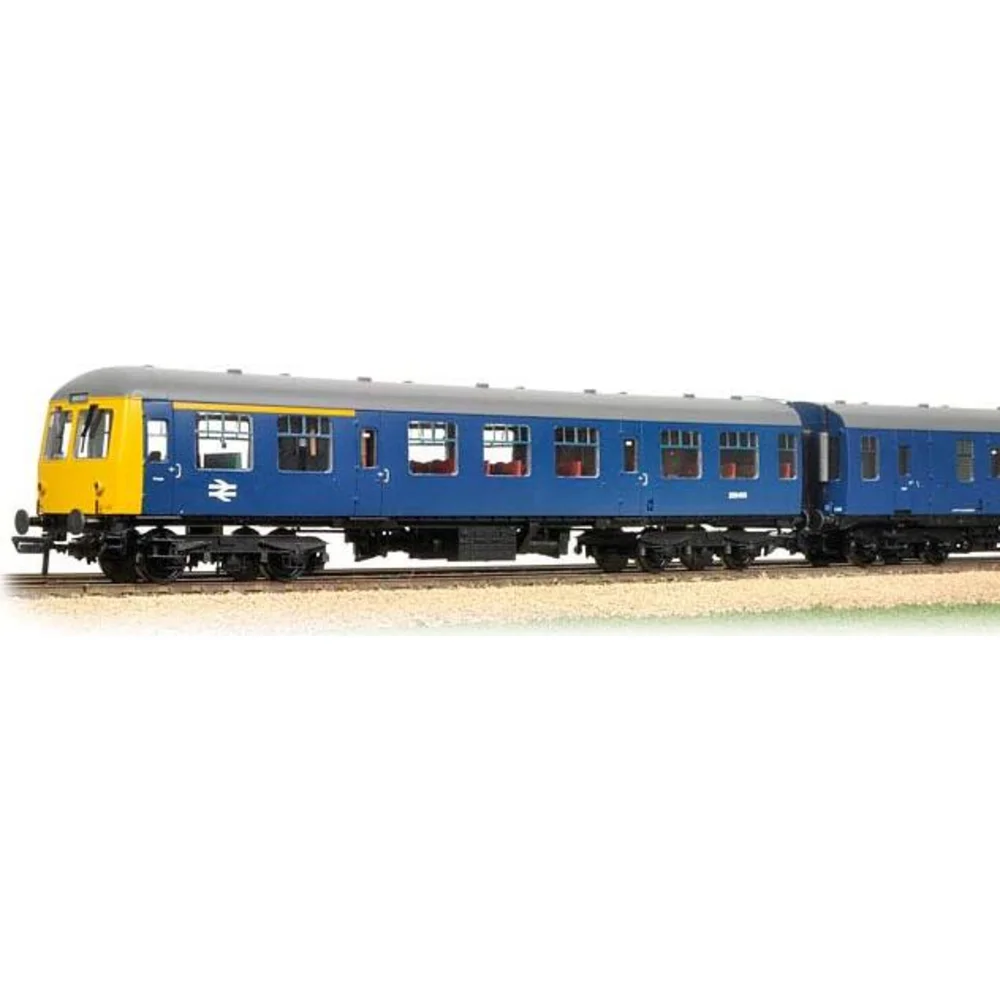
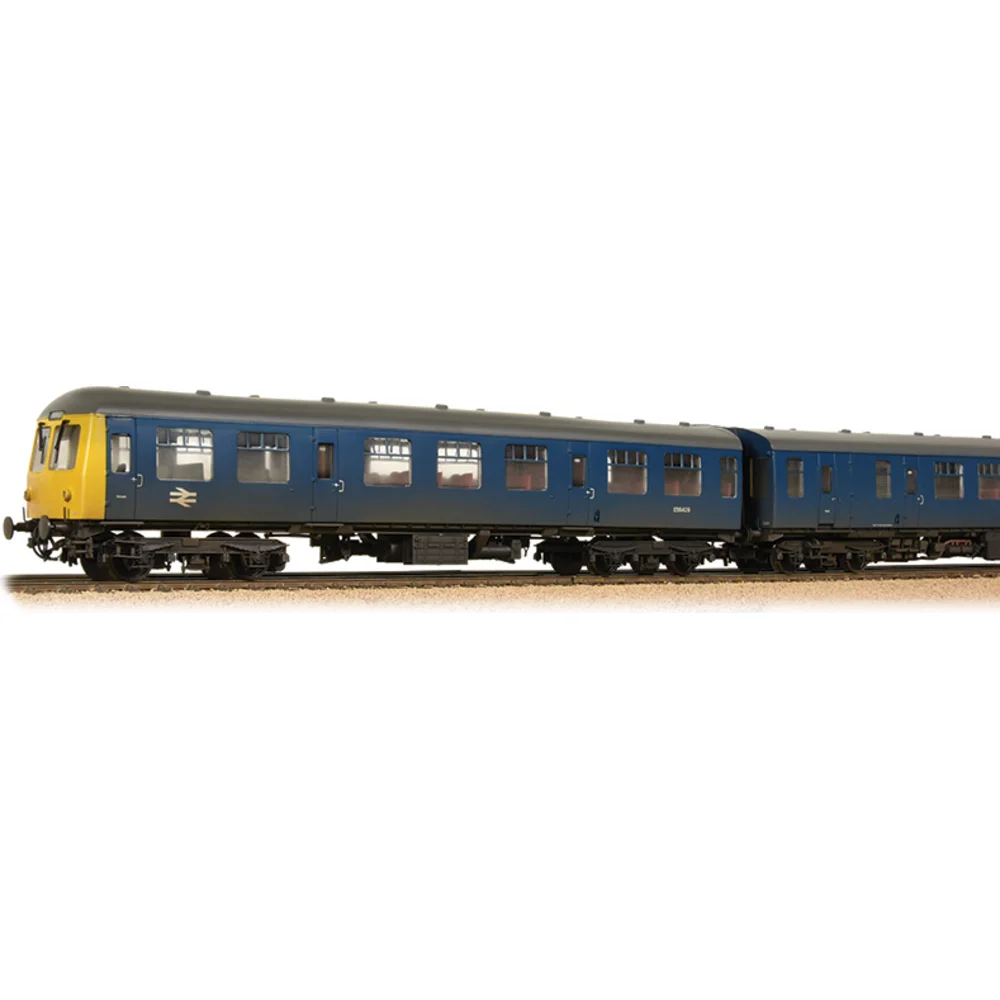
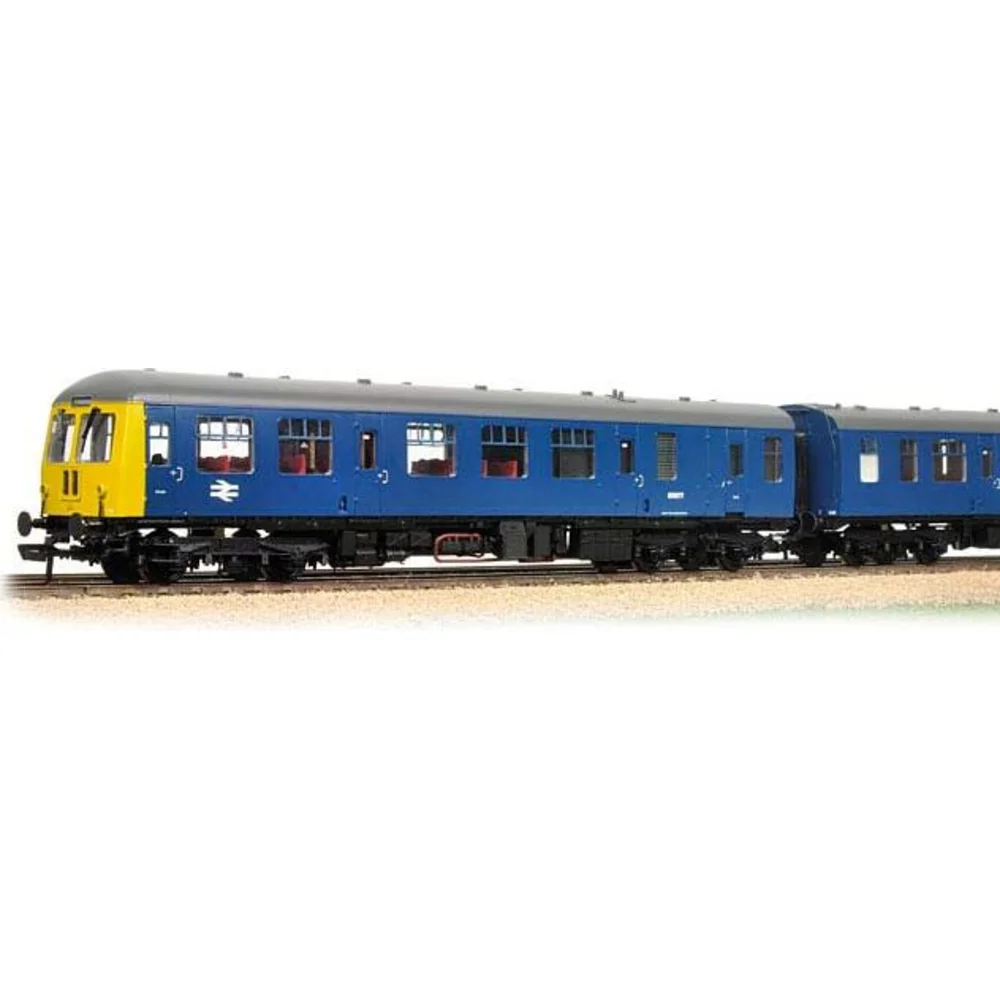
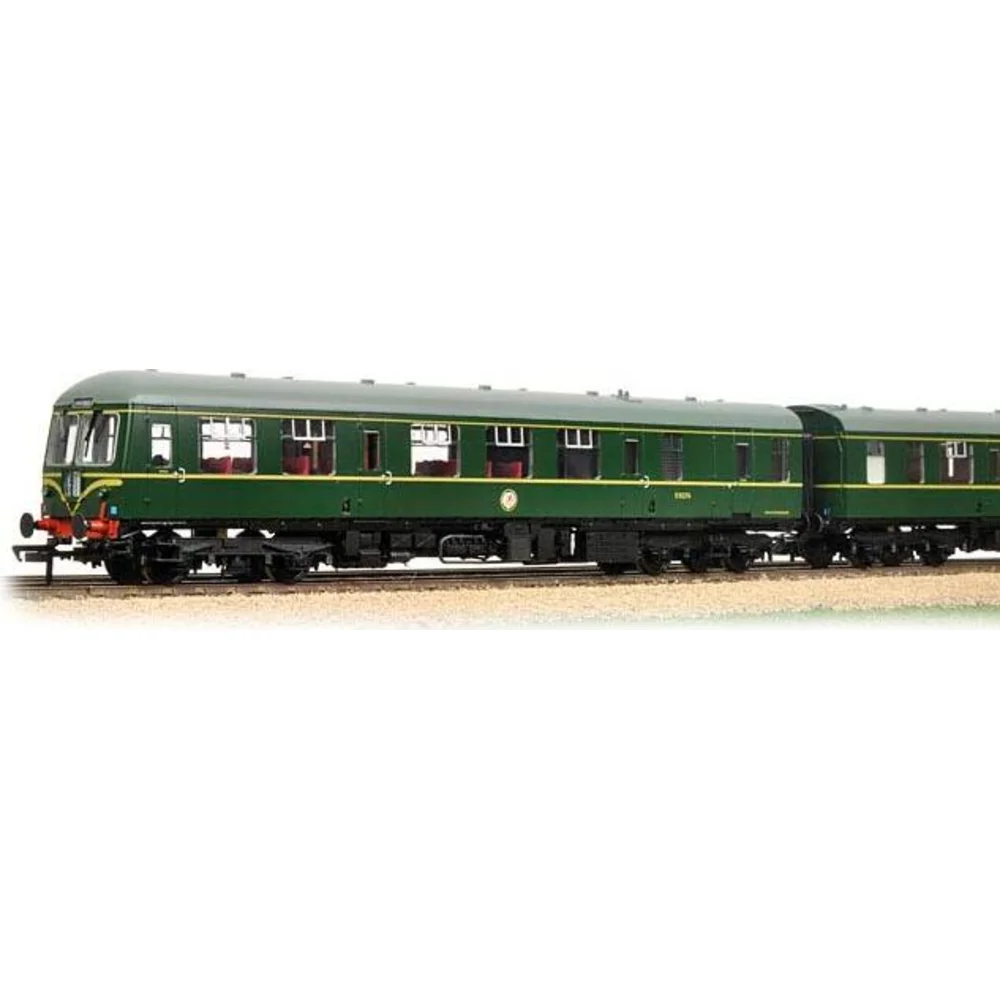
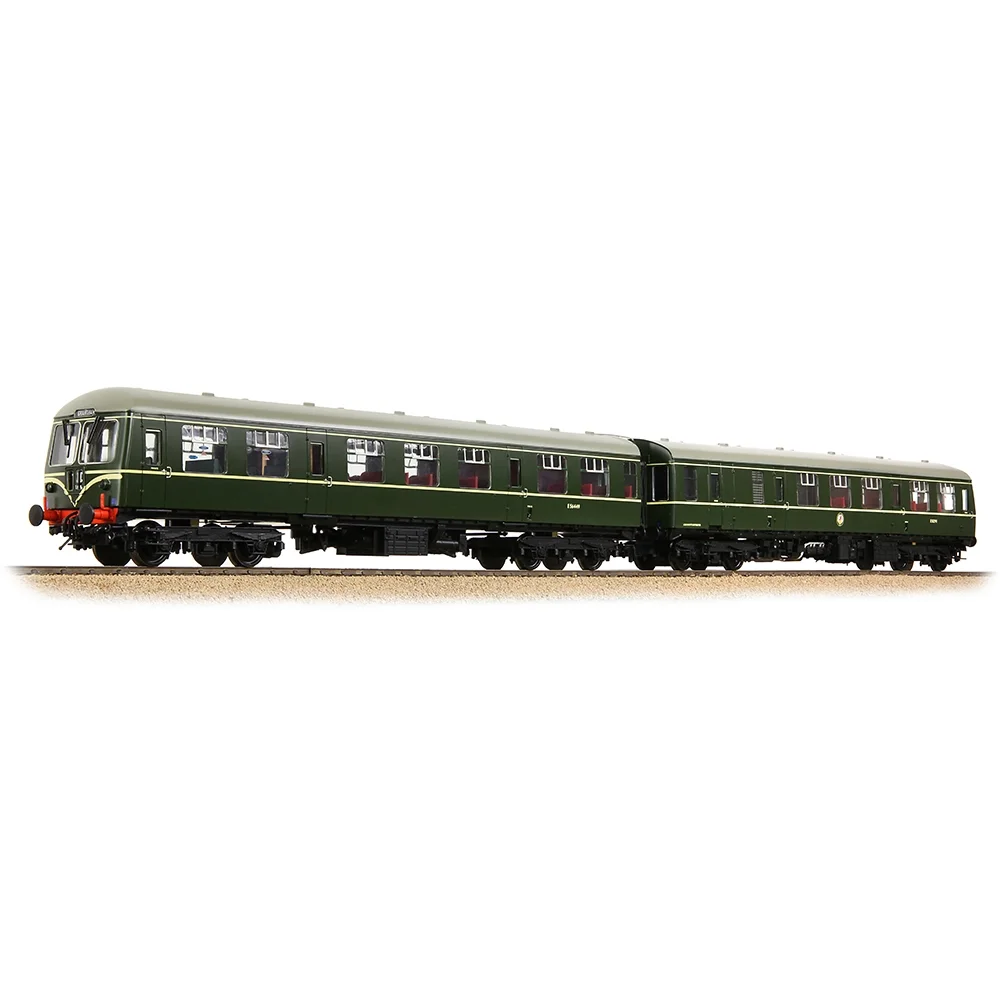
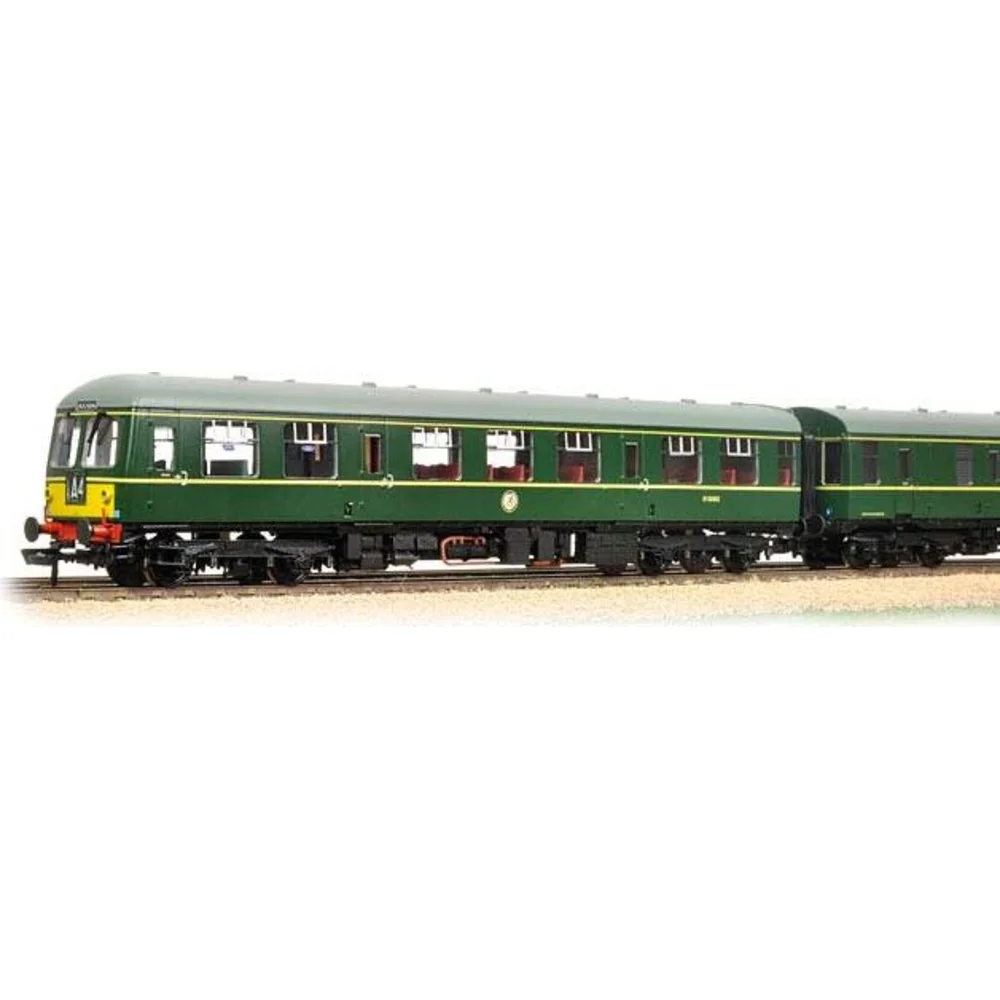
The British Rail Class 105 & 106 diesel multiple units represent one of the most distinctive yet often overlooked families of first-generation DMUs to emerge from the 1955 Modernisation Plan. Built by Cravens Ltd. at their Darnall Works in Sheffield between 1956 and 1959, these 302 vehicles served across four British Railways regions for over three decades before withdrawal in 1988. Today, just three vehicles survive in preservation—making any operational Class 105 sighting a genuinely rare experience. For modellers, Bachmann Branchline remains the sole manufacturer offering ready-to-run models in OO gauge, whilst N gauge enthusiasts must turn to specialist 3D-printed kits.
The significance of these units extends beyond mere statistics. The Class 105/106 family holds the unique distinction of being the only first-generation DMU type allocated to four different BR regions upon delivery—Eastern, London Midland, North Eastern, and Scottish. Their bodywork, identical in profile to BR Mark 1 coaching stock, gave them a distinctive appearance that set them apart from the more numerous Metropolitan-Cammell Class 101s, whilst their Cravens construction earned them a reputation for characteristic rattles and robust if unglamorous service.
From working the extensive East Anglian branch network to serving King's Cross suburban duties and operating former Great North of Scotland Railway routes around Aberdeen, the Class 105/106 units proved remarkably versatile. The final survivors operated from Norwich depot until June 1988, with the celebrity green Set 30 (vehicles 53359 and 54122) becoming a poignant symbol of the first-generation DMU era's end. Unlike the more numerous Class 101 and Class 108 families, these Cravens units were never selected for British Rail's refurbishment programme, sealing their relatively early withdrawal.
Quick Takeaways
- 302 vehicles built: Constructed by Cravens Ltd. at Darnall Works, Sheffield, between 1956-1959 in three batches for four BR regions
- Unique four-region allocation: Only first-generation DMU type delivered to Eastern, London Midland, North Eastern, and Scottish regions upon introduction
- Two engine variants: Class 105 fitted with AEC 220 engines (288 vehicles), Class 106 with Leyland 680 engines (14 vehicles), both delivering 150 bhp per engine
- Mark 1 coaching stock profile: Distinctive bodywork identical to BR Mark 1 coaches, using same doors, windows, and structural elements—unique among first-generation DMUs
- 31-year service career: Entered traffic January 1957, final passenger workings June 1988, with some departmental service until May 1990
- Just three survivors: Only 1% of original fleet preserved—vehicles 51485 and 56121 operational at East Lancashire Railway, 56456 under restoration at Llangollen Railway
- Sole ready-to-run manufacturer: Bachmann Branchline produces OO gauge models with twin 8-pin DCC sockets, comprehensive lighting, and multiple livery options (£269.95-£284.95 RRP)
Historical Background and Context
The story of Classes 105 and 106 begins with British Railways' ambitious £1.2 billion Modernisation and Re-Equipment Programme, announced in December 1954. This sweeping plan aimed to eliminate steam traction entirely and modernise the network to compete with growing road and air transport competition. Central to this transformation was an order for over 4,000 first-generation DMU vehicles to replace steam on branch lines, rural routes, and suburban services across the entire British Railways system.
British Railways deliberately spread contracts among multiple private manufacturers to stimulate the post-war engineering industry and avoid over-reliance on any single supplier. Cravens Ltd., an established Sheffield firm with experience in locomotive and coach construction, secured orders for what would become Classes 105 and 106. The company's Darnall Works in Sheffield had previously built steam locomotives for various railway companies and possessed the engineering expertise necessary for the challenging task of DMU construction.
The distinction between Class 105 and Class 106 proved remarkably simple: vehicles fitted with AEC 220 engines received the Class 105 designation, whilst those with Leyland 680 engines became Class 106. In practice, this distinction proved largely academic. Only 14 Class 106 vehicles were ever built—all delivered in the first construction batch for the North Eastern Region—compared to 288 Class 105 vehicles fitted with AEC powerplants. Both engine types delivered identical performance characteristics, differing only in minor technical specifications and maintenance procedures.
By the late 1970s, under the TOPS computerised identification system, British Rail pragmatically reclassified all surviving vehicles as Class 105, effectively ending the Class 106 designation altogether. Ironically, the re-engining programme that saw many AEC-powered vehicles receive replacement Leyland engines meant some "Class 105s" were mechanically identical to the abolished "Class 106s"—a situation that perfectly illustrated the bureaucratic complexities of Britain's railway classification systems.
Insider Tip: Recognition Features
Spotting a Cravens Class 105/106 from other first-generation DMUs requires attention to distinctive features. The bodywork profile exactly matches BR Mark 1 coaching stock—look for the characteristic door and window arrangements identical to contemporary loco-hauled coaches. The front ends feature a distinctive cab profile with large windscreens and prominent destination indicator boxes. Unlike Metropolitan-Cammell Class 101s with their rounded aluminium body panels, Cravens units have flat steel sides with visible panel joints. The underframe extends visibly beyond the body profile at both ends, creating a distinctive gap between cab front and leading buffers.
Construction proceeded in multiple lots between August 1956 and June 1959. The first vehicles entered traffic on Eastern Region services from Hull to Beverley and Hornsea in January 1957, quickly proving their worth on rural branch lines previously worked by ageing steam tank locomotives. Contemporary railway press coverage praised their modern passenger amenities including fluorescent lighting, forced-air heating, and cushioned seating—luxuries rarely experienced by branch line passengers accustomed to draughty Victorian compartment stock hauled by elderly tank engines.
The Scottish Region allocation concentrated around Aberdeen's Kittybrewster depot, working the former Great North of Scotland Railway routes to Fraserburgh, Peterhead, and Ballater through spectacular Highland scenery. These routes—characterised by steep gradients, sharp curves, and challenging weather conditions—proved ideal testing grounds for the new DMUs' capabilities. The London Midland Region deployed substantial allocations around Manchester and Birmingham, whilst the North Eastern Region operated from Hull, Darlington, and Newcastle depots across Yorkshire and the North East.
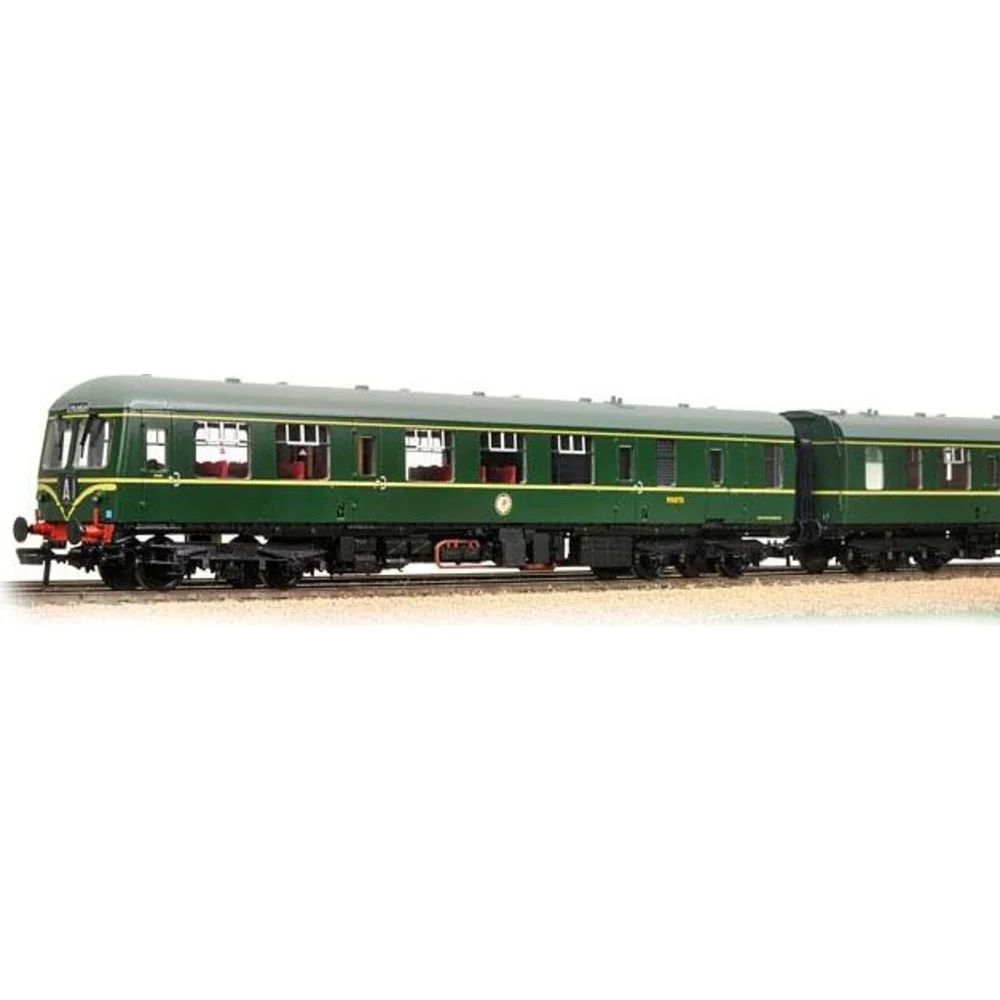
Initial livery comprised BR's multiple unit green with cream lining and distinctive "speed whiskers"—angled black stripes applied to cab fronts to improve visibility. This attractive colour scheme gave the new units a smart, modern appearance that contrasted dramatically with the grimy, weather-beaten steam locomotives they replaced. The transformation of branch line passenger services from coal-fired Victorian technology to clean, efficient diesel traction represented one of the 1955 Modernisation Plan's most visible and immediate achievements.
Design and Technical Specifications
The engineering excellence of the Cravens Class 105 & 106 lay in their robust all-welded patent underframe construction capable of withstanding 80 tonnes compression load. Built from 1/8-inch cold-formed steel sections with Corten low-alloy corrosion-resisting steel longitudinals, this substantial construction contributed to the vehicles' impressive longevity despite decades of intensive service across Britain's most challenging rural routes.
The body profile was deliberately designed to match BR Mark 1 coaching stock dimensions, using identical doors, windows, and structural elements. This standardisation simplified maintenance and parts supply whilst giving the Class 105/106 a distinctive coach-like appearance that differentiated them from other DMU families. The decision to match Mark 1 dimensions also ensured compatibility with existing loading gauges and platform heights across the entire BR network.
However, this robust construction came with characteristic operational features. The all-steel welded construction, combined with numerous metal fittings including window toplights, door droplights, and luggage racks, created what enthusiasts diplomatically describe as "tremendous rattling noises" during operation. These distinctive acoustic characteristics became one of the class's most recognisable features—passengers and railway staff could identify approaching Cravens units by sound alone long before they came into view.
Both engine types delivered identical 150 brake horsepower at 1,800 rpm, with power transmitted through a Self-Changing Gears (SCG) four-speed epicyclic gearbox and fluid flywheel coupling. Each power car carried two engines—one driving each bogie—giving a total power output of 300 bhp for acceleration and hill climbing. This twin-engine arrangement provided excellent redundancy; a single engine failure allowed continued operation at reduced performance rather than complete breakdown requiring rescue.
The AEC 220 engines featured an 11.3-litre displacement with pushrod-operated overhead valves, derived from the company's successful range of bus and commercial vehicle powerplants. The Leyland 680 offered 11.1 litres displacement with a 15.75:1 compression ratio, similarly adapted from proven road vehicle designs. Both manufacturers enjoyed excellent reputations for reliability, though parts supply issues would eventually favour Leyland engines during the 1970s re-engining programme.
Technical Innovation: The Engine Swap Programme
By the 1970s, the supply of AEC spare parts had become increasingly problematic as the manufacturer scaled back production and eventually ceased trading. British Rail responded by initiating a re-engining programme that saw many AEC-powered Class 105 vehicles receive replacement Leyland 680 engines—ironically making them mechanically identical to the now-abolished Class 106 designation. Vehicles 50370 and 50371, originally Leyland-engined Class 106s, had already been converted to AEC engines earlier in their careers, creating a fascinating paper trail that delights railway historians researching individual vehicle histories.
Running gear comprised standard DMU bogies with Timken roller-bearing axleboxes providing low-friction operation and reduced maintenance requirements compared to earlier plain bearing designs. Lateral control bolster dampers ensured stable riding characteristics at line speed. The power bogies featured fabricated steel frames with resilient wheels, whilst trailer bogies used lighter construction appropriate for their lower loadings.
The Gresham & Craven quick-release vacuum brake system originally used 22-inch cylinders, later replaced with 21-inch rolling ring units during maintenance overhauls. This vacuum brake technology—standard across BR's first-generation DMU fleet—provided adequate stopping performance for 70 mph operation whilst maintaining compatibility with vacuum-braked coaching stock and freight wagons when forming mixed trains.
Interior arrangements reflected BR's standard DMU practice. Power cars (Driving Motor Brake Standard, or DMBS) typically seated 52 passengers in fixed-back bench seating arranged in open saloon layout, with a large luggage compartment occupying one end bay. Trailer cars came in several configurations: Driving Trailer Composite Lavatory (DTCL) vehicles offered first and second class accommodation with toilet facilities, whilst Trailer Composite (TC) centre cars provided additional seating capacity for three-car formations.
Heating came from engine waste heat circulated through radiators beneath seating, supplemented by electric heaters in trailer cars. Fluorescent lighting provided excellent illumination compared to the dim oil lamps or basic electric bulbs common in older coaching stock. Large sliding ventilators in roof panels, combined with opening droplight windows, ensured adequate ventilation during summer operation—essential for passenger comfort before air conditioning became standard railway equipment.
Service History and Operations
The Class 105/106 fleet's distribution across four BR regions created remarkable operational diversity unmatched by any other first-generation DMU type. The Eastern Region received 100 vehicles allocated primarily to Cambridge, Norwich, Lincoln, and Finsbury Park depots. These worked the extensive East Anglian branch network including the Hull-Hornsea, Hull-Withernsea, Cambridge-Mildenhall, and Witham-Braintree services. The coastal routes from Hull offered spectacular scenery across Holderness, whilst East Anglian services traversed the distinctive flat fenland landscape.
The King's Cross suburban allocation based at Finsbury Park and Hornsey depots represented the class's highest-profile duties. These units operated outer-suburban services to Hertford North, Welwyn Garden City, and Hatfield alongside more numerous Class 105 and Class 115 units. The intensive service patterns—trains every 15-20 minutes during peak periods—demanded high reliability and rapid turnaround at terminal stations. This demanding operational environment proved an excellent testing ground for the Cravens units' robust construction.
The London Midland Region's 95 vehicles concentrated around Manchester (Longsight depot), Birmingham (Tyseley), and the Bletchley area, working a diverse range of services. The Oxford-Bedford-Cambridge cross-country route saw regular Class 105 operation, connecting three university cities through attractive countryside. Manchester area services included suburban routes radiating from the city to surrounding towns, whilst Birmingham allocations worked local services across the West Midlands conurbation.
The North Eastern Region operated 63 vehicles from Hull Botanic Gardens, Darlington, and Heaton (Newcastle) depots. The Hull allocation dominated East Yorkshire branch operations, whilst Darlington units worked County Durham services. Newcastle's Heaton depot employed Class 105s on Tyneside suburban routes and services into Northumberland. The challenging gradients and exposed locations of many North Eastern routes tested the units' reliability in harsh winter conditions.
The Scottish Region's 44 vehicles worked from Kittybrewster (Aberdeen), Hamilton, and Haymarket depots through some of Britain's most spectacular railway scenery. The Aberdeen allocation operated former Great North of Scotland Railway routes to Fraserburgh, Peterhead, and Ballater—services characterised by steep gradients, sharp curves, and the constant challenge of Scottish Highland weather. Hamilton depot worked Central Scotland services, whilst Haymarket units operated Edinburgh suburban routes and services into Fife.
Operational Insight: Formation Flexibility
Formation flexibility proved a significant operational advantage throughout the class's service career. Standard configurations included two-car "power twin" sets (DMBS + DTCL) for basic branch operations and three-car formations incorporating a centre trailer composite for higher-capacity services. For peak services, multiple units could work together in formations of four, six, eight, or even ten cars—a remarkable ten-car formation worked the Grimsby to King's Cross service on 2 August 1958, demonstrating the class's versatility. This ability to match capacity precisely to demand made DMUs far more economical than locomotive-hauled services on routes with fluctuating passenger numbers.
From the mid-1970s onwards, original set formations increasingly broke down as vehicles were cascaded between regions following route closures and electrification schemes. The King's Cross electrification of 1976 displaced many units to provincial depots, particularly Norwich. Hybrid formations pairing Class 105 vehicles with Classes 100, 101, 104, 107, and 108 became commonplace, particularly at Norwich depot where eclectic combinations survived until final withdrawal.
The Blue Square coupling code—indicating compatibility with other first-generation DMU types using similar control systems and gangway arrangements—enabled this operational flexibility. Mixed formations could operate seamlessly with power and brake controls functioning throughout the entire train regardless of which manufacturers had built individual vehicles. This standardisation represented one of British Railways' most successful engineering decisions.
The TOPS renumbering scheme of the 1970s saw significant fleet number changes. Original five-digit numbers in the 50xxx series (power cars) became 53xxx to avoid conflict with Class 50 locomotives, whilst 56xxx trailers moved to the 54xxx series to prevent confusion with Class 56 locomotives. This pragmatic solution to numbering conflicts created challenges for enthusiasts tracking individual vehicle histories, as the same unit might be recorded under three different numbers across its service career.
In 1986, Norwich depot repainted Set 30 (vehicles 53359 and 54122) in BR green livery with black speed whiskers applied over the mandatory yellow warning panels. This nostalgic gesture created a locally famous "celebrity set" that attracted enthusiasts from across the country during the final years of Class 105 operation. The set became a poignant symbol of the first-generation DMU era's end, regularly appearing on Norwich-Sheringham and Norwich-Lowestoft services until withdrawal, photographed extensively by enthusiasts aware they were witnessing the end of an era.
Withdrawal and Preservation Legacy
The withdrawal history of the British Rail Class 105 & 106 reflects the harsh economic realities facing unreconstructed first-generation DMUs during the 1980s. Unlike the more numerous Class 101 and Class 108 families, the Class 105/106 fleet was never selected for British Rail's DMU refurbishment programme of the late 1970s and early 1980s. This decision effectively sealed their fate, condemning the entire class to withdrawal without the life-extending overhauls that allowed other first-generation types to survive into the 2000s.
The refurbishment programme exclusion stemmed from multiple factors. The Cravens units' all-steel construction made them heavier than aluminium-bodied alternatives, reducing fuel efficiency and increasing track wear. The characteristic rattling from numerous metal fittings suggested structural fatigue that would require expensive remediation. Most significantly, the relatively small fleet size—302 vehicles compared to over 630 Class 101s—meant refurbishment costs per vehicle would be proportionally higher without delivering comparable fleet-wide benefits.
Withdrawals commenced in earnest during the early 1980s, accelerating as Sprinter units arrived to replace ageing first-generation DMUs. The King's Cross electrification of 1976 had already displaced many units to provincial depots, concentrating survivors at Norwich, Tyseley, and Scottish depots. The replacement process gathered momentum through the mid-1980s as new Sprinter and Pacer units cascaded older DMUs to secondary routes before final withdrawal.
The final passenger workings occurred in June 1988, with some vehicles lingering in departmental service for sandite application, parcels traffic, and route learning duties until May 1990. These final duties represented a common fate for withdrawn DMUs—their self-contained nature and ability to operate light engine made them ideal for infrastructure support roles requiring mobile accommodation and power generation.
Preservation's Asbestos Challenge
Asbestos contamination proved the single greatest barrier to preservation. The extensive use of asbestos in first-generation DMU construction—particularly in ceiling panels, floor tiles, brake components, and insulation—meant that any preservation attempt required expensive and specialist removal procedures before vehicles could be legally occupied or worked on. Combined with the vehicles' generally worn condition after decades of unreconstructed service, this effectively eliminated most preservation opportunities. The cost of professional asbestos removal could easily exceed the purchase price of the vehicle itself, making preservation economically challenging for volunteer-led heritage railways.
Today, just three Class 105 vehicles survive from the original 302-strong fleet—a preservation rate of barely 1% that makes surviving examples exceptionally precious. Vehicle 51485 (DMBS) and 56121 (DTCL) form the sole operational Class 105 set in existence, resident at the East Lancashire Railway in Bury. Acquired from the West Somerset Railway in 1997, these vehicles underwent a painstaking 20-year restoration including complete asbestos removal, mechanical rebuild, and interior refurbishment.
The restoration project faced numerous challenges beyond asbestos removal. Worn engines required complete overhauls, corroded underframe sections demanded replacement, and decades of service had taken toll on electrical systems, brake equipment, and interior fittings. The volunteer restoration team's dedication—supported by the East Lancashire Railway's professional engineering staff—eventually delivered a magnificently restored set that returned to traffic on 4 November 2017. The units now operate regularly at the Bury-based heritage line, resplendent in BR green livery with speed whiskers, providing modern audiences with authentic experiences of 1950s branch line travel.
Vehicle 56456 (DTCL) at the Llangollen Railway in Wales represents the third survivor. This vehicle worked for an impressive 26 years in preservation before withdrawal for major overhaul in March 2010. Following complete asbestos stripping and extensive bodywork repairs addressing corrosion in underframe sections and body panels, interior restoration continues with completion anticipated in the coming years. The Llangollen Railway's specialist DMU Group has demonstrated remarkable commitment to preserving this unique vehicle despite the technical and financial challenges involved.
The tragic loss of vehicles 53812 and 53355 represents the most significant failed preservation attempt. Intended for the National Railway Museum following withdrawal in June 1988, these asbestos-stripped vehicles were stored at Crewe Carriage Shed where severe vandalism rendered them beyond economical repair. Thieves stripped valuable components, whilst weather infiltration through damaged panels caused extensive deterioration. Both were scrapped at Vic Berry's yard in Leicester in 1991, eliminating what should have been the National Collection's representative Class 105 examples.
The engineering legacy of the Cravens Class 105/106 extends beyond preserved vehicles. The design principles—robust underframe construction, standardised components enabling economical maintenance, and Mark 1 profile compatibility—influenced subsequent DMU development. The lessons learned from operating these units informed British Rail's specifications for second-generation DMUs including the Class 150/155/156 families that replaced them, particularly regarding the importance of corrosion-resistant construction and accessible maintenance arrangements.
Modelling Significance and Scale Replications
The British Rail Class 105 & 106 presents exceptional modelling significance due to its unique position spanning three decades of British railway operations across four regions, combined with distinctive Cravens bodywork that sets it apart from more numerous DMU types. For railway modellers seeking authentic period atmosphere, these units provide compelling prototype appeal enhanced by operational stories spanning rural branch lines to suburban termini.
The modelling landscape remained frustratingly barren for decades despite the class's historical importance. Neither Hornby, Dapol, Heljan, nor Graham Farish offered Class 105/106 representations in any scale until Bachmann Branchline announced tooling development in the early 2000s. This inexplicable neglect left modellers of Eastern Region, London Midland, North Eastern, and Scottish Region operations without a fundamental DMU type that should have been considered essential for authentic layout operation.
Bachmann Branchline transformed this situation with their comprehensive Class 105 range, first released in the mid-2000s and refreshed with updated tooling in 2022. The company's approach demonstrates exemplary commitment to prototype authenticity, creating tooling that accurately captures the distinctive Cravens profile including the Mark 1 coaching stock dimensions, characteristic cab front styling, and correct underframe details that distinguish these units from contemporary Metropolitan-Cammell designs.
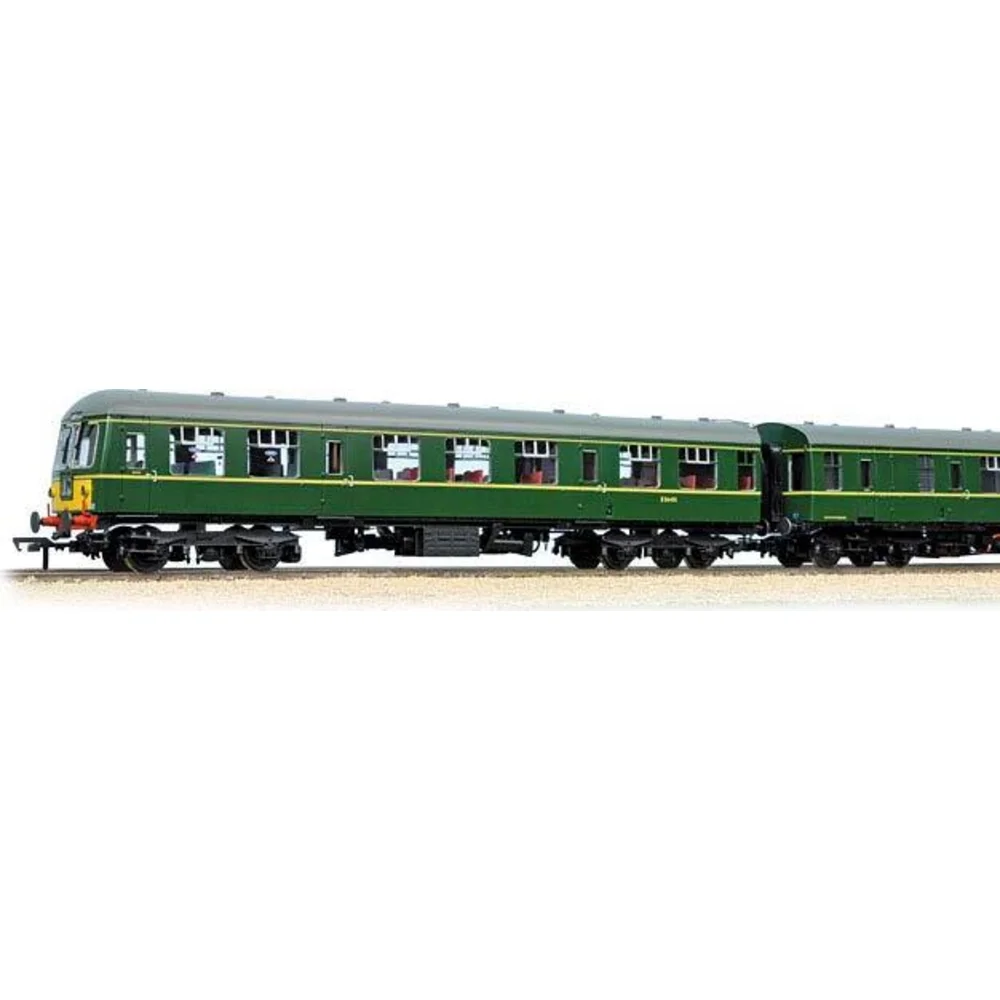
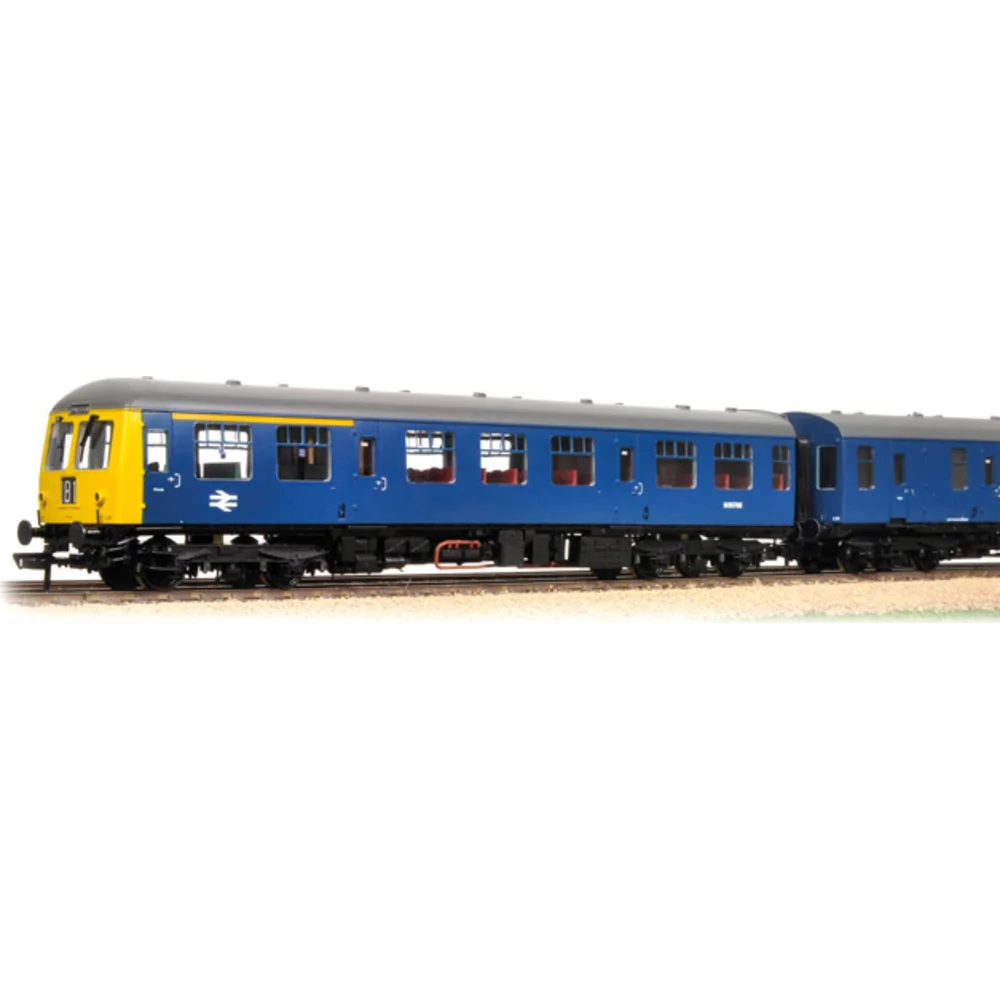
The current Bachmann OO gauge range comprises two primary variants covering the most significant livery periods. Catalog number 31-325A represents Class 105 in BR Blue livery with full yellow warning panels (weathered finish) at £284.95 RRP, whilst 31-326B depicts BR Green with speed whiskers and includes passenger figures at £269.95 RRP. Both models represent complete two-car formations comprising a Driving Motor Brake Standard (DMBS) and Driving Trailer Composite Lavatory (DTCL).
Earlier releases including the 31-325 (BR Blue), 31-326 (BR Green), 31-327 (Green with half yellow ends), and Power Twin variants (31-535/536/537) appear regularly on the pre-owned market. Street prices for current models typically range from £159 to £229 through specialist retailers including Rails of Sheffield, Hattons Model Railways, and Kernow Model Rail Centre, representing significant savings on recommended retail pricing.
Technical features include a five-pole motor with flywheel providing smooth low-speed operation, directional headlights and taillights, interior lighting with illuminated destination blinds, sprung buffers providing cushioned coupling, and NEM coupling pockets accepting standard tension-lock couplings. A comprehensive accessory pack includes alternative parts and detail components. The models require a minimum of Radius 2 curves (438mm/17.25") and measure 495mm as complete two-car units.
Advanced Modelling: DCC Installation
Bachmann's twin 8-pin DCC socket arrangement enables straightforward digital conversion. Each vehicle carries a separate socket—the powered motor car accepts standard motor decoders, whilst the trailing car's socket accommodates function-only decoders for independent lighting control. For authentic operation, programme directional headlights to illuminate only the leading vehicle whilst taillights show on the trailing end. Interior lighting can be configured to remain illuminated regardless of direction. Sound-fitted modellers should consider specialist Class 105 projects from Legomanbiffo (ESU LokSound, £98.75 excluding VAT) that accurately reproduce Leyland or AEC engine characteristics including gear change simulation.
Detail quality throughout the models reaches impressive standards for ready-to-run products. Separately applied handrails, lamp irons, vacuum brake pipes, and detailed underframe equipment provide visual depth. Factory-fitted glazing includes cab interior detail with driver's seats and control equipment visible through windows. The painting and livery application demonstrates meticulous research—BR Blue versions show correct Monastral Blue shade with accurate lining placement, whilst BR Green examples feature the authentic Brunswick green with cream lining and black speed whiskers.
N gauge modellers face more limited options. No ready-to-run Class 105/106 models exist from any manufacturer. N-Train offers 3D-printed body kits requiring separate Tomytec TM-18R chassis—the DMU004 two-car set costs £50 plus chassis, whilst the DMU005 three-car version is £70. These kits require modelling skills for assembly, painting, and detailing but provide the only realistic option for N gauge Class 105 representation.
Electrarail Graphics produces vinyl conversion sets (product code DMU03) to transform Graham Farish Class 101 models into Class 105 representations at £12 per set. This approach requires careful application of vinyl overlays to modify the Class 101's body profile, repaint work to correct colour schemes, and acceptance of compromise accuracy—the underlying Class 101 chassis and bogies don't perfectly match Class 105 dimensions. However, for modellers requiring N gauge Class 105s without extensive scratchbuilding, this represents a viable compromise.
O gauge enthusiasts face significant challenges. No manufacturer produces ready-to-run Class 105 models in O gauge (7mm scale, 1:43.5 proportion), and none have announced development plans. A limited-run Bachmann Brassworks model was produced but is now exceptionally rare on the secondary market, commanding premium prices when examples appear. The substantial market size required to justify O gauge tooling combined with the class's relatively modest historical profile makes commercial production unlikely without substantial pre-order commitments.
Notably, Hornby, Dapol, Graham Farish (beyond the conversion option), and Heljan do not manufacture Class 105/106 models. Modellers seeking similar first-generation DMUs should consider the widely available Bachmann Class 108 in OO gauge, the Graham Farish Class 101 in N gauge, or await the forthcoming Heljan Class 104 announced for future release.
Unique Modelling Tips and Layout Integration
Successfully incorporating British Rail Class 105 & 106 models into layout operation requires understanding their specialised nature as regional workhorses spanning multiple BR eras. Unlike express passenger locomotives that might work prestigious named trains, the Class 105/106 was typically assigned to humble but essential local services connecting rural communities with the main network. This operational characteristic provides excellent opportunities for creating authentic, character-filled railway scenes.
Era selection proves fundamental to authentic Class 105/106 representation. Era 5 (1957–1966) represents the introduction period with BR multiple unit green livery, cream lining, and distinctive speed whiskers on cab fronts. Two-car and three-car formations predominate, operating alongside steam traction on branch lines that were gradually transitioning from locomotive-hauled to DMU operation. Appropriate infrastructure includes semaphore signalling with lower quadrant arms, traditional station buildings with canopy awnings, coal merchant's yards, and oil lamps for platform lighting.
Compatible motive power for Era 5 layouts includes BR Standard tanks (Classes 2MT, 3MT, 4MT), LNER B1 4-6-0s on fitted freight, J39 0-6-0s on pick-up goods, and various pre-grouping types including ex-LMS 4F 0-6-0s and ex-LNER J6 0-6-0s. The visual contrast between smart green DMUs and grimy steam locomotives perfectly captures the transformation British Railways underwent during this transitional decade.
Era 6/7 (1966–1976) encompasses the transition to Rail Blue livery with expanding yellow warning panels. Mixed green and blue formations within the same train are entirely prototypical during this period as vehicles received repaint at different maintenance cycles. The Beeching closures dispersed units to new areas as branch lines closed, whilst King's Cross electrification ended suburban operations there in 1976, cascading units to provincial depots.
Weathering Authenticity for Branch Line Service
Class 105/106 weathering should reflect decades of intensive branch line operation whilst maintaining the relatively clean appearance expected of passenger-rated units. Focus weathering effects on roofs showing heavy coal dust and diesel soot accumulation (applied with dry-brushed black and dark grey weathering powders), window surrounds exhibiting rust streaking from steel frames (diluted rust-coloured acrylics applied vertically), and underframes with heavy oil and brake dust deposits. Vertical exhaust staining below engine compartment grilles—applied with black weathering powders or heavily diluted black paint—represents a distinctive Cravens feature. Yellow warning panels typically faded significantly with visible paint chipping around edges. Avoid excessive weathering inappropriate for passenger service—these units operated from depots with regular cleaning facilities.
Era 7/8 (1976–1988) shows full Rail Blue with complete yellow ends dominating the fleet, though some blue and grey examples appeared. Norwich depot becomes the final stronghold, with the celebrity green Set 30 appearing from 1986. Sprinter replacements begin arriving towards the period's end, creating interesting operational scenarios where first and second-generation DMUs work alongside each other. This era suits modellers who appreciate the nostalgic appeal of worn but characterful first-generation units working their final years.
Layout infrastructure authenticity demands attention to appropriate settings. Small branch terminus layouts with a single platform, run-round loop, and modest goods yard perfectly capture 1957–1963 rural operations. The platform should accommodate two or three-car DMU lengths (approximately 120-180mm in OO gauge), whilst the goods yard might include a coal merchant's office, cattle dock, and small goods shed handling agricultural produce and general merchandise.
East Anglian settings featuring flat fenland scenery, through stations with passing loops, and connections to Norwich work excellently for the class's final years. The distinctive East Anglian landscape—vast skies, drainage ditches, agricultural fields, and isolated farmhouses—creates atmospheric backdrops. Station architecture should reflect regional characteristics including Suffolk white rendered walls, distinctive platform canopy designs, and characteristic Eastern Region signage styles.
King's Cross suburban representations require more urban infrastructure including multiple platform faces, extensive canopy coverage, footbridges connecting platforms, and supporting passenger facilities. These layouts suit multi-car formations operating intensive services during the 1958–1976 period. Urban backdrops featuring Victorian terraced housing, industrial buildings, and busy road traffic create appropriate metropolitan atmosphere.
Scottish layouts depicting former Great North of Scotland Railway territory around Aberdeen offer distinctive architectural character and single-track operation through spectacular Highland scenery. Stations should feature Scottish granite construction, distinctive GNSR architectural details, and appropriate ScR signage. The challenging gradients and exposed locations provide operational interest as DMUs tackle steep banks and weather challenges.
Formation authenticity requires attention to typical operational practice. Standard two-car "power twin" formations (DMBS + DTCL) represent the most common configuration for basic branch operations. Three-car formations incorporating a centre trailer composite provide increased capacity for peak services. Four-car and six-car formations created by coupling multiple two-car sets appear on busier routes during commuter peaks or special workings.
Operational sessions benefit from varied duties reflecting typical Class 105/106 deployment. A realistic operating sequence might begin with morning commuter services from rural stations to regional centres, continue with mid-morning shoppers' specials, proceed through lunchtime lull with single two-car units, build through afternoon school services requiring three or four-car formations, and finish with evening commuter peaks returning workers to rural communities. This varied workload creates engaging operations whilst remaining prototypically accurate.
Sound-equipped models enhance operational realism through authentic audio experiences. Programme sound decoders to emphasize realistic operational sequences: gentle idling at stations with characteristic diesel rattle, increasing engine RPM during acceleration with audible gearbox changes, steady running noise during cruise between stations, engine braking during deceleration approaching stations, and vacuum brake hissing during stops. The distinctive rattling characteristic of Cravens construction can be suggested through judicious use of background sound effects.
Depot scenes provide excellent static display opportunities whilst demonstrating maintenance infrastructure. Model a section of Norwich, Finsbury Park, or Kittybrewster depot featuring fueling points, cleaning facilities, and basic maintenance workshops. Include details such as fuel tanks, wheel-cleaning equipment, sand drags for traction sand replenishment, and storage areas for spare parts. Depot staff figures add life—fitters, cleaners, and supervisors engaged in daily maintenance activities. Supporting motive power including Class 08 shunters and breakdown cranes complete authentic depot atmosphere.
Finally
The British Rail Class 105 & 106 represents far more than 302 diesel multiple unit vehicles that served Britain's railways for three decades; these machines embody the transformation British Railways underwent during the late 1950s as steam gave way to diesel traction across the network. Samuel Johnson's Midland Railway philosophy of "small engines, frequent services" found its diesel-age expression in these modest but remarkably versatile units that worked everything from Hull-Hornsea coastal branches to King's Cross suburban duties and Scottish Highland routes.
For railway historians, the class provides fascinating insights into British Railways' Modernisation Plan implementation and the challenges of transitioning from steam to diesel traction. The decision to standardise first-generation DMU mechanical components whilst allowing body design variation among different manufacturers created both benefits and complications. The Class 105/106's Cravens construction—with its distinctive Mark 1 coaching stock profile and characteristic rattles—differentiated them from more numerous Metropolitan-Cammell Class 101s whilst sharing common mechanical elements enabling operational flexibility.
The unique four-region allocation sets the Class 105/106 apart in first-generation DMU history. No other type served Eastern, London Midland, North Eastern, and Scottish regions from introduction, creating operational diversity that enriched the class's story. From East Anglian fenlands to Yorkshire coalfields, West Midlands conurbations to Scottish Highlands, these units proved adaptable to vastly different operating environments and traffic patterns.
The tragic absence of more preserved examples—just three vehicles from 302 built—represents one of British railway preservation's most regrettable gaps. The asbestos contamination challenge that prevented wider preservation highlights the practical difficulties preservationists face when attempting to save significant but technically problematic vehicles. The dedication demonstrated by East Lancashire Railway volunteers in restoring vehicles 51485 and 56121 to operational condition deserves particular recognition, whilst the Llangollen Railway's commitment to vehicle 56456 ensures another example will eventually return to public display.
Model railway enthusiasts find in the Class 105/106 an ideal subject that balances historical significance with practical modelling opportunities. Bachmann's exceptional OO gauge range provides the only ready-to-run option across all scales, with the 2022 tooling refresh delivering contemporary standards of detail and functionality. The variety of available liveries—BR Green with speed whiskers and BR Blue—supports layouts spanning three decades of operation. The models' moderate size suits layouts of all scales, the intensive branch and suburban operation provides engaging operational scenarios, and the distinctive Cravens profile creates immediate visual recognition.
For modellers unable to acquire ready-to-run models—particularly N gauge enthusiasts—the kit and conversion options from N-Train and Electrarail Graphics provide viable alternatives. Whilst requiring additional effort compared to ready-to-run products, these options demonstrate how dedicated modellers can represent almost any prototype through creative use of available resources and modelling skills.
As the railway preservation movement continues evolving, the operational Class 105 set at the East Lancashire Railway stands as testament to what volunteer dedication can achieve. Every operational day these restored units work provides modern passengers with authentic experiences of 1950s branch line travel—complete with characteristic rattles, distinctive diesel exhaust notes, and the nostalgic atmosphere of first-generation DMU operation. For those unable to visit Bury, Bachmann's models provide the opportunity to recreate authentic Class 105 operations on layouts spanning rural branch termini to suburban commuter routes.
The British Rail Class 105 & 106 story ultimately celebrates practical railway engineering that transformed Britain's rural and suburban passenger services. When the first units entered traffic on East Yorkshire branches in January 1957, they represented cutting-edge railway technology delivering unprecedented passenger comfort and operational economy. By their final withdrawal in 1988, they had become nostalgic relics of an earlier diesel age, yet their 31-year service career vindicated the engineering decisions that created them. These distinctive Cravens units proved that robust construction, standardised components, and systematic maintenance could deliver remarkable longevity—precisely the philosophy that Samuel Johnson had advocated seven decades earlier with his Midland Railway tank locomotives.
Frequently Asked Questions
What is the difference between Class 105 and Class 106?
The sole distinction was engine manufacturer: Class 105 vehicles used AEC 220 engines (11.3 litres), whilst Class 106 vehicles had Leyland 680 engines (11.1 litres). Both delivered identical 150 bhp output per engine. Only 14 Class 106 vehicles were ever built, all in the first construction batch for the North Eastern Region. By the late 1970s, British Rail reclassified all survivors as Class 105, effectively abolishing the Class 106 designation. The re-engining programme further blurred distinctions as many AEC-powered vehicles received replacement Leyland engines.
Who manufactured the Class 105 and 106 DMUs?
Cravens Ltd. built all 302 vehicles at their Darnall Works in Sheffield between 1956 and 1959. Contrary to some sources, Metropolitan-Cammell did not manufacture these classes—they built the separate Class 101 and 102 families. Cravens also produced Classes 112/113 and the Class 129 parcels units using similar design principles. The company's experience in locomotive and coach construction enabled them to secure substantial DMU contracts during the 1955 Modernisation Plan implementation.
Where can I see a Class 105 in operation today?
The East Lancashire Railway at Bury operates the only complete Class 105 set in existence. Vehicles 51485 and 56121, restored to BR green livery with speed whiskers, run regularly on summer weekdays, winter weekends, and special events including the annual DMU Gala each November. The 20-year restoration project included complete asbestos removal and mechanical rebuild. Vehicle 56456 at the Llangollen Railway in Wales is undergoing restoration following asbestos stripping and extensive bodywork repairs.
How many Class 105/106 vehicles survive in preservation?
Just three vehicles survive from the original 302-strong fleet—a preservation rate of barely 1%. Power car 51485 and trailer 56121 operate at the East Lancashire Railway, whilst trailer 56456 is under restoration at the Llangollen Railway. Asbestos contamination prevented wider preservation, and the class's exclusion from BR's refurbishment programme meant most vehicles were worn beyond economical preservation by withdrawal. The tragic loss of vehicles 53812 and 53355—intended for the National Railway Museum but vandalised beyond repair at Crewe—eliminated what should have been the National Collection's examples.
Does Hornby make a Class 105 model?
No. Bachmann Branchline is the sole manufacturer of ready-to-run Class 105 models, available only in OO gauge. Hornby does not produce this class, nor do Dapol, Graham Farish (beyond conversion kits), or Heljan. Modellers seeking alternatives should consider Bachmann's Class 108 for similar first-generation DMU representation, or await the forthcoming Heljan Class 104 announced for future release. The lack of manufacturer competition means Bachmann's range represents the definitive ready-to-run Class 105 option.
What Class 105 models are currently available?
Bachmann offers catalog numbers 31-325A (BR Blue weathered, £284.95 RRP) and 31-326B (BR Green with speed whiskers and figures, £269.95 RRP) in OO gauge. Both feature twin 8-pin DCC sockets, comprehensive directional and interior lighting, five-pole motors with flywheels, and detailed underframes. Earlier releases including 31-325, 31-326, 31-327, and Power Twin variants appear regularly on the pre-owned market. Street prices through specialist retailers typically range from £159 to £229, representing significant savings on recommended retail pricing.
Are there any N gauge Class 105 models?
No ready-to-run N gauge models exist. N-Train produces 3D-printed body kits requiring separate Tomytec TM-18R chassis—the DMU004 two-car set costs £50 plus chassis, whilst the DMU005 three-car version is £70. Electrarail Graphics offers vinyl conversion sets (product code DMU03, £12) to transform Graham Farish Class 101 models into Class 105 representations. Both options require modelling skills and compromise on accuracy compared to purpose-designed tooling, but provide the only realistic N gauge Class 105 options.
Which regions operated Class 105/106 DMUs?
Class 105/106 uniquely served four BR regions upon delivery: Eastern (100 vehicles), London Midland (95 vehicles), North Eastern (63 vehicles), and Scottish (44 vehicles). No other first-generation DMU type achieved this distribution breadth. Key depots included Norwich, Cambridge, Finsbury Park, Longsight, Tyseley, Hull Botanic Gardens, Darlington, Heaton, Kittybrewster, Hamilton, and Haymarket. This wide geographic distribution created operational diversity spanning East Anglian fenlands to Scottish Highlands, King's Cross suburbs to Yorkshire branches.
When were the Class 105/106 units withdrawn?
Withdrawals commenced in the early 1980s, with final passenger services operating in June 1988. Some vehicles continued in departmental service for sandite application, parcels traffic, and route learning until May 1990. The class was never selected for BR's DMU refurbishment programme, sealing relatively early withdrawal compared to refurbished Class 101 and 108 units that survived until 2003. The lack of refurbishment meant Class 105/106 vehicles faced increasing maintenance costs and declining reliability as components wore beyond economical repair.
How does the Class 105 compare to the Class 101?
The Class 101 (Metropolitan-Cammell) featured aluminium body construction on a steel chassis, compared to the all-steel construction of Cravens' Class 105. The Class 105's distinctive Mark 1 coaching stock profile differentiated it from the Class 101's lighter aluminium body panels. Both shared similar dimensions and performance characteristics with 300 bhp total power. The Class 101 fleet was significantly larger (over 630 vehicles), received extensive refurbishment, and survived in service until 2003—fifteen years beyond the Class 105's final withdrawal. The Class 105's characteristic rattling from metal fittings contrasted with the Class 101's quieter aluminium construction.
Could Class 105 units work with other DMU types?
Yes. The Blue Square coupling code permitted mixed working with other first-generation types sharing compatible control systems and gangway arrangements. From the 1970s, hybrid formations became common, pairing Class 105 vehicles with Classes 100, 101, 104, 107, and 108. Norwich depot became particularly known for eclectic hybrid combinations during the class's final years, with mixed-manufacturer formations creating interesting operational variety. This flexibility represented one of British Railways' most successful standardisation decisions during first-generation DMU development.
What was distinctive about the Cravens Class 105 design?
The Class 105/106 bodywork was identical in profile to BR Mark 1 coaching stock, using the same doors, windows, and structural elements—a feature unique among first-generation DMUs. This gave them a distinctive coach-like appearance that differentiated them from other DMU families. However, the all-steel welded construction combined with numerous metal fittings earned them a reputation for "tremendous rattling noises" from vibrating window toplights, door droplights, and luggage racks. Passengers and railway staff could identify approaching Cravens units by sound alone—a characteristic that became one of the class's most recognisable features.