The British Rail Class 166 Networker Turbo Express represents Network SouthEast's premium express diesel multiple unit from the early 1990s, with all 21 three-car units remaining in active Great Western Railway service as of late 2024 following a comprehensive £10 million refurbishment programme. Built by ABB Transportation at York between 1992 and 1993, these air-conditioned trains were specifically designed for longer-distance Thames Valley services requiring higher speed capability than their Class 165 stablemates. The units achieved 90 mph operation compared to the Class 165/0's 75 mph maximum, whilst offering superior passenger amenities including full air conditioning, carpeted flooring throughout, and dual toilet facilities in each three-car set.
For model railway enthusiasts, Bachmann remains the sole manufacturer to have produced ready-to-run OO gauge Class 166 models, though all variants entered the catalogue in 2000 and are now discontinued. This means modellers seeking authentic Thames Valley, Cotswold Line, or modern Bristol-area traction must navigate the secondary market, where examples command £40-150 depending on condition. The absence of N gauge ready-to-run alternatives represents a significant gap in the market, though specialist conversion kits offer determined modellers a path to recreating these distinctive units in smaller scale.
From their debut working the prestigious Paddington to Stratford-upon-Avon service in May 1993 through subsequent transfers to Bristol operations in 2017 and Devon expansion from 2020, the Class 166 fleet has proven remarkably adaptable. The recent Wolverton refurbishment programme completed in September 2024 ensures these units will continue serving passengers well into the 2030s, providing contemporary modellers with thoroughly modern British diesel traction whilst offering nostalgia enthusiasts the opportunity to recreate Network SouthEast's final flourish before privatisation.
Quick Takeaways
- Twenty-one units constructed: ABB Transportation built the complete fleet at York Holgate Road Works between 1992-1993, numbered 166201-166221
- Express specification advantages: 90 mph maximum speed, full air conditioning, carpeted interiors, and dual toilets distinguish the Class 166 from standard Class 165 Networker Turbos
- Distributed power arrangement: Each vehicle carries one Perkins 2006-TWH 350 hp engine delivering 1,050 hp total per three-car unit through Voith hydraulic transmission
- Geographic versatility proven: Original Thames Valley express services expanded to Bristol, South Wales, Devon, and Cornwall operations following 2017 depot relocation
- Five operators spanning thirty years: Network SouthEast, Thames Trains, First Great Western Link, First Great Western, and Great Western Railway have operated the fleet continuously since 1992
- Recent major refurbishment: £10 million Wolverton Works programme (2021-2024) delivered complete interior renewal, LED lighting upgrades, and GWR green livery application across entire fleet
- Bachmann exclusive but discontinued: Five OO gauge variants released 2000-onwards covering NSE, Thames Trains, FGW, and GWR liveries now only available through secondary market at £40-150
Historical Background and Context
The genesis of the Class 166 Networker Turbo Express lay in Network SouthEast's sophisticated fleet modernisation strategy during the late 1980s and early 1990s. British Rail's passenger sectors recognised that replacing ageing first-generation diesel multiple units required careful specification matching to diverse operational requirements rather than procuring a single standardised design. This nuanced approach would produce the Class 165 for local stopping services, the Class 166 for express work, and subsequently the Class 168 for Chiltern Railways' premium product following privatisation.
Network SouthEast operated an extensive Thames Valley network radiating from London Paddington to Reading, Oxford, Newbury, and beyond. Services fell into two distinct categories: intensive local stopping trains serving commuter markets, and longer-distance express services connecting major towns with limited intermediate calls. The Class 165 Networker Turbo admirably addressed the former requirement with its 75 mph capability and high-density seating, but NSE planners recognised that prestigious routes to Oxford, Stratford-upon-Avon, Worcester, and Hereford demanded higher standards.
The express specification required 90 mph maximum speed for competitive journey times on longer routes, full air conditioning rather than simple air cooling for passenger comfort during extended journeys, enhanced interior appointments befitting premium services, and dual toilet facilities given longer distances between major stations. These requirements informed the Class 166 design brief issued to manufacturers during the procurement process that would deliver Britain's final Network SouthEast diesel multiple units.
ABB Transportation—the privatised successor to British Rail Engineering Limited—secured the contract and constructed all 21 units at their Holgate Road Works in York. This facility had extensive experience building modern diesel multiple units including the Class 150, 155, 156, and 158 families. The Class 166 represented ABB's final major order for British Rail before privatisation fundamentally altered the procurement landscape, making these units something of a swan song for the integrated railway's ambitious modernisation programme.
Insider Tip: Networker Family Recognition
The "Networker" name actually originated with Network SouthEast's suburban electric multiple units (Classes 365 and 465) rather than the diesel fleet. The term was retroactively applied to the Class 165 and 166 diesel units due to their similar modern styling and contemporary construction period. When modelling authentically, note that Network SouthEast branding referred to these units as "Turbo Express" rather than "Networker Turbo Express"—the longer title emerged later. Contemporary timetables and publicity material from 1992-1996 emphasise the "Turbo Express" branding between first class windows.
Delivery proceeded in phases between 1992 and 1993. The first three units (166201-166203) arrived between July and September 1992, entering extensive testing and crew training before unit 166201 entered passenger service that December. The inaugural revenue-earning working occurred on 17 May 1993, appropriately operating the prestigious Paddington to Stratford-upon-Avon service—the flagship route for which these express units were specifically designed.
The original order underwent significant expansion in 1991 following a major franchise boundary change. Network SouthEast acquired Cotswold Line services (Oxford-Worcester-Hereford) from Regional Railways, the sector previously responsible for longer-distance provincial services. This operational transfer necessitated appropriate rolling stock, prompting NSE to increase the Class 166 order by six additional vehicles. The expansion enabled release of Class 158 units from Thames Valley diagrams for conversion to Class 159 three-car formations serving the West of England—a complex cascade demonstrating the interconnected nature of British Rail's fleet planning.
The timing proved fortuitous. Final deliveries occurred between August and October 1993, with unit 166221 completing the fleet just months before the Railways Act 1993 received Royal Assent, setting the legislative framework for privatisation. These units entered service during Network SouthEast's final flourish, wearing the distinctive blue, red, and white corporate livery that would soon give way to franchisee-specific schemes. Contemporary railway press coverage praised the Class 166's passenger amenities and performance, noting the significant improvement over the first-generation units they replaced.
Design and Technical Specifications
The engineering excellence of the British Rail Class 166 lies in its carefully calibrated balance between express performance capability and operational economy. At the heart of each three-car unit sits a distributed power arrangement placing one Perkins diesel engine in each vehicle, an approach that maximises adhesion whilst providing redundancy—a unit can continue operating with one failed powerplant albeit at reduced performance.
The Perkins 2006-TWH inline-six turbocharged diesel engine represents proven technology from a manufacturer with extensive railway pedigree. Each 12.2-litre engine develops 260 kW (350 hp) at 1,800 rpm, delivering smooth power delivery across the operating range. Turbocharging provides the power density necessary for compact railway applications whilst maintaining acceptable fuel consumption. The three engines per unit combine to deliver 780 kW (1,050 hp) total output—substantial power for a three-car formation weighing approximately 111 tonnes.
Power transmission follows established diesel multiple unit practice using Voith T211rz hydraulic transmissions. This proven design converts engine power to mechanical drive through fluid coupling, providing smooth acceleration without the jerky characteristics of mechanical transmissions. Final drive to wheelsets utilises Gmeinder GM190 final drive units, distributing power to both axles of one bogie per vehicle. This Bo-Bo-Bo wheel arrangement (where each vehicle has two powered axles) creates a 2-2-2 power axle configuration across the three-car set.
The distributed power concept delivers significant operational advantages. With engines positioned in all three vehicles rather than concentrated in driving cars, weight distribution remains balanced, maximising adhesion for acceleration and braking. Should one engine fail, the unit retains two-thirds power output and can continue in service rather than requiring immediate withdrawal. Maintenance planning benefits from modular engine installations allowing quicker component replacement compared to more complex powerplant configurations.
Body construction employs aluminium alloy panels mounted on substantial steel underframes—a hybrid approach balancing light weight with structural integrity. The aluminium bodyshells reduce overall mass compared to all-steel construction, improving acceleration and fuel economy. Steel underframes provide the structural rigidity necessary for reliable operation over decades of intensive service. This construction philosophy derives from contemporary British Rail multiple unit practice and would influence subsequent designs including the Class 168 and Class 170.
The 90 mph maximum speed capability distinguishes the Class 166 from its Class 165 stablemates, achieved through yaw dampers fitted as standard equipment. These sophisticated suspension components reduce lateral oscillation during high-speed running, ensuring passenger comfort and maintaining safe operation on Britain's mixed-quality track. The Class 165/0 lacked yaw dampers and thus operated at 75 mph maximum, whilst the later Class 165/1 received similar dampers enabling 90 mph capability—illustrating how this single component fundamentally impacts operational deployment.
Technical Innovation: Full Air Conditioning
The Class 166's full air conditioning system represented a significant passenger comfort enhancement over the Class 165's air cooling. True air conditioning actively chills air through refrigeration cycles rather than merely circulating ambient air through cooling radiators. This distinction proves crucial during summer operations—Class 165 passengers endured stuffy conditions when ambient temperatures exceeded comfortable levels, whilst Class 166 occupants enjoyed consistent climate control. The system's roof-mounted condenser units create distinctive external features that modellers should replicate for authentic appearance. Equipment access panels along the roof centreline distinguish air-conditioned units from air-cooled variants when examining prototype photographs.
Interior appointments reflect the express specification. Standard class features 2+3 seating in high-backed seats with antimacassars, carpeted flooring throughout replacing the vinyl specified for intensive commuter Class 165 units, opening hopper windows on alternate window bays providing natural ventilation when air conditioning proves excessive, and dual toilet compartments positioned at opposite ends of the three-car set rather than single facilities. First class accommodation occupied both driving cars until 2013, providing 2+2 seating at tables with superior upholstery and larger seat pitch—a layout distinguishing the Class 166 from Class 165 units where first class occupied only one end.
Braking systems utilise disc brakes on all axles with electro-pneumatic control, providing powerful and progressive retardation. The braking performance enables the 90 mph maximum speed whilst ensuring safe operation on undulating routes including the Cotswold Line's challenging gradients between Moreton-in-Marsh and Worcester. Emergency brake application automatically occurs should driver vigilance systems detect incapacitation, whilst sophisticated wheel slip protection prevents flat spots during adverse adhesion conditions.
Multiple working capability allows Class 166 units to operate in formation with each other (up to four units/twelve cars maximum) or with Class 165 and Class 168 units sharing compatible BSI automatic couplers and control systems. This operational flexibility proves valuable for strengthening services during peak periods or providing sufficient capacity on special event workings. The compatible coupling systems reflect British Rail's standardisation philosophy during the final years of integrated railway operation.
Service History and Operations
The British Rail Class 166 fleet entered service during Network SouthEast's final years, immediately assuming responsibility for prestigious Thames Valley express services that would define the class's operational identity for its first quarter-century. Initial deployment focused on routes radiating from London Paddington where the express specification's advantages—90 mph capability, air conditioning, superior accommodation—justified premium branding and positioned these units as Network SouthEast's flagship diesel traction.
The inaugural revenue-earning working on 17 May 1993 operated the Paddington to Stratford-upon-Avon service, covering approximately 90 miles through the Thames Valley and Cotswolds with intermediate stops at Reading, Oxford, Banbury, and Leamington Spa. This prestigious route exemplified the operational niche for which Class 166 units were designed: long-distance express work demanding sustained high-speed running, comfortable accommodation for journeys exceeding 90 minutes, and passenger amenities befitting premium services competing with road and coach alternatives.
Network SouthEast's "Turbo Express" branding emphasised these units' superior specification. Distinctive vinyl lettering applied between first class windows on both driving cars proclaimed the premium product, whilst marketing materials highlighted air conditioning and express timings. Services extended across the Thames Valley network including Reading to Newbury and Bedwyn, Paddington to Oxford with extensions via the Cotswold Line to Worcester, Great Malvern, and Hereford, and North Downs Line services from Reading through Guildford to Gatwick Airport—a surprisingly diverse route portfolio demonstrating operational versatility.
The privatisation of British Rail in 1996 transferred the Class 166 fleet to Thames Trains, the newly-franchised operator serving the Thames Valley territory. All 21 units received Thames Trains' distinctive blue, white, and green livery with "Express" branding distinguishing the Class 166 fleet from standard Thames Trains Class 165 units. Operational deployment remained largely unchanged through this franchise period (1996-2004), maintaining established diagrams serving Oxford, the Cotswold Line, Newbury, and Gatwick services.
A brief transitional period occurred in 2004 when First Great Western Link assumed operations following Thames Trains' absorption into the expanding Great Western franchise. The short-lived First Great Western Link identity (2004-2006) saw minimal livery changes, with Thames Trains colours retained whilst logos were updated. Operational patterns continued reflecting the fleet's Thames Valley heritage, though gradually the units began appearing on wider Great Western routes as franchise integration progressed.
Operational Insight: The Bristol Transformation
July 2017 marked the most significant operational shift in Class 166 history. The entire fleet transferred from Reading Train Maintenance Depot to St Philip's Marsh depot in Bristol, fundamentally redefining the class's geographic territory. This strategic redeployment enabled cascade of newer Class 387 electric units onto Thames Valley services whilst deploying the Class 166 fleet onto Bristol-area routes requiring diesel traction. New workings included Severn Beach Line services (Bristol to Severn Beach), Cardiff to Taunton services via Bristol Parkway, Golden Valley Line operations (Swindon to Cheltenham and Gloucester), Heart of Wessex Line services (Bristol to Weymouth), and Cardiff to Portsmouth Harbour cross-country workings. This dramatic geographic expansion demonstrated the fleet's versatility whilst extending operational relevance into new territory.
The Devon expansion from December 2020 represented another major deployment change. Class 166 units began operating in Devon for the first time, replacing life-expired Class 143 Pacer units on the Riviera Line (Exeter St Davids to Paignton via Torquay), Avocet Line (Exeter St Davids to Exmouth), and occasionally Dartmoor Line (Exeter to Okehampton) and Barnstaple Line (Exeter to Barnstaple) services. This represented significant quality improvement for Devon passengers—the Class 166's air conditioning, superior ride quality, and modern amenities contrasted dramatically with the austere bus-derived Pacers they replaced.
Throughout these operational changes, the fleet underwent progressive refurbishment programmes maintaining passenger appeal and mechanical reliability. First Great Western's £8 million refresh programme (2010-2012) delivered retrimmed seats and carpets, repainted interiors, GPS-based passenger information systems replacing older displays, and upgraded toilet facilities. The 2014-2016 GWR rebranding introduced LED head and tail lights, more accessible toilet facilities, new door controls, and initial exterior repaints to Great Western Railway's dark green corporate livery.
The most comprehensive refurbishment commenced in September 2021 at Wolverton Works, carried out by Gemini Rail Services under a £10 million contract covering the entire 21-unit fleet. This major programme delivered complete interior strip-out with new seat coverings and foam replacement, repaired and repainted seat shells, new flooring throughout, repainted interior panels, comprehensive anti-corrosion treatment, and exterior repainting of remaining blue units to GWR green livery. Each unit spent 4-5 weeks at Wolverton, with the final unit (166220) completed in September 2024.
Contemporary operations see Class 166 units distributed across Great Western Railway's extensive network. Typical duties include Bristol to Cardiff services via Severn Tunnel, Cardiff to Taunton and Exeter services, Bristol to Weymouth via Bath and the Heart of Wessex Line, Exeter to Exmouth and Paignton local services, Bristol to Portsmouth cross-country workings, and Swindon to Cheltenham and Gloucester via the Golden Valley Line. Peak hour operations frequently see multiple units coupled in six-car or nine-car formations, maximising capacity whilst maintaining operational flexibility through modular three-car sets.
The fleet has proven remarkably reliable throughout its service career. Beyond routine maintenance and progressive refurbishments, few serious incidents have affected operations. The most notable occurred in November 2015 when unit 166209 suffered a serious engine fire on the North Downs Line. Driving car 58109 sustained significant damage requiring extensive repair, whilst centre coach 58609 was temporarily transferred to Class 165 unit 165128 to maintain fleet availability. The unit returned to service following comprehensive repairs by 2016, demonstrating the engineering resilience built into these designs.
Withdrawal and Preservation Legacy
The withdrawal history of the British Rail Class 166 remains entirely unwritten as of late 2024—all 21 units continue active revenue-earning service with Great Western Railway following the September 2024 completion of the comprehensive Wolverton refurbishment programme. This remarkable longevity, with the fleet approaching its 32nd year of continuous operation, reflects both the fundamental soundness of the original design and Great Western Railway's strategic commitment to maintaining diesel capability on non-electrified routes across their extensive network.
The recent £10 million investment in complete interior and exterior refurbishment signals GWR's intention to operate the Class 166 fleet well into the 2030s. Contemporary railway economics favour extending existing asset life through systematic refurbishment over premature replacement, particularly for fleets demonstrating reliable service and adequate performance. The Class 166 satisfies both criteria—mechanical reliability remains strong following decades of progressive maintenance, whilst 90 mph capability and 1,050 hp power output continue meeting operational requirements on current diagrams.
However, the broader railway decarbonisation agenda casts long shadows over all diesel-only traction. The UK government's commitment to achieving net-zero emissions by 2050 includes ambitious railway decarbonisation targets, with diesel-only operations likely phased out during the 2030s on routes where electrification proves economically viable or where battery-electric or hydrogen alternatives mature sufficiently. Great Western Railway's "Churchward" project specifically examines replacement options for Class 165 and Class 166 fleets, with battery-electric trains identified as the preferred solution for non-electrified routes.
Industry analysis suggests Class 166 withdrawal will likely occur during the mid-to-late 2030s, potentially around 2035-2038 when the units reach 42-45 years old—respectable longevity for diesel multiple units but increasingly elderly by contemporary standards. The precise timing depends on multiple factors: Great Western Railway franchise commitments and investment capacity, battery-electric train technology maturation and cost reduction, government decarbonisation policy implementation timescales, and infrastructure investment enabling electrification of currently diesel-dependent routes.
Preservation's Future Opportunity
Unlike classes withdrawn before the preservation movement matured, Class 166 units face withdrawal in an era when heritage railways and museums actively seek representative examples of recent traction. The fleet's historical significance—Network SouthEast's final diesel multiple unit design, representing the cusp between integrated railway and privatisation—creates strong preservation appeal. The distributed power arrangement and Voith hydraulic transmission provide operational characteristics heritage railways appreciate: smooth performance, reasonable fuel economy, and maintainable technology. Multiple preservation societies have expressed preliminary interest, suggesting several units will likely survive. Priority candidates include unit 166201 (the first built), unit 166204 (named "Norman Topsom MBE"), and examples representing key livery periods including original Network SouthEast scheme.
Preservation prospects appear encouraging compared to many withdrawn classes. Heritage railways increasingly recognise that preserving recent traction provides operating diversity and appeals to younger enthusiasts who remember these units in service. The Class 166's moderate size (three-car formation) suits heritage railway operations better than larger units requiring extensive platform lengths. The 90 mph capability enables impressive demonstration runs on longer preserved lines. Operational costs should prove manageable—fuel economy exceeds older diesel designs, whilst parts availability benefits from substantial surviving fleets of related Networker family units.
Several preservation societies maintain strong connections with Great Western Railway territory, creating natural pathways for Class 166 acquisition. The Dean Forest Railway operates through former GWR territory where Class 166 units have worked Heart of Wessex services. The Gloucestershire Warwickshire Railway serves the Cotswolds, historically core Class 166 territory during the Thames Valley era. The South Devon Railway's proximity to the Riviera Line where Class 166 units currently operate creates further preservation possibilities.
The engineering legacy extends beyond individual preserved units. The Class 166 validated design approaches that influenced subsequent British diesel multiple unit development: distributed power arrangements for optimal adhesion, hydraulic transmission for smooth operation, yaw dampers enabling high-speed capability on diesel units, and modular three-car formations balancing capacity flexibility with operational economy. These lessons informed the Class 168 Clubman design for Chiltern Railways and influenced the subsequent Class 170 Turbostar family that deployed across multiple operators.
Modelling Significance and Scale Replications
The British Rail Class 166 presents exceptional modelling significance due to its distinctive position representing Network SouthEast's final diesel multiple unit procurement, its extensive livery evolution spanning five operators and six schemes, and its continued front-line service enabling contemporary layout operation. For railway modellers seeking authentic Thames Valley, Cotswold Line, Bristol-area, or Devon operations, Class 166 units provide essential traction spanning three decades of British railway evolution from the final years of integrated British Rail through privatisation into the modern franchised railway era.
The modelling landscape has proven frustratingly limited despite the prototype's operational prominence and enthusiast appeal. Bachmann Branchline introduced Class 166 tooling in 2000 for OO gauge production, making them the sole manufacturer ever to produce ready-to-run models of this class in any scale. The initial release capitalised on strong demand from modellers recreating late-Network SouthEast and early-privatisation era layouts, with subsequent variants following the prototype's livery evolution through Thames Trains, First Great Western, and Great Western Railway schemes.
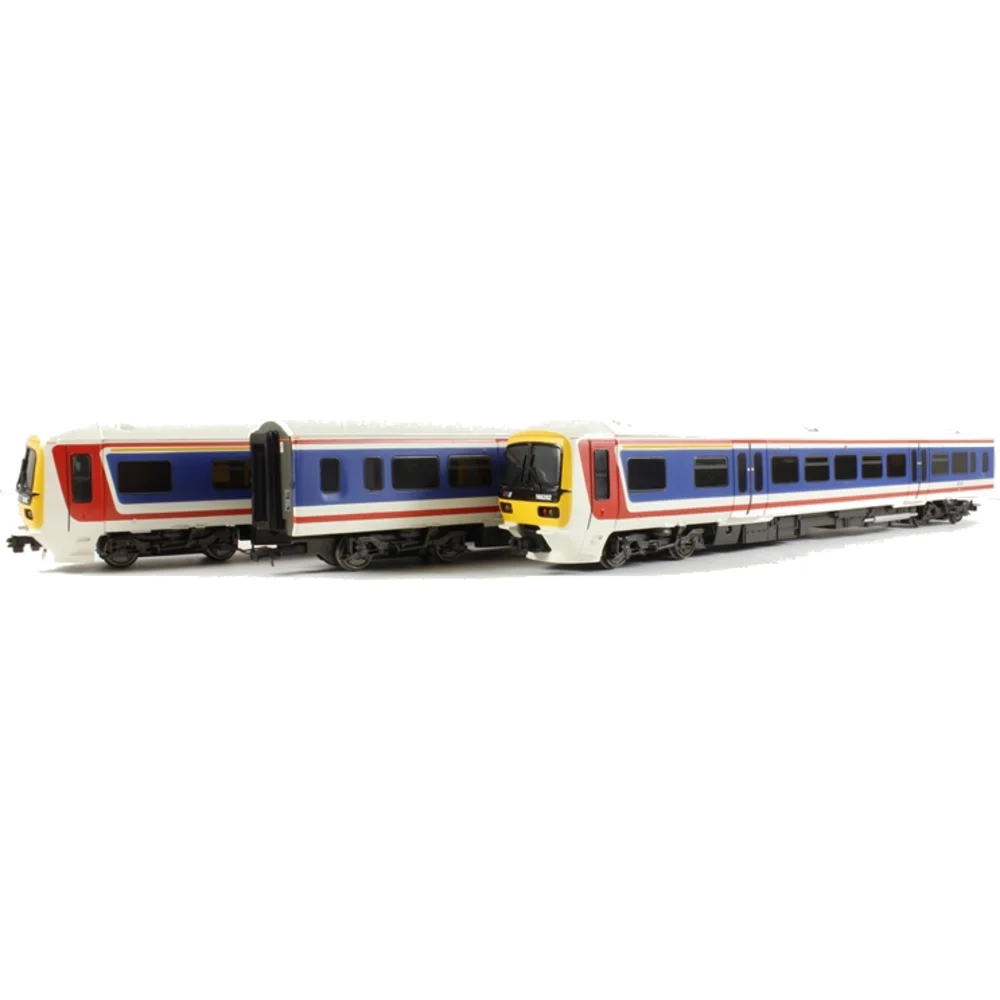
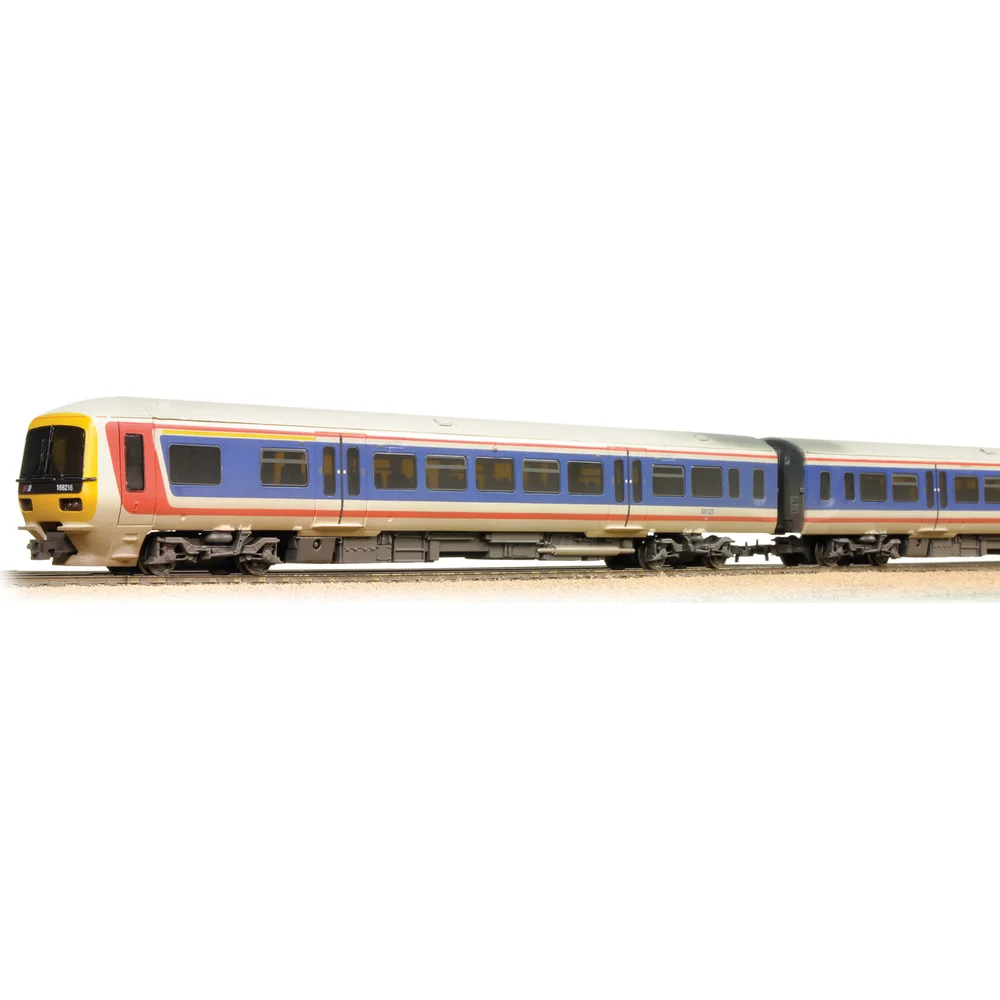
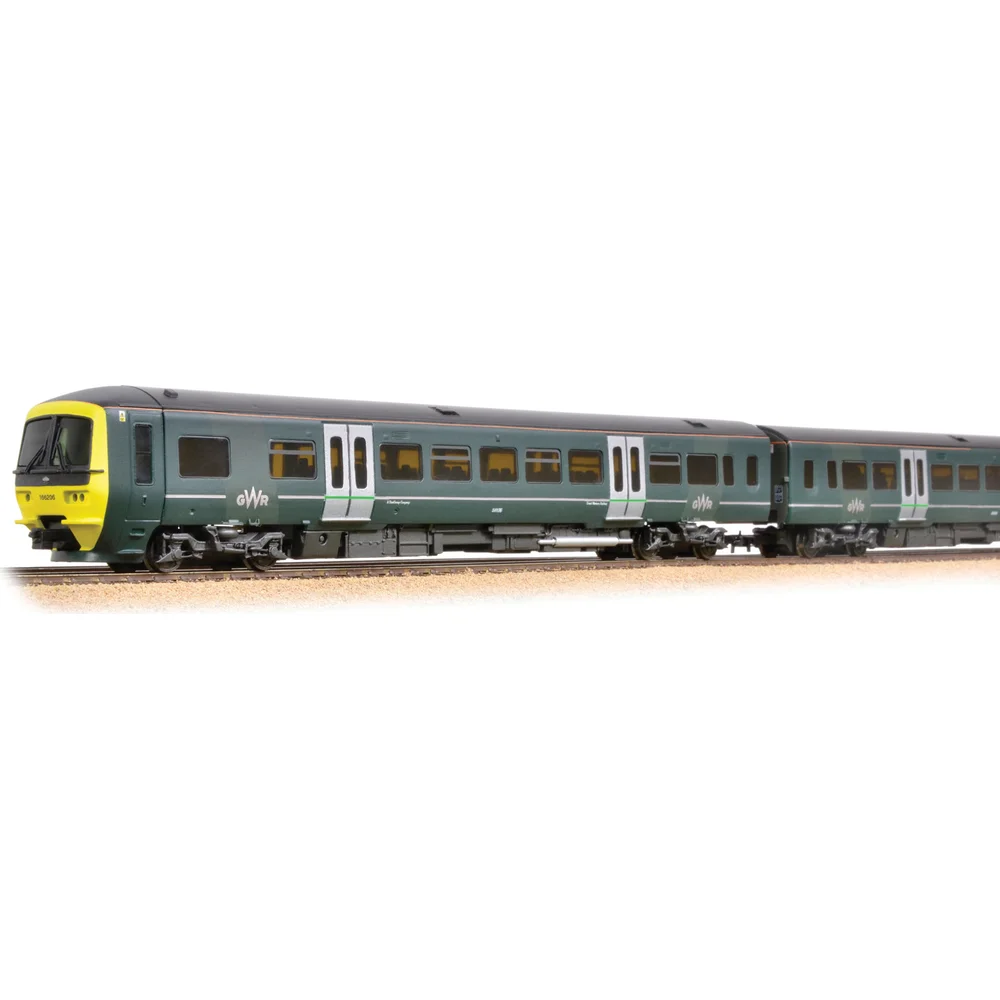
Bachmann's OO gauge Class 166 range ultimately encompassed five distinct catalogue numbers covering key livery periods. Catalog number 31-025 represented unit 166202 in original Network SouthEast blue, red, and white livery with "Turbo Express" branding—the iconic scheme that defined the class during its first years. 31-026 depicted unit 166209 in Thames Trains blue, white, and green "Express" livery representing the 1996-2004 franchise period. 31-027 showed unit 166214 in First Great Western Link transitional livery (Thames Trains colours with updated logos). 31-028 featured unit 166205 in First Great Western "Dynamic Lines" livery with distinctive pink/purple swoosh design. Finally, 31-029 represented unit 166206 in current Great Western Railway dark green livery.
The technical execution throughout Bachmann's production demonstrated competent ready-to-run standards for the era. A five-pole motor with twin flywheels positioned in the centre coach drives eight wheels through geared transmission providing Bo-Bo configuration in the powered vehicle. All-wheel electrical pickup from metal tyres on all wheelsets ensures reliable current collection minimising stalling on dirty track or insulated point frogs. The diecast metal chassis provides satisfying weight and low centre of gravity enhancing stability. Models measure approximately 915mm in three-car formation, accurately scaled to OO gauge's 1:76 proportion.
Detail quality reached respectable standards for mainstream ready-to-run production. Separately applied components included grab rails, lamp brackets, and windscreen wipers. Factory-fitted glazing incorporated printed interior detail visible through windows including seats and table arrangements. Underframe detail represented brake rigging and equipment boxes, though not to the extensive standards of more recent releases. Roof equipment including air conditioning condenser units received reasonably accurate representation, providing the distinctive Class 166 profile that distinguishes these units from non-air-conditioned Class 165 variants.
Livery application demonstrated meticulous research and execution. The Network SouthEast scheme precisely matched the distinctive colour separations and "Turbo Express" branding position between first class windows. Thames Trains livery captured the specific shade variations and logo placements that evolved through that operator's existence. First Great Western schemes accurately represented both the transitional Link period and the later Dynamic Lines design. Great Western Railway green matched contemporary prototype finish with correct gold lettering and modern GWR branding.
However, significant limitations affected Bachmann's Class 166 models, particularly regarding digital control compatibility. The most serious constraint involves the complete absence of a DCC decoder socket—these models predate the industry standardisation on NEM interfaces for easy decoder installation. Converting to digital operation requires hardwiring a decoder, whilst headlights and tail lights in both driving cars must be separately wired to achieve directional lighting. Without these modifications, DCC operation illuminates all lights simultaneously regardless of direction—an obviously unrealistic appearance that necessitates additional work beyond simple decoder installation.
Advanced Modelling: DCC Conversion Challenges
Converting Bachmann Class 166 models to DCC presents challenges that deter many modellers. The lack of decoder socket necessitates identifying appropriate permanent wiring locations within the limited space of the centre coach where the motor resides. Separately wiring directional lighting requires running additional wires through the three-car formation to both driving cars, then identifying which lights should illuminate for each direction and wiring accordingly through the decoder's function outputs. Several specialist installers including Rainbow Railways offer professional fitting services for modellers lacking confidence in these modifications, typically charging £60-80 for decoder and labour. Alternatively, accept analogue DC operation where all lights illuminate constantly—historically accurate for many prototype operations that ran with all lights illuminated regardless of direction.
The coupling mechanisms utilise NEM pockets with tension lock couplings—a standard European fitting that provides reliable operation through curves and gradients. Minimum curve radius is specified as second radius (438mm/17.25 inches), suitable for most OO gauge layouts though not for the tightest curves found on space-restricted layouts. The close coupling achieved through NEM pockets creates reasonably authentic appearance in multiple unit formations, though the gap between units remains slightly wider than prototype scale distance—a compromise inherent to model railway operation through curves.
Performance characteristics prove adequate for the intended duty. Smooth low-speed operation enables realistic station stops and shunting movements, whilst reasonable top speed suits mainline running. The single motor in the centre coach provides sufficient tractive effort for operating as designed three-car formations, though cannot match the pulling power of models with motors in multiple vehicles. Electrical pickup reliability generally satisfies provided track remains reasonably clean—the metal tyres on all wheelsets minimise stalling, though the single motor location means any power interruption immediately affects performance unlike models with distributed motors providing redundancy.
The most significant challenge facing modellers seeking Class 166 models involves availability. All Bachmann variants are now discontinued—none remain available through major retailers including Hattons Model Railways, Rails of Sheffield, Kernow Model Rail Centre, The Model Centre, or any other mainstream stockists. This means the secondary market provides the only procurement route, with eBay UK representing the primary source alongside specialist second-hand dealers and model railway shows.
Secondary market pricing reflects discontinued status and collector demand. Typical prices vary significantly based on condition and livery: used models in played-with condition command £40-80, good condition examples with minimal wear fetch £80-120, mint condition boxed models reach £100-150, whilst DCC-fitted examples (professionally installed) command premium pricing at £120-180 depending on installation quality and decoder specification. Network SouthEast livery typically commands premium pricing due to collector appeal and the scheme's iconic status representing NSE's final years.
Prospective purchasers navigating the secondary market should verify several critical factors before committing. Confirm all three vehicles are present and match—sellers sometimes split units or mix vehicles from different sets. Check bogies and wheels for damage, particularly examining gear towers and axle bearings for cracks or wear. Verify motors function smoothly without excessive noise or stalling. Inspect body shells for cracks around mounting points—the plastic can become brittle with age. Examine glazing for scratches and proper fit. Request detailed photographs of the model from multiple angles, and if purchasing from eBay, study feedback carefully to assess seller reliability.
N gauge enthusiasts face even greater challenges—no ready-to-run Class 166 exists in N gauge (1:148 scale) from any manufacturer. N-Train offers the only alternative: a specialist 3D-printed conversion kit using a Graham Farish Class 170 Turbostar as donor model. This approach requires substantial modelling skills including dismantling the Class 170, modifying body shells to accept the conversion parts, careful alignment and assembly, painting and lining to required livery standards, and final detailing and weathering. Kits are made to order with approximately 28-day delivery, reflecting their specialist nature. This solution suits experienced modellers comfortable with advanced conversion projects but remains inaccessible to those seeking ready-to-run convenience.
O gauge modellers face complete absence—no ready-to-run, kit, or conversion options exist in O gauge (7mm scale, 1:43.5 proportion). The substantial market size required to justify O gauge tooling combined with the Class 166's moderate enthusiast following makes commercial production unlikely. Scratch-building from plans remains the only option for determined O gauge modellers, representing a substantial undertaking requiring advanced skills and significant time investment.
Accessory manufacturers provide limited support. Track3D Railway Parts produces LED lighting upgrade kits for the Bachmann OO gauge model in two versions: complete LED replacement with new lenses and surrounds (DCC ready requiring only function wire connection), or light surrounds only retaining original Bachmann bulbs whilst improving external appearance. These kits enable modellers to enhance their models' lighting quality and add DCC directional control more easily than hardwiring original bulbs.
Unique Modelling Tips and Layout Integration
Successfully incorporating British Rail Class 166 models into layout operation requires understanding the specialised nature of their express diesel multiple unit role and the diverse operational scenarios that characterised service across Thames Valley, Cotswold, Bristol-area, and Devon territories spanning three decades. Unlike humble branch line railcars working short local services, Class 166 units tackled substantial express duties connecting major centres with limited intermediate stops—a service pattern that should inform authentic layout deployment and operational scenarios.
Era selection proves fundamental for authentic Class 166 representation. The earliest appropriate timeframe begins late 1992 when the first units entered testing, with full service operations commencing May 1993. Layouts depicting Network SouthEast's final years (1993-1996) demand original blue, red, and white NSE livery with "Turbo Express" branding, operating prestigious Thames Valley express services from Paddington to Oxford, Stratford-upon-Avon, Worcester, and Hereford. Thames Valley stations during this period featured distinctive NSE "target" station branding, colour-coordinated seat furniture, and comprehensive corporate signage creating instantly recognisable atmosphere.
Privatisation-era layouts (1996-2006) represent Thames Trains operations following franchise award. Class 166 units in Thames Trains blue, white, and green "Express" livery worked similar route portfolios to NSE predecessors, maintaining Thames Valley express services whilst adapting to new franchise boundaries and commercial pressures. Station environments evolved through this period as new franchisees applied their corporate identities, whilst rolling stock liveries diversified as different operators pursued distinctive branding strategies.
Contemporary layouts depicting 2017-onwards operations should reflect the dramatic geographic shift following Bristol redeployment. Class 166 units in Great Western Railway dark green livery operate services throughout South West England and South Wales including Bristol to Cardiff via Severn Tunnel, Cardiff to Taunton and Exeter, Bristol to Weymouth via the Heart of Wessex Line, and Exeter to Exmouth and Paignton local services. Modern infrastructure featuring LED signalling, CCTV surveillance, help points, and accessibility improvements characterises stations serving current Class 166 operations.
Weathering Authenticity for Express DMU Service
Class 166 weathering should reflect express diesel multiple unit operations whilst acknowledging the fleet's progressive refurbishment history. Focus weathering effects around operational areas: exhaust residue above roof-mounted engine compartment grilles (each vehicle carries one engine), brake dust along solebar edges and around wheel areas, general road grime accumulated during service particularly on lower body panels and underframe equipment, and light fuel staining around filler caps. However, avoid heavy industrial weathering inappropriate for passenger-rated units receiving regular exterior cleaning at depot facilities. The recent Wolverton refurbishment delivered thoroughly cleaned and repainted units—models depicting 2022-onwards operations should show minimal weathering consistent with recently-refurbished rolling stock. Earlier periods permit moderate weathering reflecting accumulated service grime between periodic cleaning cycles.
Authentic operating scenarios should reflect the express specification and typical service patterns. Thames Valley express workings during the NSE and Thames Trains eras involved Paddington to Oxford services with limited stops at Slough, Reading, and Didcot Parkway (50-60 minute journey times), Paddington to Stratford-upon-Avon via Oxford and Banbury with intermediate calls only at major stations (approximately 120 minute end-to-end timings), Cotswold Line services from Oxford through Moreton-in-Marsh and Evesham to Worcester, Great Malvern, and Hereford, and Reading to Gatwick Airport via Guildford on the North Downs Line—a surprisingly lengthy cross-country working demonstrating operational versatility.
Contemporary Bristol-based operations create different operational scenarios. Typical duties include Bristol Temple Meads to Cardiff Central via Severn Tunnel (30-35 minute fast services), Cardiff to Taunton stopping services calling at intermediate stations throughout the Bristol area, Bristol to Weymouth via Bath Spa, Westbury, and Dorchester on the scenic Heart of Wessex Line, Golden Valley Line services between Swindon and Cheltenham/Gloucester serving intermediate stations through the Cotswolds, and Devon local services including the Exeter to Exmouth and Exeter to Paignton diagrams replacing former Pacer operations.
Train formations typically operate as single three-car units on most diagrams, reflecting the modest passenger loads outside peak periods on many routes. However, strengthening to six-car (two units) or nine-car (three units) formations regularly occurs during morning and evening peaks, weekends serving tourist destinations, and special event traffic. The BSI automatic couplers enable rapid coupling and uncoupling at strategic locations, with Reading, Bristol Temple Meads, and Exeter St Davids representing typical strengthening/division points where operational patterns demand capacity flexibility.
Layout infrastructure authenticity demands attention to period-appropriate details. Network SouthEast era layouts (1992-1996) require distinctive NSE corporate station signage with target logo, red/white/blue colour-coordinated bench seating, comprehensive timetable poster boards in NSE house style, and BR corporate architecture where stations date from modernisation programmes. Privatisation-era layouts (1996-2015) should show evolving station branding as franchisees applied corporate identities, modern electronic passenger information displays replacing older mechanical indicator boards, and progressive accessibility improvements including ramped access and tactile paving.
Contemporary layouts (2015-onwards) need modern railway infrastructure features including LED signal aspects replacing older colour-light signals, CCTV cameras and help points on platforms, electronic real-time passenger information displays, accessibility improvements including platform humps and passenger assistance points, and modern station furniture in GWR corporate colours. Overhead electrification equipment appears increasingly common as infrastructure investment proceeds—Class 166 units regularly operate under wires on mixed-traffic routes though the units themselves cannot draw power from overhead lines.
Station platform lengths should accommodate typical Class 166 formations. A three-car unit measures approximately 70 metres, requiring platforms of roughly 75-80 metres minimum to accommodate the entire formation with buffer stops clearance. Six-car formations (two coupled units) demand approximately 145-150 metre platforms. Nine-car formations require 215-220 metre platforms. Major stations throughout GWR territory including Reading, Oxford, Bristol Temple Meads, Cardiff Central, and Exeter St Davids provide adequate platform lengths for maximum formations, whilst smaller stations like Moreton-in-Marsh, Bath Spa, and Exmouth accommodate three-car or six-car formations.
Sound-equipped models (requiring DCC conversion with appropriate sound decoder installation) benefit from careful attention to authentic Class 166 operational characteristics. The Perkins diesel engines produce distinctive medium-pitched exhaust notes differing from both higher-revving small diesel railcars and deeper-toned larger locomotives. Engine RPM increases noticeably during acceleration as hydraulic transmission loads the engine, creating characteristic crescendo effects. Programme sound decoders to emphasise realistic operational sequences: gentle idling during station stops, increasing engine note during acceleration, steady running noise at line speed, engine braking during deceleration, and air brake hissing during stops. The absence of turbocharger wastegate "chuff" distinguishes turbocharged Perkins engines from naturally-aspirated alternatives.
Multiple working with compatible units creates interesting operational variety. Class 166 units can couple with Class 165 and Class 168 units sharing BSI automatic couplers and compatible control systems. Thames Trains frequently operated mixed formations combining Class 165 and Class 166 units to provide optimal capacity matching, whilst contemporary GWR operations occasionally see Class 165/166 combinations on strengthened services. These mixed formations create visual interest through differing liveries and detail variations whilst remaining prototypically accurate.
Depot scenes offer excellent static display opportunities whilst demonstrating maintenance infrastructure essential for diesel multiple unit fleets. Model a section of Reading Train Maintenance Depot (pre-2017) or St Philip's Marsh depot Bristol (2017-onwards) featuring examination pits for underfloor access, fueling points with diesel storage tanks, carriage washing facilities for exterior cleaning, wheel lathe equipment for wheelset maintenance, and component storage areas. Class 166 units sharing space with Class 150, Class 158, Class 165, or Class 800 units creates authentic GWR depot atmosphere reflecting the diverse fleet composition. Include depot staff figures—fitters, cleaners, and supervisors engaged in daily maintenance activities.
Timetable construction enables systematic operations reflecting intensive express schedules. Express diesel multiple units maximise utilisation through tight turnaround times and back-to-back workings. A Class 166 unit might complete a Paddington-Oxford return, immediately work a Didcot-Newbury service, then finish with an evening Oxford-Banbury-Stratford diagram—three distinct workings within an operating session with minimal dwell time between duties. This intensive deployment pattern reflects commercial realities whilst creating engaging operations for modellers preferring constant activity over lengthy static periods.
Finally
The British Rail Class 166 Networker Turbo Express represents far more than 21 three-car diesel multiple units; these machines embody Network SouthEast's final flourish before privatisation, demonstrating that the integrated railway retained capacity for sophisticated fleet planning and premium passenger product development even as political commitment to public ownership crumbled. The express specification—90 mph capability, full air conditioning, superior accommodation—delivered tangible passenger benefits distinguishing these units from standard local DMUs whilst creating distinctive operational identity that successive franchisees maintained through three decades of continuous service.
For railway historians, the Class 166 provides fascinating insights into late-British Rail procurement philosophy and the nuanced approach to fleet modernisation that characterised Network SouthEast's final years. Rather than specifying single standardised designs covering all requirements, NSE planners carefully matched rolling stock specifications to service patterns: Class 165 for intensive local stopping trains, Class 166 for longer-distance express work, and subsequently Class 168 for Chiltern Railways' premium product following privatisation. This sophisticated procurement strategy delivered better value than blunt standardisation, though required more complex fleet management and maintenance planning.
The geographic transformation following 2017 Bristol redeployment demonstrates the fundamental versatility engineered into these units. Designs conceived for Thames Valley express services adapted seamlessly to South Wales, Bristol-area, and Devon operations covering dramatically different route characteristics and service patterns. The 90 mph capability and 1,050 hp power output proved adequate for everything from Cardiff-Taunton intercity services to Exeter-Exmouth local operations, validating the balanced specification that avoids over-engineering whilst maintaining operational margins enabling diverse deployment.
The recent £10 million Wolverton refurbishment signals Great Western Railway's commitment to operating the Class 166 fleet well into the 2030s, extracting maximum value from sound assets through systematic renewal rather than premature replacement. This pragmatic approach reflects contemporary railway economics where extending existing fleet life through comprehensive refurbishment delivers better returns than procuring new-build alternatives, particularly when replacement technologies like battery-electric or hydrogen traction have yet to achieve full maturity and cost competitiveness.
Bachmann's discontinued OO gauge range presents modellers with procurement challenges but rewards persistence with reasonably accurate representations spanning key livery periods from Network SouthEast through Great Western Railway. The models capture the distinctive Class 166 appearance including air conditioning equipment, express unit proportions, and characteristic Networker family styling. Secondary market sourcing requires patience and careful verification, but examples regularly appear through eBay and specialist dealers at prices reflecting discontinued status whilst remaining accessible to committed modellers.
The absence of N gauge ready-to-run alternatives and complete lack of O gauge options represents significant gaps in the model railway market. These omissions reflect commercial realities—manufacturers prioritise designs with broader appeal and larger potential sales volumes. The Class 166's moderate enthusiast following and geographic specificity (primarily Thames Valley and South West England operations) limits market size below thresholds justifying new tooling investment, particularly given discontinued status of existing Bachmann tooling suggesting modest commercial success.
Model railway enthusiasts incorporating Class 166 units into Thames Valley, Cotswold, Bristol-area, or Devon layouts gain authentic express diesel traction spanning three decades of British railway evolution. The units' operational versatility enables diverse service patterns from prestigious intercity workings to humble local stopping trains, providing layout operational variety whilst maintaining prototypical accuracy. Appropriate consist formations, realistic operating scenarios, and period-correct infrastructure create convincing atmosphere whether depicting Network SouthEast's final years, privatisation-era Thames Trains operations, or contemporary Great Western Railway services.
As railway decarbonisation programmes mature and battery-electric or hydrogen alternatives approach commercial deployment, the Class 166 fleet faces eventual retirement during the mid-2030s. However, strong preservation prospects suggest multiple units will survive into heritage railway operation, ensuring future generations can experience these distinctive units representing the cusp between integrated British Rail and the privatised railway. The combination of historical significance, operational characteristics suitable for heritage railway operation, and distributed power arrangement with maintainable technology creates compelling preservation appeal.
The British Rail Class 166 story ultimately celebrates sophisticated fleet planning, enduring engineering, and remarkable adaptability. When Network SouthEast specified express diesel multiple units for prestigious Thames Valley services in the early 1990s, planners could not have anticipated that these same units would operate Devon local services three decades later following comprehensive refurbishment and multiple franchise transfers. This operational longevity and geographic versatility validates the balanced specification philosophy: sufficient capability for express work without over-engineering, distributed power for optimal adhesion, modular three-car formations enabling flexible capacity, and robust construction enabling decades of intensive service. These units prove that thoughtful design precisely matched to core requirements whilst maintaining operational margins delivers exceptional value across changing circumstances and evolving operational demands.
Frequently Asked Questions
How many British Rail Class 166 units were built and when?
Twenty-one three-car units comprised the complete Class 166 fleet, all constructed by ABB Transportation at York Holgate Road Works between 1992 and 1993. The units are numbered 166201 through 166221. The first three units (166201-166203) were delivered between July and September 1992, with unit 166201 entering passenger service that December. The inaugural revenue-earning service operated on 17 May 1993 from London Paddington to Stratford-upon-Avon. The final batch (166219-166221) arrived between August and October 1993, completing fleet delivery.
What makes the Class 166 different from the Class 165?
The Class 166 features 90 mph maximum speed versus Class 165/0's 75 mph capability, achieved through yaw dampers fitted as standard. Full air conditioning replaces the Class 165's air cooling system. Carpeted flooring throughout contrasts with vinyl specified for intensive commuter Class 165 units. The Class 166 provides dual toilet facilities (one at each end) versus single facilities on Class 165. Until 2013, first class accommodation occupied both driving cars rather than just one end as on Class 165. These enhancements reflect the express specification for longer-distance Thames Valley services.
Where do Class 166 units currently operate?
All 21 units operate with Great Western Railway, based at St Philip's Marsh depot in Bristol since July 2017. Typical duties include Bristol to Cardiff services via Severn Tunnel, Cardiff to Taunton and Exeter services, Bristol to Weymouth via the Heart of Wessex Line, Exeter to Exmouth and Paignton local services in Devon, Bristol to Portsmouth cross-country workings, and Swindon to Cheltenham and Gloucester via the Golden Valley Line. This represents dramatic geographic expansion from original Thames Valley territory.
What engines power the Class 166?
Each three-car unit contains three Perkins 2006-TWH inline-six turbocharged diesel engines, with one engine positioned in each vehicle. Each 12.2-litre engine develops 260 kW (350 hp), delivering total unit output of 780 kW (1,050 hp). Power transmits through Voith T211rz hydraulic transmissions to Gmeinder GM190 final drive units. This distributed power arrangement maximises adhesion whilst providing redundancy—units can continue operating with one engine failed albeit at reduced performance.
What liveries have Class 166 units worn?
The fleet has worn six distinct livery schemes: original Network SouthEast blue, red, and white with "Turbo Express" branding (1992-late 1990s), Thames Trains blue, white, and green "Express" livery (1996-2004), First Great Western Link transitional scheme (2004-2006), First Great Western "Dynamic Lines" livery with pink/purple swoosh (2006-2015), First Great Western plain blue (eight units received simplified all-over blue), and current Great Western Railway dark green with gold lettering (2015-present). All units now carry GWR green following completion of the Wolverton refurbishment programme in September 2024.
Have any Class 166 units been withdrawn or preserved?
No units have been withdrawn—all 21 three-car sets remain in active revenue-earning service with Great Western Railway as of late 2024. The recent £10 million refurbishment signals GWR's commitment to operating the fleet well into the 2030s. Preservation decisions remain at least a decade away, though multiple heritage railways have expressed preliminary interest. Priority preservation candidates include unit 166201 (the first built) and unit 166204 (named "Norman Topsom MBE"). The fleet's historical significance and operational characteristics create strong preservation appeal.
What OO gauge Class 166 models are currently available?
Bachmann Branchline produced five OO gauge variants covering key livery periods, but all are now discontinued and only available through the secondary market. Catalog numbers include 31-025 (NSE livery, unit 166202), 31-026 (Thames Trains, unit 166209), 31-027 (First Great Western Link, unit 166214), 31-028 (First Great Western 2006, unit 166205), and 31-029 (GWR green, unit 166206). Typical secondary market prices range from £40-80 for used condition to £100-150 for mint boxed examples. eBay UK remains the primary procurement source.
Are Class 166 models available in N gauge or O gauge?
No ready-to-run N gauge or O gauge Class 166 models exist from any manufacturer. N-Train offers a 3D-printed conversion kit for N gauge using a Graham Farish Class 170 Turbostar as donor model, requiring substantial modelling skills to complete. No O gauge options exist—neither ready-to-run, kit, nor conversion. The moderate enthusiast following and geographic specificity limit market size below thresholds justifying new tooling investment from manufacturers, making future releases unlikely.
Can Bachmann Class 166 models be converted to DCC?
Yes, but conversion requires hardwiring as the models lack a DCC decoder socket. Installing a decoder necessitates identifying permanent wiring locations within the centre coach where the motor resides. Directional lighting requires running additional wires through the three-car formation to both driving cars, then wiring appropriate lights through decoder function outputs. Without this work, DCC operation illuminates all lights simultaneously—an unrealistic appearance. Several specialist installers including Rainbow Railways offer professional fitting services typically charging £60-80 for decoder and labour.
What is the seating capacity of a Class 166 unit?
Each three-car unit seats approximately 276 passengers. Standard class features 2+3 seating in high-backed seats throughout most of the unit. First class accommodation (until 2013 in both driving cars, subsequently reduced to one end) provides 2+2 seating at tables with superior upholstery and larger seat pitch. The recent Wolverton refurbishment replaced all seat coverings and foam whilst retaining the original shell structures and layouts, maintaining consistent capacity throughout the fleet's service life.
Can Class 166 units operate with other DMU classes?
Yes, Class 166 units feature BSI automatic couplers and compatible control systems enabling multiple working with Class 165 and Class 168 units. Thames Trains frequently operated mixed Class 165/166 formations during the 1996-2004 franchise period. Contemporary GWR operations occasionally see similar combinations on strengthened services. Maximum formations reach twelve cars (four three-car units coupled together), though typical operations involve single units or six-car (two units) formations except during peak periods or special events.
What was the purpose of the 2021-2024 Wolverton refurbishment?
The £10 million programme delivered comprehensive renewal extending fleet life into the 2030s. Work included complete interior strip-out with new seat coverings and foam replacement, repaired and repainted seat shells, new flooring throughout, repainted interior panels, comprehensive anti-corrosion treatment, and exterior repainting of remaining blue units to GWR green livery. Each unit spent 4-5 weeks at Wolverton Works, with the final unit (166220) completed in September 2024. The investment signals GWR's commitment to continued Class 166 operations.
Why were Class 166 units transferred to Bristol in 2017?
The July 2017 transfer from Reading to St Philip's Marsh depot Bristol enabled cascade of newer Class 387 electric units onto Thames Valley services whilst deploying the Class 166 fleet onto Bristol-area routes requiring diesel traction. New workings included Severn Beach Line services, Cardiff to Taunton services, Golden Valley Line operations, Heart of Wessex Line services, and Cardiff to Portsmouth cross-country workings. This strategic redeployment extended the Class 166 fleet's operational relevance whilst addressing Bristol-area capacity requirements.