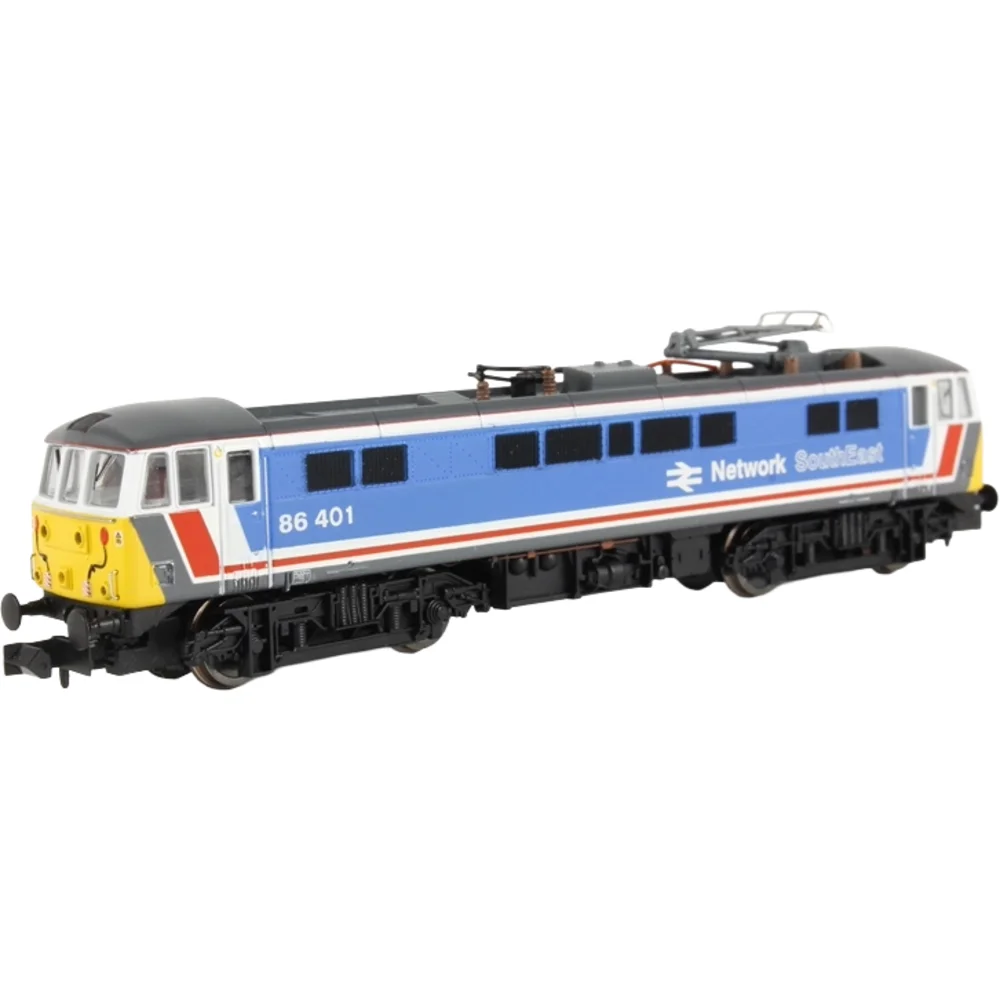
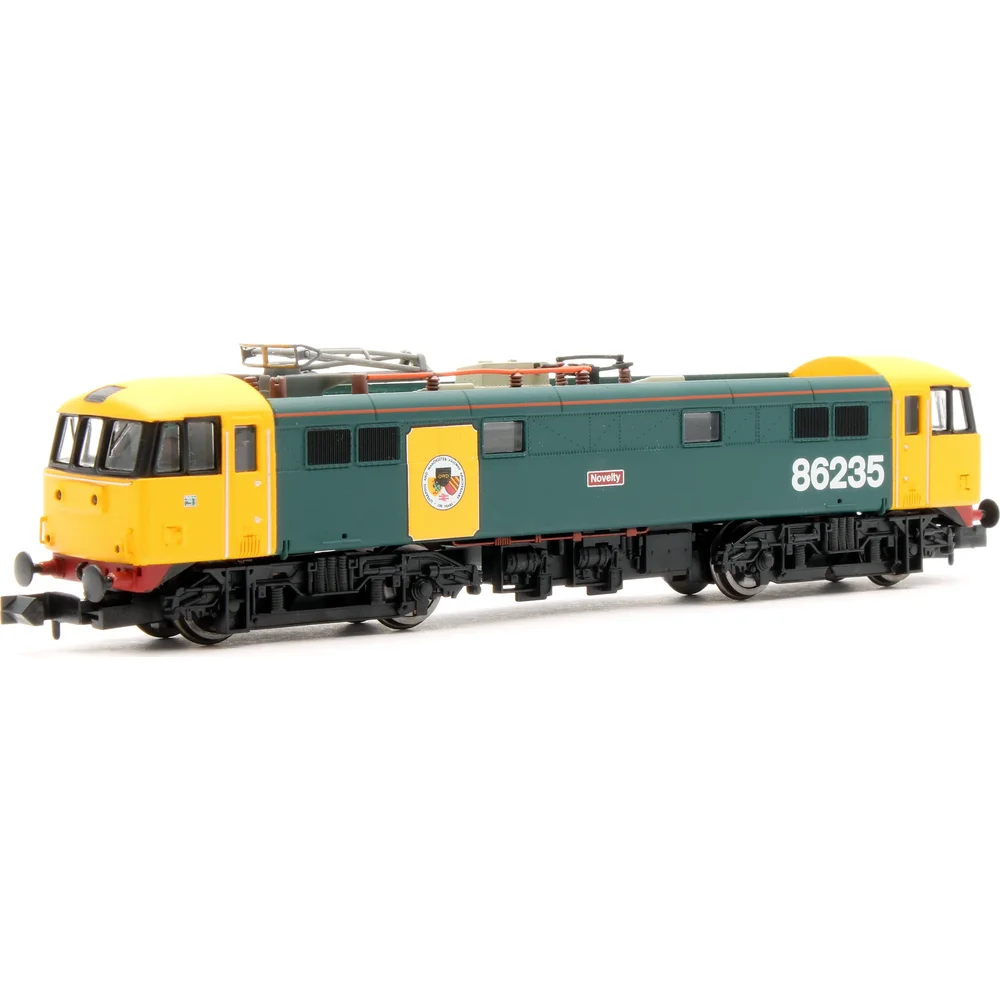
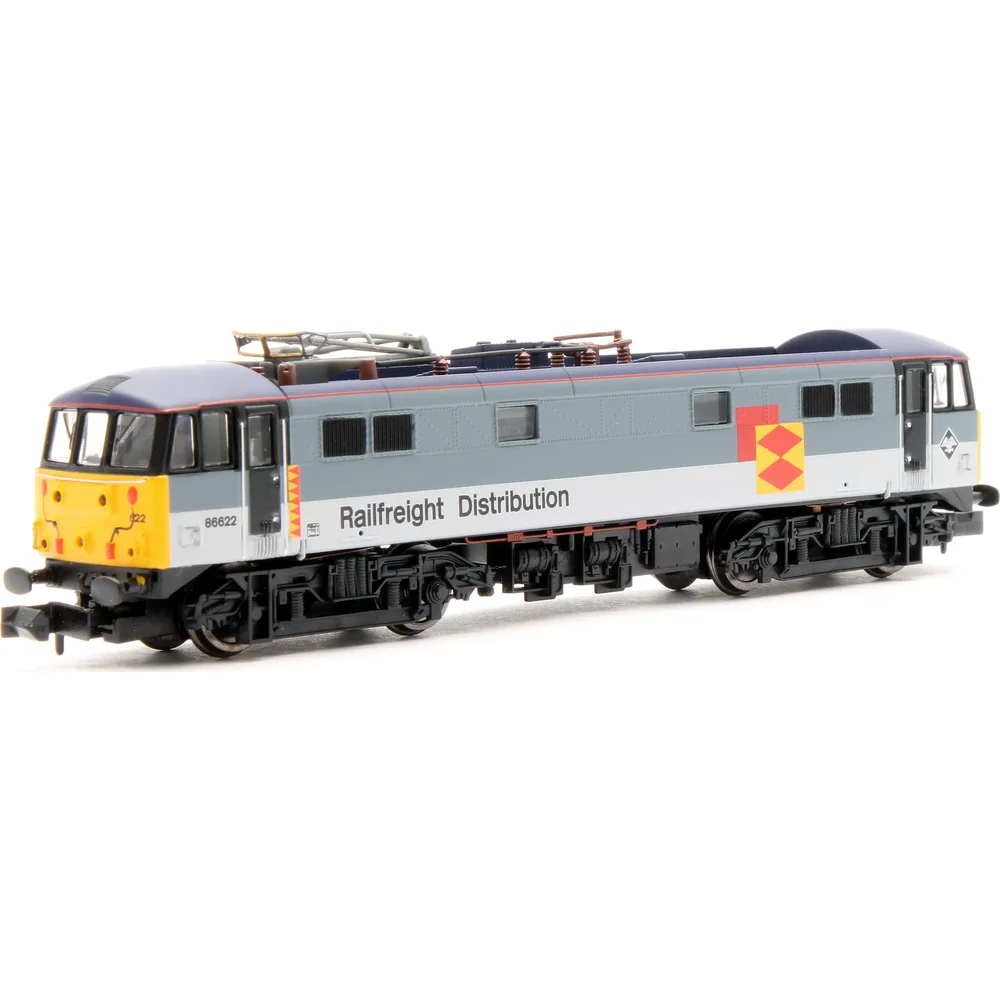
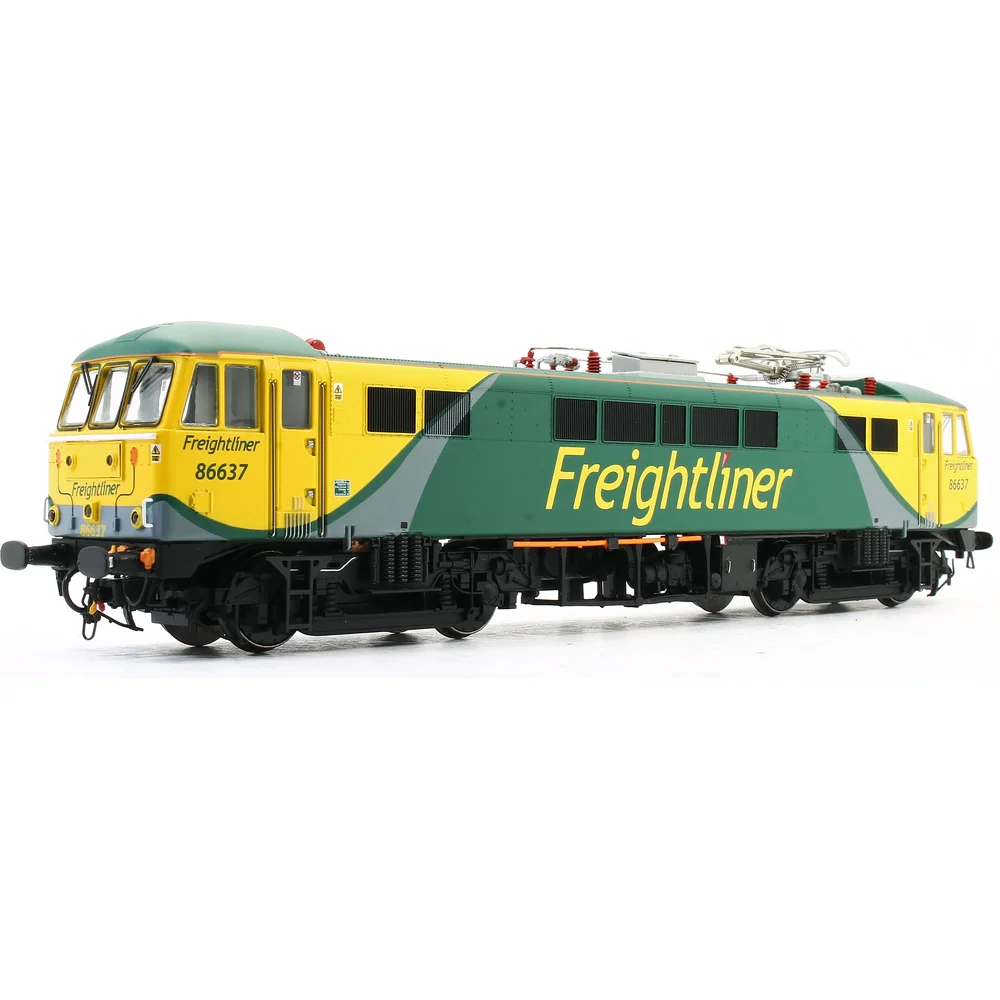
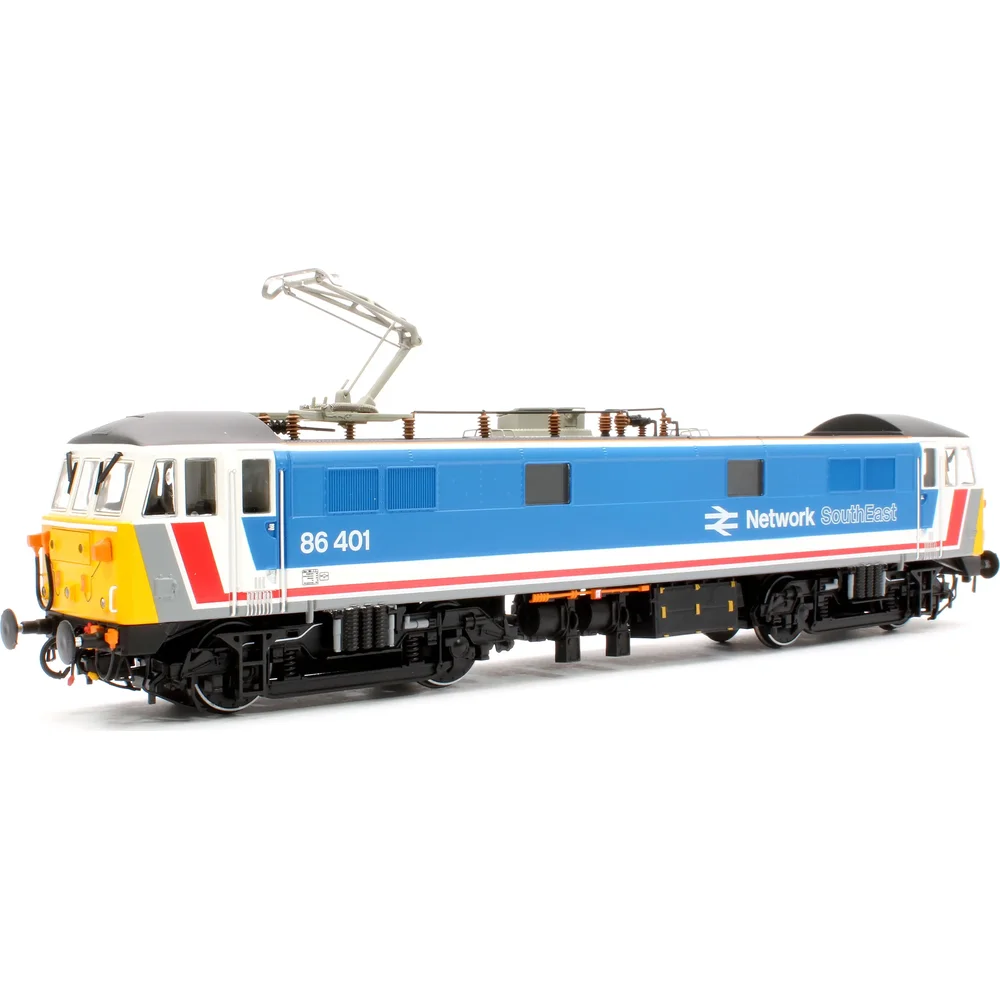
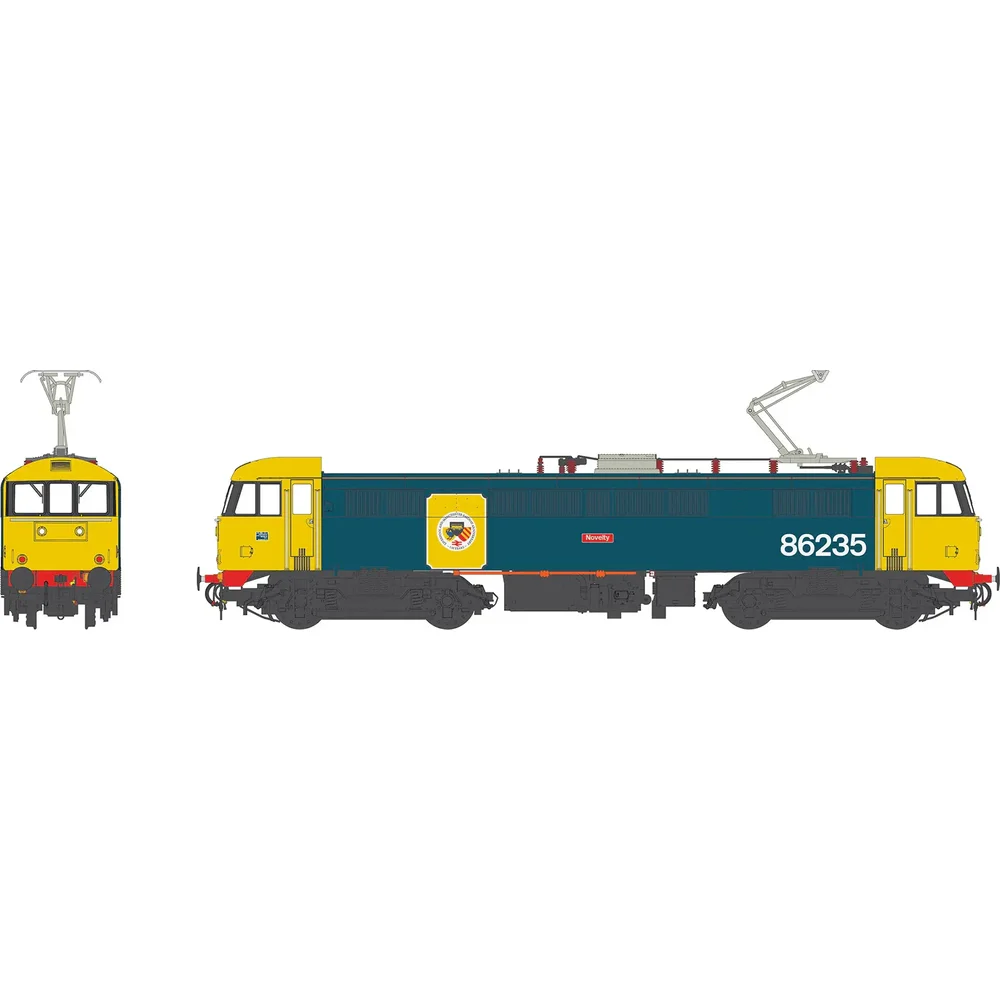
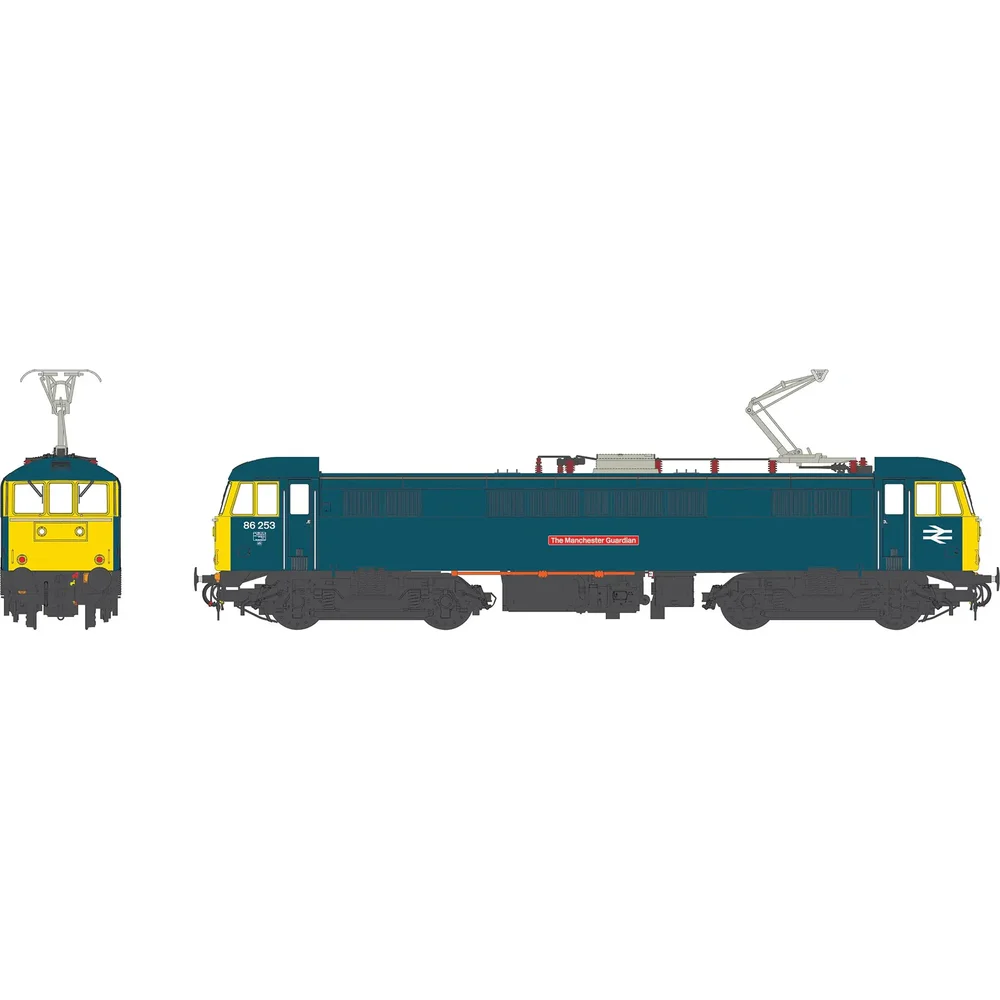
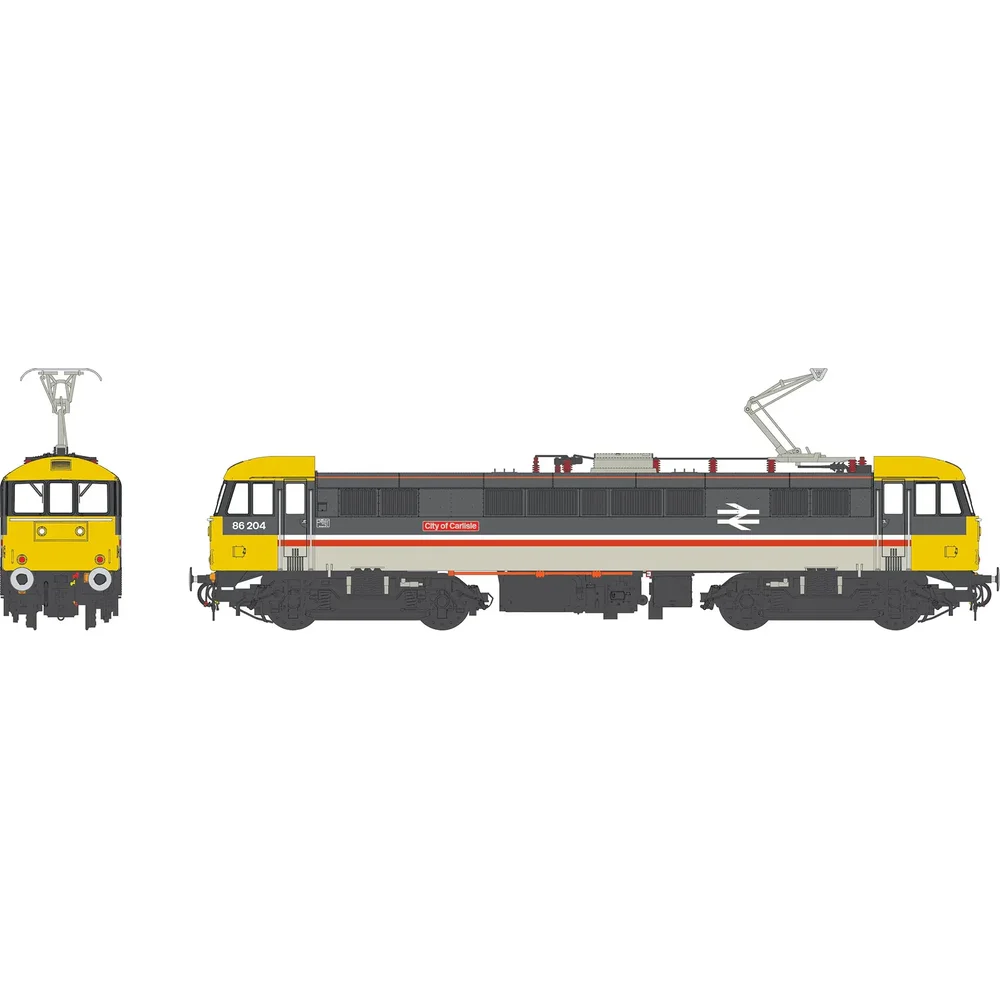
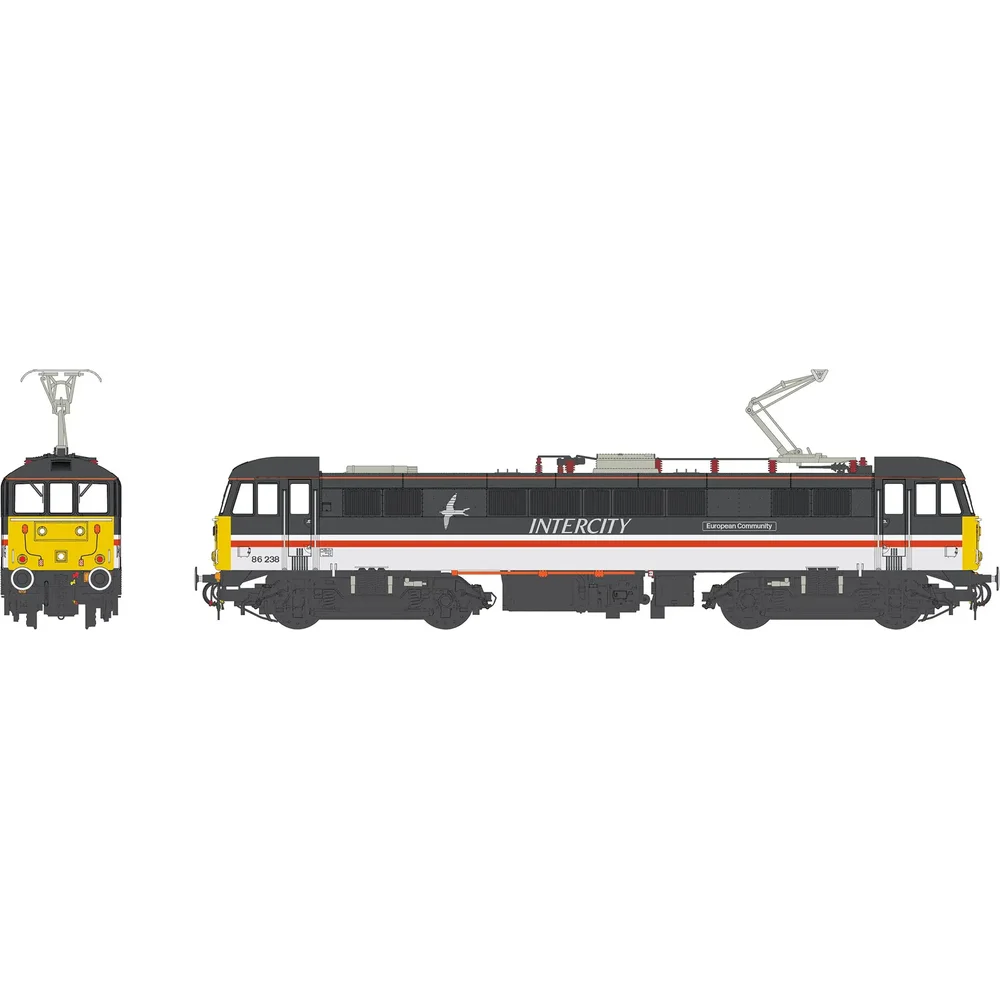
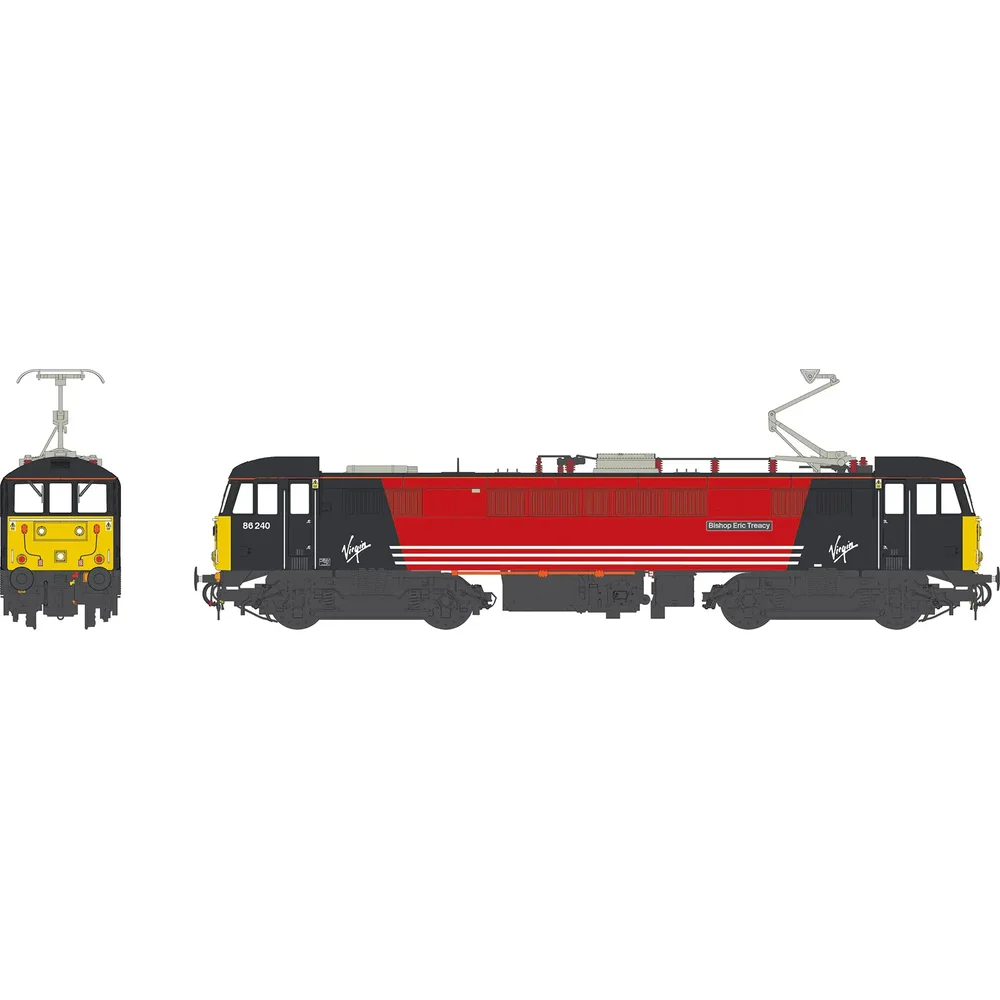
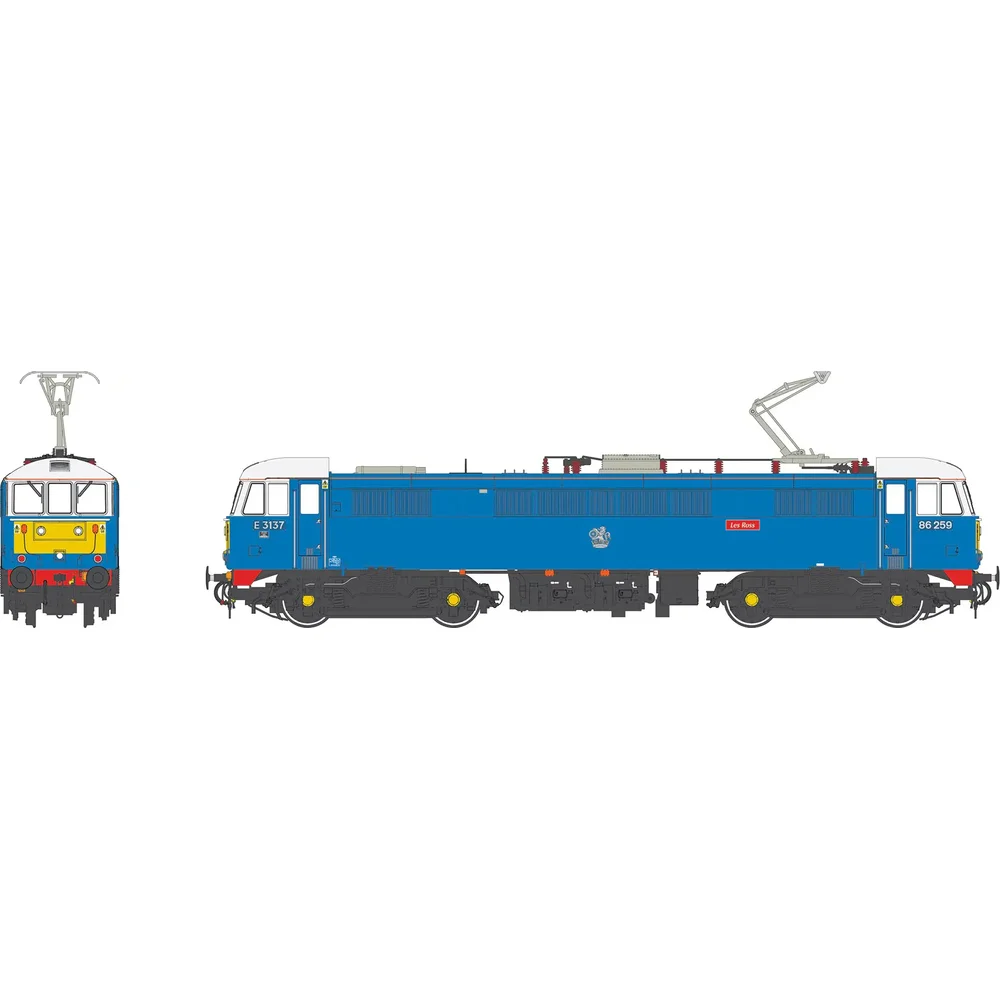
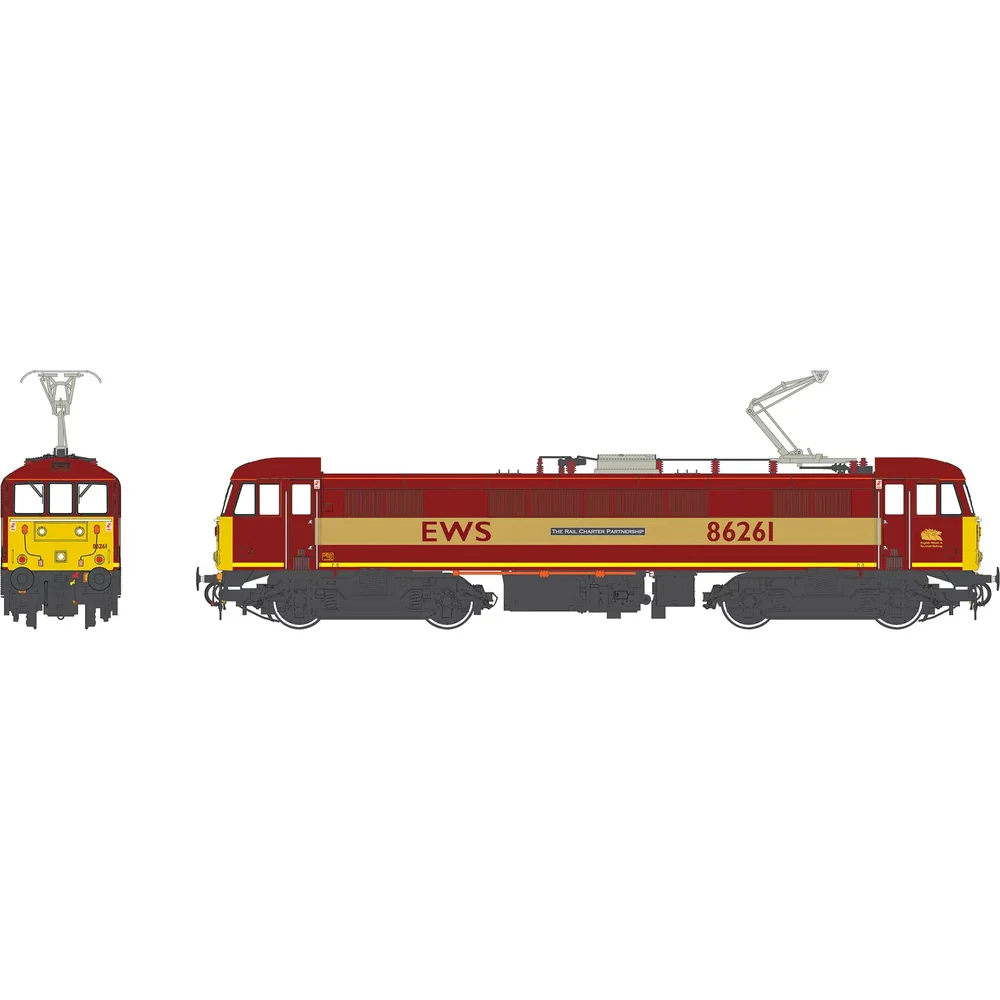
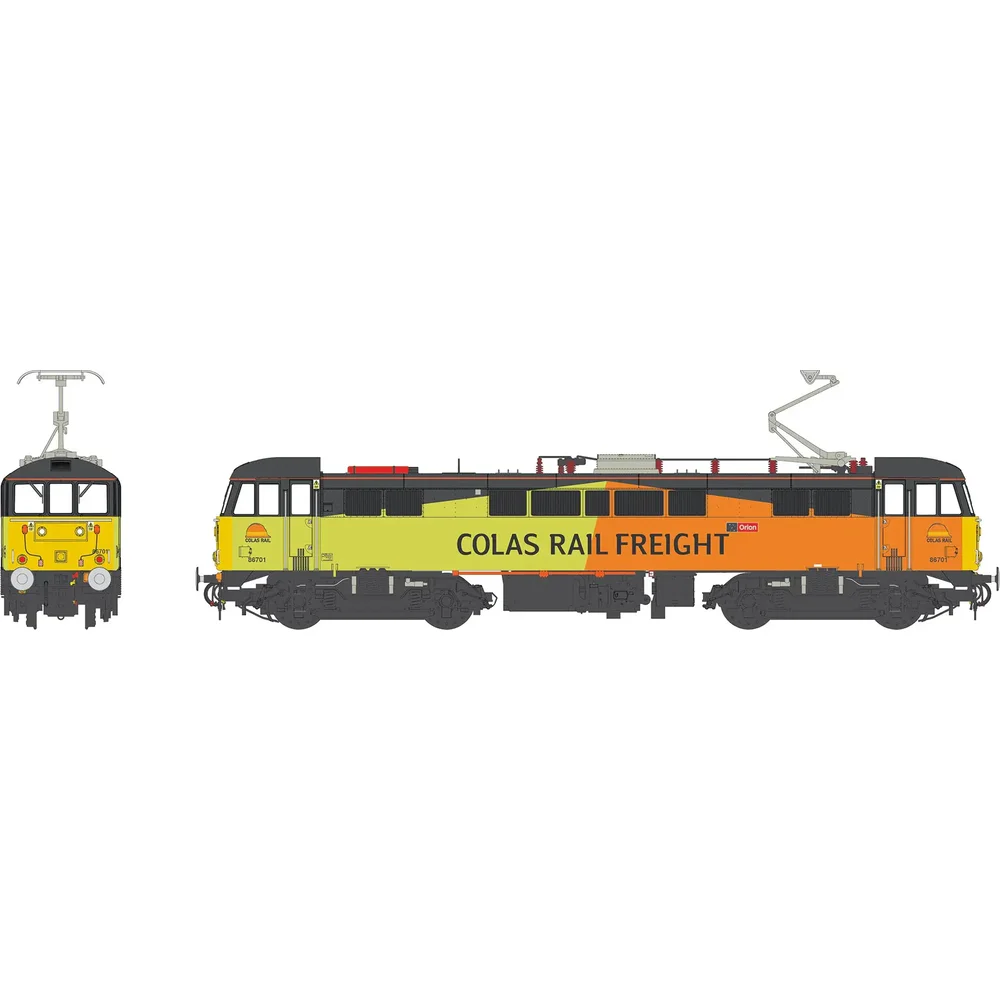
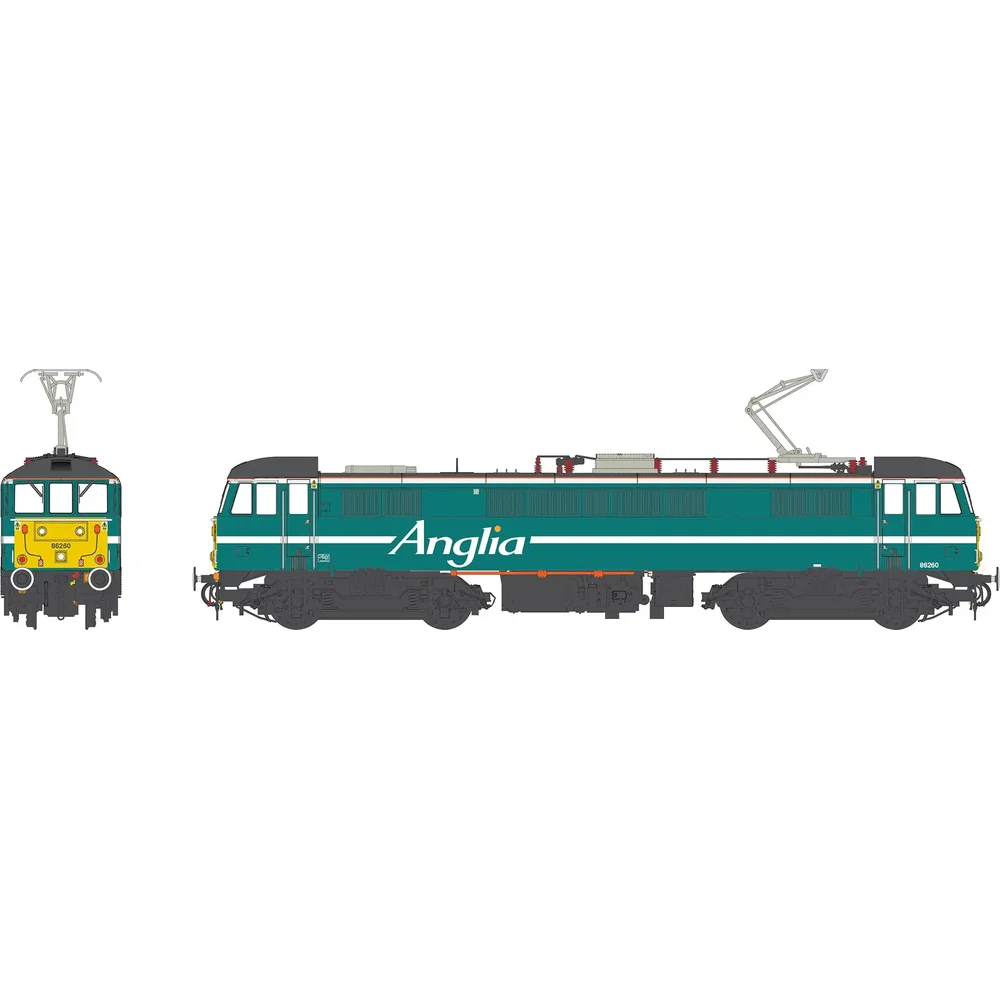
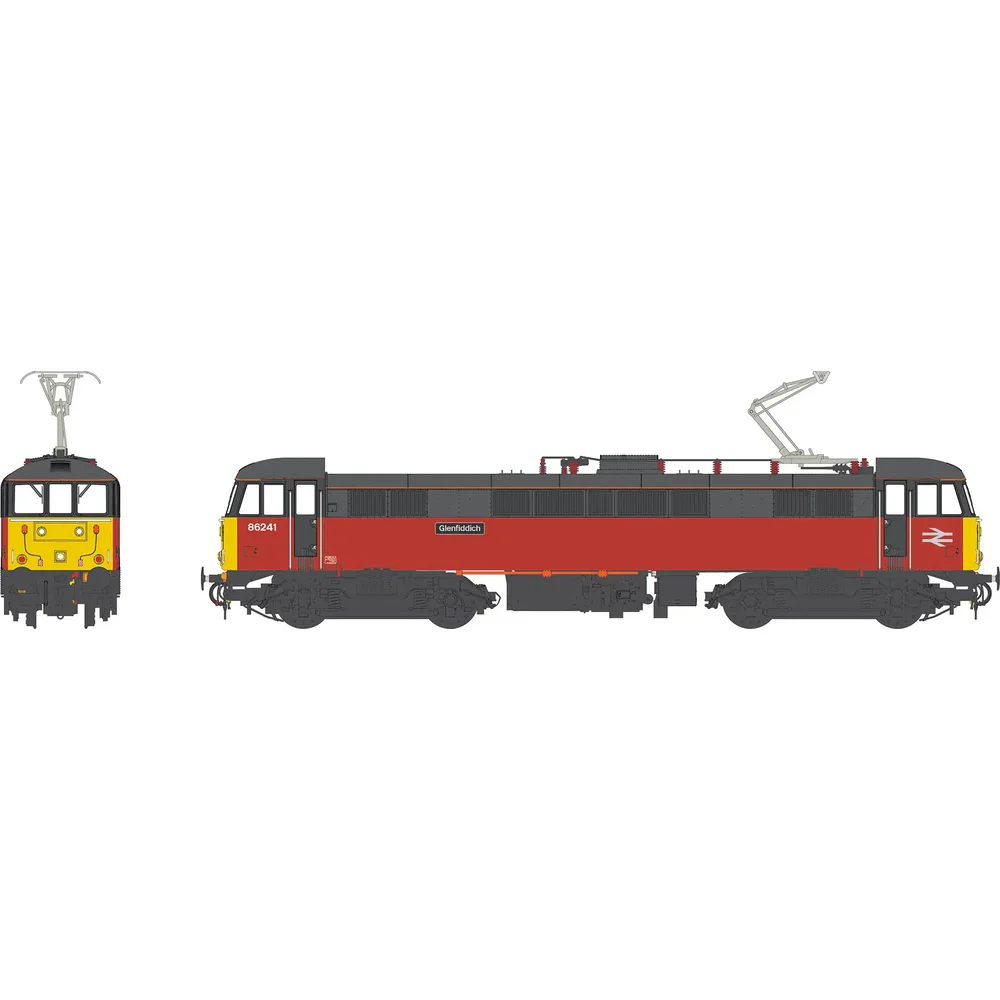
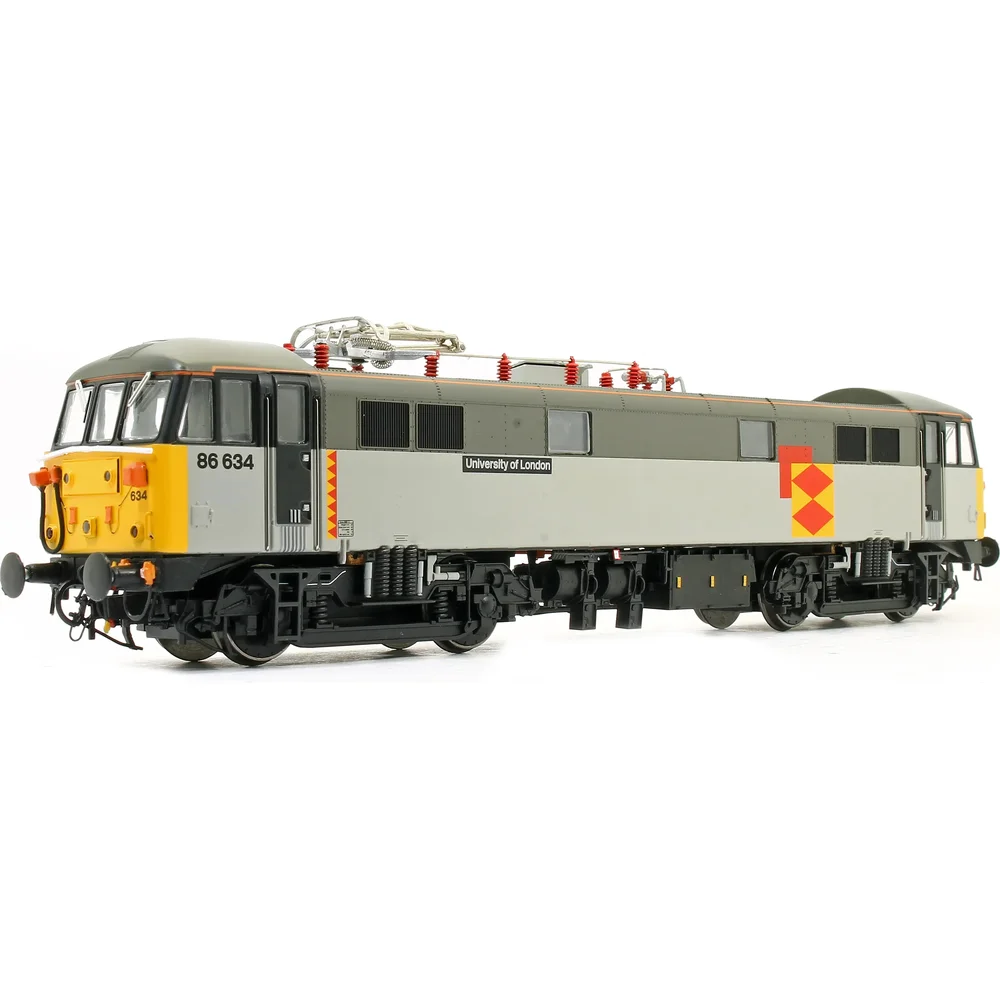
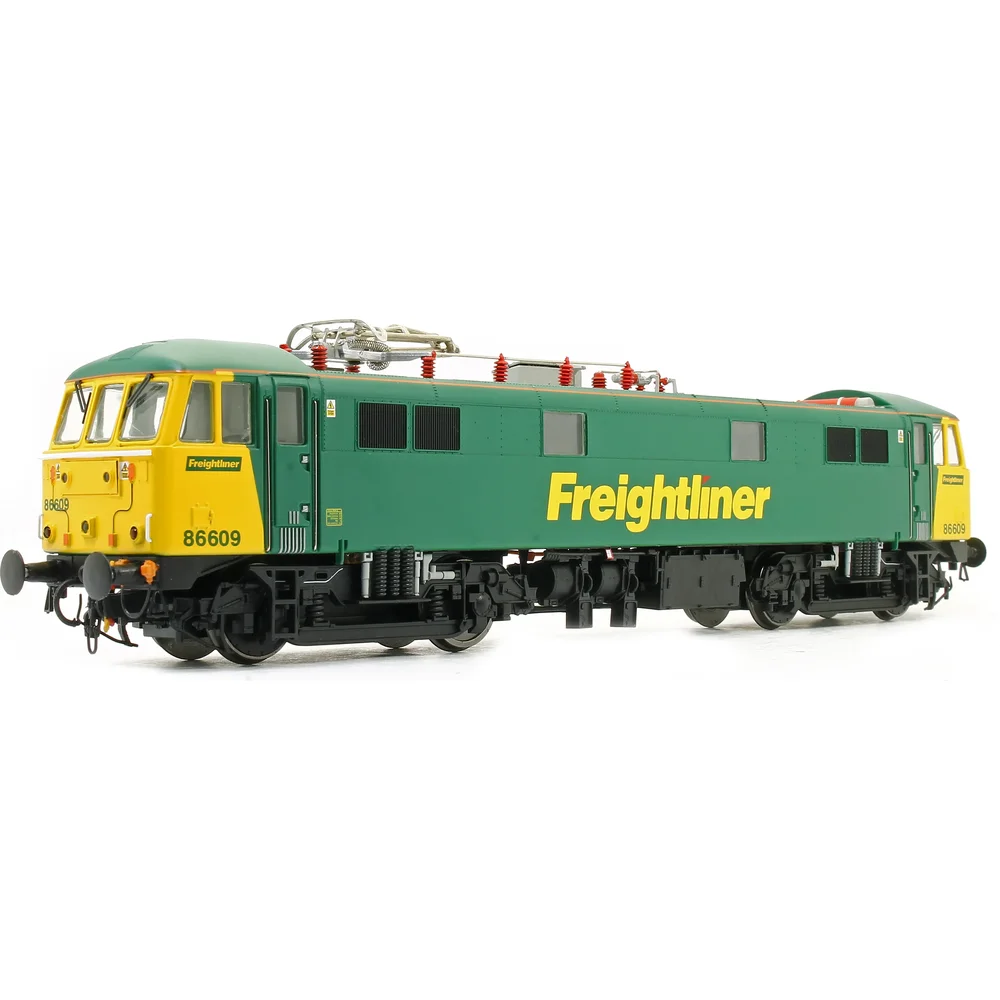
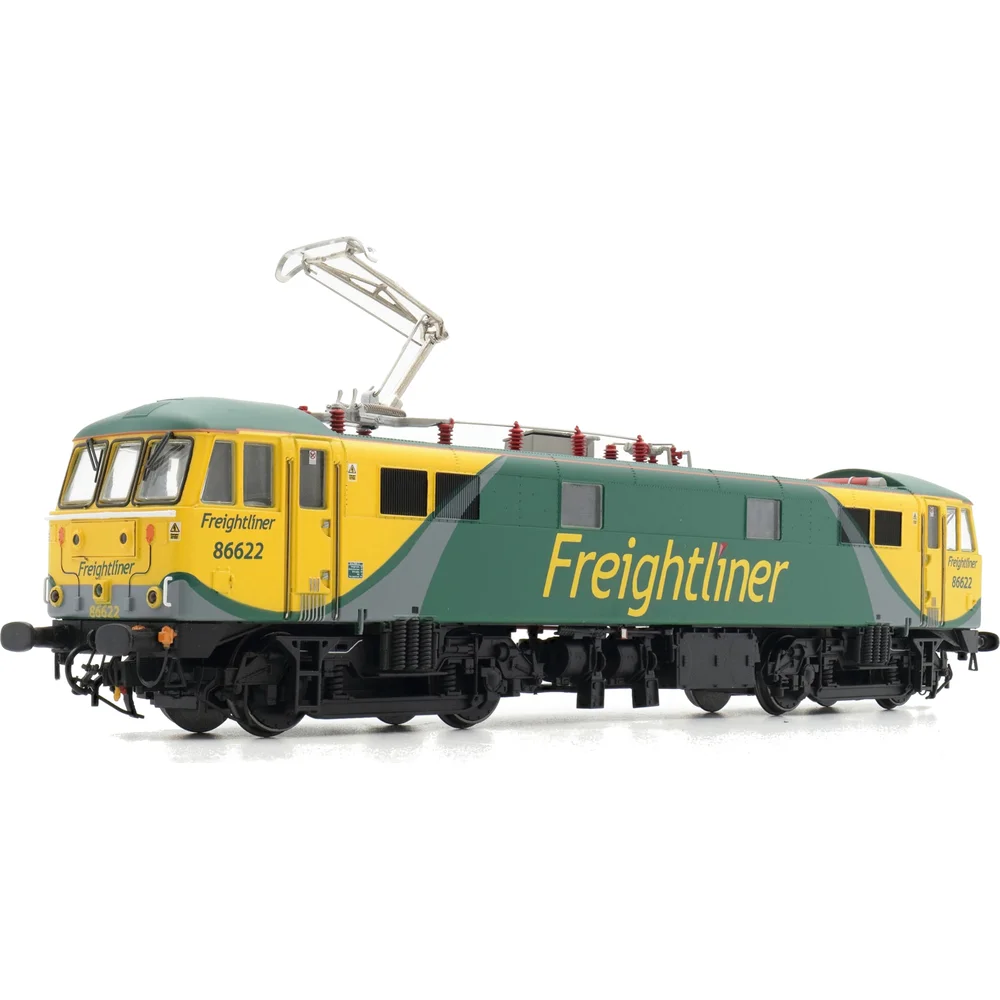
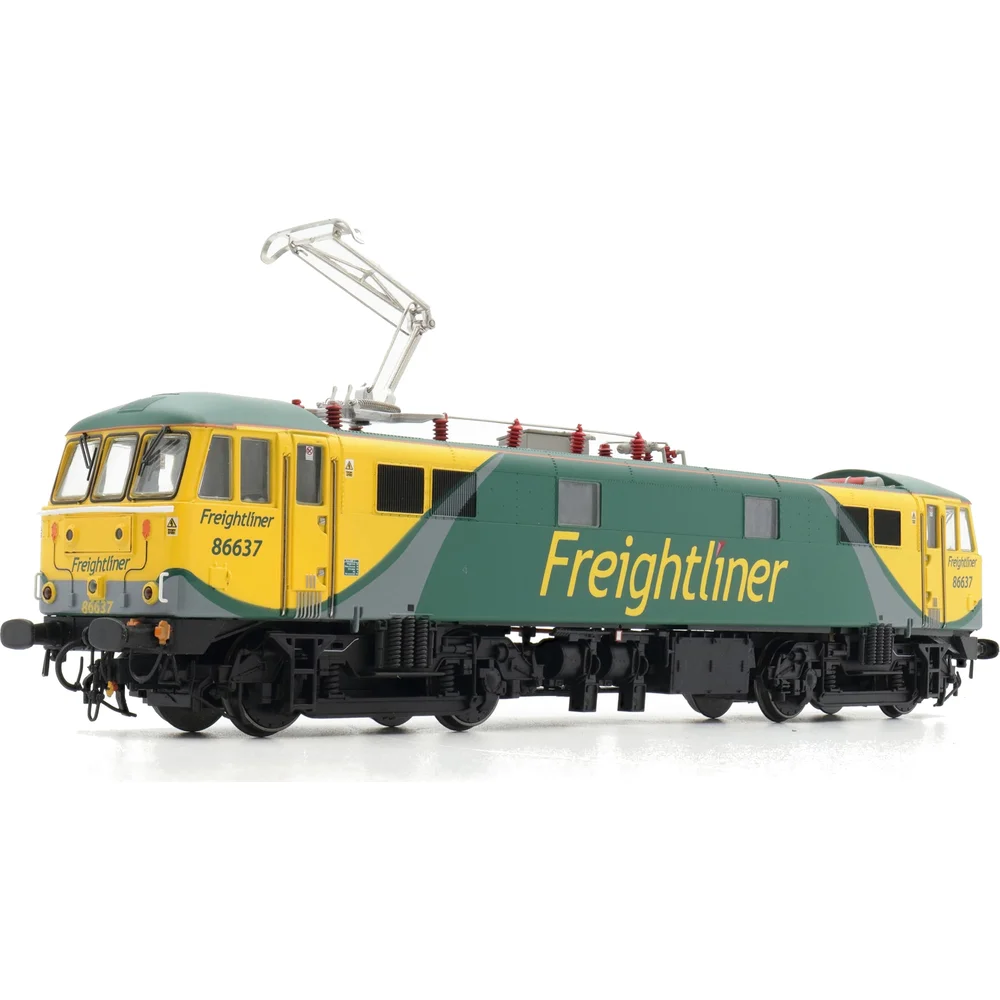
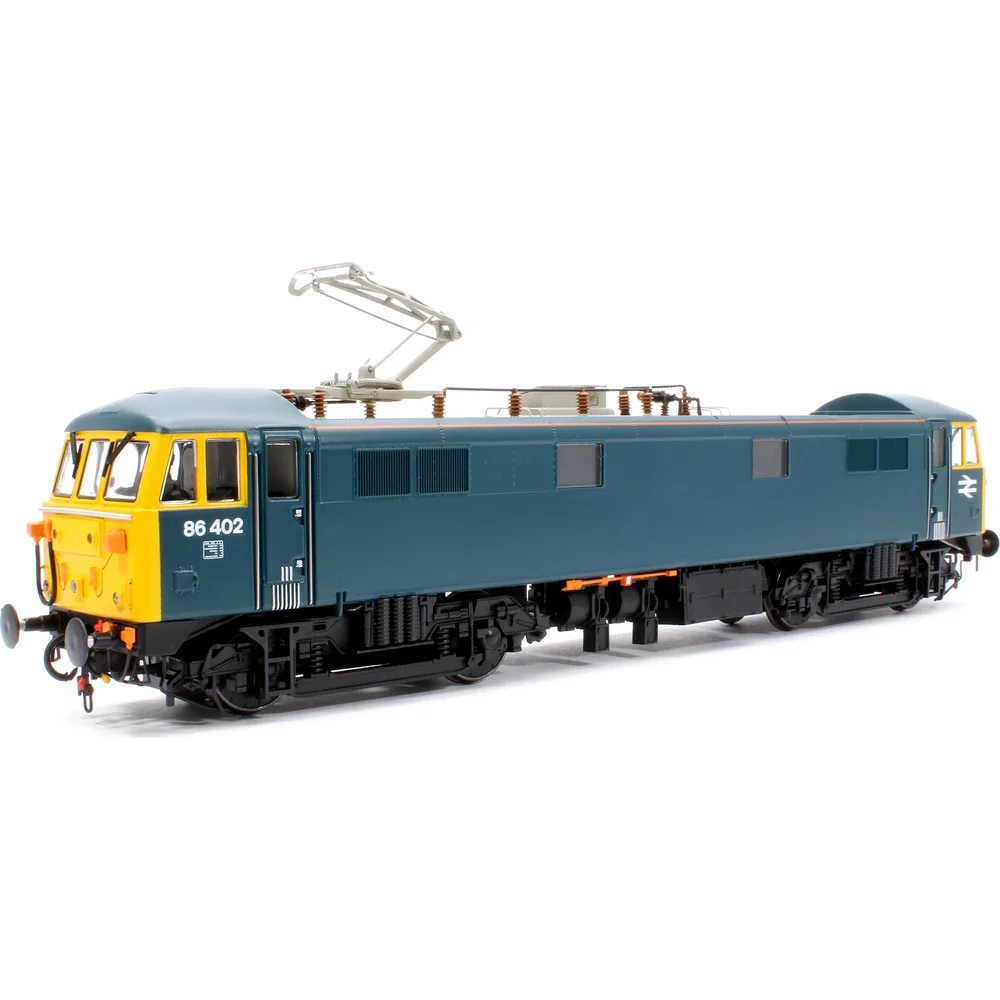
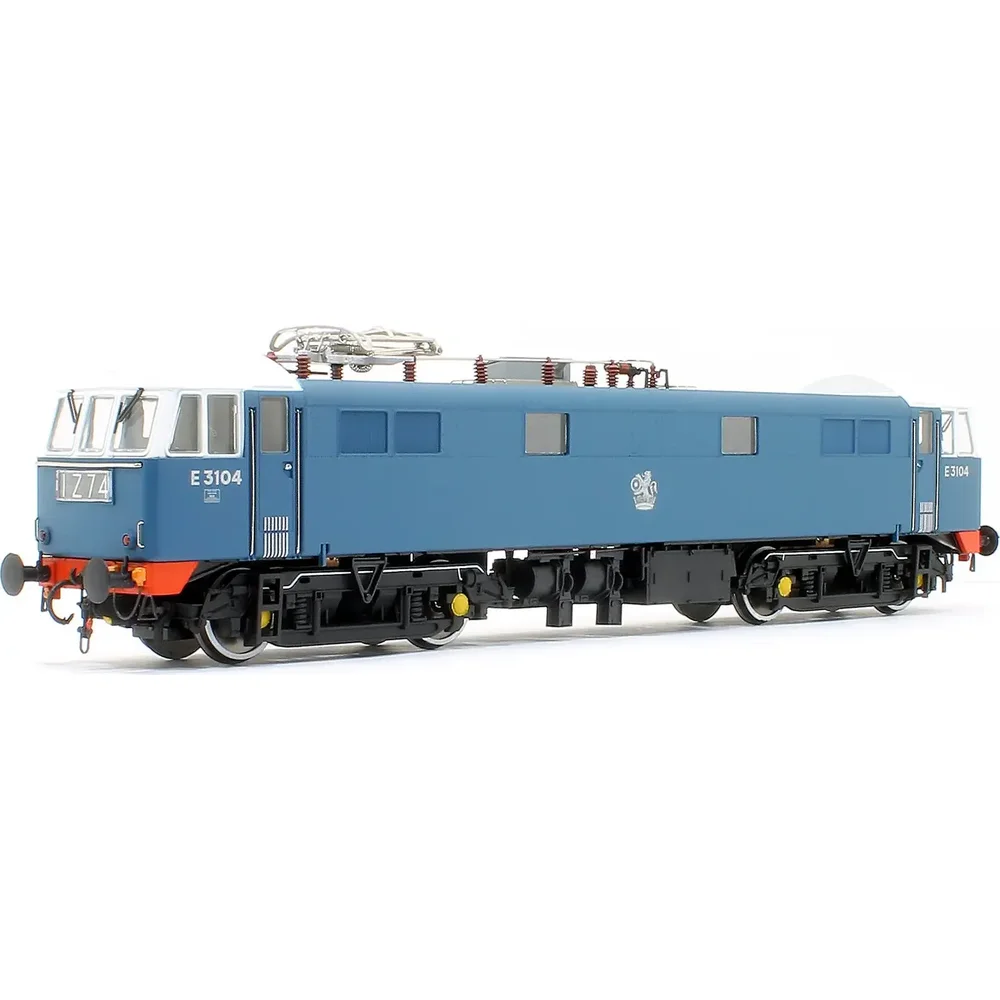
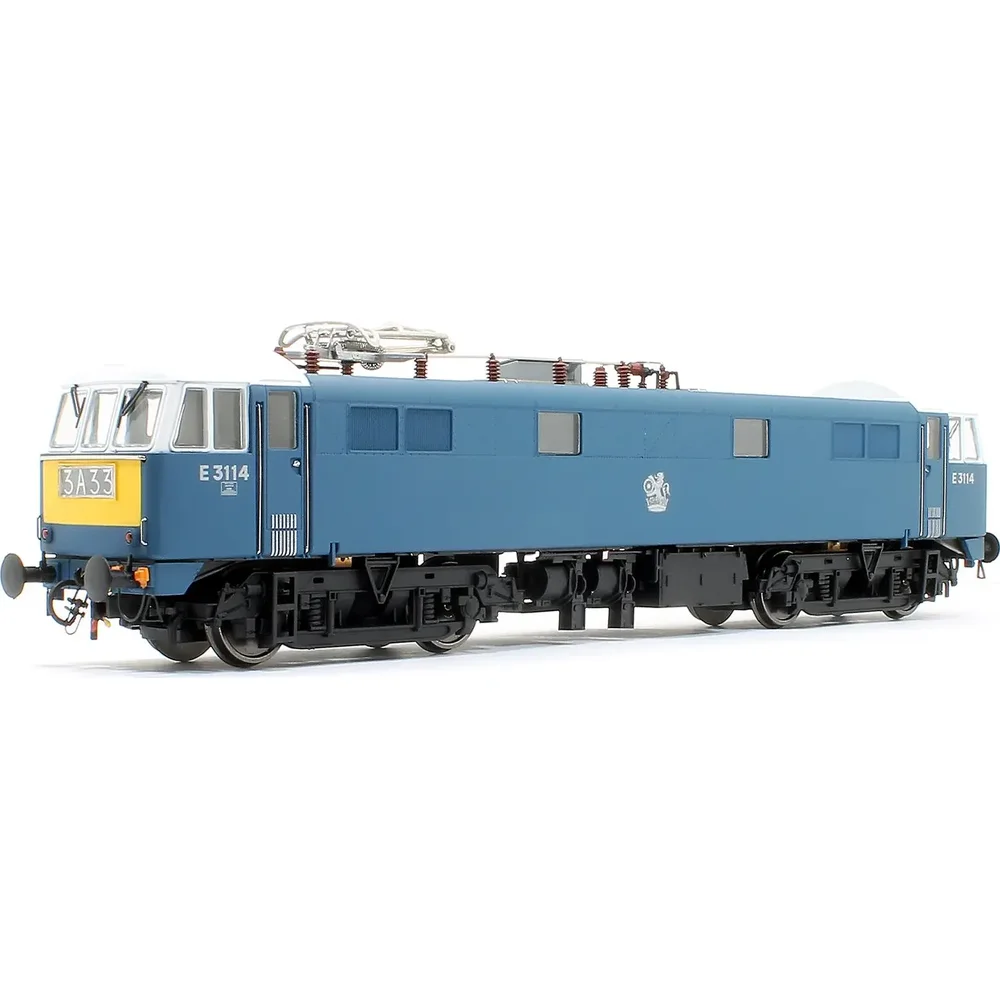
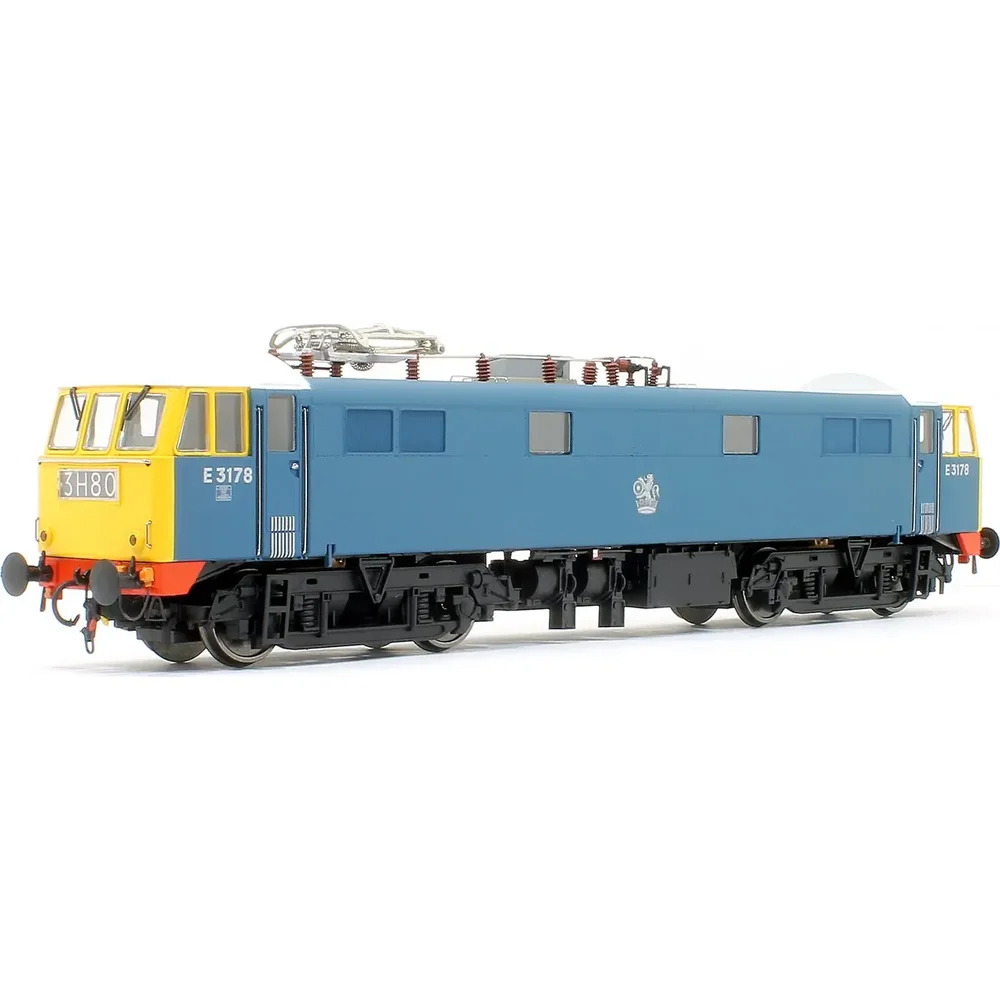
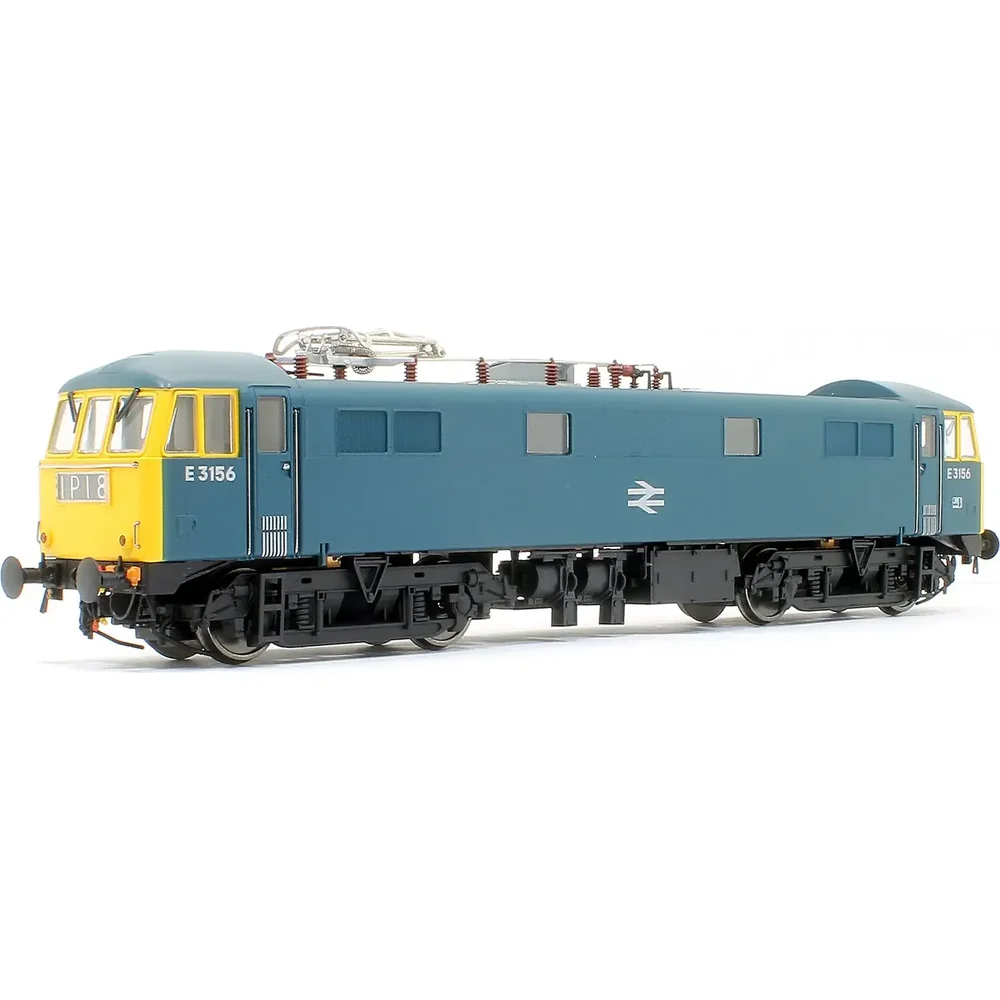
The British Rail Class 86 stands as one of the most successful and long-lived electric locomotive designs in British railway history, with a service life spanning 56 years from 1965 to 2021. Originally designated AL6, these 100 locomotives revolutionised West Coast Main Line operations, hauling millions of passengers between London Euston and Scotland whilst proving equally capable on freight duties. For model railway enthusiasts, the BR Class 86 offers exceptional versatility—from BR Electric Blue through InterCity Swallow to modern Freightliner liveries—making it essential for anyone modelling British railways from the 1960s onwards.
The Class 86's remarkable longevity stemmed from continuous technical development addressing early problems whilst maintaining the fundamental soundness of English Electric's design. Initial batches suffered serious track damage due to axle-hung motors, restricting them to 80 mph freight work. Yet systematic engineering improvements—particularly the revolutionary flexicoil suspension fitted from 1971—transformed the class into 100 mph express passenger locomotives that dominated WCML services for three decades. Three operational examples remain in preservation today, hauling charter trains across Britain's electrified network.
From breakthrough 129 mph test runs to humble container trains, the Class 86 proved adaptable across every electric railway duty. Privatisation saw Virgin Trains, Anglia Railways, and Freightliner operating distinct fleets, whilst export sales to Hungary and Bulgaria ensured over 30 locomotives continue working into the 2020s. The diversity of operators, liveries, and modifications creates fascinating modelling opportunities spanning six decades of British railway evolution, all captured in exceptional ready-to-run models from Heljan and Dapol across OO and N gauge scales.
Quick Takeaways
- One hundred locomotives built: Constructed 1965-1966 by English Electric at Vulcan Foundry (60 locomotives) and BR Doncaster Works (40 locomotives) for West Coast Main Line electrification
- Pioneering 25 kV AC design: First mass-produced AC electric locomotives in Britain, applying lessons from experimental AL1-AL5 classes to create standardised production type
- Flexicoil suspension breakthrough: Revolutionary 1971 bogie modifications eliminated track damage caused by original axle-hung motors, restoring 100 mph capability and extending service life by decades
- Record-breaking performance: Locomotive 86246 allegedly reached 129 mph near Tring during testing, though British Railways suppressed publicity to avoid overshadowing High Speed Train programme
- Multiple subclass variations: Evolution through Class 86/0, 86/1, 86/2, 86/3, 86/4, 86/6, 86/7, 86/9 designations reflecting technical modifications, power rating changes, and operational specialisation
- 56-year British service span: From 1965 WCML introduction until February 2021 final Freightliner withdrawals, encompassing BR, InterCity, Virgin Trains, Anglia Railways, EWS, and Freightliner operations
- International export success: Approximately 32 locomotives exported to Hungary (9 examples) and Bulgaria (23 examples), many remaining operational on continental European freight services
- Comprehensive model availability: Heljan produces definitive OO gauge range (£186-£240) whilst Dapol offers modern N gauge versions (£104-£168), covering major liveries and subclass variations
Historical Background and Context
The genesis of the Class 86 lay in British Railways' transformative decision to electrify the West Coast Main Line using 25 kV AC overhead supply—a revolutionary departure from the Southern Region's established 750V DC third-rail system. By the early 1960s, BR had commissioned five experimental electric locomotive classes (AL1 through AL5, later renumbered Classes 81-85) from different manufacturers to evaluate competing technologies. Each design offered distinct approaches to transformers, rectification, control systems, and mechanical arrangements, providing invaluable operational data for the production locomotive specification.
English Electric emerged triumphant from this technical evaluation, securing the contract for the AL6 production class based on their AL5 design's superior performance and reliability. The company's extensive experience building electric locomotives for overseas railways—particularly South Africa—provided engineering expertise that proved decisive. British Railways ordered 100 locomotives, representing enormous confidence in both the design and the WCML electrification programme's transformative potential for intercity travel.
Construction commenced in 1965 with the order split between English Electric's Vulcan Foundry at Newton-le-Willows and BR Doncaster Works. Originally Doncaster would build 60 locomotives whilst Vulcan Foundry constructed 40, but capacity constraints reversed this allocation. The Vulcan-built locomotives (E3141-E3200) featured slightly different specifications from their Doncaster counterparts (E3101-E3140), with the latter producing 4,000 hp compared to Vulcan's 3,600 hp output—a distinction reflecting subtle variations in transformer and control gear specifications.
The first AL6, numbered E3173, entered testing in January 1965, immediately demonstrating impressive performance characteristics. Revenue-earning passenger services began in May 1965 with football specials, and by August the class officially entered service. The entire 100-locomotive fleet arrived within 24 months—a remarkable achievement that enabled British Railways to eliminate steam traction from the WCML years ahead of pessimistic forecasts. The final steam-hauled services on the route vanished in 1968, vindicated by the AL6's reliability and performance.
Insider Tip: The Zebedee Phenomenon
Locomotive E3173 achieved legendary status after receiving experimental flexicoil suspension in 1969, earning the nickname "Zebedee" after the bouncing character from The Magic Roundabout children's television programme. The distinctive oscillating motion—caused by engineers deliberately over-softening the suspension to test extremes—created an unforgettable sight. More significantly, this locomotive allegedly reached 129 mph near Tring during high-speed testing, potentially exceeding Mallard's steam record. British Railways suppressed publicity to avoid overshadowing the High Speed Train development programme, but railway enthusiasts documented the achievement. For modellers, E3173/86246 represents a fascinating prototype with unique operational history.
Contemporary railway publications praised the new design's elegant proportions and purposeful appearance. The streamlined nose profile with its distinctive split headcode boxes created immediately recognisable identity, whilst the Electric Blue livery with full yellow warning panels established aesthetic standards for British electric traction. The locomotives measured 58 feet 6 inches over buffers—compact dimensions that facilitated operation through restrictive clearances on older infrastructure whilst providing sufficient length for necessary equipment installation.
Yet serious problems emerged almost immediately. The cost-reduction decision to specify axle-hung traction motors rather than frame-mounted motors with flexible drives created excessive unsprung mass. At speeds above 90 mph, the heavy motor armatures caused violent oscillations that damaged track and threatened safety. British Railways engineers discovered that several locomotives had cracked frames, whilst permanent way inspectors reported accelerated rail wear on sections regularly traversed by AL6 locomotives. The severity of this problem necessitated restricting the entire class to 80 mph maximum speed—a devastating limitation for locomotives intended for 100 mph express passenger work.
Design and Technical Specifications
The engineering excellence of the British Rail Class 86 lay in English Electric's sophisticated integration of proven electrical components within a robust mechanical platform. At the heart of the design sat a single-phase transformer receiving 25 kV AC supply from overhead catenary via roof-mounted pantographs. The transformer featured multiple tappings enabling precise voltage control, feeding rectifier equipment that converted alternating current to direct current suitable for the traction motors. This AC-to-DC conversion approach represented established technology, avoiding the developmental risks associated with experimental AC motor systems.
The traction motors themselves followed conventional DC series-wound design, with four motors (one per axle) in the Bo-Bo wheel arrangement. Each motor developed approximately 625 kW continuous rating, combining to deliver total power output ranging from 3,600 hp to 4,000 hp depending on specific locomotive build and modifications. The motors drove axles through single-reduction gearing, typically 32:73 ratio for passenger variants providing 100 mph maximum speed, or 22:65 for freight-dedicated locomotives limited to 75 mph but offering superior tractive effort at lower speeds.
Control systems utilised tap-changing technology, where a motor-driven mechanism selected different transformer tappings to vary voltage supplied to traction motors. This electromechanical approach proved robust and maintainable, though later thyristor-controlled designs (as fitted to Class 87) offered superior performance through stepless electronic control. The tap-changer mechanism required regular maintenance, with carbon brush wear and contact erosion representing primary service items. Drivers became intimately familiar with the characteristic clunking sound of tap-changers operating through their notches during acceleration.
The original bogie design incorporated axle-hung traction motors—a cost-saving measure that proved disastrous. The motors' substantial mass increased unsprung weight, causing violent oscillations at high speeds that damaged both track and locomotive frames. British Railways restricted affected locomotives to 80 mph, designating them Class 86/0, whilst engineers developed solutions. Three locomotives (E3143, E3189, E3191) became testbeds for Class 87 development, receiving BP9 bogies with frame-mounted motors and flexible drives. These became Class 86/1, achieving 5,000 hp output and 110 mph capability whilst providing invaluable data for the Class 87 programme.
The breakthrough came in 1969 when locomotive E3173 received experimental flexicoil suspension. Large helical springs replaced the original leaf springs, dramatically reducing forces transmitted to the track whilst maintaining adequate control over bogie movements. Engineers deliberately over-softened the initial installation to test performance extremes, creating the distinctive bouncing motion that earned E3173 its "Zebedee" nickname. More importantly, high-speed testing proved the concept's validity—the locomotive allegedly reached 129 mph near Tring, demonstrating that proper suspension could unlock the Class 86's full performance potential.
Technical Innovation: VAMPIRE Computer Simulation
British Railways utilised the groundbreaking VAMPIRE (Vehicle Dynamics Analysis using Multi-body Program for Interactive Rail Engineering) computer simulation system to optimise Class 86 bogie modifications. This sophisticated programme modelled complex interactions between suspension components, wheelsets, and track, enabling engineers to predict behaviour before expensive prototype construction. VAMPIRE simulations identified optimal spring rates, damper characteristics, and geometry for the flexicoil suspension, dramatically reducing development time and cost. The success validated computer-aided engineering for railway applications, establishing methodologies still employed today. For railway historians, the Class 86 flexicoil programme represents a pivotal moment when digital simulation replaced purely empirical testing approaches.
From 1971, British Railways commenced systematic rebuilding of Class 86/0 locomotives with redesigned bogies incorporating flexicoil suspension, improved dampers, and SAB resilient wheels. These modifications created Class 86/2, restoring 100 mph capability whilst eliminating track damage. The transformation proved so successful that BR eventually retrofitted the entire remaining fleet. An interim solution created Class 86/3 (locomotives 86311-86329) using SAB wheels on original 86/0 chassis, but this proved insufficient. By 1984, standardisation on flexicoil suspension created Class 86/4, with freight-dedicated variants regeared to 75 mph becoming Class 86/6.
Later modifications addressed operational requirements beyond pure performance. Electric train heating equipment enabled use with air-conditioned Mark 3 coaching stock, essential for WCML express services. Time Division Multiplex (TDM) equipment facilitated push-pull operation with Driving Van Trailers from 1988, allowing locomotives to remain at one train end throughout journeys. Slow-speed control modifications enabled shunting and trip freight work. Multiple working capability allowed paired operation on heavy trains, particularly important for Freightliner's Scottish services where steep gradients demanded double-heading.
Two special variants emerged for specific duties. Class 86/7 (locomotives 86701 and 86702) represented 110 mph-capable machines prepared for commercial hire in 2009, featuring enhanced control systems and comprehensive refurbishment. Class 86/9 (86901 and 86902) served Network Rail as mobile load-bank testing units from 2004, providing resistive loads for testing electric supply systems. These locomotives carried distinctive all-over yellow livery and operated until withdrawal in 2014, after which both were scrapped.
Service History and Operations
The Class 86 entered service during a transformative period in British railway history, when steam traction's final years overlapped with revolutionary electrification programmes. Initial deployment concentrated on West Coast Main Line express passenger services radiating from London Euston to Birmingham, Liverpool, Manchester, and—following northward electrification completion in 1974—Carlisle and Glasgow. The locomotives hauled prestigious named trains including The Caledonian, The Royal Scot, and The Clansman, establishing themselves as the public face of BR's modern railway.
The early years proved challenging as engineers grappled with the track damage problem. Class 86/0 locomotives restricted to 80 mph found themselves relegated to secondary passenger services and freight work, whilst British Railways accelerated the Class 87 development programme to provide reliable 100 mph traction. Yet the successful flexicoil suspension modifications vindicated faith in the basic Class 86 design. By the mid-1970s, modified Class 86/2 locomotives dominated WCML passenger services, working intensive diagrams that saw individual locomotives cover over 100,000 miles annually.
Geographic expansion followed electrification schemes. The Great Eastern Main Line from Liverpool Street to Norwich received wires in 1987, with Class 86 locomotives transferring from WCML duties to work East Anglian services. The distinctive sight of these machines hauling Mark 2 coaching stock through the Suffolk countryside demonstrated the class's operational flexibility. Cambridge services also saw Class 86 operation from 1987-89, though these workings proved relatively short-lived as route infrastructure required upgrades for intensive electric services.
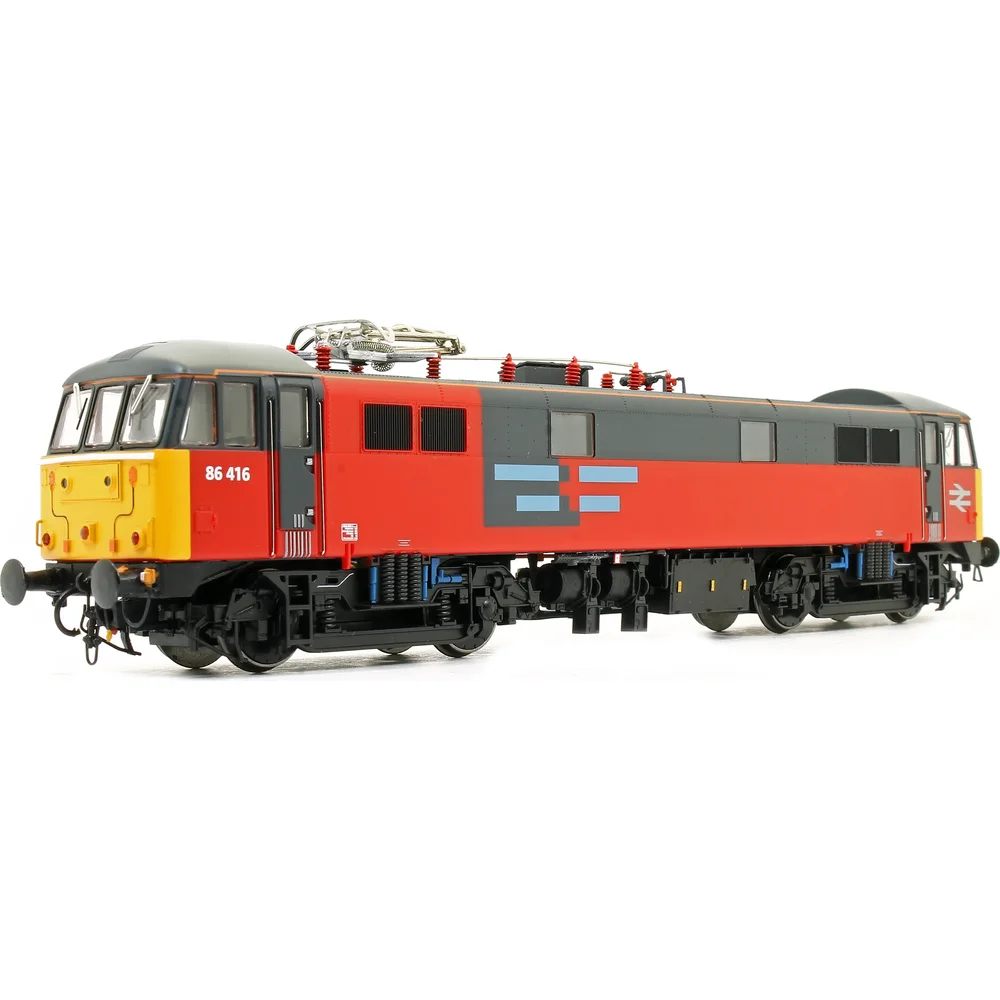
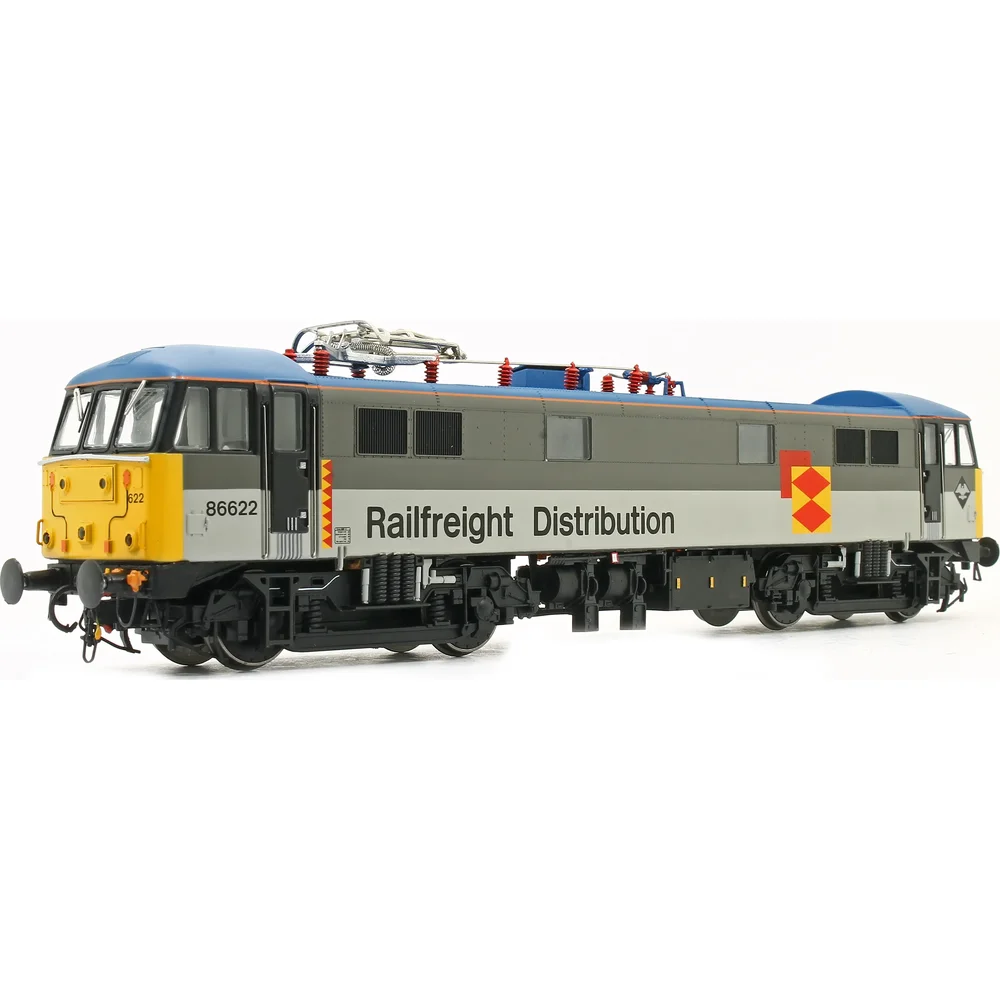
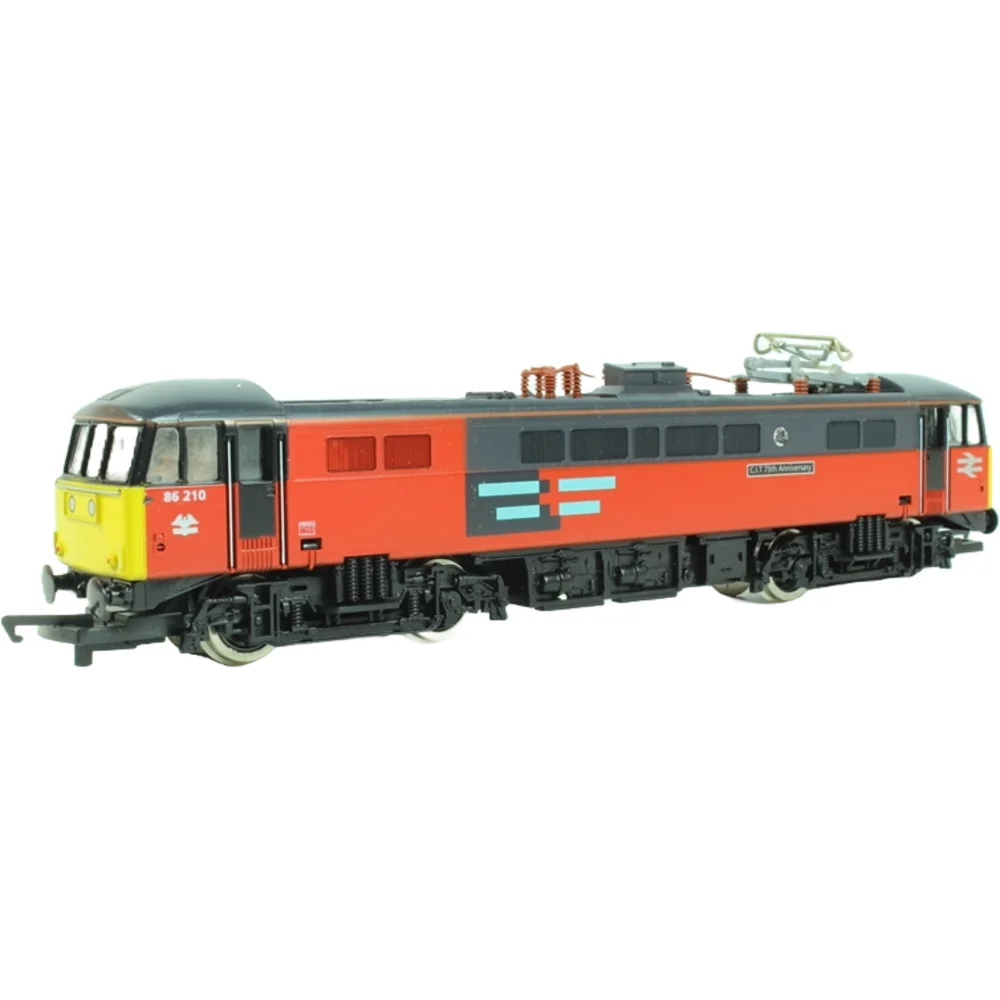
British Railways' 1980s sectorisation created distinct operational patterns. InterCity retained the best Class 86/2 locomotives for prestigious WCML express services, with regular maintenance ensuring high reliability standards. Railfreight Distribution acquired most Class 86/4 and 86/6 freight variants, deploying them on container trains, petroleum flows, and automotive traffic. Rail Express Systems operated specialised mail trains using Class 86 haulage on routes including King's Cross to Newcastle and Birmingham to Glasgow, working overnight schedules that maximised infrastructure utilisation.
Operational Insight: Push-Pull Revolution
The 1988 introduction of 52 Driving Van Trailers transformed Class 86 operations by enabling push-pull working. DVTs featured full driving cabs at the leading end of formations, with Time Division Multiplex equipment transmitting control signals to locomotives at the trailing end. This eliminated time-consuming locomotive run-rounds at terminal stations, improving punctuality and enabling tighter timetables. For modellers, push-pull formations create authentic 1988-2005 era operations, with DVTs in matching InterCity Swallow, Virgin Trains, or Anglia Railways liveries paired with appropriately liveried Class 86 locomotives. The operational efficiency gains proved so significant that subsequent electric locomotive classes incorporated push-pull capability from introduction.
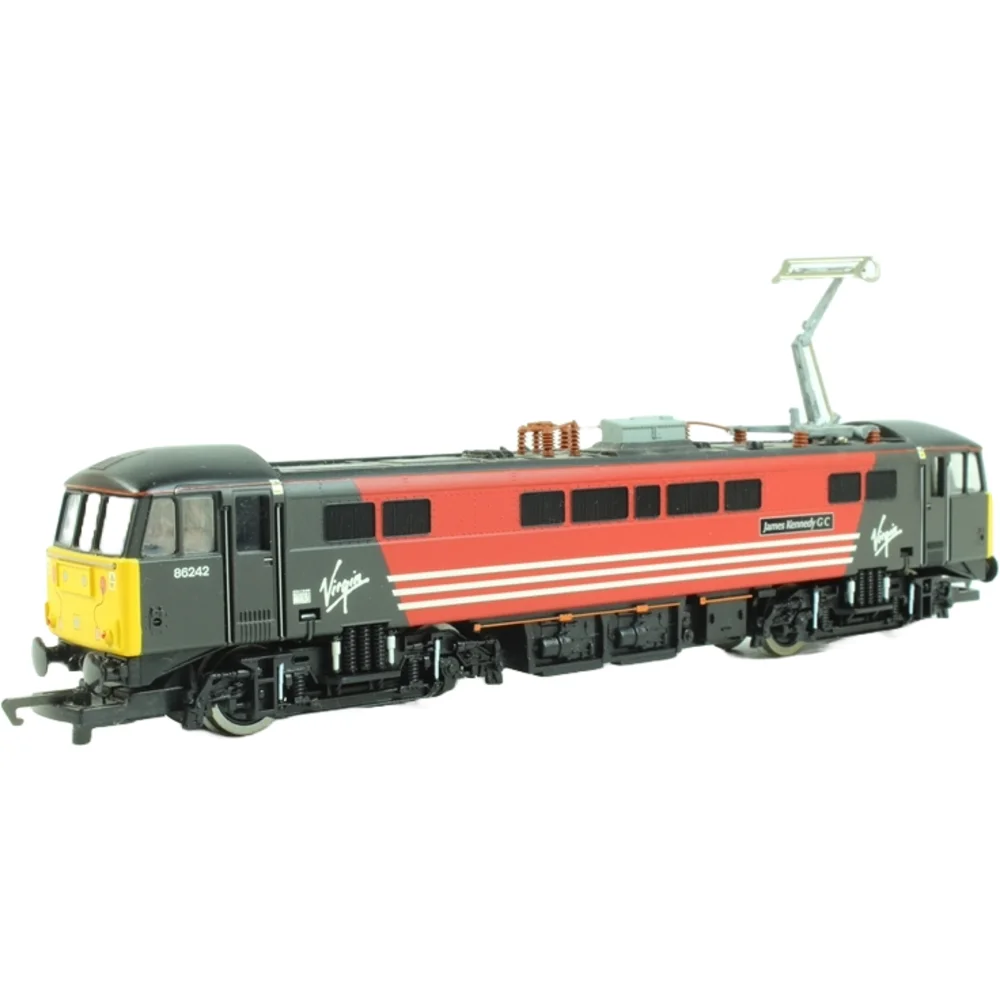
Privatisation in the mid-1990s fragmented the Class 86 fleet across multiple operators. Virgin Trains inherited 32 locomotives for West Coast and CrossCountry franchises from 1997. CrossCountry operations worked Birmingham-Manchester-Liverpool-Edinburgh services until Class 220/221 Voyager diesel units arrived in 2001. West Coast operations continued longer, with the final three Class 86s (86229, 86233, 86247) making farewell passenger runs in September 2003. Locomotive 86233 received special Electric Blue livery for these final workings, recreating the iconic 1960s appearance for nostalgic enthusiasts.
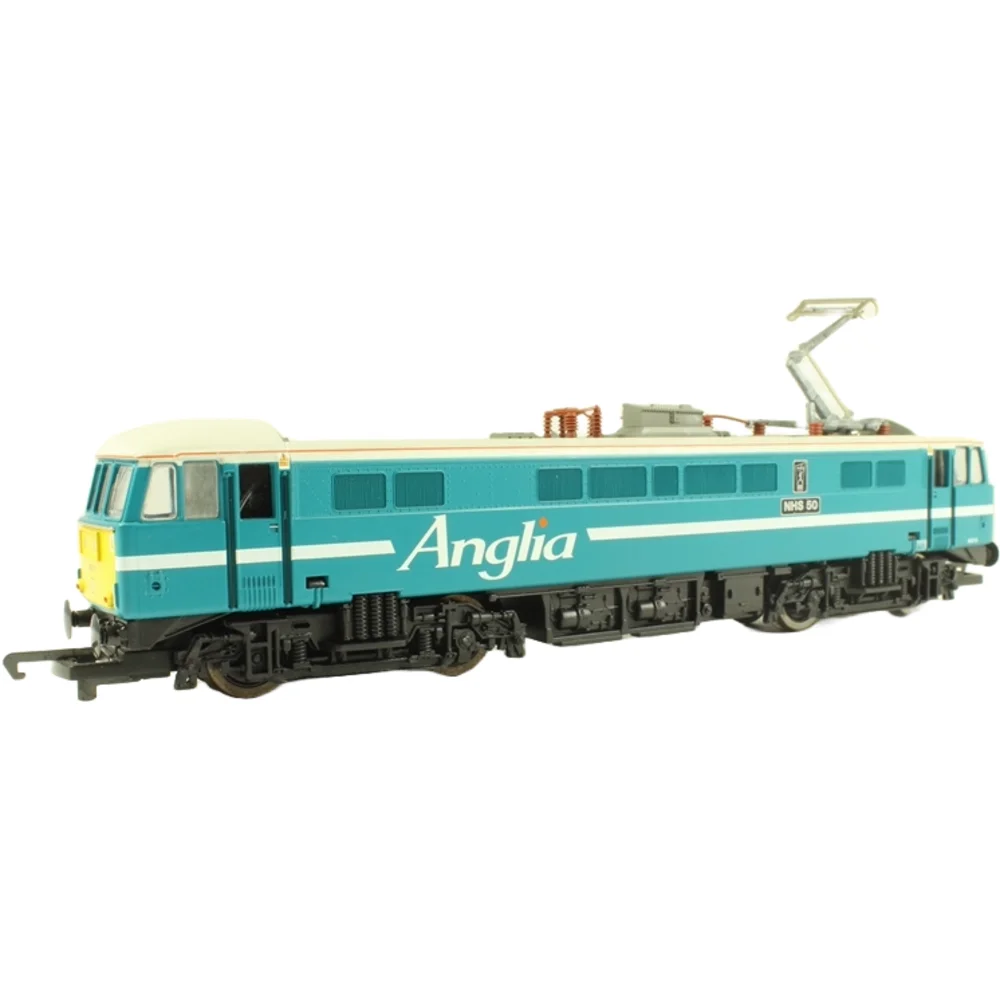
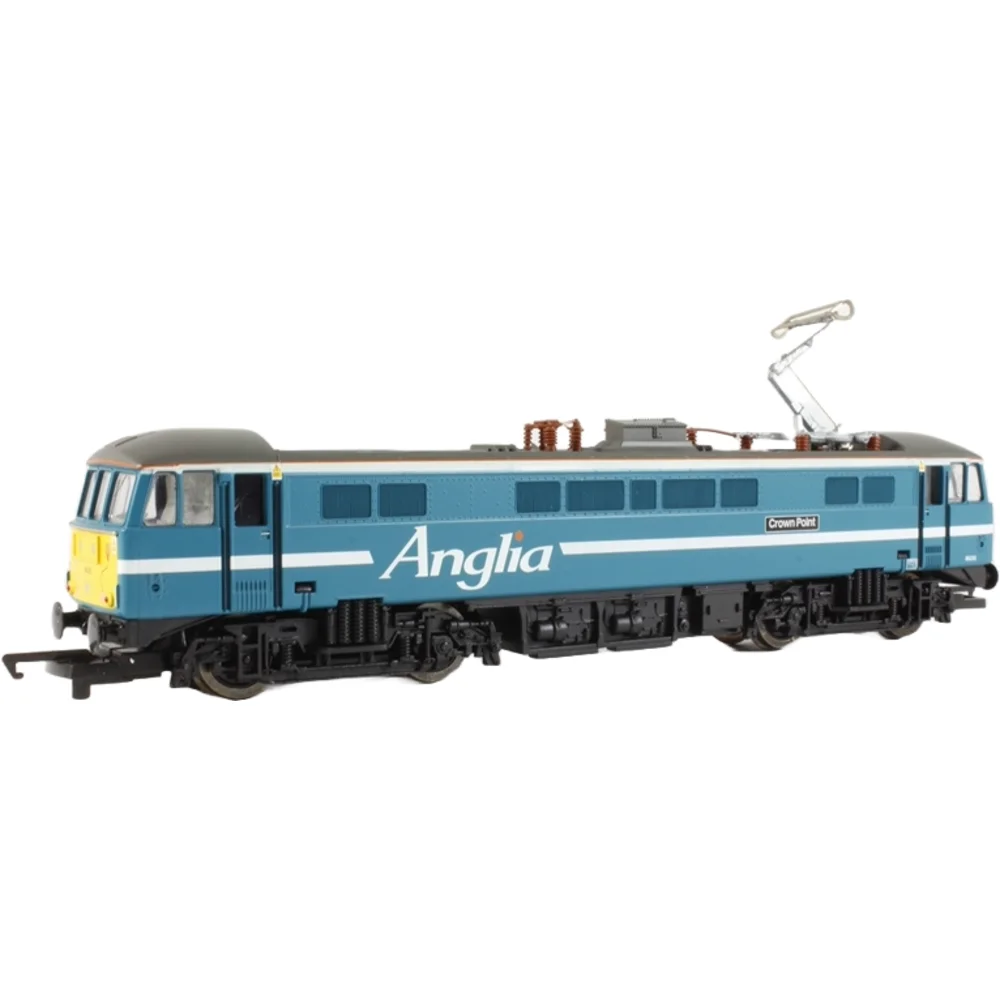
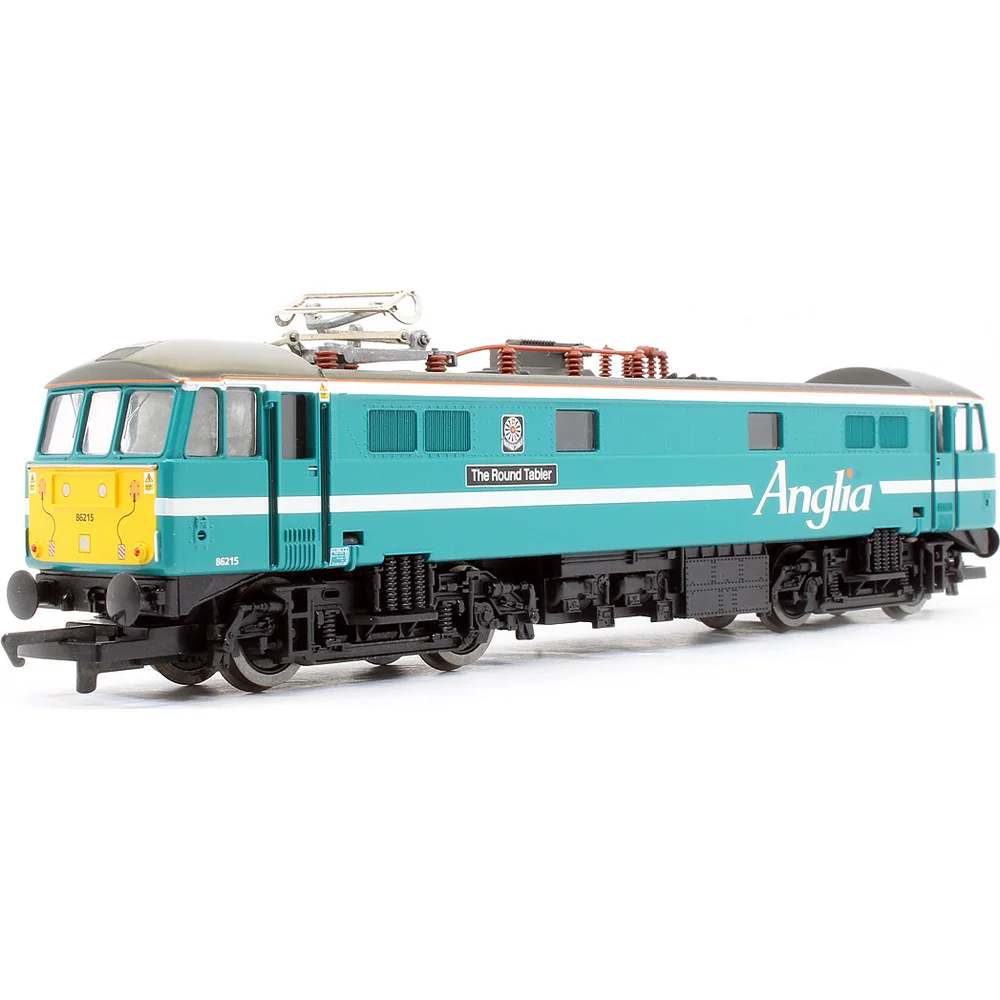
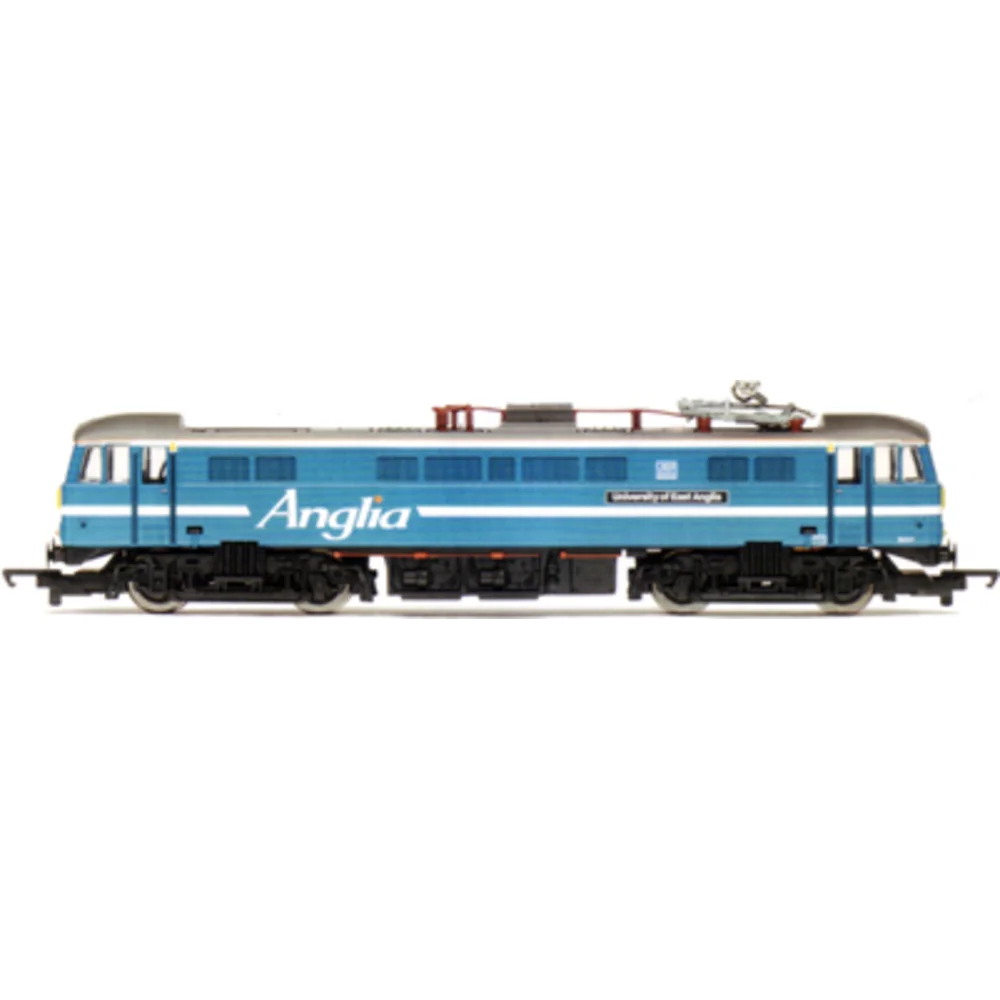
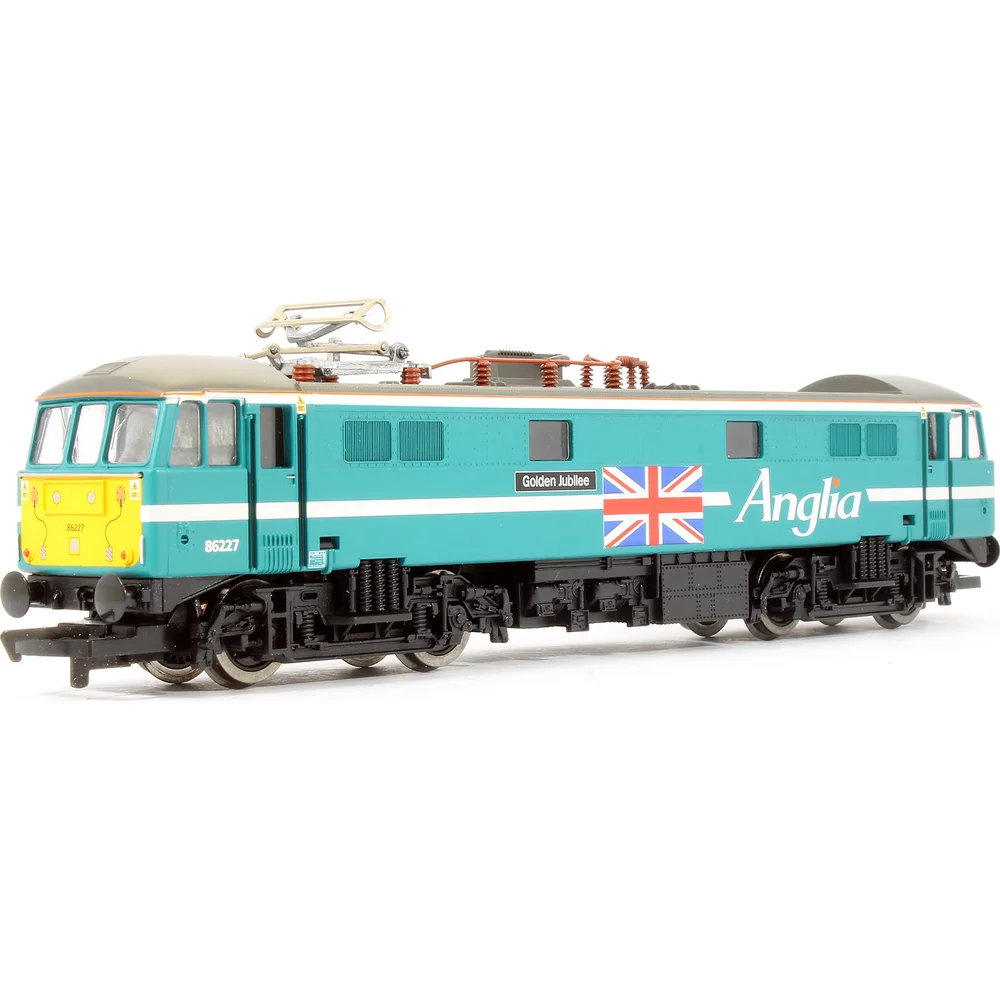
Anglia Railways operated perhaps the most visually distinctive Class 86 fleet, with 15 locomotives in striking turquoise and grey livery working Liverpool Street-Norwich services from 1998. These locomotives hauled Mark 3 coaching stock inherited from InterCity, maintaining traditional locomotive-hauled services whilst competitors introduced multiple units. Locomotive 86227 received special Union Flag livery as "Golden Jubilee" in 2002, celebrating Queen Elizabeth II's jubilee year. The final Class 86 passenger service anywhere in Britain occurred on 17 September 2005 when 86235 "Crown Point" worked the last Norwich trains, ending 40 years of Class 86 passenger operations.
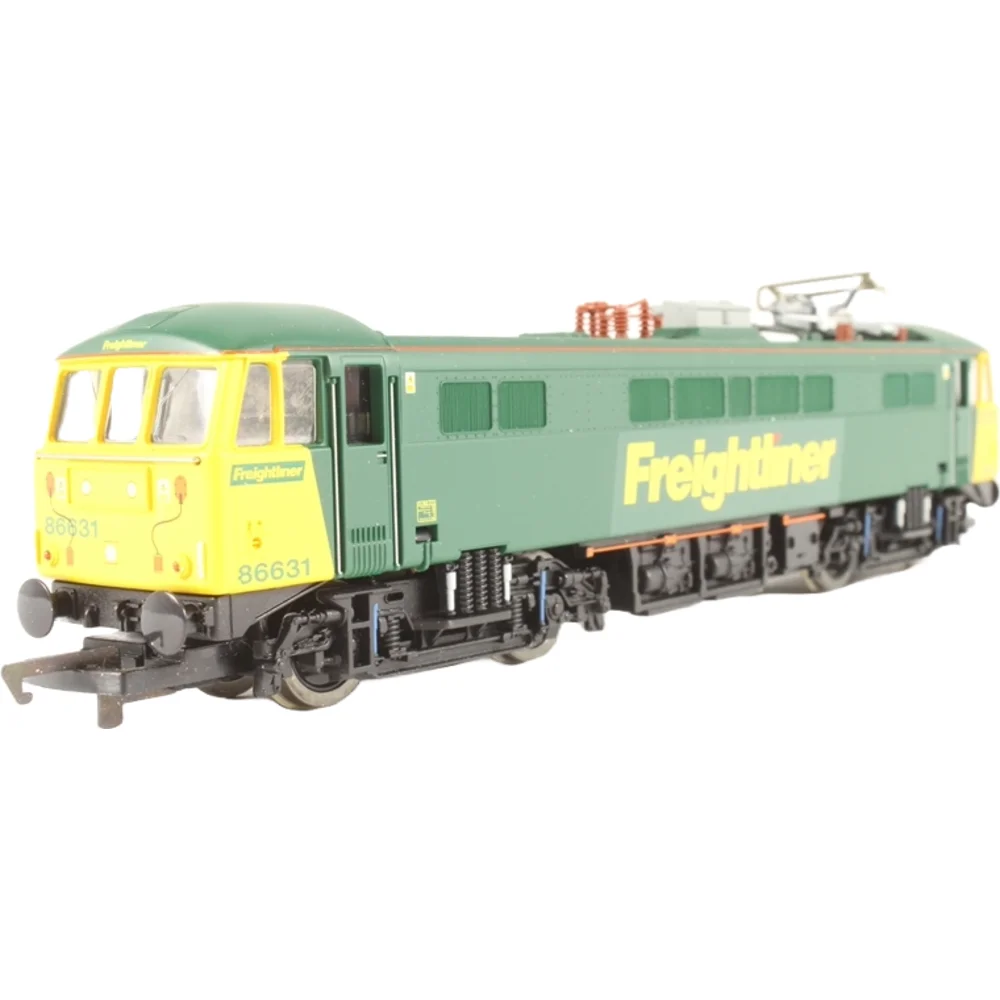
Freightliner became the class's longest-serving privatised operator, with Class 86/6 locomotives working in pairs on container trains between Crewe, Coatbridge (Glasgow), and Felixstowe. The steep gradients on Scottish routes—particularly Beattock and Shap—demanded double-heading for maximum loading. Freightliner's operations continued until February 2021 when the final locomotives (86607, 86632) were withdrawn, replaced by cascaded Class 90 locomotives offering superior reliability and standardisation across Freightliner's electric fleet. This withdrawal marked the end of Class 86 operations in Britain after 56 continuous years.
The Class 86's robust design attracted international buyers. Floyd Zrt (later Eurogate Rail Hungary) purchased nine locomotives from 2009-2013, operating them as Hungarian Class 450 on international freight services including Hamburg-Budapest intermodal trains. These locomotives received twin pantographs for operation under different overhead systems and EVM-102 signalling equipment for continental railways. Bulgaria acquired approximately 23 locomotives total—Bulmarket purchased initial examples in 2012 and 2016, whilst Express Services bought all 16 remaining Freightliner Class 86/6s in July-August 2023. Several Bulgarian locomotives have returned to active service, ensuring the Class 86 story continues into the 2020s on continental European freight networks.
Withdrawal and Preservation Legacy
The withdrawal history of the British Rail Class 86 reflects the progressive replacement of locomotive-hauled services by multiple units and newer electric locomotive classes throughout the privatisation era. Early withdrawals proved relatively limited, with British Railways maintaining the fleet through systematic rebuilding programmes that extended service lives well beyond original expectations. The flexicoil suspension modifications proved so successful that Class 86s outlasted several newer designs, validating the investment in continuous technical improvement rather than wholesale replacement.
Serious withdrawals commenced in 2001 when Virgin Trains' Pendolino order signalled the end for locomotive-hauled West Coast Main Line express services. The CrossCountry Class 86 fleet disappeared by September 2002, with most locomotives transferred to freight operators or placed in storage. West Coast locomotives followed in 2003, whilst EWS examples faced withdrawal by late 2002 as the company standardised on Class 90 and Class 92 traction. Anglia Railways' distinctive turquoise fleet survived longest in passenger service, finally withdrawn in September 2005 when the franchise introduced Class 90-hauled formations offering improved reliability and performance.
Several notable Class 86s were written off in accidents rather than systematic withdrawal. The 1986 Colwich rail crash destroyed 86211 "City of Milton Keynes" and 86429 "The Times" in a devastating head-on collision that killed one passenger and injured 67 others. The 1996 Stafford crash claimed 86239 "L S Lowry" when a Virgin Trains service struck a failed freight locomotive on the running line. The 2003 Norton Bridge collision broke 86631 in half, resulting in the locomotive's immediate condemnation. Network Rail's testing units 86901 and 86902 were scrapped following withdrawal in 2014, with neither locomotive preserved despite their distinctive yellow livery and specialised equipment.
Freightliner's operations provided the class's final years in British service. Progressive fleet rationalisation saw older and less reliable examples withdrawn from 2010 onwards, with the remaining locomotives concentrated on Scottish container services where their power and multiple-working capability proved valuable. The February 2021 final withdrawals (86607, 86632) marked the end of an era, with cascaded Class 90 locomotives from Greater Anglia's fleet replacement providing superior reliability and standardisation. The withdrawn locomotives faced uncertain futures until Express Services purchased 16 examples for export to Bulgaria in July-August 2023.
Preservation's Success Story
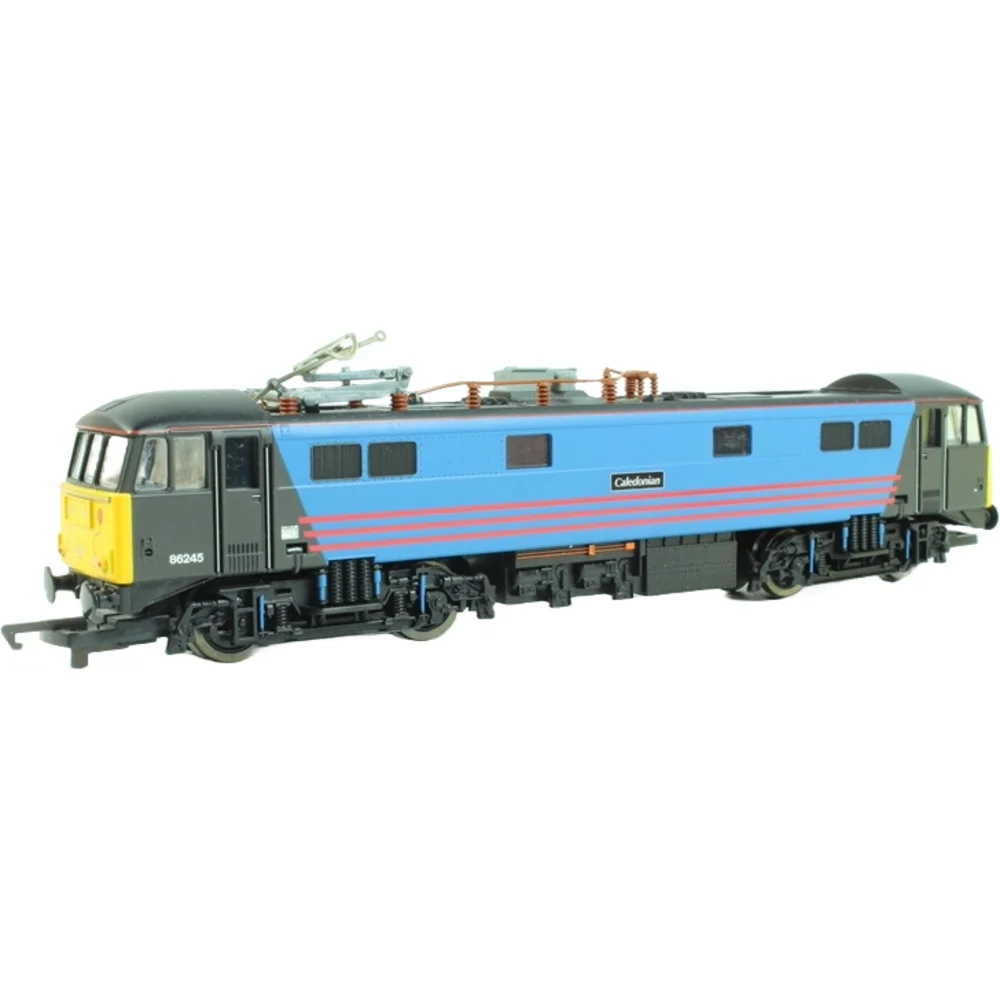
Unlike many withdrawn locomotive classes, the Class 86 achieved successful mainline preservation with three operational examples hauling charter trains across Britain's electrified network. This remarkable achievement reflects both the locomotives' continuing reliability and the preservation movement's maturity in managing complex electric traction. The diversity of preserved liveries—InterCity Swallow, Electric Blue, and Caledonian Sleeper—ensures authentic representation across multiple eras. For railway enthusiasts, these locomotives provide regular opportunities to experience Class 86 haulage on railtours and special services, maintaining living connections with 56 years of electric railway history.
Preservation efforts have secured three operational Class 86 locomotives for future generations. 86101 "Sir William A Stanier FRS" became the first preserved AC electric locomotive authorised for mainline operation in March 2007. Originally one of three Class 86/1 test-beds, this locomotive retains 110 mph capability and wears InterCity Swallow livery. Now owned by Locomotive Services Limited and based at Crewe, 86101 hauls regular charter trains across the West Coast Main Line, providing enthusiasts with authentic electric traction experiences.
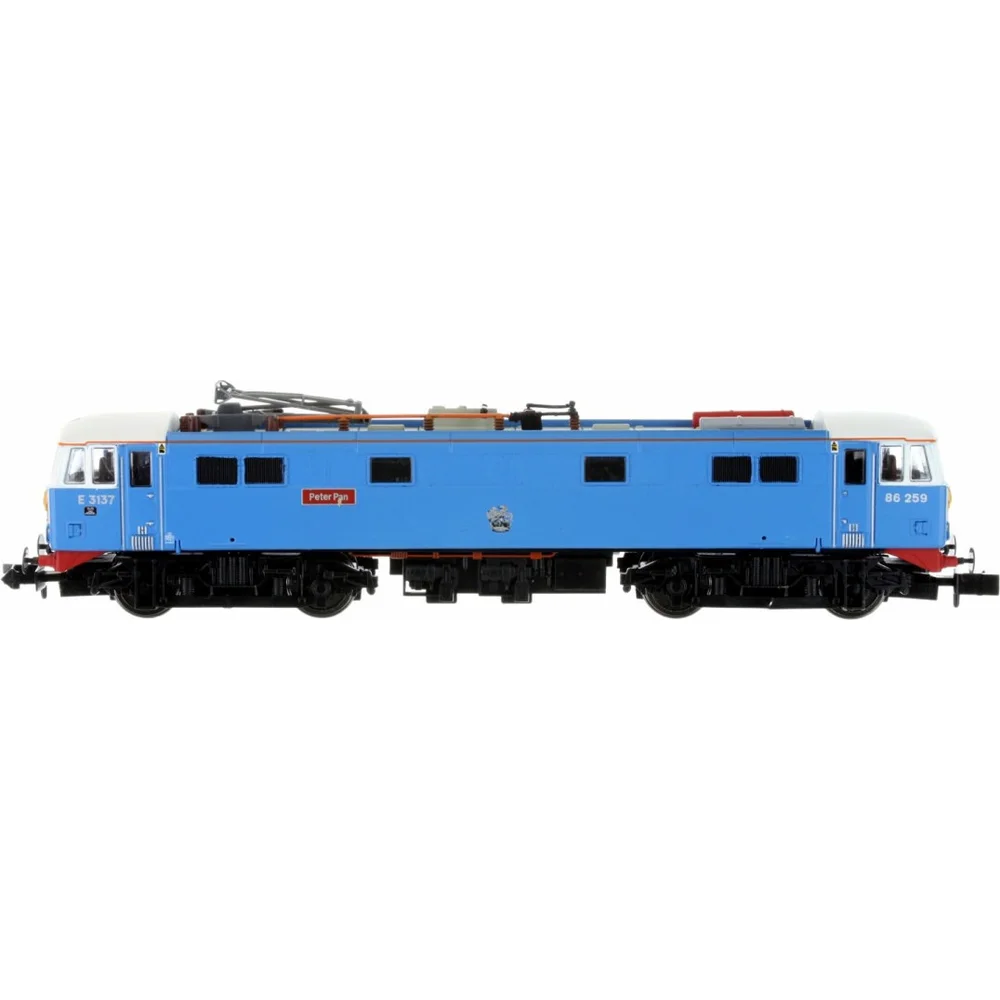
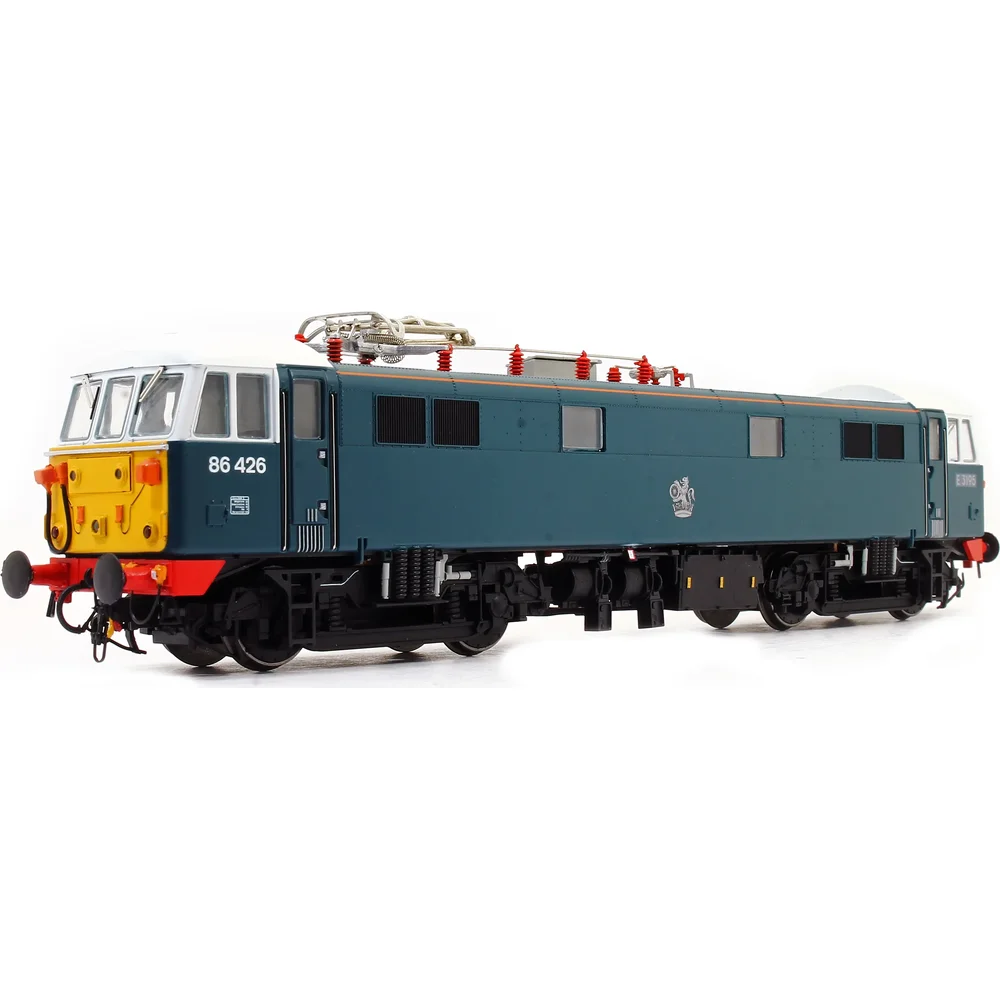
86259 "Les Ross / Peter Pan" wears original-style Electric Blue livery and operates Railway Touring Company's prestigious Cumbrian Mountain Express services via West Coast Railways. This locomotive displays unique dual naming—"Les Ross" on one side and "Peter Pan" on the other, with original number E3137 at one end and TOPS number 86259 at the other. The Peter Pan Locomotive Company purchased 86259 in December 2023, with 14 railtour dates scheduled for 2025 demonstrating strong commercial demand for Class 86 haulage.
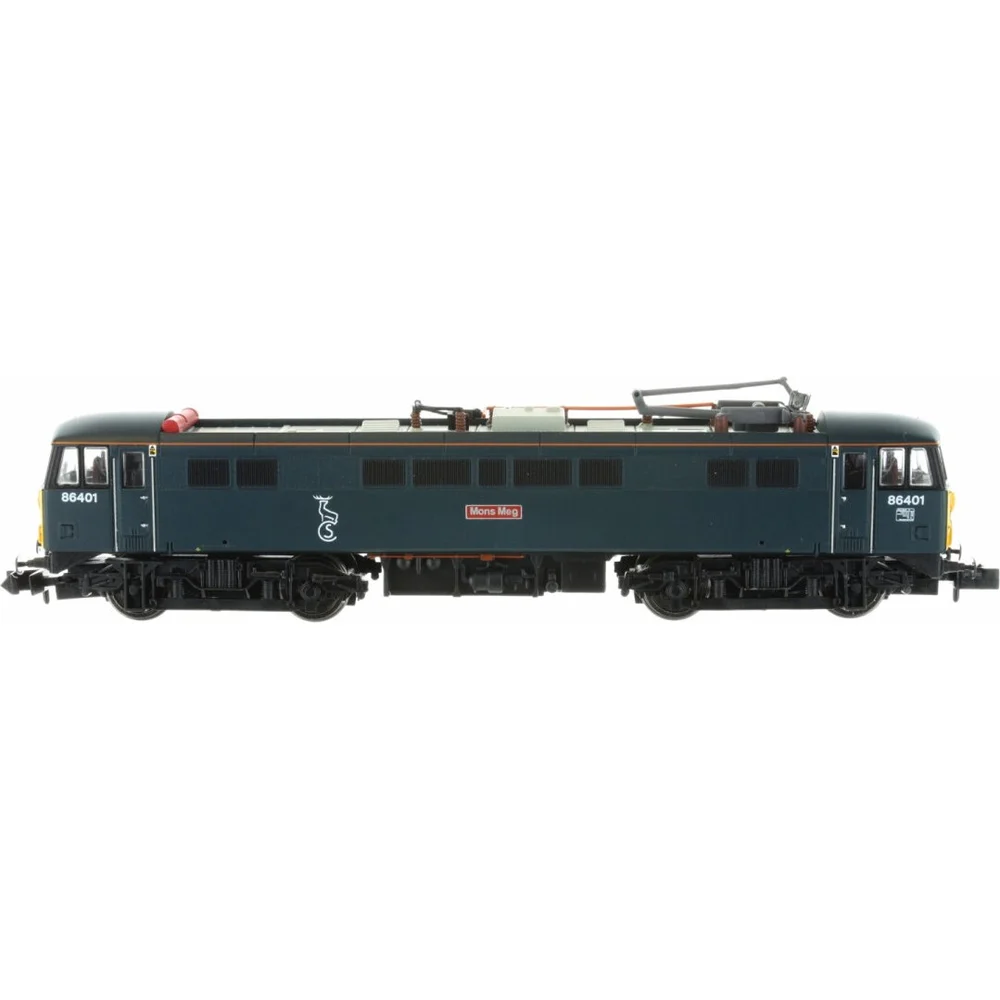
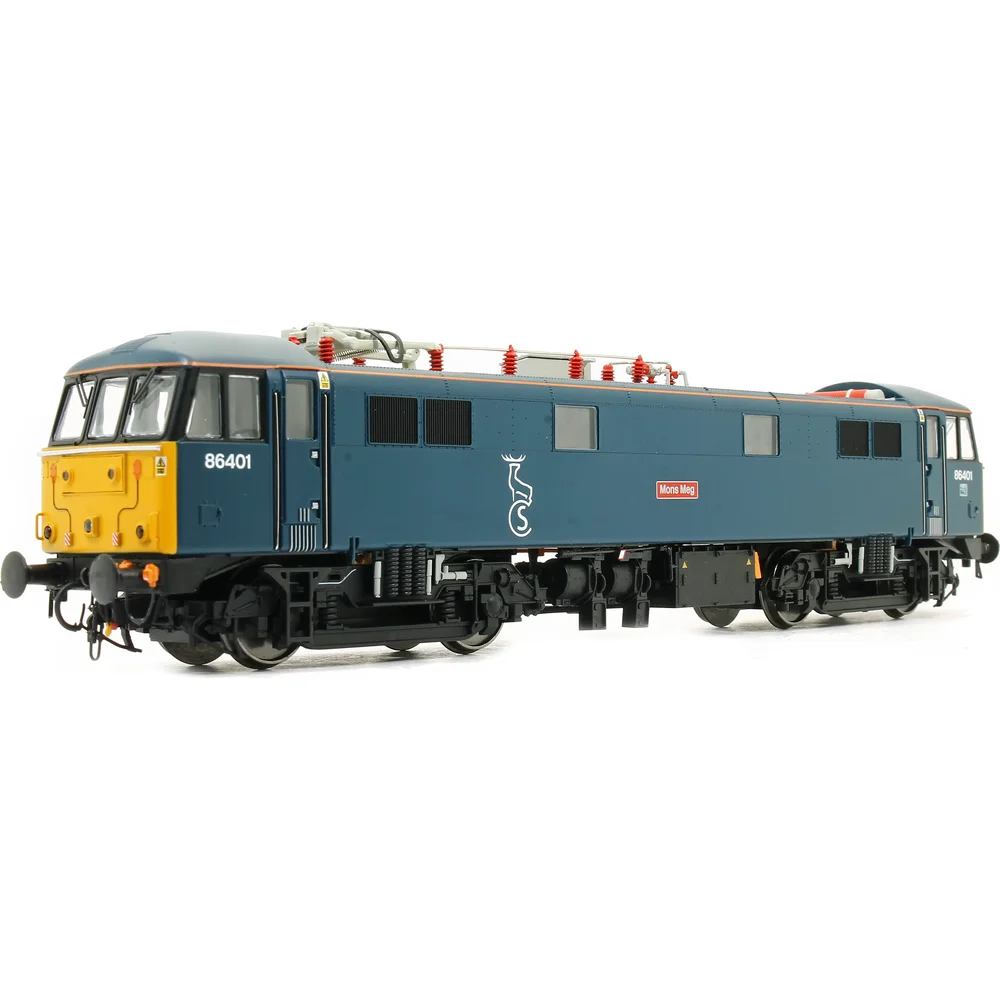
86401 "Mons Meg" belongs to West Coast Railways at Carnforth, wearing Caledonian Sleeper blue livery. Though operating less frequently than 86101 or 86259, this locomotive works occasional charter trains including Northern Belle luxury services. The locomotive's freight heritage—it originally carried 86/4 classification before conversion to 86/6—provides historical interest for enthusiasts documenting the class's diverse operational roles.
Static preservation proved more challenging for Class 86 locomotives. The National Railway Museum holds no Class 86 examples, reflecting the practical difficulties of displaying electric locomotives requiring overhead wire infrastructure. However, two cab sections from 86247 were saved by the South Wales Cab Preservation Group, with one later sold to private collectors and now displayed at Crewe Heritage Centre. A cab section from 86902 was also preserved, providing accessible viewing opportunities for enthusiasts unable to experience operational locomotives.
The engineering legacy extends beyond individual preserved locomotives. The Class 86 programme demonstrated that systematic technical improvement could extend service lives far beyond original expectations, validating continuous development over wholesale replacement. The flexicoil suspension modifications pioneered techniques subsequently applied to numerous British locomotive classes. The operational flexibility across passenger and freight duties established design principles for subsequent generations. These lessons informed British electric locomotive development through the Class 90, Class 91, and contemporary Hitachi Class 800-series bi-mode trains.
Modelling Significance and Scale Replications
The British Rail Class 86 presents exceptional modelling significance due to its position spanning six decades of British railway evolution, from 1960s BR Electric Blue through sectorisation and privatisation to contemporary freight operations. For railway modellers seeking authentic electric traction, Class 86s provide compelling prototype appeal enhanced by remarkable operational diversity, extensive livery variations, and geographic deployment across Britain's entire 25 kV AC overhead network. The class's continuous technical evolution through multiple subclass designations creates fascinating opportunities for period-specific modelling accuracy.
The modelling landscape has evolved dramatically, with current ready-to-run offerings representing quantum leaps beyond earlier products. Hornby dominated for decades with their original Ringfield motor tooling introduced in 1981, producing numerous variants through catalogue numbers R289 onwards. These models featured the characteristic Ringfield pancake motor, driving one bogie via gears and the second via a rotating shaft beneath the chassis. Whilst groundbreaking for their era, these models lacked DCC sockets (requiring hardwiring for digital operation), offered relatively limited detail, and suffered occasional mechanical reliability issues. Contemporary examples appear regularly on pre-owned markets for £40-£130 depending on condition and livery.
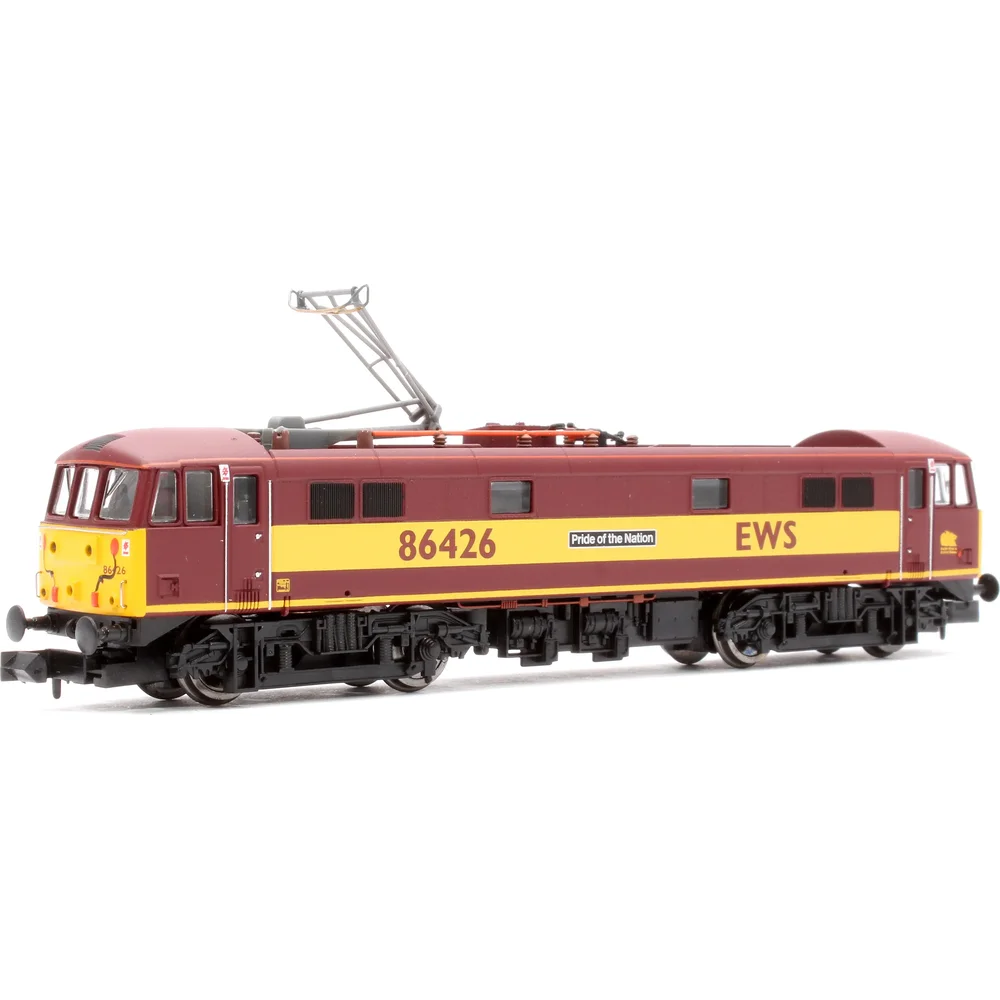
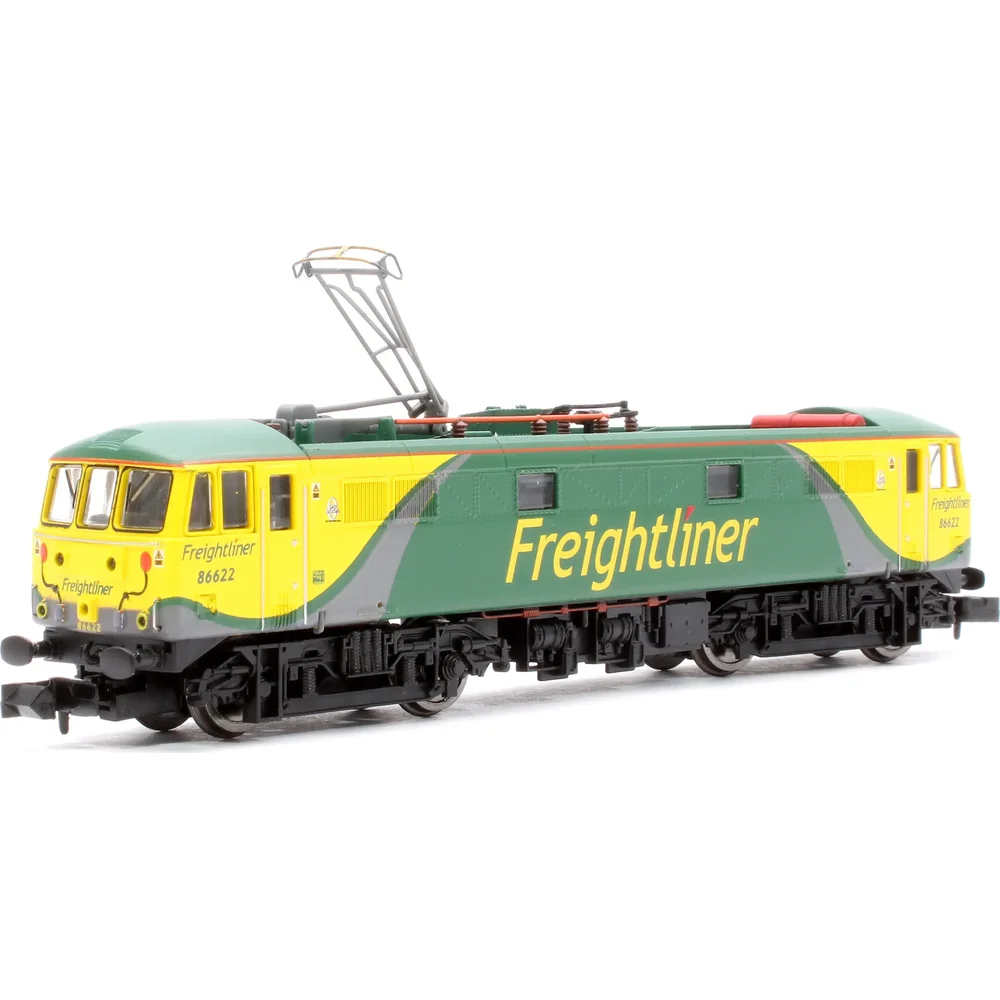
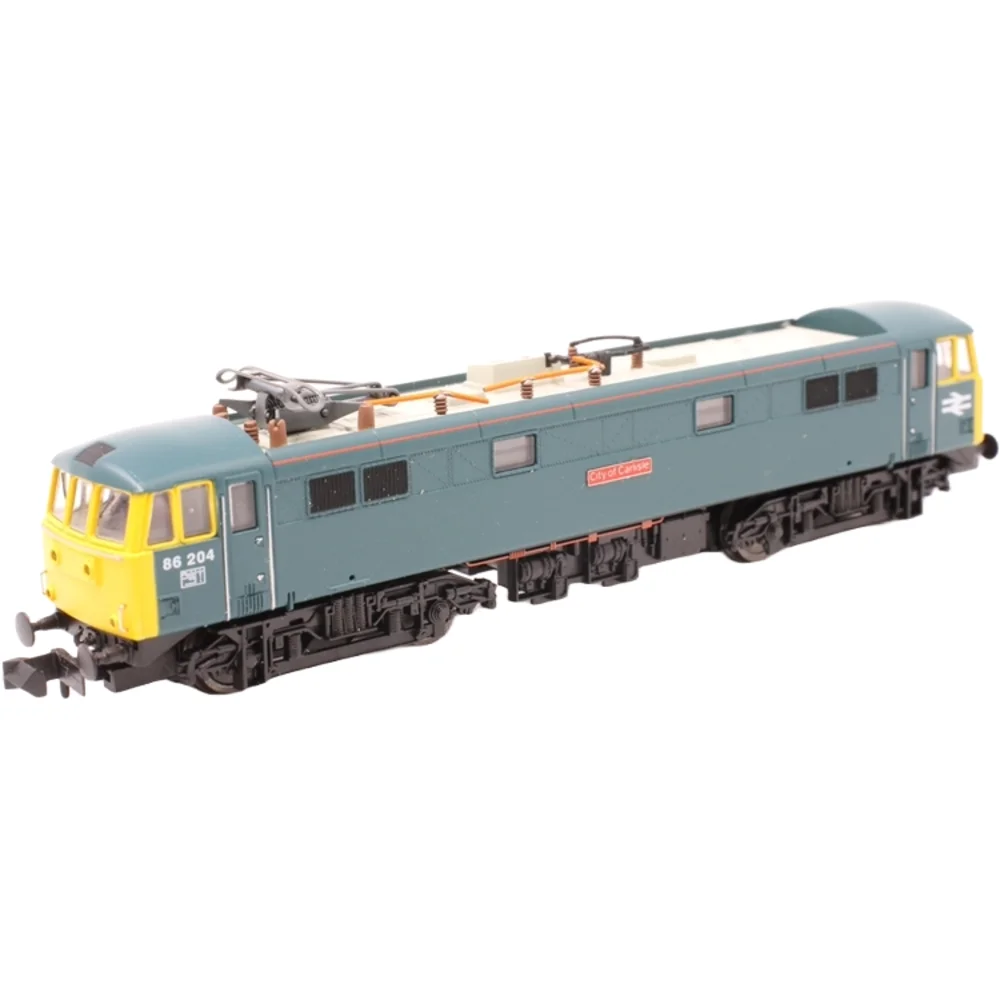
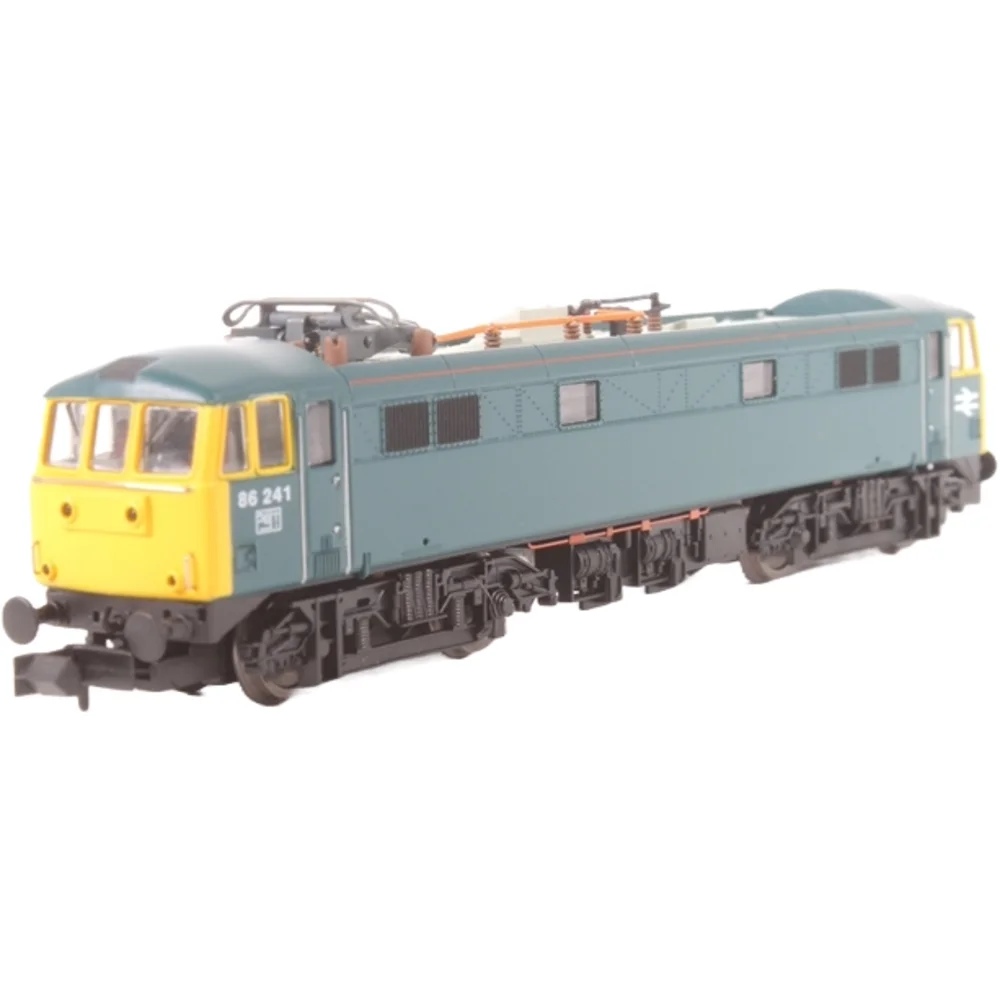
Heljan transformed Class 86 modelling in OO gauge with superior new tooling introduced from 2021. Their comprehensive range covers multiple subclass variants with unprecedented accuracy and technical sophistication. The engineering represents modern ready-to-run standards: 21-pin DCC interface enabling plug-and-play decoder installation, LED directional lighting with independently controllable headlights, illuminated four-character headcodes using miniature displays, provision for 28mm speakers beneath removable roof panels, and working poseable pantographs with fine wire pickups creating authentic overhead wire contact simulation.
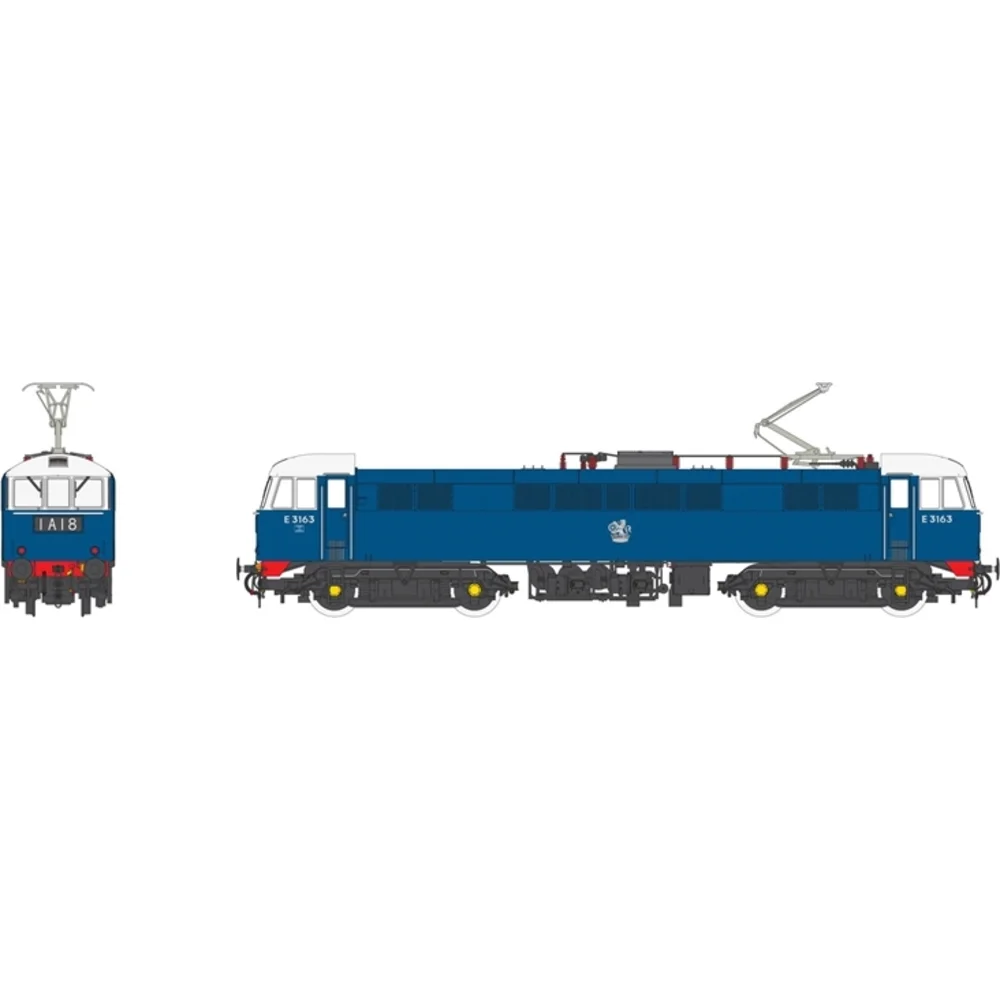
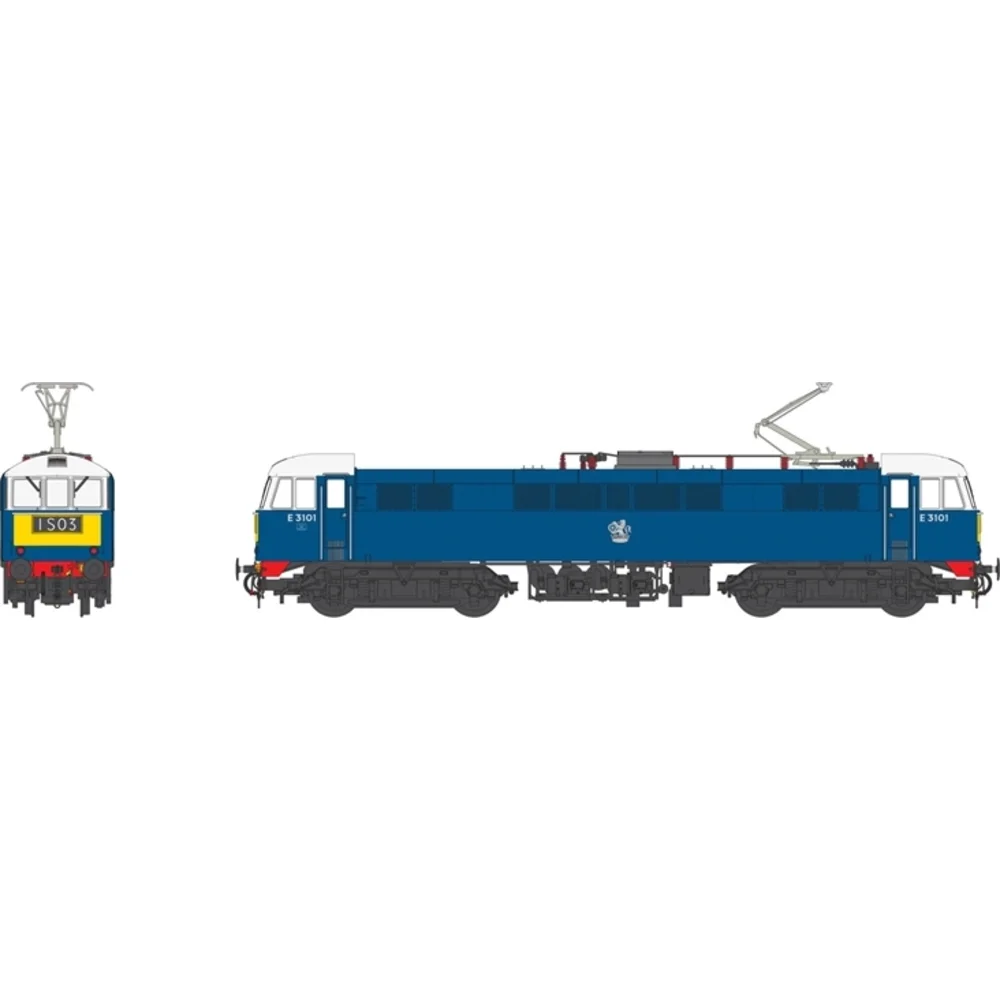
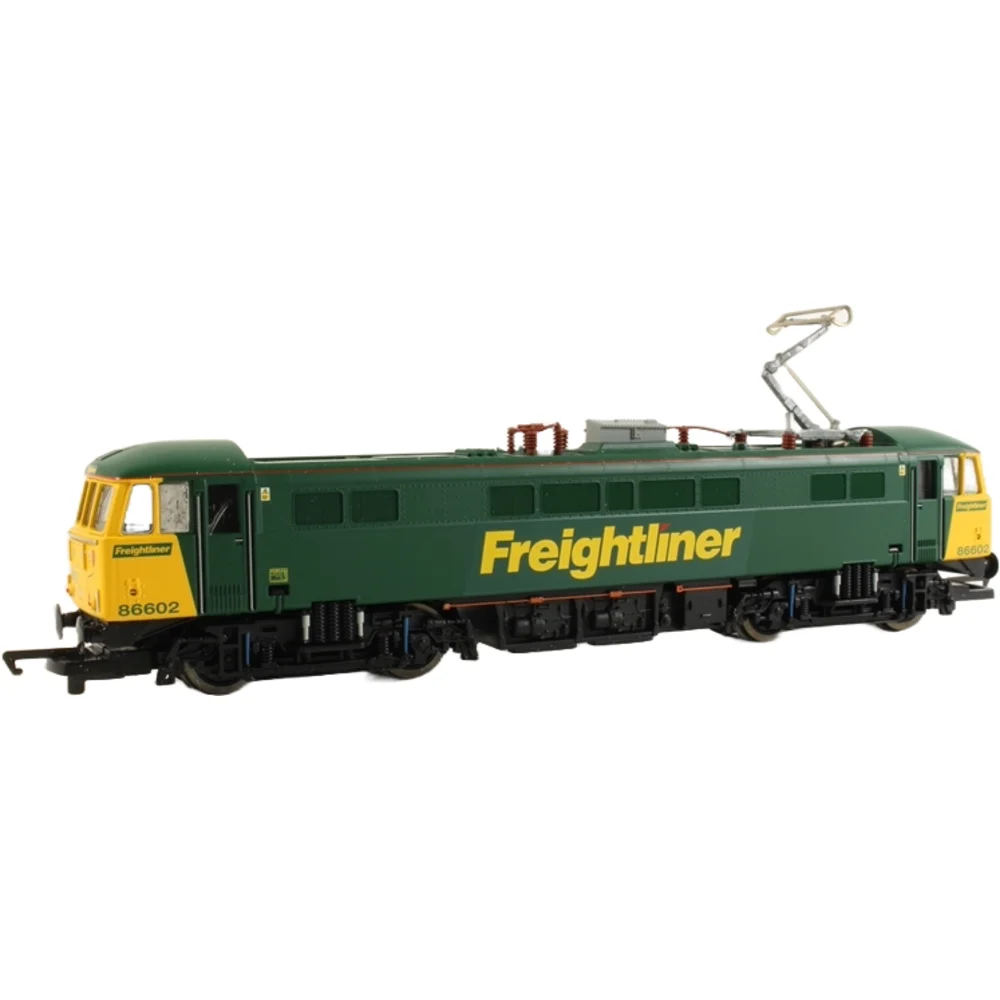
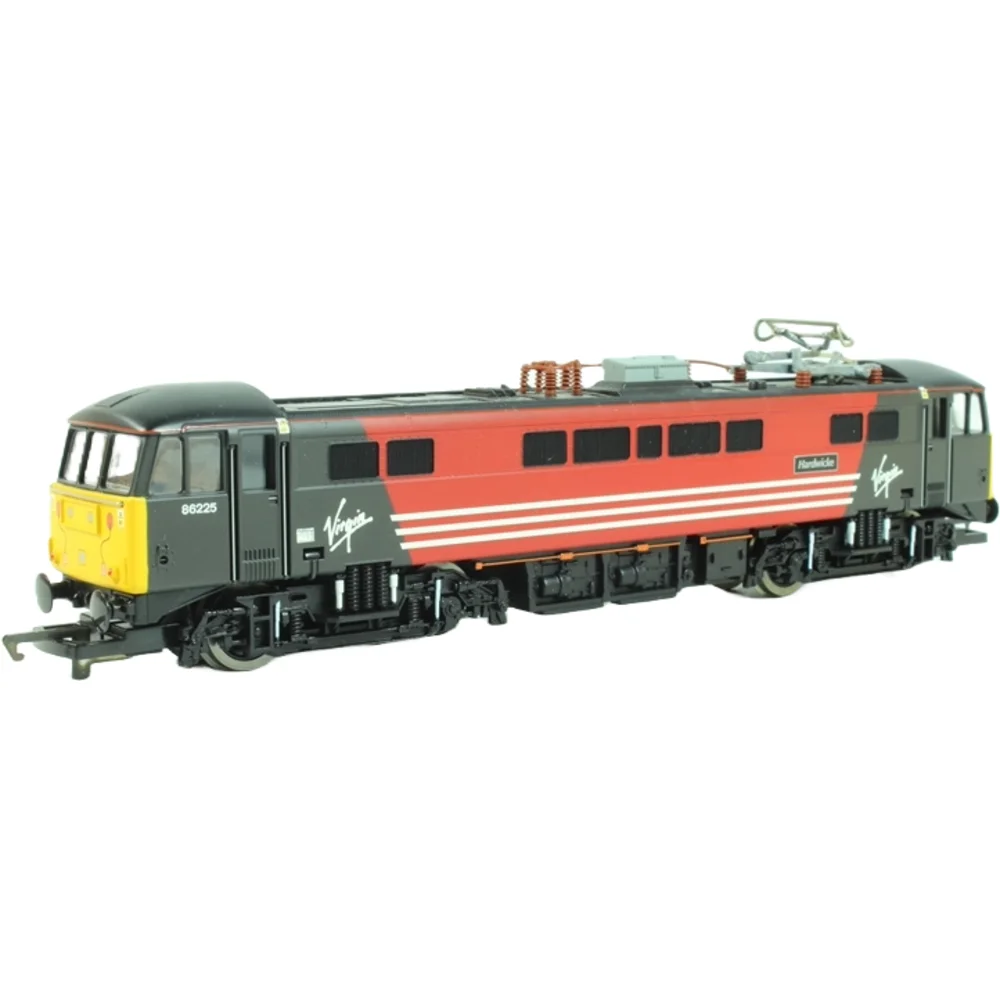
Heljan's catalogue organisation reflects careful attention to prototype variations. The Class 86/0 "as built" series (catalogue numbers 8650-8658) represents original condition locomotives with axle-hung motors and 80 mph restriction, typically in early BR Electric Blue livery. Retail pricing ranges £186-£240 depending on specific variant and retailer. Class 86/4 and 86/6 versions (8640-8649) depict later freight-dedicated examples, available in Railfreight Distribution grey, Rail Express Systems red, EWS maroon, and Freightliner green variants. Class 86/2 models (8621-8637) cover the crucial flexicoil-modified express passenger locomotives, offered in BR Large Logo Blue, InterCity Executive, InterCity Swallow, Virgin Trains red, and Anglia Railways turquoise.
Advanced Modelling: Subclass Identification
Heljan's tooling variations enable period-specific accuracy across the Class 86's technical evolution. Class 86/0 models feature original leaf spring bogies with axle-hung motors, appropriate for 1965-1971 layouts. Class 86/2 variants show distinctive flexicoil spring bogies with large visible coils, correct for 1971-2005 express passenger operations. Class 86/4 and 86/6 examples may include freight-specific details like isolated train heating equipment. Matching locomotive subclass to layout era creates authentic atmosphere—86/0s restricted to secondary passenger and freight duties, 86/2s dominating WCML expresses, 86/6s working Freightliner container trains in pairs. Consult prototype photographs when selecting models to ensure bogie types match your chosen period.
Kernow Model Rail Centre offers exclusive Heljan variants unavailable through standard distribution, including 86402 in BR Rail Blue and other limited-edition liveries. These special releases typically feature identical mechanical specifications to standard models but provide livery options filling gaps in Heljan's main catalogue. Pricing generally matches or slightly exceeds standard releases, reflecting the exclusivity and often more limited production quantities.
The technical execution throughout Heljan's range impresses. A powerful five-pole motor with twin flywheels drives both bogies through geared transmission, ensuring smooth operation at realistic crawling speeds appropriate for station work whilst maintaining sufficient power for long express formations on gradients. All-wheel electrical pickup collects current from eight contact points, maximising reliability on slightly dirty track or through insulated point frogs. The diecast metal chassis and body weights provide excellent stability and low centre of gravity. Models measure approximately 240mm in length, accurately matching the 58ft 6in prototype when scaled to OO gauge's 4mm:1ft proportion.
Detail quality reaches impressive standards for ready-to-run models. Separately applied components include fine wire handrails, multiple working unit cables, vacuum brake pipes, corridor connection, and detailed brake rigging beneath the underframe. Factory-fitted glazing includes printed cab interior detail with driver's seats, control desks, and instrument panels visible through windows. The roof equipment shows transformer cooling grilles, resistor banks, and circuit breaker housings. Sprung metal buffers provide authentic appearance and cushioning during coupling. Close coupling via NEM362 standard coupling pockets enables realistic train formations with minimal gaps between vehicles.
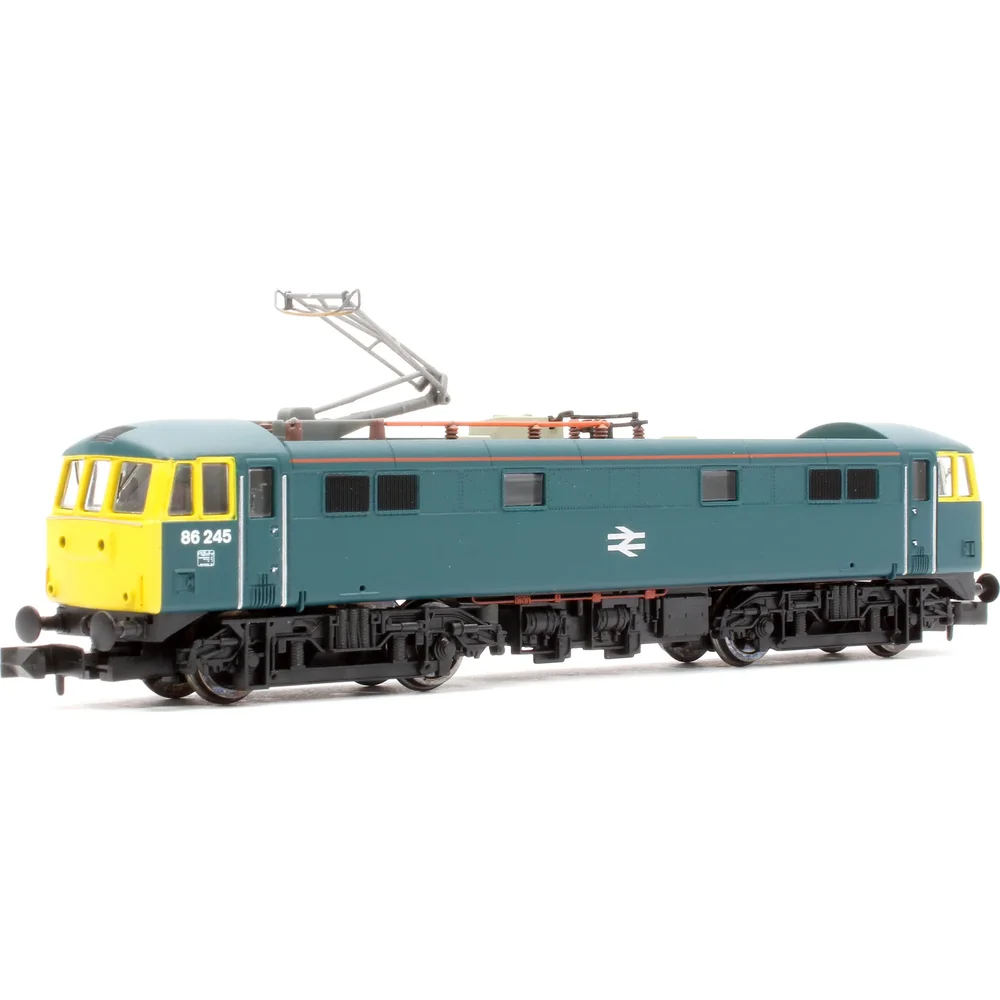
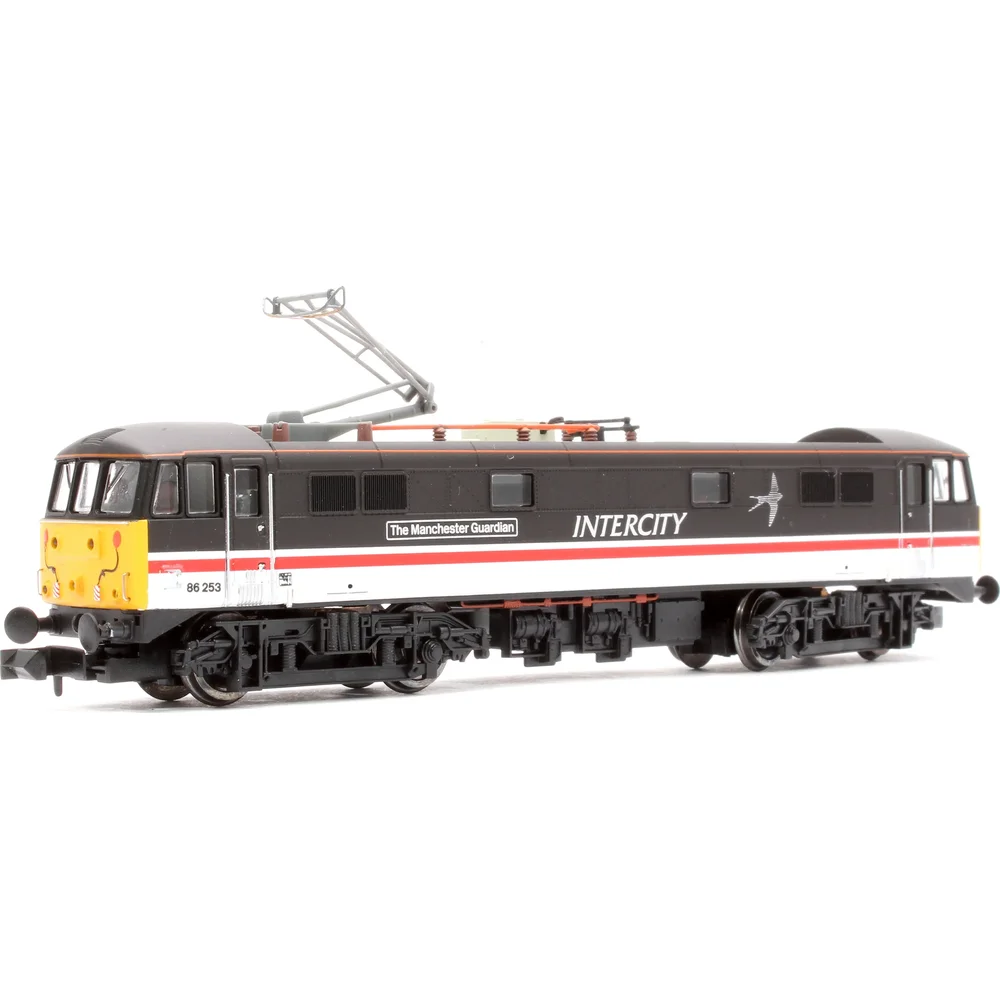
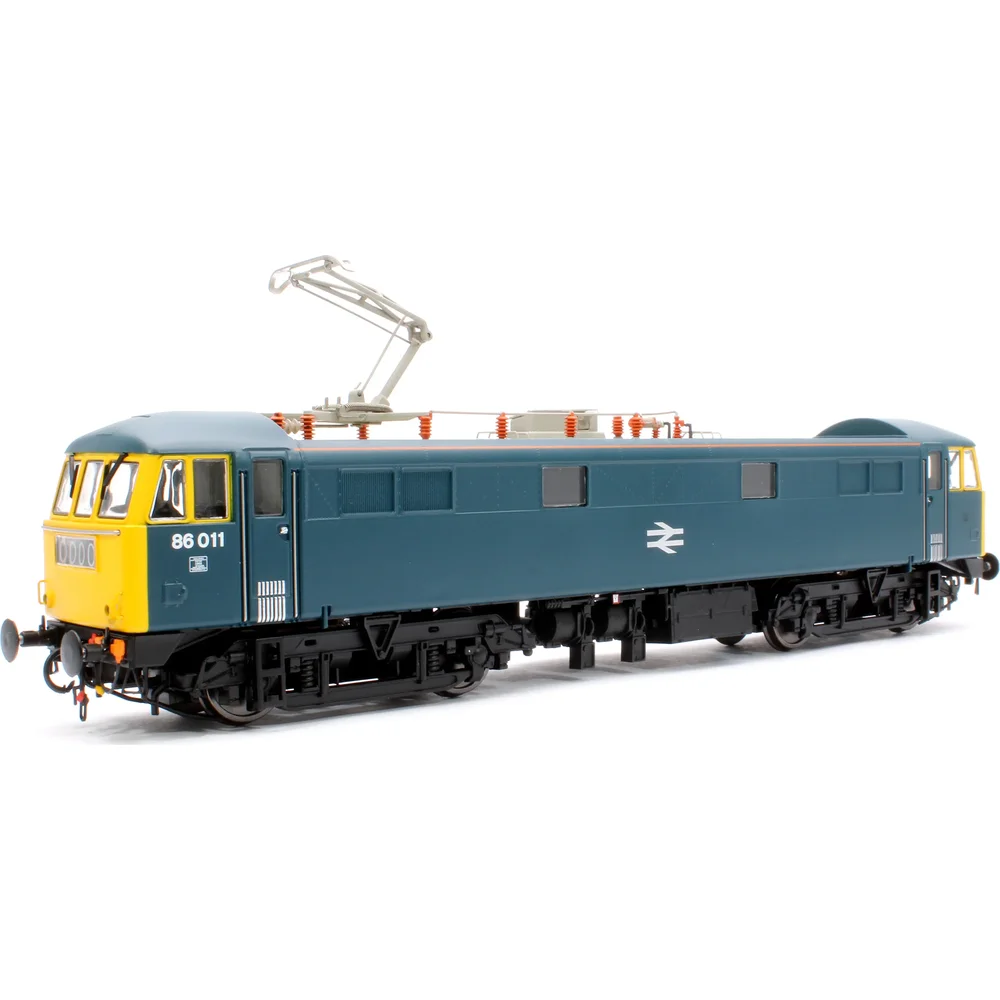
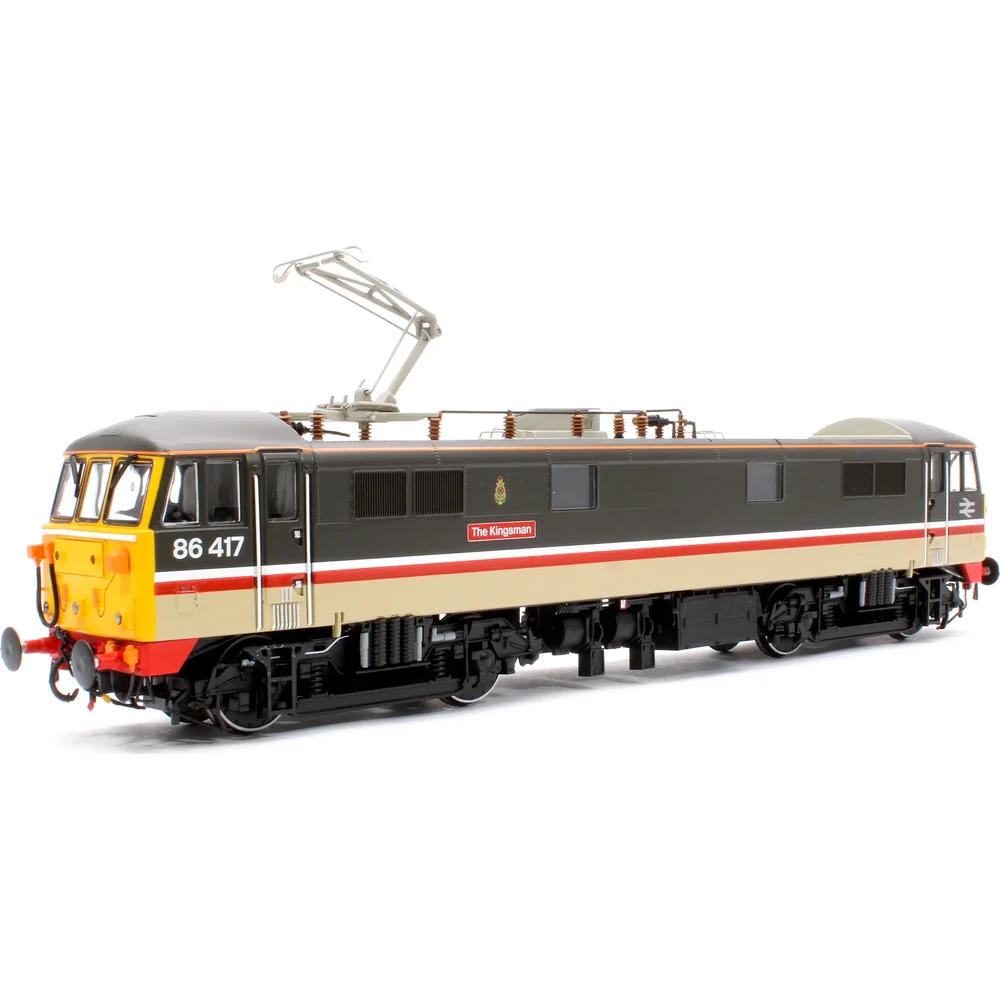
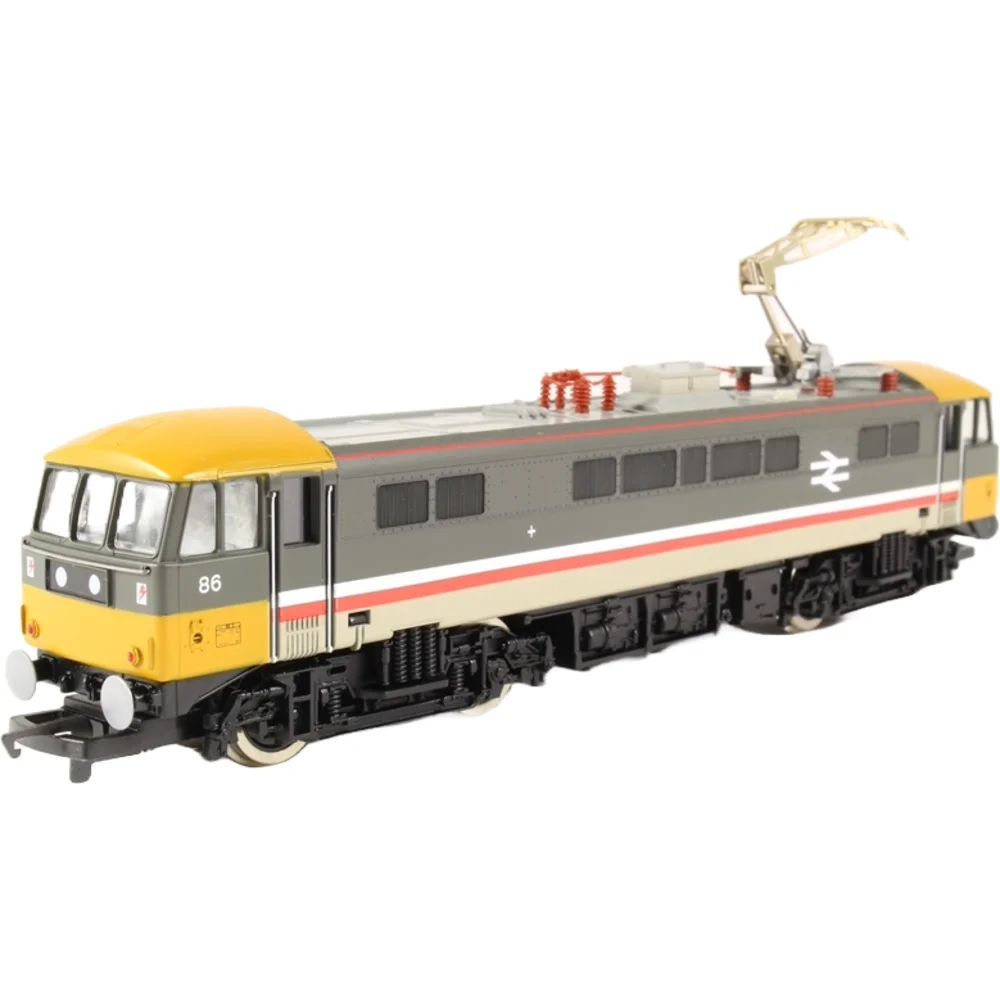
Livery application demonstrates meticulous research and execution. Heljan consulted prototype photographs and paint specifications to ensure authentic colours, lining patterns, and logo placement. The BR Electric Blue variants precisely match the vibrant shade with full yellow warning panels and early numbering styles. Large Logo Blue examples show correct two-tone application with white window surrounds. InterCity Swallow features accurate grey with red and white stripes. Freightliner liveries capture the evolution through multiple green shades and branding variations. Weathered examples would benefit from modellers' own application rather than factory finishing, enabling individual preferences for cleanliness levels.
N gauge modellers benefit from Dapol's modern Class 86 tooling introduced 2010. These models represent significant advances over earlier Lima products, featuring five-pole super-creep motors providing smooth slow-speed operation, all-wheel drive and electrical pickup from both bogies, detailed poseable pantographs with fine wire pickups, and Next18 DCC sockets enabling straightforward digital conversion. The chassis construction uses diecast metal for weight and stability, whilst the body moulding captures characteristic Class 86 proportions and details scaled to N gauge's 2mm:1ft proportion.
Dapol's catalogue numbers 2D-026-005 through 2D-026-008 cover major liveries including BR Rail Blue, InterCity Swallow, EWS maroon, and Freightliner Powerhaul green. DCC-ready versions retail at £104-£134 depending on livery and retailer, whilst factory DCC-fitted models incorporating sound decoders cost £134-£168. The sound-fitted variants provide authentic Class 86 audio including traction motor whine, tap-changer operation, cooling fan sounds, and two-tone horns—remarkable features for N gauge models where speaker installation traditionally proves challenging due to space constraints.
Historical Lima N gauge Class 86 models from the 1970s-80s appear occasionally on pre-owned markets, though these represented budget products sometimes incorrectly detailed or labelled. Collectors value them for nostalgia rather than operational quality, with typical prices £15-£40 depending on condition. These models featured crude mechanisms by modern standards, with single-motor drive, limited detail moulding, and non-standard couplings. Lima's bankruptcy and subsequent acquisition by Hornby ended production, with Dapol subsequently tooling superior replacements.
O gauge enthusiasts face significant disappointment—currently no O gauge ready-to-run Class 86 exists from major manufacturers including Heljan, ACE Trains, or Tower Models. No dedicated etched brass or white metal kits have been identified either, representing a substantial gap in the market for 7mm scale modellers seeking this iconic electric locomotive. The substantial tooling investment required for O gauge production combined with uncertain commercial returns apparently discourages manufacturers from addressing this gap. Skilled modellers could potentially scratchbuild Class 86 representations using brass or plasticard, though this demands advanced skills and substantial time investment.
Unique Modelling Tips and Layout Integration
Successfully incorporating British Rail Class 86 models into layout operation requires understanding the specialised nature of electric traction and the authentic operating scenarios that characterised BR and privatised railway electric services from 1965 onwards. Unlike diesel locomotives offering operational flexibility across any route, Class 86s demand electrified infrastructure with 25 kV AC overhead catenary—a significant modelling commitment that shapes entire layout design philosophies. Yet this specificity creates remarkable opportunities for authentic period atmosphere across six decades of British railway evolution.
Era selection proves fundamental to authentic Class 86 representation. Era 7-8 layouts (1966-1982) demand BR Electric Blue livery paired with Mark 1 or Mark 2 coaching stock in blue and grey, graduating to Mark 3 introduction from 1975. Infrastructure should show early overhead line equipment with relatively simple portal designs and ceramic insulators. Stations require period-appropriate signalling with semaphores gradually replaced by colour lights. The distinctive sight of gleaming Electric Blue locomotives hauling matching coaching stock through modernised stations creates powerful 1960s-70s atmosphere.
Era 9 (1983-1994) sectorisation requires matching locomotive and coaching stock liveries—InterCity Swallow on Mark 3 formations for express services, or Large Logo Blue on earlier stock for secondary work. Overhead line equipment should show BR's blue-painted steelwork introduced during this period. Station infrastructure demonstrates 1980s modernisation including digital departure boards and concrete platform furniture. Driving Van Trailers enable authentic push-pull operation from 1988, with locomotives positioned at trailing ends of formations.
Era 10 (1995-2004) privatisation modelling demands careful attention to operator-specific liveries. Virgin Trains red locomotives haul matching Mark 3 stock, Anglia Railways turquoise pairs with appropriate East Anglian coaching stock, whilst EWS maroon and Freightliner green operate freight formations. Infrastructure shows contemporary developments including CCTV cameras, modern LED signals, and security fencing. The diversity of operators and liveries creates visually interesting layouts reflecting this transitional period's commercial fragmentation.
Weathering Authenticity for Electric Traction
Class 86 weathering should reflect electric locomotive operational characteristics—generally cleaner than diesel equivalents due to absence of engine exhaust whilst showing specific electric traction weathering patterns. Focus carbon dust accumulation around roof-mounted pantograph equipment using black and dark grey powders, with streaking running down from pantograph bases toward cab ends. Brake dust should concentrate behind wheel arches in rust-brown tones. Roof equipment benefits from subtle oil staining around transformer cooler grilles. BR Blue livery exhibits characteristic fading and chalking, particularly on roof surfaces exposed to sunlight—replicate this using thinned lighter blue washes. Freight locomotives justify heavier lower-body soiling reflecting container terminal operations, whilst passenger examples should remain relatively clean befitting their prestigious duties.
Coaching stock selection requires careful period matching for authentic formations. Class 86s typically hauled 8-12 coach formations on WCML express services, comprising Mark 2 stock during the 1970s-early 1980s, graduating to Mark 3 introduction from 1975 onwards. InterCity-era layouts demand matching Swallow or Executive liveries across entire formations. Virgin Trains operations utilised Mark 3 stock in distinctive red livery until Pendolino replacement. Anglia Railways worked Mark 3 formations in turquoise and grey. Driving Van Trailers at formation ends enable authentic push-pull operation, with locomotives remaining at trailing positions throughout journeys.
Freight operations provide alternative modelling opportunities distinct from prestigious passenger services. Freightliner Class 86/6 locomotives operated in pairs on container trains, typically hauling 20-30 container flats between Crewe, Coatbridge, and Felixstowe. The double-heading reflected steep gradients on Scottish routes where single locomotives proved insufficient. Model these operations using paired Class 86/6s in matching Freightliner liveries hauling appropriate container wagons loaded with authentic period containers—older ISO boxes for 1970s-80s layouts, modern high-cube containers for 2000s-era modelling.
Operational sessions benefit from authentic duty cycles reflecting intensive electric traction utilisation. A typical Class 86 diagram might involve departing the depot for morning express service to Birmingham or Manchester, working a return service, then continuing with afternoon express to Glasgow, overnight positioning back to London depot. This intensive deployment pattern—enabled by rapid electric traction turnaround times compared to steam or early diesel—creates engaging operations whilst remaining prototypically accurate.
Layout infrastructure authenticity demands attention to electric railway specifics. Overhead line equipment represents the most visible requirement, with 25 kV AC catenary suspended from portal structures or individual masts. Model overhead systems range from simple representation using fine wire (adequate for static display) to functional systems using brass wire delivering current to pantographs (essential for operation). DCC systems enable overhead wire current collection, though most modellers prefer track-based pickup for reliability. Electrification infrastructure should include feeder stations, section insulators, and neutral sections at station throats—details adding authentic atmosphere even when non-functional.
Sound-equipped models enhance operational realism through authentic audio experiences. Programme sound decoders to emphasise characteristic Class 86 operational sequences: the distinctive AC traction motor whine increasing in pitch with speed, tap-changer clunking through notches during acceleration, cooling fan ramping up under load, air compressor cycling, and authentic two-tone horns. ESU LokSound 5 decoders fit Heljan's 21-pin socket, with specialist sound projects from Legomanbiffo (£118), Howes (£115-£120), and Olivia's (£115-£120) providing custom Class 86 recordings. Install 28mm speakers in sealed enclosures beneath removable roof panels for optimal bass response.
Detail enhancement elevates models beyond factory finish. Replace thick moulded handrails with fine wire versions from Alan Gibson or Mainly Trains, creating more delicate appearance matching prototype fineness. Add etched brass windscreen wipers from Shawplan or Extreme Etch—essential details improving frontal appearance. Fit separate etched nameplates where appropriate—86259 requires different names each side. Install crew figures from Modelu or Langley Models to bring cab interiors alive. Consider replacing bulky NEM couplings with close-coupling conversions or screw-link couplings from Wizard Models for authentic appearance, particularly on passenger stock.
Depot scenes offer excellent static display opportunities whilst demonstrating maintenance infrastructure specific to electric traction. Model a section of Willesden, Crewe, or Manchester Longsight depot featuring electric locomotive servicing facilities—pantograph maintenance platforms, transformer oil tanks, electrical test equipment, and battery charging points. Class 86s sharing depot space with Class 87, Class 90, or older Class 81-85 examples creates authentic atmosphere. Include overhead line equipment extending throughout depot areas, with locomotives positioned under live catenary during maintenance. Depot staff figures engaged in electrical testing, pantograph inspection, and routine servicing add operational realism.
Finally
The British Rail Class 86 represents far more than 100 electric locomotives; these machines embodied British Railways' transformation from steam-age operation to modern electric traction, establishing template designs and operational practices that shaped British railway development for generations. English Electric's elegant design—refined through continuous technical improvement addressing early problems—delivered 56 years of reliable service spanning express passenger duties through freight operations, validating the 25 kV AC electrification system's fundamental superiority over alternative technologies.
For railway historians, the Class 86 programme provides fascinating insights into engineering problem-solving and the value of systematic technical development over wholesale replacement. The axle-hung motor problems that restricted early locomotives to 80 mph freight work could have condemned the entire class to premature withdrawal. Yet British Railways' determination to develop flexicoil suspension solutions—validated through sophisticated VAMPIRE computer simulation—transformed Class 86s into 100 mph express passenger locomotives that dominated WCML services for three decades. This vindicated continuous improvement approaches whilst establishing dynamic analysis methodologies subsequently applied across numerous British locomotive classes.
The Class 86's remarkable operational diversity across six decades demonstrates adaptable design's enduring value. From pioneering WCML electrification through InterCity's express passenger peak, privatisation's commercial fragmentation, and finally Freightliner's container operations, these locomotives proved capable across every electric railway duty. The successful preservation of three operational examples ensures contemporary railway enthusiasts can experience authentic Class 86 haulage, maintaining living connections with this transformative design. The export success to Hungary and Bulgaria extends the story into the 2020s, with over 30 locomotives continuing active service on continental European freight networks.
The tragic absence of Class 86 representation from the National Railway Museum highlights practical challenges preserving electric traction requiring overhead wire infrastructure for display. Yet the preserved operational examples arguably provide superior public engagement—charter train passengers experience authentic Class 86 performance, sounds, and operational characteristics impossible to convey through static museum display. The diversity of preserved liveries spanning InterCity Swallow, Electric Blue, and Caledonian Sleeper ensures representation across multiple significant periods.
Heljan's exceptional OO gauge range and Dapol's N gauge offerings provide model railway enthusiasts with unprecedented opportunities to incorporate accurate Class 86 representation across any electrified layout from 1965 onwards. The comprehensive coverage of subclass variations, livery options, and technical specifications enables authentic period-specific modelling reflecting the class's continuous evolution. DCC sound-equipped variants deliver remarkable audio experiences, with specialist decoders capturing the distinctive AC traction motor whine, tap-changer operation, and authentic horns that characterised Class 86 operations throughout their service lives.
Model railway hobbyists incorporating Class 86s into layouts gain versatile electric traction suitable for prestigious WCML express services, secondary passenger work, mail trains, and intensive freight operations. The requirement for overhead electrification infrastructure—whilst demanding additional modelling effort—creates authentic electric railway atmosphere impossible to achieve with diesel traction alone. Whether recreating 1960s Electric Blue elegance, 1980s InterCity sophistication, or 2000s privatisation diversity, Class 86 models bring character and historical authenticity to any British electric railway layout.
As contemporary railway preservationists recognise electric traction's historical significance alongside traditional steam and diesel examples, the Class 86's preservation success establishes important precedents. The operational locomotives demonstrate that complex electric machines requiring specialised infrastructure can achieve sustainable preservation through charter operations and enthusiast support. Future generations will appreciate these remarkable machines as pivotal designs bridging British Railways' steam heritage with modern electric railway systems.
The British Rail Class 86 story ultimately celebrates engineering determination, systematic technical improvement, and operational adaptability across six transformative decades. When early problems threatened the entire programme, British Railways engineers refused surrender and developed innovative solutions that extended service lives far beyond original expectations. The sight and sound of a Class 86 working WCML expresses—with its distinctive AC motor whine and characteristic two-tone horns—became familiar to millions of passengers, establishing the audible and visual identity of modern British electric railways. This legacy ensures the Class 86 will remain recognised as one of Britain's most significant and successful electric locomotive designs, worthy of celebration through both operational preservation and outstanding ready-to-run models capturing this iconic traction across all its fascinating variations.
Frequently Asked Questions
Why was the Class 86 originally called AL6?
Before TOPS computerised numbering introduced in 1968, British Railways designated AC electric locomotives as "AL" (AC Locomotive) followed by design sequence numbers. The AL6 represented the sixth AC electric design, following experimental classes AL1-AL5 (later Classes 81-85). The "86" classification under TOPS reflected the design sequence when British Railways renumbered the fleet systematically. This change provided standardised identification compatible with emerging computerised freight and passenger information systems deployed during the late 1960s-early 1970s.
What made the Class 86/1 different from other subclasses?
Only three locomotives (86101-86103) received the rare 86/1 designation after conversion to Class 87 development test-beds during 1970-71. They received BP9 bogies with frame-mounted motors, upgraded transformers delivering 5,000 hp output—significantly exceeding standard Class 86 ratings—and enhanced control systems. This combination achieved 110 mph maximum speed compared to 100 mph for Class 86/2 or just 80 mph for unrebuilt Class 86/0 variants. The engineering data proved invaluable for Class 87 programme development.
Where can I see a preserved Class 86 in the UK?
Three operational Class 86 locomotives work charter trains across Britain's electrified network. Locomotive 86101 operates from Crewe with Locomotive Services Limited in InterCity Swallow livery. Number 86259 works Railway Touring Company's Cumbrian Mountain Express services based at Rugby, wearing Electric Blue with dual naming "Les Ross/Peter Pan". Locomotive 86401 belongs to West Coast Railways at Carnforth in Caledonian Sleeper blue. No Class 86 appears at the National Railway Museum due to electric traction display challenges requiring overhead wire infrastructure.
Are any Class 86 cab sections preserved for static display?
Yes, several cab sections survived for static preservation. Two cab sections from 86247 were saved by the South Wales Cab Preservation Group, with one later sold to private collectors and now displayed at Crewe Heritage Centre providing accessible public viewing. A cab section from scrapped Network Rail testing unit 86902 was also preserved by private owners. These static displays enable enthusiasts to examine authentic Class 86 cab layouts, control equipment, and driver working positions without requiring complex overhead electrification infrastructure.
Which manufacturers currently produce Class 86 models in OO gauge?
Heljan produces the definitive OO gauge Class 86 with superior tooling introduced from 2021, offering comprehensive coverage of Class 86/0, 86/2, 86/4, and 86/6 subclasses across major liveries. Features include 21-pin DCC interface, LED lighting with illuminated headcodes, working pantographs, and twin-motor drive. Prices range £186-£240 depending on variant. Hornby's earlier Ringfield motor models from 1981 tooling appear on pre-owned markets for £40-£130 but lack modern features including DCC sockets, requiring hardwiring for digital conversion.
Is there an N gauge Class 86 model available?
Dapol produces the only current N gauge Class 86 with modern tooling from 2010, featuring five-pole motors, all-wheel drive and pickup, detailed pantographs, and Next18 DCC sockets. Catalogue numbers 2D-026-005 through 2D-026-008 cover BR Blue, InterCity Swallow, EWS, and Freightliner Powerhaul liveries. DCC-ready versions retail £104-£134, whilst factory DCC-fitted sound models cost £134-£168. Historical Lima N gauge examples from 1970s-80s appear occasionally on pre-owned markets but represent budget products with crude mechanisms by contemporary standards.
Are there any O gauge Class 86 models?
Currently no O gauge ready-to-run Class 86 exists from any major manufacturer including Heljan, ACE Trains, or Tower Models. No dedicated 7mm scale etched brass or white metal kits have been identified either—this represents a significant gap for O gauge modellers seeking this iconic electric locomotive. The substantial tooling investment required combined with uncertain commercial returns apparently discourages manufacturers from addressing this market gap. Skilled modellers could potentially scratchbuild Class 86 representations, though this demands advanced techniques and considerable time investment.
What services did Class 86s typically work?
Class 86s dominated West Coast Main Line express passenger services from 1965 until 2003, working prestigious trains including The Caledonian, The Royal Scot, and The Clansman between London Euston and Birmingham, Liverpool, Manchester, Carlisle, and Glasgow. They also operated Liverpool Street-Norwich services from 1987-2005, mail trains for Rail Express Systems, and Freightliner container services until February 2021. Push-pull operation with Driving Van Trailers began 1988, enabling locomotives to remain at trailing ends throughout journeys, improving operational efficiency significantly.
How many Class 86s were exported abroad?
Approximately 32 Class 86 locomotives have been exported to continental Europe. Hungary's Floyd Zrt (later Eurogate Rail Hungary) operates nine as Hungarian Class 450 on international freight including Hamburg-Budapest intermodal services. Bulgaria acquired approximately 23 locomotives total—Bulmarket purchased initial examples in 2012 and 2016, whilst Express Services bought all 16 remaining Freightliner Class 86/6s in July-August 2023. Many Bulgarian locomotives have returned to active service, ensuring the Class 86 story continues well into the 2020s on European networks.
What liveries were carried by Class 86 locomotives?
Major liveries spanned six decades. BR Electric Blue with full yellow warning panels dominated 1965-1967. BR Corporate Blue with variations in yellow panel size followed. Large Logo Blue appeared from 1979. InterCity Executive grey and tan arrived 1984. InterCity Swallow grey with red and white stripes dominated from 1990. Privatisation brought Virgin Trains red, Anglia Railways turquoise, Rail Express Systems red, Railfreight Distribution grey, EWS maroon and gold, Freightliner multiple green variants, and Caledonian Sleeper blue. Special liveries included Anglia's Union Flag "Golden Jubilee" scheme.
How do I identify different Class 86 subclasses from appearance?
Class 86/0 locomotives retained original leaf spring bogies with axle-hung motors and 80 mph restriction—look for simpler bogie design. Class 86/1 (only three examples: 86101-86103) featured distinctive BP9 bogies from Class 87 development. Class 86/2 locomotives show characteristic large flexicoil spring coils visible in bogies, indicating 100 mph capability. Class 86/4 and 86/6 appear similar—86/6s were freight-dedicated with isolated train heating. Check number series: 86/1 (86101-86103), 86/2 (86204-86261), 86/4 (86401-86439), 86/6 (86601-86639). Bogie design provides most reliable visual identification method.
How does the Class 86 compare to the Class 87?
The Class 87 (introduced 1973) represented English Electric's next-generation design with thyristor control instead of mechanical tap-changing, eliminating wear and improving performance smoothness. Class 87s produced 5,000 hp from introduction versus the Class 86's 3,600-4,000 hp, achieved 110 mph capability as standard compared to 100 mph for rebuilt Class 86/2s, and lacked headcode boxes featuring streamlined nose profiles. Both classes worked together on WCML services through the 1970s-1990s, though Class 87s were considered superior for express passenger work requiring consistent high-speed performance.