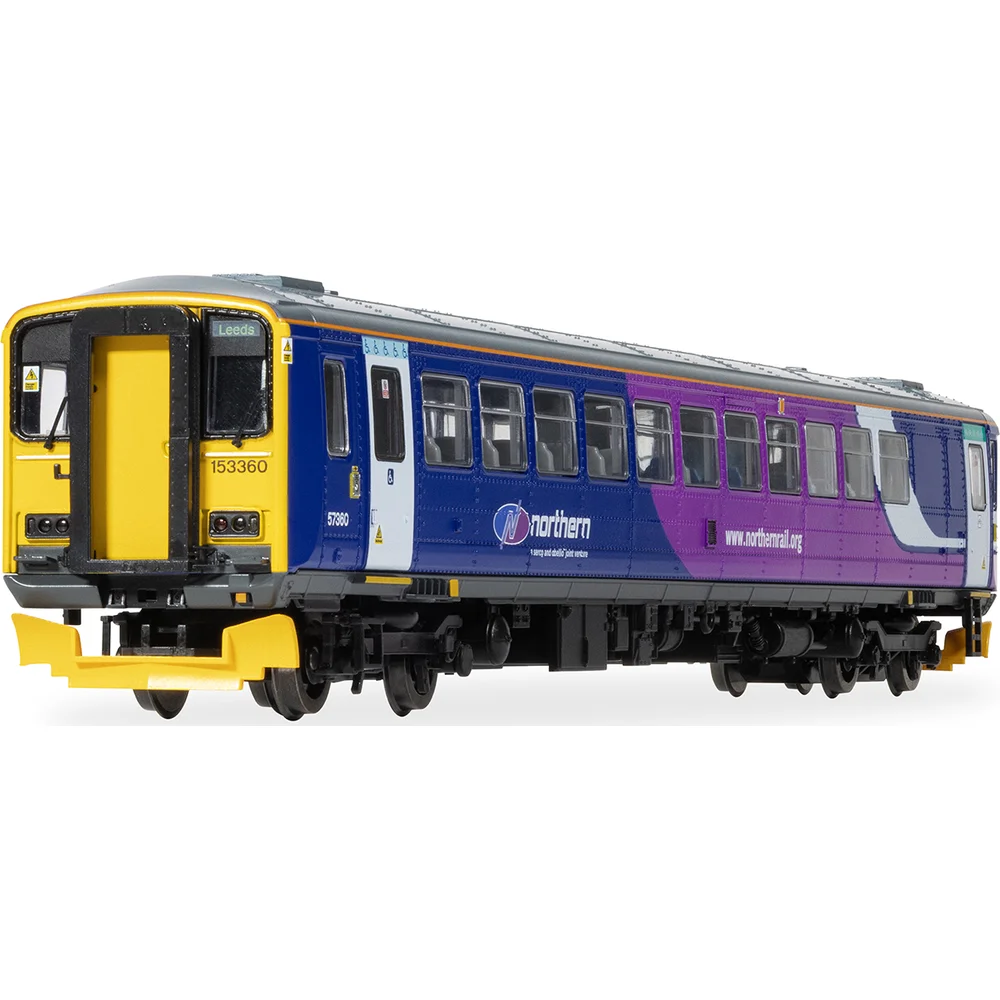
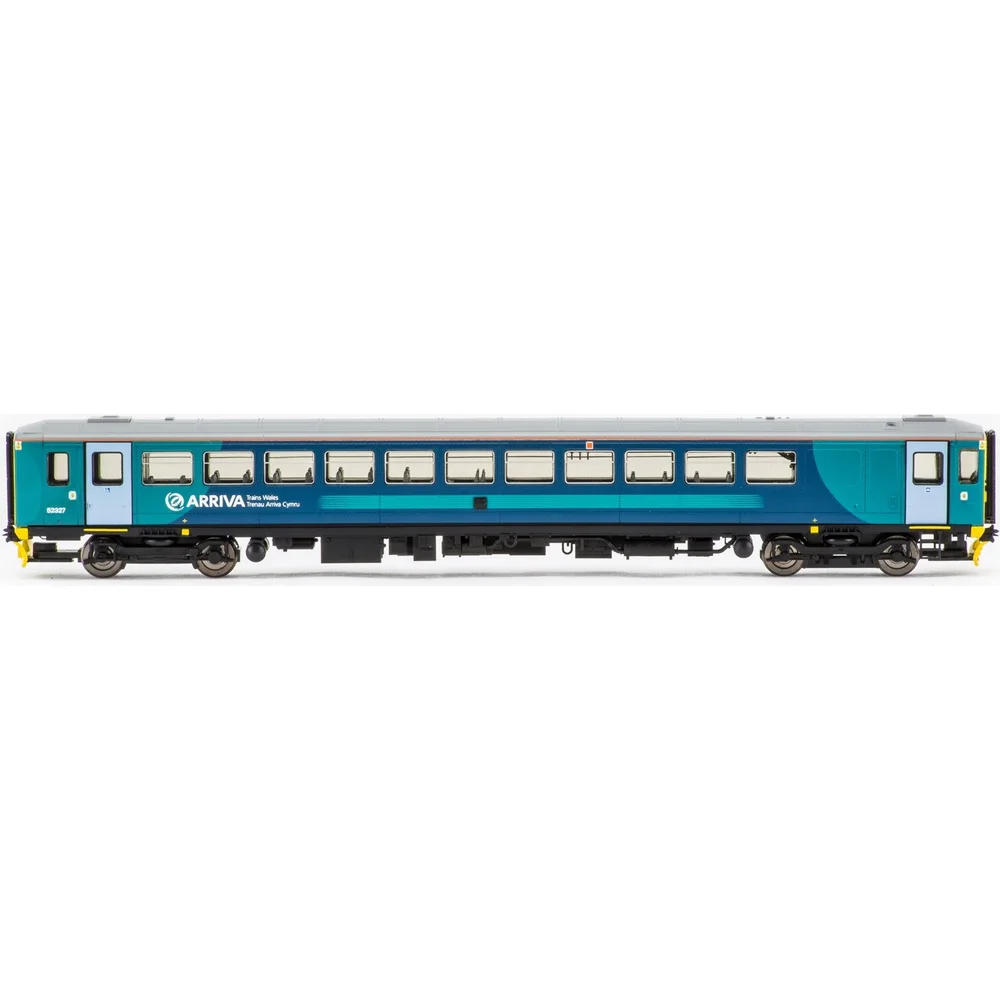
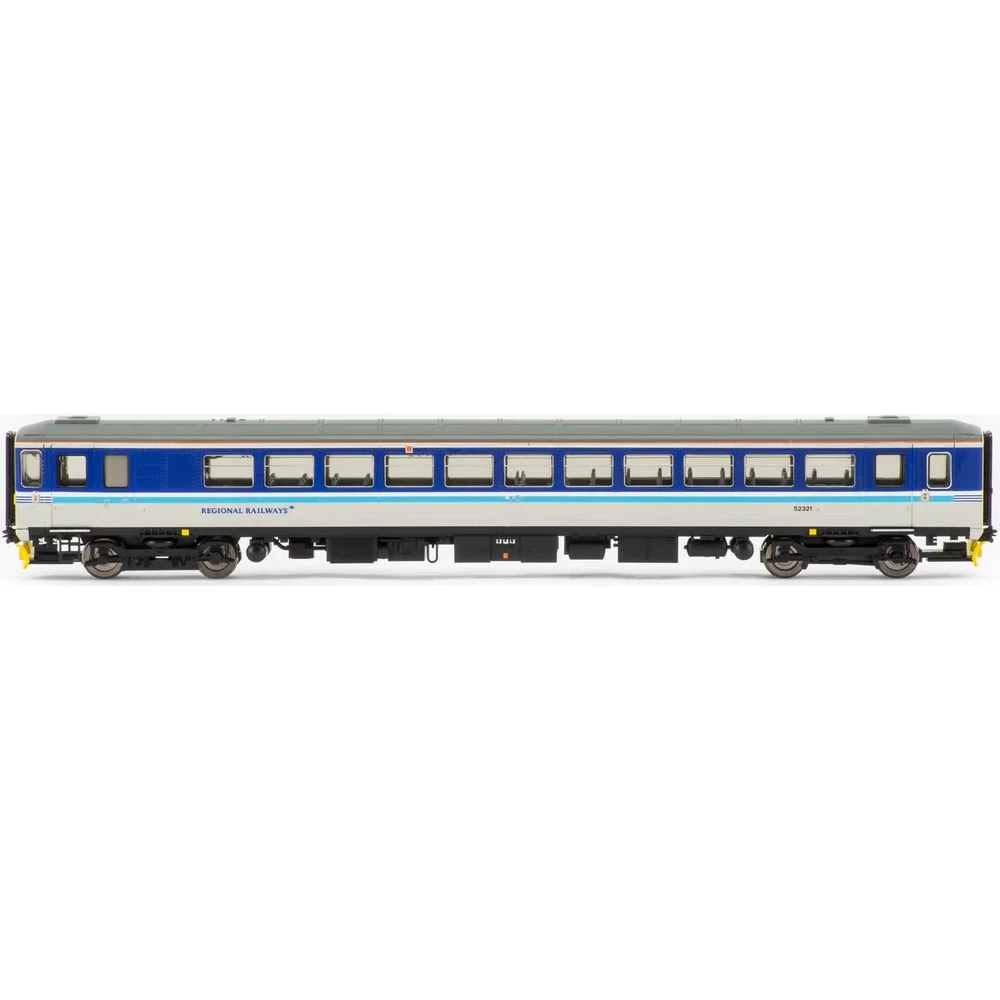
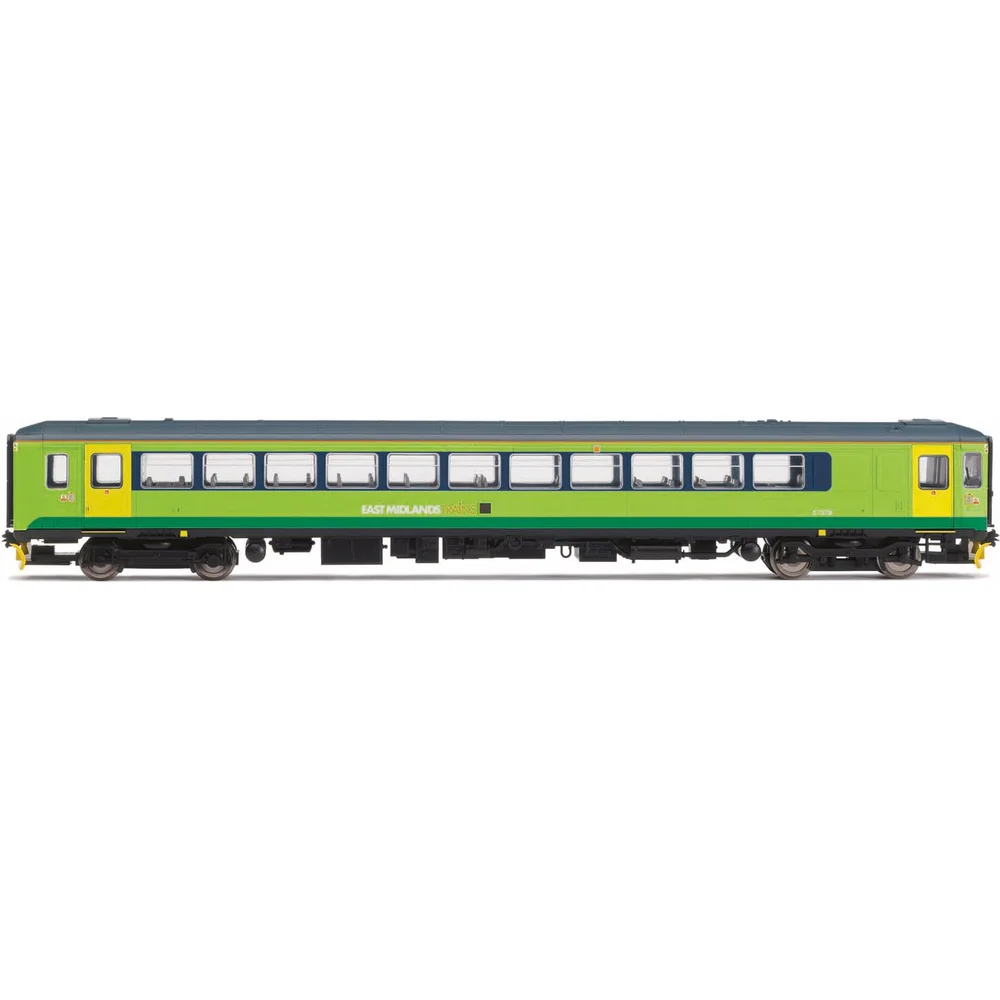
The British Rail Class 153 represents one of British Rail's most pragmatic solutions to a persistent operational challenge—how to economically serve rural and branch line routes with modern rolling stock. Created by splitting 35 Class 155 two-car diesel multiple units into 70 single-car railcars, the Class 153 became the workhorse of secondary routes across Britain from 1991 onwards. Today, 29 units remain in passenger service with Transport for Wales and ScotRail, whilst the Great Central Railway operates two preserved examples—making these versatile single-car DMUs increasingly attractive subjects for model railway layouts depicting the privatisation era through to the present day.
The conversion programme, undertaken by Hunslet-Barclay at Kilmarnock between 1991 and 1992, replaced the ageing Class 121 and 122 "Bubblecars" that had served branch lines since the late 1950s. Rather than ordering purpose-built single-car units, British Rail's Regional Railways sector took the innovative approach of retrofitting new driver's cabs to create two operational vehicles from each donor unit. This fleet cascade allowed efficient utilisation of relatively new rolling stock whilst addressing the specific capacity requirements of lightly-used rural services.
From serving the Heart of Wales Line to operating ScotRail's Highland Explorer services on the West Highland routes, the Class 153 proved that Samuel Johnson's philosophy of matching locomotive power precisely to operational requirements remained valid into the modern diesel era. The distinctive sight of these asymmetrical single-car units—with full-width A-end cabs and cramped retrofitted B-end cabs—now characterises branch line operations across Wales and Scotland. With Transport for Wales completing comprehensive refurbishment and converting six units to Active Travel specification with bicycle spaces, the Class 153 continues demonstrating remarkable adaptability 34 years after the first conversions entered service.
Quick Takeaways
- Seventy single-car units created: Converted from 35 Class 155 two-car Super Sprinters by Hunslet-Barclay at Kilmarnock between 1991-1992, numbered 153301-153385
- Asymmetrical design: Original full-width A-end cabs retained, whilst retrofitted B-end cabs feature cramped layout due to unchanged door positions creating distinctive appearance
- Cummins NT855-R5 power: 285 bhp six-cylinder turbocharged diesel driving through Voith T211r hydraulic transmission delivering 75 mph maximum speed and 10,500 lbf tractive effort
- Multiple working capability: BSI automatic couplers enable operation with Classes 142, 143, 144, 150, 155, 156, 158, 159, 170, and 172 with gangway connections for passenger movement
- Widespread privatisation deployment: Operated by Regional Railways, Wales & West, Wessex Trains, Central Trains, Anglia Railways, First Great Western, Northern Rail, London Midland, and current operators Transport for Wales and ScotRail
- Active Travel conversion: Six Transport for Wales units (Class 153/5) modified with 10 bicycle spaces each, entering service from February 2025 for sustainable transport promotion
- Comprehensive model availability: Hornby OO gauge models (£119-£152 RRP), Heljan new-tooling OO with DCC sound (£199-£299 Q3 2025), Dapol N gauge (£145-£178), and Heljan O gauge (£399-£519)
Historical Background and Context
The genesis of the Class 153 lies in British Rail's ambitious programme to replace first-generation diesel multiple units dating from the 1955 Modernisation Plan. By the mid-1980s, Regional Railways—known as Provincial sector until reorganisation in 1988—operated hundreds of life-expired railcars requiring expensive maintenance whilst offering passengers outdated facilities including slam doors, vacuum brakes, and spartan interiors that deterred patronage on rural routes already threatened by bus competition and private car ownership.
Leyland Bus constructed 35 Class 155 two-car Super Sprinters at their Workington factory between 1987 and 1988, incorporating bus-building techniques to reduce costs compared to traditional railway carriage construction methods. These units featured pre-formed aluminium panels riveted together on a welded floor assembly—a radical departure from conventional railway practice that attracted criticism from engineering traditionalists but delivered significant manufacturing economies. The Class 155 fleet was numbered 155301-155335 and allocated to Regional Railways depots across England and Wales for secondary passenger services requiring modern traction but not justifying locomotive-hauled formations.
A further seven Class 155 units (155341-155347) were built for West Yorkshire Passenger Transport Executive in 1989 following the initial production run. Crucially, WYPTE refused to allow their units to be split during the subsequent conversion programme, and these seven two-car sets survive today as the only operational Class 155s with Northern Trains—an ironic outcome given the wholesale conversion of the original British Rail fleet.
Regional Railways identified that two-car formations provided excessive capacity on many rural and branch line services. Running half-empty trains represented poor economics, particularly on routes where passenger numbers rarely justified even a single vehicle outside peak hours. The sector needed single-car railbus replacements capable of working independently whilst remaining compatible with the wider Sprinter fleet for strengthening duties during busier periods or special events requiring additional capacity.
Insider Tip: The Abandoned Class 152 Project
British Rail originally planned to convert Class 156 units into single-car vehicles designated Class 152, but this scheme was abandoned in favour of using the Class 155 fleet. Several factors influenced this decision beyond simple fleet availability. The Class 155s had experienced door reliability problems in early service, with incidents of doors opening whilst trains were in motion causing safety concerns that required expensive retrofitting. Additionally, a fleet cascade released Class 155 diagrams to other Sprinter types as Regional Railways standardised operations, making the two-car sets available for conversion without disrupting passenger services. The Class 156 fleet, by contrast, performed reliably and remained in heavy demand across the network.
British Rail awarded the conversion contract to Hunslet-Barclay in 1990, with work commencing at their Kilmarnock plant in Scotland the following year. The programme proceeded methodically through 1991-1992, eventually delivering 70 single-car Class 153 units that would serve rural and branch line routes for the next three decades and counting. The numbering scheme reflected the conversion process: DMSL(A) vehicles from the Class 155 sets (numbered 52301-52335) became units 153301-153335, whilst DMSL(B) vehicles were renumbered by incrementing 50 from their original numbers 57301-57335 to become 57351-57385, then designated as units 153351-153385.
The conversion process involved splitting each Class 155 at the inter-vehicle gangway connection and retrofitting a new driver's cab at the inner end—the B-end—of each vehicle. This engineering challenge created the class's distinctive asymmetrical appearance that remains immediately recognisable trackside. The original A-end cab retained its full-width configuration from the Class 155 design, providing drivers with generous space and good visibility. However, the retrofitted B-end cab proved notably smaller because the exterior door positions remained unchanged from the original intermediate vehicle layout, creating cramped conditions that would later cause industrial relations challenges.
ScotRail's ASLEF union branch negotiated that their Class 153s could only be driven from the spacious A-end cab for longer journeys, reflecting driver concerns about fatigue and ergonomics when operating from the restricted B-end position for extended periods. This operational constraint required careful diagram planning to ensure units faced the correct direction for longer-distance rural services, though short shuttle workings could utilise either driving position without union objection.
Design and Technical Specifications
The British Rail Class 153 retained the fundamental mechanical specification of its Class 155 parent, ensuring complete compatibility with the wider Sprinter family for multiple working operations whilst maintaining proven reliability characteristics. This engineering continuity delivered significant maintenance economies through parts commonality and standardised servicing procedures across the Regional Railways DMU fleet.
At the heart of the Class 153 sits the Cummins NT855-R5 six-cylinder turbocharged diesel engine—a robust powerplant producing 285 brake horsepower (213 kW) from 14.01 litres (855 cubic inches) displacement. This underfloor-mounted engine drives both axles of the inner-end powered bogie through a Voith T211r hydrokinetic transmission, providing smooth torque conversion and excellent acceleration characteristics for stopping services requiring frequent station starts. The final drive utilises Gmeinder units transmitting power to the wheelsets, creating a single-end powered configuration that proved entirely adequate for the class's branch line duties.
Maximum speed is restricted to 75 mph (121 km/h)—entirely appropriate for rural routes rarely offering extended straight sections permitting higher velocities. Tractive effort of 10,500 lbf (46.7 kN) provides sufficient pulling power for single-car operation and enables the units to haul failed vehicles or assist with strengthening duties when multiple-worked with compatible DMU types. Fuel capacity and range proved adequate for typical rural diagrams involving 100-150 daily miles without requiring intermediate refuelling stops.
The powered bogie employs the BREL P3-10 design—a proven truck providing good ride characteristics and reliable power transmission. The trailing bogie utilises the BREL BT38 type, offering smooth running whilst accommodating the weight distribution changes resulting from conversion from intermediate vehicle to driving unit. Both bogies feature coil spring primary suspension and air spring secondary suspension, delivering passenger comfort appropriate for rural railway operations whilst minimising track wear through controlled wheel loading.
Seating capacity varies by configuration reflecting the different requirements of various operators and the progressive modifications undertaken during three decades of service. Pre-PRM (Persons with Reduced Mobility) vehicles accommodated 66, 72, or 75 passengers in 2+2 medium-density airline-style seating arrangements. Units modified for PRM-TSI compliance—principally Transport for Wales' refurbished fleet—seat 59 passengers following the installation of accessible toilet facilities, wheelchair spaces, and improved internal circulation areas mandated by modern disability access regulations.
Technical Innovation: Multiple Working Capability
Class 153s feature BSI (Bergische Stahl Industrie) automatic couplers at both ends enabling multiple working with compatible DMU types including Classes 142, 143, 144, 150, 155, 156, 158, 159, 170, and 172. Gangway connections permit passenger movement between coupled units—a significant operational advantage over earlier single-car types like Class 121/122 Bubblecars that required passengers to detrain and board separately when units were coupled. This versatility enables flexible capacity management: single units on quiet periods, pairs for moderate loadings, or strengthening with two-car Sprinter sets during peaks or special events. For modellers, this means authentic mixed formations provide operational interest and variety on layouts depicting rural railway operations.
Door equipment comprises single-leaf sliding-plug automatic doors positioned at two locations per bodyside, replacing the slam doors of earlier generations and providing improved passenger safety alongside reduced dwell times at stations. The automatic operation integrates with the modern Train Management System controlling lighting, heating, ventilation, and passenger information displays. Contemporary safety features include dead man's handle vigilance systems, Train Protection and Warning System (TPWS), and Automatic Warning System (AWS) ensuring compliance with mainline railway safety standards despite the units' rural operational focus.
The distinctive external appearance—particularly the asymmetrical cab arrangements—immediately identifies Class 153s trackside. The full-width A-end cab features wrap-around glazing providing excellent forward visibility and generous internal space for driver controls, whilst the retrofitted B-end cab's narrower configuration reflects the constraints of converting an intermediate vehicle whilst retaining the original door positions. The Leyland Bus construction heritage remains visible in the riveted aluminium bodyside panels and the general proportions that differ subtly from contemporary railway carriage designs built by traditional rolling stock manufacturers.
Livery application areas include bodyside panels, cab ends, roof sections, and underframe components, with vinyl wrap technology enabling relatively economical repainting compared to traditional railway painting methods. This facilitated the proliferation of operator-specific colour schemes following privatisation, creating the diverse visual appearance that characterises the class across its operational history and provides modellers with extensive livery selection opportunities.
Service History and Operations
The British Rail Class 153 fleet entered service progressively from August 1991 as Hunslet-Barclay completed conversions at their Kilmarnock facility. Initial allocations distributed the 70 units across five principal Regional Railways depots reflecting the geographic spread of rural and branch line routes requiring economical single-car operation: Heaton (Newcastle) received 15 units, Tyseley (Birmingham) 20 units, Crown Point (Norwich) 16 units, Plymouth Laira 10 units, and Cardiff Canton 9 units.
This distribution enabled the class to replace ageing Class 121 and 122 Bubblecars across diverse rural railway environments. Northern England allocations supported Tyne Valley Line services between Newcastle and Carlisle, branches throughout County Durham and Northumberland, and connections serving rural Cumbrian communities. Midlands allocations covered an extensive network of secondary routes radiating from Birmingham including the Stratford-upon-Avon branch, Leamington-Coventry locals, and the distinctive Marston Vale Line between Bedford and Bletchley. East Anglian units served branches throughout Norfolk and Suffolk, connecting market towns with regional centres. West Country allocations covered Cornish branches including the scenic routes to Looe and St Ives, whilst Welsh units operated throughout the principality including the spectacular Heart of Wales Line between Shrewsbury and Swansea.
The operational pattern established during Regional Railways ownership would characterise Class 153 duties throughout their careers: predominantly single-car operation on lightly-trafficked rural routes, occasional strengthening into pairs during busier periods, and multiple working with other Sprinter types when passenger loadings justified additional capacity. The flexibility inherent in the BSI coupling system proved invaluable for managing capacity efficiently without requiring dedicated coupled formations.
Fleet ownership transferred to rolling stock leasing companies in April 1994 as British Rail's privatisation programme gathered momentum. Angel Trains acquired 30 units whilst Porterbrook took the remaining 40, establishing the leasing arrangements that would govern subsequent Train Operating Company access to the fleet. Upon rail privatisation's completion on 31 March 1997, Class 153s passed to multiple Train Operating Companies inheriting Regional Railways' network of rural and secondary routes.
Operational Insight: Livery Diversity Through Privatisation
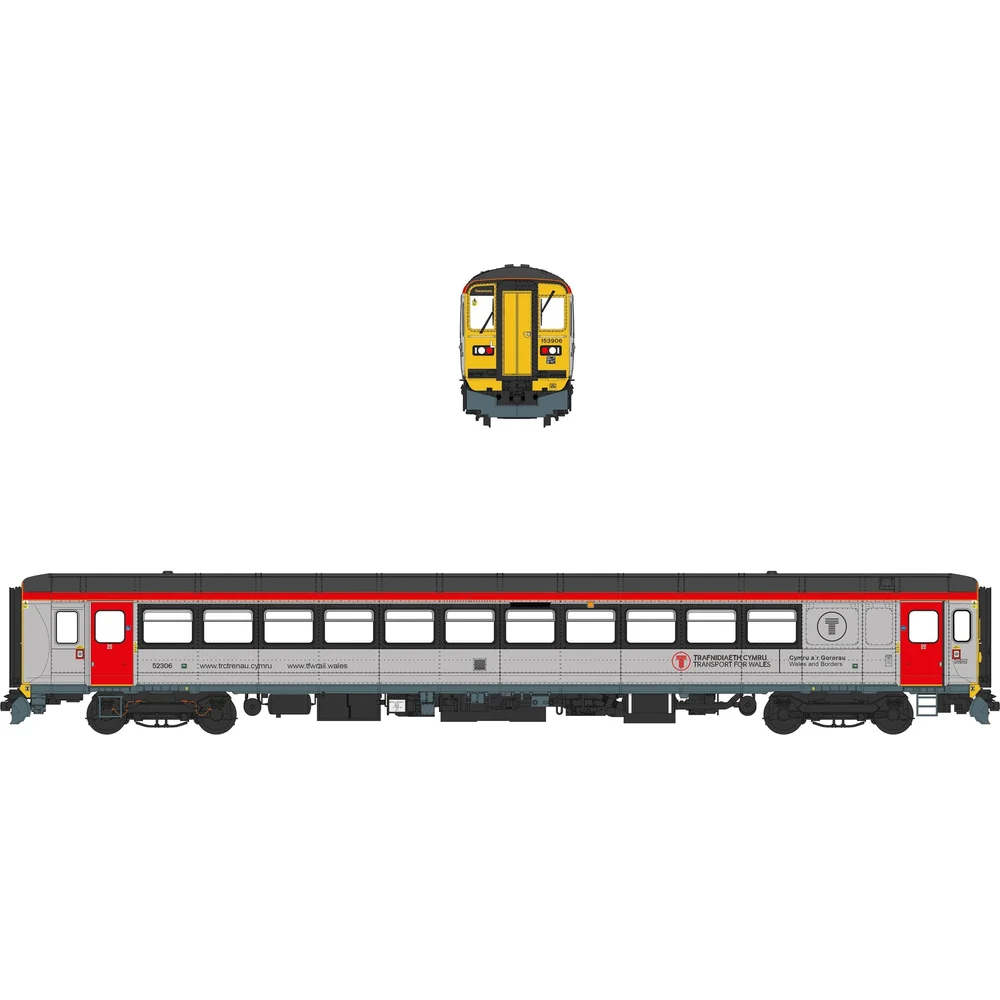
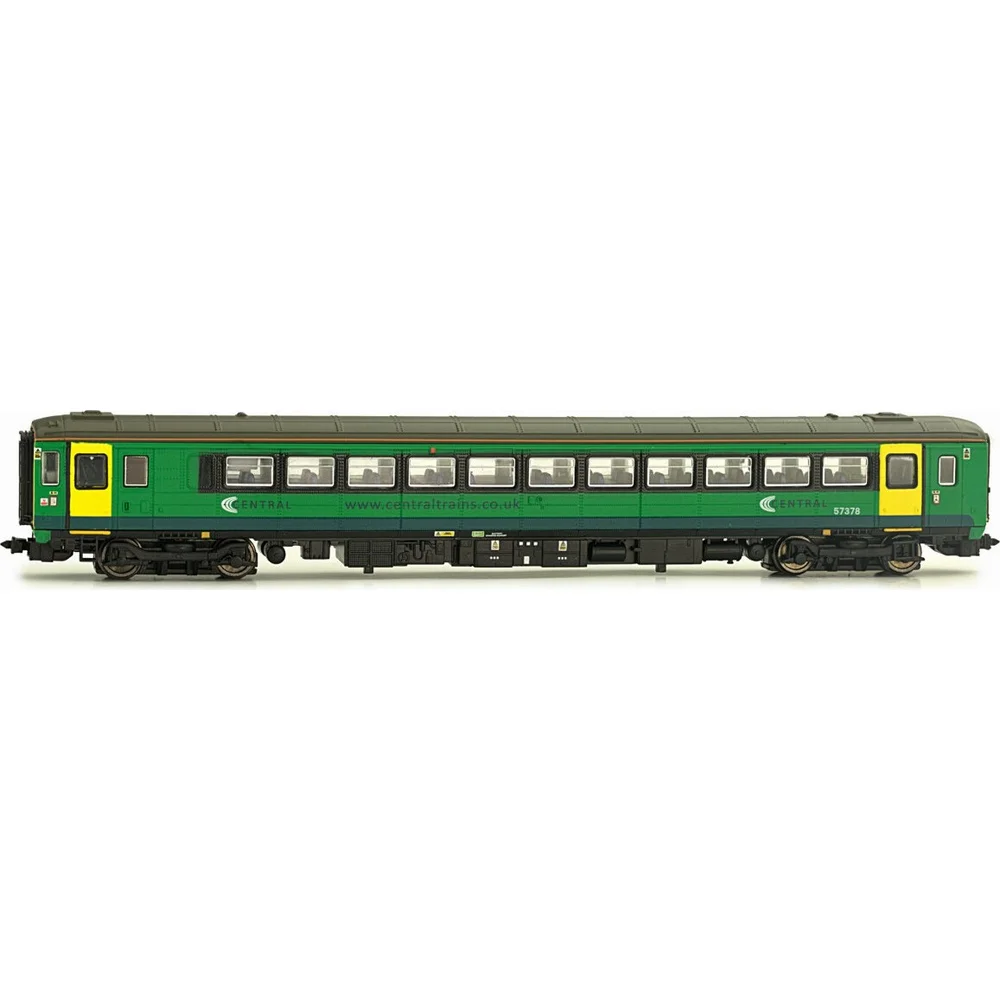
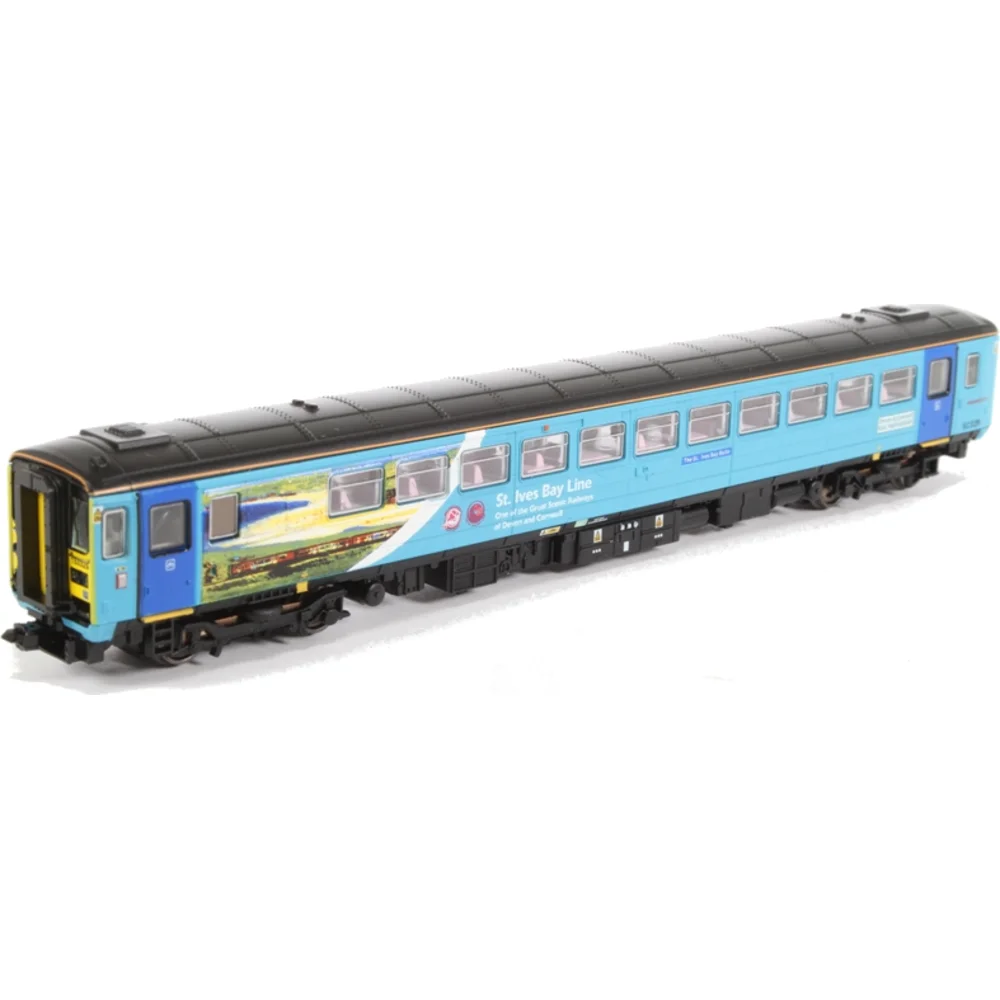
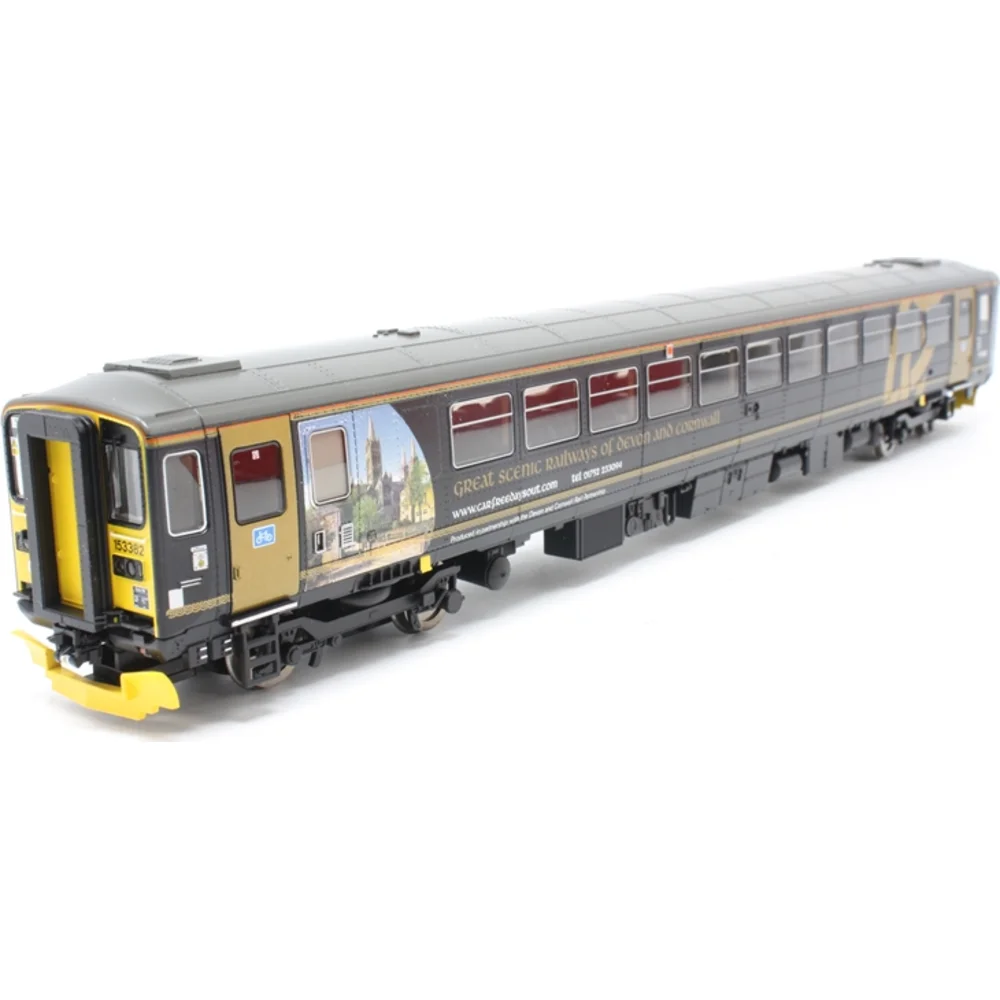
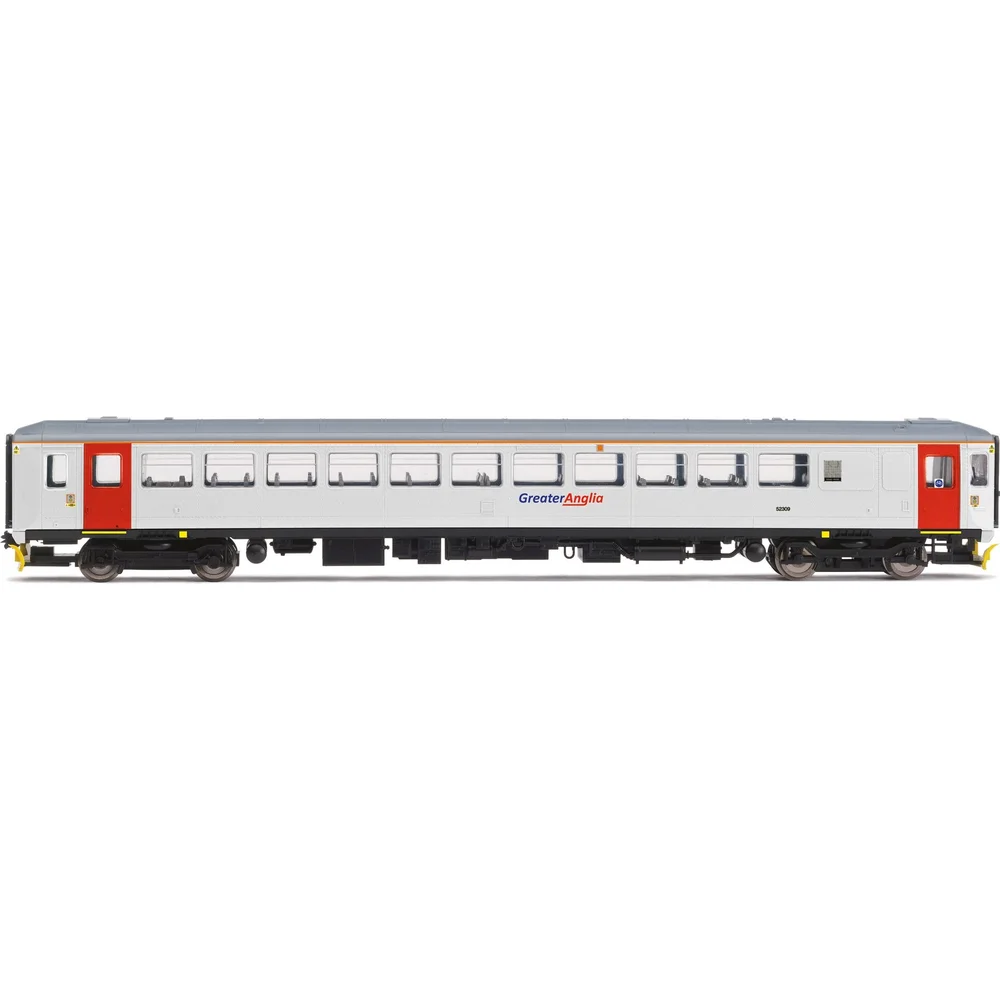
The privatisation era delivered extraordinary livery diversity unimaginable during the standardised British Rail period. Wales & West operated units in Regional Railways colours initially, transitioning to distinctive teal and cream. Wessex Trains applied striking black and gold livery with "Great Scenic Railways of Devon and Cornwall" branding celebrating the region's tourism appeal. Central Trains' green and yellow scheme served the Midlands, whilst Anglia Railways' blue and white livery adorned East Anglian services. This proliferation of colour schemes—ultimately spanning dozens of variations across the fleet—creates exceptional modelling opportunities representing specific operators, regions, and periods. Contemporary operators Transport for Wales (grey and red) and ScotRail (Highland Explorer scenic livery) continue this tradition of distinctive branding differentiating rural services.
Wales & West inherited Welsh and West Country allocations, subsequently passing units to Wessex Trains following franchise reorganisation in 2001. Wessex operated Class 153s until 2006 in their distinctive black and gold livery that became synonymous with Devon and Cornwall rural railways. Central Trains operated the Midlands fleet from 1997 until 2007 in green and yellow colours, covering an extensive secondary network including the unique Marston Vale Line requiring specialised single-car operation due to infrastructure constraints. Anglia Railways received seven units for East Anglian locals, applying blue and white livery and naming several after famous regional figures including composer Benjamin Britten, nurse Edith Cavell, and television chef Delia Smith—a practice reflecting the strong community connections characterising rural railway operations.
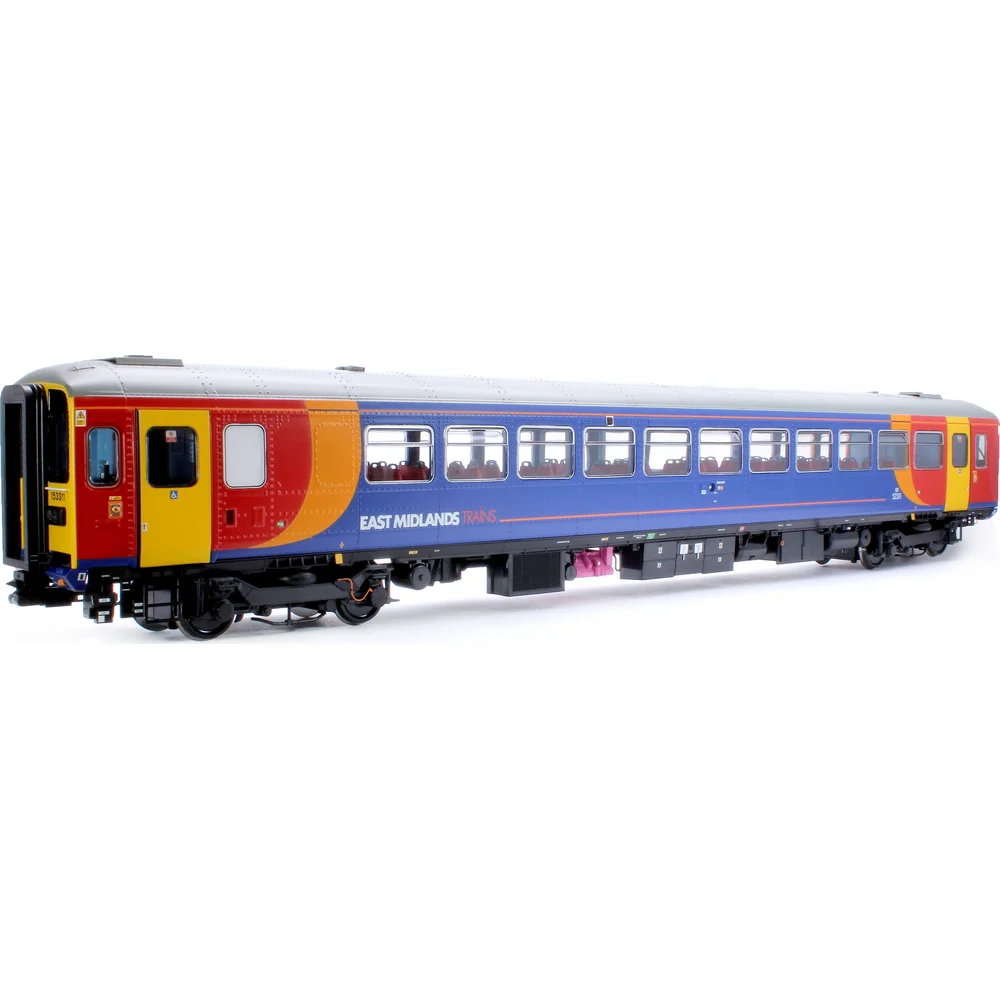
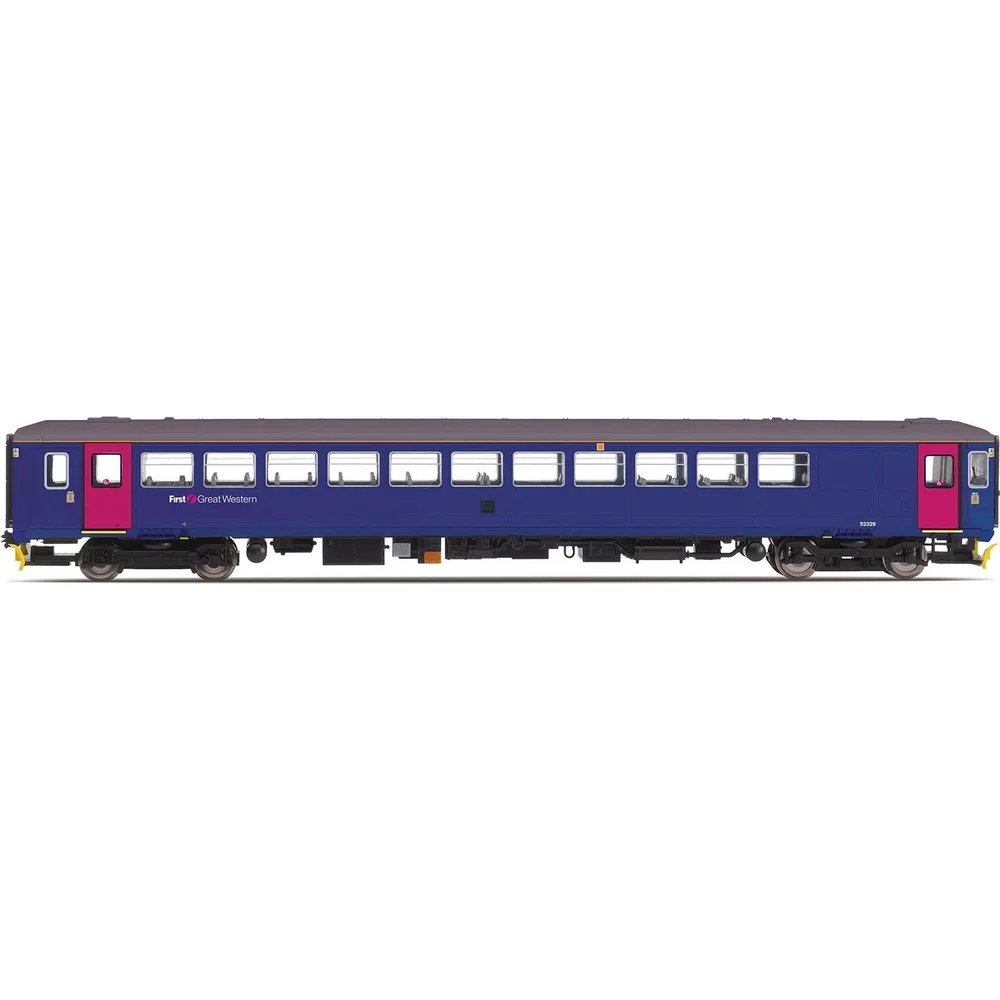
The franchise map continued evolving through subsequent decades as the privatised railway structure underwent repeated reorganisations. First Great Western absorbed Wessex Trains units in 2006, applying "Local Lines" branding distinguishing rural services from main line operations. Northern Rail operated the largest Class 153 fleet at its peak, utilising units across Lancashire, Yorkshire, and Cumbria on an extensive network of rural and branch services. London Midland deployed eight units on Birmingham-area services and the Marston Vale Line following Central Trains' franchise expiry in 2007. East Midlands Trains, West Midlands Trains, and Great Western Railway all operated Class 153s at various points during the 2010s, reflecting the continued importance of single-car operation for economic rural service provision.
The introduction of Persons with Reduced Mobility Technical Specification for Interoperability (PRM-TSI) regulations effective from 1 January 2020 created an existential challenge for the Class 153 fleet. The legislation mandated accessible facilities on passenger rolling stock including wheelchair spaces, accessible toilets, and improved internal circulation areas—expensive modifications for 30-year-old vehicles approaching life expiry. Most operators chose withdrawal rather than investment, with East Midlands Railway, Northern Trains, and West Midlands Trains withdrawing their final Class 153s during 2020-2021 following replacement by newer rolling stock types.
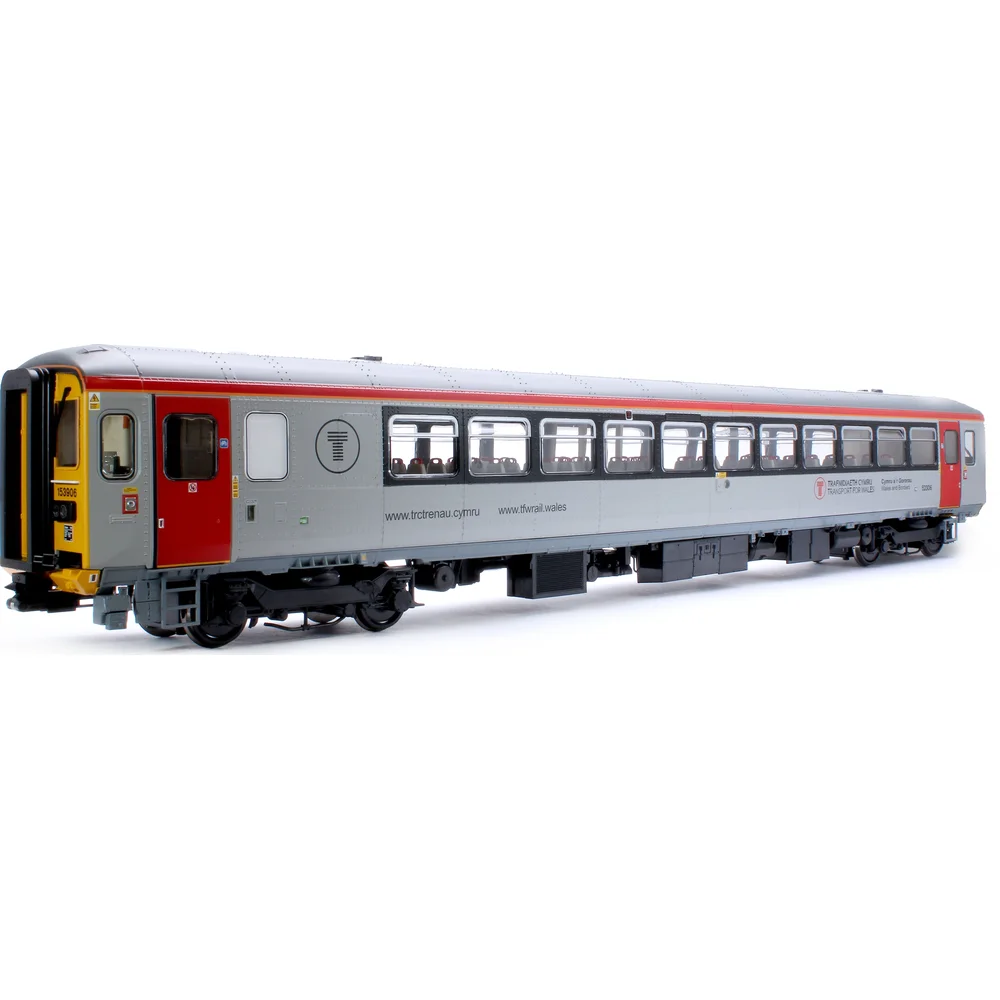
Transport for Wales Rail emerged as the sole operator willing to invest in comprehensive Class 153 refurbishment for PRM-TSI compliance. The company contracted Chrysalis Rail's Landore works to undertake modifications across their inherited fleet of 26 units, with work completed by July 2022. The refurbishment programme delivered TfW grey and red livery, accessible toilet facilities, wheelchair spaces, improved seating, modern passenger information systems, and revised internal layouts meeting accessibility regulations. Twenty-four units entered active passenger service following completion, whilst two remained as spare vehicles.
Transport for Wales subsequently developed an innovative Active Travel variant designated Class 153/5. Six units (153304, 153318, 153325, 153329, 153352, 153357) underwent conversion incorporating 10 bicycle spaces each, supporting Welsh Government's sustainable transport policies and the growing demand for rail-bike integrated journeys. These units entered service from February 2025 specifically for Heart of Wales Line operations where the spectacular rural scenery attracts cycling tourists. The conversion involved removing seats and installing secure bicycle storage racks, reducing passenger capacity to accommodate the cycle spaces whilst maintaining accessible facilities.
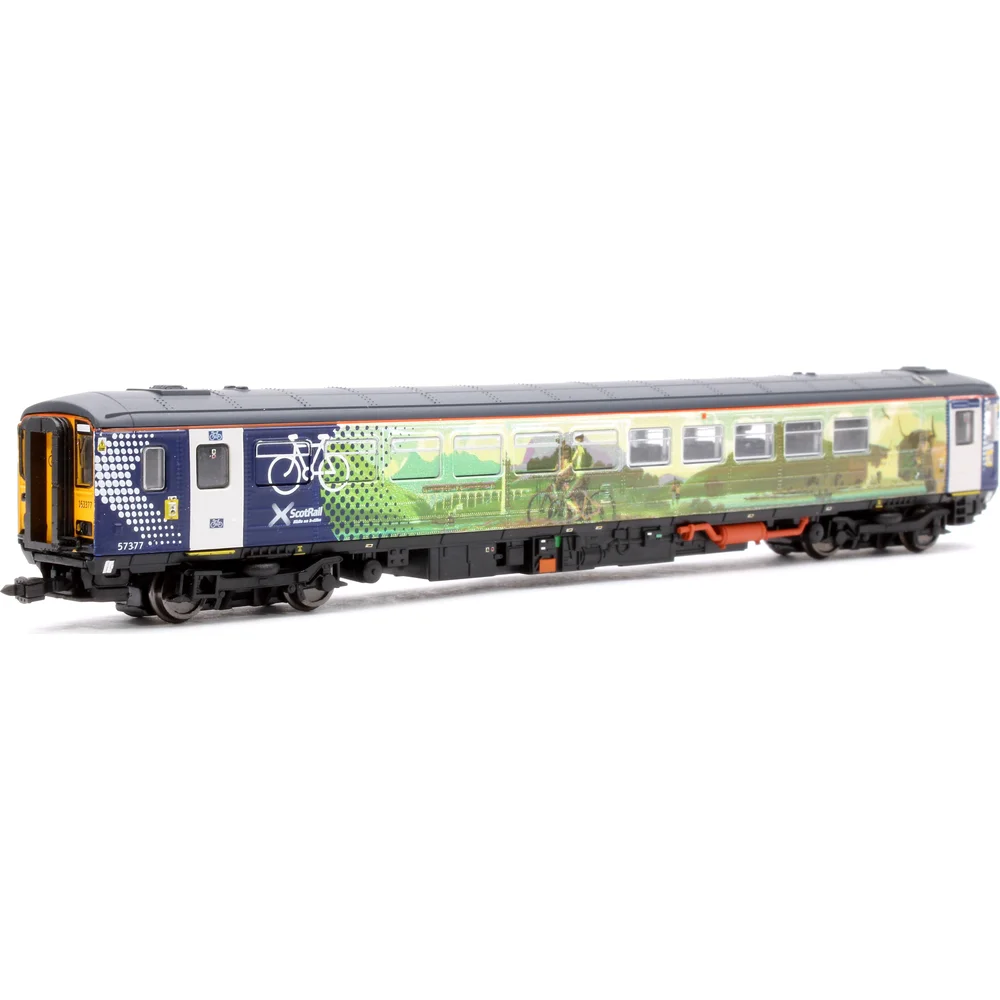
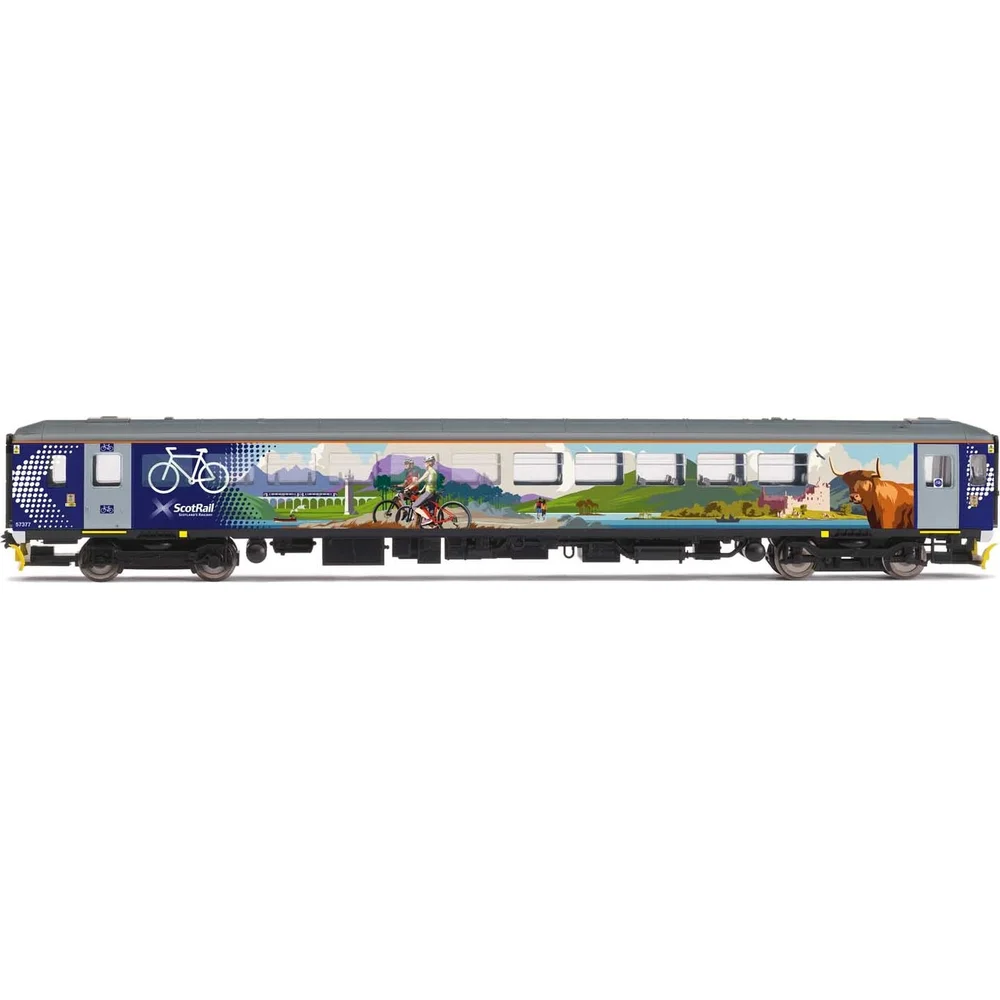
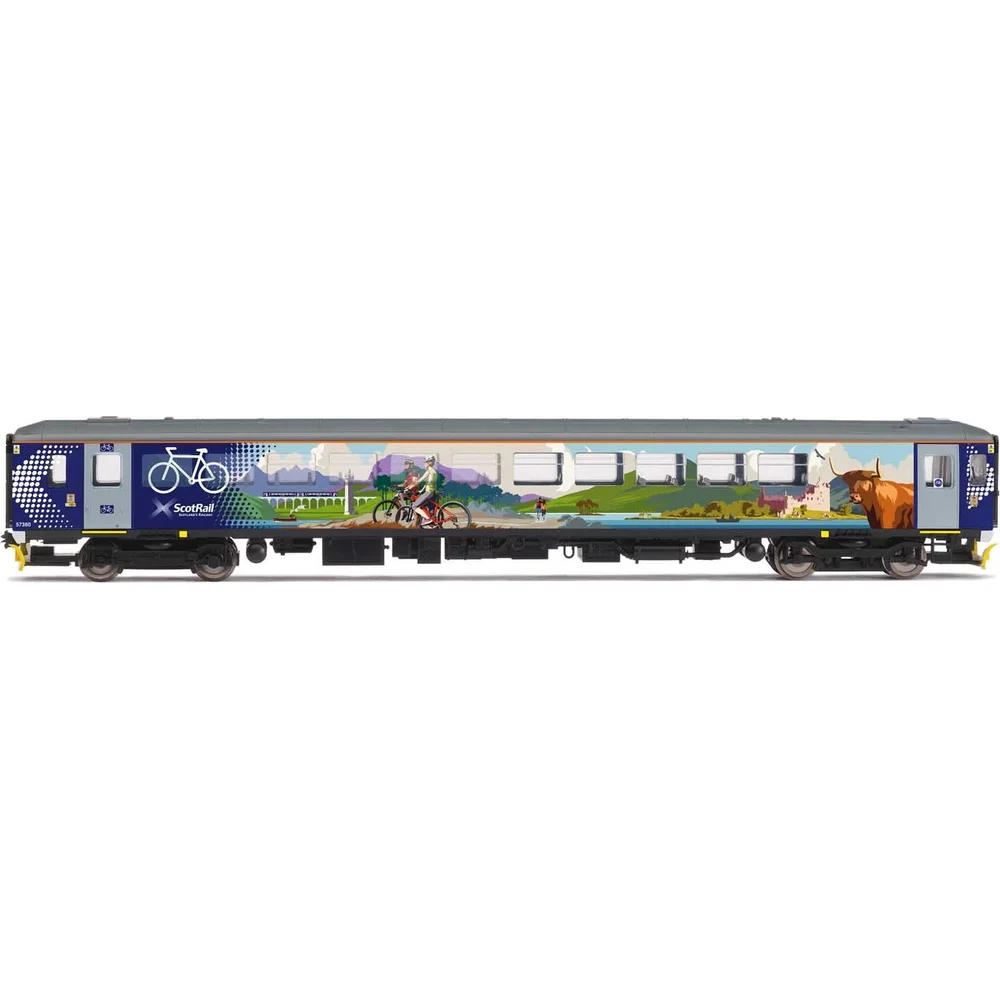
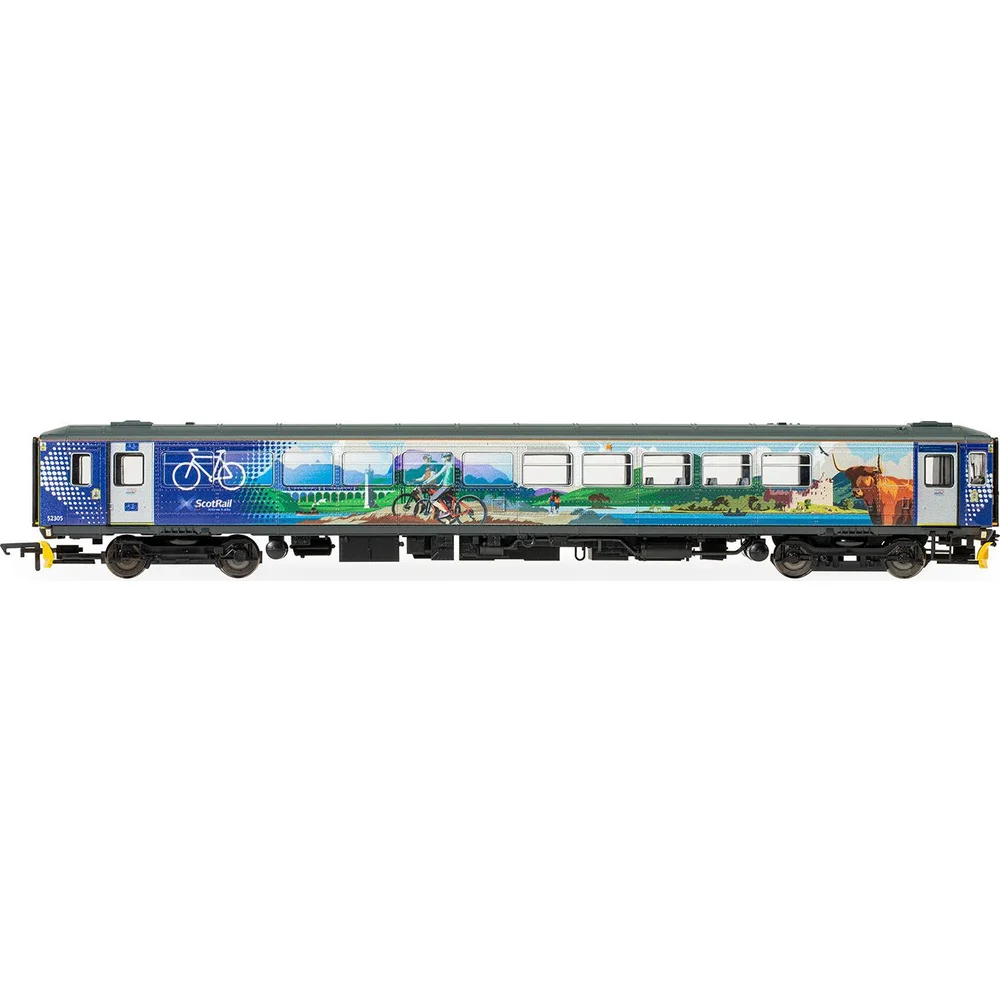
ScotRail operates five units designated Highland Explorer (153305, 153370, 153373, 153377, 153380) on West Highland Line services from Glasgow to Oban, Fort William, and Mallaig. These feature striking livery designed by Scottish artist Peter McDermott depicting Highland scenery including the iconic Glenfinnan Viaduct—creating visually distinctive units that complement the spectacular landscapes traversed. Each unit accommodates 20 bicycles and 24 passengers, reflecting the tourism focus of West Highland Line operations and the popularity of cycling amongst visitors exploring the Scottish Highlands. The Highland Explorer brand positions these services as scenic experiences rather than basic rural transport, supporting premium fare structures and encouraging discretionary travel.
Network Rail acquired three units (153311, 153376, 153385) in May 2021 for infrastructure monitoring duties, converting them for specialist departmental service. These units support video surveillance operations including the VSU2 video survey train that captures continuous footage of railway infrastructure for condition monitoring and maintenance planning. This non-passenger deployment extends the operational lives of redundant passenger units whilst avoiding scrapping serviceable vehicles, demonstrating the versatility of the basic Class 153 platform for diverse railway applications.
Withdrawal and Preservation Legacy
The withdrawal history of the British Rail Class 153 reflects the existential challenge posed by PRM-TSI accessibility regulations effective from 1 January 2020. Unlike classes where gradual obsolescence created steady withdrawal patterns over decades, the Class 153 faced a sharp dividing line: operators either invested substantial sums modifying 30-year-old vehicles for compliance or withdrew entire fleets en masse as newer accessible rolling stock became available.
East Midlands Railway and Northern Trains—previously the largest Class 153 operators—withdrew their entire combined fleets during December 2021. The final EMR workings occurred on 12 December 2021, whilst Northern's last services ran shortly afterwards. These withdrawals released approximately 40 units into storage at locations including Long Marston Rail Innovation Centre in Warwickshire and Ely Potter Papworth Terminal in Cambridgeshire. West Midlands Trains had already withdrawn its fleet in December 2020 following replacement by Class 172 Turbostar and Class 230 D-Train units, accelerating the withdrawal process across the network.
The stored units faced uncertain futures as operators, leasing companies, and potential purchasers evaluated options including further service with compliant operators, conversion to departmental use, sale to preservation societies or heritage railways, export to overseas railways, or scrapping. The absence of significant scrap metal value—aluminium bodyshells fetching lower prices than traditional steel construction—reduced financial incentives for rapid scrapping, potentially extending storage periods whilst markets developed.
Twelve Class 153s have been confirmed scrapped, primarily at Sims Metal facilities in Newport Docks and Beeston. Notable losses include unit 153316, which carried the name "John 'Longitude' Harrison inventor of the Marine Chronometer" during Anglia Railways service commemorating the Norfolk-born clockmaker whose marine chronometer enabled accurate longitude determination. This unit was cut up at Newport in September 2023, representing the loss of both a functional railway vehicle and a mobile heritage commemoration. Approximately 14 additional units remain in storage as of late 2024, their ultimate fates dependent on market conditions for second-hand rolling stock and the economics of further conversion projects.
Preservation Success: Great Central Railway Operations
The Great Central Railway at Loughborough acquired two Class 153s for its Testing & Training Department, supporting mainline crew training for East Midlands Railway and CrossCountry alongside heritage railway operations. Unit 153371 became the first complete Class 153 into preservation, arriving in December 2023 and entering passenger service in March 2024. Unit 153308 followed shortly afterwards, providing operational redundancy and ensuring service continuity during maintenance periods. These preserved units enable heritage railway passengers to experience authentic 1990s-2020s branch line travel whilst supporting commercial crew training activities generating revenue for the heritage railway. The successful integration demonstrates that relatively modern diesel units can contribute meaningfully to preservation railway operations beyond the traditional steam and first-generation diesel focus.
Beyond formal preservation, several Class 153s have found alternative uses extending their social utility beyond railway service. Entrepreneur Daniel Ashville Louisy purchased unit 153334 in June 2024 for conversion to a reception building at West Drayton, demonstrating the potential for redundant railway vehicles to serve as distinctive hospitality venues. The Llanelli & Mynydd Mawr Railway received the bodyshell of unit 153374 for use as a community café, supporting social enterprise objectives whilst preserving the physical structure if not operational capability. These creative reuse projects prevent scrapping whilst providing community facilities, though they sacrifice mechanical components and operational potential.
The engineering legacy of the Class 153 extends beyond individual preserved vehicles. The conversion programme demonstrated that relatively new rolling stock could be creatively adapted to changing operational requirements through comprehensive rebuilding—a precedent informing subsequent projects including the Class 230 D-Train conversions of former London Underground D78 stock and various locomotive conversion schemes. The class validated single-car operation for lightly-trafficked rural routes, influencing subsequent rolling stock procurement decisions including battery-electric and hydrogen fuel cell development programmes targeting similar markets with zero-emission traction.
The operational longevity achieved—34 years from first conversions to present with 29 units remaining in passenger service—vindicated the conversion strategy. British Rail's £20 million investment (approximate 1990s pricing) delivered over three decades of reliable rural service from vehicles that might otherwise have faced premature withdrawal or reassignment. The surviving Transport for Wales and ScotRail fleets should continue operating into the late 2020s following recent refurbishment, potentially extending operational lives to 35-40 years from conversion—an impressive return on investment for second-generation rolling stock originally envisaged as medium-term gap-fillers.
Future preservation prospects remain uncertain for units currently stored. Heritage railway operators typically prioritise first-generation diesel units from the 1950s-1960s representing the pioneering modernisation period, whilst the Class 153's 1990s vintage lacks the nostalgic appeal attracting volunteer labour and visitor interest. However, as the privatisation era recedes into history and enthusiasts who travelled on these units reach positions of influence within preservation societies, interest may increase. The availability of stored units at relatively low acquisition costs could enable additional preservation projects if suitable heritage railway homes emerge with operational requirements matching single-car DMU capabilities.
Modelling Significance and Scale Replications
The British Rail Class 153 presents exceptional modelling significance due to its extended operational timeline spanning 1991 to the present—encompassing Regional Railways, the colourful privatisation era, and contemporary operations. For railway modellers seeking to depict British railways from the 1990s onwards, Class 153s provide essential rural branch line traction that appeared across England, Wales, and Scotland in dozens of operator liveries. The single-car configuration enables convincing operation on compact layouts where space constraints prohibit longer formations, whilst the multiple working capability permits flexible consists matching varied operational scenarios.
The modelling landscape demonstrates unusual manufacturer diversity across scales, with Hornby's established OO gauge tooling facing competition from Heljan's ambitious new-tooling project announced for 2025, whilst Dapol produces the N gauge variant and Heljan dominates the growing O gauge market. This comprehensive coverage across multiple scales and price points ensures accessibility for modellers regardless of their chosen scale or budget constraints.
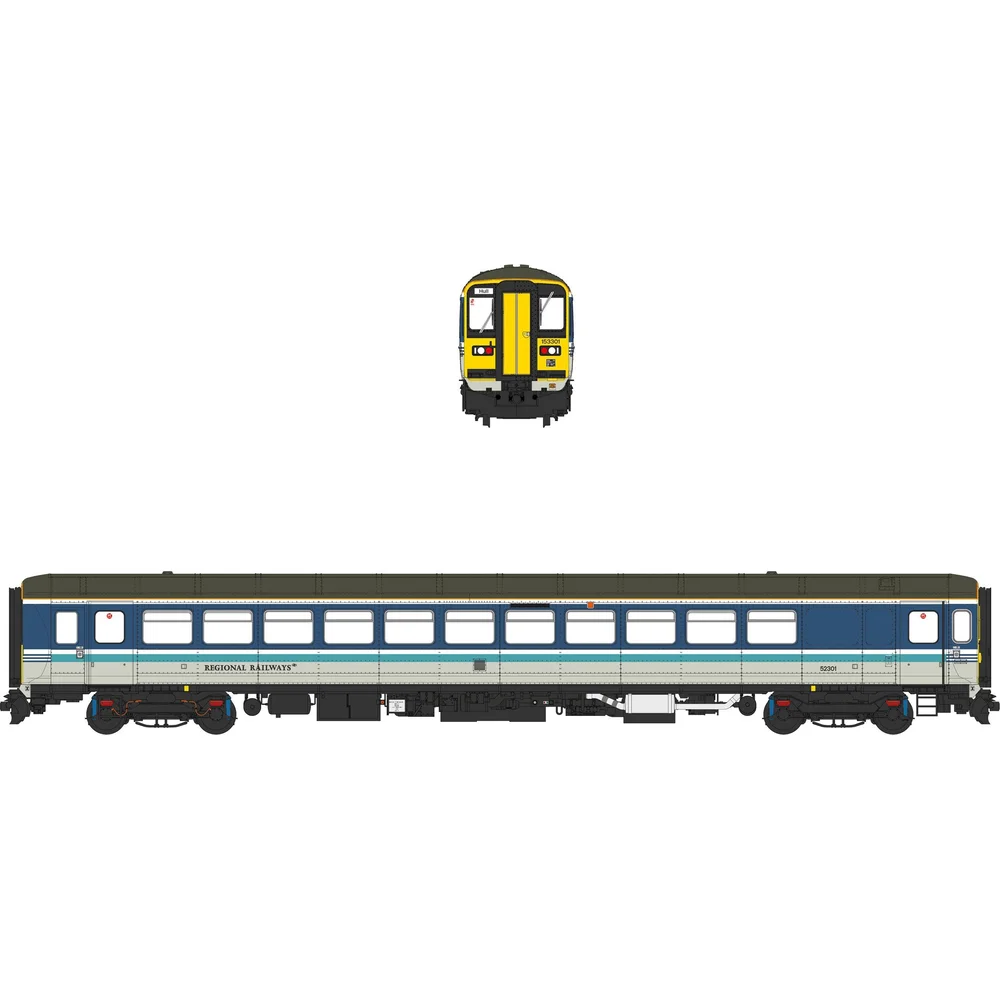
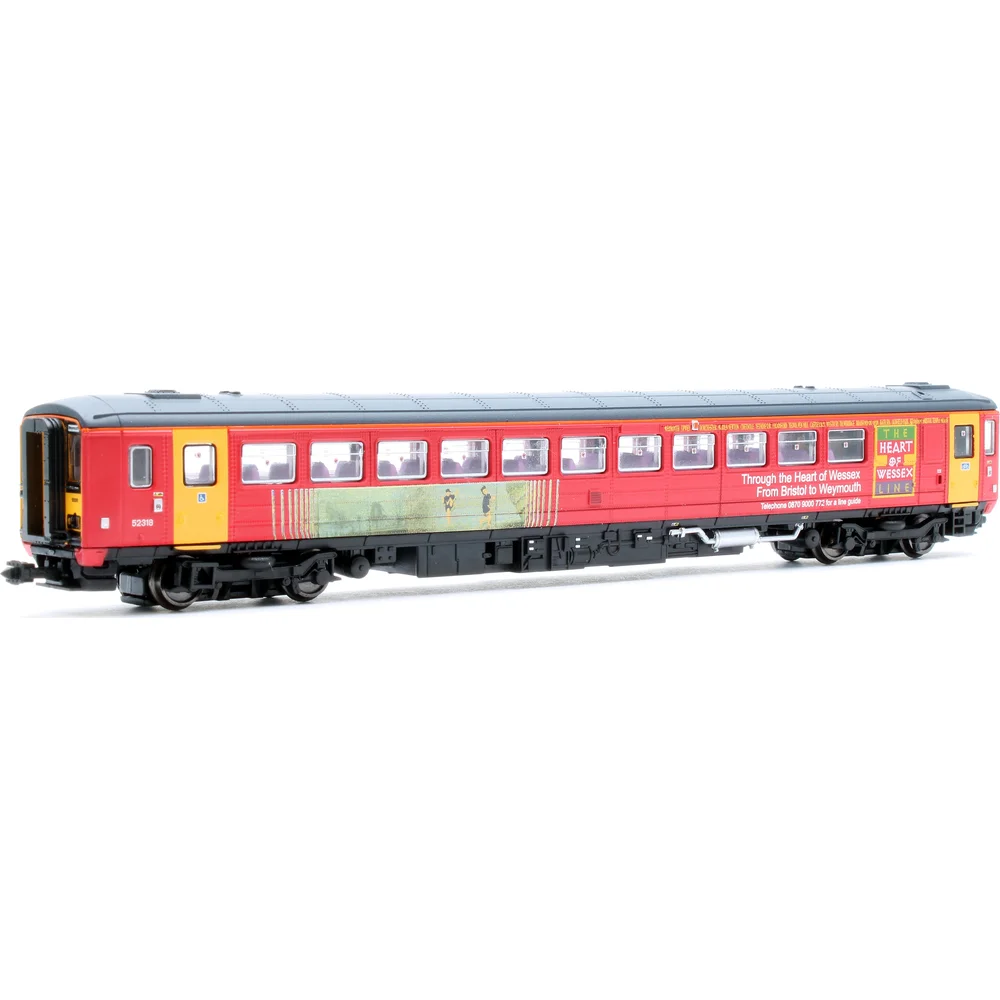
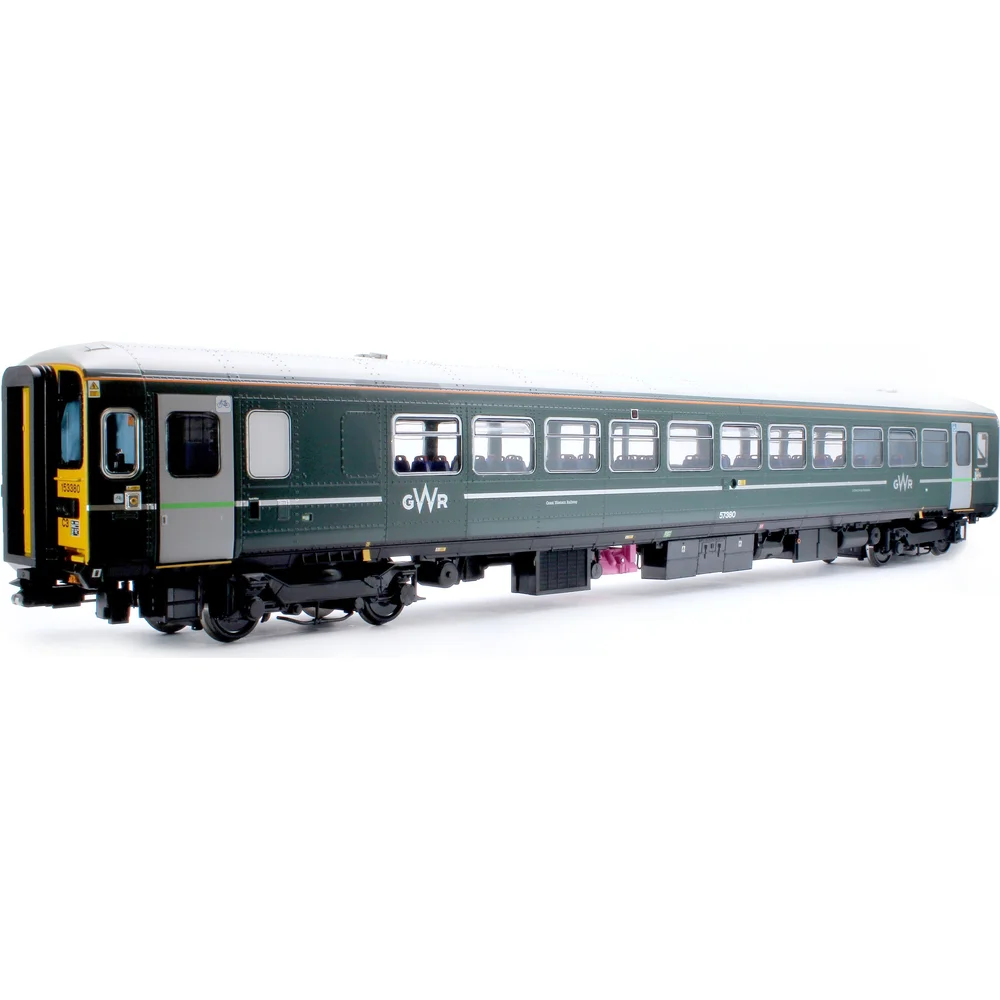
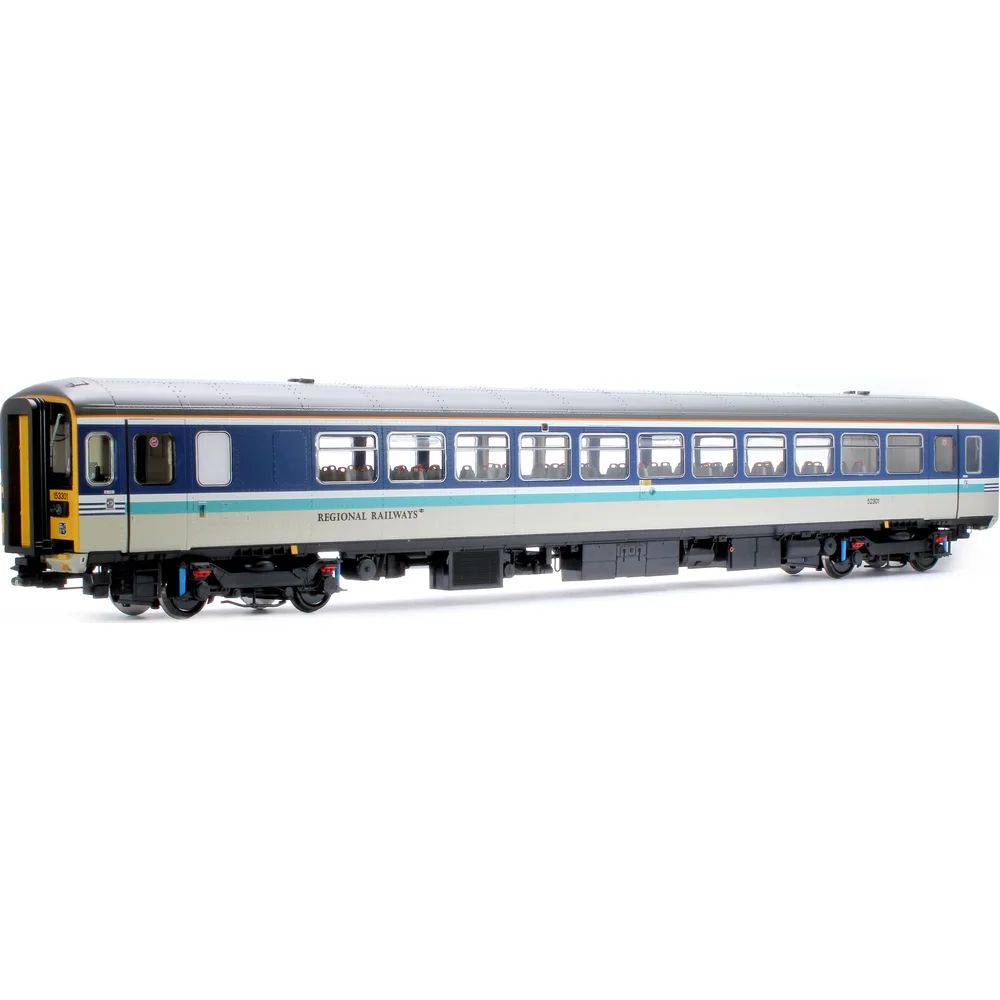
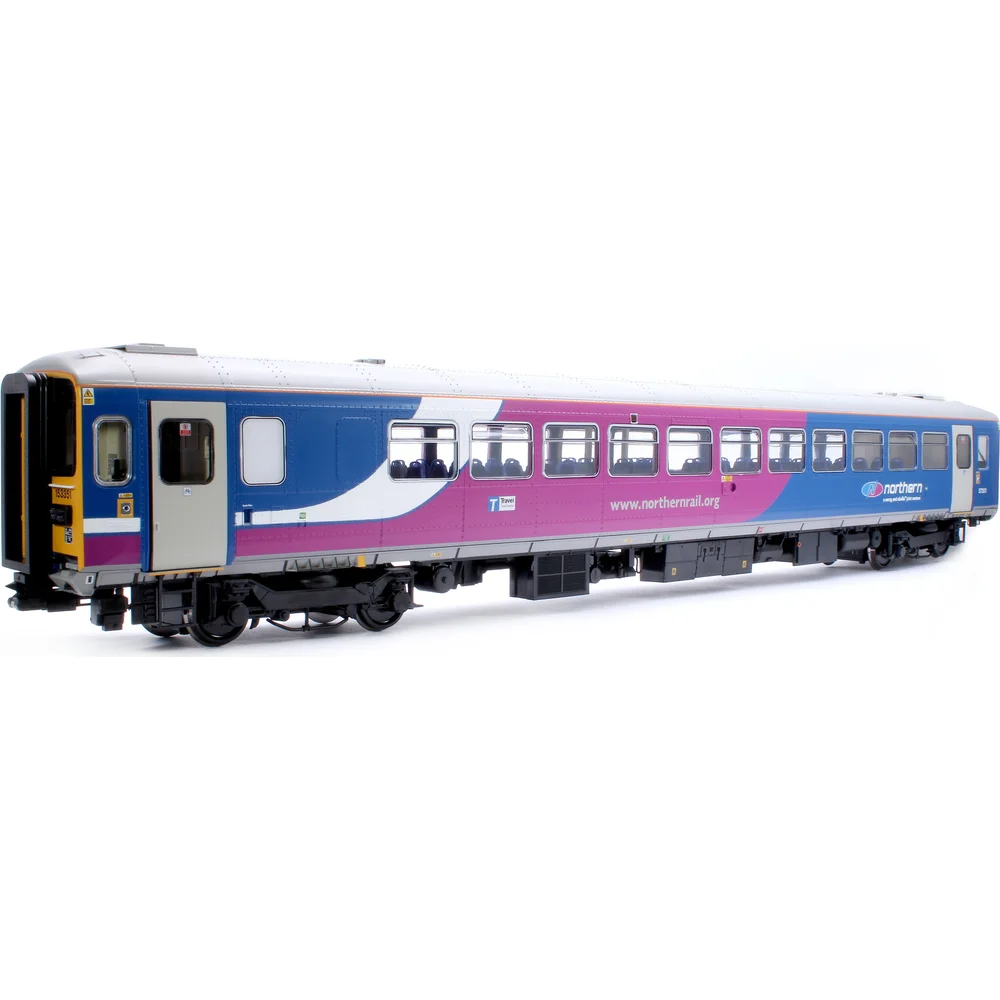
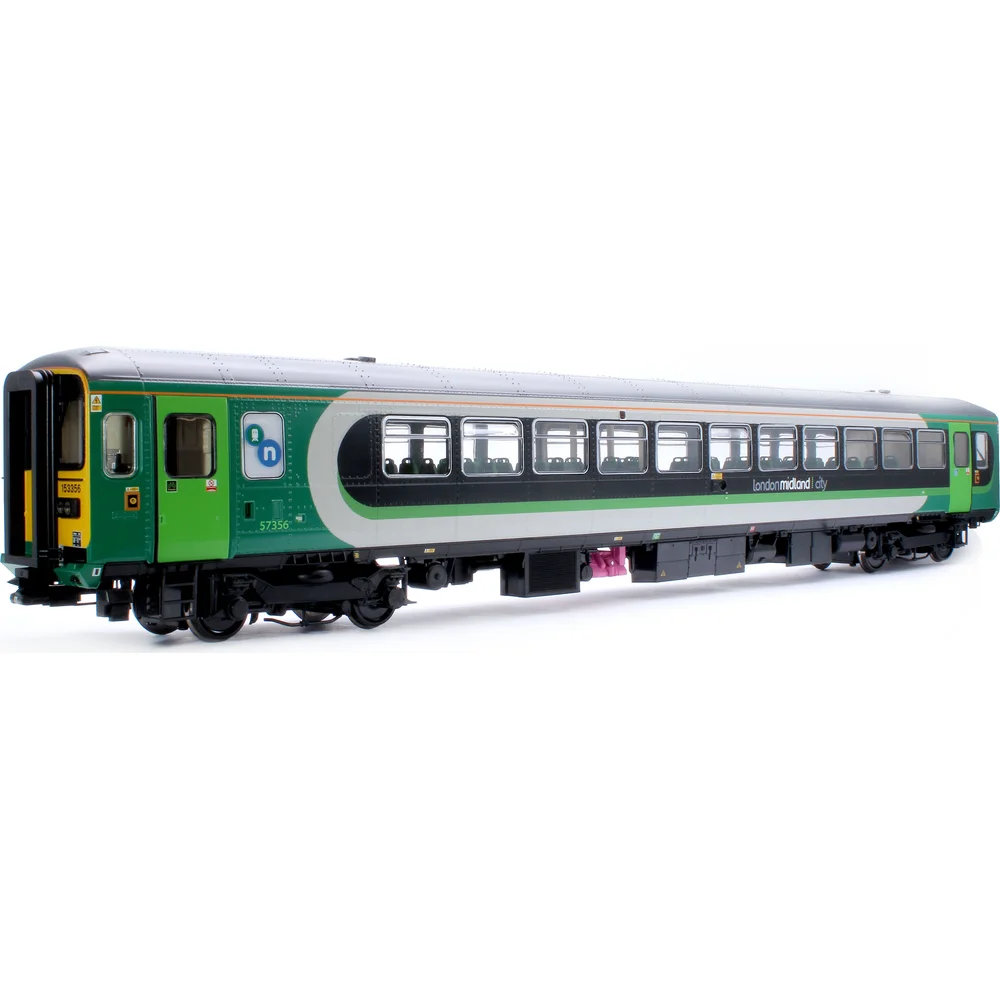
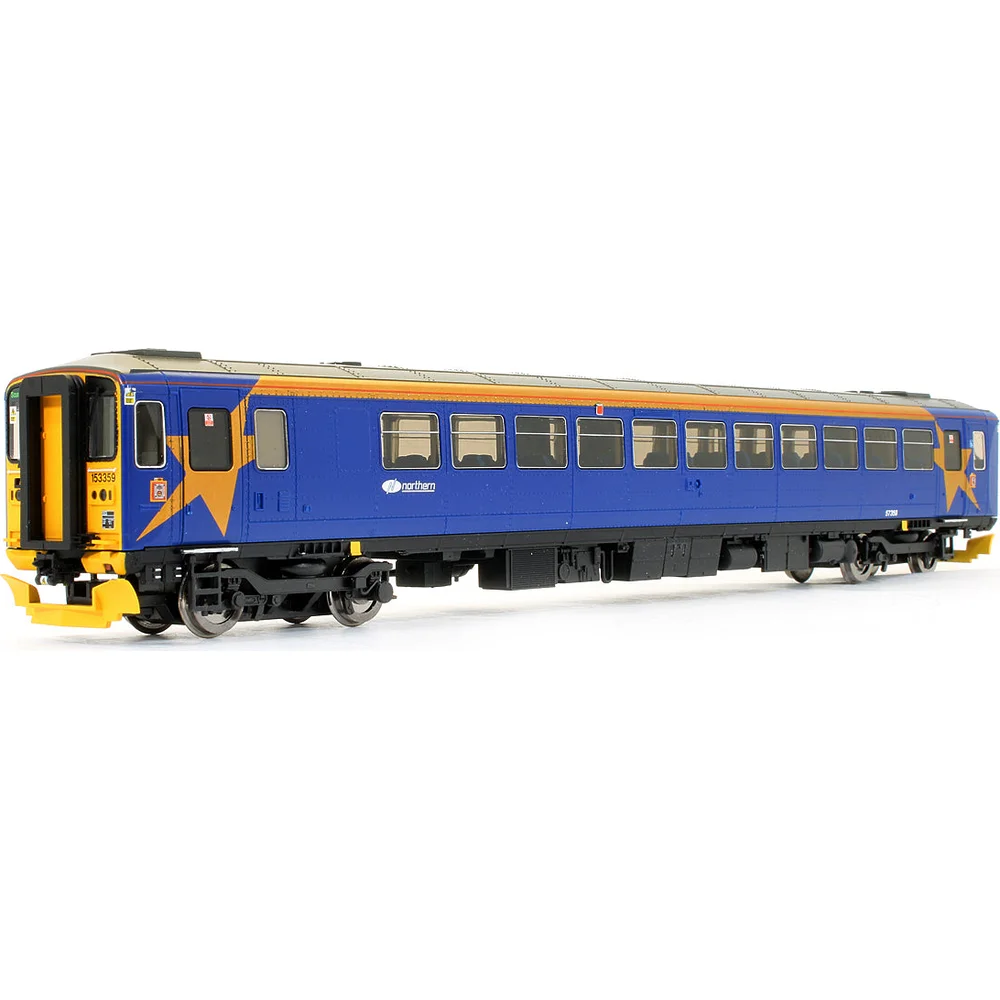
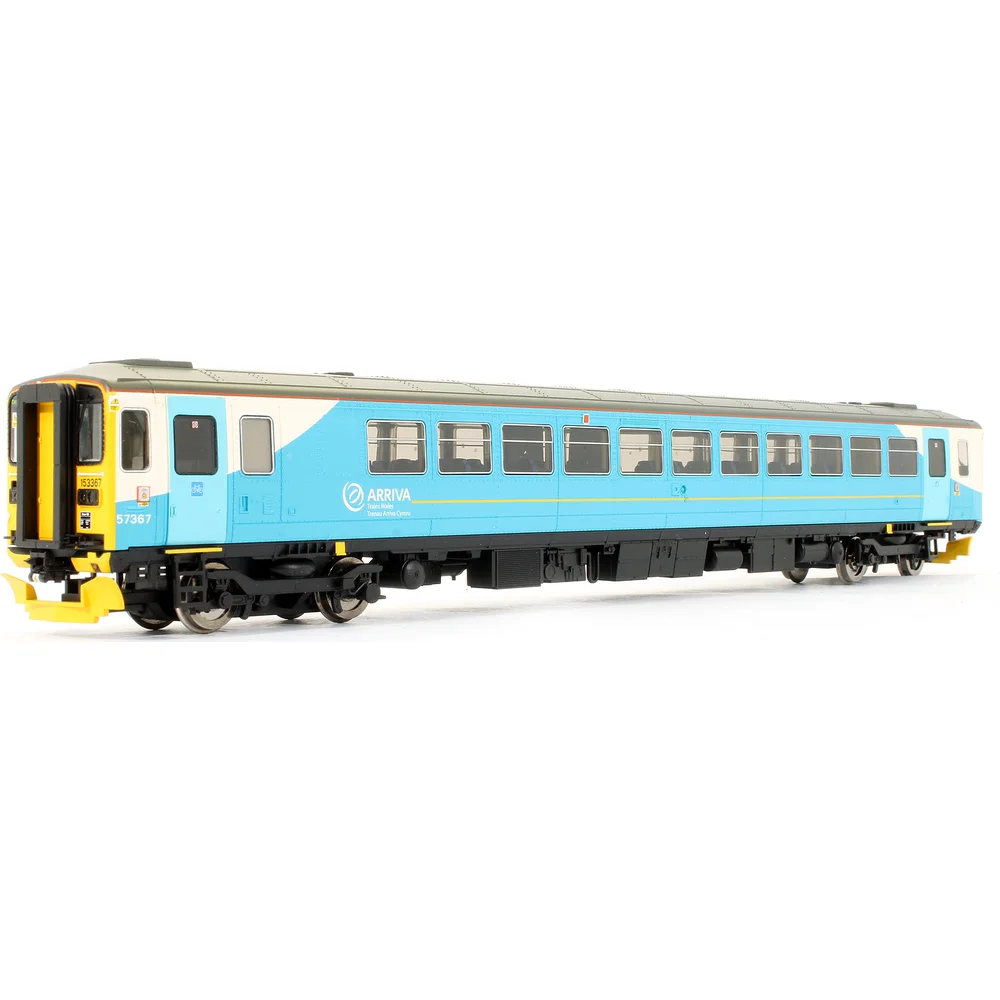
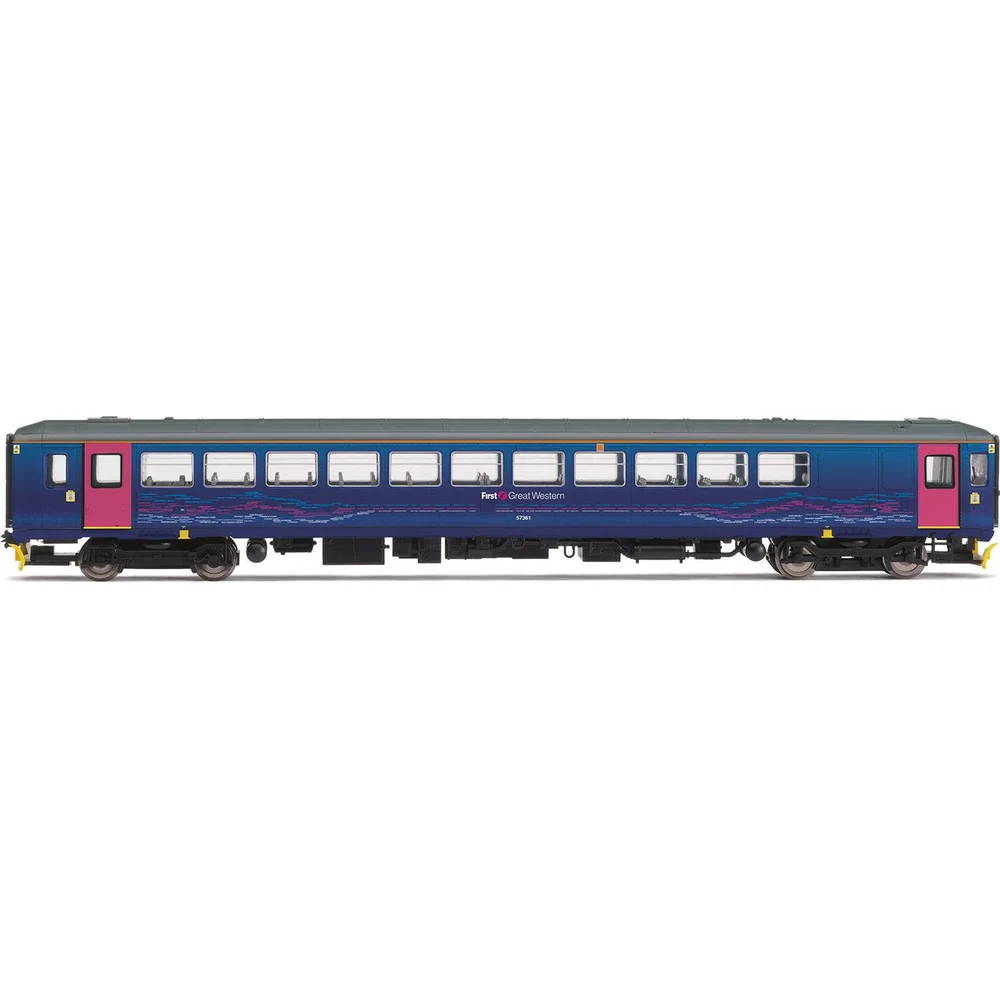
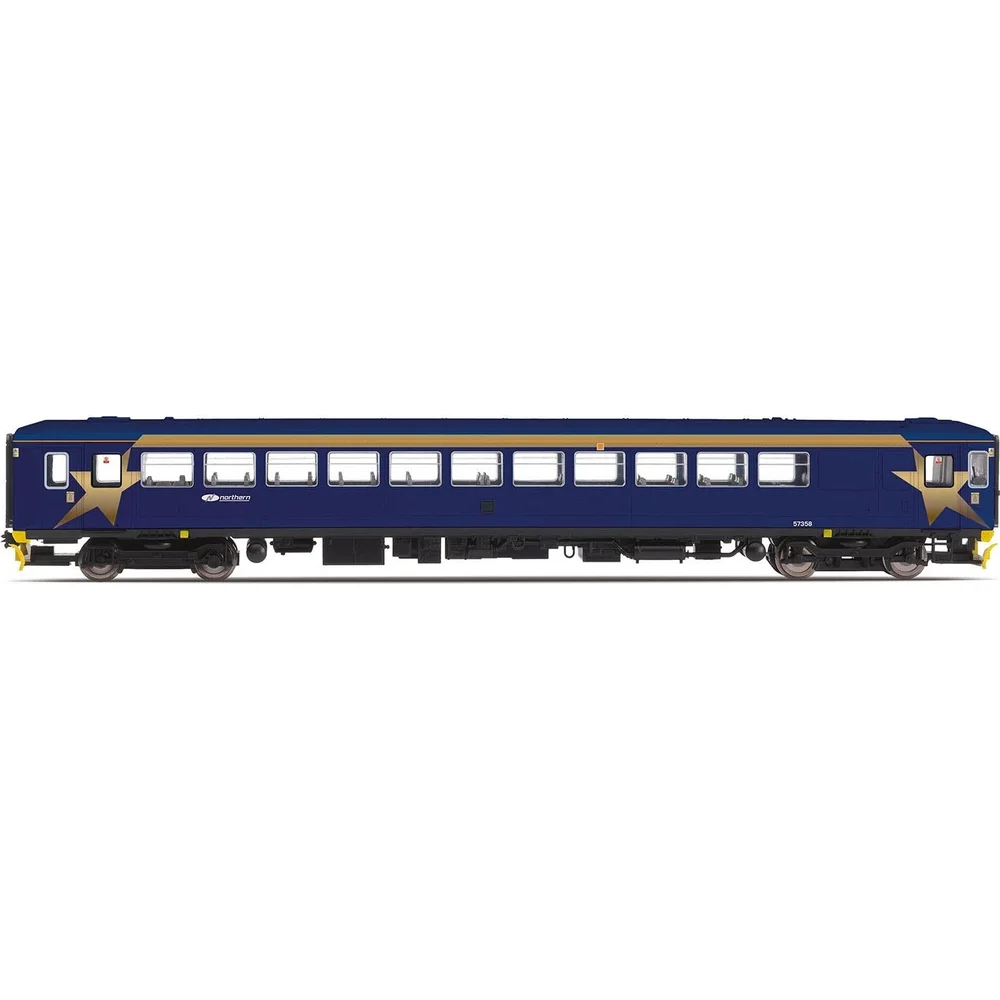
Hornby produces the established OO gauge Class 153 model, first released in 2008 with subsequent livery variants continuing through to 2024. The tooling captures the essential character of the prototype including the distinctive asymmetrical cab arrangements, riveted aluminium bodyside panels, and compact proportions. Current production includes ScotRail Active Travel livery (R30011, unit 153377, £152.49 RRP), First Great Western Local Lines scheme (R30357, unit 153361, £152.49 RRP), and Northern Rail livery (R30427, unit 153360, £152.99 RRP). Historical releases covered Regional Railways, Central Trains, Greater Anglia, London Midland, Wessex Trains, and Arriva Trains Wales liveries, though many remain available through specialist retailers' remaining stock.
Street prices for Hornby models typically range from £119-£137 depending on retailer discounting policies and remaining stock availability. Models feature Next18 8-pin DCC socket enabling straightforward digital conversion, working directional lighting with appropriate illumination at the driving end, and detailed riveted bodysides capturing the Leyland Bus construction heritage. Performance characteristics include smooth slow-speed operation from the five-pole motor, comprehensive electrical pickup, and reliable running on layouts with reasonable track standards. The minimum recommended curve radius of second radius (438mm/17.25") suits most OO gauge layouts, though tighter radius operation may be possible with careful testing.
Advanced Modelling: Heljan's New-Tooling Revolution
Heljan announced groundbreaking new-tooling OO gauge Class 153 and 155 models scheduled for Q3 2025 release, promising unprecedented functionality and detail quality. The models feature eight separately controllable lighting functions including directional headlights, cab lights, saloon lights, and tail lights enabling authentic operational lighting scenarios. Factory-fitted speakers in the roof space support Heljan's comprehensive DCC sound installations. Remarkably, the models include route-specific DCC sound announcements with bilingual Welsh/English options for Transport for Wales units and Scottish accents for ScotRail variants—creating region-specific authenticity previously impossible with generic sound files. The advanced specification positions these models at premium pricing: DCC Ready versions retail at £199 with DCC Sound at £299, substantially above Hornby's established range but delivering next-generation functionality for enthusiasts prioritising ultimate realism.
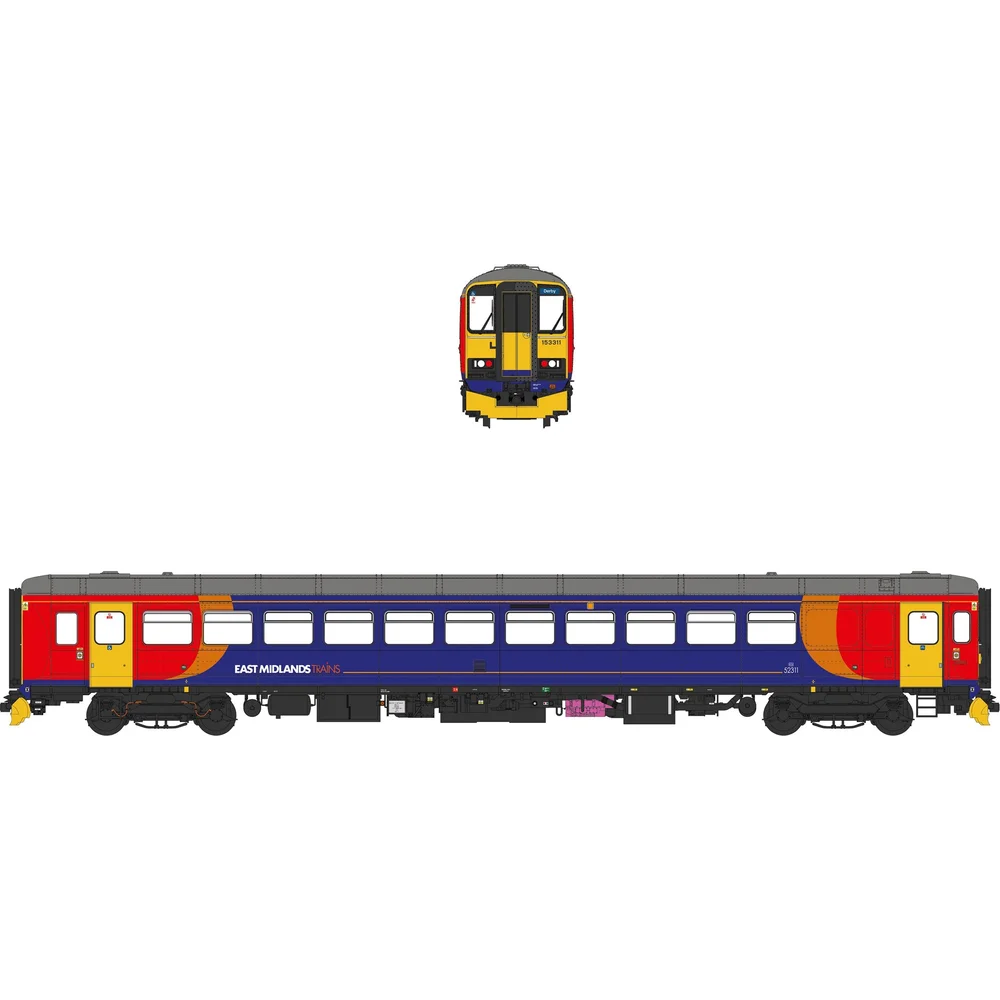
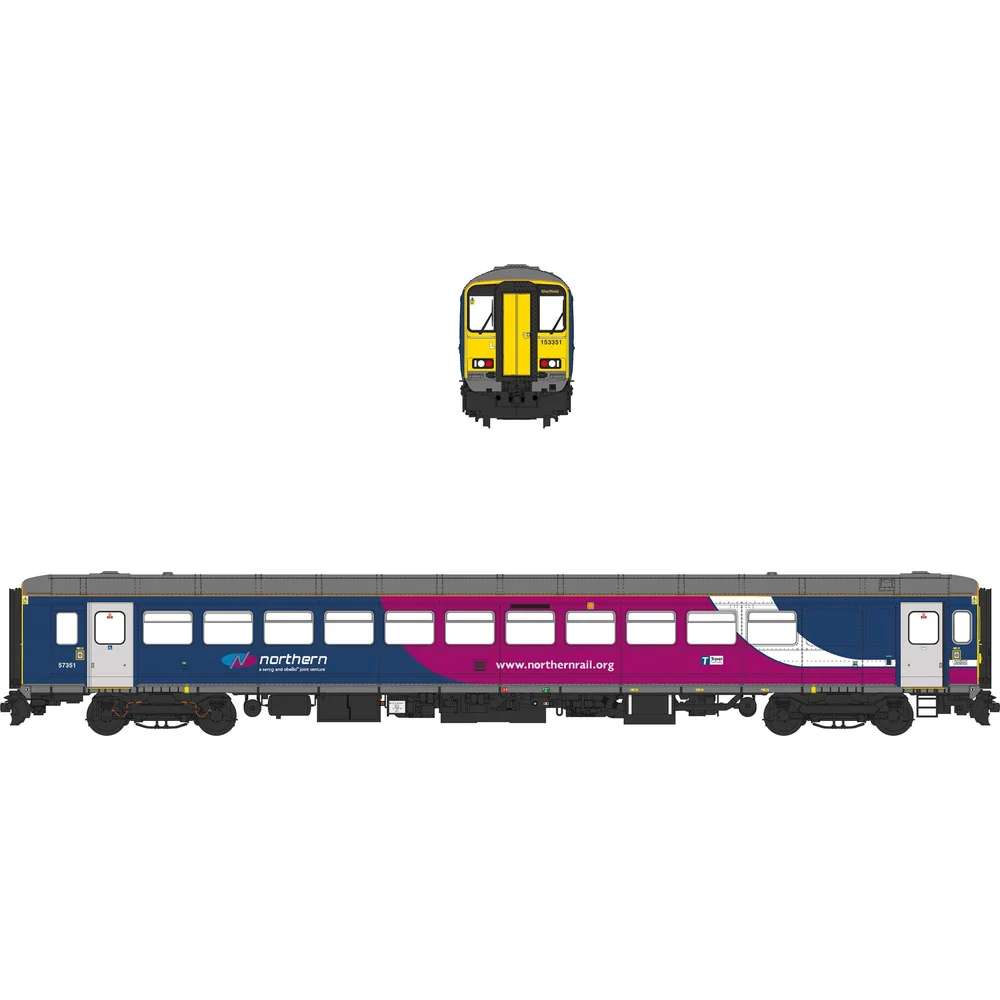
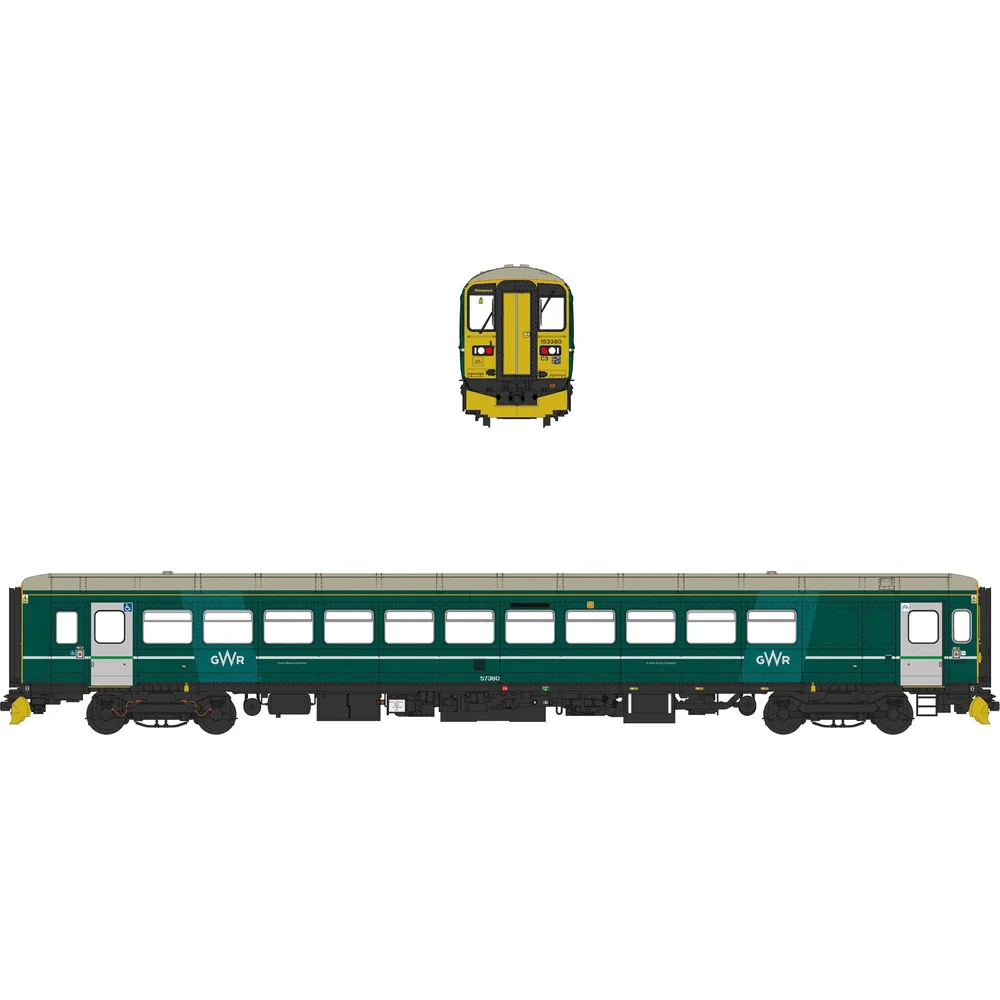
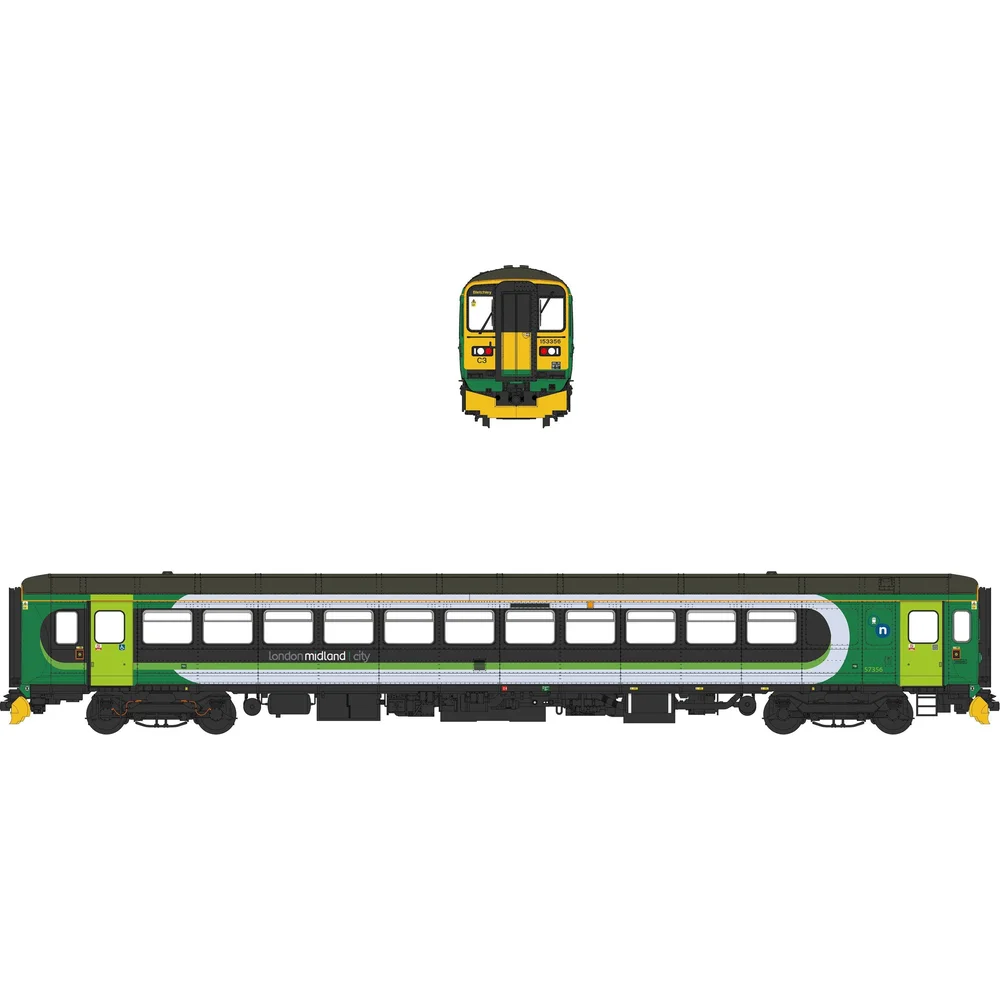
Heljan's initial OO gauge release schedule includes Regional Railways blue (8501, unit 153308), East Midlands Trains teal (8502, unit 153360), Northern purple (8503, unit 153377), Transport for Wales grey/red (8504, unit 153329), London Midland green/black (8505, unit 153369), and GWR green (8506, unit 153368). This selection spans the operational timeline from early conversions through contemporary operations, enabling modellers to select liveries matching their chosen era and geographic focus. Additional livery variants will follow initial releases based on market response and collector demand.
Dapol produces the established N gauge Class 153, upgraded with 2022 revised tooling incorporating Next-18 DCC socket and the company's "Super Creep" slow-speed motor technology. Current production includes Transport for Wales grey/red livery (2D-020-005, unit 153333), Wessex Trains black/gold (2D-020-003, unit 153302), and Arriva Trains Wales turquoise/cream (2D-020-004, unit 153363). The models retail at approximately £145 for DCC Ready versions and £178 for DCC Fitted variants including Dapol's factory-installed decoder with directional lighting and stay-alive capacitors preventing power interruptions on dirty track.
N gauge Class 153 models measure approximately 153mm long, closely matching the 23.0-metre prototype when scaled to N gauge's 1:148 proportion. Detail quality impresses for the scale including separately applied aerials, detailed underframe equipment, and accurate bodyside panel work. The compact wheelbase suits N gauge's typically tighter curve radii, with reliable operation on second radius curves and potential for tighter radii depending on layout geometry. The single-car configuration proves particularly valuable for N gauge modellers creating compact branch line layouts where space constraints necessitate short train formations.
Heljan released groundbreaking O gauge Class 153 models in late 2024, setting new standards for modern image large-scale modelling. The sophisticated specification includes eight separately controllable lighting functions via DCC, illuminated destination blinds displaying appropriate route information, detailed interior fitting visible through glazed windows, and working BSI automatic couplers enabling multiple working with compatible O gauge DMU models. DCC Ready versions retail at £399 (street price approximately £339) with DCC Sound versions at £519 (street price approximately £441). The premium pricing reflects the substantial tooling investment required for 7mm scale models and the limited O gauge market compared to OO and N gauge volumes.
O gauge models measure approximately 475mm long, accurately representing the prototype's 23.0-metre length in 7mm scale (1:43.5 proportion). The large scale enables exceptional detail application including individual rivets, separately-applied door handles and grab rails, detailed bogie construction with visible suspension components, and comprehensive underframe equipment. Operating characteristics suit the large scale with smooth slow-speed crawling from powerful coreless motors and electrical pickup from both bogies ensuring reliable operation. The substantial weight (typically 900-1000g) provides stable operation whilst the chunky appearance creates impressive shelf presence for collectors prioritising display quality alongside operational capability.
Contemporary availability across all scales reflects sustained manufacturer commitment and healthy demand from modellers depicting modern-era British railways. Major UK retailers including Rails of Sheffield, Hattons Model Railways, Kernow Model Rail Centre, and The Model Centre stock current production across manufacturers, whilst specialist dealers offer remaining stocks of historical releases at varied pricing dependent on rarity and condition. Pre-order opportunities for forthcoming Heljan releases enable modellers to secure desired livery variants whilst benefiting from pre-release discounts typically offering 10-15% reductions on recommended retail pricing.
The comprehensive model availability spanning multiple manufacturers, scales, and price points creates accessibility for all modellers regardless of budget or layout configuration. From Dapol's economical N gauge range through Hornby's established OO gauge models and Heljan's premium new-tooling variants to the ultimate O gauge specification, the Class 153 enjoys representation matching or exceeding many more historically significant locomotive classes. This modelling diversity acknowledges the class's genuine importance in contemporary British railway operations whilst serving the practical needs of modellers depicting rural and branch line services across the 1991-present timeline.
Unique Modelling Tips and Layout Integration
Successfully incorporating British Rail Class 153 models into layout operation requires understanding the specialised nature of rural branch line services and the operational patterns that characterised single-car DMU workings during the 1991-present period. Unlike main line operations featuring frequent intensive services or heritage railway operations emphasising nostalgic steam and first-generation diesel traction, Class 153 operations present unique challenges and opportunities for authentic representation.
Era selection proves fundamental to authentic Class 153 deployment. Layouts depicting August 1991 onwards can incorporate these units, with the 1992-2020 period offering maximum operational variety as multiple Train Operating Companies simultaneously operated extensive Class 153 fleets across different geographic regions. The colourful privatisation era (1997-2015 approximately) provides exceptional livery diversity with Regional Railways blue, Central Trains green/yellow, Wessex Trains black/gold, Anglia Railways blue/white, First Great Western teal, Northern purple, and numerous other schemes all prototypically active. Contemporary layouts (2020-present) should focus on Transport for Wales and ScotRail operations reflecting the dramatic fleet contraction following PRM-TSI implementation.
Authentic operating scenarios should reflect the specific characteristics of rural branch line service. Typical Class 153 duties involved stopping services connecting small towns and villages with regional centres, operating 2-4 trains daily in each direction outside commuter peaks. The operational pattern emphasised economical service provision rather than intensive frequency—single units sufficed for most diagrams, with pairs operating during busier periods (market days, school holidays, special events) and multiple working with other Sprinter types during peaks requiring additional capacity. Modellers should resist the temptation to run continuous intensive services more appropriate to suburban railway operations.
Layout design should accommodate the specific infrastructure associated with rural branch operations. Appropriate settings include single-platform terminus stations with minimal facilities (waiting shelter, ticket office, small car park), basic two-platform through stations with passing loops enabling bidirectional services on single-track routes, and request stops with simple platforms lacking buildings. Infrastructure should suggest economy and functionality rather than the substantial facilities characterising main line stations—no extensive covered areas, grand station buildings, or multiple platform roads. The atmosphere should convey rural railway operations serving lightly-populated areas where passenger numbers rarely justified expensive infrastructure investment.
Weathering Authenticity for Rural Service
Class 153 weathering should reflect rural railway operations whilst acknowledging operator maintenance standards and the aluminium construction. Focus weathering effects on underframe accumulation including road grime, brake dust, and oil staining around mechanical components. Bodysides should show light weathering only—aluminium panels resist corrosion but accumulate surface dirt particularly around door surrounds and lower panels. Roof surfaces show exhaust staining above engine compartments with weathering intensity reflecting operational intensity and washing frequency. Bogies accumulate the heaviest weathering with brake dust, oil staining, and general grime consistent with daily operation. Avoid excessive weathering inappropriate for passenger-rated rolling stock receiving regular attention at depot facilities—Class 153s were maintained to reasonable cleanliness standards throughout their operational lives despite the rural focus.
Train formation options enable operational variety matching different traffic conditions and operational practices. Single-car operation represents the typical Class 153 working, reflecting the design's core mission providing economical rural service. Pairs (153+153) suit slightly busier routes or peak-period strengthening, creating convincing two-car formations. Multiple working with Class 156 two-car units creates three-car formations (153+156) prototypically operated on services including ScotRail West Highland Line duties. Strengthening with Class 158 Express Sprinters (153+158) produces three-car formations appropriate for Leeds-Settle-Carlisle services during peaks. Mixed formations with Pacer classes (153+142, 153+143, 153+144) reflect Northern Railway operational practices during the 2000s-2010s period. The BSI coupling system enables all these formations to operate seamlessly, creating operational interest through varied consists matching changing traffic patterns.
Timetable construction should incorporate realistic service frequencies and operational patterns. Rural branch lines typically operated 4-8 return trains daily during weekdays with reduced Saturday services and minimal or no Sunday operation—dramatically different from the intensive suburban railway timetables familiar to many modellers. Authentic operations might involve a morning commuter service reaching the regional centre by 08:30, mid-morning and mid-afternoon shoppers' services, an evening commuter return, and possibly an evening leisure service. This sparse timetable creates extended periods without train movements—realistic but potentially dull for modellers seeking constant activity. Consider developing varied operating sessions representing different times of day and days of week to maintain interest whilst preserving authenticity.
Sound-equipped models benefit from careful attention to Class 153 operational characteristics. The Cummins engine note differs markedly from the MTU and Perkins engines fitted to other Sprinter types, creating distinctive audio signatures. Programming sound decovers to emphasise realistic operational sequences enhances authenticity: gentle idling at platforms with air compressor cycling, increasing engine RPM during acceleration with hydraulic transmission whine, steady cruise noise during running between stations, and air brake hissing during stops. The relatively modest power output compared to larger DMU types should be reflected in restrained exhaust effects—avoid excessive dramatic barking more appropriate for high-power traction.
Depot and maintenance scenes provide static display opportunities whilst depicting the operational reality supporting rural railway services. Model a section of a depot featuring fueling points, exterior washing facilities, minor maintenance capability, and storage sidings. Class 153s sharing space with other Sprinter types (Classes 150, 156, 158) creates authentic TOC depot atmosphere. Include detail such as fuel tanks, traction batteries being charged, cleaning staff undertaking interior and exterior washing, and maintenance staff performing routine inspections. These scenes acknowledge that rural railway operations require substantial behind-the-scenes support infrastructure despite the modest visible train services.
Scenic settings should emphasise the rural character appropriate to Class 153 operations. Appropriate landscapes include rolling agricultural countryside, forested valleys, coastal scenery, moorland, and small market towns. Urban scenes should depict secondary centres rather than major cities—modelling Cardiff, Plymouth, Norwich, or Sheffield suburbia proves more authentic than attempting London-scale metropolitan operations inappropriate for single-car rural DMUs. The Heart of Wales Line's spectacular scenery provides inspiration for modellers creating dramatically scenic layouts combining railway operations with landscape modelling—cliffs, viaducts, distant mountain ranges, and isolated rural stations all suit Class 153 operations.
Period-specific operational practices enhance authenticity. Regional Railways period layouts (1991-1996) should show blue/white livery with InterCity, Regional Railways, or Network SouthEast branding depending on route characteristics. Early privatisation layouts (1997-2000) can mix residual Regional Railways livery with emerging TOC colours as repainting programmes proceeded gradually. Mature privatisation layouts (2000-2020) showcase the full diversity of TOC liveries with each operator establishing distinctive branding. Contemporary layouts (2020-present) focus on Transport for Wales and ScotRail operations whilst acknowledging the dramatic fleet contraction and withdrawal of units from other operators. This chronological approach ensures livery selection matches operational context rather than arbitrary mixing of incompatible schemes.
Finally
The British Rail Class 153 represents pragmatic problem-solving at its finest—a creative solution that extended the operational utility of relatively new rolling stock whilst addressing specific service requirements more cost-effectively than purpose-built alternatives. The conversion programme's £20 million investment delivered 34 years of continuous service and counting, validating the strategy of adapting existing assets through comprehensive rebuilding rather than ordering expensive new-build vehicles for specialist duties.
For railway historians, the Class 153 programme provides fascinating insights into British Rail's final years and the subsequent privatised railway era. The class emerged from Regional Railways' recognition that two-car formations provided excessive capacity on many rural services, reflecting broader awareness that railway operations must match capacity to actual demand rather than aspirational projections. The successful execution—delivering 70 operational units from 35 donor sets—demonstrated that radical rolling stock conversions could succeed when carefully planned and professionally executed.
The operational longevity achieved—29 units remain in passenger service as of 2024 following Transport for Wales' comprehensive refurbishment programme—proves that well-maintained rolling stock can deliver decades of reliable service despite relatively modest initial specifications. The recent Active Travel conversions incorporating bicycle spaces demonstrate continued adaptability, positioning the class at the intersection of railway operations and contemporary sustainable transport policy. ScotRail's Highland Explorer livery celebrating Scottish landscapes through artist-designed external decoration exemplifies how functional railway vehicles can simultaneously serve transportation and tourism promotion objectives.
The dramatic fleet contraction following PRM-TSI implementation—from 70 units to 29 operational examples within four years—illustrates how accessibility legislation drives rolling stock replacement patterns as powerfully as technical obsolescence. The stark choice facing operators (invest in 30-year-old vehicle compliance or withdraw entire fleets) created the sudden withdrawal wave during 2020-2021 that continues shaping preservation opportunities and scrapping decisions. This regulatory-driven fleet reduction mirrors similar patterns affecting other non-compliant DMU types including Pacer classes and early Sprinter variants.
Model railway enthusiasts find in the Class 153 an ideal subject balancing historical significance with practical modelling opportunities. The extended operational timeline from 1991 to present enables authentic representation across multiple eras, the extraordinary livery diversity provides aesthetic variety satisfying all tastes, and the single-car configuration suits compact layouts where space constraints prohibit longer formations. The comprehensive model availability from Hornby, Heljan, and Dapol across OO, N, and O gauges ensures accessibility regardless of chosen scale or budget.
The forthcoming Heljan OO gauge new-tooling releases promise to establish new standards for modern image British DMU models, combining exceptional detail quality with advanced functionality including route-specific DCC sound announcements and eight controllable lighting functions. These premium models address the growing market segment prioritising ultimate realism and comprehensive operating features, complementing Hornby's established range serving modellers seeking reliable performance at accessible pricing. The competitive dynamics between manufacturers create healthy product diversity benefiting all modellers through varied options matching different priorities and budgets.
Layout integration opportunities abound for modellers willing to embrace the specific characteristics of rural railway operations. Unlike main line operations emphasising intensive service frequencies and high-speed running, or heritage railway operations celebrating nostalgic steam and early diesel traction, Class 153 operations present a third operational paradigm: economical rural service emphasising infrequent but reliable connections between small communities and regional centres. This operational focus creates authentic operating sessions incorporating extended gaps between train movements, varied consist formations reflecting changing traffic patterns, and infrastructure design emphasising functionality over grandeur.
As the Class 153 story continues unfolding—with surviving Transport for Wales and ScotRail units potentially operating into the late 2020s following recent refurbishment—these distinctive asymmetrical single-car DMUs remain familiar sights on rural railways across Wales and Scotland. Whether hauling commuters on Heart of Wales Line services, carrying tourists through Highland scenery, or supporting Active Travel initiatives promoting sustainable transport, the class continues demonstrating the adaptability and longevity that characterised its design from the outset. For model railway enthusiasts seeking to capture the essence of contemporary British rural railway operations, the Class 153 stands as the obvious choice—historically authentic, visually distinctive, and comprehensively available across multiple scales and manufacturers.
Frequently Asked Questions
How many British Rail Class 153s were built?
Seventy Class 153 single-car units were created by converting 35 Class 155 two-car Super Sprinter DMUs. The conversion work was performed by Hunslet-Barclay at their Kilmarnock plant in Scotland between 1991 and 1992. Each Class 155 two-car set was split at the inter-vehicle gangway and retrofitted with driver's cabs, creating two operational single-car vehicles numbered 153301-153385 in two series.
What is the difference between Class 153 and Class 155?
Class 155 units are two-car diesel multiple units built by Leyland Bus at Workington in 1987-1989, featuring paired vehicles with driving cabs at outer ends and gangway connections between vehicles. Class 153s are single-car vehicles created by splitting Class 155 sets and retrofitting a new driver's cab at the inner end of each vehicle, creating distinctive asymmetrical units with full-width A-end cabs and cramped retrofitted B-end cabs. Only seven original Class 155s survive with Northern Trains.
Are any Class 153s preserved?
Yes, the Great Central Railway at Loughborough has acquired two preserved Class 153s for heritage operations and mainline crew training. Unit 153371 became the first into preservation, arriving in December 2023 and entering passenger service in March 2024. Unit 153308 followed shortly afterwards, providing operational redundancy. Additionally, unit 153334 has been purchased for conversion to a static reception building, whilst the bodyshell of 153374 serves as a café at the Llanelli & Mynydd Mawr Railway.
Which companies currently operate Class 153s?
Transport for Wales Rail operates 24 units in active passenger service following comprehensive refurbishment completed in July 2022. ScotRail operates five Highland Explorer units on West Highland Line services from Glasgow to Oban, Fort William, and Mallaig. Network Rail acquired three units in May 2021 for infrastructure monitoring duties including video surveillance operations. Approximately 29 Class 153s remain in passenger service from the original fleet of 70 units.
Does Bachmann make a Class 153 model?
No, Bachmann Branchline does not produce a Class 153 model despite manufacturing other Sprinter types including Classes 158 and 159. OO gauge Class 153 models are available from Hornby (established tooling since 2008) with Heljan announcing premium new-tooling variants for Q3 2025 release featuring advanced DCC sound and lighting functions. Dapol produces the N gauge model, whilst Heljan manufactures the O gauge version released in late 2024.
What liveries are available in OO gauge?
Hornby currently produces ScotRail Active Travel (R30011), First Great Western Local Lines (R30357), and Northern Rail (R30427) liveries with street prices ranging from £119-£152. Historical releases included Regional Railways, Central Trains, Greater Anglia, London Midland, Wessex Trains, and Arriva Trains Wales, some remaining available through specialist retailers. Heljan's forthcoming 2025 range will include Regional Railways blue, East Midlands Trains teal, Northern purple, Transport for Wales grey/red, London Midland green/black, and GWR green variants.
Can Class 153s work with other DMU types?
Yes, Class 153s feature BSI automatic couplers enabling multiple working with compatible DMU types including Classes 142, 143, 144, 150, 155, 156, 158, 159, 170, and 172. Gangway connections at both ends permit passenger movement between coupled units—a significant advantage over earlier single-car types like Class 121/122 Bubblecars. This versatility enables flexible capacity management with single units, pairs, or strengthening with two-car Sprinter sets matching changing traffic patterns.
What routes do Class 153s typically operate?
Class 153s serve rural branch lines and lightly-trafficked routes requiring economical single-car operation. Transport for Wales operates them across Welsh rural services including the Heart of Wales Line between Shrewsbury and Swansea. ScotRail's Highland Explorer units serve West Highland Line routes from Glasgow to Oban, Fort William, and Mallaig. Historical operations spanned Devon and Cornwall branches, East Anglian rurals, Midlands secondary routes including the Marston Vale Line, and Northern England services across Lancashire, Yorkshire, and Cumbria.
What is Class 153/5 Active Travel specification?
Class 153/5 Active Travel units are six Class 153s (153304, 153318, 153325, 153329, 153352, 153357) converted by Transport for Wales with 10 bicycle spaces each, supporting Welsh Government sustainable transport policies and rail-bike integrated journeys. The conversion involved removing seats and installing secure bicycle storage racks whilst maintaining accessible facilities. These units entered service from February 2025 specifically for Heart of Wales Line operations where spectacular scenery attracts cycling tourists, reducing passenger capacity to accommodate bicycle spaces.
Why were Class 153s created instead of ordering new single-car units?
British Rail's Regional Railways sector recognised that converting relatively new Class 155 two-car units into single-car vehicles proved more cost-effective than ordering purpose-built new single-car DMUs. The conversion programme cost approximately £20 million compared to substantially higher new-build costs. Additionally, fleet cascade opportunities released Class 155s as other Sprinter types became available, whilst door reliability problems affecting early Class 155 service reduced operator confidence in the type, making them suitable conversion candidates rather than long-term two-car operations.
What is the seating capacity of Class 153s?
Seating capacity varies by configuration. Pre-PRM (Persons with Reduced Mobility) vehicles accommodated 66, 72, or 75 passengers in 2+2 medium-density airline-style seating depending on specific internal layout. Units modified for PRM-TSI compliance including Transport for Wales' refurbished fleet seat 59 passengers following installation of accessible toilet facilities, wheelchair spaces, and improved internal circulation areas mandated by modern disability access regulations. ScotRail Highland Explorer units accommodate 24 passengers alongside 20 bicycle spaces.
Are Class 153s still being built or converted?
No, the conversion programme concluded in 1992 after creating 70 units from 35 Class 155 donor sets. No additional conversions have occurred since the original programme. However, Transport for Wales undertook comprehensive refurbishment during 2020-2022 including PRM-TSI compliance modifications and Active Travel conversions adding bicycle spaces, extending operational lives for surviving units potentially into the late 2020s. These represent modifications of existing Class 153s rather than new conversions from Class 155 donor vehicles.