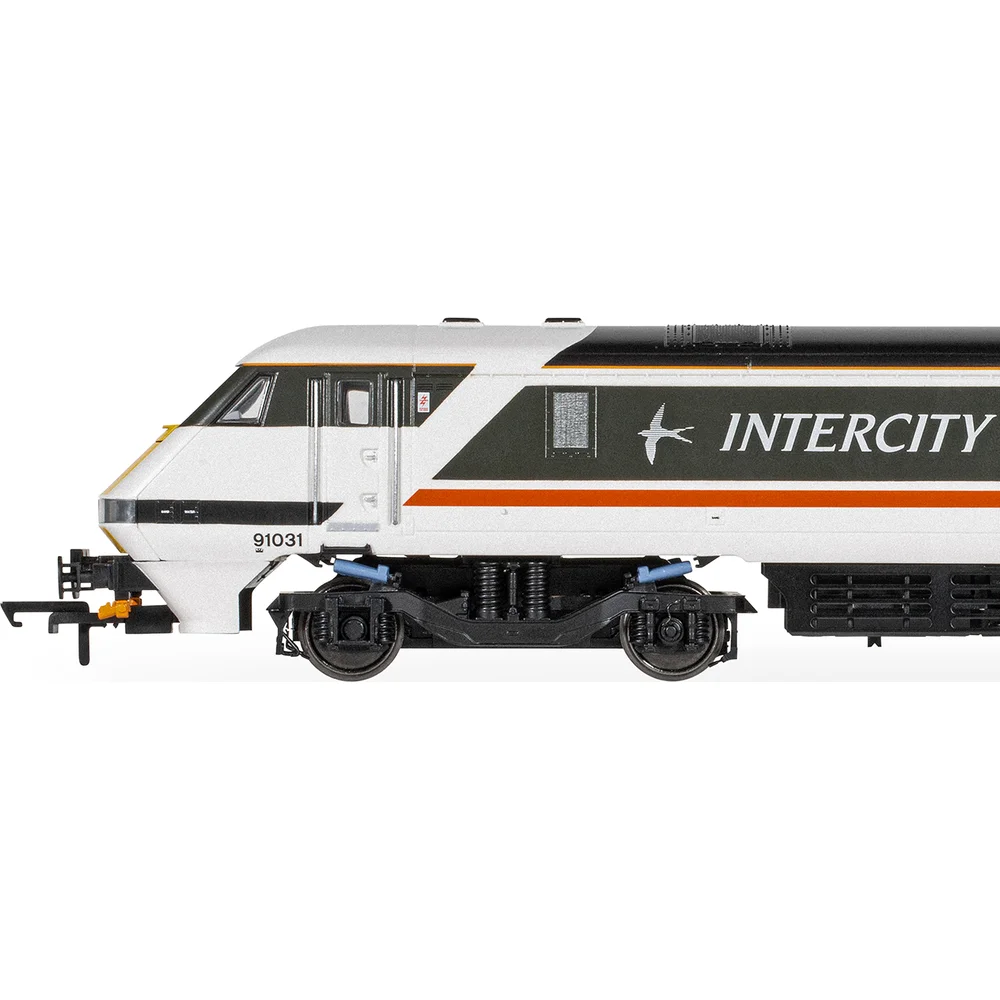
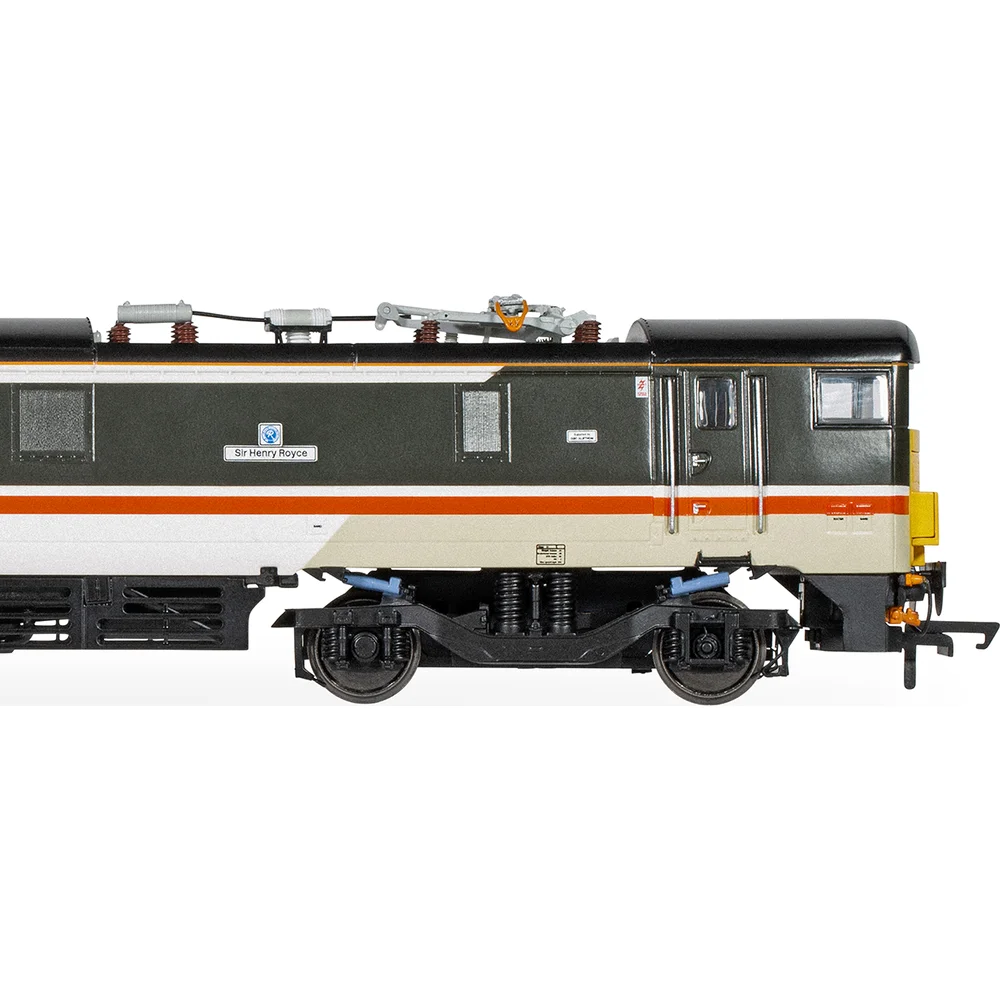
Hornby R30423
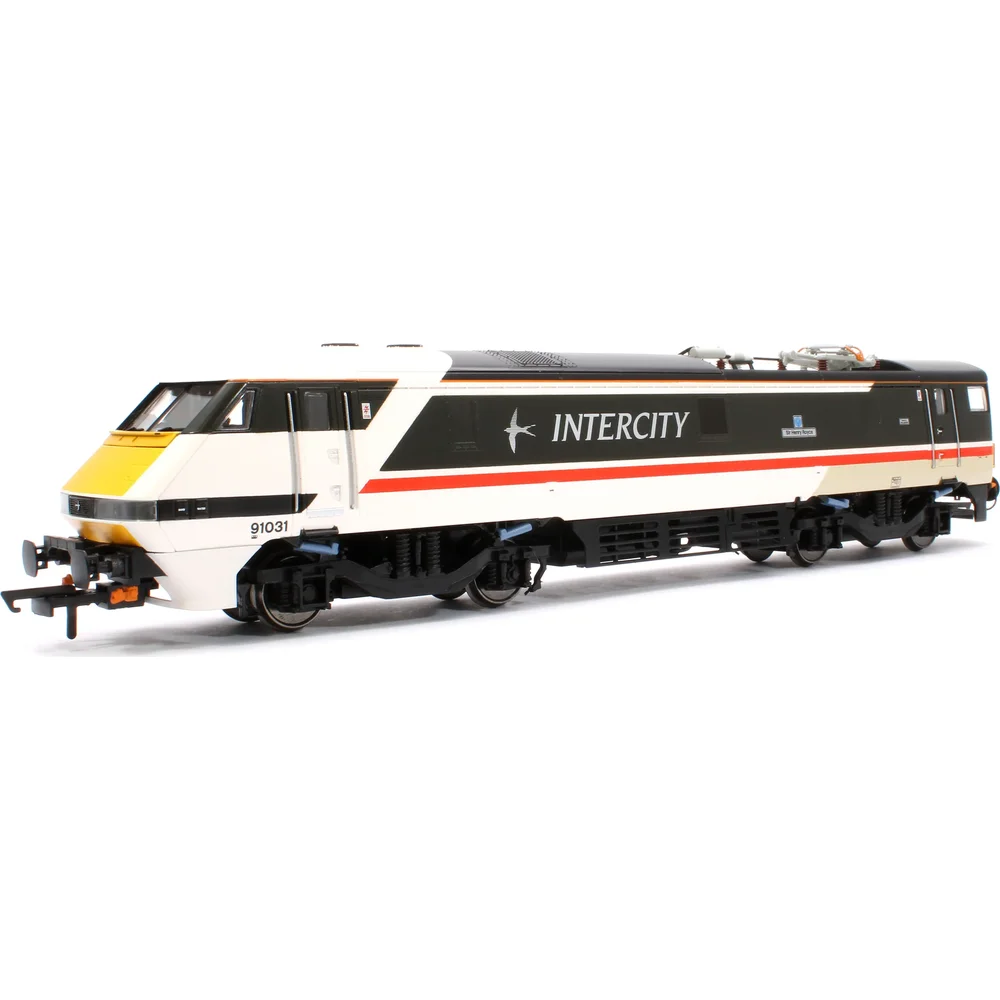
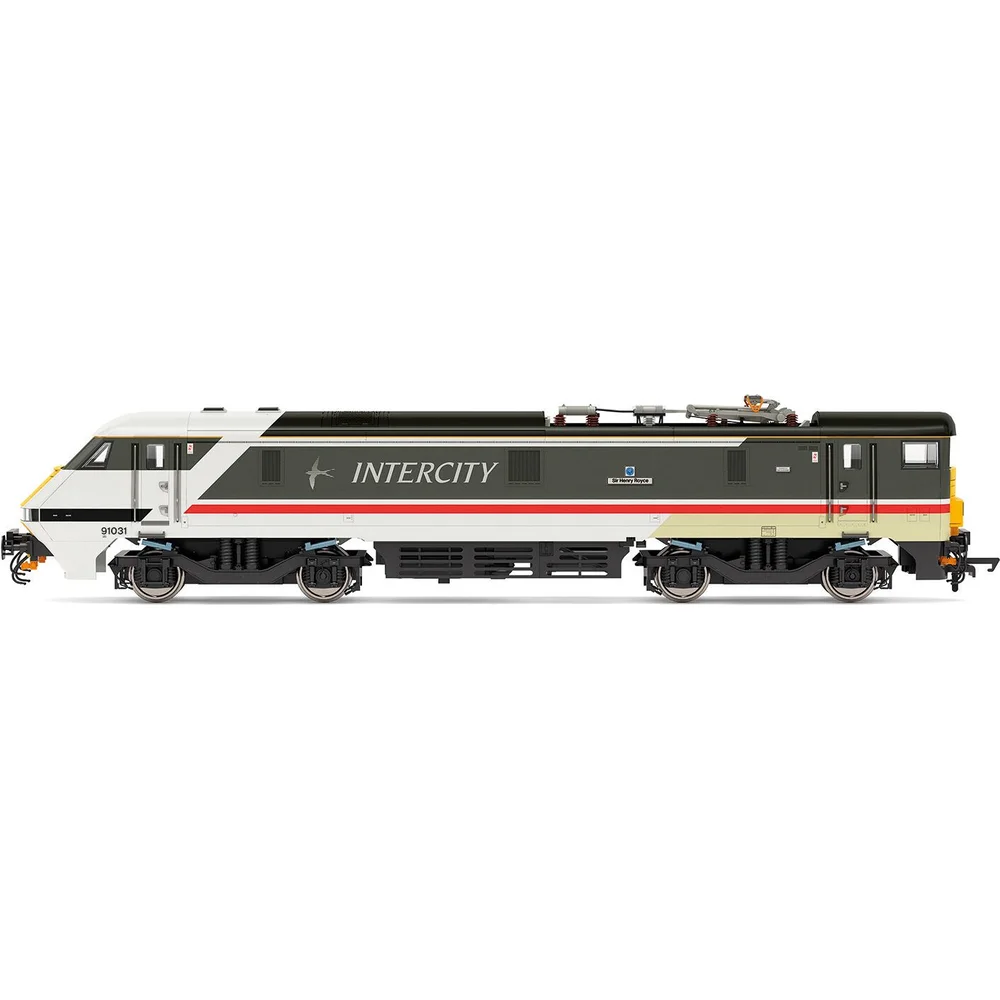
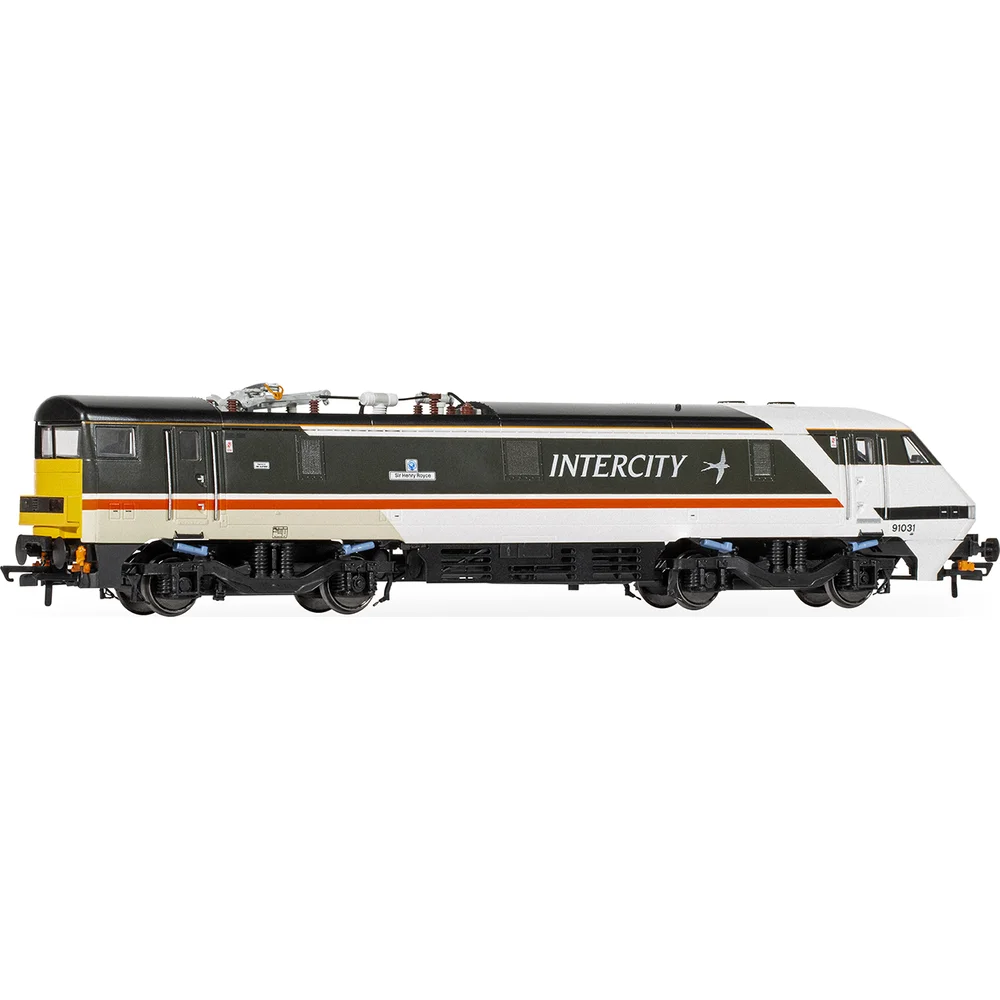
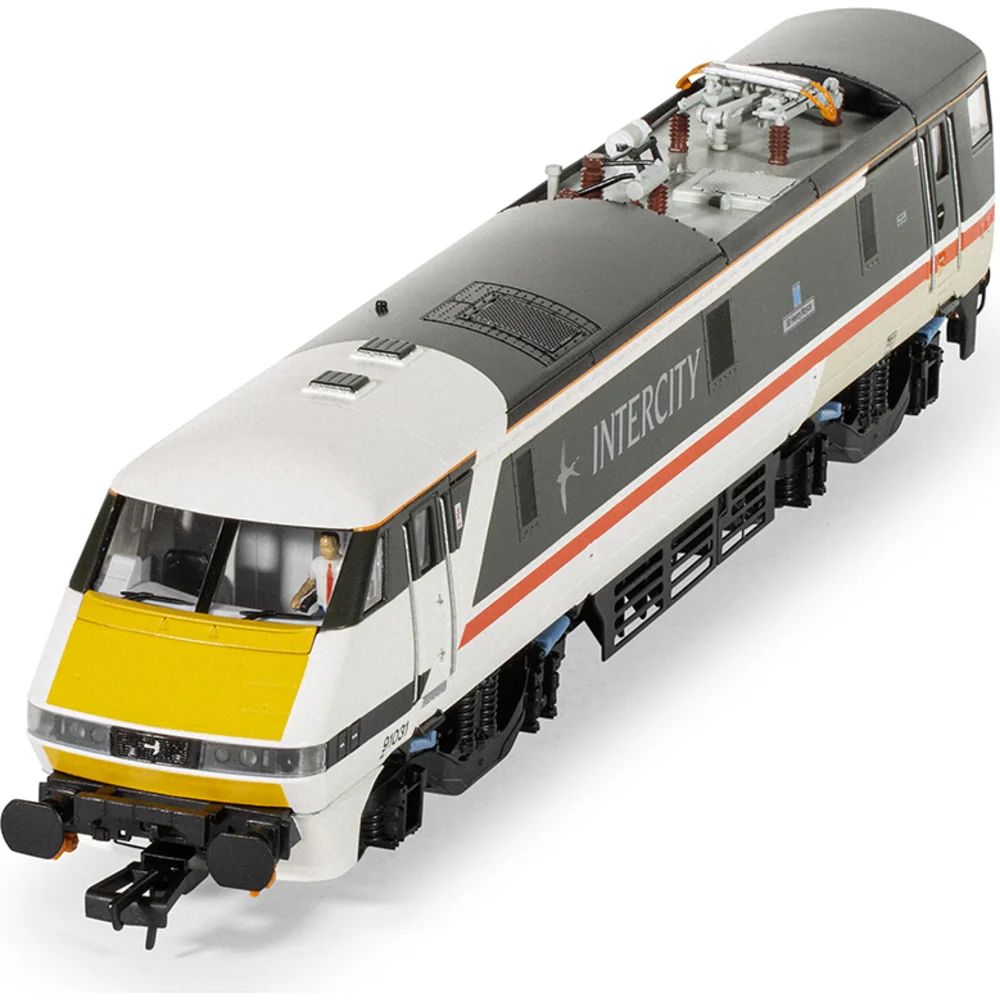
British Rail Class 91 91031 Sir Henry Royce British Rail InterCity Swallow
Tooling
In 2022, Hornby unveiled a completely retooled British Rail Class 91 for OO gauge, representing a major leap forward from previous iterations. This new tooling was designed to meet modern expectations for accuracy, performance, and digital capability. The release coincided with renewed interest in East Coast Main Line operations and the enduring popularity of the InterCity 225 sets, which remain iconic in British railway history.
The 2022 retooling was widely praised for its accuracy, fine detailing, and vastly improved running qualities. Reviewers highlighted the smooth performance from the all-wheel drive and flywheel-equipped motor, as well as the inclusion of modern features like LED lighting and DCC sound capability. Social media and forums noted that this model finally delivered the premium specification enthusiasts had long requested, making it a standout in Hornby’s modern electric range.
Detailing: Etched nameplates, roof electrical equipment, underframe detail, sprung buffers, and detailed cab interior with driver figure. Retractable buffers on No.1 end.
Class & Prototype
- Class: British Rail Class 91
- Traction: Electric
- Built: 1988-1991
- Total Built: 31
- Running Number: 91031
- Name: Sir Henry Royce
The British Rail Class 91 represents Britain's most advanced domestic electric locomotive, holding the 161.7 mph national speed record since 1989. Built at BREL Crewe Works between 1988-1991, these 31 locomotives pioneered unique body-mounted traction motors derived from Advanced Passenger Train research. Operating InterCity 225 services with Mark 4 coaches and Driving Van Trailers, the class served six operators across 36 years on the East Coast Main Line. Despite 140 mph design capability, signalling regulations limited operational speed to 125 mph. LNER currently operates 12 examples, with final withdrawal scheduled by end of 2028 when CAF Class 897 tri-mode units arrive. Hornby's exceptional 2022-tooled OO gauge models feature 21-pin DCC, five-pole motors, all-wheel drive, and directional LED lighting across multiple liveries from InterCity Swallow through GNER, Virgin Trains East Coast, and current LNER oxblood claret.
Operator & Livery
- Operator: British Rail InterCity
- Livery: Swallow
- Era: 8 - British Rail Sectorisation
British Rail InterCity was the premium express passenger brand that operated from 1966 to 1997, transforming long-distance rail travel across Britain. Initially launched as a marketing brand for high-speed services, InterCity became an autonomous business sector in 1982 under the sectorisation programme, operating profitable express services from London to Scotland, Wales, the West Country, and extensive cross-country routes.
The brand pioneered revolutionary rolling stock including the iconic InterCity 125 HST (High Speed Train) from 1976, which achieved 125mph operations on existing infrastructure, and the electric InterCity 225 sets from 1989, capable of 140mph but limited to 125mph in service. InterCity also developed the ground-breaking Advanced Passenger Train (APT) with tilting technology that influenced modern high-speed trains worldwide.
Distinguished by its evolving livery schemes - from Rail Blue and Grey through the sophisticated Executive livery with dark grey upper bodies and red stripes - InterCity became synonymous with quality, speed, and reliability. All day services featured buffet cars and the majority operated at 100mph or above, making British Rail one of the world's most intensive high-speed operators.
The brand was divided among multiple operators during railway privatisation in the 1990s, but its technical innovations, operational excellence, and commercial principles continue influencing modern rail services. InterCity remains hugely popular with railway modellers, with extensive ranges of locomotives and coaching stock available in all major scales from manufacturers like Hornby, Bachmann, and Heljan.