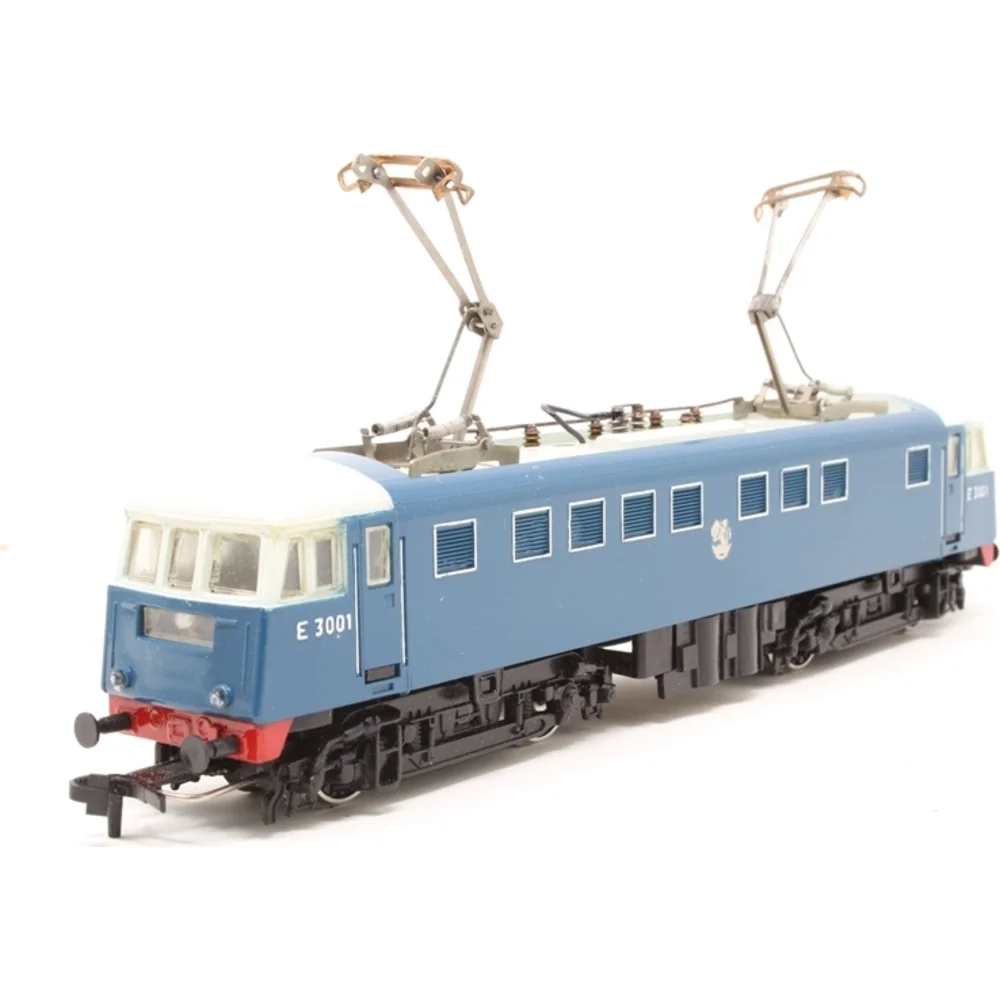
Liliput 1001

British Railways AL1 E3001 British Rail Blue

Tooling

The Trix British Rail Class 81 model was introduced in 1962, representing the AL1 electric locomotive (later Class 81) used on the West Coast Main Line. This was among the first British-outline AC electric locomotives in OO gauge and marked Trix’s move toward more accurate British prototypes during the early years of mainline electrification. The tooling was developed under the influence of Ernst Rozsa, who had previously collaborated with Liliput on similar models. Production continued through the 1960s and early 1970s, later appearing under Liliput branding after Trix ceased UK operations in 1973.

Collectors and enthusiasts note that the Trix Class 81 was robust and reliable for its time, though its deep wheel flanges and coarse-scale features can cause issues on modern fine-scale track. The model’s diecast weight and smooth-running motor were praised, but detailing was considered basic compared to later standards. Today, it is valued as a vintage collectible, often restored or kitbashed for improved realism.

The Class 81 tooling frequently appears in vintage model railway forums and collector groups, with discussions focusing on restoration, repainting, and conversions. Videos and posts highlight its historical significance as one of the earliest British AC electric models in OO gauge.

The original tooling is DCC incompatible. There is no factory provision for decoder installation or speaker fitting, reflecting its early 1960s design. Conversion to DCC requires significant modification.

The tooling originated from a Liliput design adapted for Trix, reflecting a transitional period in British model manufacturing. After Trix ceased UK operations, Liliput continued to produce models using the same tooling, marketed under both Liliput and Trix branding.

Detailing: Factory-fitted separate details, Stone Faiveley AMBR pantograph, roof-mounted electrical components, cab and footplate detail, interior glazing, and underframe detailing including battery boxes.

Class & Prototype

  • Running Number: E3001

The British Railways Class 81 were Britain's first production mainline AC electric locomotives, with 25 examples built 1959-1964 by Birmingham Railway Carriage & Wagon Company with AEI electrical equipment. Pioneering 25kV AC electrification on the West Coast Main Line, these Bo-Bo locomotives delivered 3,680 hp through mercury-arc rectifiers and frame-mounted motors. Operating primarily from Manchester, Liverpool, and later Glasgow depots, they hauled Anglo-Scottish expresses and freight until withdrawal in 1991. Only 81002 survives in preservation at Barrow Hill.

Operator & Livery

  • Operator: British Rail
  • Livery: Blue
  • Era: 6 - British Rail Blue Pre-TOPS

British Rail (1965-1997) transformed Britain's railways through revolutionary modernisation, introducing the iconic double arrow logo, Rail Blue livery, and business sectorisation. BR pioneered high-speed rail with the InterCity 125 and Advanced Passenger Train, electrified major routes, and created profitable divisions like InterCity and Network SouthEast. From steam succession through diesel and electric development to privatisation preparation, British Rail's diverse locomotive fleet, multiple livery schemes, and operational scenarios provide unparalleled variety for railway modellers across all scales and periods.

BR Blue, also known as Rail Blue or Monastral Blue, was introduced in 1965 as part of British Rail's comprehensive corporate identity overhaul that accompanied the rebranding from British Railways to British Rail. The colour was officially defined by British Standards BR28/6001 (airless spray finish) and BR28/5321 (brush finish), representing a dark, greyish blue tone specifically chosen to hide dirt and weathering effects well.

The livery was prototyped on the experimental XP64 train in 1964 before becoming the standard scheme from 1 January 1965. Rail Blue was applied to all diesel and electric locomotives with yellow warning panels (initially small, then extending to full yellow ends from 1966). The standardised application included the iconic double arrow logo and Rail Alphabet typeface, creating one of the most successful transport corporate identities of the 20th century.

The livery dominated British Rail operations for over two decades until sectorisation in the 1980s began fragmenting the unified appearance. Despite initial colour fading problems in early applications, these were resolved by the late 1970s when the Large Logo variant was introduced featuring extended yellow areas and full-height double arrow symbols. Rail Blue's enduring appeal among railway enthusiasts reflects its role as the definitive British Rail image during the organisation's most unified period.