Dapol 4D-006-014S
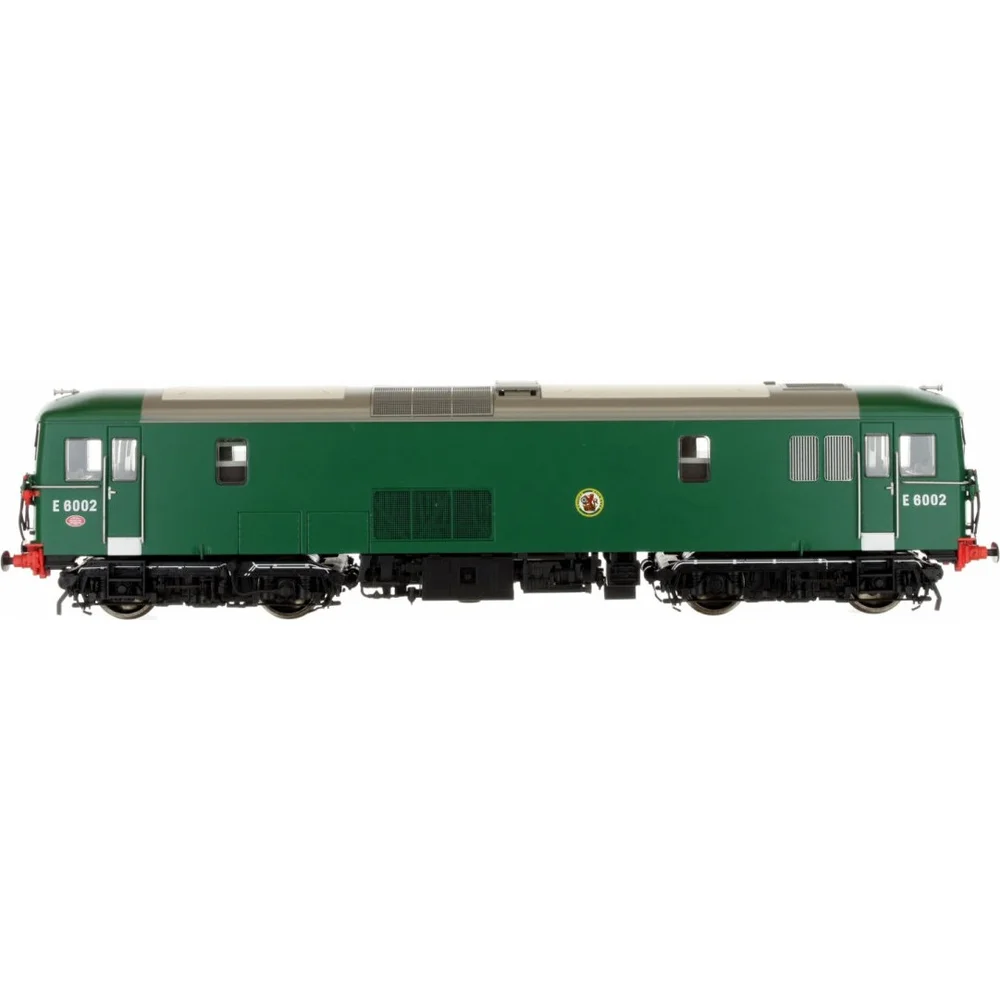
British Rail Class 73 E6002 British Railways Green
Source: Dapol
Side elevation left direction
Tooling
Dapol introduced its OO gauge model of the British Rail Class 73 electro-diesel locomotive in 2016. The Class 73 is a unique dual-mode locomotive capable of operating from the Southern Region’s 650/750V DC third rail or via an onboard diesel engine, making it versatile for both electrified and non-electrified routes. Built between 1962 and 1967, the prototype was primarily used in the Southern Region, with many units later appearing in a wide range of liveries under various operators.
The Dapol Class 73 has generally been praised for its high level of detail, accurate body shape, and smooth running qualities. Features such as etched grilles, sprung buffers, and lighting functions have been highlighted positively. However, some reviewers noted occasional issues with bogie articulation on uneven track, leading to derailments in certain conditions. Social media and video reviews often commend the model's slow-speed performance and realistic lighting, while some early batches were criticized for minor lighting configuration errors, later corrected in subsequent releases.
The tooling allows for both JA and JB variants, enabling accurate representation of early and later builds. Accessory packs include optional snowploughs and bufferbeam detailing parts for customization. Later production runs introduced improved lighting arrangements and factory sound-fitted options.
Detailing: Separately fitted handrails, etched metal side and roof grilles, fan detail, lamp irons, jumper cables, and bufferbeam detailing packs. Glazing includes flush-fitting windows with interior cab detail.
Class & Prototype
- Class: British Rail Class 73
- Traction: Electro-diesel
- Built: 1962-1967
- Total Built: 49
- Running Number: E6002
The British Rail Class 73 electro-diesel represents one of Britain's most versatile and longest-serving locomotive classes, designed in the early 1960s to solve the Southern Region's third-rail gap problem in goods yards. With dual 1,600hp electric and 600hp diesel modes (1,600hp diesel in Class 73/9 rebuilds), these Bo-Bo locomotives served prestigious duties from Gatwick Express to Venice Simplon Orient Express, and now operate Caledonian Sleeper services in Scotland. Of 49 built (6 Class 73/0, 43 Class 73/1), 39 survive with approximately 22 still operational, making them among British Rail's most enduring designs spanning over 60 years of continuous service.
Operator & Livery
- Operator: British Railways
- Livery: Green
- Era: 5 - British Railways Late Crest
British Railways transformed Britain's fragmented rail network into a unified national system following nationalisation on 1st January 1948. Created from the "Big Four" companies under the Transport Act 1947, BR operated most of Great Britain's railways until rebranding as British Rail in 1965, managing over 20,000 route miles and inheriting nearly 20,000 locomotives of diverse designs.
The organisation pioneered standardisation through its revolutionary BR Standard locomotive programme (1951-1960), producing 999 advanced steam engines under Robert Riddles' direction. These included the versatile Britannia Pacifics, mighty 9F freight engines, and mixed-traffic classes that incorporated the best features from all predecessor companies. The 1955 Modernisation Plan accelerated diesel and electric traction development, creating fascinating mixed-traction operations.
Notable achievements included establishing unified locomotive classification systems, introducing distinctive corporate liveries, and managing the complex transition from steam to modern traction. BR's six regional structure preserved operational diversity whilst enabling standardisation of practices, signalling, and rolling stock that had eluded private enterprise for over a century.
The BR era represents steam traction's final flowering alongside emerging diesel technology, creating unparalleled locomotive variety. Today, this heritage remains highly popular with railway enthusiasts through extensive preserved fleets, heritage railway operations, and comprehensive model ranges from manufacturers like Hornby, Bachmann, and Dapol, making BR subjects essential for authentic post-war British railway modelling across all scales.