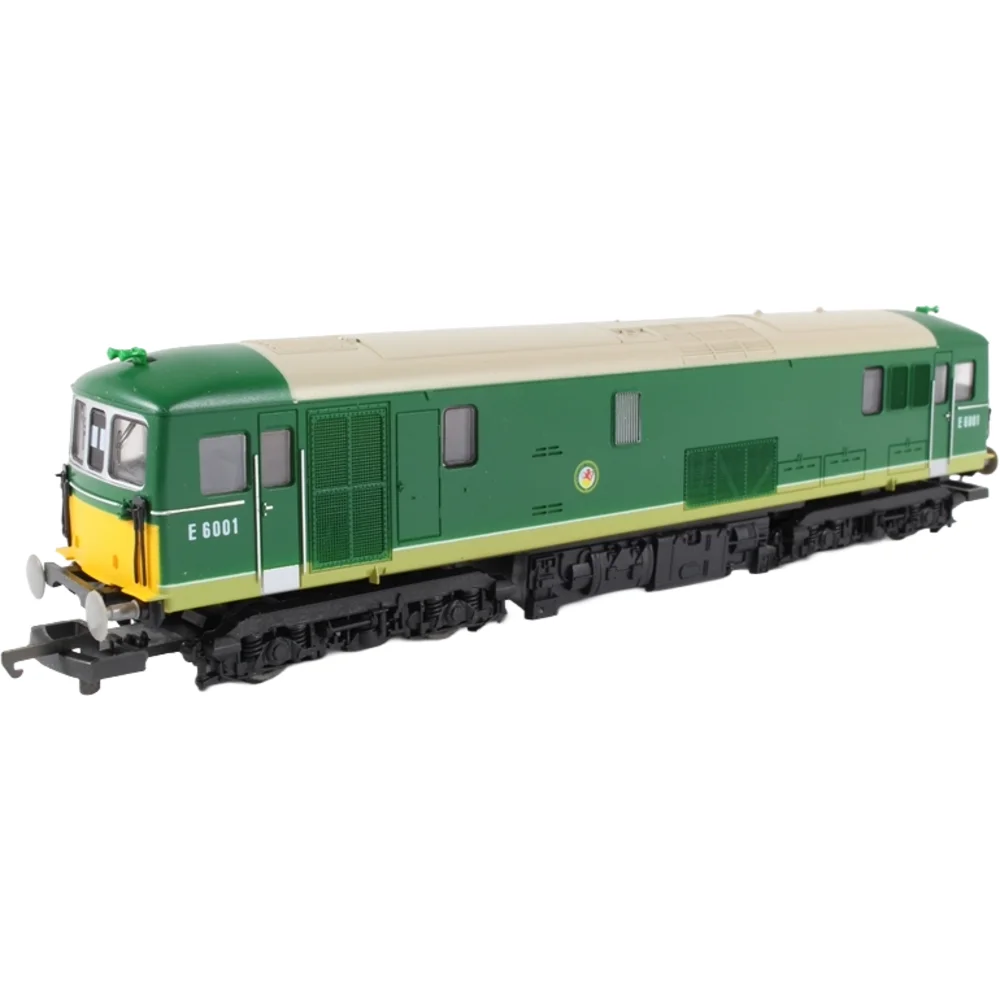
Lima L205276

British Rail Class 73 E6001 British Railways Green with Late Crest

Tooling

Lima introduced its British Rail Class 73 electro-diesel locomotive in OO gauge in 1986. At the time, Lima was a major supplier of affordable ready-to-run models for UK enthusiasts, competing with Hornby and Mainline. The Class 73 was a distinctive choice, representing a Southern Region electro-diesel capable of operating on third-rail DC and diesel power, making it a versatile prototype for layouts set from the 1960s onwards.

At launch, the Lima Class 73 was praised for its accurate body shape and crisp moulding, which compared well to competitors of the era. However, the mechanism was considered basic, with limited electrical pickup and a high top speed. Enthusiasts often noted that the model benefited from running-in and regular maintenance. Modern reviews highlight its affordability and suitability for upgrading, with common improvements including rewiring for DCC, fitting better wheels, and replacing the motor for smoother performance. Detailing upgrades such as wire handrails and etched parts are popular among modellers.

The Lima Class 73 remains a frequent subject in online forums, YouTube reviews, and blogs. Videos often showcase servicing tips, repaint projects, and DCC conversions. Collectors value limited editions such as Pullman and Network SouthEast commemorative releases, while budget-conscious modellers appreciate its availability on the second-hand market.

DCC compatible but not DCC-ready. There is no factory-fitted socket; conversion requires hard-wiring a decoder. Space inside the body allows for basic installations, but no provision for speakers or lighting upgrades from the factory.

The tooling represented multiple sub-classes (73/0, 73/1, and 73/2) through variations in detail and livery. Despite its age, the model is still widely used and upgraded, reflecting Lima’s strong pattern-making and printing quality for its time.

Detailing: Factory-fitted separate details including horns, jumper cables, cab interiors, footplate detail, window wipers, and detailed glazing. Underframe features include battery boxes, fuel tanks, and third-rail pick-up shoes.

Class & Prototype

  • Running Number: E6001

The British Rail Class 73 electro-diesel represents one of Britain's most versatile and longest-serving locomotive classes, designed in the early 1960s to solve the Southern Region's third-rail gap problem in goods yards. With dual 1,600hp electric and 600hp diesel modes (1,600hp diesel in Class 73/9 rebuilds), these Bo-Bo locomotives served prestigious duties from Gatwick Express to Venice Simplon Orient Express, and now operate Caledonian Sleeper services in Scotland. Of 49 built (6 Class 73/0, 43 Class 73/1), 39 survive with approximately 22 still operational, making them among British Rail's most enduring designs spanning over 60 years of continuous service.

Operator & Livery

  • Operator: British Railways
  • Livery: Green with Late Crest
  • Era: 5 - British Railways Late Crest

British Railways transformed Britain's fragmented rail network into a unified national system following nationalisation on 1st January 1948. Created from the "Big Four" companies under the Transport Act 1947, BR operated most of Great Britain's railways until rebranding as British Rail in 1965, managing over 20,000 route miles and inheriting nearly 20,000 locomotives of diverse designs.

The organisation pioneered standardisation through its revolutionary BR Standard locomotive programme (1951-1960), producing 999 advanced steam engines under Robert Riddles' direction. These included the versatile Britannia Pacifics, mighty 9F freight engines, and mixed-traffic classes that incorporated the best features from all predecessor companies. The 1955 Modernisation Plan accelerated diesel and electric traction development, creating fascinating mixed-traction operations.

Notable achievements included establishing unified locomotive classification systems, introducing distinctive corporate liveries, and managing the complex transition from steam to modern traction. BR's six regional structure preserved operational diversity whilst enabling standardisation of practices, signalling, and rolling stock that had eluded private enterprise for over a century.

The BR era represents steam traction's final flowering alongside emerging diesel technology, creating unparalleled locomotive variety. Today, this heritage remains highly popular with railway enthusiasts through extensive preserved fleets, heritage railway operations, and comprehensive model ranges from manufacturers like Hornby, Bachmann, and Dapol, making BR subjects essential for authentic post-war British railway modelling across all scales.