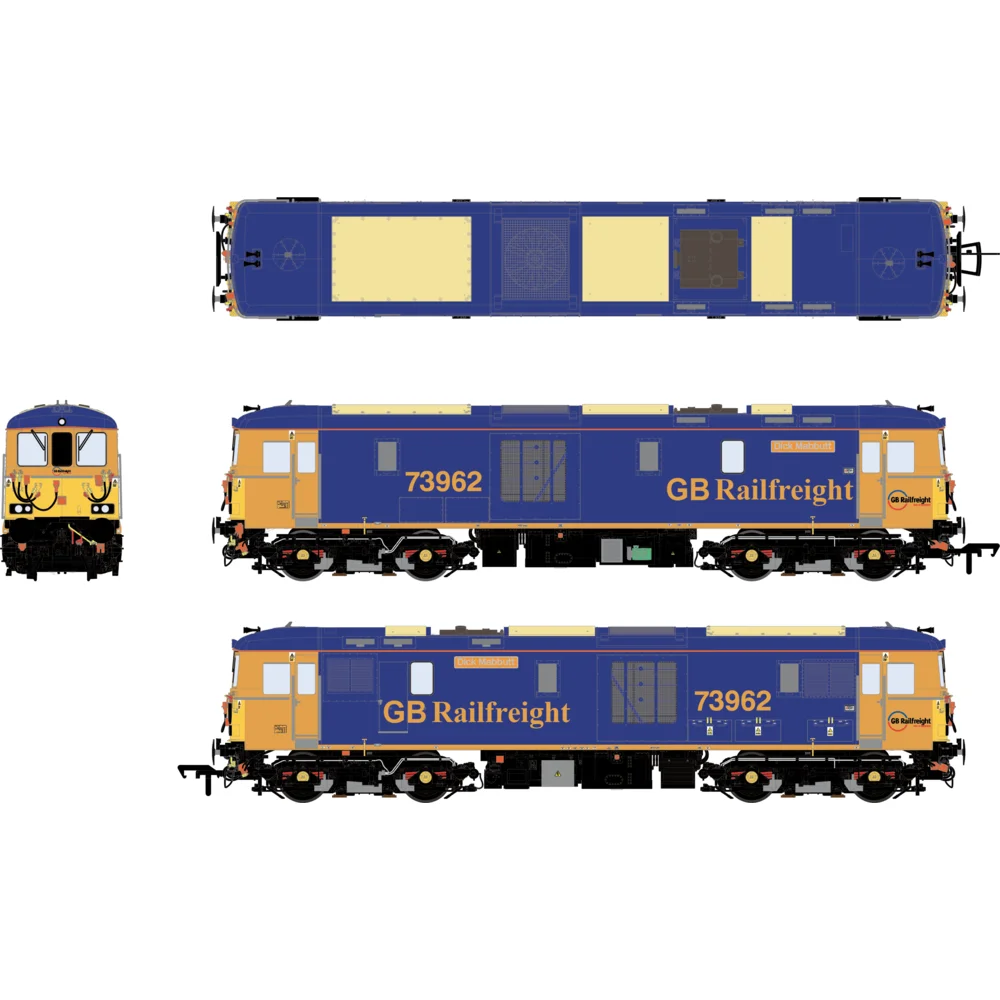
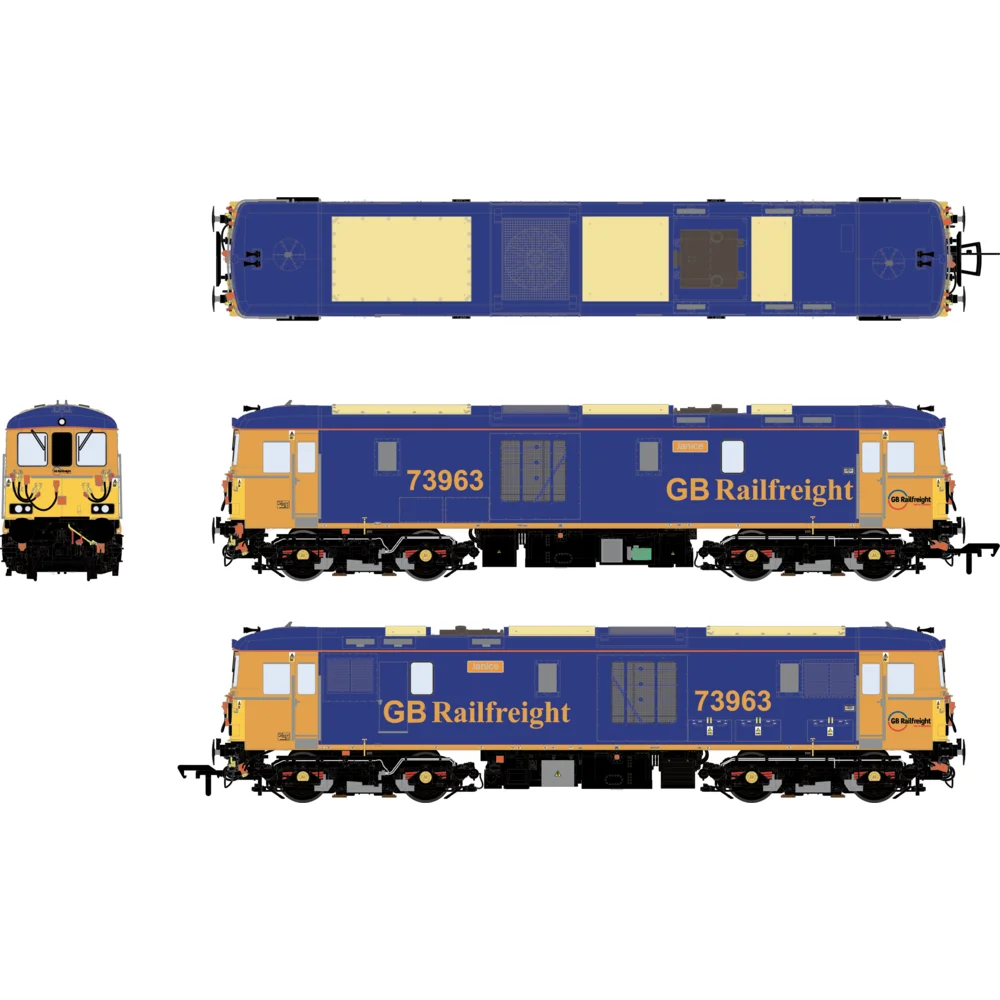
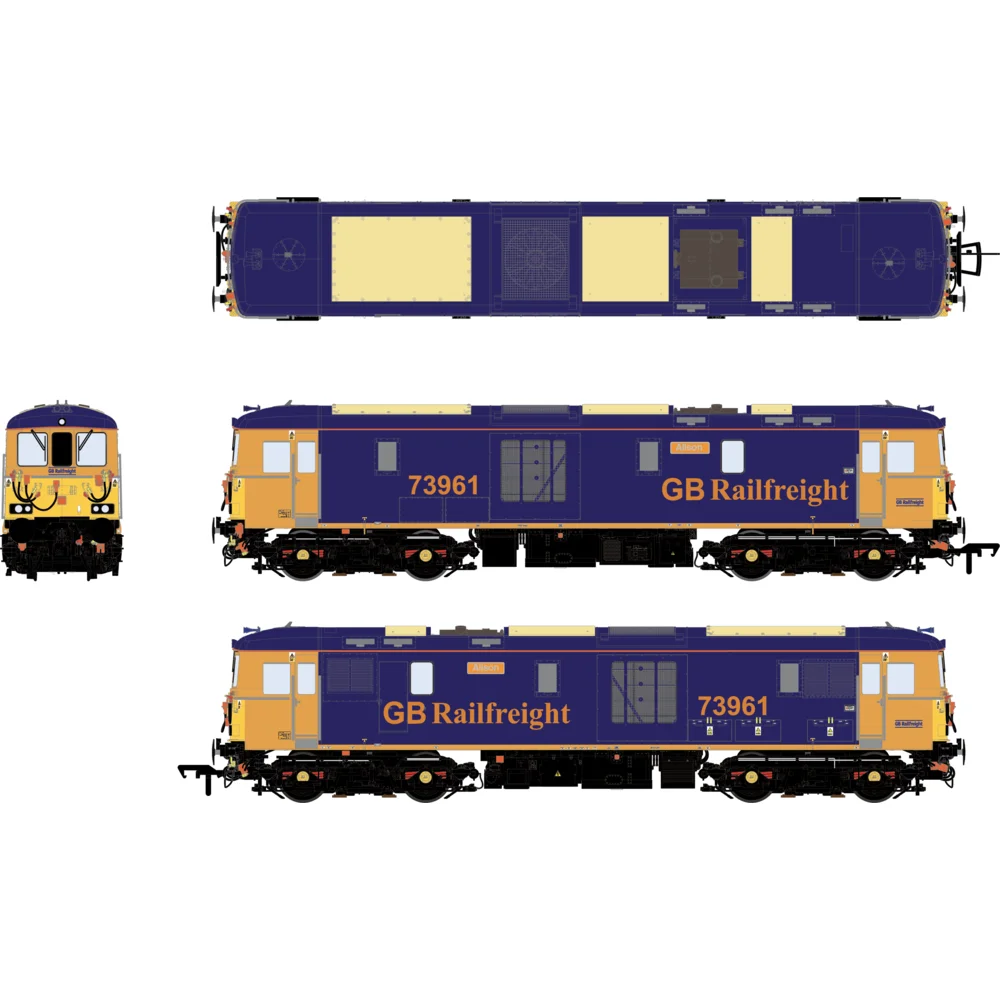
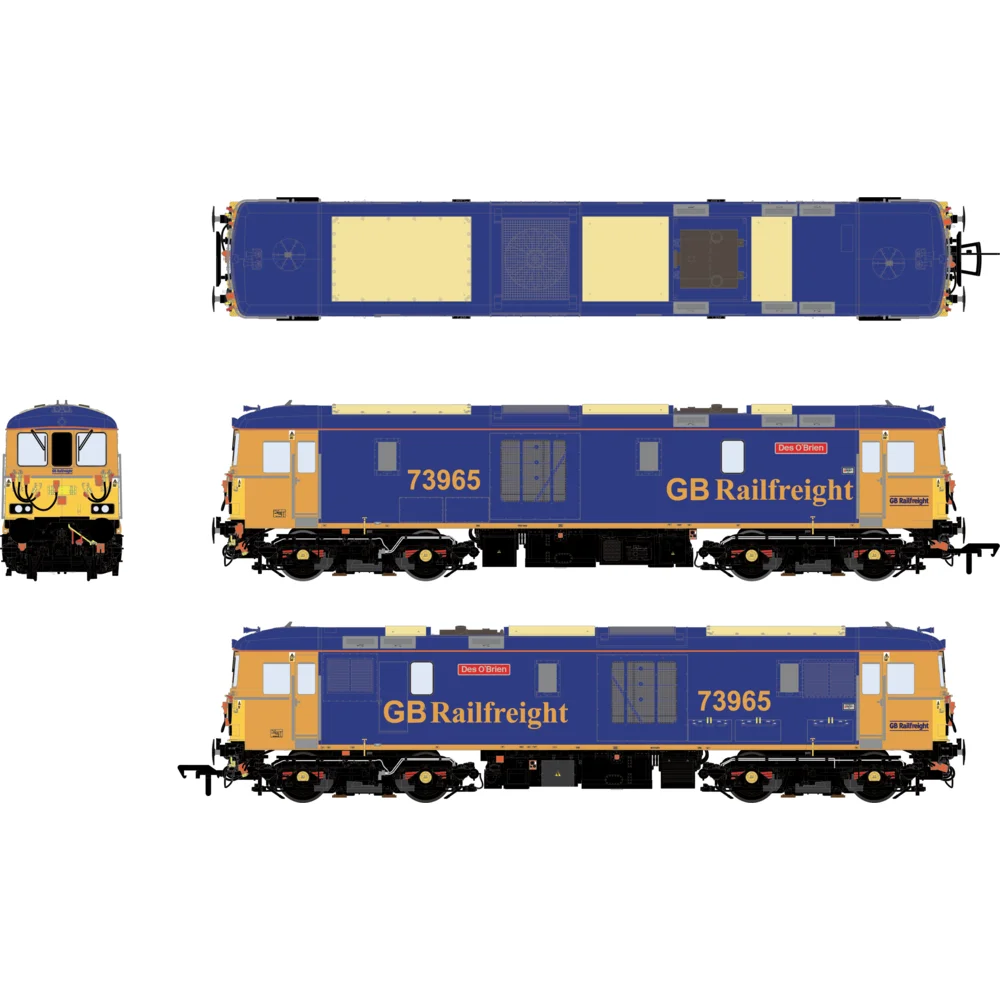
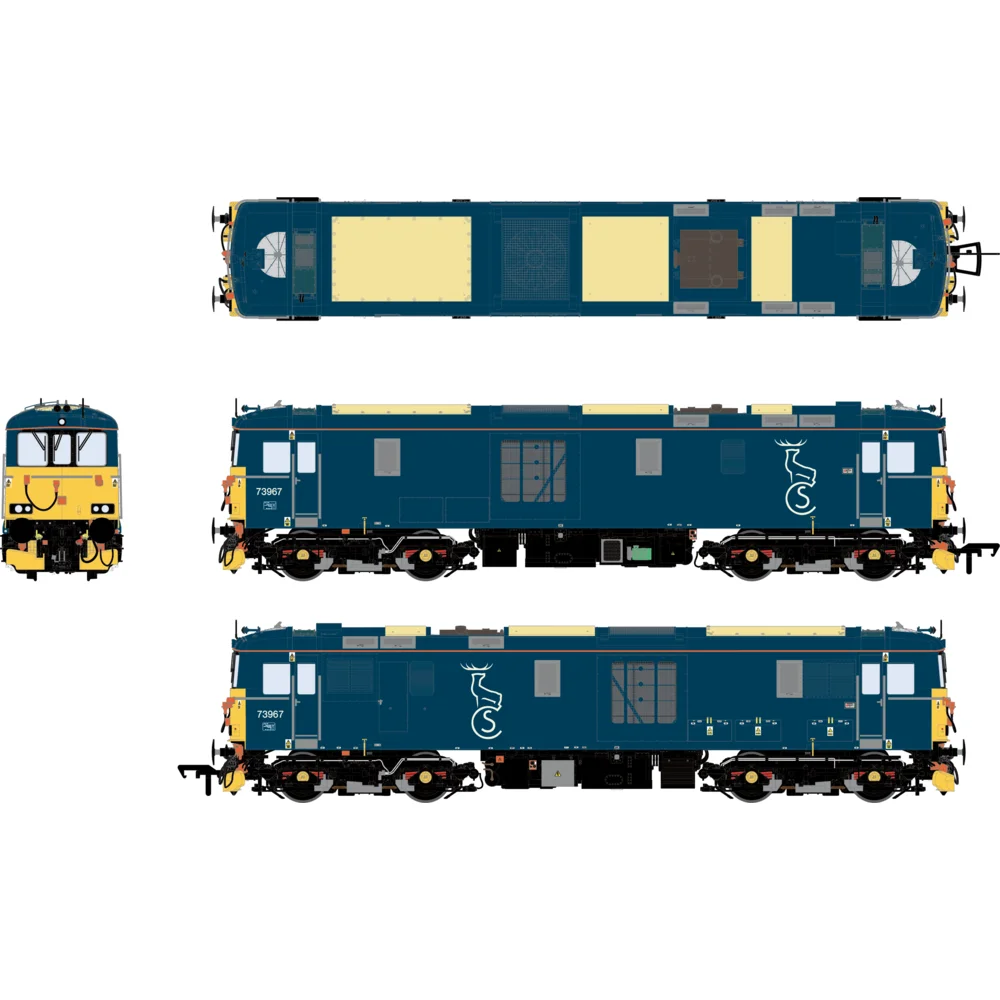
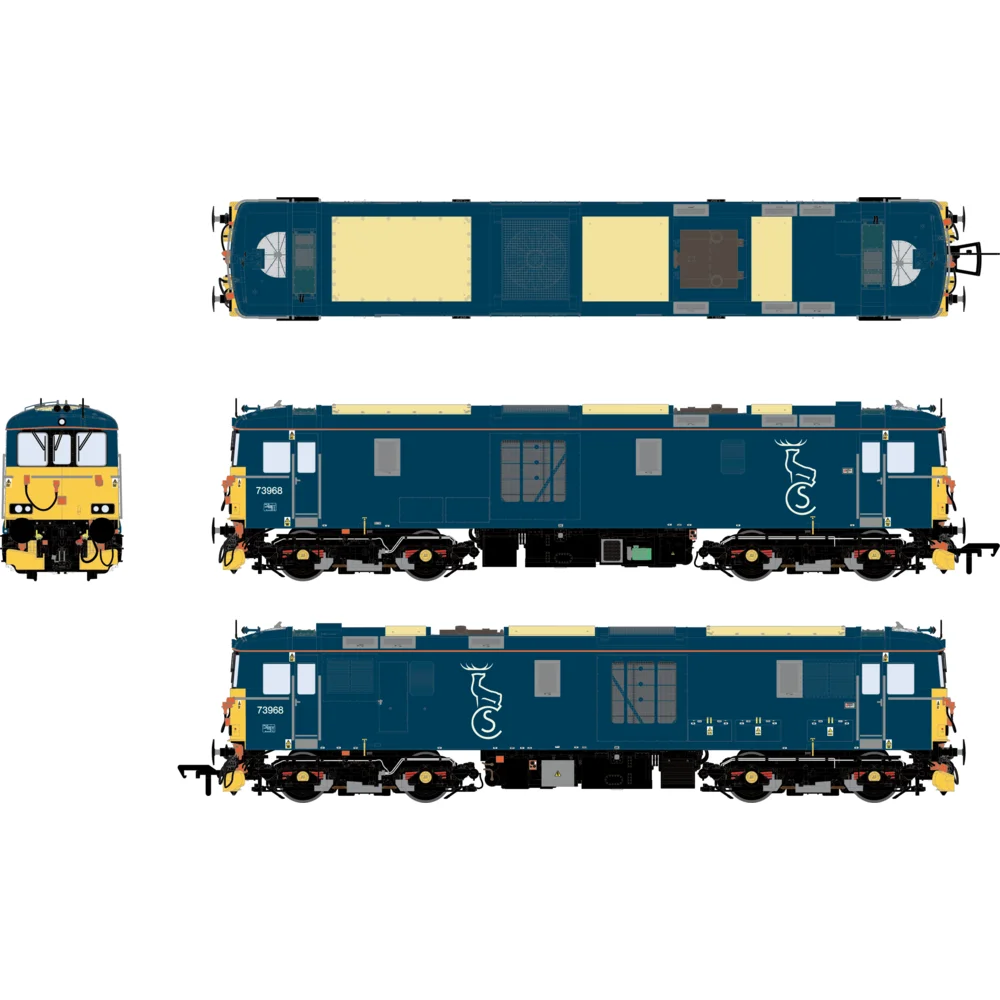
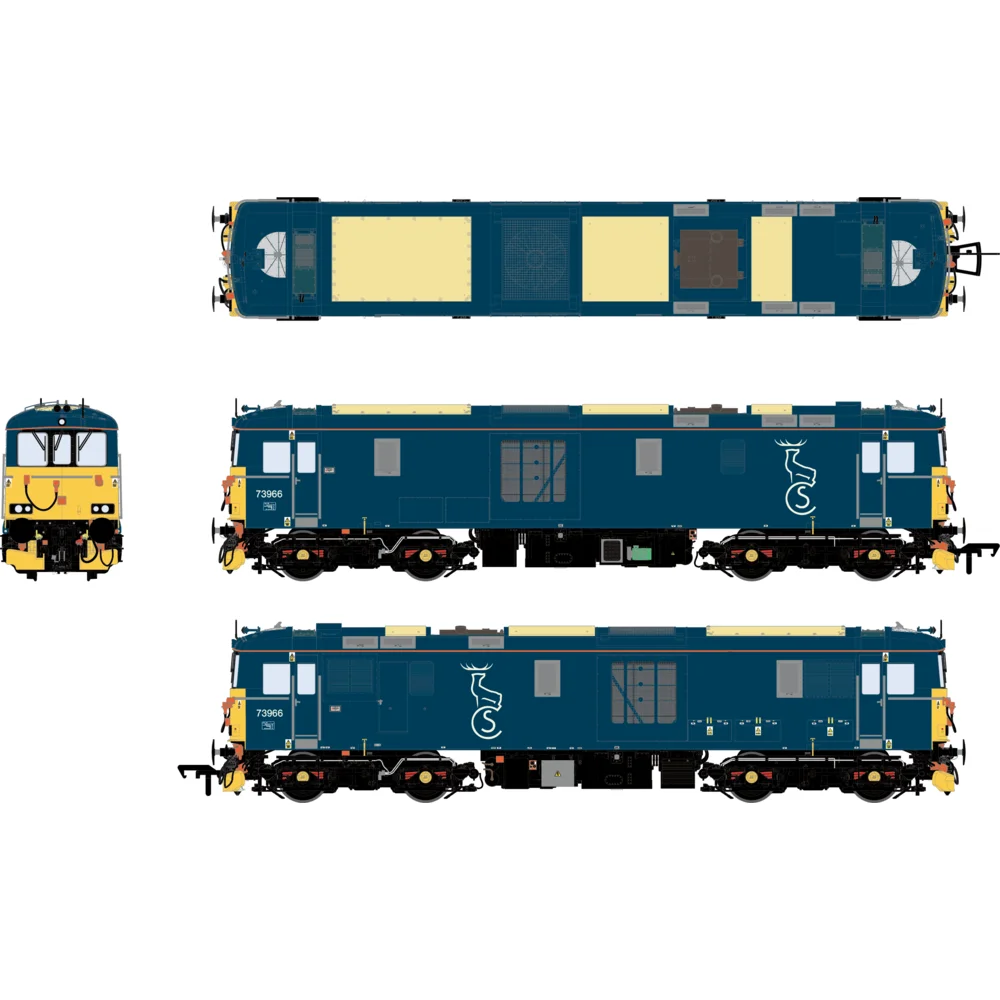
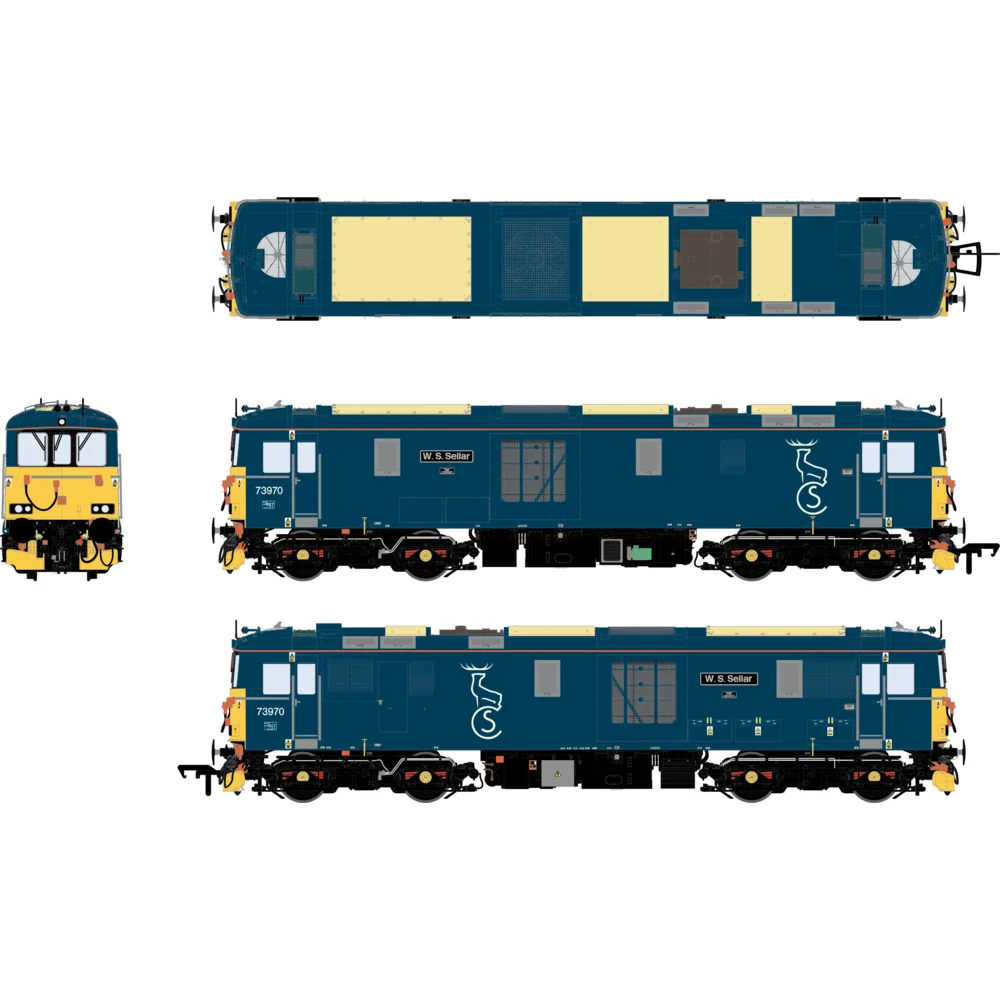
The British Rail Class 73 electro-diesel stands as one of British railway engineering's most innovative and enduring designs—a dual-power locomotive that has outlasted nearly every contemporary from its 1962 debut. Originally conceived to solve the Southern Region's peculiar operational problem of third-rail gaps in goods yards, these versatile machines proved so effective that 39 of the original 49 remain in existence today, with approximately 22 still earning their keep on Network Rail's mainline more than 63 years after construction.
For model railway enthusiasts, the BR Class 73 offers an exceptionally well-served prototype across all major scales. Dapol dominates OO gauge production with comprehensive ranges spanning every significant livery period, Hornby provides budget-friendly Railroad and Railroad Plus alternatives, whilst Heljan's O gauge models represent exceptional value with substantial discounts on original pricing. N gauge coverage comes through Dapol production marketed via Gaugemaster Collection, ensuring modellers of all scales can authentically represent this remarkable class.
From solving the third-rail safety problem in 1962 through prestigious Gatwick Express services in the 1980s-90s to hauling Caledonian Sleeper trains through Scottish Highlands today, the Class 73 has demonstrated operational versatility unmatched by any British diesel or electric class. The electro-diesel concept—marrying 1,600 horsepower electric traction with diesel capability for non-electrified sections—created locomotives equally at home on express passenger services, heavy freight duties, shunting operations, and infrastructure maintenance work spanning six decades and three railway eras.
Quick Takeaways
- Forty-nine locomotives built: Six Class 73/0 prototypes (E6001-E6006) at Eastleigh Works 1962, forty-three Class 73/1 production examples (E6007-E6049) at Vulcan Foundry 1965-1967
- Dual-power innovation: 1,600 horsepower electric mode from 750V DC third rail, 600hp diesel mode from English Electric 4SRKT engine, transforming to 1,600hp diesel in Class 73/9 rebuilds
- 63-year service span: From February 1962 debut until present day operations, encompassing BR green/blue, sectorisation liveries, privatisation rainbow schemes, and current GBRf/Caledonian Sleeper work
- Technical versatility: Bo-Bo wheel arrangement, 90mph maximum speed (73/1), comprehensive brake compatibility (vacuum, air, electro-pneumetic), 27-wire jumper EMU working, eight retractable third-rail shoes
- Geographic diversity: Southern Region boat trains and express services, Gatwick Express dedicated operation 1984-2000, Merseyrail network shunting 1992-2002, Scottish Highland sleeper trains 2015-present
- Exceptional model availability: Dapol OO gauge comprehensive range (20+ variants), Hornby Railroad budget options, Heljan O gauge 12 liveries, Gaugemaster Collection N gauge coverage
- Preservation success: 39 of 49 locomotives survive, including operational examples at Bluebell Railway, Severn Valley Railway, Mid-Hants Railway, and approximately 22 in mainline service
Historical Background and Context
The genesis of the Class 73 electro-diesel lay in a specific operational challenge facing the Southern Region during the late 1950s. The extensive 750-volt DC third-rail electrification network, pioneered from 1915 onwards, had transformed passenger services across the South East with remarkable efficiency. However, extending conductor rails into goods yards created severe safety hazards—ground personnel working among wagons risked electrocution from exposed live rails running at waist height throughout marshalling facilities.
Earlier attempts to solve this problem had produced mixed results. The experimental Class 70 locomotives incorporated massive flywheels enabling them to coast over short non-electrified gaps, but the technology proved temperamental and limited in application. The Class 71 electric locomotives featured overhead pantographs for use in specially-wired Kent goods yards, but this solution required expensive infrastructure modifications and couldn't address the broader network challenge.
The Southern Region's Civil Mechanical and Electrical Engineering division developed a more elegant solution during the late 1950s: a locomotive carrying both electric traction equipment for main line operation and a self-contained diesel engine sufficient for yard movements and non-electrified sections. The specification called for performance matching the recently-introduced BRCW Class 33 Type 3 diesels—1,600 horsepower in electric mode—whilst the diesel component needed only enough power for slow-speed shunting and positioning moves.
English Electric won the manufacturing contract, building on their proven expertise with Southern Region diesel-electric multiple units. The company would supply the diesel engine (the 4SRKT Mk II four-cylinder unit already successful in DEMUs), traction motors, and all electrical equipment. Ashford Works constructed the underframes whilst Eastleigh Carriage and Wagon Works handled bodyshell fabrication and final assembly, keeping construction entirely within Southern Region facilities.
Insider Tip: Third-Rail Shoe Recognition
Class 73 locomotives carried eight retractable third-rail collector shoes—four per bogie, two on each side. This distinctive arrangement enabled safe diesel-powered movements across electrified track during relaying work, with shoes raised clear of conductor rails. You can identify original specification locomotives by examining the bogie sides for the prominent shoe beam housings. The six Class 73/9 rebuilds allocated to Caledonian Sleeper had their shoes permanently removed in 2019/2020 since Scottish routes lack third-rail electrification. Modellers should note this detail when recreating authentic Highland sleeper formations.
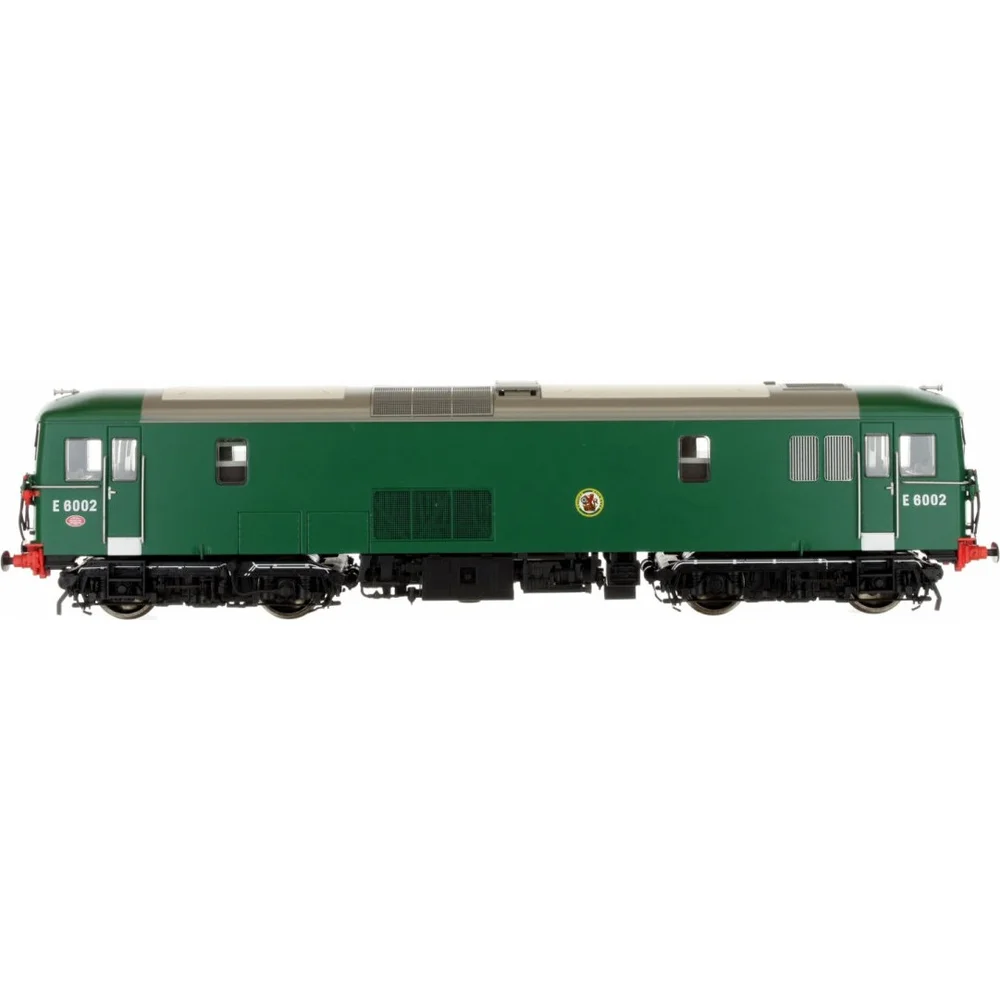
The six prototype locomotives emerged from Eastleigh Works between February and December 1962, numbered E6001 through E6006 and classified Type JA under British Railways' modernisation plan numbering. These machines wore Southern multiple unit green livery with grey roofs, reflecting their close relationship with the region's EMU fleet. Small yellow warning panels appeared progressively through the late 1960s as safety regulations evolved.
Initial testing validated the electro-diesel concept comprehensively. The locomotives performed flawlessly in electric mode on third-rail routes, matching Class 33 diesel performance whilst offering superior acceleration from electric traction's instant torque delivery. Diesel mode, whilst modest in power output, proved entirely adequate for yard work and enabled locomotives to traverse non-electrified sections including the critical movements across goods yards with conductor rails safely de-energised.
Success prompted an order for 43 production examples as part of the Bournemouth Electrification scheme. English Electric's Vulcan Foundry at Newton-le-Willows constructed these Type JB locomotives between October 1965 and January 1967, numbered E6007 through E6049. The production batch incorporated refinement from prototype experience, most significantly uprated traction motors enabling 90mph maximum speed compared to the prototypes' 80mph limitation. These locomotives emerged in corporate BR blue—among the first new-build locomotives to carry this livery that would characterise British Railways through the 1970s and early 1980s.
Design and Technical Specifications
The engineering excellence of the British Rail Class 73 lay in seamlessly integrating two complete power systems within a compact Bo-Bo locomotive measuring just 53 feet 8 inches (16.36 metres) in length. At the heart of the diesel capability sat the English Electric 4SRKT Mk II four-cylinder powerplant developing 600 brake horsepower at 850 rpm. This proven engine had already demonstrated reliability in Southern Region's diesel-electric multiple units, offering maintenance commonality and parts availability across the fleet.
Electric traction drew power from the Southern Region's 750-volt DC third-rail system through eight retractable collector shoes—four per bogie, positioned two on each side. This arrangement enabled diesel-powered movements across electrified track with shoes raised, crucial for engineering work and yard operations. When operating electrically, the locomotive could draw up to 1,600 horsepower (one-hour rating) or 1,420 horsepower continuously, transmitted through four nose-suspended traction motors driving the wheelsets directly.
The critical distinction between Class 73/0 prototypes and Class 73/1 production locomotives centred on traction motor specification. The six prototypes carried English Electric Type 542A motors restricting maximum speed to 80 mph, whilst the 43 production examples received uprated EE 546/1B motors permitting 90 mph operation. This seemingly modest improvement significantly enhanced operational flexibility, enabling Class 73/1s to work express passenger services requiring higher speed capability.
Tractive effort figures reflected this motor difference markedly. The Class 73/0 delivered 32,000 pounds-force in electric mode, adequate for mixed-traffic duties but limiting heavy freight capability. The Class 73/1's enhanced motors produced 40,000 lbf tractive effort—a 25% improvement enabling substantially heavier train formations. In diesel mode, both variants managed approximately 18,000 lbf, sufficient for yard work though clearly unsuitable for main line haulage with anything beyond light formations.
The comprehensive brake equipment specification—vacuum, compressed air, and electro-pneumatic systems—ensured compatibility with virtually any coaching stock or freight wagon formation. This versatility proved crucial for Southern Region operations involving diverse rolling stock types from elderly vacuum-braked Mark 1 coaches through modern air-braked EMUs to continental ferry vans with differing brake systems.
A particularly innovative feature enabled Class 73s to work in multiple with Southern Region electric multiple units using the standard 27-wire jumper cable system. This capability meant locomotives could control entire EMU formations during depot moves, rescue failed units, or provide additional power during service disruptions. The locomotives also featured multiple working compatibility with Classes 33/1, 71, 74, and Blue Star coded diesel classes, creating operational flexibility unmatched by contemporary designs.
Technical Innovation: The Class 73/9 Transformation
The most dramatic evolution in Class 73 development occurred between 2013 and 2016 when Wabtec Brush Traction at Loughborough rebuilt eleven locomotives with MTU 8V 4000 R43L V8 engines delivering 1,600 horsepower in diesel mode—tripling diesel capability and matching electric performance for the first time. Five locomotives (73961-73965) went to GB Railfreight in blue and orange livery, whilst six (73966-73971) received Caledonian Sleeper's midnight teal for dedicated Scottish operations. These rebuilds featured AAR multiple working with Classes 59, 66, and 67, Dellner couplings for CAF Mark 5 sleeper coaches, dramatically increased fuel capacity, and higher Electric Train Supply ratings for sleeping car requirements. The Scottish-allocated locomotives had third-rail shoes permanently removed in 2019/2020 since unnecessary on non-electrified Highland routes.
The Class 73/2 sub-classification emerged in February 1988 when twelve Class 73/1 locomotives received modifications for dedicated Gatwick Express push-pull operation. Flash guards were fitted to bogies following arcing incidents in 1984, vacuum brakes were isolated since the service used air-braked Mark 2f coaches exclusively, and eventually diesel engines were not maintained as the Victoria-Gatwick route enjoyed complete third-rail coverage. These locomotives were renumbered 73201-73212 in reverse order specifically to ensure Royal Train-certified 73142 became the prestigious 73201.
Fuel capacity varied across the fleet. Standard Class 73/0 and 73/1 locomotives carried 475 imperial gallons of diesel, sufficient for extended diesel-mode operation though rarely necessary given Southern Region's extensive electrification. The Class 73/9 rebuilds increased capacity substantially to support their enhanced diesel capability and long-distance Scottish operations far from third-rail infrastructure. Radiator groups and cooling systems were dimensioned primarily for electric mode operation, with diesel mode cooling requirements modest given the original engine's limited output.
Service History and Operations
The British Rail Class 73 fleet quickly established itself across the Southern Region's most prestigious and demanding duties following the prototypes' 1962 debut. The electro-diesel concept's versatility—seamlessly transitioning between 1,600 horsepower electric traction and diesel capability—enabled deployment on services requiring both main line speed and yard/branch manoeuvrability without third-rail limitations.
Boat train operations to Dover Marine, Dover Western Docks, and Folkestone Harbour became signature Class 73 duties. These services connected London Victoria and Waterloo with cross-Channel ferries, demanding punctual high-speed running on electrified main lines followed by diesel-powered movements through harbour facilities where third-rail installation proved impractical. The locomotives' dual-power capability eliminated time-consuming locomotive changes that would have been necessary with pure electric or diesel traction.
The Venice Simplon Orient Express adopted Class 73 haulage from 1982, creating one of the class's most glamorous associations. The luxury train's movements between London Victoria and Folkestone Harbour required locomotives capable of hauling heavy formations of restored Pullman coaches whilst maintaining strict timing. Class 73s in special VSOE umber and cream livery became synonymous with this prestigious service, regularly appearing in railway press photography that elevated the class's public profile far beyond typical mixed-traffic locomotives.
Newspaper and parcels traffic represented high-volume overnight duties exploiting the Class 73's compatibility with diverse rolling stock. From London termini including Waterloo, Victoria, and Charing Cross, these trains worked to distribution points across the Southern Region carrying time-sensitive printed material and Royal Mail traffic. The locomotives' vacuum brake compatibility enabled working with older vans whilst air brake capability suited modern rolling stock, creating operational flexibility that simplified rostering and maintenance planning.
Operational Insight: Gatwick Express Supremacy
The Gatwick Express service, launched 14 May 1984, represented the Class 73/2's operational zenith. Twelve dedicated locomotives worked a 15-minute frequency non-stop airport shuttle using specially-converted Mark 2f air-conditioned coaches and Class 489 GLV driving luggage vans. Push-pull operation via the Southern Region's 27-wire jumper system placed a Class 73 at the Gatwick end providing traction, with the GLV (itself incorporating 500hp auxiliary power) at the Victoria end enabling driver control from either direction. This eliminated locomotive run-rounds, crucial for maintaining the intensive 15-minute interval service. The formation ran as: GLV (with driving controls) + 6-7 Mark 2f coaches + Class 73/2 locomotive. Operations continued until Class 460 'Juniper' EMUs replaced locomotive-hauled trains from September 2000, marking the end of locomotive-hauled express services at London Victoria.
Freight operations expanded Class 73 deployment beyond passenger work. The locomotives regularly hauled aggregate trains, oil tank formations, and general merchandise across the Southern network. The third-rail power source's superior acceleration compared to diesel traction proved particularly valuable for freight workings with numerous signal stops and speed restrictions. Engineering trains carrying track materials, ballast, and maintenance equipment became increasingly important duties as the class aged, with their diesel capability essential for accessing non-electrified sidings and engineering possessions.
A surprising operational chapter saw four Class 73/0 prototypes transferred to Merseyrail's third-rail network at Liverpool between 1992 and 2002. Based at Birkenhead North TMD, these locomotives (73001, 73002, 73005, 73006) handled shunting duties and sandite railhead treatment operations on Merseyside's electrified lines. Two received distinctive all-over yellow livery with Merseyrail 'M' logos, creating a unique visual identity far removed from their Southern origins. All four eventually returned south following withdrawal, with several entering preservation.
The most dramatic geographical expansion occurred from October 2015 when Class 73/9 rebuilds ventured to Scotland for Caledonian Sleeper operations. Initially deployed for driver training, the locomotives began working public Oban Sleeper diversions from February 2016. GB Railfreight signed a seven-year contract with the Scottish Government in June 2023 following the government's Caledonian Sleeper service takeover, cementing Class 73/9 operations on Scottish routes.
The six dedicated Scottish locomotives (73966-73971) received extensive modifications for Highland operations. Third-rail collector shoes were removed entirely in 2019/2020 since unnecessary on non-electrified routes. Higher Electric Train Supply ratings (96 versus standard 38) supported sleeping car hotel power requirements. RETB (Radio Electronic Token Block) signalling equipment enabled operation on Highland single-track sections. Dellner automatic couplers provided compatibility with CAF Mark 5 sleeping car stock introduced from 2019.
Current Class 73/9 Scottish duties include the Lowland Sleeper (London Euston-Edinburgh via West Coast Main Line, worked by electric traction, then Edinburgh-Fort William/Aberdeen/Inverness under diesel power), the Highland Sleeper (similar pattern), and occasional daytime charter work. Fort William services operate with single or paired Class 73/9s providing both traction and Electric Train Supply. Inverness workings typically pair a Class 66 for traction with a Class 73/9 solely providing hotel power, though operational patterns vary. Route learning has extended along the Far North Line to Georgemas Junction, suggesting potential future deployment on Thurso/Wick sleeper services.
GB Railfreight's broader Class 73 fleet, numbering approximately 24 locomotives including all operational Class 73/9s, handles diverse contemporary duties. Rail Head Treatment Trains combat autumn leaf contamination across the Southern network and beyond. Network Rail test trains employ Class 73s for infrastructure monitoring, with the class remaining the only locomotive type permitted through the Kentish Town-Blackfriars tunnel section of the Thameslink Core. Engineering trains from Tonbridge West Yard and Eastleigh support track renewal and maintenance programmes. The flexibility to operate in diesel mode when third-rail power is isolated for engineering work makes Class 73s invaluable for infrastructure projects on electrified routes.
Withdrawal and Preservation Legacy
The withdrawal history of the British Rail Class 73 reflects the design's exceptional longevity rather than premature obsolescence. Of the 49 locomotives built between 1962 and 1967, only ten have been confirmed scrapped as of late 2025. This 80% survival rate—unprecedented for a 1960s-era British diesel or electric class—validates the electro-diesel concept's fundamental soundness and operational versatility that kept locomotives economically viable across six decades.
The first withdrawals occurred in the early 1990s as British Railways rationalised locomotive fleets ahead of privatisation. Several Class 73/0 prototypes faced retirement during this period, their 80mph speed limitation and slightly lower tractive effort making them less competitive than the more capable Class 73/1 production locomotives. However, preservation interest emerged immediately, with railway heritage groups recognising the class's historical significance as Britain's pioneering production electro-diesel design.
Privatisation in the mid-1990s could have spelled disaster for the entire class. New private operators often favoured standardised modern traction over inherited BR types, particularly complex dual-power designs requiring specialist maintenance knowledge. However, the Southern Region's extensive third-rail infrastructure and the Class 73's proven versatility ensured continued employment. English Welsh & Scottish Railway acquired several examples for departmental duties, whilst various passenger franchises retained locomotives for stock movements and engineering work.
The Gatwick Express Class 73/2 sub-class faced uncertain futures following their September 2000 replacement by Class 460 EMUs. With diesel engines unmaintained and specialised push-pull equipment limiting redeployment options, several faced immediate storage. However, engineering companies including Fragonset Railways recognised value in the robust electrical equipment and third-rail capability, acquiring examples for infrastructure work. Several returned to traffic in modified form, demonstrating the basic design's adaptability to changing operational requirements.
Preservation's Enthusiastic Embrace
The railway preservation movement embraced Class 73s with remarkable enthusiasm, recognising their unique dual-power capability offers operational advantages on heritage railways. The Bluebell Railway's 73133 (E6040) "The Bluebell Railway" underwent comprehensive restoration at Eastleigh Works completing spring 2023, led by Paul Auckland with crowdfunding support. The locomotive now operates regular passenger services and offers footplate experience courses including runs through the 731-yard Sharpthorne Tunnel. Other significant preservations include 73001 and 73006 at Severn Valley Railway, 73002 at Mid-Hants Railway, 73129 "City of Winchester" in Network SouthEast livery at Cambrian Heritage Railways, 73130 in Eurostar grey at Llanelli and Mynydd Mawr Railway, and 73140 which departed Spa Valley Railway in August 2025 after 22 years covering 18,830 miles. The Class 73 Locomotive Preservation Company (formed 2004, later Transmart Trains) coordinates preservation activities across multiple sites.
GB Railfreight's 2013-2016 Class 73/9 rebuild programme demonstrated that creative engineering could extend service life dramatically whilst enhancing capability. The MTU 8V 4000 R43L engine installation tripled diesel horsepower to 1,600—matching electric mode for the first time—and created locomotives equally capable on electrified Southern routes and non-electrified Scottish Highlands. This £20+ million investment validated continued Class 73 operations through the 2020s and potentially into the 2030s.
Current operational fleet status shows approximately 22 Class 73s in mainline service with GB Railfreight and other operators, primarily Class 73/1 and 73/9 variants. Several additional locomotives remain serviceable in store, potentially available for reactivation should operational requirements demand. The remarkably low scrappage rate—just ten confirmed cut up from 49 built—means 39 locomotives survive in various states from active mainline service through operational preservation to static display and long-term storage.
The engineering legacy extends beyond individual preserved locomotives. The electro-diesel concept pioneered by the Class 73 influenced subsequent British Rail designs including the Class 73/9 rebuilds and informed thinking about dual-mode traction that eventually produced the Class 88 and Class 93 bi-mode freight locomotives. The principle of combining two power sources in a single locomotive—once considered exotic when Class 73 prototypes emerged in 1962—became mainstream as railway electrification progressed whilst substantial non-electrified route mileage persisted.
Looking forward, the operational fleet faces an uncertain but potentially lengthy future. The Class 73/9 rebuilds, essentially new locomotives mechanically despite retaining original bodies and traction motors, could operate well into the 2030s. The Caledonian Sleeper contract extends to 2030, guaranteeing employment for the six Scottish-allocated locomotives. Other Class 73/1s will likely continue infrastructure duties on the Southern Region as long as third-rail electrification remains the primary traction power source and diesel capability proves necessary for engineering possessions.
Preservation ensures that future generations will experience Class 73s in operation long after mainline retirement. Heritage railways appreciate the dual-power capability—electric operation on demonstration lines with third-rail installation, diesel mode for movements and non-electrified sections—that offers visitor interest and operational flexibility unmatched by pure electric or diesel designs. The comprehensive model availability across OO, N, and O gauges further cements the Class 73's position in British railway consciousness, ensuring these innovative locomotives remain familiar to railway enthusiasts decades after the last example finishes revenue service.
Modelling Significance and Scale Replications
The British Rail Class 73 presents exceptional modelling significance spanning six decades of operational history, diverse livery applications, and three major railway eras from BR corporate schemes through privatisation's rainbow period to contemporary GBRf and Caledonian Sleeper operations. For railway modellers seeking authentic Southern Region atmosphere, these electro-diesels provide essential motive power for layouts depicting any period from 1962 through the present day.
The modelling landscape demonstrates unusual manufacturer concentration, with Dapol dominating OO gauge production whilst Bachmann—despite comprehensive coverage of most significant British diesel classes—has never produced a Class 73 in any scale. This notable absence leaves Dapol effectively unchallenged in the ready-to-run market, supplemented by Hornby's budget Railroad range and Heljan's premium O gauge offerings.
Dapol's OO gauge Class 73 range represents the most comprehensive ready-to-run coverage currently available. The company announced the model in March 2014 with first deliveries arriving June 2018 following extensive development including laser scanning for dimensional accuracy. The tooling incorporates etched see-through bodyside and roof grilles, sprung buffers, NEM coupler pockets with close coupling capability, separately fitted grab rails and detail parts, and provision for interior cab lighting.
Technical specifications demonstrate serious engineering. A five-pole super creep motor with twin brass flywheels drives all four axles through a split-chassis design ensuring excellent electrical pickup from all eight wheels. The 21-pin decoder socket accepts standard DCC decoders, whilst sound-fitted variants come pre-installed with appropriate decoder and dual speakers. RP25.100 profile wheels finished in darkened nickel-silver reduce visual prominence whilst maintaining electrical conductivity. Minimum curve radius of second radius (438mm) suits most OO gauge layouts.
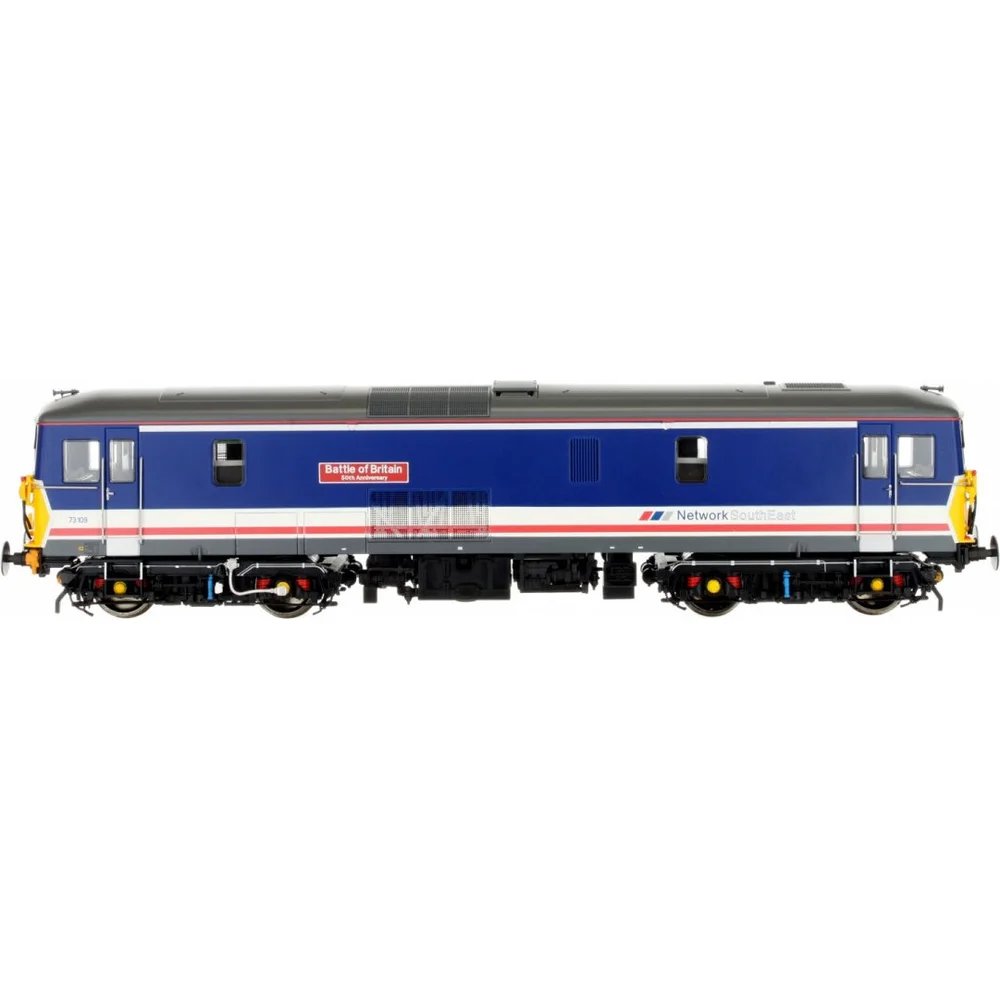
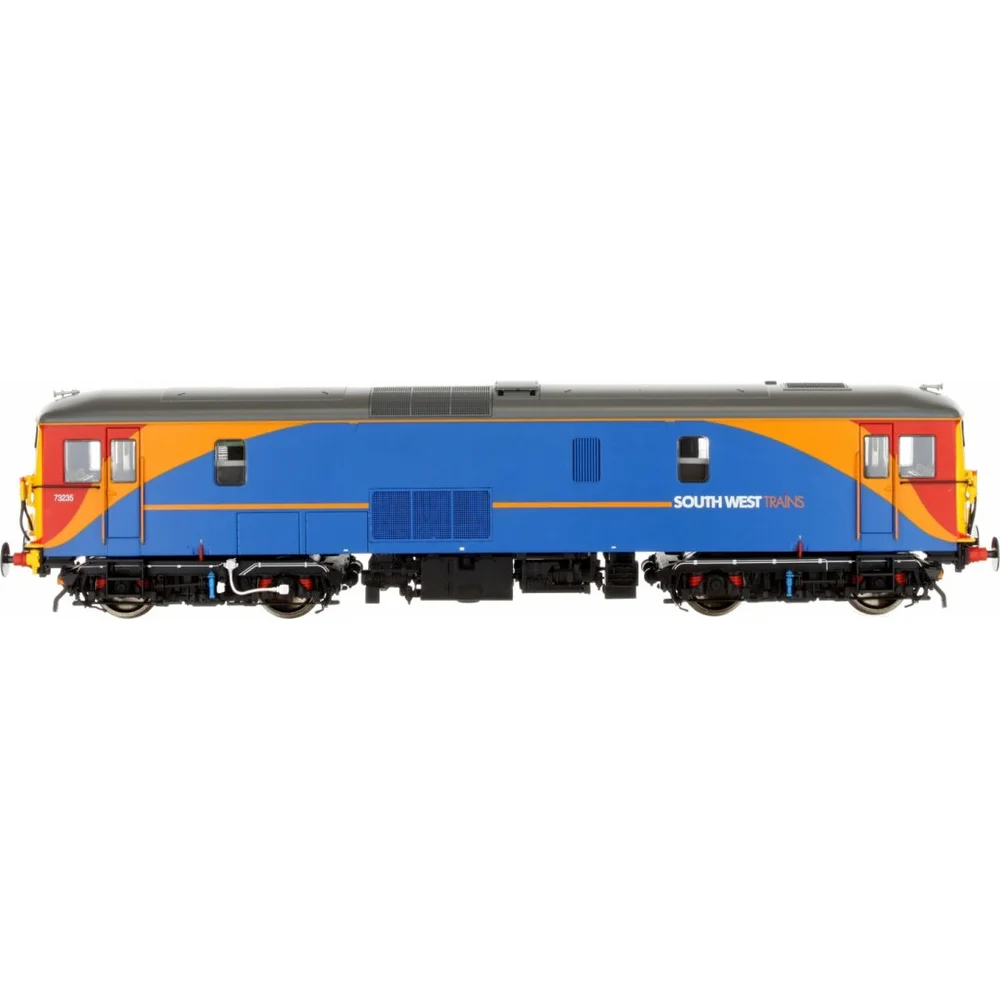
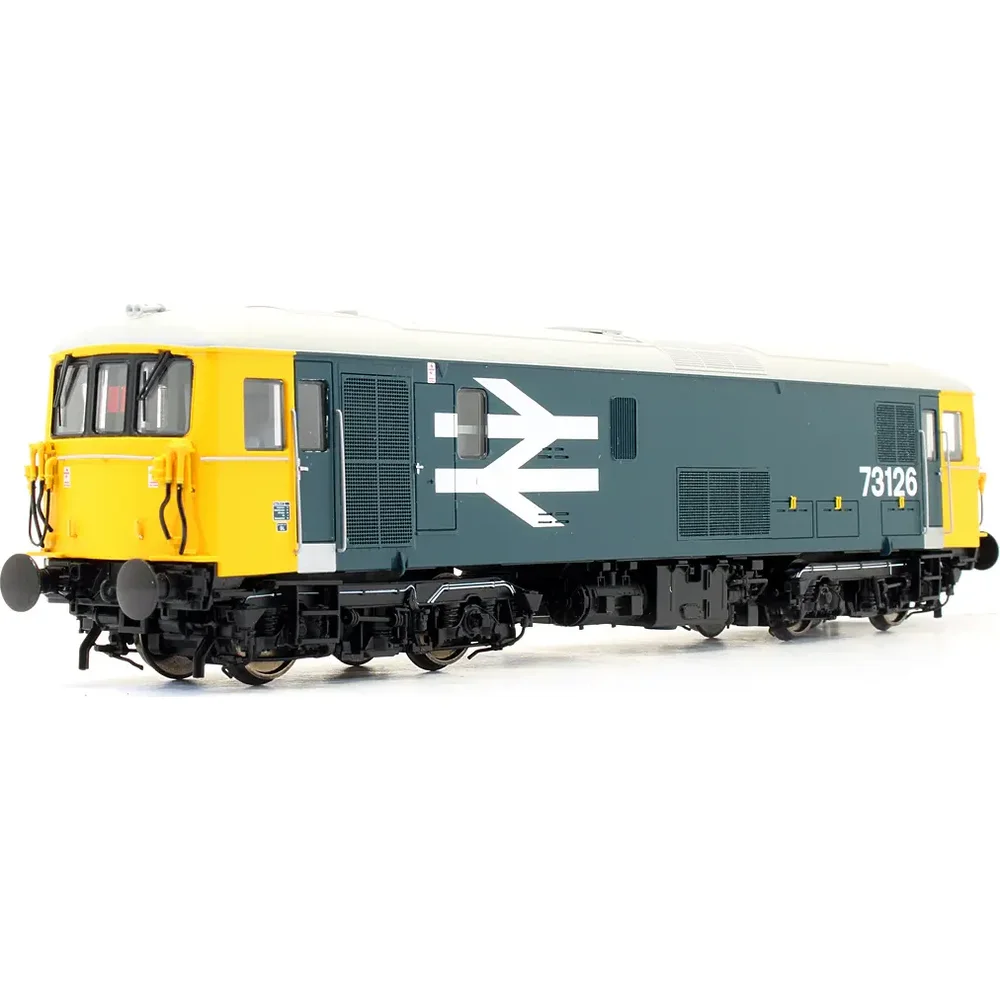
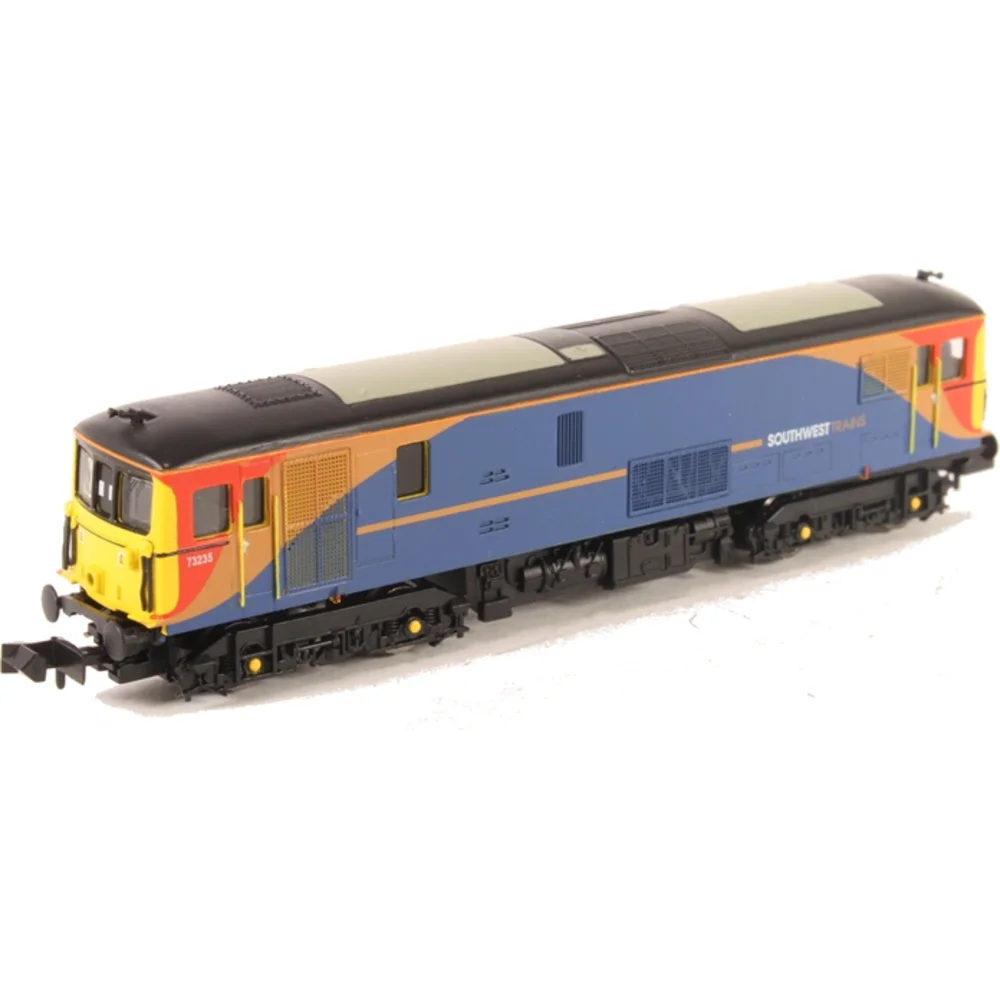
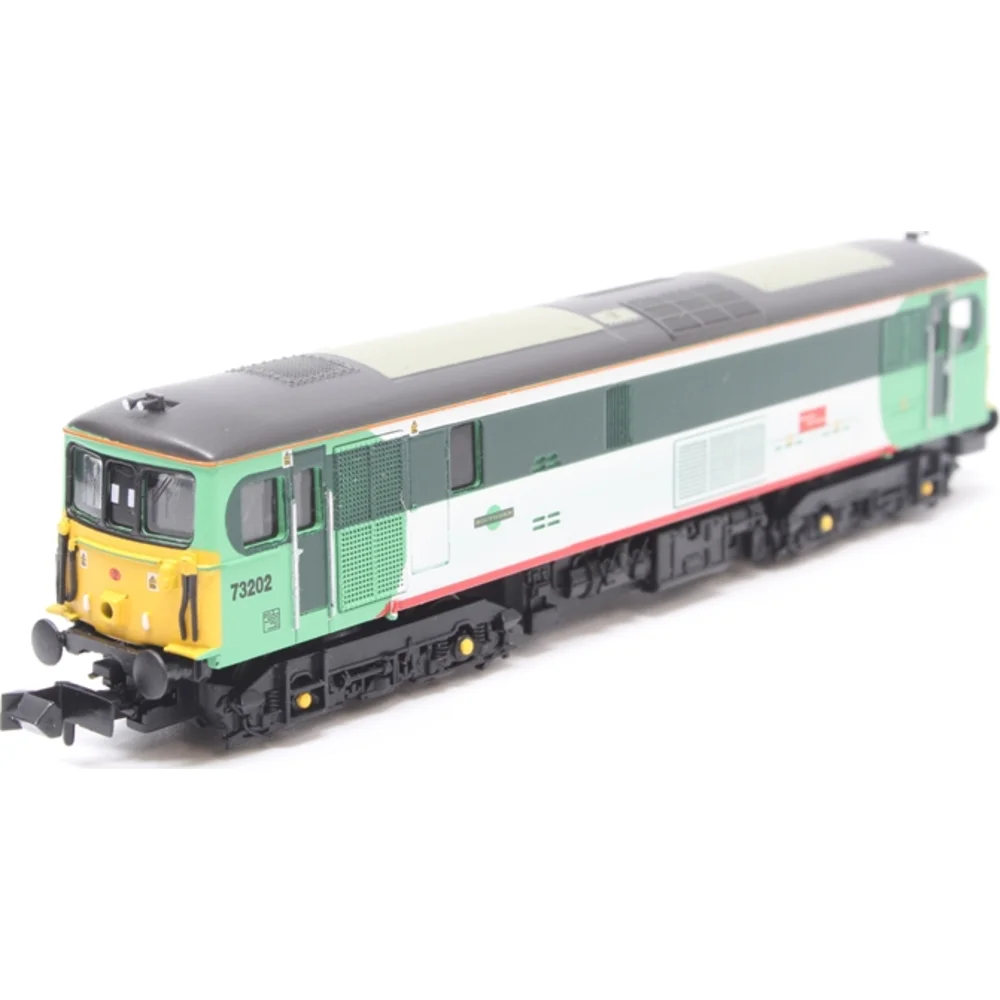
Dapol catalog numbers span 4D-006-000 through 4D-006-021 covering extraordinary livery diversity. Class 73/0 examples include E6002 and E6004 in BR green with small yellow panels. Class 73/1 representation encompasses BR blue with both small and full yellow ends, Large Logo blue, Network SouthEast red/white/blue "toothpaste" livery, InterCity Executive grey/charcoal, and multiple GB Railfreight variations including heritage schemes retaining NSE and BR blue colours. Class 73/2 Gatwick Express models appear in both original blue/red stripes and later South West Trains and Southern dark/light green schemes.
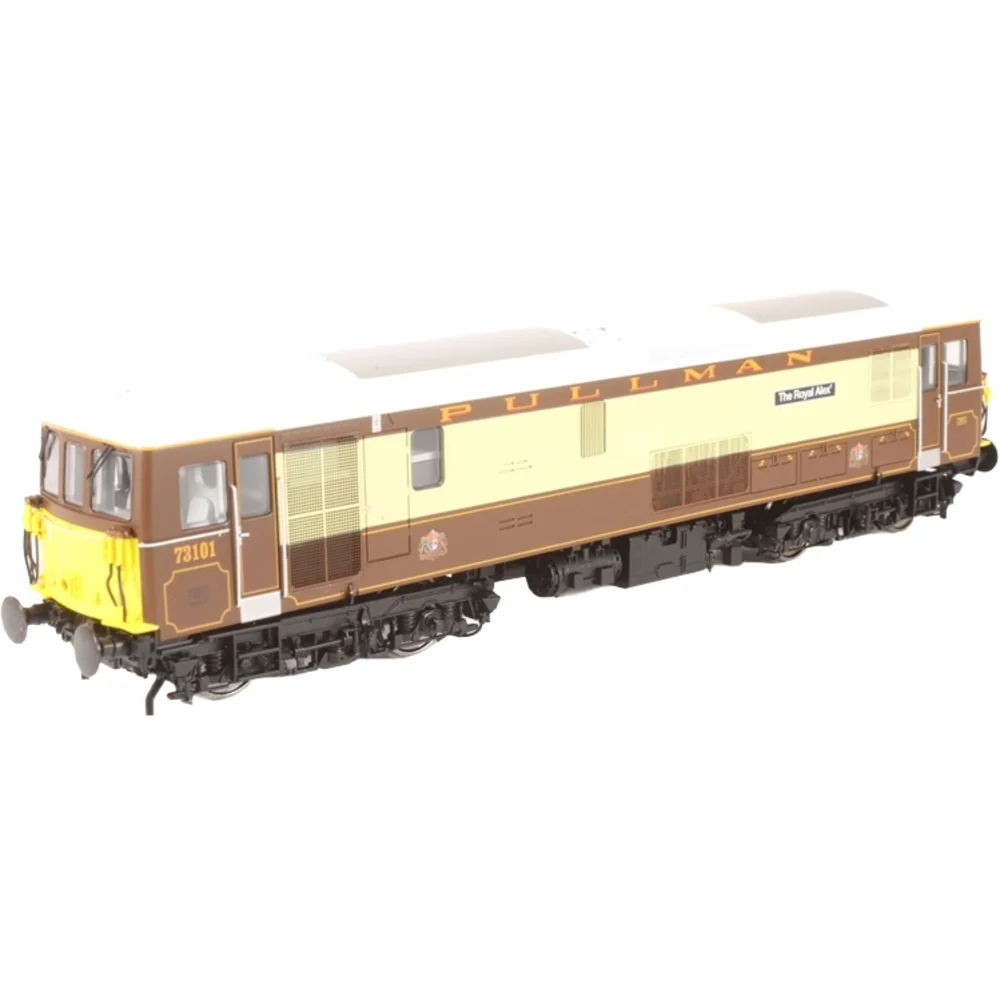
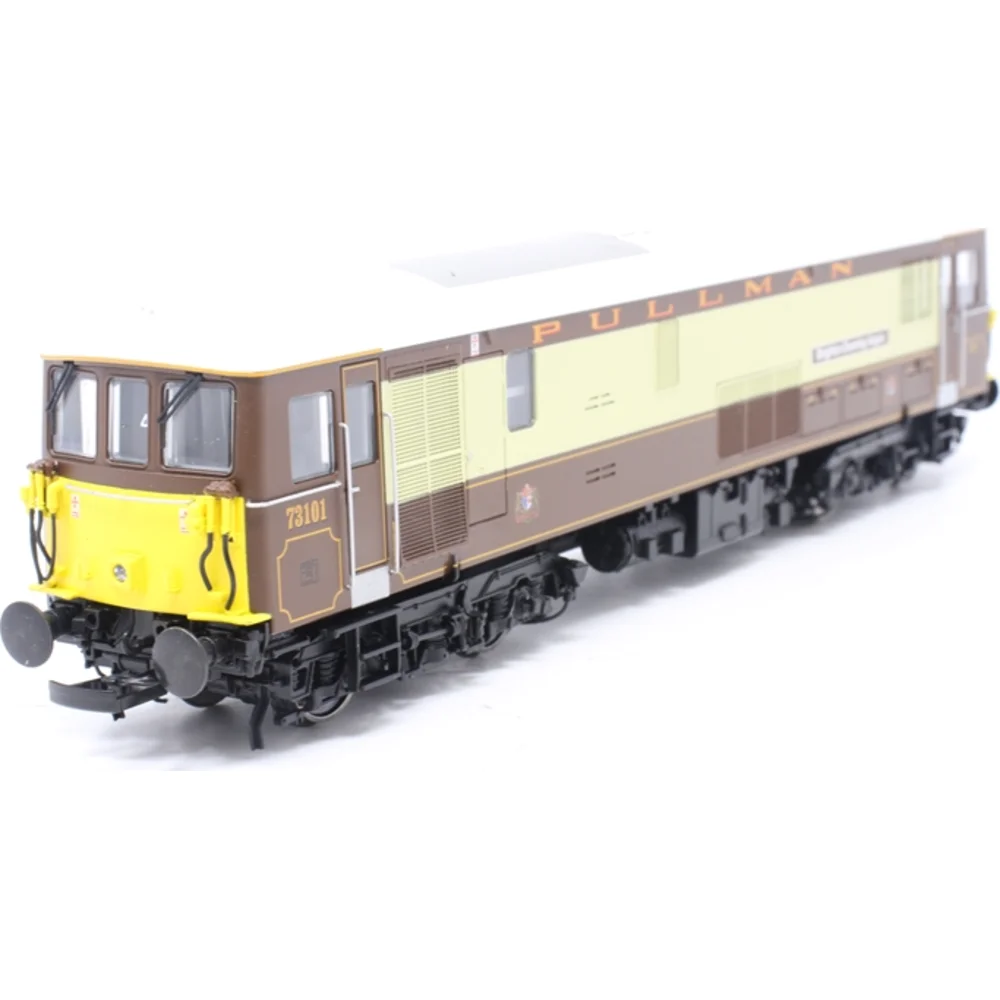
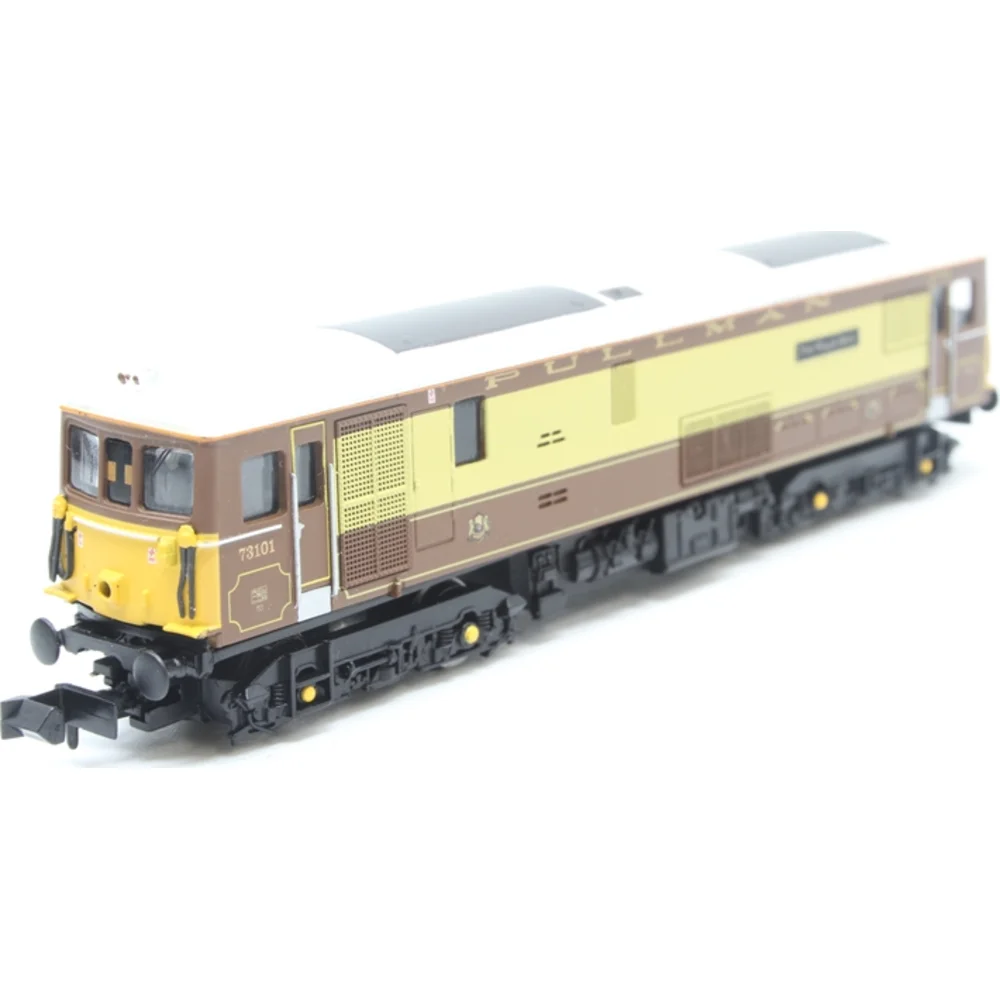
Retailer exclusive editions expand the range considerably. Gaugemaster Collection offers Class 73/1 73101 "The Royal Alex" in Pullman umber and cream livery (DAGM100), Olivias Trains produced 73142 in Gatwick Express blue/red (OLIV001) and 73212 in Fragonset all-over black (OLIV004), whilst The Hobby Shop Faversham secured exclusive BR blue variants. Current pricing runs approximately £128-132 RRP for DCC Ready versions, £155-157 for DCC Fitted, and £242-258 for DCC Sound equipped models. Retailers typically offer 10-15% discounts from RRP.
Advanced Modelling: Identifying Authentic Sub-Class Variations
Accurate Class 73 modelling requires attention to sub-class differences beyond livery alone. Class 73/0 examples (E6001-E6006) featured distinctive full-height cab door windows and certain detail variations from production locomotives. Class 73/1 (E6007-E6049) represented the standard build with refined details. Class 73/2 conversions (73201-73212) showed modified bogie flash guards, removed vacuum brake pipes, and eventually eliminated diesel engine exhaust details as engines fell into disuse. Class 73/9 rebuilds (73961-73971) display modern details including modified roof equipment, enhanced fuel tank sections, and on Scottish examples (73966-73971), complete absence of third-rail collector shoes and beams. Matching locomotive to appropriate period and operational context creates authentic atmosphere—Gatwick Express formations require Class 73/2 variants, Highland sleepers demand Class 73/9s without shoes, whilst 1960s-70s boat trains need early BR blue Class 73/1s.
Hornby's Railroad range provides budget-conscious entry into Class 73 modelling. The R30431 model depicting 73132 in Large Logo blue carries £89.99 RRP with delivery expected Q3 2025. The enhanced Railroad Plus specification offers R30432TXS, a sound-fitted version of 73128 "Kent & East Sussex Railway" in combined GBRf blue/orange with Network SouthEast-style striping, priced £144.99 (due August 2025). These models utilise retooled ex-Lima tooling with 8-pin DCC decoder sockets, representing older technology than Dapol's purpose-designed modern tooling but offering acceptable performance at significantly lower price points.
Historical Hornby releases from 2006-2011 based on Lima tooling remain available through secondhand markets. Catalog numbers R2516 through R3045 covered BR green, various BR blue schemes, Large Logo, and several privatisation liveries. Whilst lacking the detail refinement of current Dapol production, these earlier Hornby models provide economical options for modellers prioritising fleet building over ultimate accuracy.
Heljan's O gauge Class 73/1 represents exceptional current value following substantial price reductions. Originally £779 RRP, remaining stock is clearing at £349-425 from retailers including Rails of Sheffield, Hattons Model Railways, and Kernow Model Rail Centre—discounts exceeding 50% in some cases. The models feature over 550 separately-applied parts, twin motor and flywheel chassis with all-wheel drive and pickup, ESU LokSound 5 XL interface (though decoder not fitted), and comprehensive lighting including switchable cab, headcode, and engine room illumination plus DCC-activated third-rail arc flash effects simulating shoe contact sparking.
Heljan catalog numbers 7300 through 7310 cover BR blue with small and full yellow ends, Large Logo blue, InterCity Executive grey, Dutch engineers' grey/yellow/black, Network SouthEast, EWS maroon, Network Rail all-over yellow, and multiple GBRf schemes. Detail quality impresses throughout with separately fitted handrails, vacuum and air brake pipes, multiple working unit cables, etched bodyside grilles, glazed cab windows with interior detail, and accurately profiled body contours matching prototype dimensions when scaled to 7mm:1ft proportion.
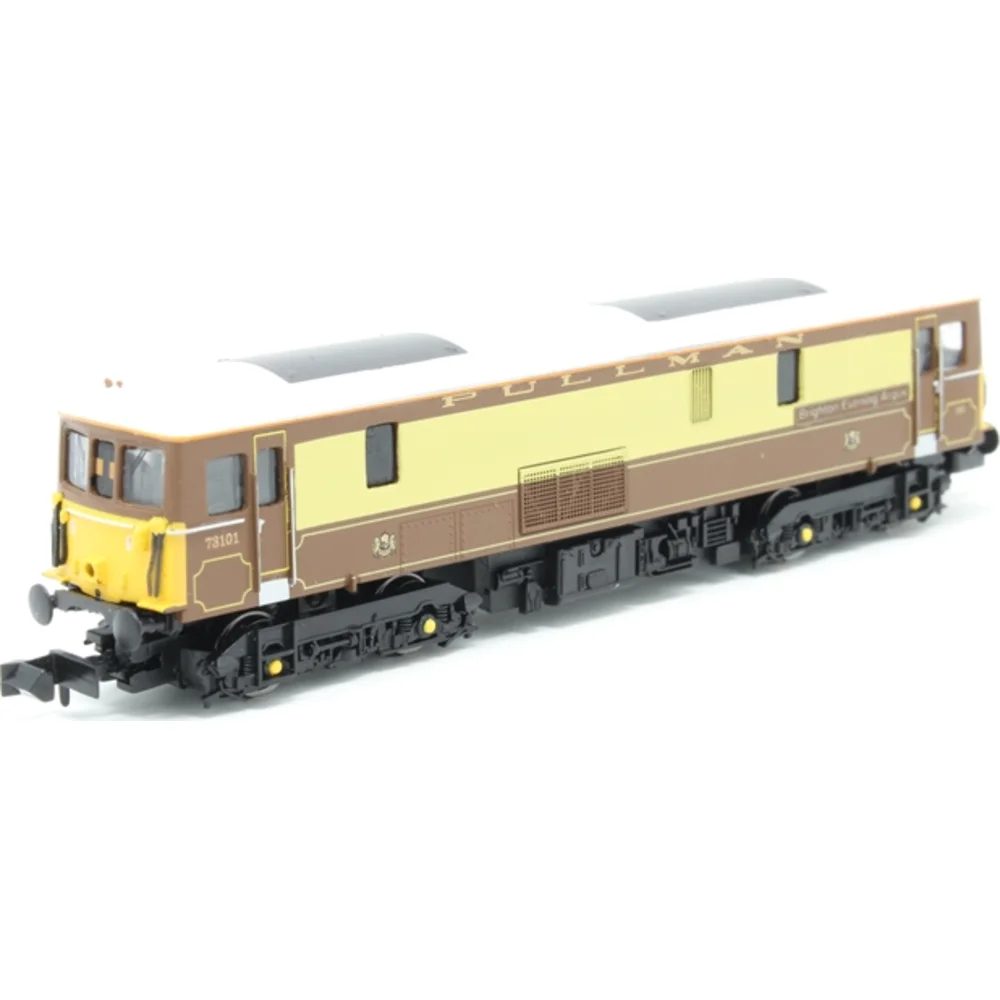
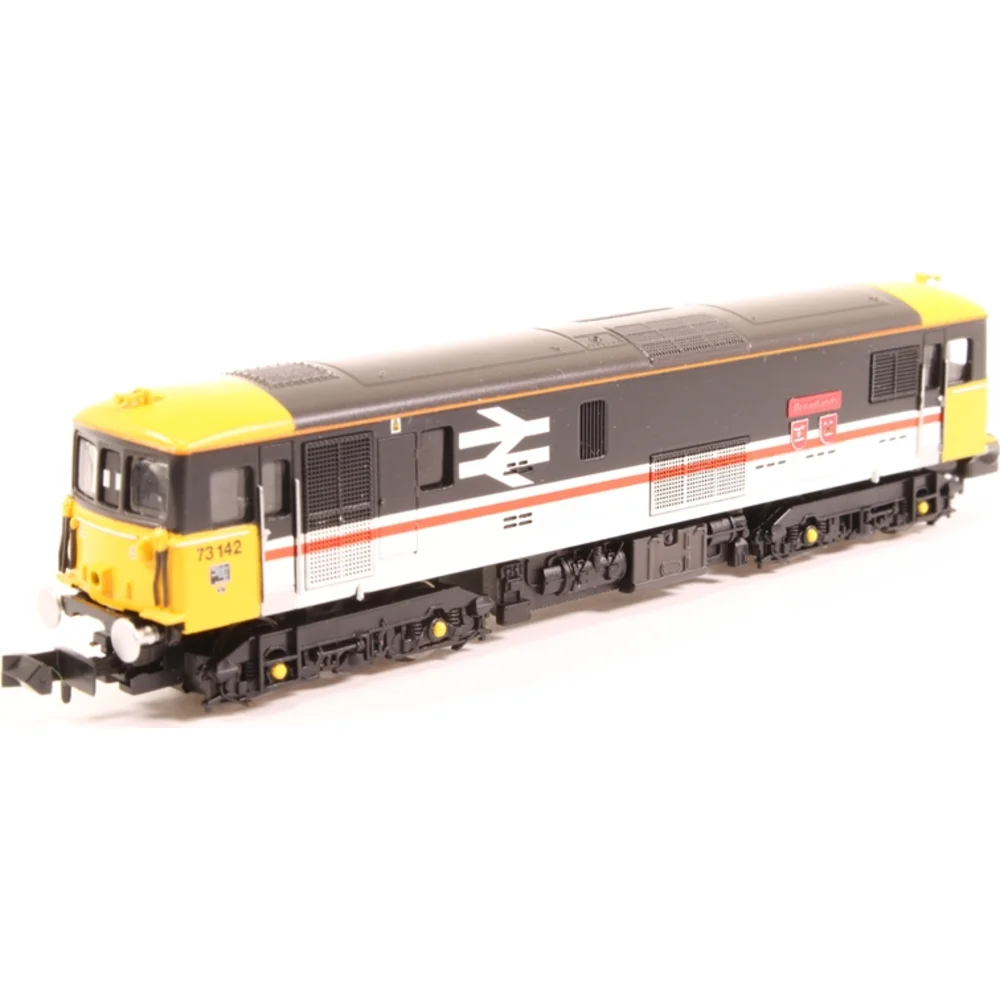
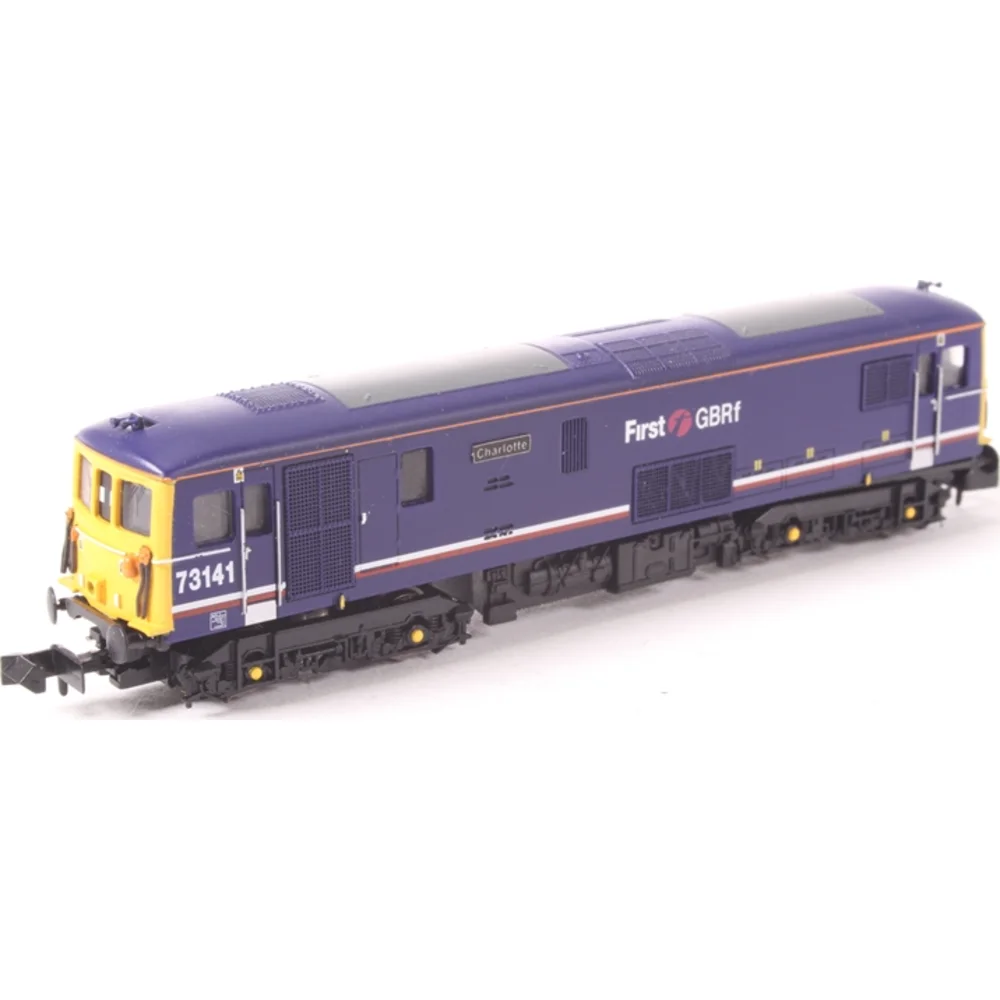
N gauge coverage comes via Dapol production marketed through Gaugemaster Collection branding. Current pricing approximates £124.95 for standard versions or £149.95 for DCC fitted variants. Catalog numbers GM2210201 through GM2210210 include BR green with small yellow panels, BR blue (both small and full yellow variants), Civil Engineers Dutch livery, Network SouthEast, Network Rail yellow, Large Logo blue, InterCity Swallow (white/blue), and InterCity Executive grey. The models employ Dapol's proven N gauge mechanism with coreless motor, all-wheel drive, and 6-pin decoder socket for straightforward DCC conversion.
Kit manufacturers have largely ignored the Class 73, with comprehensive ready-to-run coverage eliminating demand for brass or white metal alternatives. The class's relatively modern outline and smooth body contours suit moulded plastic construction better than riveted steam-era designs that benefit from etched brass detailing. Modellers seeking unavailable liveries typically achieve results through careful repainting of existing ready-to-run models rather than scratch-building from components.
Unique Modelling Tips and Layout Integration
Successfully incorporating British Rail Class 73 models into layout operations requires understanding the class's specialised dual-power nature and the specific operational contexts that characterised electro-diesel deployment across six decades. Unlike pure diesel or electric classes with straightforward operating parameters, Class 73s demand careful attention to era selection, infrastructure authenticity, and appropriate train formations reflecting their unique capabilities.
Era selection proves fundamental to authentic Class 73 deployment. The earliest appropriate timeframe begins February 1962 with prototype E6001's entry to traffic in Southern multiple unit green. Layouts depicting early-to-mid 1960s operations should show Class 73/0s in green with small yellow warning panels appearing progressively through the decade. BR blue introduction from 1965 onwards permits Class 73/1 representation, with these locomotives among the first new-builds in corporate livery. The 1970s and early 1980s saw universal blue application including Large Logo variants from September 1983 onwards.
The sectorisation period (mid-1980s through early 1990s) offers exceptional livery variety: InterCity Executive grey/charcoal from May 1984, Network SouthEast red/white/blue from late 1990, Civil Engineers grey/yellow/black Dutch livery, and the specialised Gatwick Express Class 73/2s in blue with red stripes from May 1984. Privatisation from 1994 onwards permits the full rainbow spectrum including EWS maroon (rare—only 73128 and 73131), South West Trains blue, Southern green, multiple GB Railfreight schemes, and from 2015, Caledonian Sleeper midnight teal for Scottish operations.
Infrastructure authenticity demands specific attention to third-rail representation. Southern Region operations require accurate conductor rail installation alongside running rails, typically positioned outside the running rails at a height of approximately 3-4 inches (at 4mm:1ft scale). The positive conductor rail and negative return rail should be modelled where space permits, though many modellers simplify to single-rail representation. Importantly, goods yards and depot areas can authentically omit third-rail in specific areas—this operational reality prompted Class 73 development and explains the diesel capability that modellers should reference through occasional diesel-only running scenarios.
Authentic operating scenarios should reflect period-appropriate Class 73 deployment patterns. 1960s-1970s operations emphasise boat trains to Dover and Folkestone (requiring period-appropriate coaching stock including Pullman cars and continental ferry vans), newspaper trains from London termini, and mixed freight workings. The 1980s-1990s see Gatwick Express push-pull formations (Class 73/2 + Mark 2f coaches + Class 489 GLV in specific arrangement), Venice Simplon Orient Express luxury trains in matching livery, and expanding freight operations including aggregates and petroleum.
Weathering Authenticity for Dual-Power Operation
Class 73 weathering should reflect the distinctive operational pattern of frequent electric mode operation with occasional diesel running. Focus weathering on roof areas above diesel exhausts—light sooting and discolouration from diesel operation whilst electric mode produces no exhaust residue. Bodysides should show relatively clean appearance reflecting passenger duties and regular depot cleaning, though lower bodyside panels and bogies accumulate brake dust, rail dirt, and oil staining. Third-rail collector shoes and beams show electrical arcing marks—subtle black scoring where shoes contact conductor rails. Avoid heavy industrial weathering inappropriate for locomotives spending majority of time in clean electric mode. The contrast between lightly-weathered passenger examples and heavily work-stained engineering locomotives creates visual interest whilst remaining prototypically accurate.
Contemporary operations from 2000 onwards permit Network Rail engineering train formations (typically Class 73s in all-over yellow with various maintenance vehicles), GBRf infrastructure work, and the distinctive Caledonian Sleeper consists. Scottish Highland layouts set from 2015 onwards can authentically show Class 73/9s (without third-rail shoes on Scottish examples 73966-73971) hauling CAF Mark 5 sleeping cars between Edinburgh and Fort William/Aberdeen/Inverness, often paired for additional power on challenging Highland gradients.
Train formations require careful attention to prototype practice and Class 73 power limitations. Electric mode's 1,600 horsepower and 40,000 lbf tractive effort (Class 73/1) enables express passenger formations of 8-10 coaches on level routes, though Southern Region's undulating profile typically restricted practical loadings to 6-8 coaches. Gatwick Express formations ran to a specific pattern: Class 489 GLV + 6-7 Mark 2f coaches + Class 73/2, with the GLV providing driving position and 500hp auxiliary power whilst the locomotive supplied main traction.
Diesel mode operation should reflect the original 600hp limitation—adequate for yard movements, light coaching stock manoeuvres (3-4 coaches maximum), and empty stock workings, but clearly unsuitable for main line haulage. The Class 73/9 rebuilds transform this equation with 1,600hp diesel capability matching electric performance, permitting full-load haulage anywhere in Britain. Modellers can authentically show Class 73/9s hauling 10-12 Mark 5 sleeping cars through Highland scenery—operations impossible for original Class 73/1s on diesel power alone.
Sound-equipped models benefit from programming that emphasises operational mode transitions. The diesel engine note should be audible but relatively subdued during yard movements and positioning, rising to full power only when operating in diesel mode with loaded trains. Electric mode creates minimal mechanical noise—just traction motor whine and the characteristic "singing" of DC traction equipment under load. The transition from diesel to electric operation when third-rail power becomes available creates an authentic operational moment modellers can replicate through appropriate sound decoder programming.
Multiple working scenarios add operational interest. Class 73s worked in multiple with each other, with Classes 33/1, 71, and 74, and with Southern Region EMUs via 27-wire jumper cables. Paired Class 73s suited heavy boat trains, engineering trains requiring extended diesel-mode operation, and contemporary Highland sleeper services where two locomotives provide 3,200hp diesel traction plus redundancy for reliability. The sight of twin Class 73/9s in Caledonian Sleeper livery attacking Highland gradients offers dramatic modelling opportunities far removed from the class's Southern commuter origins.
Depot and maintenance scenes provide static display opportunities demonstrating Class 73 technical complexity. Model a section of a Southern depot showing third-rail shoe maintenance, diesel engine access with body side panels removed, or battery charging equipment connected for extended storage. The dual-power nature creates twice the maintenance points compared to pure diesel or electric classes—an operational reality that modellers can reference through appropriate detailing and diorama construction.
Layout design should accommodate the operational patterns that characterised Class 73 deployment. Southern Region suburban and main line routes with third-rail conductor rails, harbour terminus with diesel-only running for final approach, freight yards with selective electrification, and for contemporary layouts, Scottish Highland single-track routes with passing loops all provide authentic contexts. The class's versatility means almost any Southern-themed layout from 1962 onwards can justify Class 73 presence, whilst modern era layouts depicting Scottish operations have equally valid reasons for inclusion.
Finally
The British Rail Class 73 represents far more than 49 electro-diesel locomotives; these machines embody a design philosophy that prioritised operational flexibility and long-term utility over specialised capability in a single operating mode. The decision to combine 1,600 horsepower electric traction with diesel capability—initially just 600hp for yard work—created locomotives that remained relevant across operational contexts their designers never envisaged, from prestigious 1960s boat trains through 1980s airport express services to 21st-century Highland sleeper operations.
For railway historians, the Class 73 provides fascinating insights into British Rail's engineering pragmatism during the modernisation era. Faced with the specific challenge of third-rail gaps in goods yards, Southern Region engineers could have pursued multiple narrow solutions—more flywheel locomotives, expanded overhead wire installation, or accepting the operational compromise of locomotive changes. Instead, they specified a genuinely dual-mode design that solved the immediate problem whilst creating unexpected long-term value through versatility that kept these locomotives economically competitive for over six decades.
The tragic absence of any Class 73 in the National Railway Museum collection represents a significant gap in Britain's transport heritage. Whilst numerous examples survive in preservation and operational service, the lack of a nationally-curated example means future generations studying railway electrification development may struggle to appreciate how the electro-diesel concept evolved from 1960s innovation to 2020s practical necessity. The Class 73/9 rebuilds—effectively demonstrating that comprehensive re-engineering can deliver modern performance from 1960s platforms—deserve particular recognition for validating locomotive life-extension strategies increasingly relevant as railway decarbonisation prioritises asset preservation over new-build programmes.
The comprehensive model availability across OO, N, and O gauges ensures contemporary railway enthusiasts can appreciate Class 73s regardless of modelling scale preferences. Dapol's extensive OO gauge range captures virtually every significant livery and operational period, Hornby provides budget-friendly alternatives for fleet building, whilst Heljan's O gauge models offer remarkable value following recent price reductions. The notable absence of Bachmann from Class 73 production—given the company's comprehensive coverage of British diesel and electric classes—creates curiosity about what commercial or technical factors prevented their tooling investment, though Dapol's thorough market coverage leaves little gap for competitor exploitation.
Model railway hobbyists incorporating Class 73s into Southern Region layouts gain versatile motive power suitable for diverse duties spanning express passenger, stopping services, freight operations, and infrastructure work. The dual-power capability creates authentic operational scenarios impossible with pure diesel or electric classes: transitions between electric and diesel modes navigating third-rail gaps, diesel-powered movements through harbour facilities, and electric traction accelerating boat trains away from London termini. Contemporary modellers depicting Scottish operations can authentically show these quintessentially Southern locomotives hauling Highland sleepers through mountain scenery—an operational development that would have seemed fantastical when E6001 first collected current from Eastleigh Works' conductor rails in February 1962.
The Class 73/9 rebuilds prove that innovative engineering can extract remarkable additional value from locomotives others might consider obsolete. Wabtec Brush Traction's installation of MTU diesel engines tripling diesel horsepower to match electric capability transformed operational flexibility, enabling deployment on non-electrified routes previously inaccessible to standard Class 73/1s. This precedent for comprehensive locomotive rebuilding—retaining basic structure whilst replacing major mechanical systems—may inform future railway decarbonisation strategies as operators balance asset replacement costs against creative re-engineering delivering contemporary performance from existing platforms.
As the railway preservation movement continues evolving and societies recognise value in preserving recent traction alongside heritage steam, Class 73 examples seem virtually certain to remain operational for decades beyond mainline retirement. The Bluebell Railway's 73133 restoration demonstrates that comprehensive overhaul can return 60-year-old electro-diesels to "as-new" condition, whilst operational examples at Severn Valley Railway, Mid-Hants Railway, and other heritage lines prove ongoing commercial viability. The dual-power capability offers heritage railways genuine operational advantages—electric operation where third-rail exists, diesel mode for movements and non-electrified sections—creating versatility that justifies the additional complexity compared to pure diesel preservation.
The British Rail Class 73 story ultimately celebrates the enduring value of innovative engineering matched to genuine operational requirements. When Southern Region specified dual-power capability in the late 1950s, they addressed an immediate third-rail safety challenge. The resulting locomotives exceeded every expectation, providing six decades of reliable service across operational contexts from boat trains to sleeper trains, yard shunting to express passenger work, freight haulage to infrastructure maintenance. The sight of a Class 73—whether in heritage BR blue, Network SouthEast toothpaste livery, or contemporary Caledonian Sleeper teal—remains a powerful reminder that well-conceived railway engineering can deliver value far beyond initial design intentions, creating machines that adapt, evolve, and ultimately prove irreplaceable across the changing decades of railway operations.
Frequently Asked Questions
How many British Rail Class 73 locomotives were built and when?
Forty-nine Class 73 electro-diesel locomotives were built in two batches between 1962 and 1967. Six Class 73/0 prototypes (E6001-E6006) emerged from Eastleigh Carriage and Wagon Works between February and December 1962. Forty-three Class 73/1 production examples (E6007-E6049) followed from English Electric's Vulcan Foundry at Newton-le-Willows between October 1965 and January 1967. The production batch formed part of the Bournemouth Electrification scheme's rolling stock procurement. Eleven locomotives subsequently received comprehensive rebuilds as Class 73/9 variants between 2013 and 2016.
What makes the Class 73 different from standard diesel or electric locomotives?
The Class 73 combines two complete power systems in a single locomotive. Electric mode draws 1,600 horsepower from the Southern Region's 750-volt DC third-rail system via eight retractable collector shoes (four per bogie). Diesel mode employs an English Electric 4SRKT four-cylinder engine producing 600hp in original specification, upgraded to 1,600hp MTU engines in Class 73/9 rebuilds. This dual capability enables main line express operation on electrified routes whilst retaining yard movement and branch line capability where third-rail installation is impractical or dangerous.
Why did British Railways develop electro-diesel locomotives?
The Southern Region faced a specific safety challenge extending third-rail electrification into goods yards where ground personnel working among wagons risked electrocution from exposed conductor rails. Earlier solutions including flywheel locomotives and overhead pantograph designs proved unsatisfactory. The electro-diesel concept enabled locomotives to operate electrically on main lines for performance and efficiency, then switch to diesel mode for yard movements with third-rail safely de-energised. The eight retractable third-rail shoes could be raised clear when operating in diesel mode across electrified track during engineering work.
What is the difference between Class 73/0, 73/1, 73/2, and 73/9?
Class 73/0 (E6001-E6006) were six prototypes with 80mph maximum speed and 32,000lbf electric tractive effort. Class 73/1 (E6007-E6049) production locomotives featured uprated traction motors enabling 90mph and 40,000lbf tractive effort. Class 73/2 (73201-73212) were twelve Class 73/1s modified for Gatwick Express push-pull operation with flash guards, isolated vacuum brakes, and eventually unmaintained diesel engines. Class 73/9 (73961-73971) are eleven locomotives comprehensively rebuilt with 1,600hp MTU diesel engines matching electric capability, AAR multiple working, and enhanced specifications for contemporary operations.
What famous services did Class 73 locomotives work?
Class 73s hauled prestigious boat trains from London Victoria and Waterloo to Dover and Folkestone connecting with cross-Channel ferries. The Venice Simplon Orient Express adopted Class 73 haulage from 1982 with dedicated locomotives in matching Pullman livery. Gatwick Express non-stop airport shuttle service from 14 May 1984 employed twelve specialised Class 73/2s in push-pull formation with Mark 2f coaches and Class 489 GLV driving vans. From October 2015, Class 73/9 rebuilds began working Caledonian Sleeper services to Scottish Highlands including Fort William, Aberdeen, and Inverness.
Are any Class 73 locomotives preserved?
Yes, Class 73 preservation is extensive. The Bluebell Railway operates 73133 (E6040) "The Bluebell Railway" following comprehensive Eastleigh Works restoration completed spring 2023. Severn Valley Railway holds 73001 and 73006, Mid-Hants Railway preserves 73002, Cambrian Heritage Railways maintains 73129 "City of Winchester" in Network SouthEast livery, and Llanelli and Mynydd Mawr Railway operates 73130 in Eurostar grey. Of 49 built, only ten have been scrapped, meaning 39 survive with approximately 22 still in mainline service—an exceptional survival rate for 1960s-era locomotives.
What OO gauge Class 73 models are currently available?
Dapol produces the most comprehensive OO gauge Class 73 range with catalog numbers 4D-006-000 through 4D-006-021 covering Class 73/0 in BR green, Class 73/1 in BR blue, Large Logo blue, Network SouthEast, InterCity Executive, and multiple GB Railfreight liveries, plus Class 73/2 Gatwick Express and franchise operator schemes. Pricing runs approximately £128-132 RRP for DCC Ready, £155-157 DCC Fitted, and £242-258 for DCC Sound versions. Hornby offers budget Railroad range models (R30431 at £89.99) and Railroad Plus sound-fitted variants (R30432TXS at £144.99).
Are Class 73 models available in N gauge or O gauge?
Yes, both scales are well-served. N gauge models come via Dapol production marketed through Gaugemaster Collection branding at approximately £124.95 standard or £149.95 DCC fitted. Catalog numbers GM2210201-GM2210210 include BR green, BR blue variants, Civil Engineers, Network SouthEast, Network Rail, Large Logo, and InterCity liveries. Heljan produces O gauge Class 73/1 models with over 550 parts, twin motor/flywheel chassis, and comprehensive lighting. Originally £779 RRP, remaining stock is clearing at £349-425 representing exceptional value. Catalog numbers 7300-7310 cover twelve different livery schemes.
Why are Class 73s still operating after 60+ years?
The electro-diesel concept's operational versatility keeps Class 73s economically competitive. Third-rail electric operation delivers 1,600hp performance matching modern traction whilst diesel capability enables work during engineering possessions when conductor rails are de-energised. The Class 73/9 rebuilds with 1,600hp MTU diesel engines created effectively new locomotives mechanically whilst retaining proven traction motors and basic structure. GB Railfreight's continued investment including a seven-year Caledonian Sleeper contract to 2030 ensures ongoing employment. Only ten of 49 built have been scrapped—an exceptional retention rate validating the fundamental design soundness.
Can Class 73s operate anywhere in Britain or only on third-rail routes?
Original Class 73/0 and 73/1 locomotives could operate on third-rail electrified routes in electric mode (1,600hp) or in diesel mode (600hp) anywhere in Britain, though the modest diesel power output limited practical non-electrified operation to yard movements and light formations. The Class 73/9 rebuilds transformed capability with 1,600hp diesel engines matching electric performance, enabling full-load operation anywhere on the British network. Class 73/9s now regularly work Scottish Highland routes from Edinburgh to Fort William, Aberdeen, and Inverness hauling Caledonian Sleeper services—operations impossible for standard Class 73/1s on diesel power alone.
What happened to the Gatwick Express Class 73/2 locomotives?
The twelve Class 73/2s (73201-73212) worked dedicated Gatwick Express service from 14 May 1984 until September 2000 when Class 460 'Juniper' EMUs replaced locomotive-hauled operation. Following withdrawal from airport shuttle work, several faced uncertain futures with diesel engines unmaintained and specialised push-pull equipment limiting redeployment. However, engineering companies including Fragonset Railways acquired examples for infrastructure duties. Some returned to traffic in modified form for Network Rail work, whilst others entered preservation. The sub-class demonstrated adaptability through successful second careers despite specialised original specification.
How do Dapol and Hornby Class 73 models compare?
Dapol models represent purpose-designed modern tooling with laser-scanned accuracy, etched grilles, five-pole motors, all-wheel drive and pickup, 21-pin decoder sockets, and comprehensive detail refinement at £128-258 depending on specification. Hornby Railroad models utilise retooled ex-Lima tooling with 8-pin sockets representing older technology but offering acceptable performance at £89.99-144.99. Dapol provides far greater livery variety and superior detail execution, whilst Hornby suits budget-conscious modellers prioritising fleet building over ultimate accuracy. Both manufacturers deliver reliable runners appropriate for different modelling priorities and budget constraints.