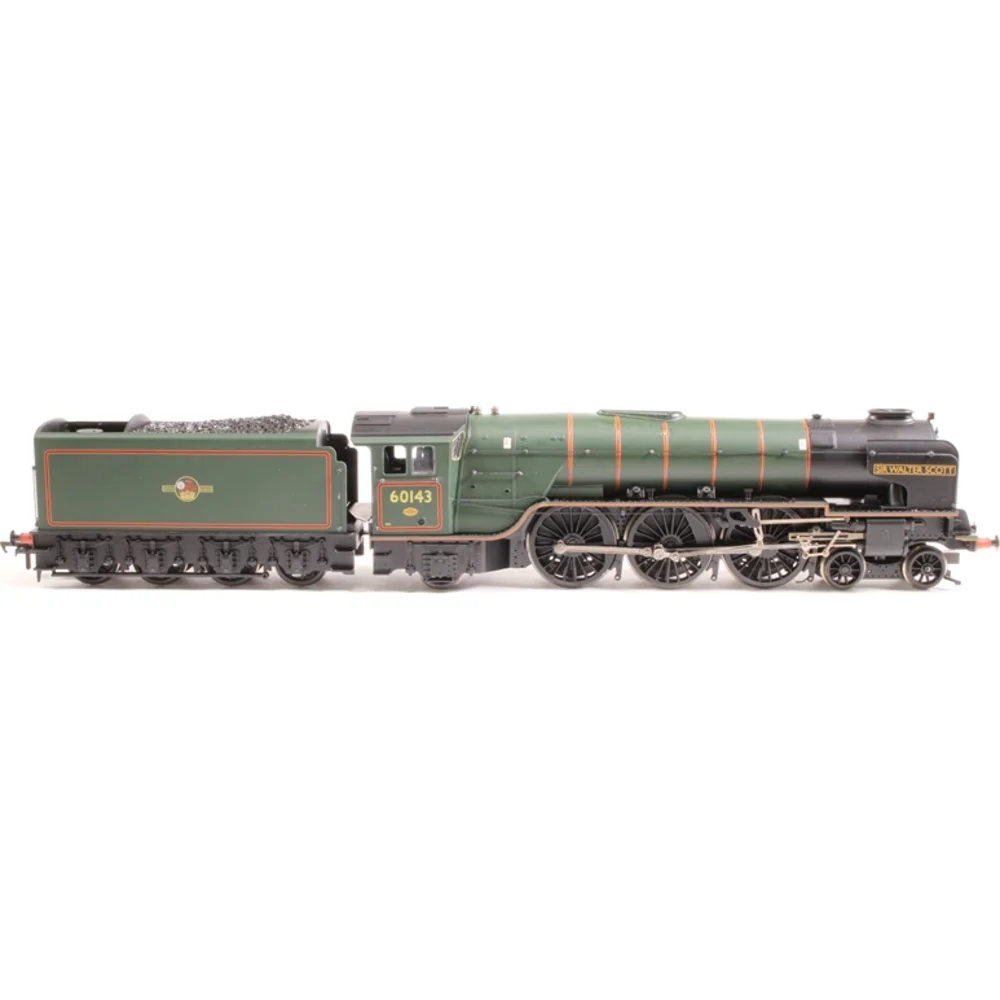
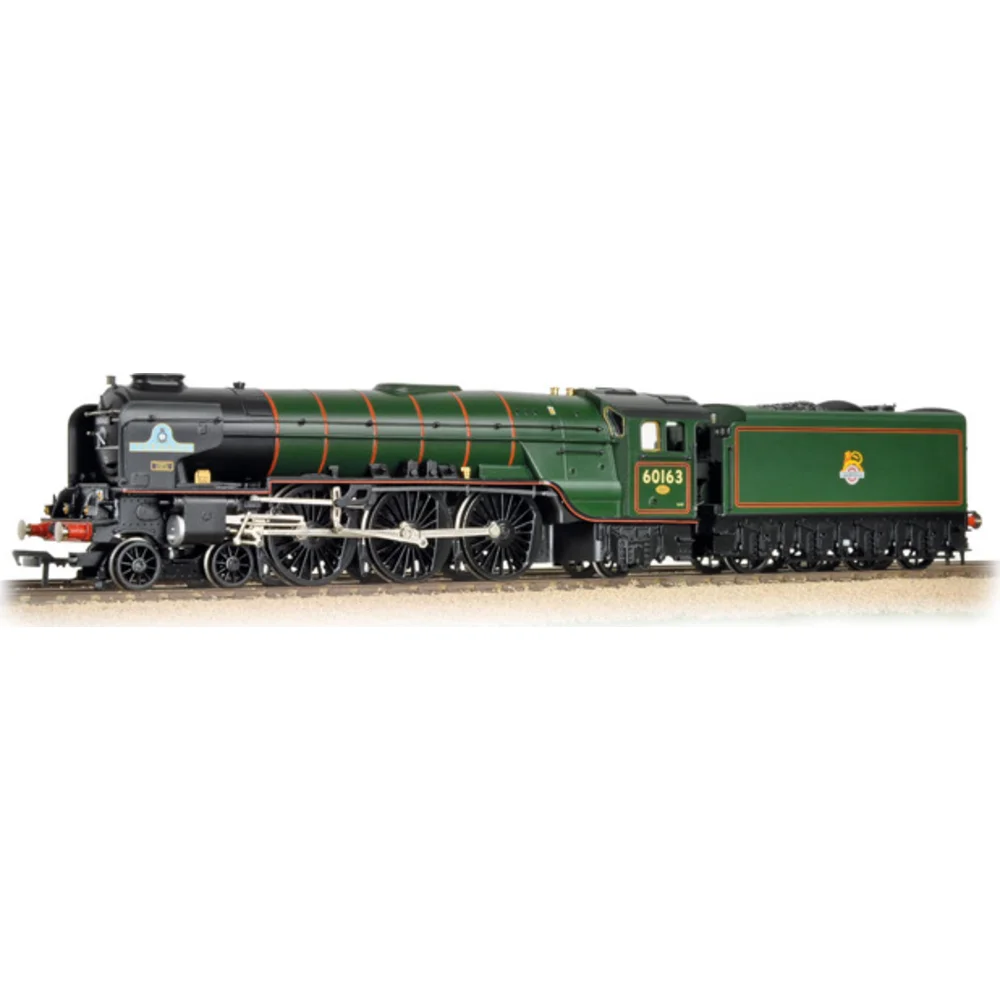
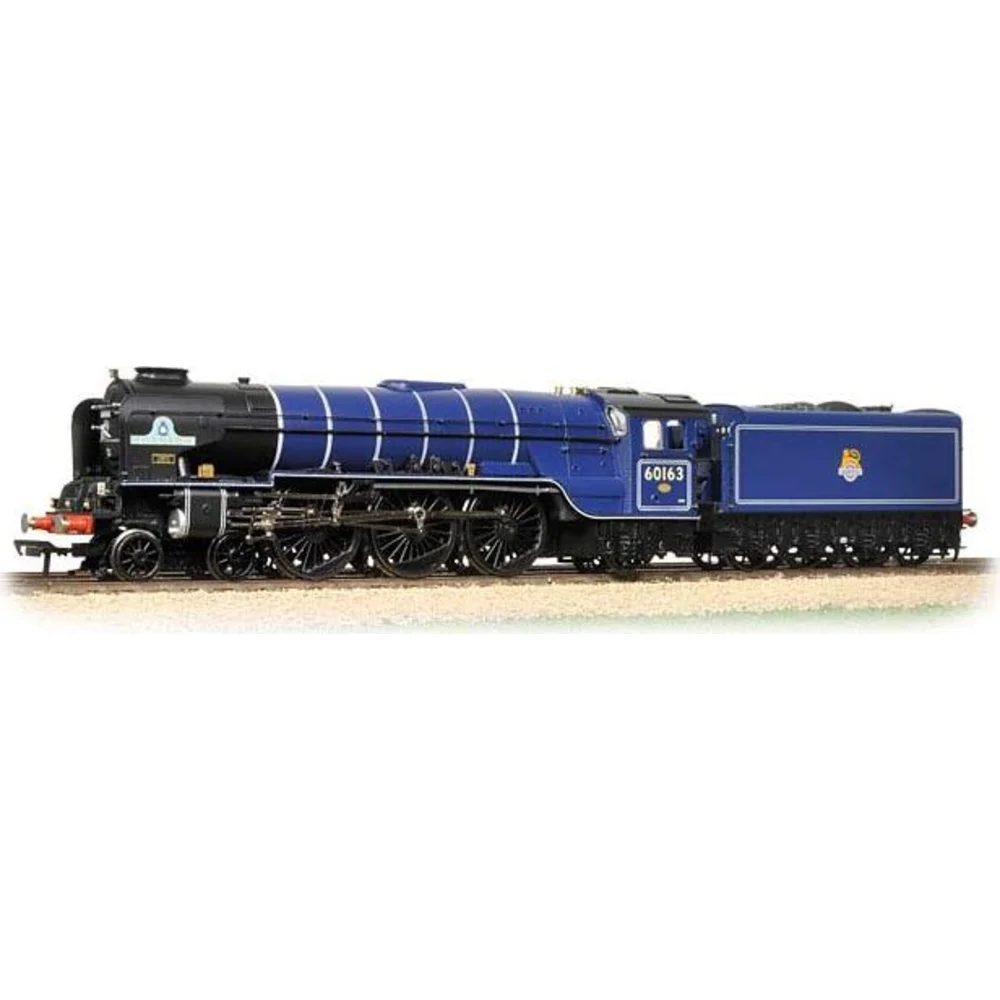
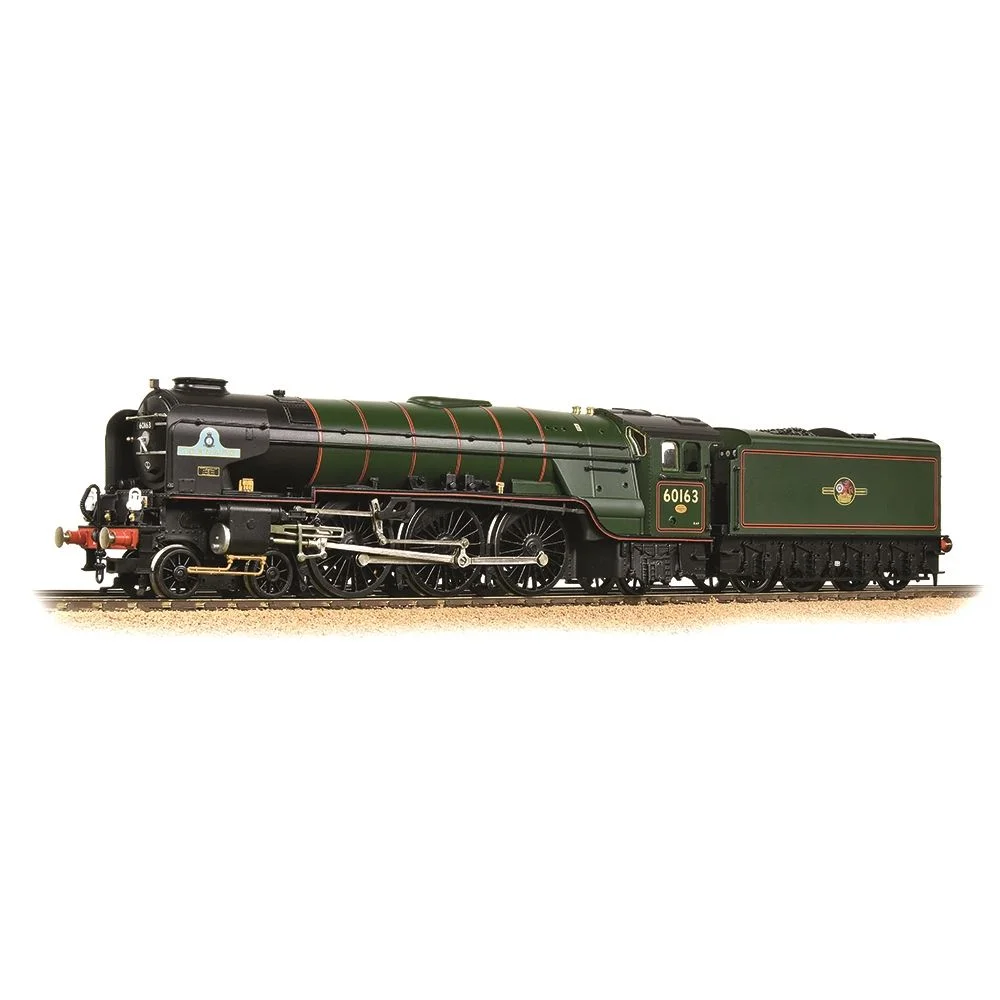
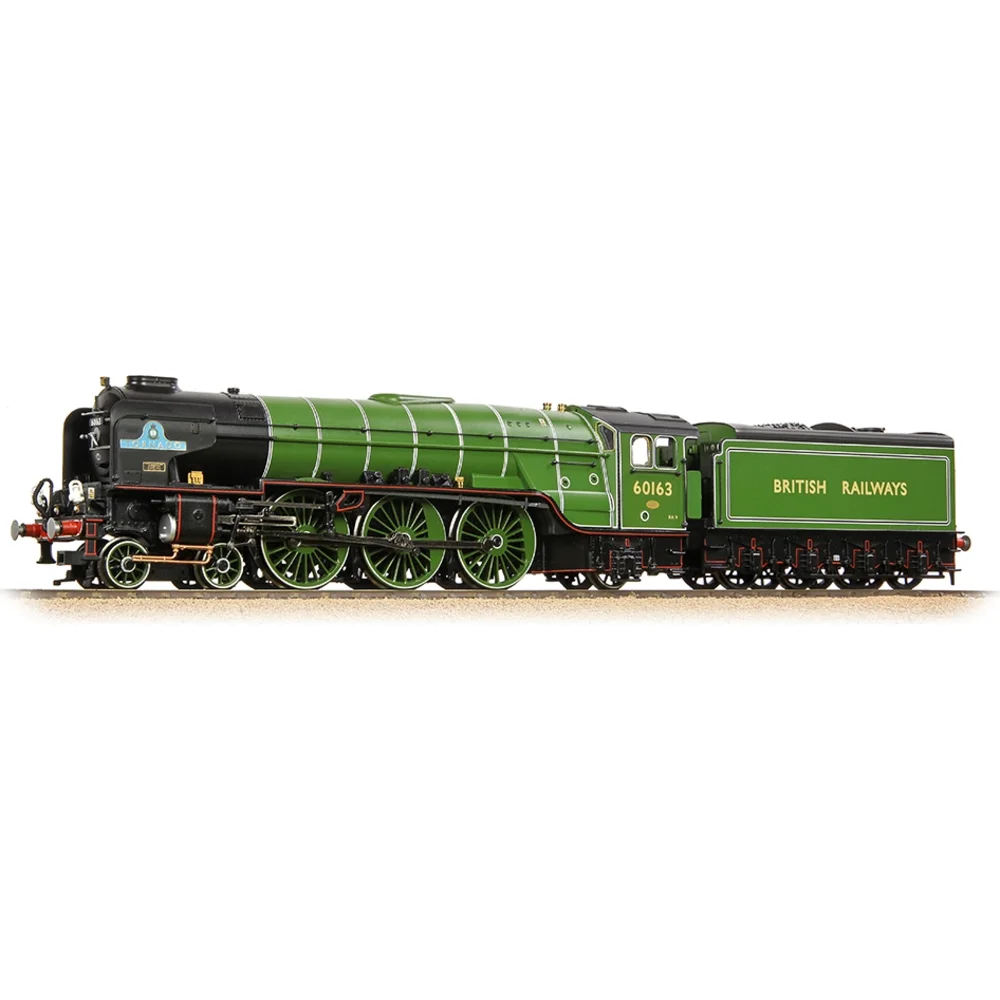
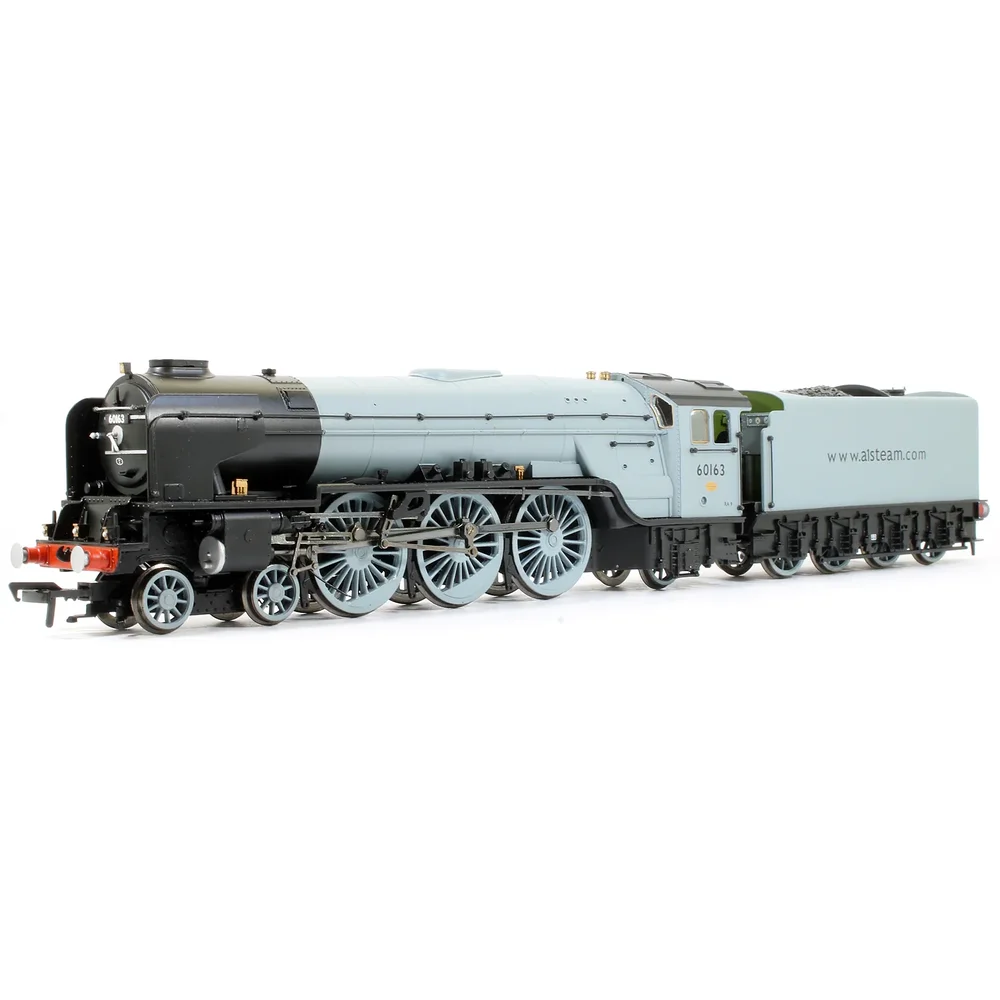
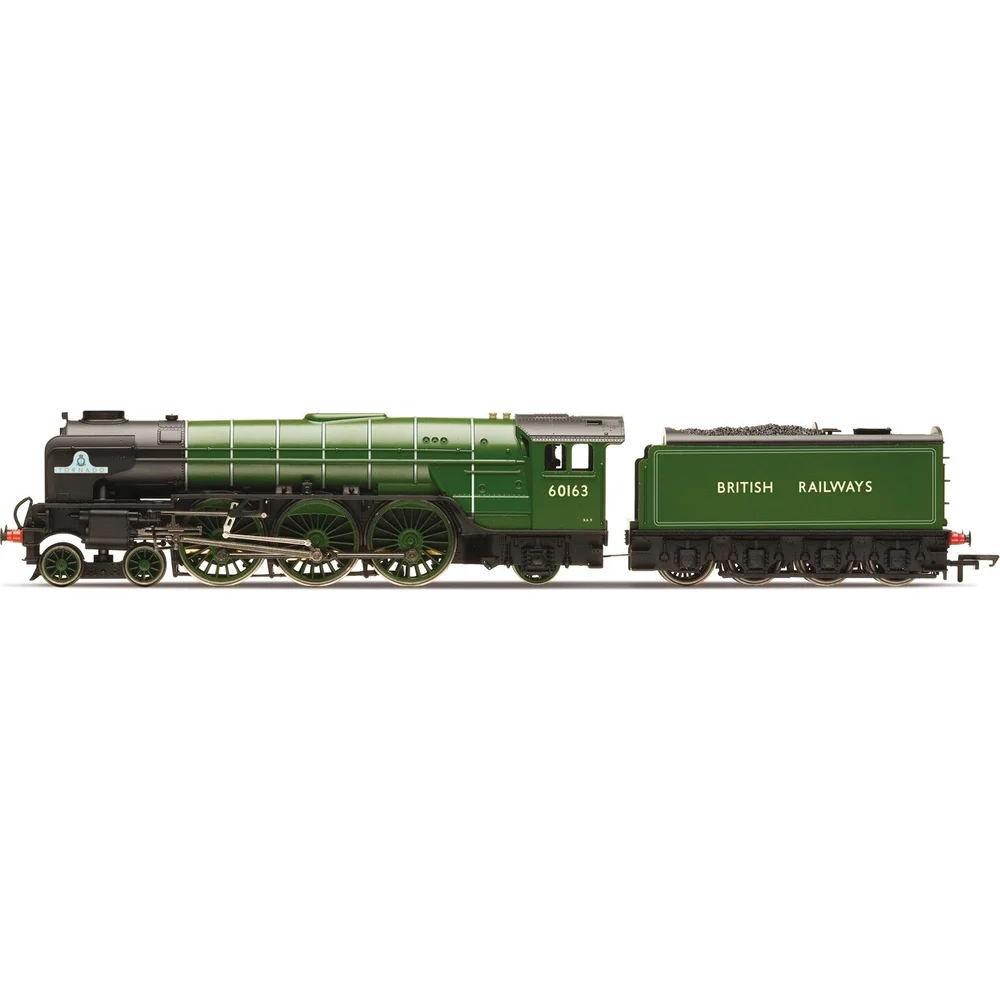
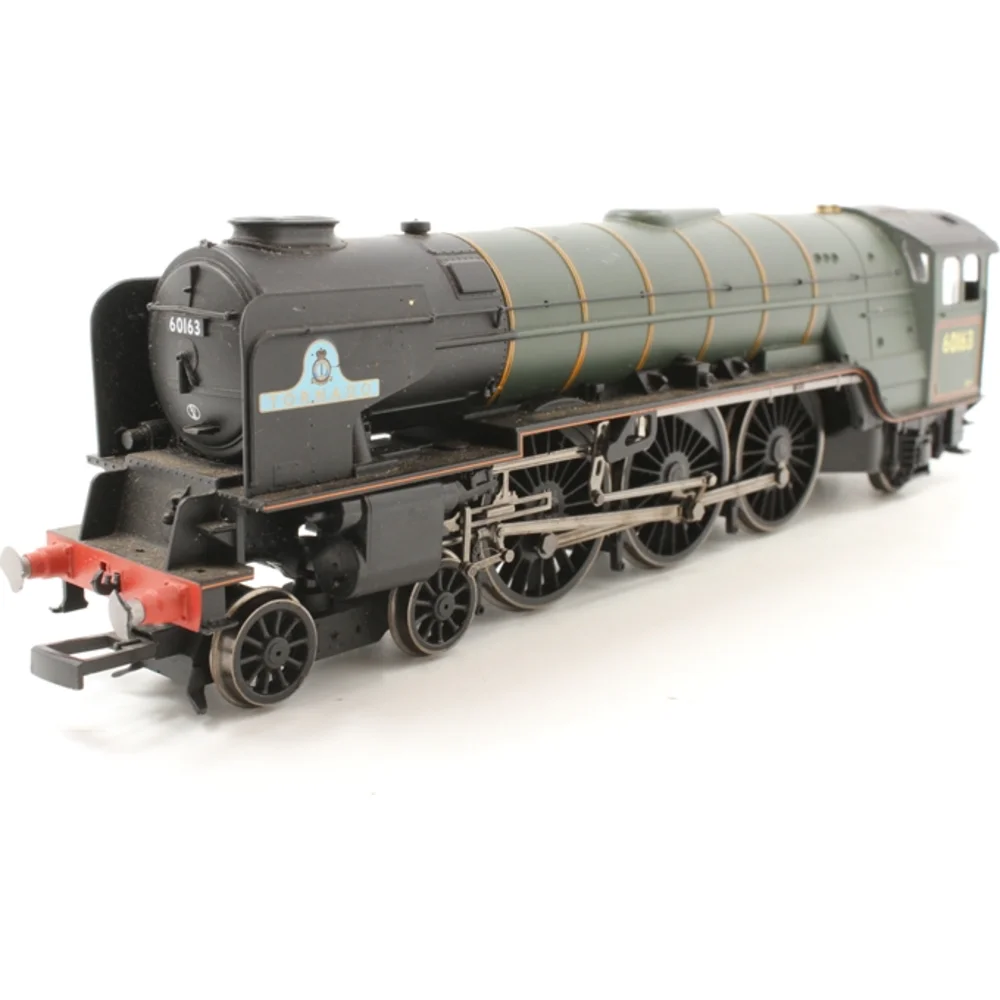
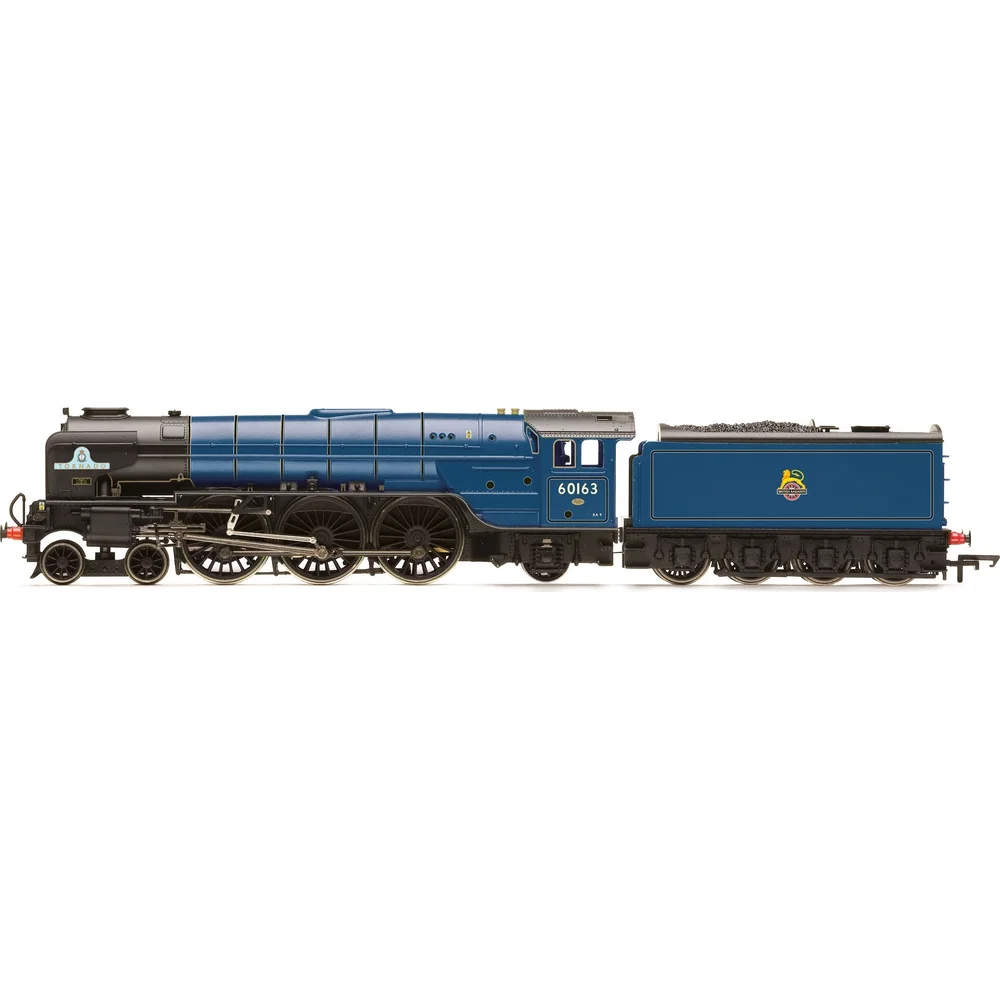
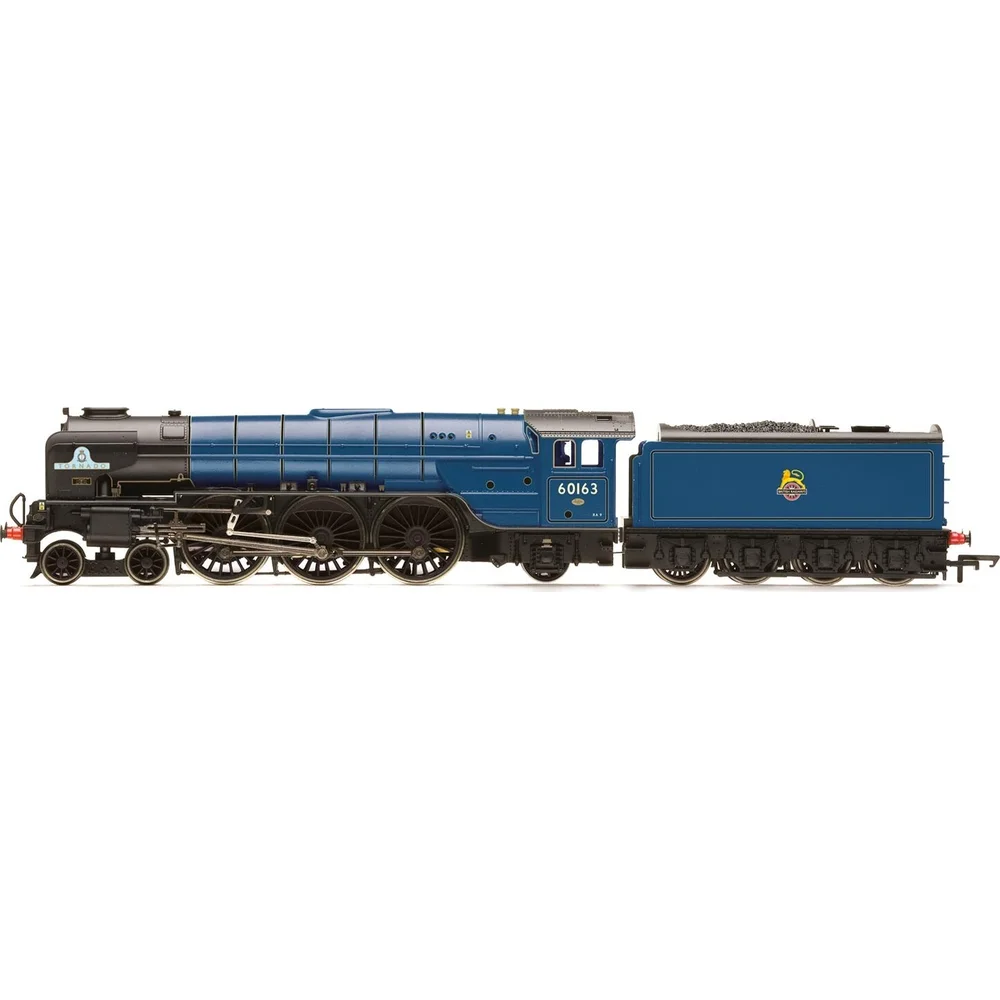
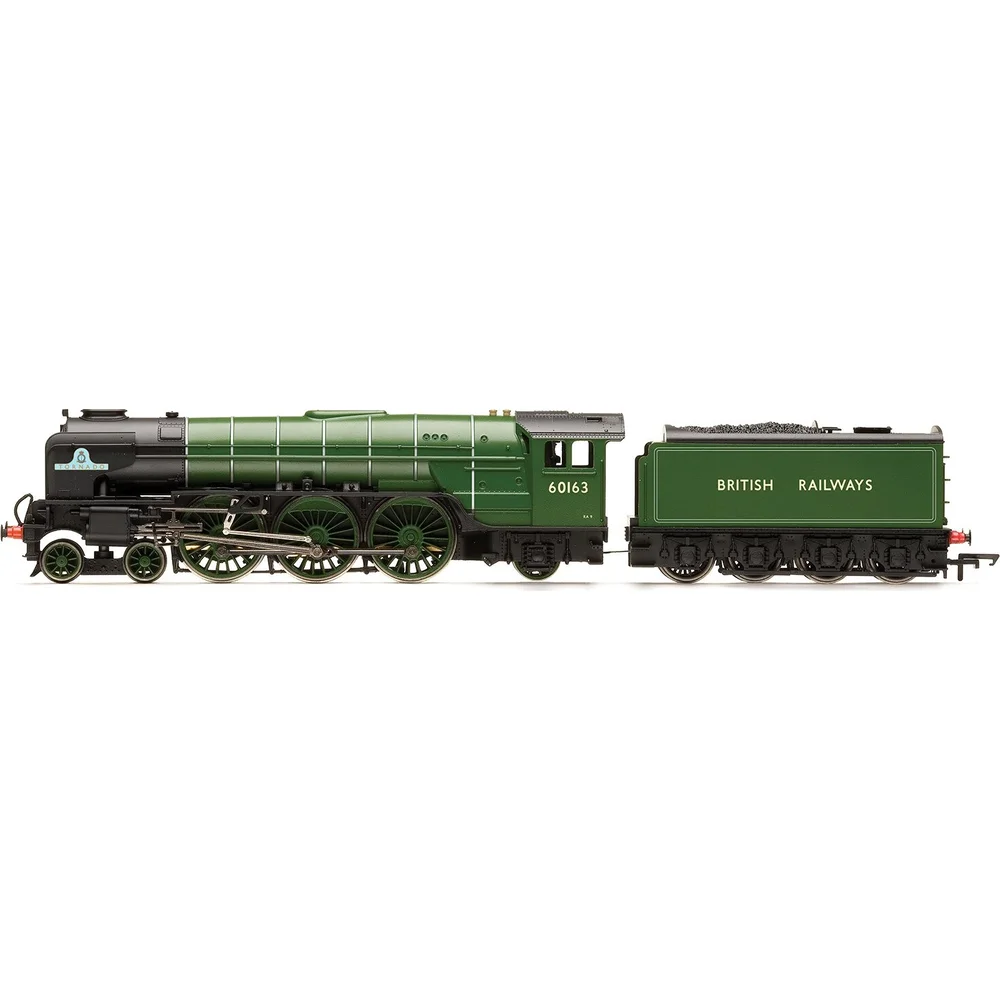
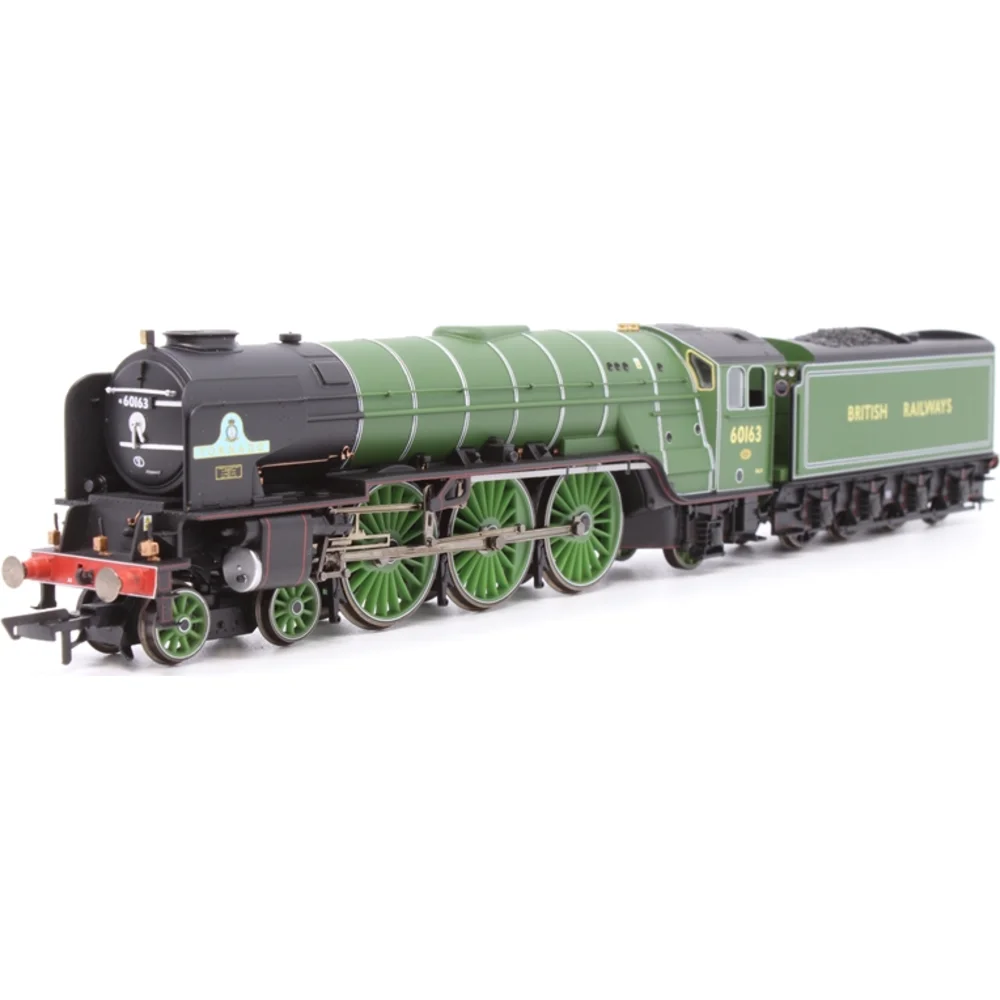
The LNER Peppercorn Class A1 stands as one of the most bittersweet stories in British railway history. Forty-nine magnificent 4-6-2 Pacifics, delivered under British Railways between 1948 and 1949, proved themselves the most reliable heavy express engines on the East Coast Main Line — only to be scrapped to the last locomotive within seventeen years, leaving not a single survivor. That tragedy ultimately inspired one of preservation's greatest achievements: the construction of new-build No. 60163 Tornado, completed in 2008 and still hauling passenger trains across the national network today.
For model railway enthusiasts, the Peppercorn A1 offers extraordinary appeal. The class spans multiple compelling livery periods from transitional LNER apple green through BR Express Blue to Brunswick green, operates authentic East Coast Main Line expresses of the 1950s and early 1960s, and remains well represented in ready-to-run form across OO and N gauges. Whether you are recreating Top Shed's allocation at King's Cross or running Tornado on a contemporary heritage railway layout, these locomotives deliver prototype drama and modelling versatility in equal measure.
Quick Takeaways
- Forty-nine locomotives built: All delivered under British Railways between August 1948 and December 1949, from Doncaster and Darlington Works, numbered 60114–60162
- Kylchap double blastpipe: Fitted from new, giving the A1s their famously free steaming and making them the most economical of all BR express Pacific designs
- The ECML's reliable workhorses: Assigned to The Flying Scotsman, The Talisman, and The Heart of Midlothian amongst many other crack East Coast expresses
- Roller-bearing sub-group: Nos. 60153–60157 carried Timken roller bearings on every axle, covering around 150,000 miles between overhauls versus 90,000 for the plain-bearing majority
- Complete extinction: All 49 withdrawn by June 1966, none preserved — the last, No. 60145 Saint Mungo, cut up at Hull despite a last-minute rescue attempt
- 60163 Tornado: New-build completed 2008, first steam locomotive in Britain to officially exceed 100 mph since the end of BR steam, now fitted with ETCS cab signalling
- Excellent model availability: Bachmann covers the original 49 in OO gauge; Hornby and Graham Farish represent Tornado in OO and N gauge respectively
Historical Background and Context
The Peppercorn A1 was the third distinct LNER locomotive class to carry the "A1" designation — a fact that causes persistent confusion. The original Gresley A1 of 1922, as exemplified by Great Northern, used a three-cylinder arrangement with conjugated valve gear driving the middle cylinder from the two outside sets. Elegant in theory, this system proved maintenance-intensive and prone to hot middle big-end bearings. Most were progressively rebuilt with higher-pressure boilers to become the celebrated Class A3, while the remaining unrebuilt examples were reclassified A10 to free the "A1" designation.
Thompson's own redesigned A1, prototyped in September 1945 by a controversial rebuild of Great Northern itself, was a radical departure. Divided drive, equal-length connecting rods, and a greatly extended coupled wheelbase produced a locomotive that engineering staff at Doncaster regarded with deep scepticism. Reports of cracked frames, hot axleboxes, and persistent steam leaks filtered back from the sheds. When Arthur Henry Peppercorn succeeded Thompson as the LNER's last Chief Mechanical Engineer on 1 July 1946, drawing office staff — who had reportedly been dragging their feet on Thompson's follow-on order — immediately began reworking the front-end design.
Peppercorn retained the most important innovation of Thompson's work: three fully independent sets of Walschaerts valve gear, one per cylinder, which decisively abandoned Gresley's notoriously troublesome conjugated 2-to-1 arrangement. Everything else was rethought. The cylinders returned to a single in-line arrangement rather than Thompson's divided drive. The conventional short coupled wheelbase and forward bogie position were restored. The standard Diagram 118 boiler — already proven on Peppercorn's Class A2 — was specified rather than an A4-pattern unit. Most significantly, from the first production order the Kylchap double blastpipe and chimney was adopted universally, having been fitted only selectively under Gresley and not at all under Thompson's A1.
The timing was significant. Although the class was designed and ordered entirely by the LNER, nationalisation on 1 January 1948 meant that every one of the 49 locomotives was delivered under British Railways. None ever carried an LNER running number in service. They emerged from works as Nos. 60114–60162, at an approximate cost of £16,000 per locomotive. Doncaster Works built 26 (Nos. 60114–60129 and 60153–60162); Darlington Works built 23 (Nos. 60130–60152). The first into traffic, No. 60114 W.P. Allen, entered service in August 1948; the last, No. 60124 Kenilworth, followed in March 1949.
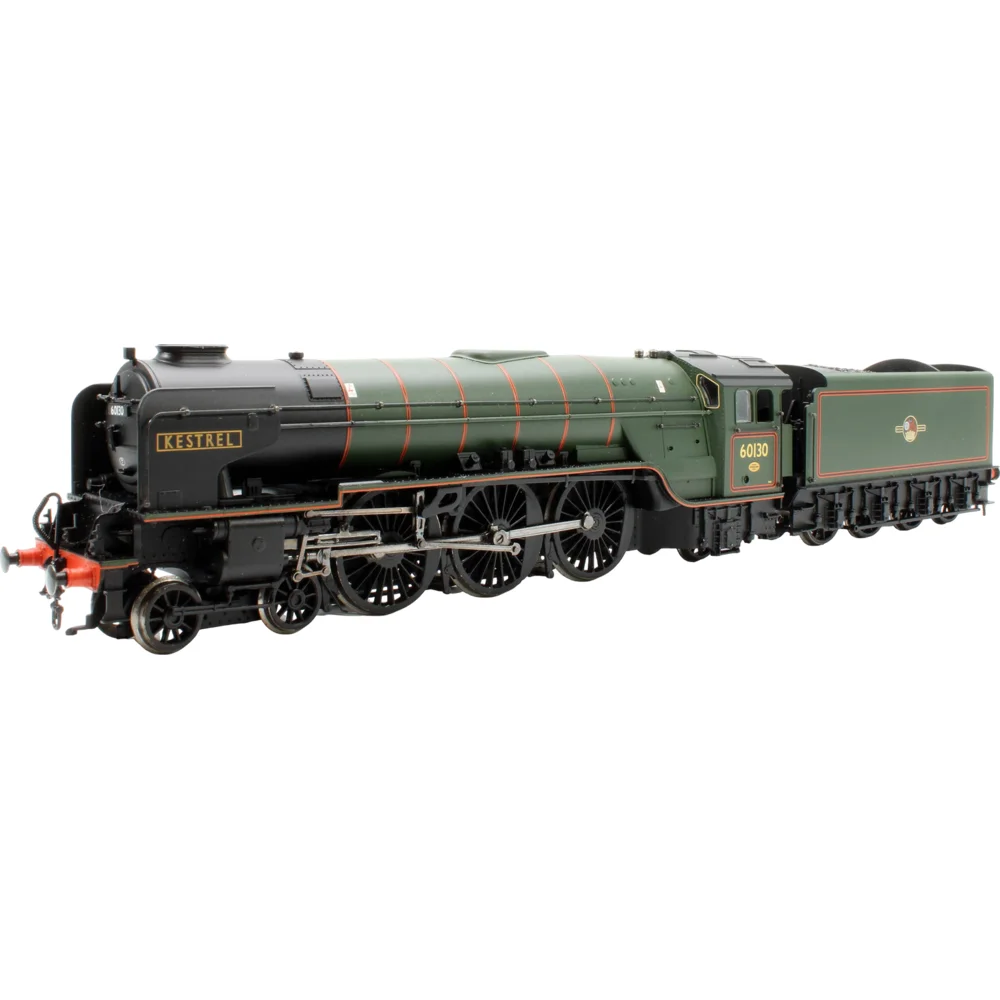
Insider Tip — The Naming Policy: All 49 A1s were named, though each ran unnamed for an initial period while nameplates were fitted to the smoke deflectors. The five naming themes were: former CMEs and LNER officials (W.P. Allen, H.A. Ivatt, Sir Vincent Raven, Wilson Worsdell, Edward Fletcher, Archibald Sturrock, Patrick Stirling); Sir Walter Scott works and characters (Kenilworth, Marmion, Redgauntlet, Guy Mannering, Madge Wildfire); racehorses (Bois Roussel, Silurian, Pommern, Foxhunter, Alcazar, Boswell, Aboyeur); former LNER constituent railways (North Eastern, Great Central, Great Eastern, North British); and Scottish places and birds (Kittiwake, Curlew, Osprey, Sea Eagle, Kestrel, Peregrine, Balmoral, Holyrood, Saint Mungo).
Design and Technical Specifications
The Peppercorn A1 represented a deliberate synthesis — combining the free-steaming virtues of the Gresley Pacifics with the independent valve gear and reduced maintenance demands that Thompson had identified as essential improvements. The result was, in the assessment of the LNER Encyclopedia, a locomotive that "ran and steamed well, and required less maintenance than any of the other major express locomotive types running on BR."
At the heart of the design was the Diagram 118 boiler, a large and well-proportioned unit pressed to 250 psi and fitted with a generous 50 sq ft grate. The Kylchap double blastpipe — a patent arrangement originally designed by Kyala and Chapelon that pairs a twin-orifice blastpipe with a double-petticoat chimney — dramatically improved draughting and steaming. The A1s needed no single-chimney derivatives: they were Kylchap-fitted from the outset, which sets them apart from both the A3s (which gained Kylchaps only in the late 1950s after Riddles' intervention) and Thompson's own A2 designs.
Three 19 in × 26 in cylinders, all in line, drove the 6 ft 8 in coupled wheels through three independent sets of Walschaerts valve gear and 10 in diameter piston valves. The power output was prodigious: tractive effort at 85% boiler pressure was 37,397 lbf, placing the A1s firmly in the 8P power category (initially classified 7P, uprated to 8P in 1951). Footplatemen appreciated the smooth, even torque of three-cylinder working, and the absence of the Gresley conjugated gear's characteristic "middle cylinder bang" during heavy acceleration.
| Specification | Value |
|---|---|
| Wheel arrangement | 4-6-2 Pacific |
| Cylinders | Three, 19 in × 26 in (bore × stroke) |
| Valve gear | Walschaerts, three independent sets, piston valves |
| Boiler pressure | 250 psi |
| Grate area | 50.0 sq ft |
| Total heating surface | 2,461.4 sq ft |
| Superheater area | 697.7 sq ft |
| Driving wheel diameter | 6 ft 8 in |
| Tractive effort (85% BP) | 37,397 lbf |
| Power classification | 8P (from 1951; originally 7P) |
| Locomotive weight (working order) | 104 tons 2 cwt |
| Tender capacity (water / coal) | 5,000 gal / 9 tons |
| Length over buffers | 72 ft 11¾ in |
| Maximum speed | 100 mph |
A notable sub-group within the class was Nos. 60153–60157, the final five Doncaster-built locomotives, which were fitted from new with Timken roller bearings on every engine and tender axle. This extended a trial that had previously been confined to certain A4 tenders. The results were striking: the roller-bearing five averaged around 150,000 miles between intermediate overhauls, against approximately 90,000 miles for the plain-bearing majority. Despite this evidence, British Railways never extended roller bearings to the rest of the class — a decision that, with hindsight, has baffled historians.
One early operational quirk: the Kylchap ejectors produced a loud roar at station platforms that was reported to drown out tannoy announcements at King's Cross. Silencers were experimentally fitted to three locomotives before a general recommendation was circulated.
Service History and Operations
From the moment the first A1s entered service in late 1948, they were distributed across the principal ECML depots. Initial and established allocations included King's Cross "Top Shed" (34A), Grantham (34F), Doncaster (36A), York (50A), Gateshead (52A), Heaton (52B), Copley Hill (56C), Neville Hill (55H), and Haymarket (64B). The five Scottish-named examples — Holyrood, Bonnie Dundee, Auld Reekie, North British, and Saint Johnstoun — were allocated to Haymarket to work the Edinburgh portion of the timetable.
The roster of expresses these locomotives worked reads like a roll-call of British railway romance. Regular A1 duties included The Flying Scotsman, The Heart of Midlothian, The Talisman, The Tees-Tyne Pullman, The Queen of Scots, The Yorkshire Pullman, The White Rose, The Northumbrian, The Norseman, The Aberdonian, and the overnight Night Scotsman. One prestigious duty did, however, remain beyond them: The Elizabethan non-stop King's Cross–Edinburgh service required the A4s and their corridor tenders, through which crews could be changed en route without stopping.
Comparisons with the Gresley A4 Pacifics were inevitable and often unfair to both classes. The A4s held glamour, prestige, and Mallard's 126 mph world record. The A1s did the sustained daily work. Running inspectors consistently reported that A1s caused fewer service failures than any other Pacific type on the region. Hot axleboxes — the persistent curse of Gresley's conjugated-gear Pacifics — were essentially unknown on the Peppercorns. One regional running inspector's report from the early 1950s noted that an A1 would work a 550-ton, 15-coach formation at sustained 60–70 mph on level track with a composure that even A4s could not always match. Speed was not the point: reliability was, and the A1s delivered it in abundance.
Operational Insight — The Top Shed Turnaround: King's Cross "Top Shed" maintained its A1 allocation on intensive diagrams involving multiple return King's Cross–Leeds or King's Cross–Newcastle workings daily, with remarkably tight servicing windows between duties. The A1s' reduced maintenance requirements made them ideal for this intensive operation. A typical Top Shed A1 in the early 1950s might cover 80,000–90,000 miles annually — figures that caused no alarm precisely because the design was so robust.
Withdrawals began in October 1962, when No. 60123 H.A. Ivatt was damaged beyond economic repair in a rear-end collision at Offord, Cambridgeshire. The real cause of the class's demise was not accident but policy: the arrival of 22 English Electric Class 55 "Deltics" at Finsbury Park, Gateshead, and Haymarket from 1961–62 displaced 55 Pacifics from the top ECML links in one sweep. Brush Type 4 diesels (later Class 47) displaced the secondary passenger work. The A1s had no niche left to fill. All 49 had been withdrawn by June 1966, giving the class an average service life of barely fifteen years — a pitiful return on locomotives that were not merely competent but genuinely outstanding.
Withdrawal, Preservation and Legacy
The complete extinction of the Peppercorn A1 was not inevitable, but it required a specific and cruel confluence of circumstances. The final withdrawals came between late 1965 and June 1966 — just a few years before the preservation movement expanded sufficiently to save locomotives of this generation at scale. Woodham Brothers' famous Barry scrapyard stockpiled rusting GWR and LMS types in South Wales; ECML scrapyards in Yorkshire and the North East cut their deliveries swiftly and completely. The National Collection's curatorial priorities in that period favoured streamlined record-breakers (the A4s) and pre-grouping pioneers, leaving the more prosaic express Pacific unrepresented.
No. 60145 Saint Mungo became the last survivor, working York parcels trains and the Red Bank newspaper empties in the final weeks. Enthusiast Geoff Drury attempted to purchase her for preservation but could not raise the approximately £4,500 asking price in time. She was cut up at T. W. Ward's Draper yard at Hull from September 1966, joining her 48 classmates in oblivion. The Peppercorn A2, represented by preserved No. 60532 Blue Peter at the National Railway Museum, endured; the A1s did not.
Preservation's Lost Opportunity: The timing of A1 withdrawals — between 1962 and 1966 — preceded the rapid growth of the heritage railway movement by just a few years. Most of the class's final duties were at secondary sheds; none were candidates for the National Collection's "glamour" selections of 1968. This complete extinction of 49 locomotives makes the new-build Tornado project all the more remarkable — and all the more necessary.
The engineering legacy of the class proved more durable than any physical survivor. Independent valve gear, high boiler pressure, and the Kylchap exhaust system became recognised as the correct specification for heavy British Pacifics. The A1s' influence is visible in the 9F 2-10-0s that BR built contemporaneously: the same philosophy of three independent valve gears and high grate area on a proven boiler. Peppercorn himself retired shortly after nationalisation and died in 1951, but his final design outlasted him by fifteen years and inspired a community of enthusiasts that has now outlasted the locomotives themselves by six decades.
Tornado and the New-Build Revolution
The story of No. 60163 Tornado is by now well known, but its details remain astonishing. On 17 November 1990, a small group of enthusiasts formally launched the A1 Steam Locomotive Trust at York's Railway Institute. Their proposition — building a new main-line steam locomotive funded entirely by small monthly contributions from a national membership — was unprecedented in British preservation. The slogan became a movement: "Build a main-line loco for the price of a pint of beer a week." Over 2,500 covenantors signed up. Construction began at Tyseley in 1995, moving to the Trust's dedicated Darlington Locomotive Works at Hopetown in September 1997. The boiler was built at DB Meiningen in Germany — an all-welded, all-steel unit built to EU Pressure Equipment Directive standards that no British shop could then meet. Total cost reached approximately £3 million against an initial estimate of £1.6 million.
Tornado raised steam for the first time in January 2008 and moved under her own power on 29 July 2008. After mainline certification in January 2009, the first passenger run — "The Peppercorn Pioneer" from York to Newcastle — ran on 31 January 2009. HRH The Prince of Wales officially named her at York on 19 February 2009, in the presence of Dorothy Mather, Arthur Peppercorn's widow, who served as the Trust's President.
She is not a replica. Key differences from the 1948–49 originals include: a one-inch reduction in overall height to clear Network Rail's overhead line equipment envelope; roller bearings throughout (as fitted to the original Nos. 60153–57); an increased water capacity of 6,200 gallons against the original 5,000; full modern safety and communication equipment including TPWS, AWS, OTMR, and GSM-R; and dual battery banks fed by turbogenerators. She carries TOPS number 98863 on the network.
The headline achievement came on 12 April 2017, when Tornado reached 101.6 mph between Raskelf and Tollerton during an overnight ECML test run — the first steam locomotive in Britain to officially exceed 100 mph since the end of BR steam. Following a major overhaul from November 2021, she returned to service in August 2024 fitted with ETCS cab-signalling, making her the world's first operational steam locomotive so equipped. She remains the Trust's principal source of income and one of Britain's most photographed machines.
Modelling Significance and Scale Replications
The Peppercorn A1 offers modellers a compelling combination: a historically important prototype, authentic period expresses, four distinct livery phases, and a living survivor operating in modern BR green. The ready-to-run market has responded with a split that suits the prototype's two identities well — Bachmann dominates representation of the original 49 with authentic period accuracy, while Hornby and Graham Farish serve modellers running Tornado in her preservation guise.
A critical warning before purchase: several products marketed as "Class A1" use entirely different tooling. Hornby's R3990 Doncaster and R3991 Flying Scotsman are based on the Gresley A1/A3 tooling and are emphatically not Peppercorn locomotives. Similarly, Graham Farish 372-385 A. H. Peppercorn is a Peppercorn Class A2, not an A1 — named after the engineer, not the class. Check photographs of the distinctive high-running-plate Peppercorn front end against what you are buying.
OO Gauge
Bachmann Branchline introduced dedicated Peppercorn A1 tooling in 2001 and comprehensively retooled it in 2010. The current model uses a 21-pin MTC decoder socket, and the range correctly distinguishes between flush-rivet Darlington-built tenders and snap-head Doncaster tenders — a detail that earlier ready-to-run models ignored entirely. Key catalogue numbers include:
- 32-550 / 32-550DSF — No. 60163 Tornado, BR lined green (late crest), with the DSF variant sound-fitted
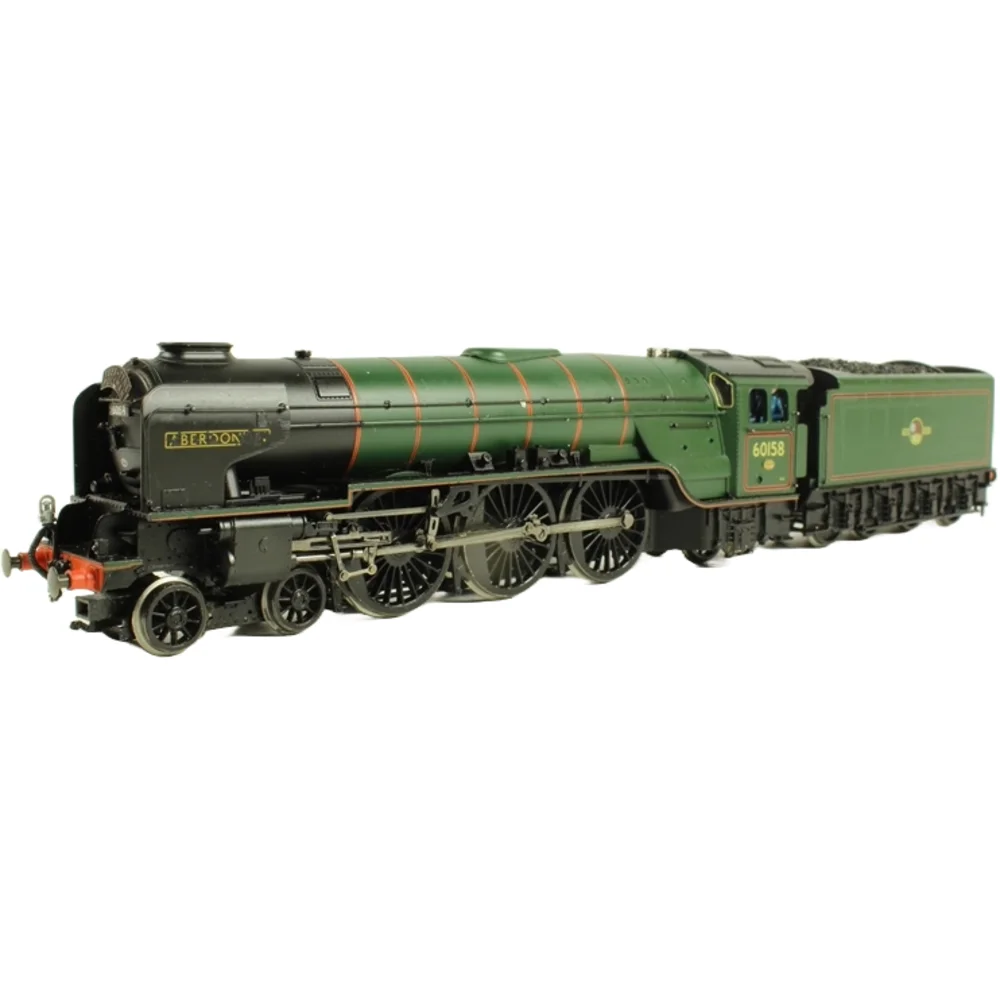
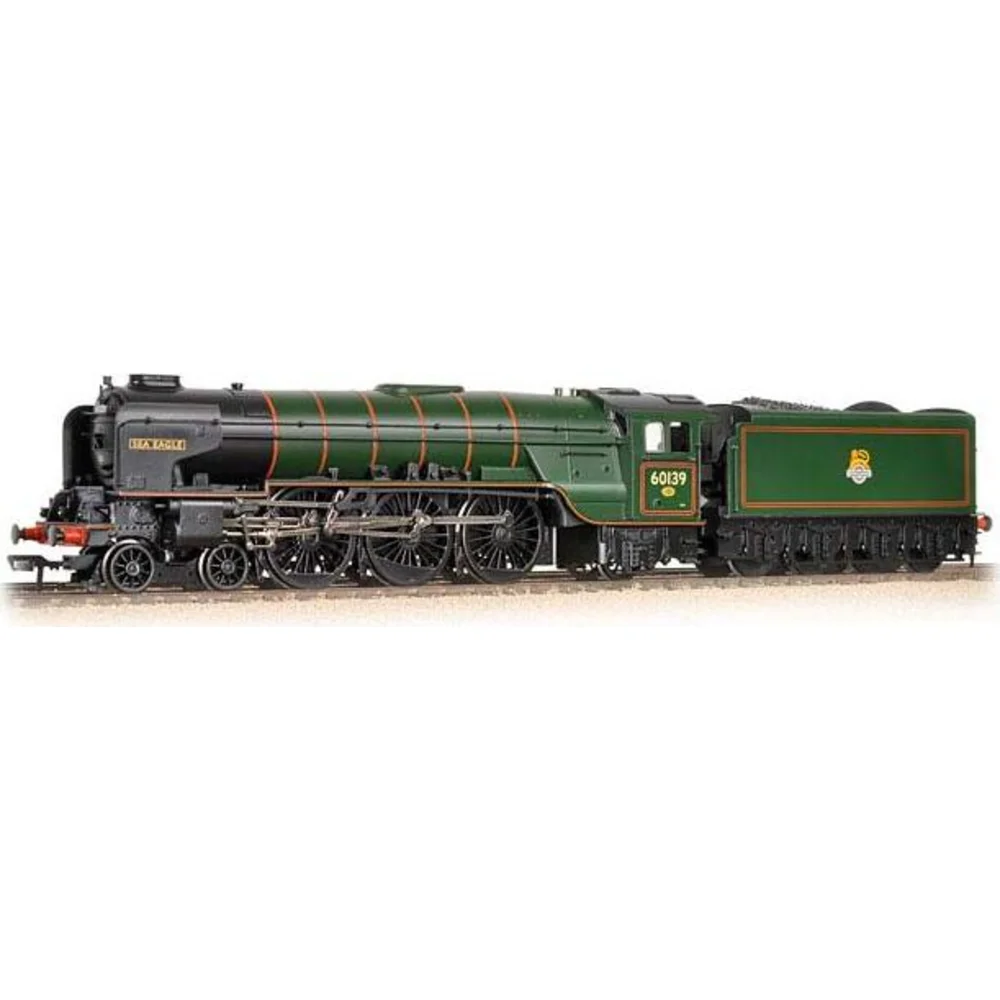
- 32-551 / 32-551DS — No. 60158 Aberdonian and No. 60139 Sea Eagle (sound-fitted), late crest Brunswick green
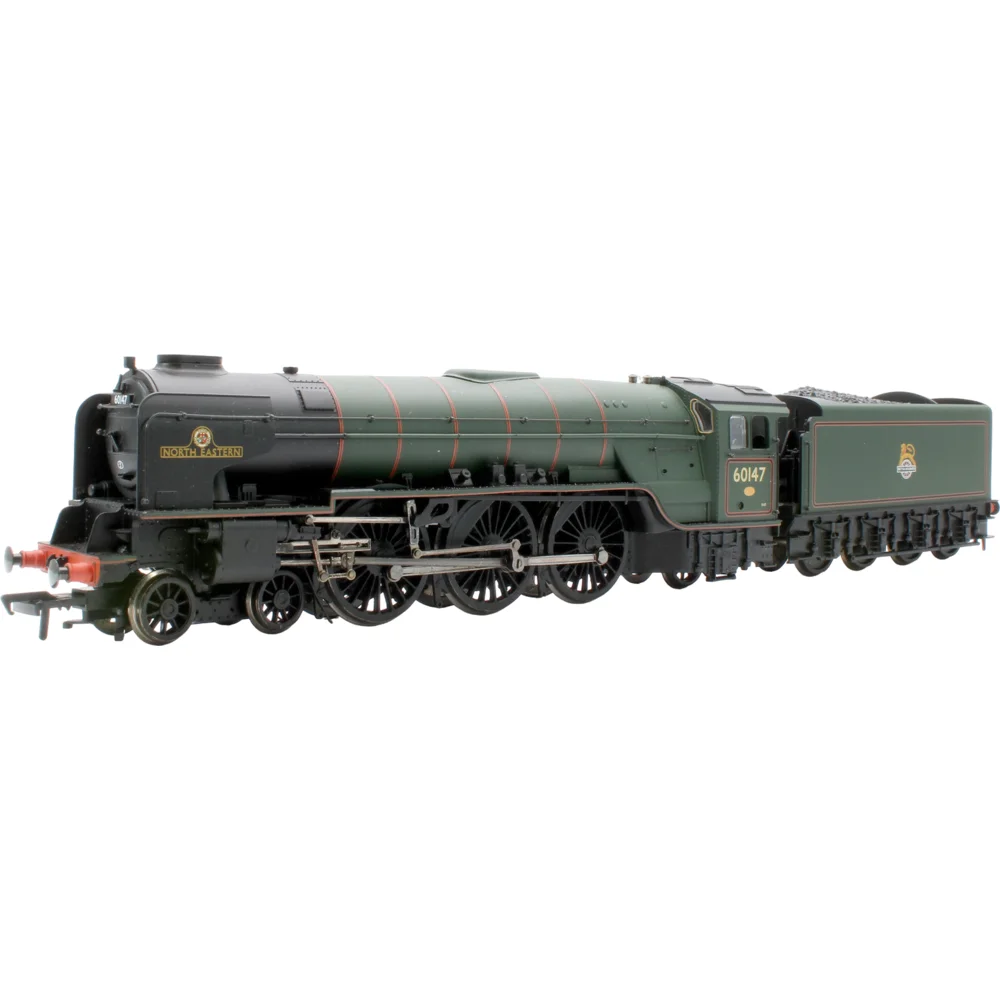
- 32-552 — No. 60147 North Eastern, BR lined green
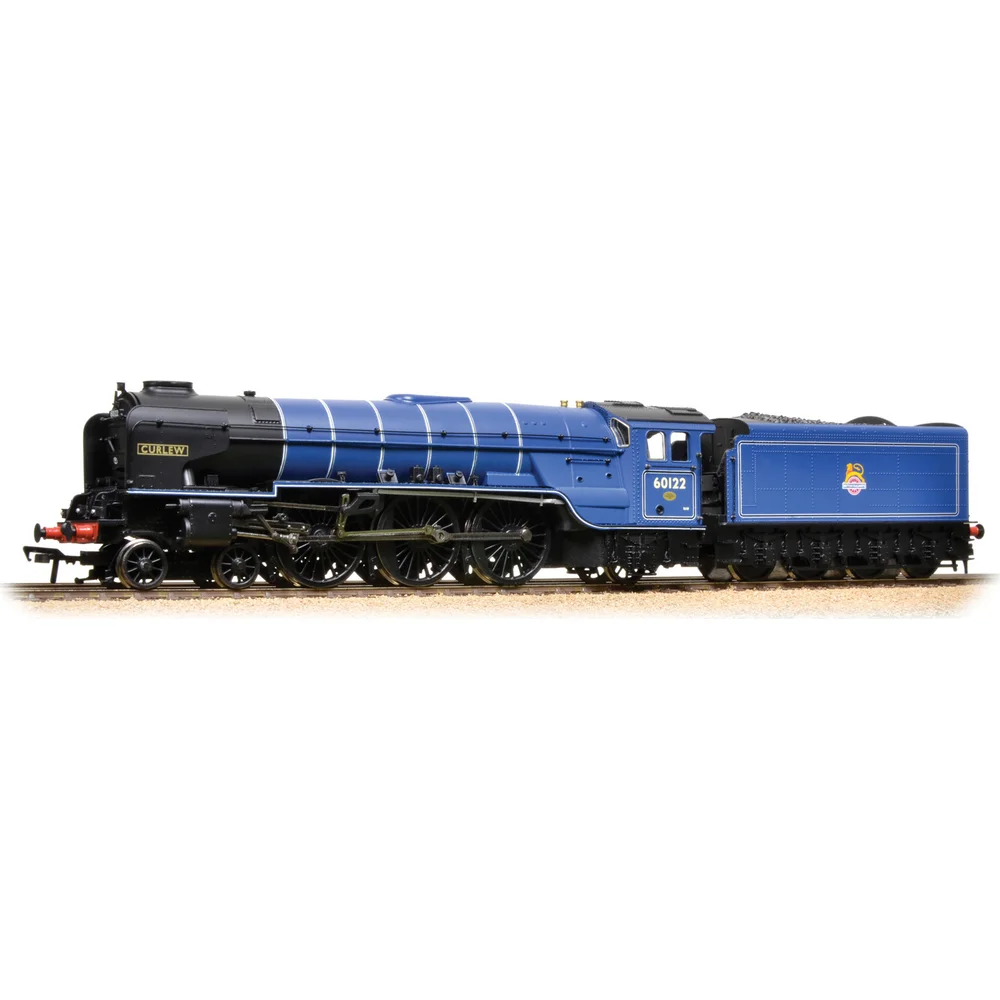
- 32-553 — No. 60161 North British, BR Express Blue
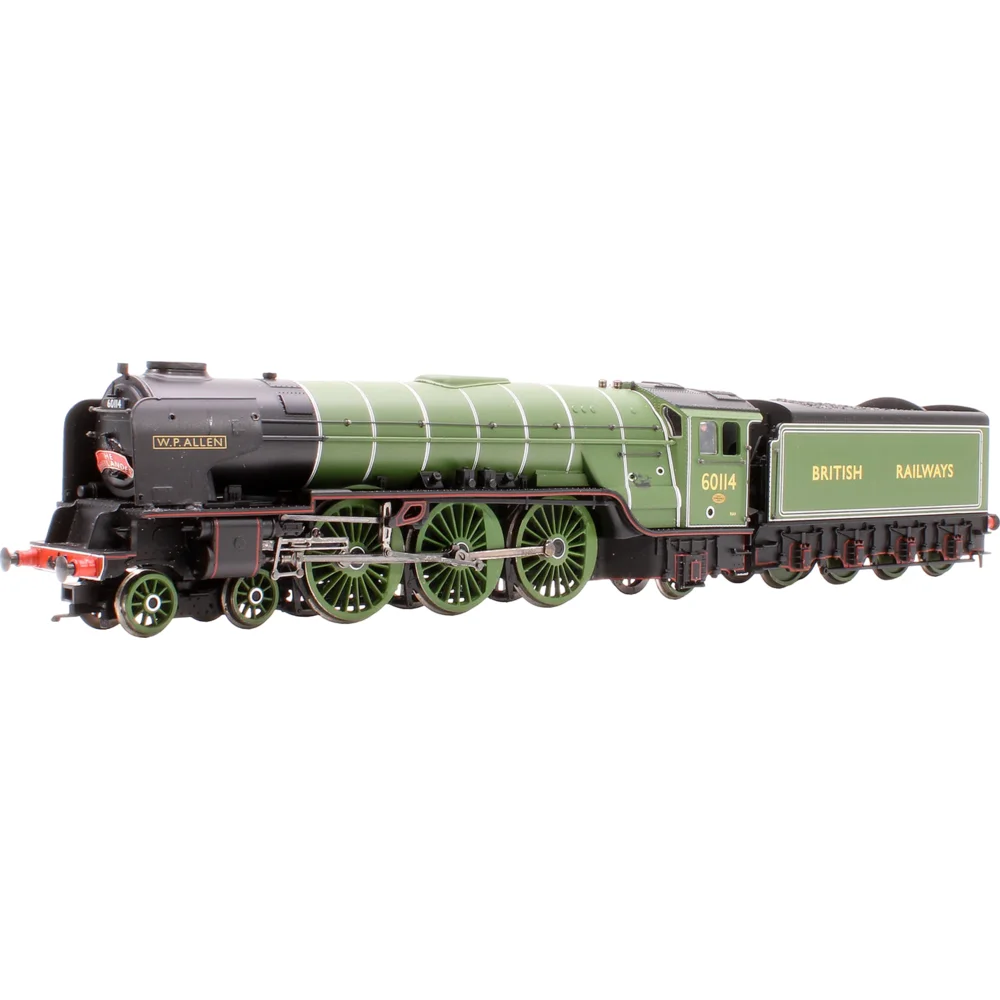
- 32-554 — No. 60114 W.P. Allen, BR Doncaster green (early livery)
- 32-556 / 32-557 / 32-558 — Great Central, King's Courier and Meg Merrilies in various BR liveries
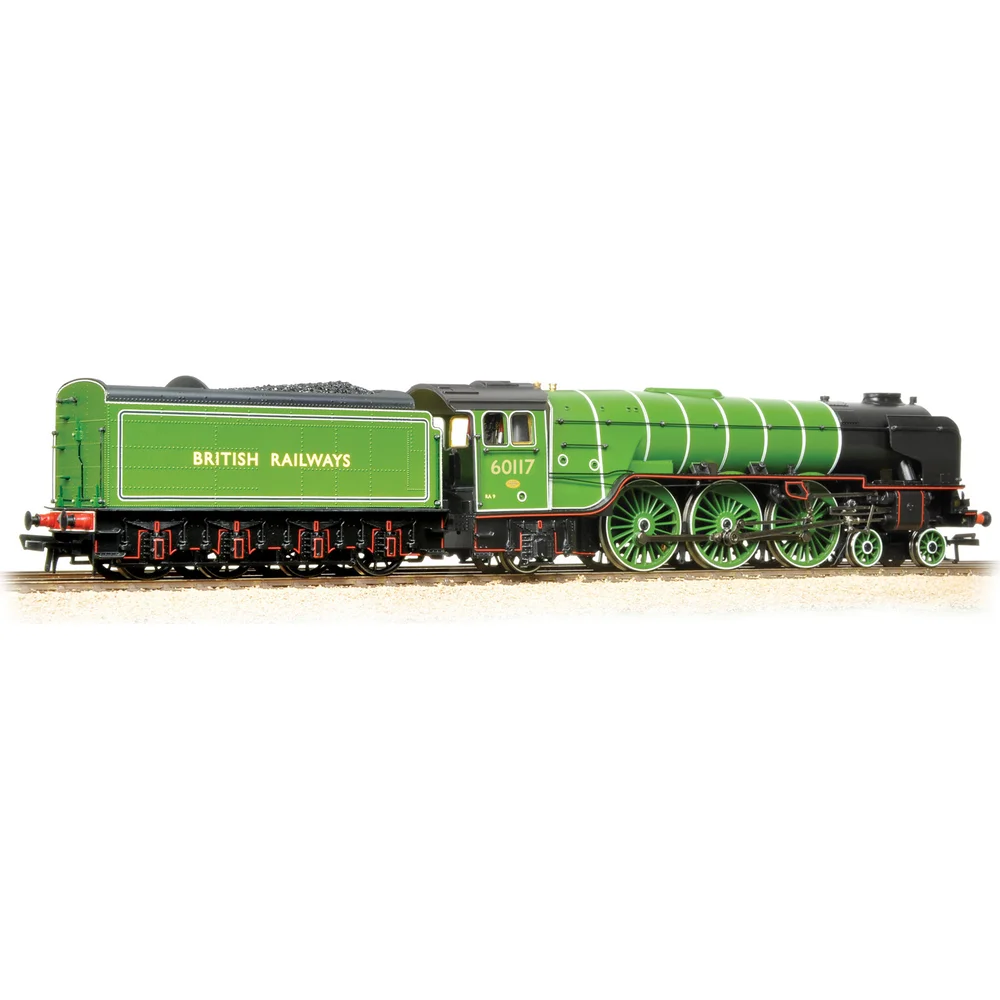
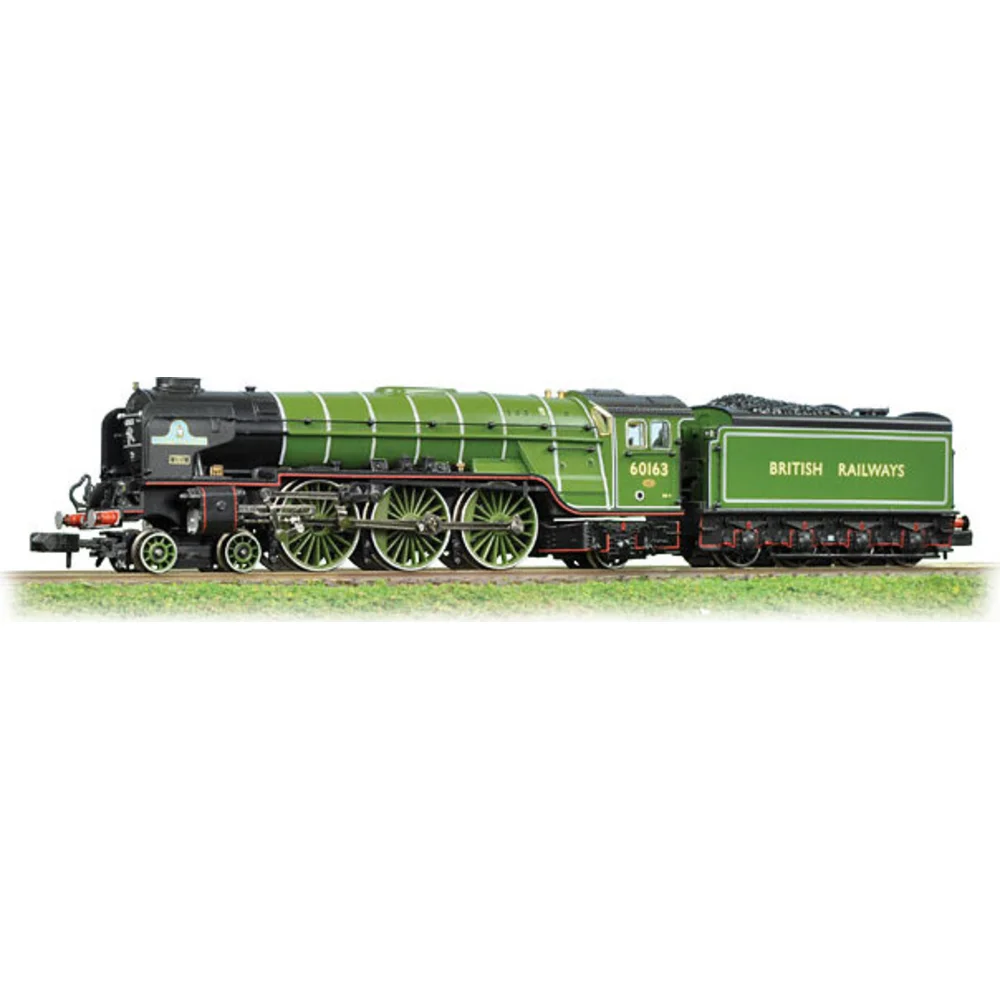
- 32-560 — No. 60117 unnamed, BR apple green with "British Railways" tender lettering
- 32-561 — No. 60122 Curlew, BR Express Blue
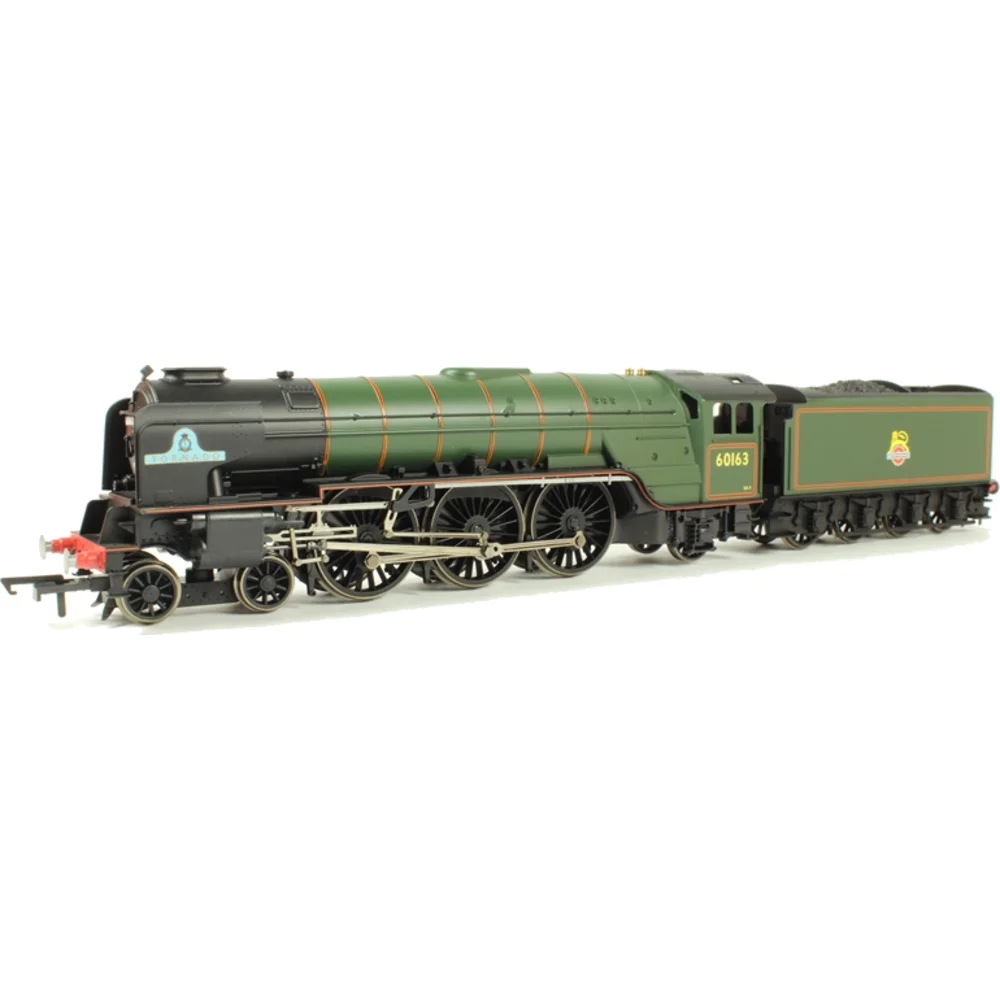
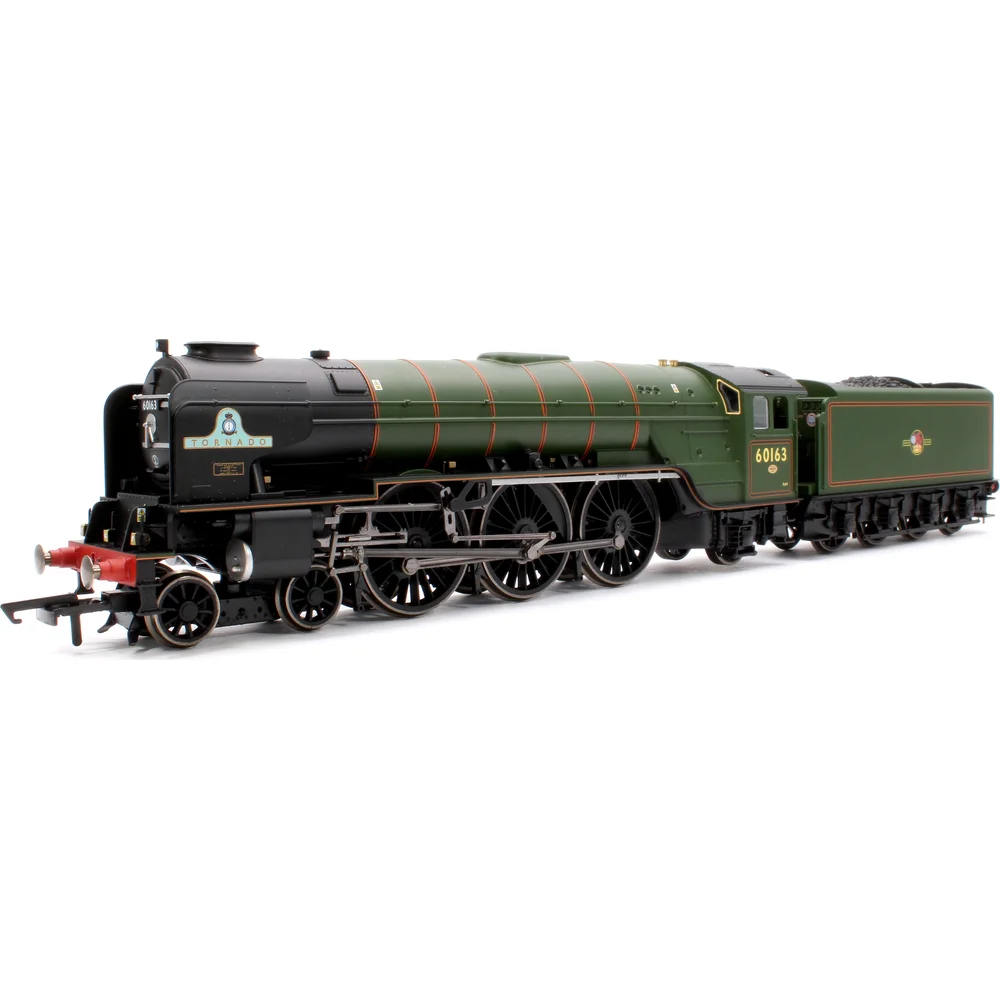
Hornby's Peppercorn A1 tooling, introduced 2011, represents only No. 60163 Tornado in her preserved liveries. It is a RailRoad/RailRoad Plus specification with an 8-pin NEM652 socket. Key numbers:
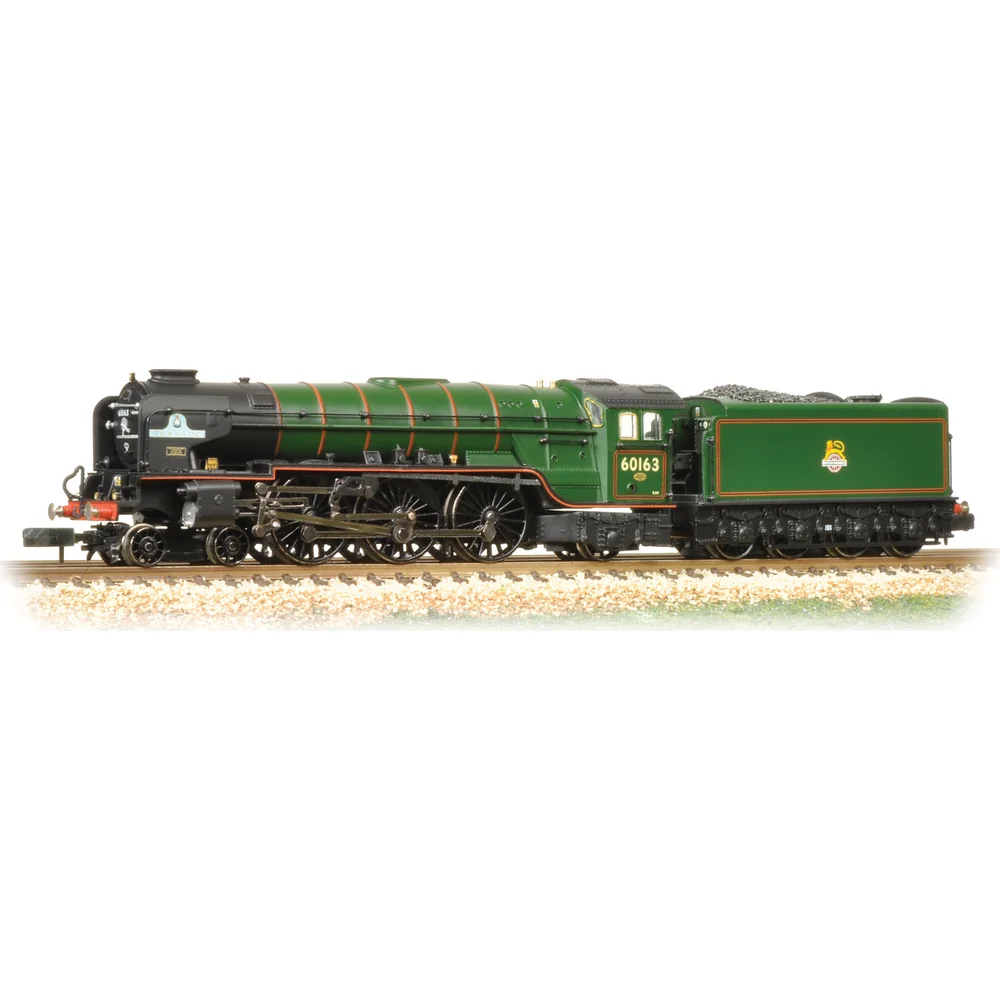
- R30086 — current production, BR Brunswick green late crest, Era 11 (circa £140–£150)
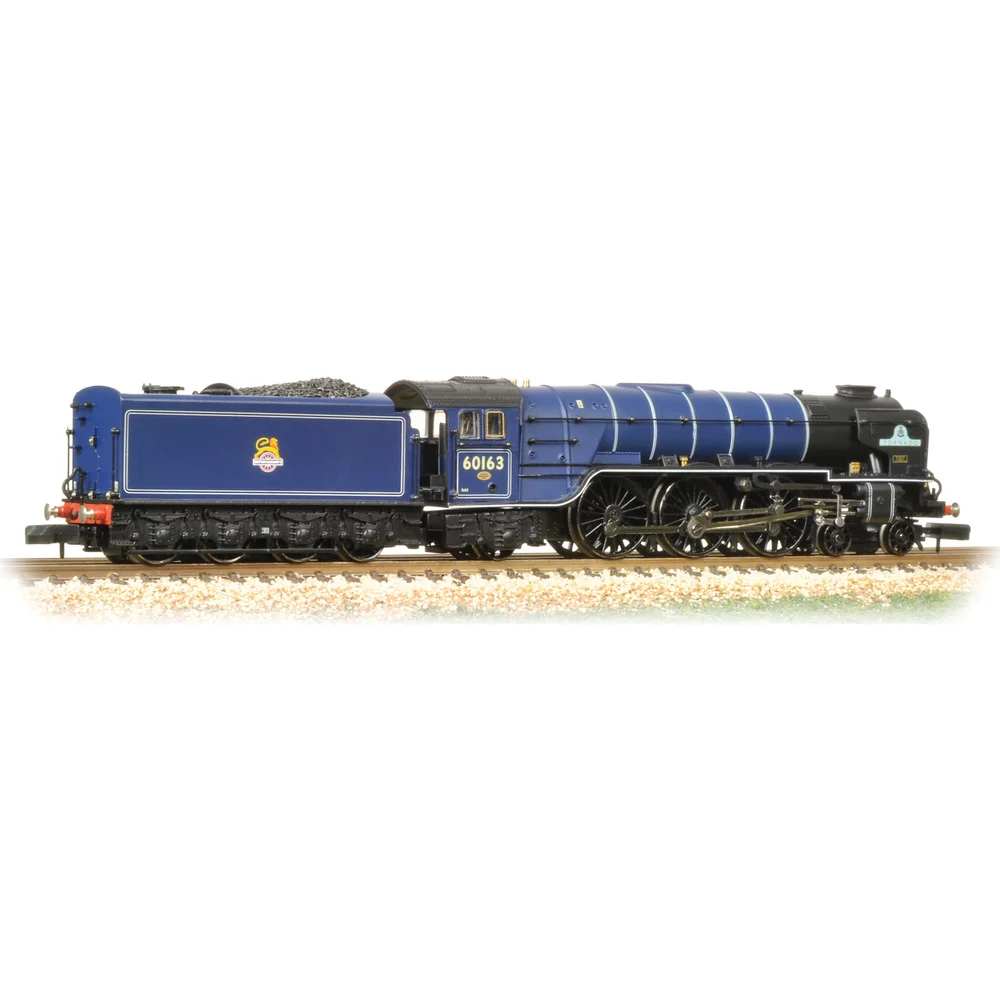
- R3206 — BR Express Blue with etched nameplates
- R3245TTS — BR Express Blue with Hornby TTS sound fitted
- R3663TTS — LNER apple green / BR "British Railways" lettering with TTS sound
- R3070 — BR apple green, Special Limited Edition
N Gauge
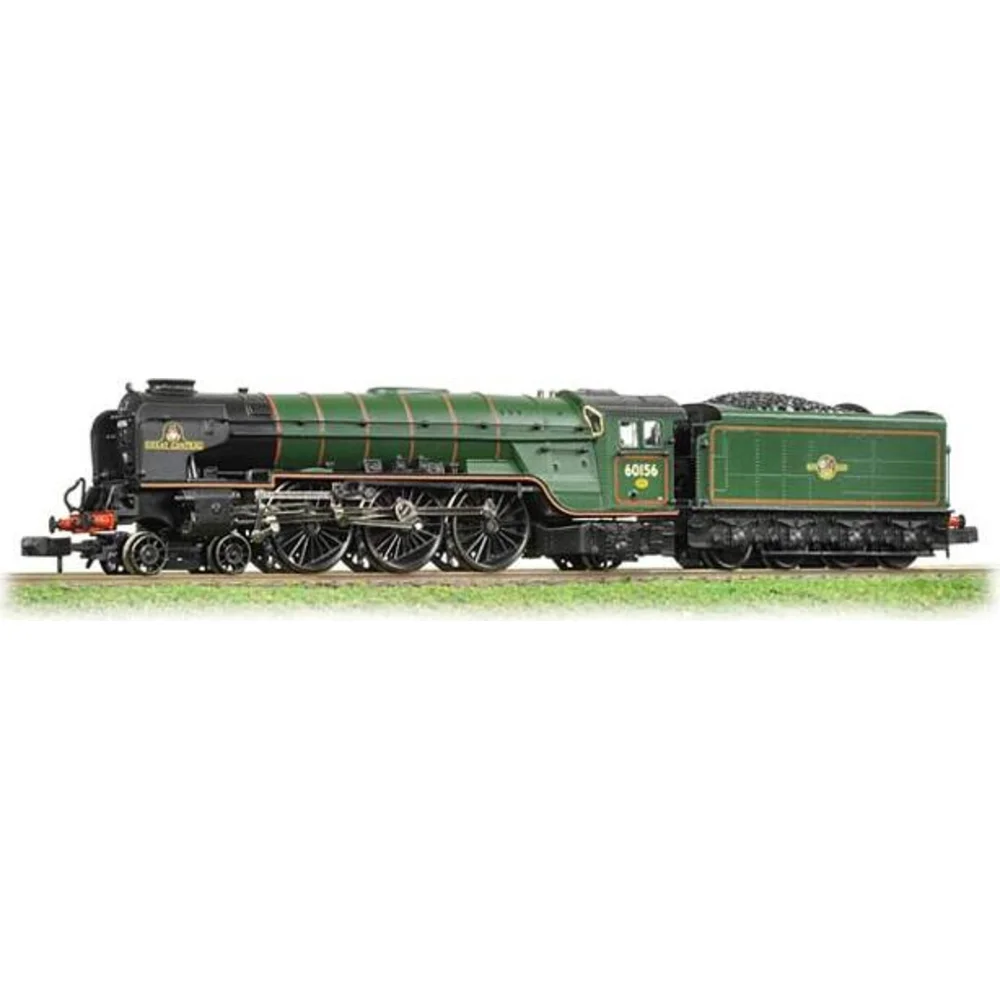
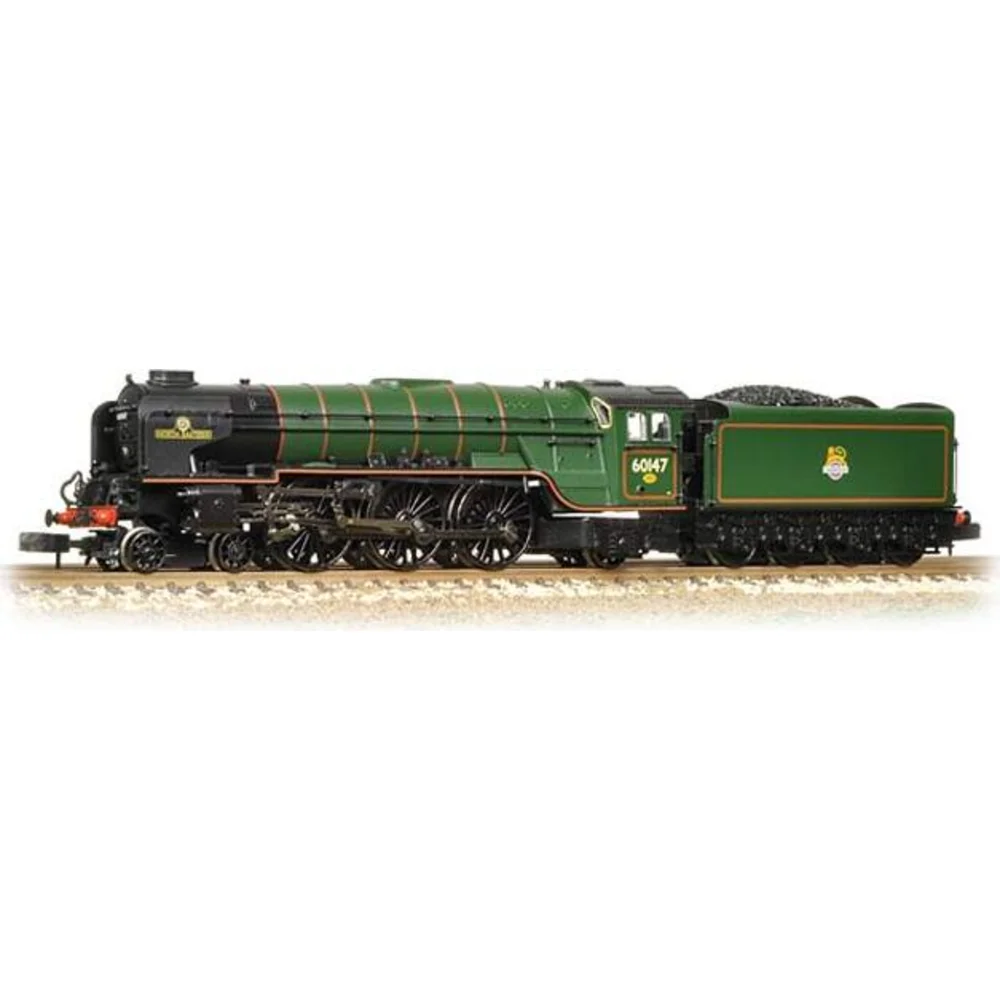
Graham Farish launched its Peppercorn A1 in 2011 with a 6-pin NEM651 socket and tender-mounted motor. No factory sound-fitted variants exist in N gauge for this class. Key numbers:
- 372-800 / 372-800A / 372-800B — No. 60163 Tornado in Doncaster green, BR lined green, and BR Express Blue respectively
- 372-801 — No. 60156 Great Central, BR late crest (circa £144)
- 372-802 — No. 60147 North Eastern, BR lined green early emblem
O Gauge and Beyond
No mainstream ready-to-run manufacturer currently produces a Peppercorn A1 in O gauge (7mm/1:43.5). The standard offering is DJH Model Loco's K30 kit, available in both 4mm OO and separate 7mm O gauge specifications. DJH was acquired by Squires Tools in 2024 with production continuing. Completed professional builds regularly appear on the second-hand market at £1,000 or more for 7mm examples. David Andrews Locomotive Kits also offers a 7mm A1.
In Gauge 1 live steam, Accucraft UK produced a gas-fired Tornado from 2013 in three liveries — apple green, BR Express Blue and BR Brunswick green — at launch prices of £2,895 rising to £3,650. The model is now discontinued; Accucraft UK's distribution transferred to Maxitrak in 2024.
TT:120 (Hornby's 1:120 scale): no Peppercorn A1 has been announced as of publication.
Unique Modelling Tips and Layout Integration
The Peppercorn A1 is fundamentally an East Coast Main Line machine, and your layout will be most convincing if it reflects that geography. The prototype worked between King's Cross and Edinburgh with major intermediate stops at Peterborough, Grantham, Doncaster, York, Darlington, and Newcastle. Even a compact terminus-to-fiddle-yard OO layout representing one of these stations in the early to mid-1950s immediately places the A1 in its correct context.
Era selection is the first decision. The four livery phases give you natural period anchors:
- LNER apple green with "British Railways" tender lettering (1948–circa 1951): represents the earliest BR period before the regional livery settled. Model this era with early Mk1 coaches in the short-lived plum-and-cream or full carmine-and-cream, non-corridor stock on secondary workings, and pre-1950 signalling.
- BR Express Blue (circa 1949–1952): a surprisingly short-lived livery applied unevenly across the class, abandoned in favour of green. Authentic period details include Hawksworth-style coaches and early AWS equipment.
- BR Brunswick green, early emblem (from 1952): the dominant livery for most of the class's working life. Corridor Mk1s in carmine-and-cream or, from 1956, maroon are correct for secondary and secondary-express workings; full Pullman consists for the Yorkshire Pullman and Queen of Scots.
- BR Brunswick green, late crest (from 1956): the "ferret-and-dartboard" emblem and correct for modelling the class's final decade. By this period, maroon coaches are universal and diesel multiple units begin appearing on secondary services at the same stations.
Insider Tip — Tender Accuracy: Bachmann's retooled 2010 models correctly distinguish between the riveted (snap-head) tenders from Doncaster and the flush-rivet tenders from Darlington. If you are modelling specific prototype numbers, verify which tender type applies. Nos. 60114–60129 and 60153–60162 (Doncaster) carried snap-head riveted tenders; Nos. 60130–60152 (Darlington) carried flush-rivet variants. This is a detail visible at arm's length on a well-lit layout.
Train formation should reflect the A1's heavy-express brief. Standard East Coast Main Line formations in the 1950s for named trains ran to 10–15 coaches, often over 450 tons. In OO gauge, even a modest 8-coach rake of Hornby or Bachmann Mk1 corridor coaches creates an impressive formation behind the locomotive. For the Yorkshire Pullman, use six Hornby or Bachmann Pullman cars (Kitchen First, Parlour Brake First, Parlour First, and Parlour Second combinations). If you are running the roller-bearing sub-group (60153–60157), these locomotives were considered the best runners in the class and were often selected for the hardest diagrams; allocating them to your most challenging gradient will be prototypically sound.
Weathering should respect the passenger locomotive protocols of the period. Top-link ECML engines at Grantham, King's Cross, and York were cleaned regularly, particularly between diagrams. Aim for a light working patina rather than industrial grime: graduated exhaust darkening on the smokebox door and front of the boiler, light oil staining beneath the motion, and coal dust accumulation in the tender bunker top. Avoid heavy rust streaking on the boiler casing — these engines were steam-cleaned and wiped down between duties at the larger depots.
For Tornado on a modern layout, the challenge is authenticity of the surrounding scene. She operates charter trains from mainline stations with modern infrastructure: overhead electrification gantries, colour-light signalling, and modern rolling stock at adjacent platforms. If you are modelling the current era, include at least some representation of OHLE (even if your layout is DC only on the main line) for the visual context. Tornado regularly hauls vintage Pullman and BR Mk1 stock on charters, so period coaching stock remains entirely appropriate even on an Era 11 layout.
Sound Decoder Tip: If you are fitting an aftermarket decoder to the Bachmann 21-pin MTC version, the body space in the A1 boiler and the tender allows for a larger speaker than on smaller locomotive types. Fitting a sugar-cube speaker in the firebox aperture combined with a 35mm × 16mm oval in the tender produces significantly better bass response than any single-speaker installation — crucial for capturing the distinctive three-cylinder exhaust beat of a working Pacific at speed.
Finally
The Peppercorn Class A1 encapsulates a paradox at the heart of British railway history. Here was a design that solved the principal weaknesses of the Gresley Pacifics — the conjugated valve gear, the hot big-ends, the maintenance-intensive front end — and delivered a locomotive that running inspectors consistently rated the most reliable heavy express engine on British Railways. Yet within seventeen years every one of them had been cut up, overtaken not by any mechanical failing but by the diesel transition and the timing of their final duties relative to the growth of the preservation movement.
That injustice is only partially remedied by Tornado. She is a genuine addition to the class rather than a replica, incorporating modern materials, roller bearings throughout, and now ETCS cab-signalling in her role as a test platform for Victorian-era technology operating in a 21st-century railway. No other preserved or new-build steam locomotive in Britain has been asked to do so much — nor has demonstrated so convincingly that the Peppercorn design was good enough to endure.
For modellers, the class offers something genuinely unusual: a prototype with two identities, the vanished 49 and the living one, each served by different manufacturers with different strengths. If you want period accuracy for a 1950s ECML layout, reach for Bachmann's retooled range with its correct tender variations and authentic liveries. If you want to run modern charter trains with period coaching stock, Hornby's and Graham Farish's Tornado models in their multiple liveries will serve you well. And if you want the complete experience — a meticulously constructed 7mm model on P4 or fine-scale track — the DJH kit in the hands of a skilled builder remains one of the most rewarding projects in British outline modelling.
Few classes give you so much history in so compact a story: the last LNER CME's finest work, delivered under BR, lost to the scrapyard, and resurrected by public subscription sixty years later. That is a narrative worth putting on a layout.
Frequently Asked Questions
How many Peppercorn Class A1 locomotives were built and when?
Forty-nine locomotives were built across two works: Doncaster constructed 26 (Nos. 60114–60129 and 60153–60162) and Darlington built 23 (Nos. 60130–60152). All were delivered under British Railways between August 1948 and December 1949, despite being designed and ordered under the LNER before nationalisation on 1 January 1948.
What made the Peppercorn A1 different from the Gresley and Thompson A1s?
Peppercorn retained Thompson's three fully independent sets of Walschaerts valve gear — abandoning Gresley's troublesome conjugated 2-to-1 system — but restored a conventional single-line cylinder arrangement and a normal coupled wheelbase. The Kylchap double blastpipe was fitted from new to every locomotive, delivering the free-steaming characteristics that made the class the most economical heavy Pacific on British Railways.
Why were none of the original 49 Peppercorn A1s preserved?
Withdrawals ran from 1962 to June 1966 — just before the preservation movement could save locomotives of this type at scale. ECML scrapyards cut engines promptly, unlike Woodham Brothers at Barry. The National Collection prioritised Gresley A4s and pre-grouping types. A last-minute attempt to purchase No. 60145 Saint Mungo failed to raise the asking price in time.
Where can you see a Peppercorn A1 today?
No. 60163 Tornado is the only representative of the class and operates on the national network on charter trains and at heritage railways throughout the year. The A1 Steam Locomotive Trust publishes an up-to-date schedule at a1steam.com. There is no static museum example of an original class member; the Trust's Darlington Locomotive Works at Hopetown is open to visitors on selected days.
How did Tornado reach 100 mph and what significance does that have?
During an overnight test run on the East Coast Main Line on 12 April 2017, Tornado recorded a peak speed of 101.6 mph between Raskelf and Tollerton in Yorkshire — the first steam locomotive in Britain to officially exceed 100 mph since the end of BR steam operations in 1968. This cleared the path for 90 mph operational certification and demonstrated that Peppercorn's design remained capable of express performance after nearly seven decades.
Which OO gauge manufacturer produces the original Peppercorn A1s?
Bachmann Branchline produces the definitive OO gauge representation of the original 49 locomotives, with a range comprehensively retooled in 2010 to include correct tender variations for Doncaster and Darlington-built examples. Sound-fitted variants (DSF) are available in selected liveries. Hornby's OO Peppercorn A1 tooling represents only No. 60163 Tornado in her preserved liveries and should not be confused with the original 49.
Are Peppercorn A1 models available in N gauge?
Yes. Graham Farish produces the class in N gauge (1:148 scale), with Nos. 60163 Tornado (372-800 series in multiple liveries), 60156 Great Central (372-801) and 60147 North Eastern (372-802) among current catalogue numbers. No factory sound-fitted N gauge variant exists. Note: Graham Farish 372-385 A.H. Peppercorn is a Class A2, not an A1 — a common source of confusion for new collectors.
What coaching stock should I use with a Peppercorn A1 model?
Formation depends on the era. For the early BR period (1948–1956), use corridor Mk1 coaches in carmine-and-cream or, for named expresses, pre-nationalisation teak-effect LNER vehicles. From 1956, maroon Mk1 corridor stock is correct for most services. Pullman cars in umber-and-cream are appropriate for the Yorkshire Pullman and Queen of Scots throughout the A1s' service life. Bachmann, Hornby, and Rapido all offer suitable Mk1 and Pullman stock in the correct period colours.
How did the Peppercorn A1s compare to the Gresley A4 Pacifics in everyday service?
The A4s were faster on record, holding the 126 mph world steam speed record with Mallard, and were preferred for the non-stop Elizabethan service due to their corridor tenders. The A1s, however, consistently bettered the A4s on reliability and reduced maintenance requirements. Hot axleboxes and middle-cylinder failures — persistent A4 problems — were essentially unknown on the Peppercorns. For sustained heavy express haulage in everyday service, the A1s were arguably the superior design.
What DCC sound options are available for Peppercorn A1 models?
Factory sound options include Bachmann's DSF (Digital Sound Fitted) variants in the 32-550DSF and 32-551DS catalogue numbers, and Hornby's TTS (Train Technical Sound) in R3245TTS and R3663TTS. Aftermarket projects are available from Locoman Sounds, ESU LokSound 5 (with dedicated Peppercorn A1 sound files), Steam Sounds Supreme, YouChoos, and Howes DCC Sound. For Bachmann's 21-pin MTC models, the available body space allows a superior twin-speaker installation compared to smaller locomotive types.
What is the connection between the A1 Steam Locomotive Trust and the RAF Tornado aircraft?
No. 60163 Tornado was named in tribute to the Panavia Tornado jet aircraft then operated by the Royal Air Force. The name was chosen during the Gulf War period, with RAF Tornado crews present at the frame-laying ceremony at Tyseley in 1995 to present the nameplates. The Trust has maintained a close relationship with RAF Tornado units throughout the locomotive's construction and operational life, and the naming by HRH The Prince of Wales in 2009 specifically acknowledged this bond.
What is the significance of the five Timken roller-bearing A1s?
Nos. 60153–60157, the final five Doncaster-built locomotives, were fitted with Timken roller bearings on every engine and tender axle — an extension of a trial previously limited to certain A4 tenders. These five averaged approximately 150,000 miles between intermediate overhauls against 90,000 miles for the plain-bearing majority. Despite this compelling evidence, British Railways never extended roller bearings to the other 44 locomotives. Tornado was built with roller bearings throughout, effectively applying this lesson retrospectively to the entire class.