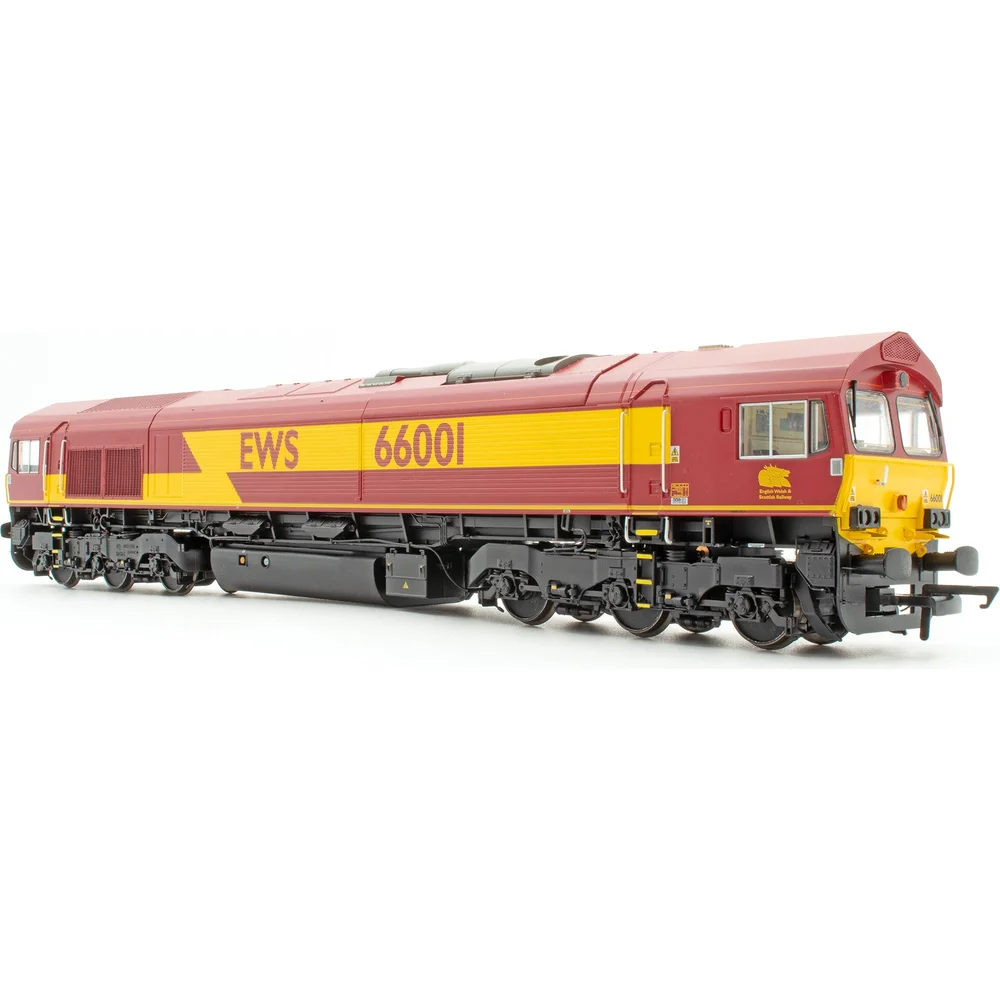
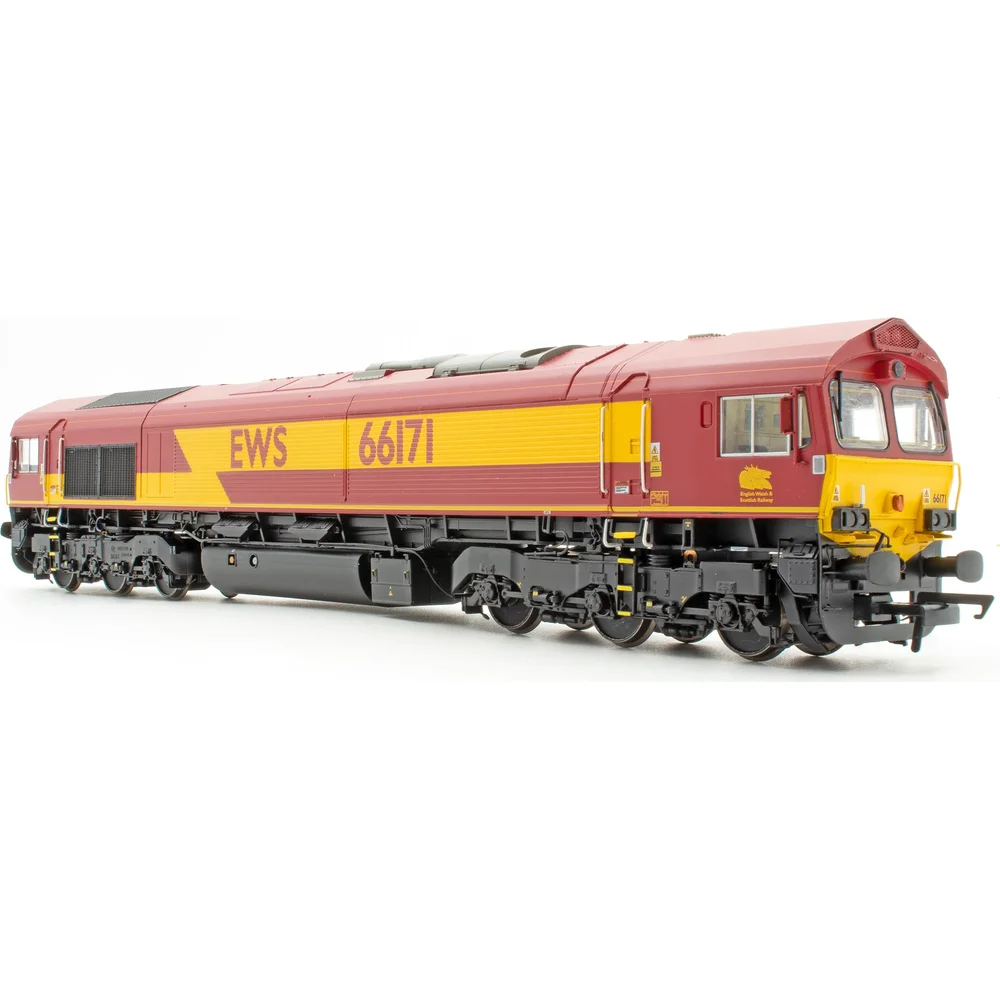
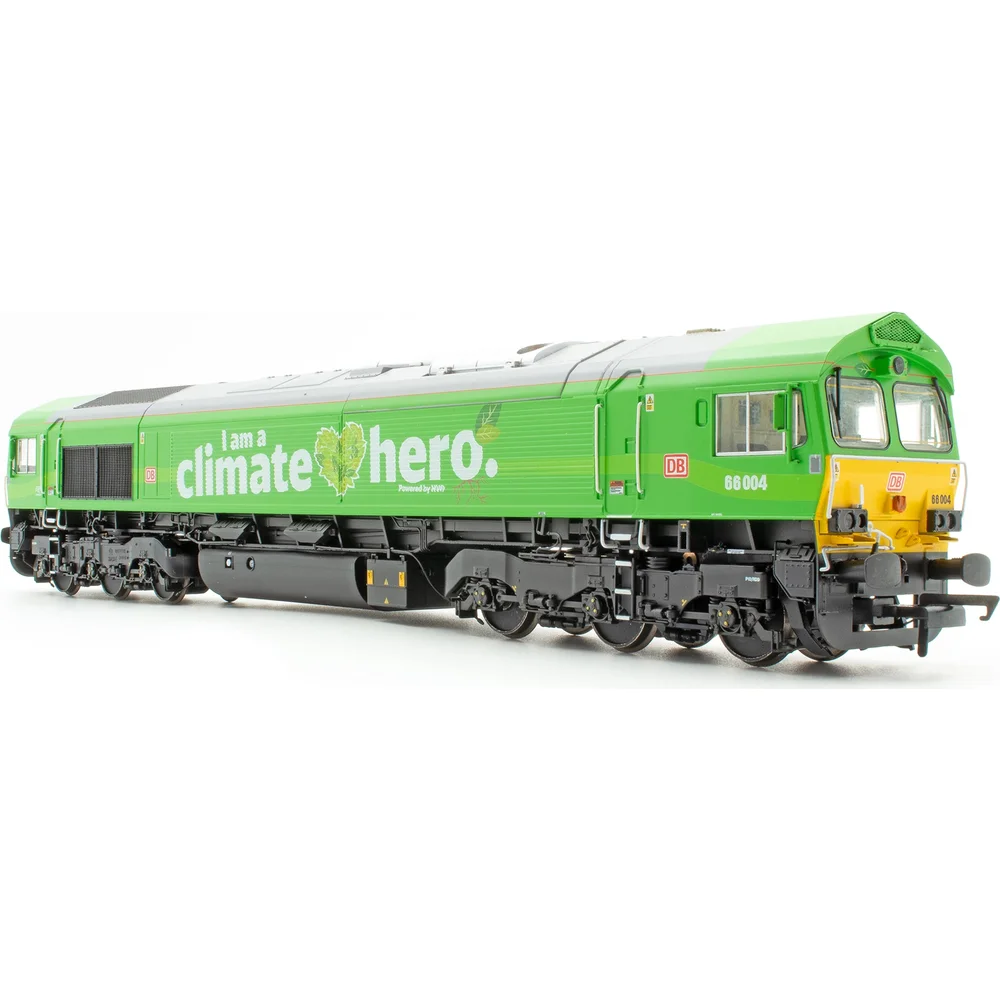
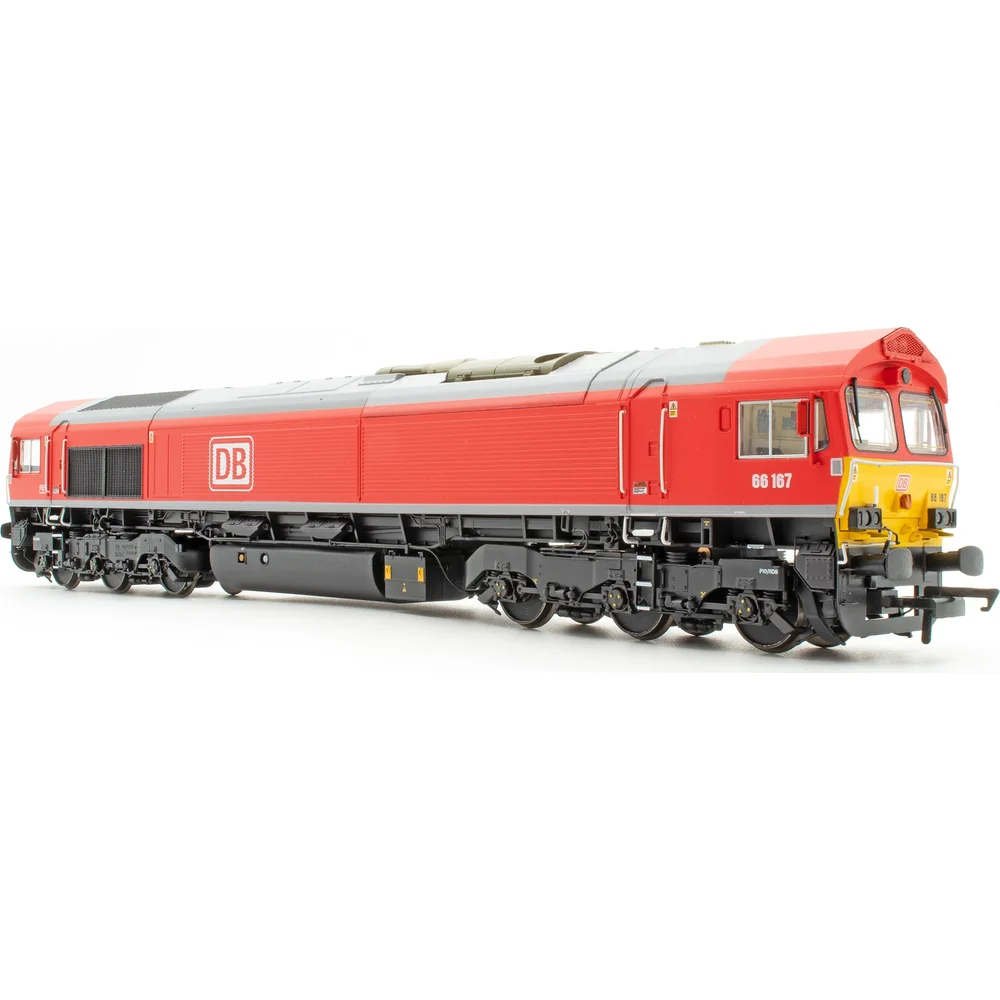
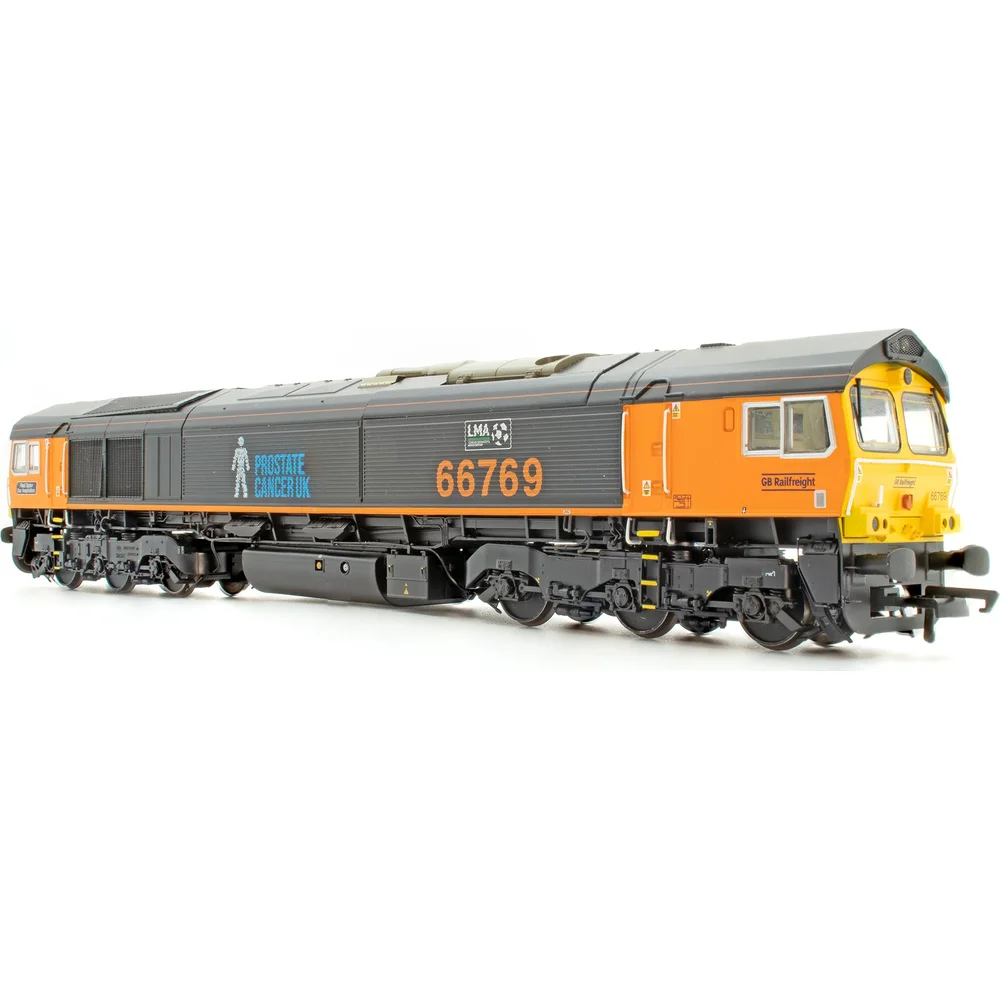
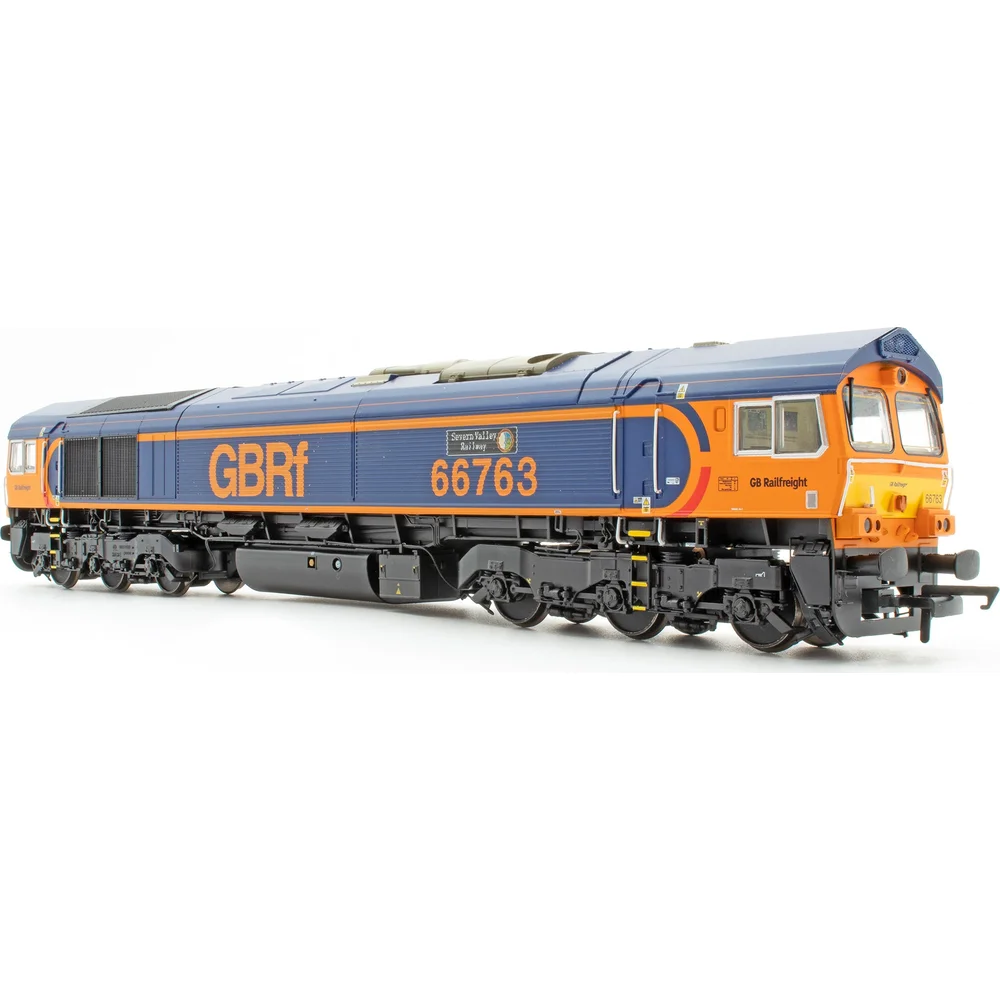
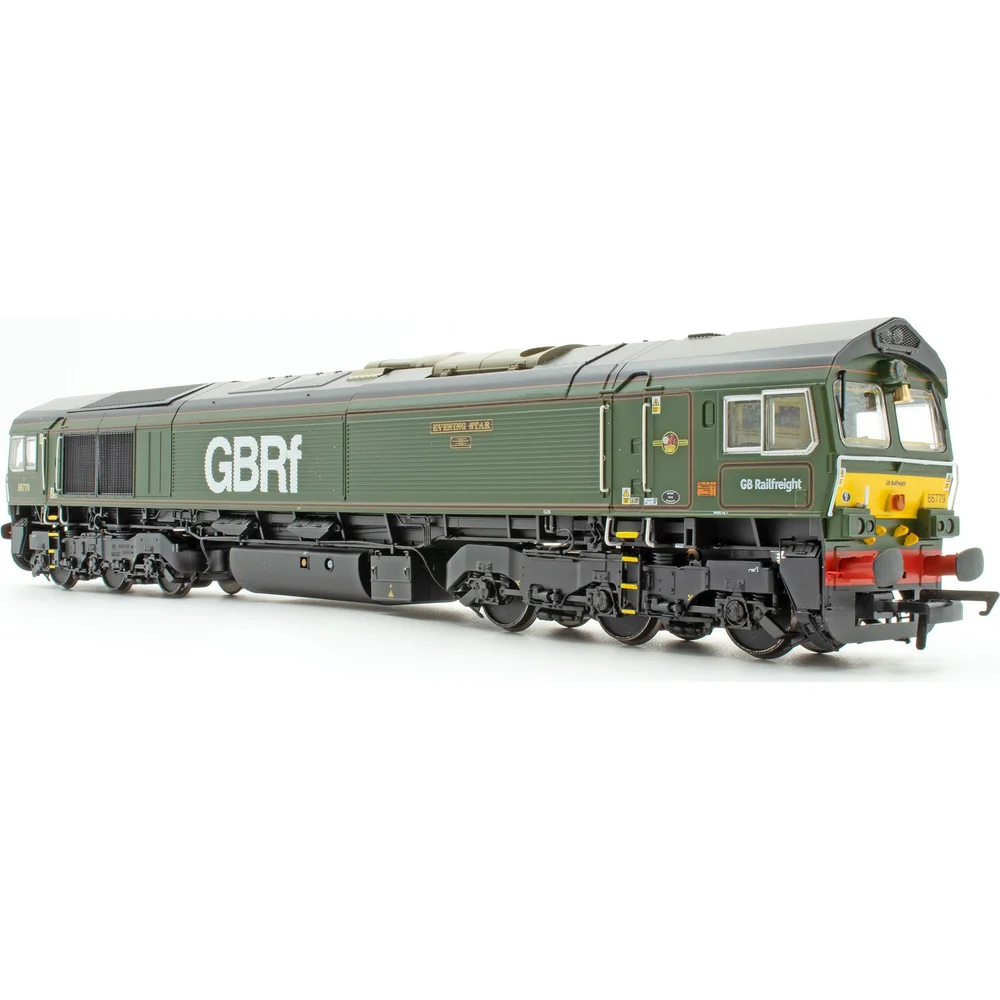
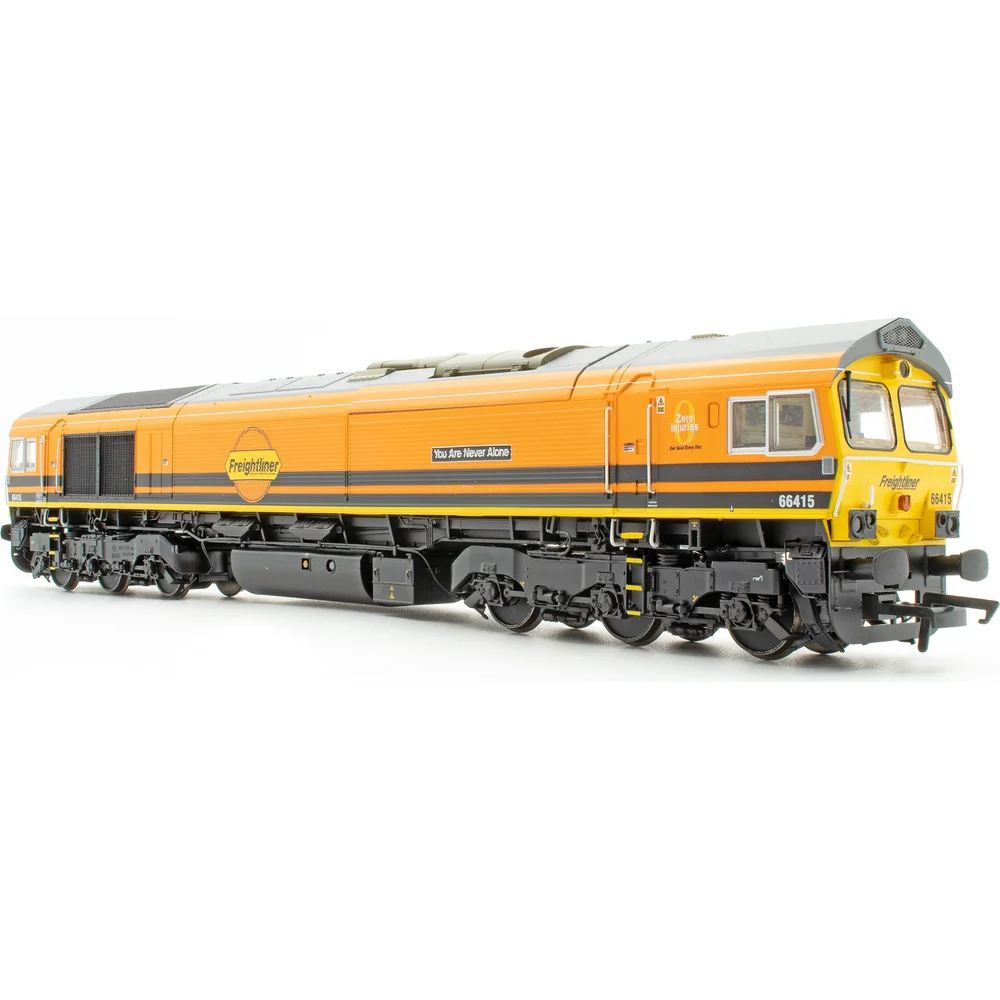
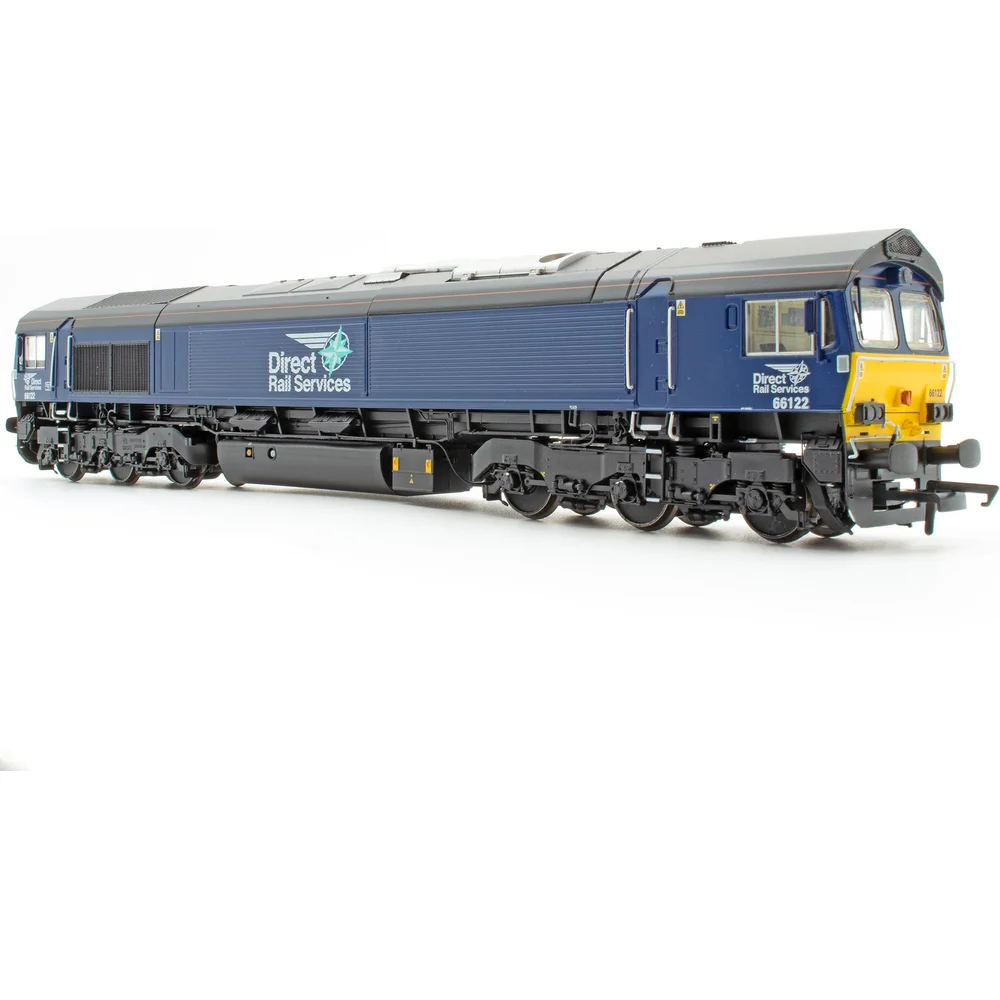
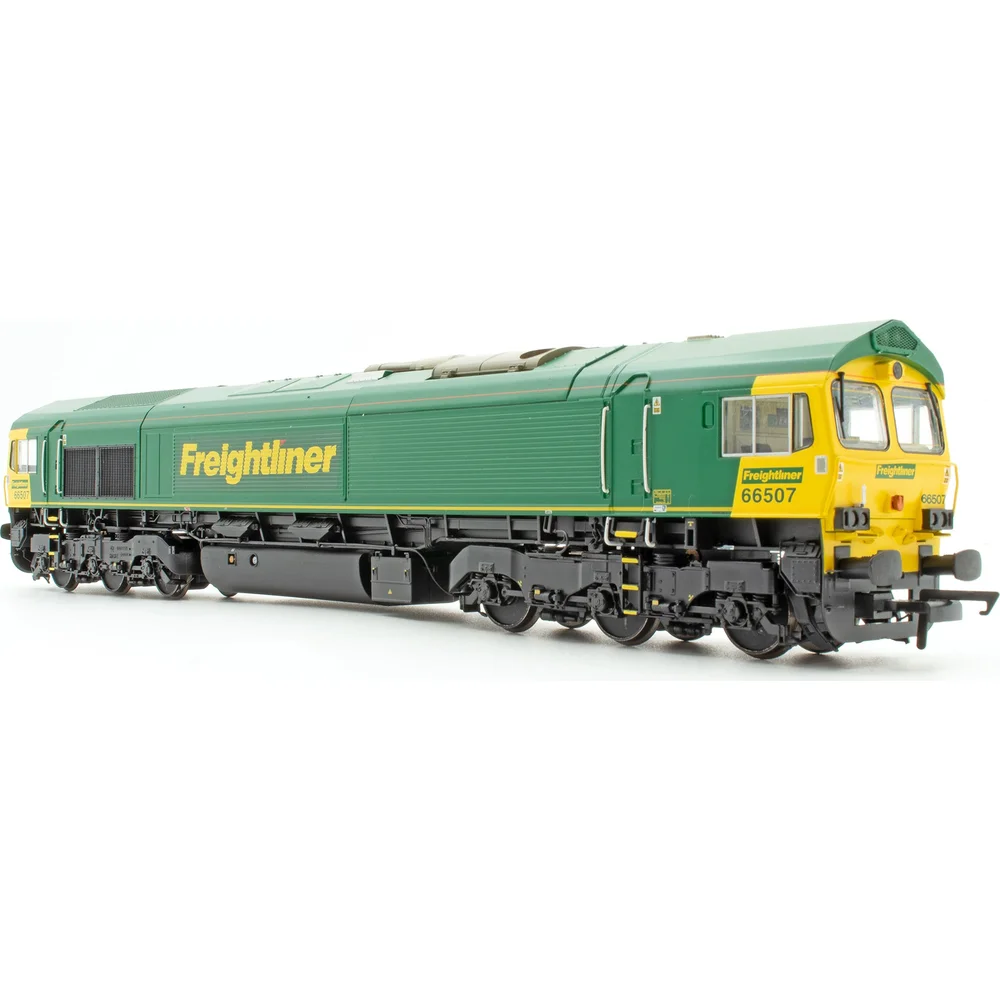
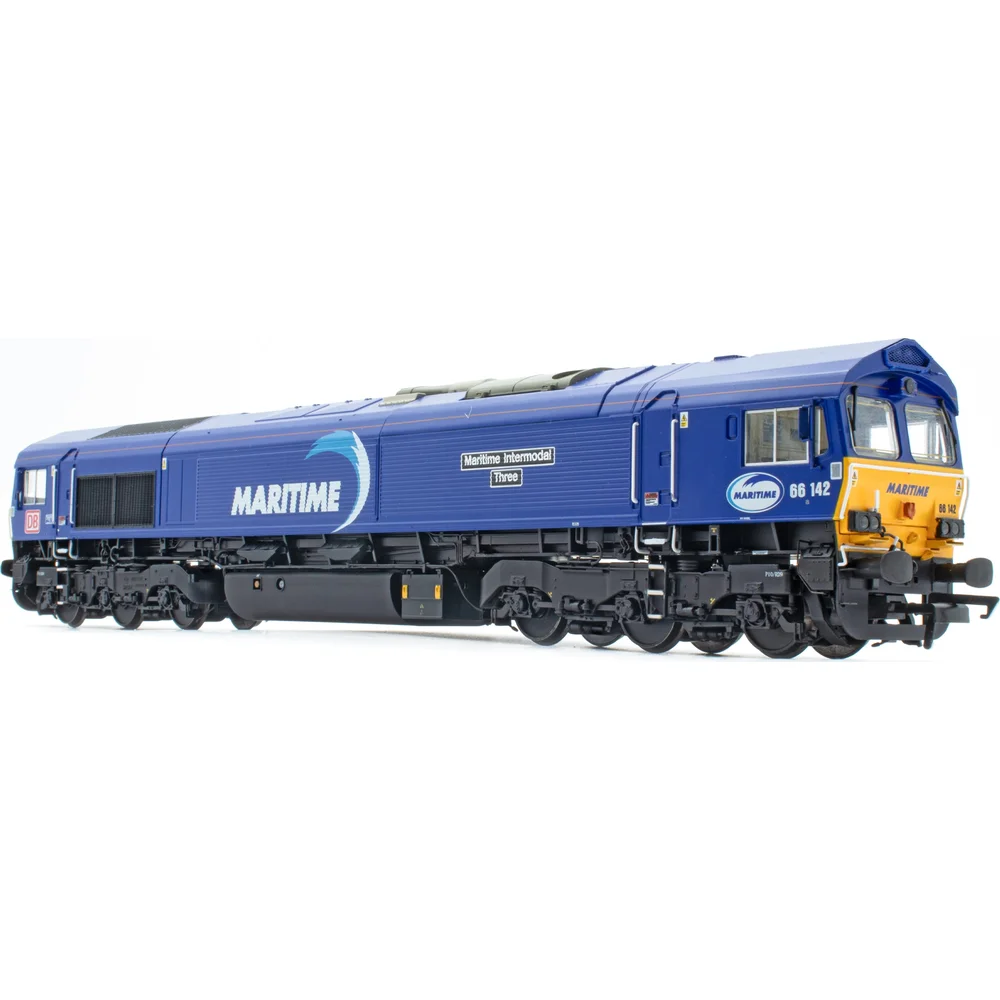
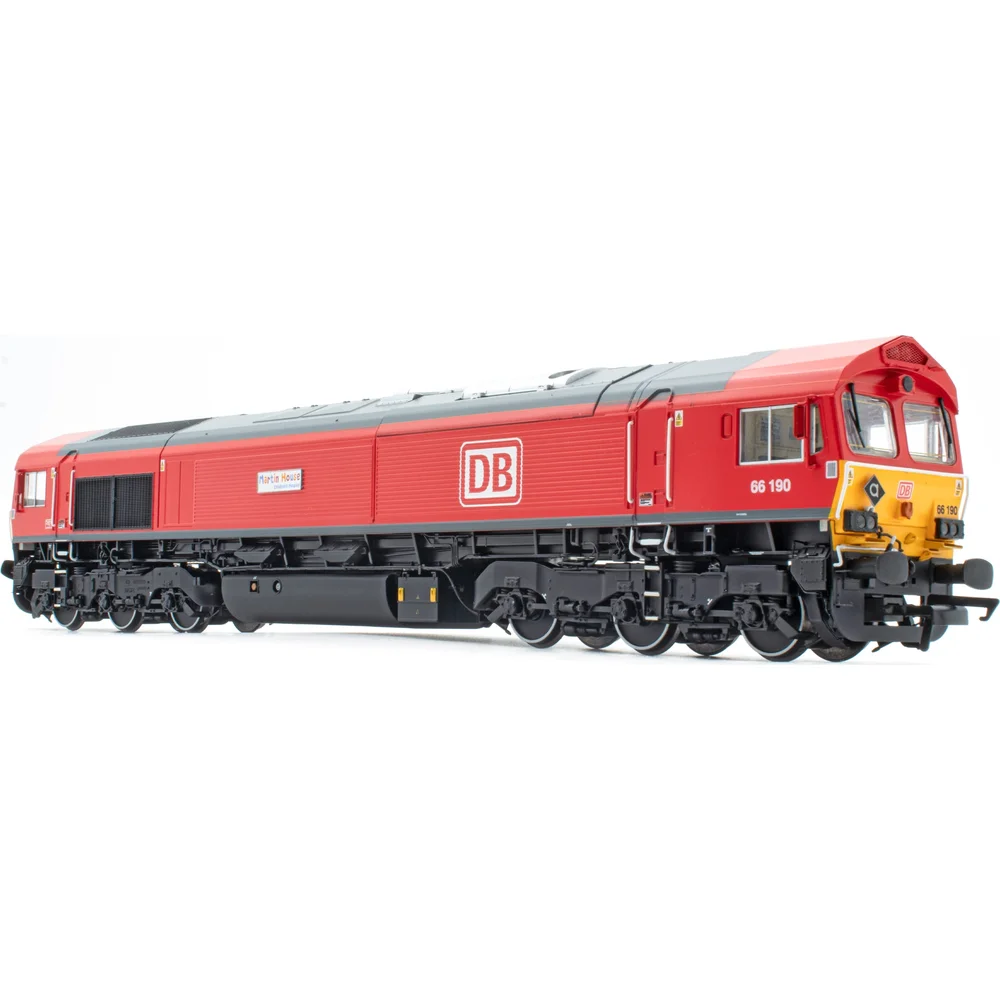
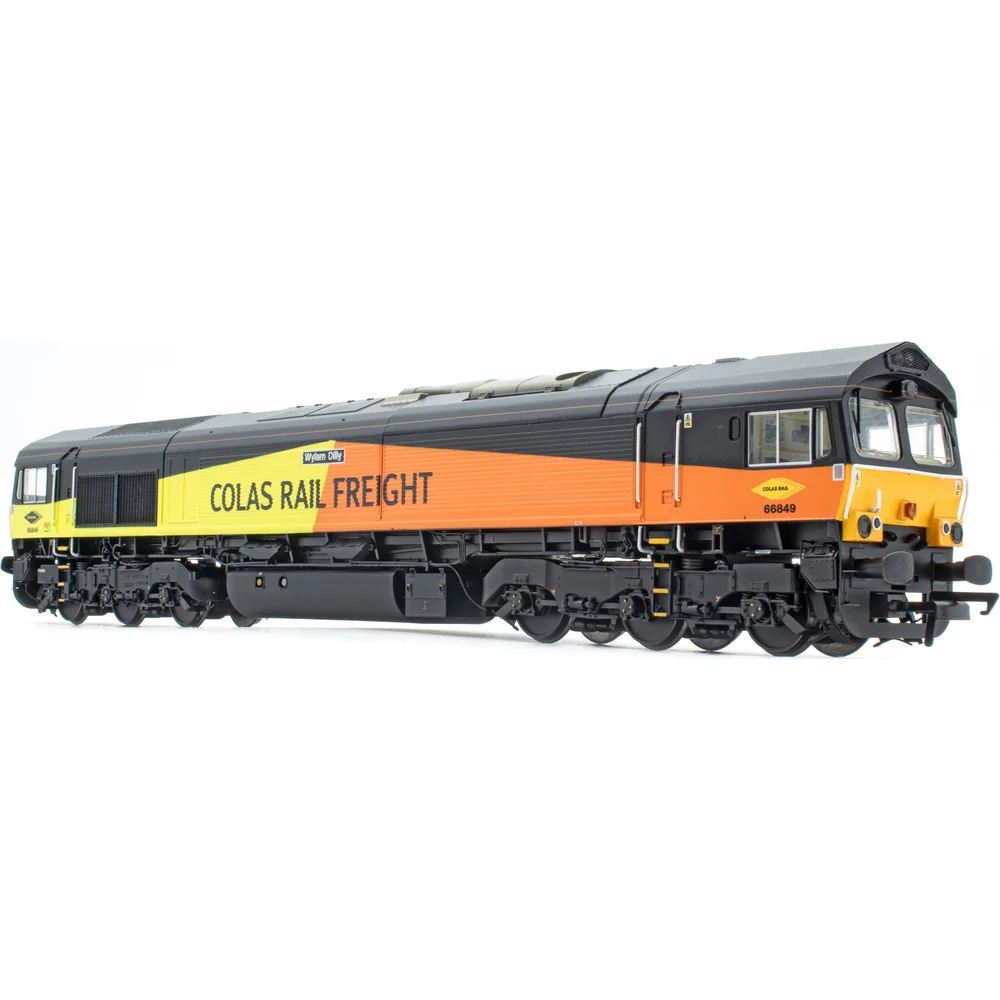
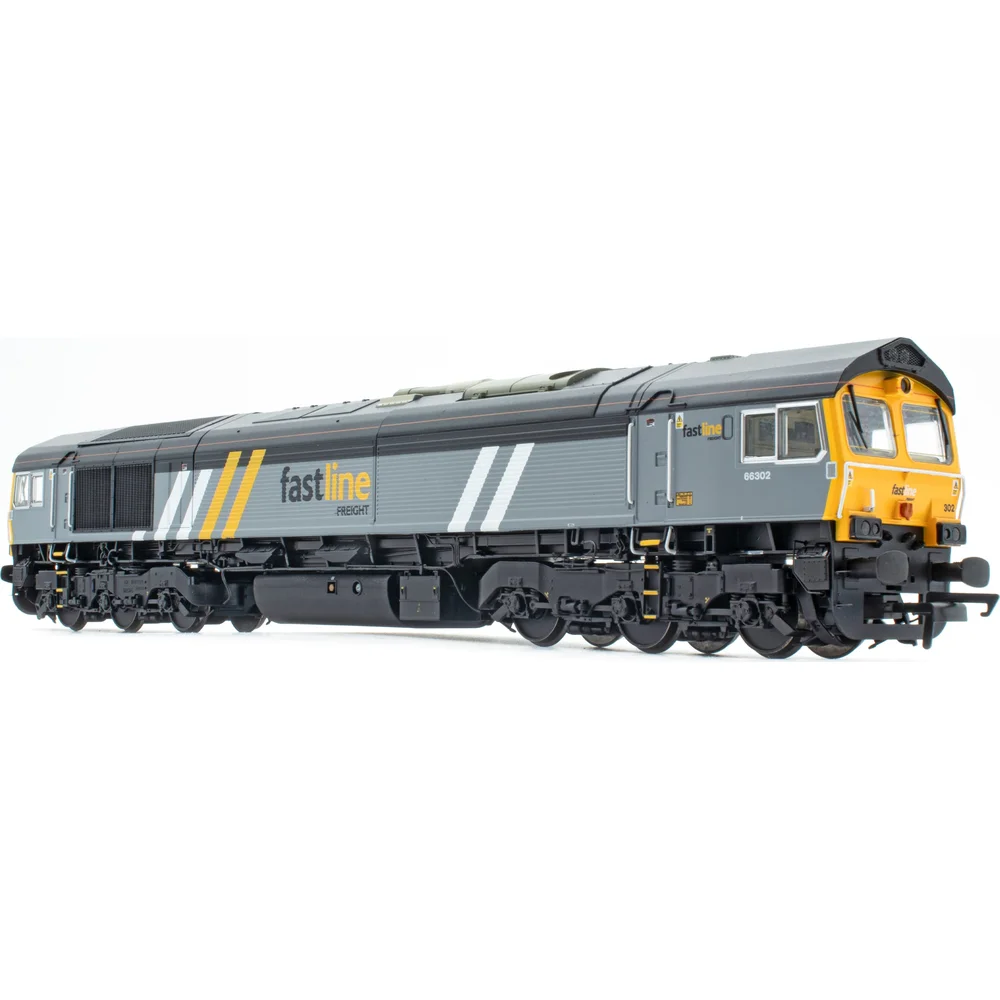
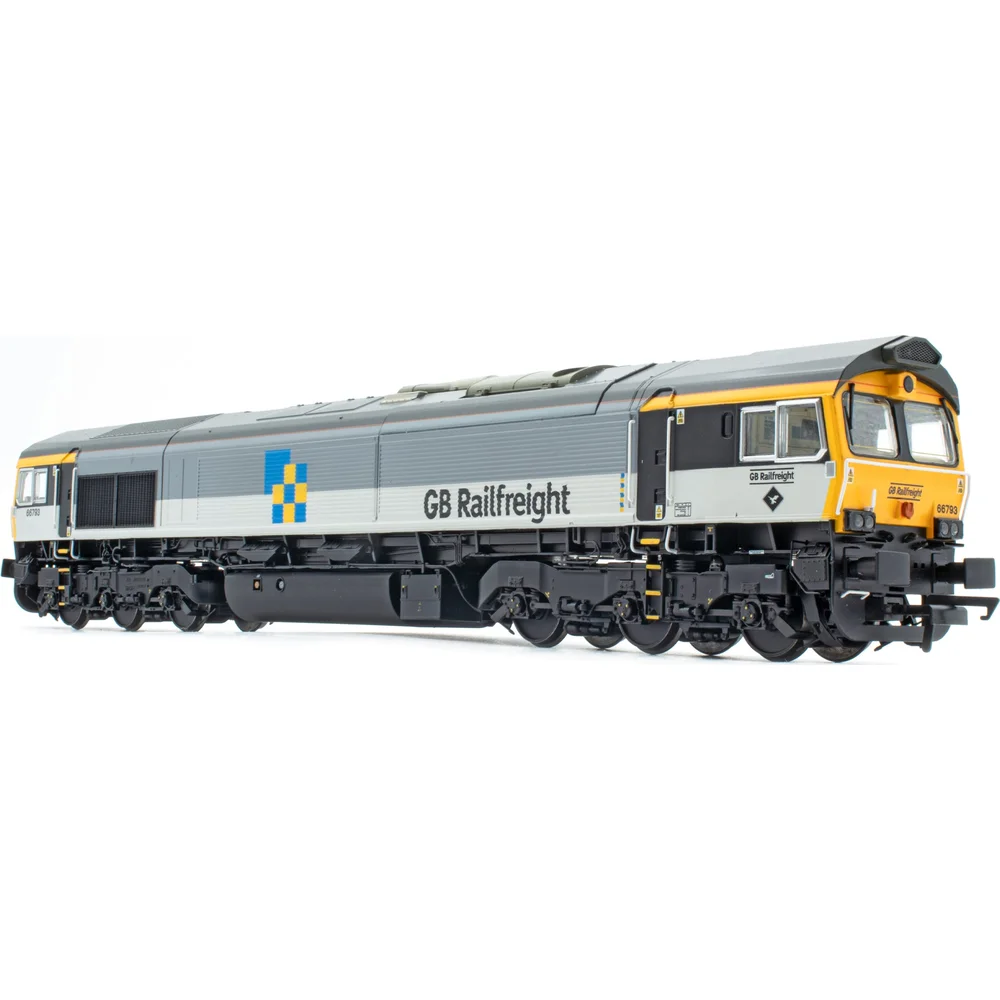
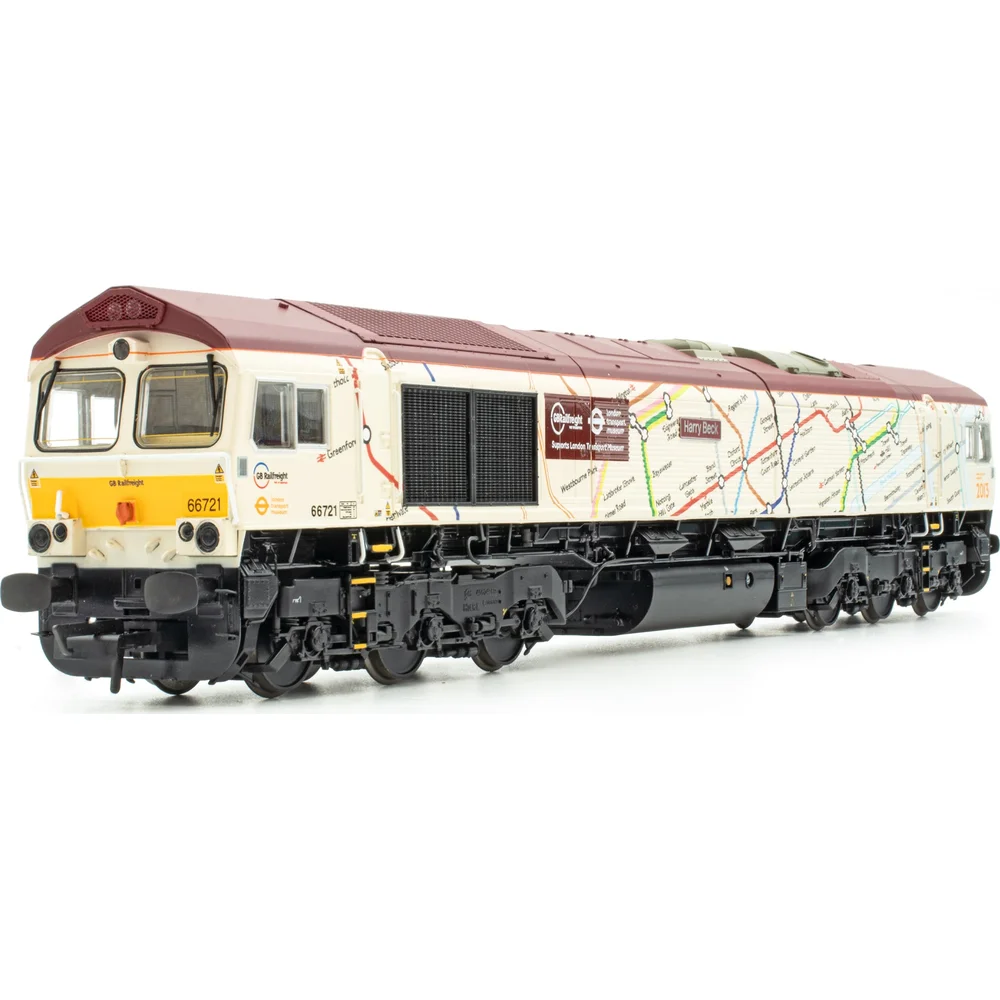
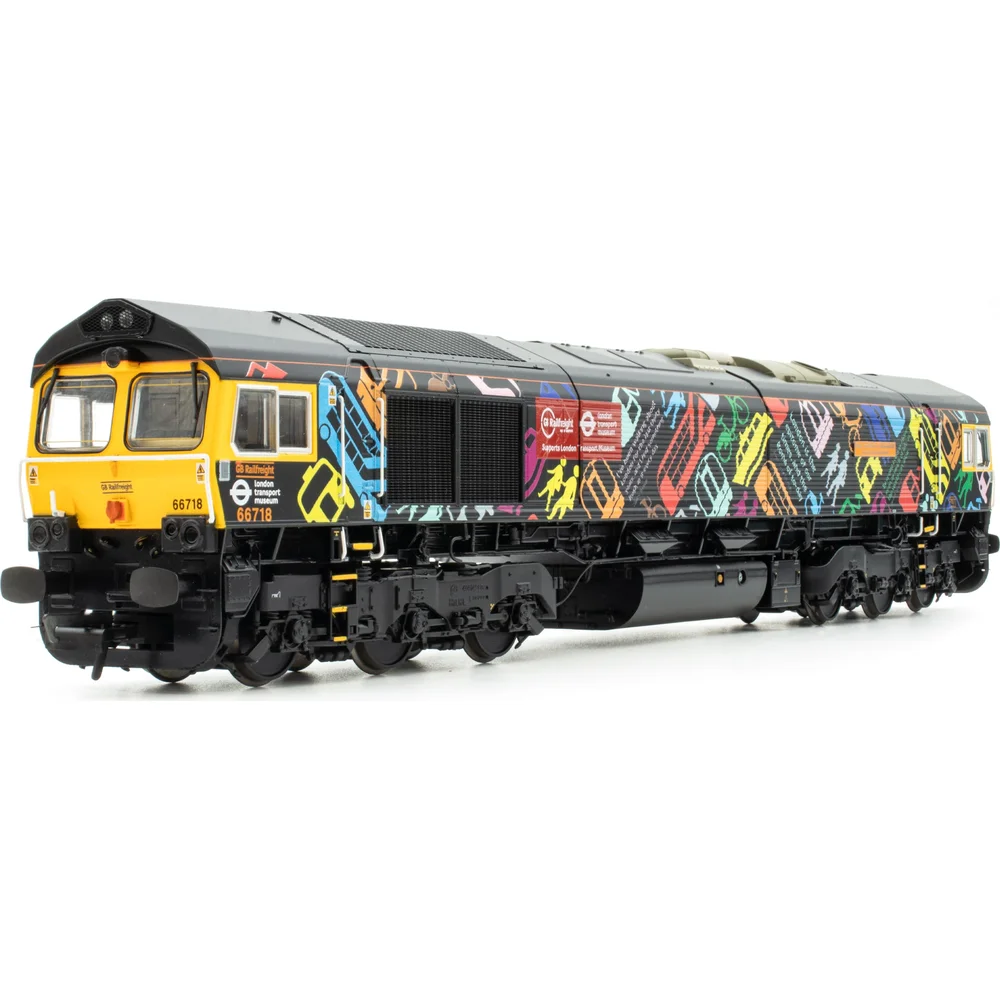
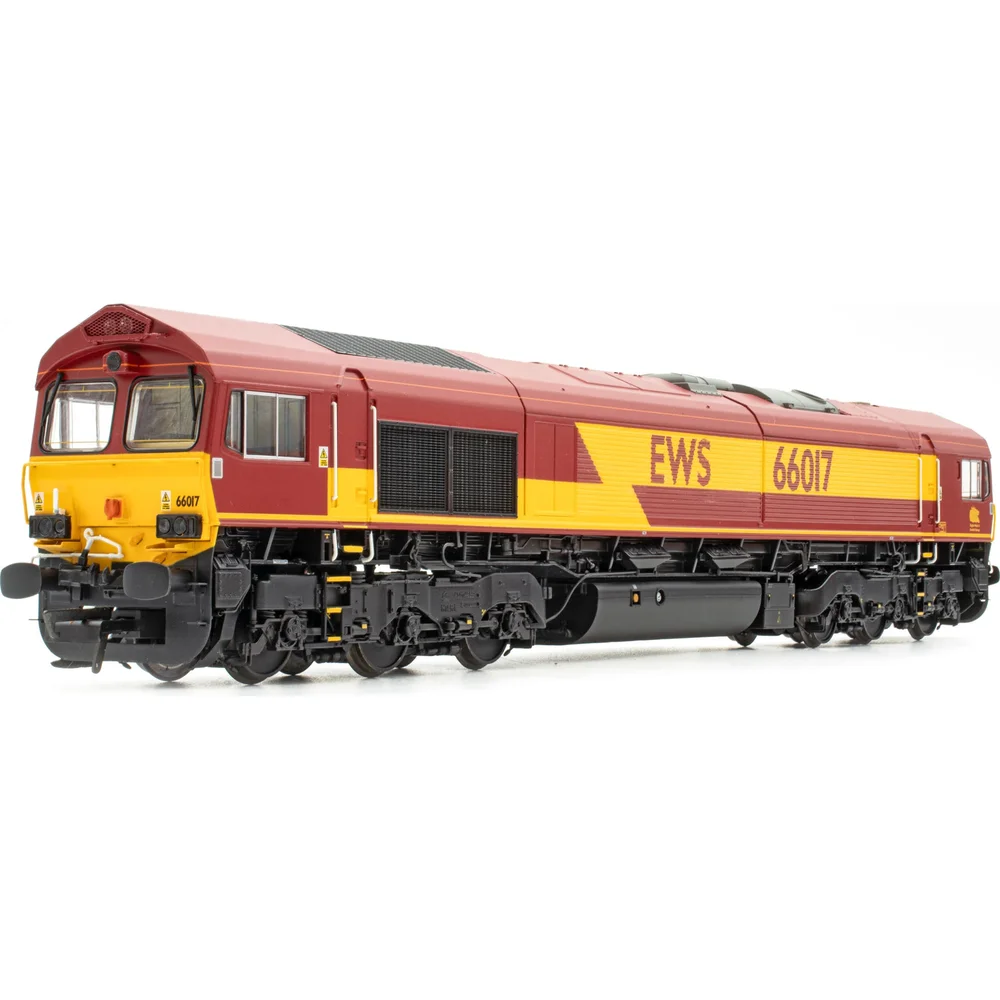
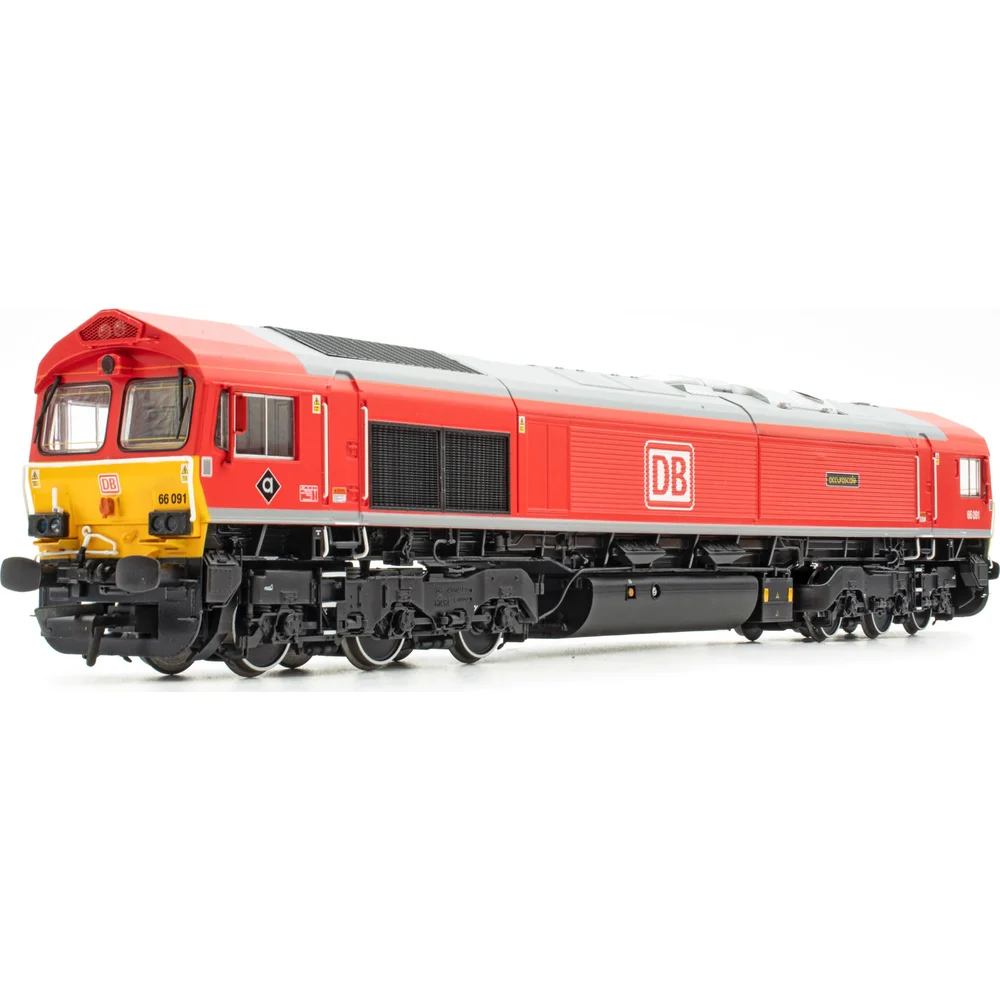
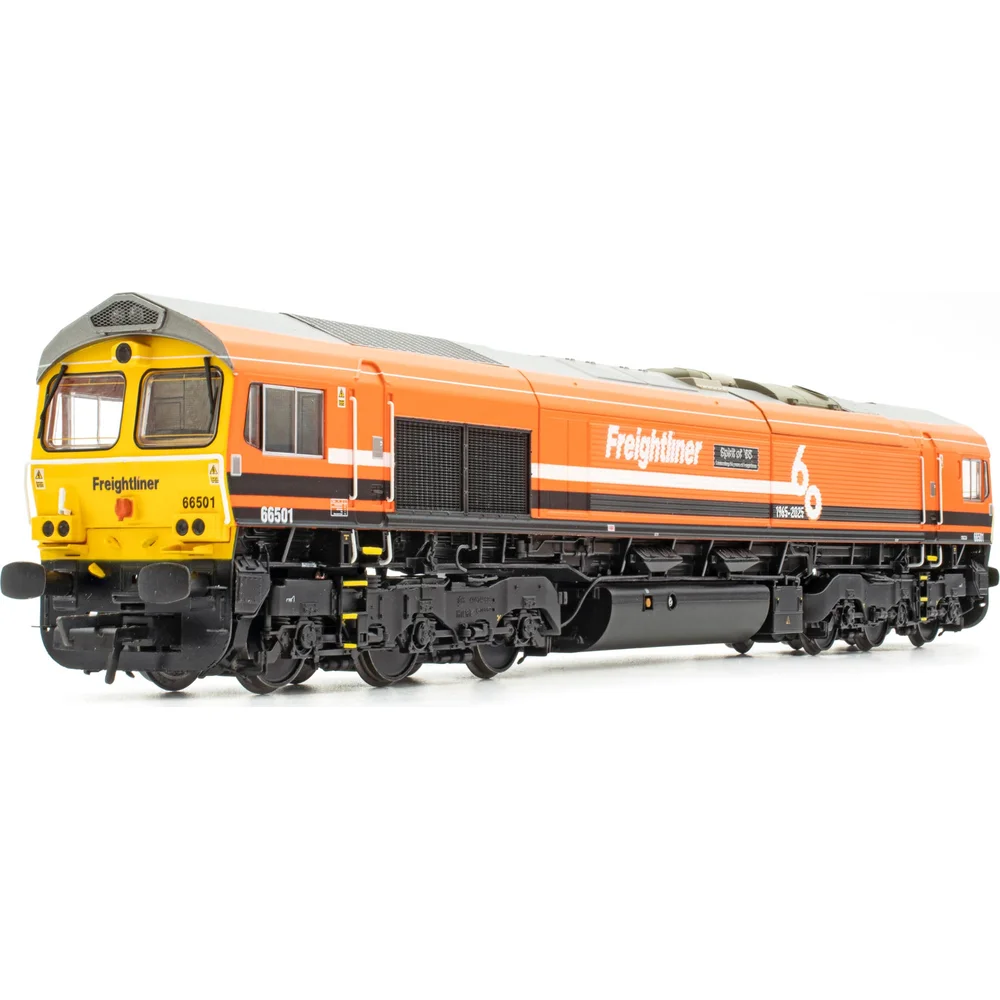
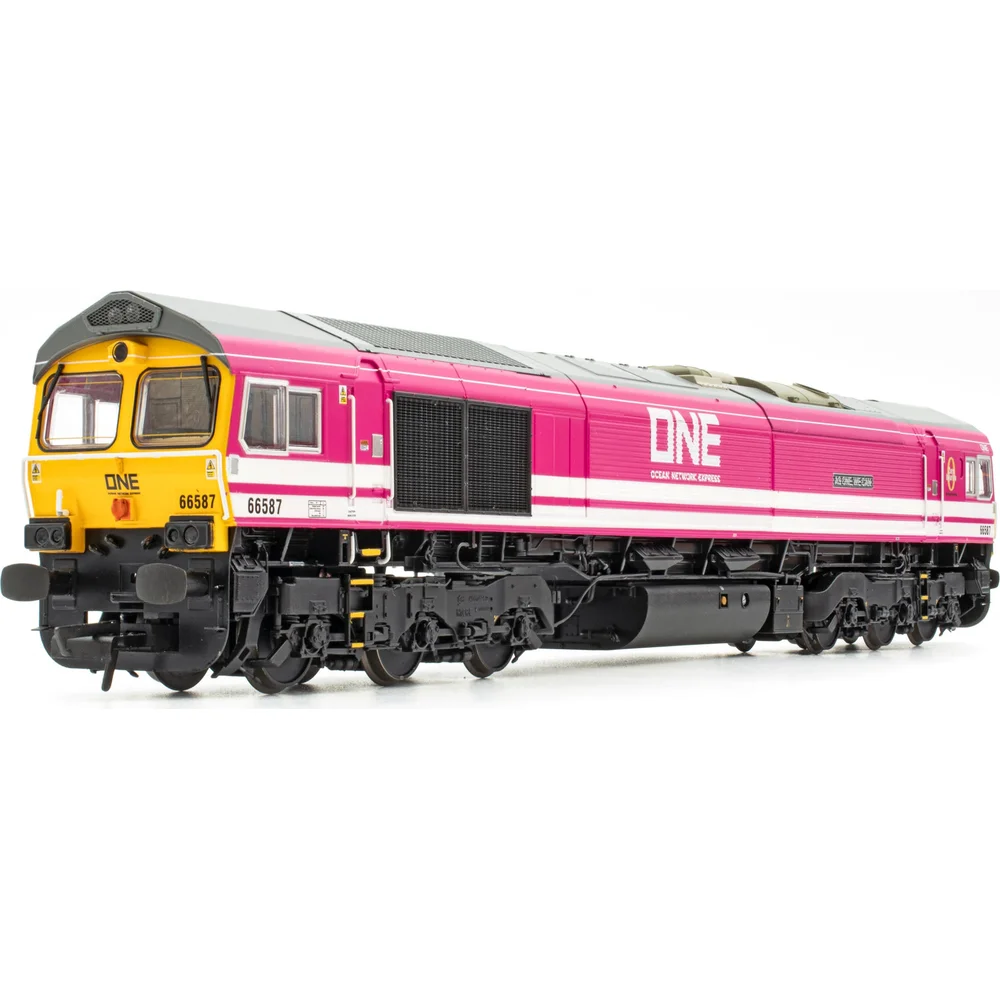
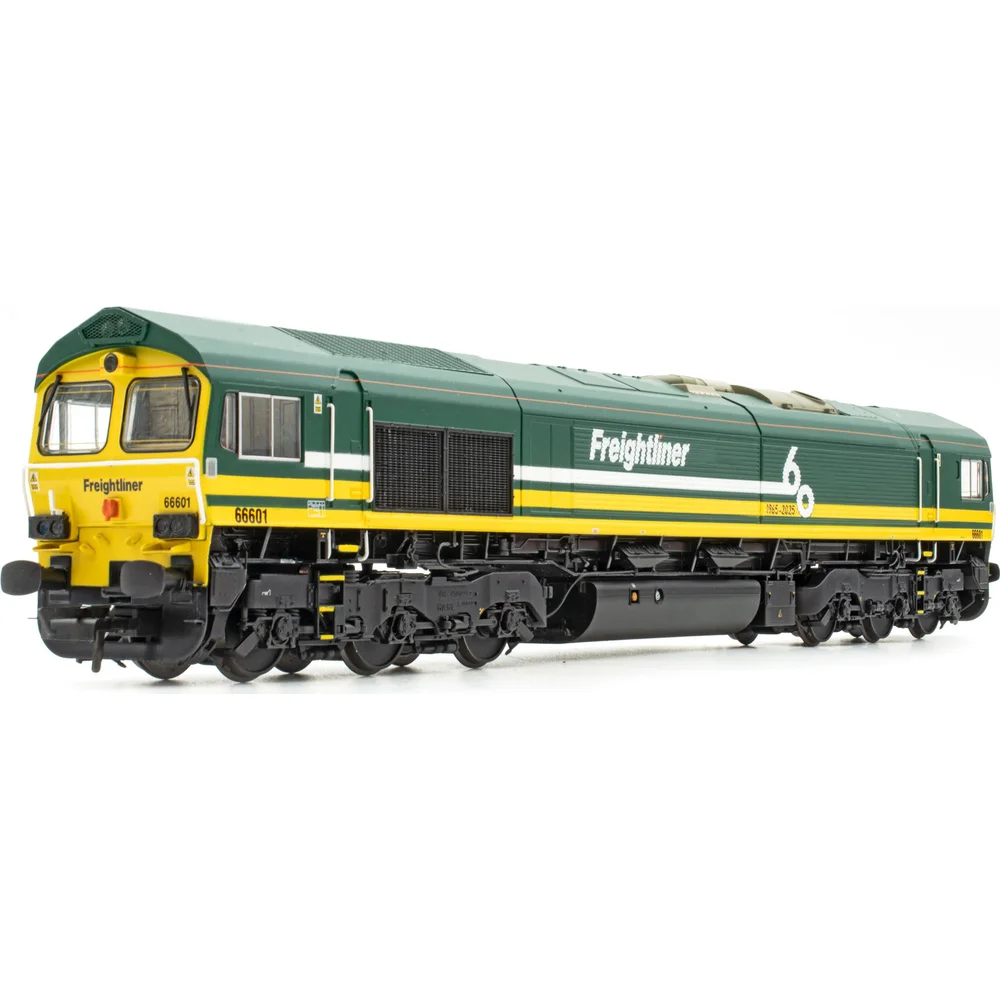
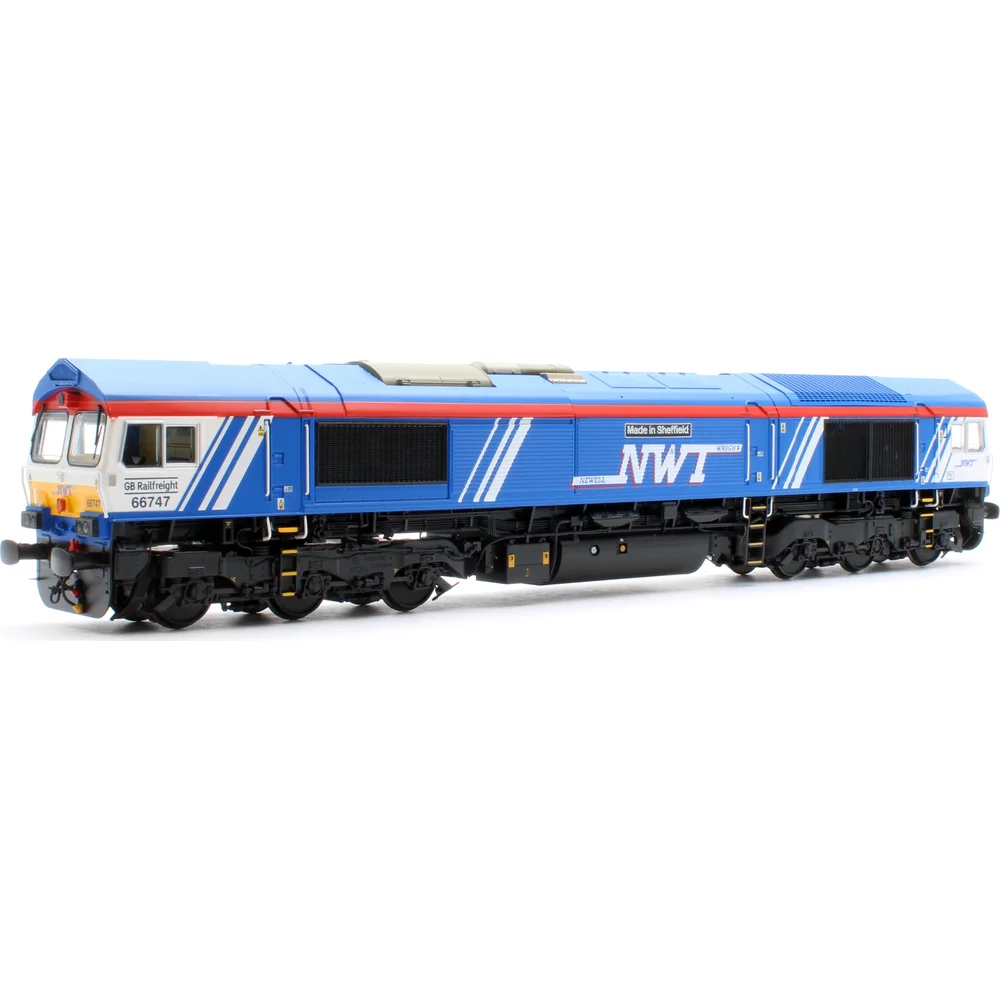
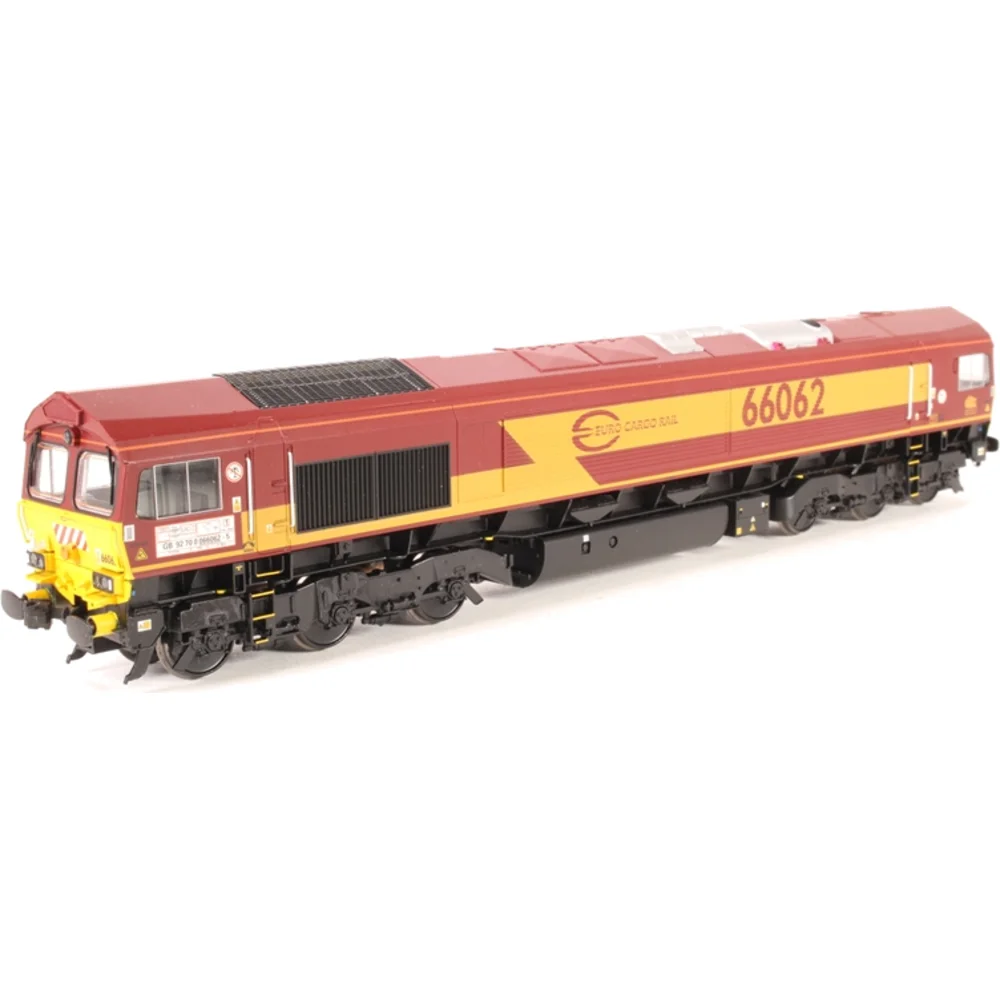
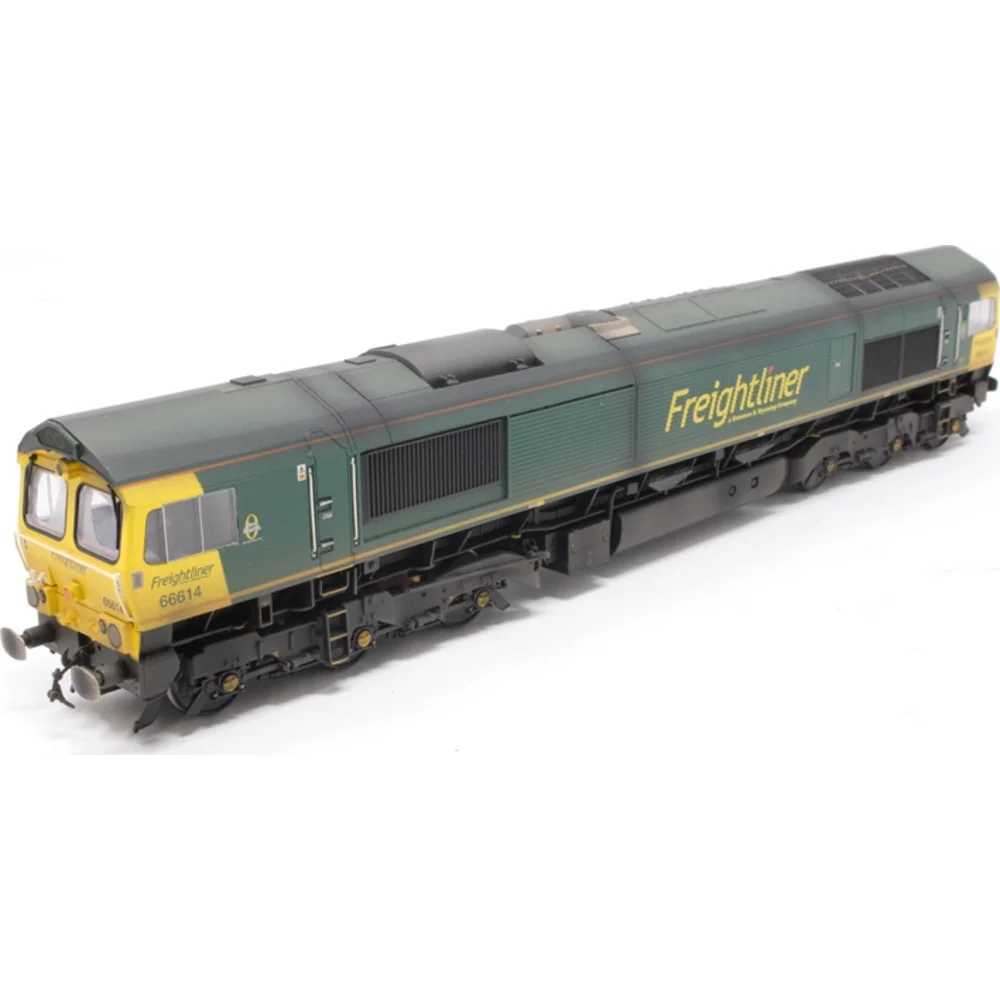
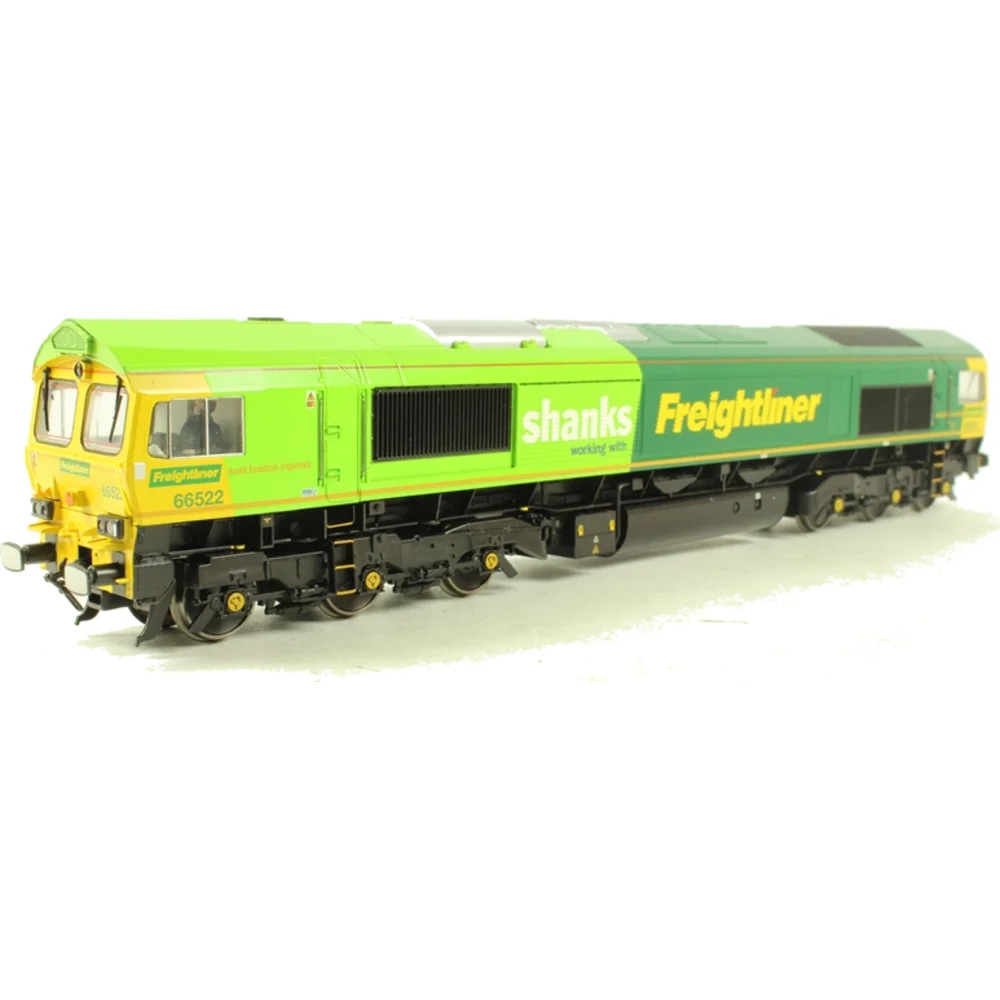
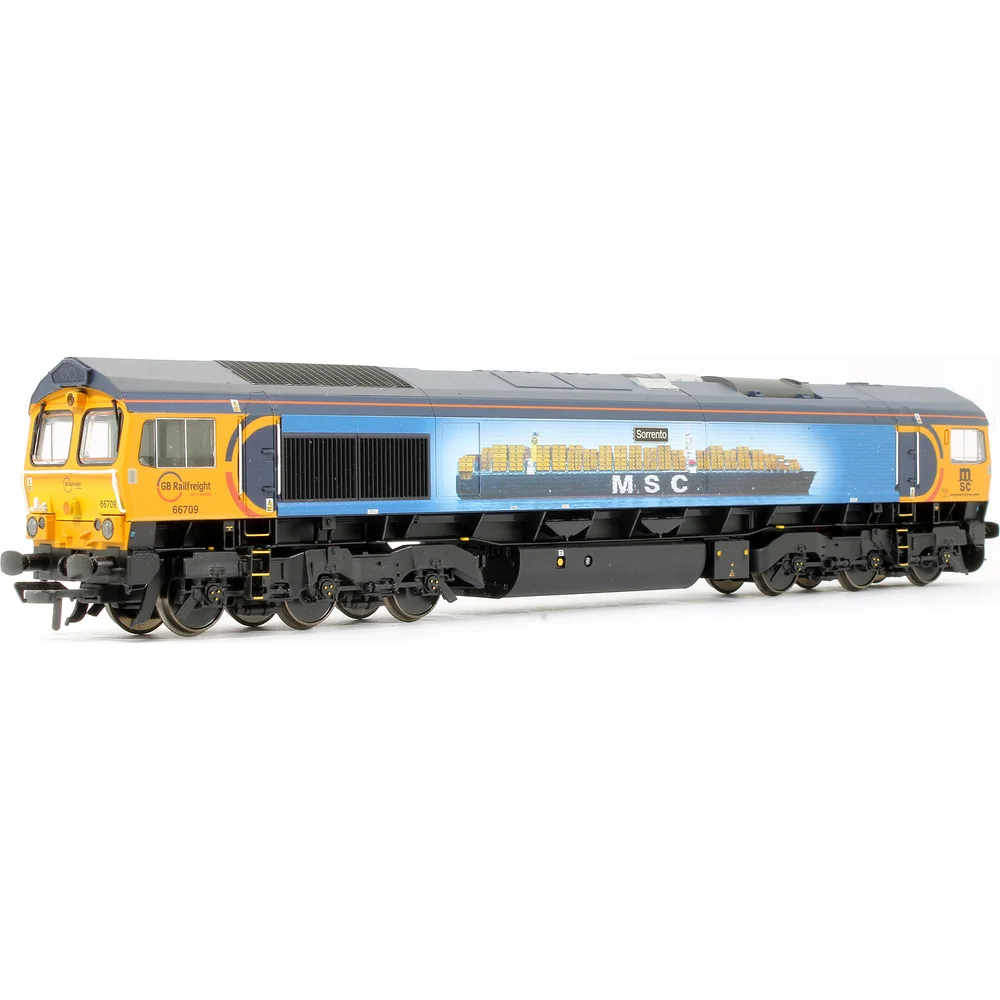
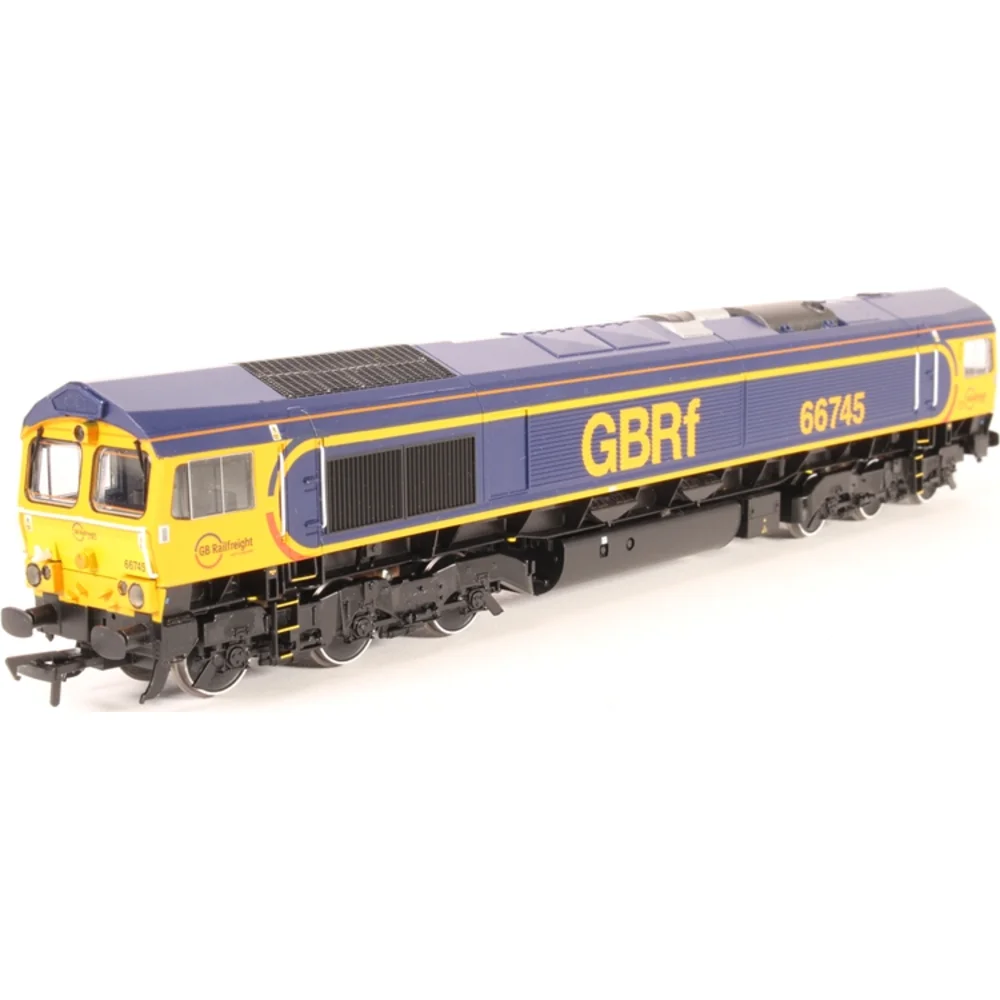
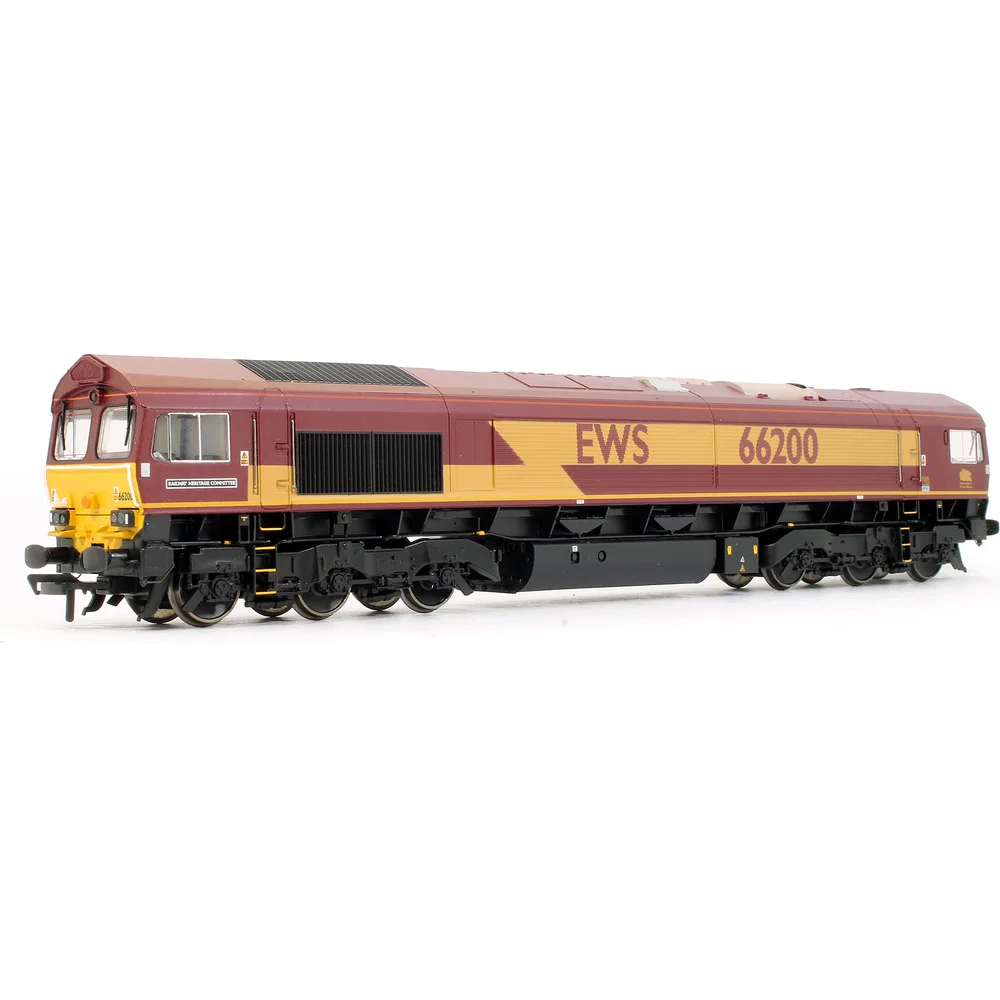
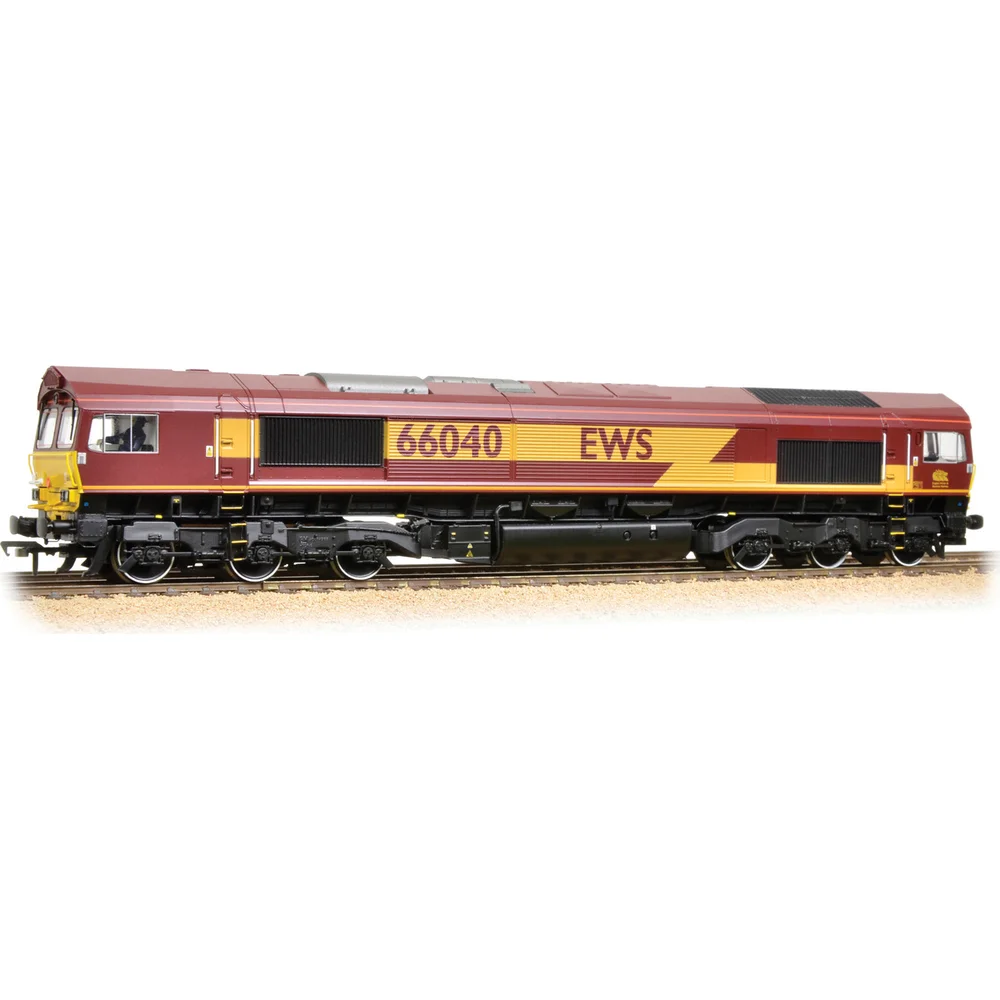
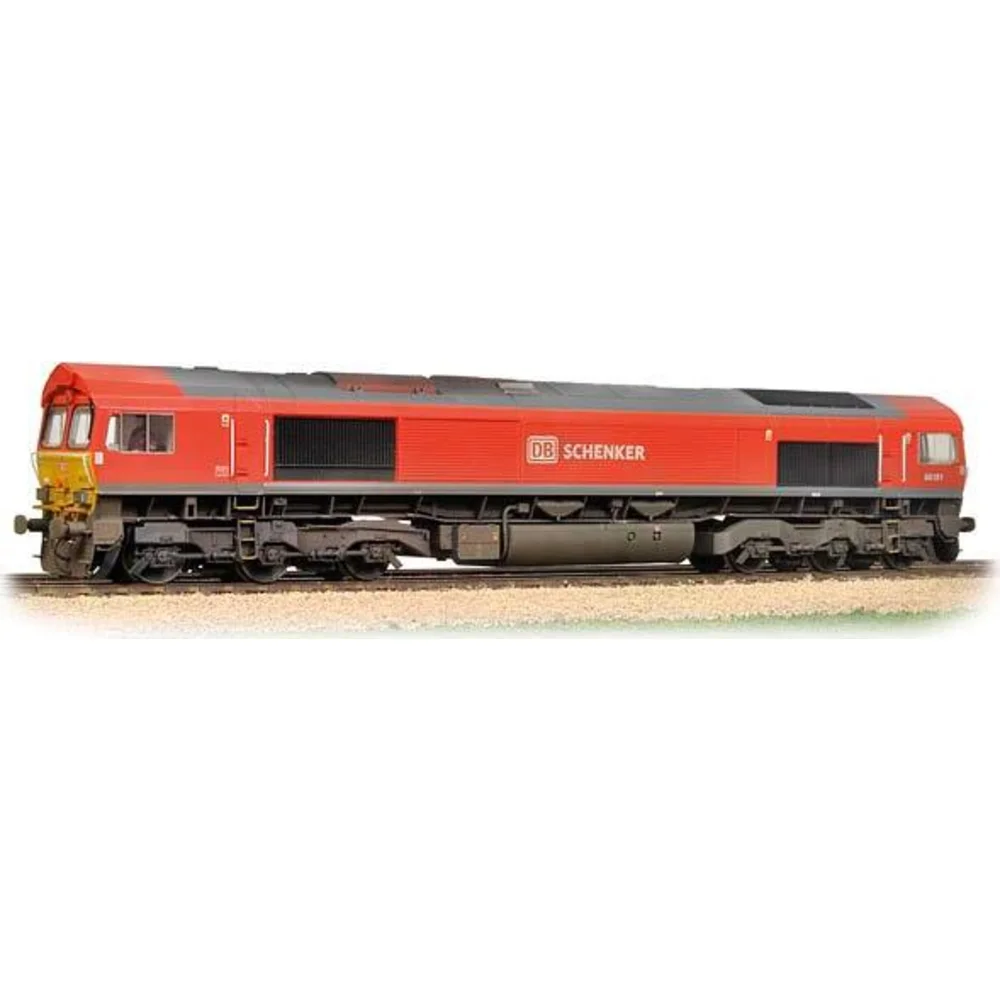
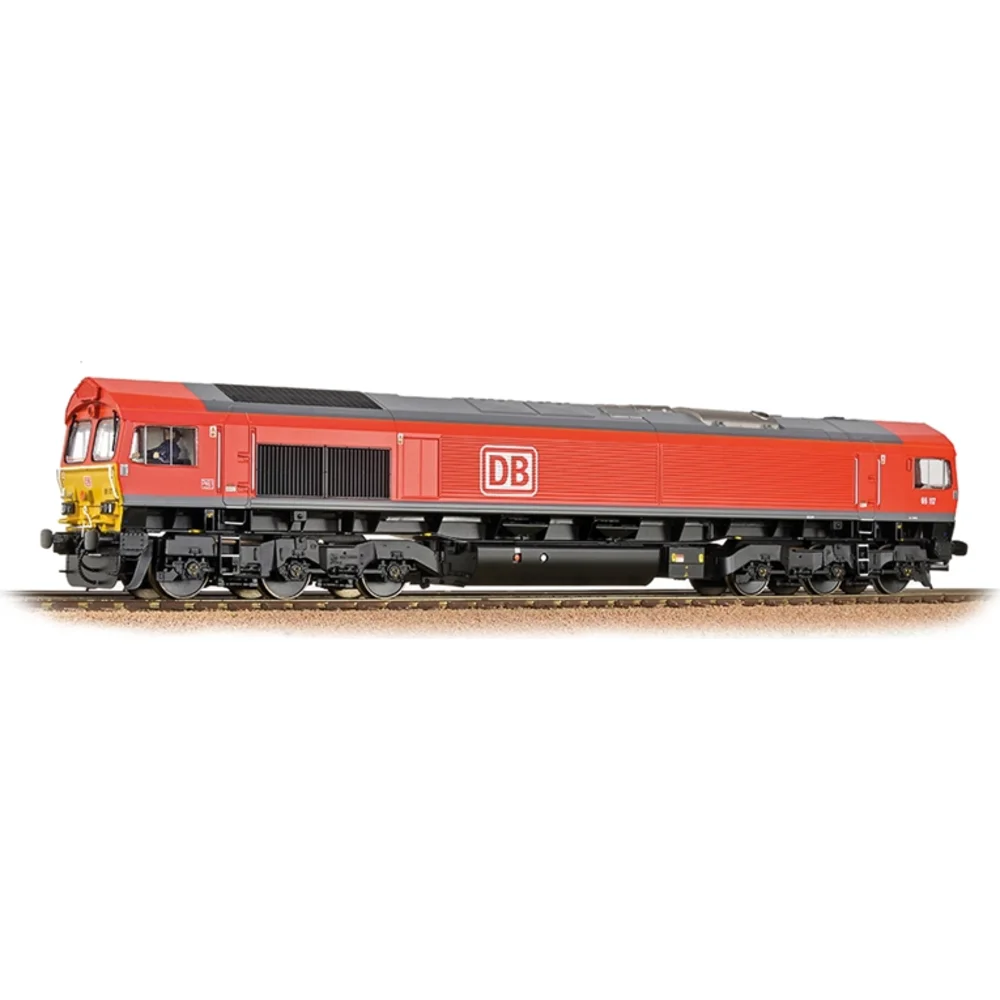
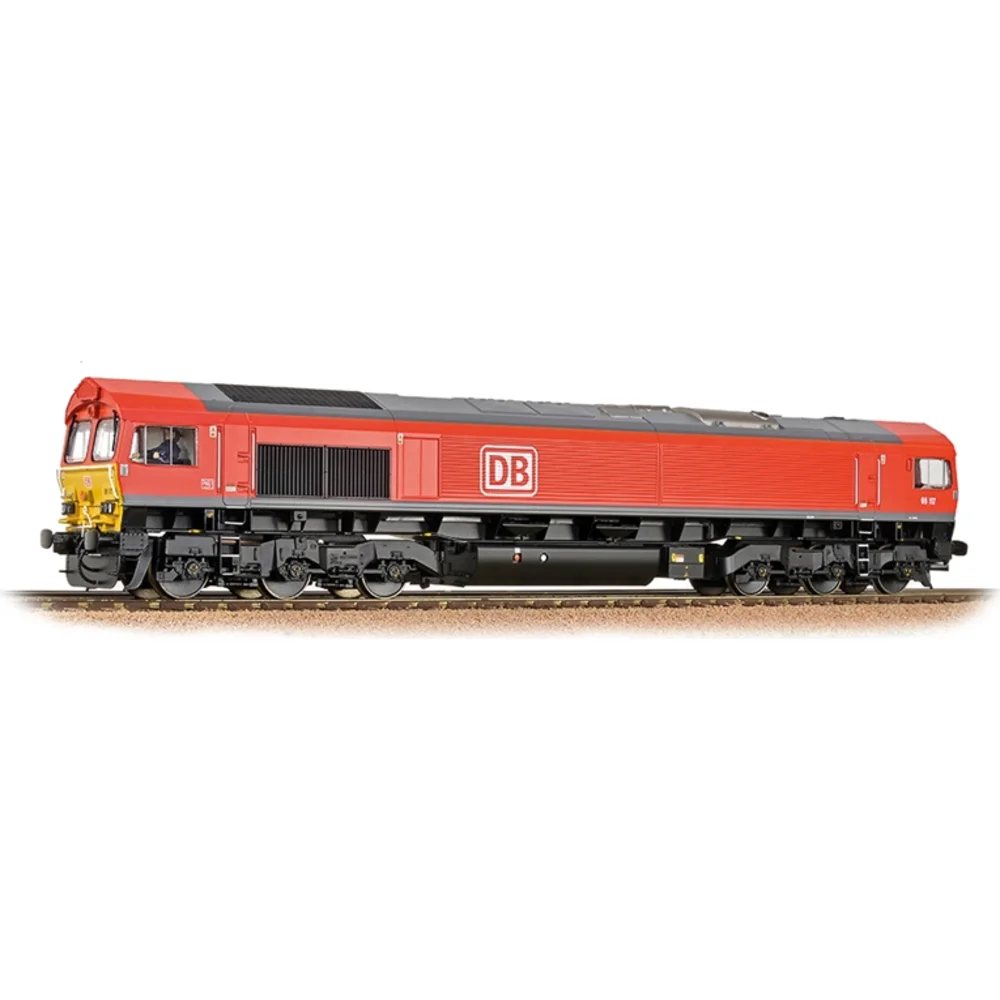
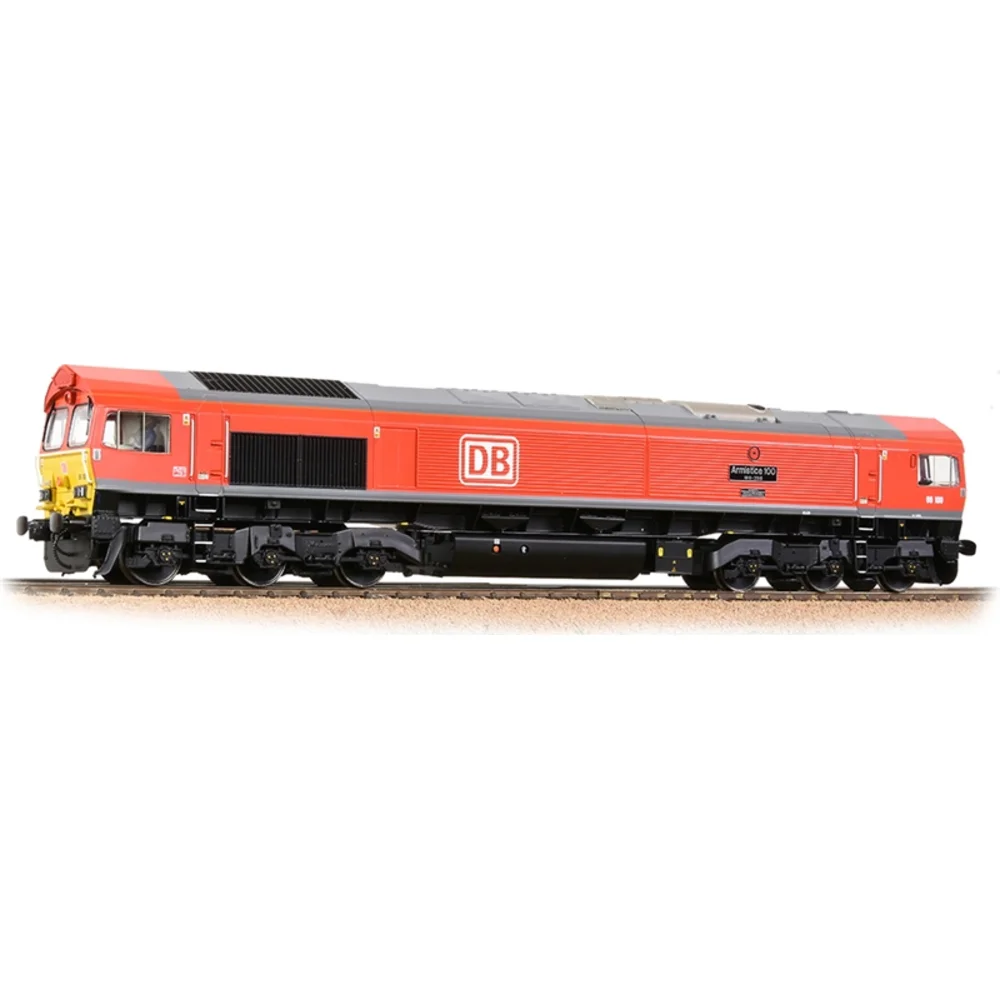
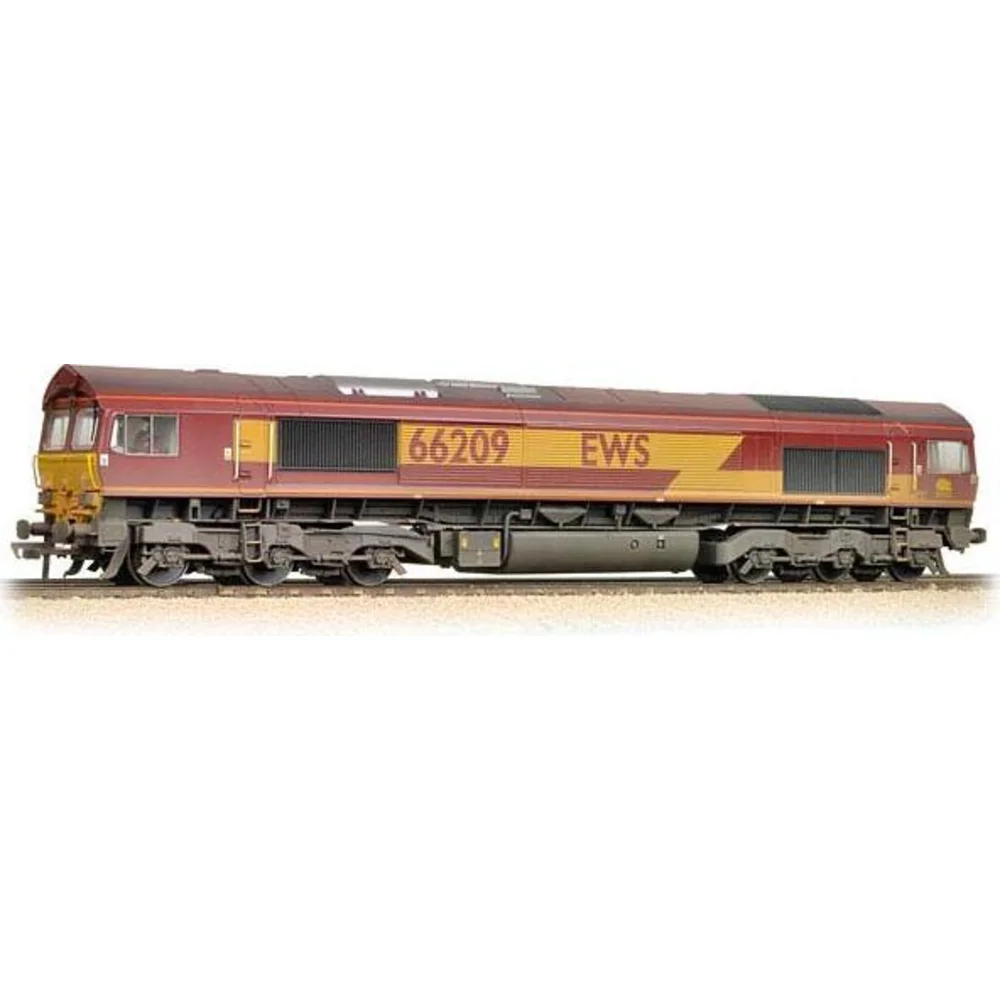
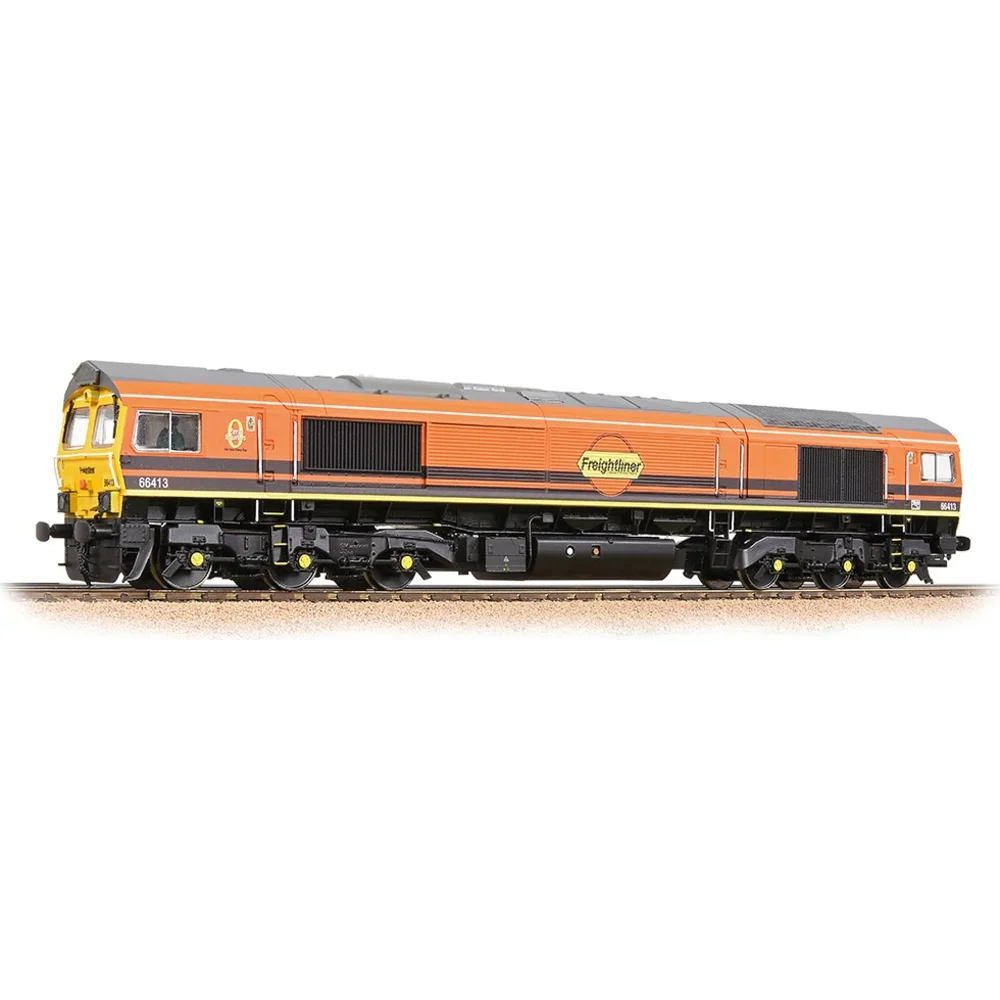
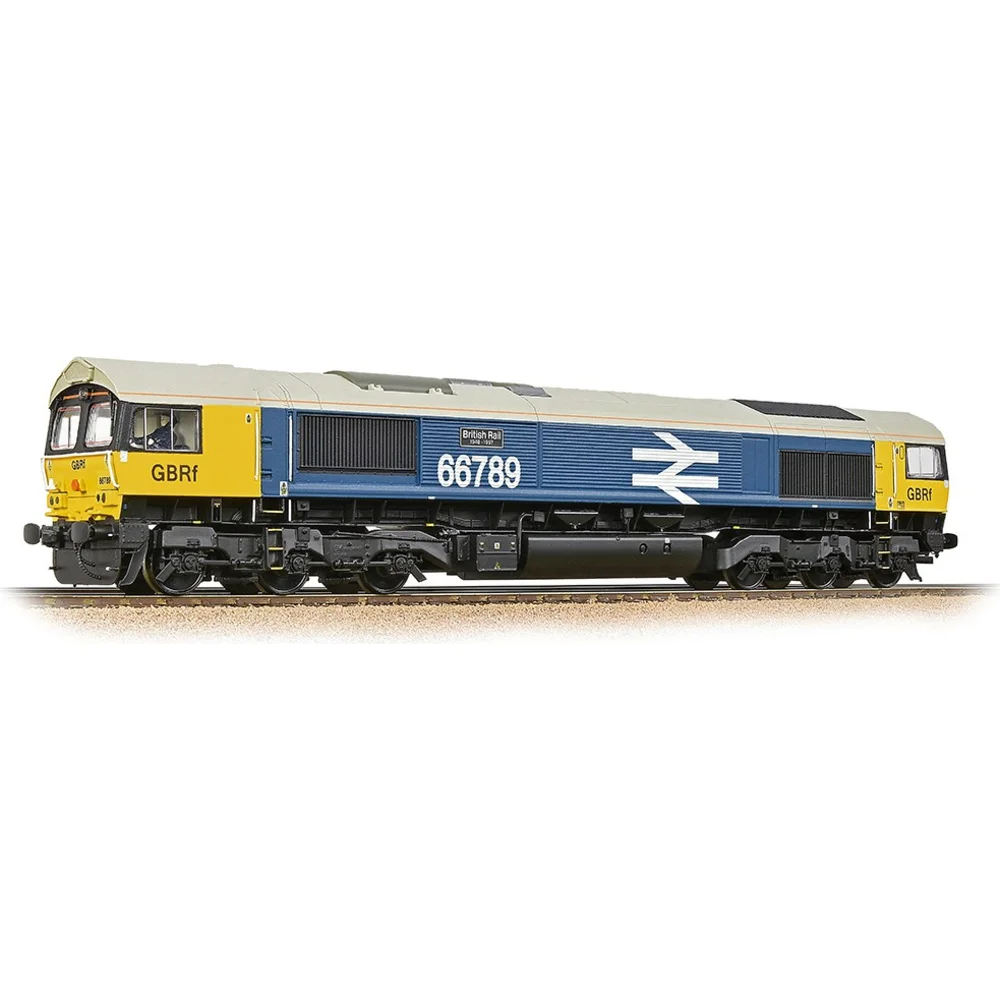
The British Rail Class 66 transformed UK freight operations from 1998, replacing aging British diesel types with American-built reliability that still dominates Britain's railways in 2025. For modellers, this ubiquitous locomotive offers unparalleled prototype variety and an exceptional range of ready-to-run models across all scales, with Bachmann's groundbreaking 2025 tooling representing the most advanced diesel locomotive model ever produced in OO gauge.
When English Welsh & Scottish Railway's 66001 arrived at Immingham in April 1998, few predicted the Class 66 would still dominate UK freight a quarter-century later. Yet with approximately 412 locomotives operational across five major operators in 2025, this General Motors design has proven the most successful freight locomotive in British railway history. The Class 66's longevity stems from exceptional reliability—95% availability versus barely 65% for the Class 47s it replaced—and crucially, exemption from modern emissions regulations that prevents new construction but protects the existing fleet. For railway modellers, the Class 66 is essential for representing any British layout from 1998 onwards, and manufacturers from Bachmann to Dapol now offer unprecedented choice and technological sophistication.
Quick Takeaways
- Over 400 locomotives operational: Approximately 412 Class 66s serve five major UK freight operators in 2025, representing the largest standardized diesel fleet in British history
- American EMD design heritage: Built by Electro-Motive Diesel as JT42CWR model, featuring proven 12-cylinder 710 engine producing 3,300 horsepower with exceptional 95% availability
- 27-year production span: First deliveries 1998 through final locomotive 66779 "Evening Star" in 2016, with EU emissions regulations preventing further new construction
- Revolutionary reliability standards: 180-day mean time between failures versus 16 days for Class 47s, with 1.6-million kilometer design life transforming freight economics
- Diverse traffic operations: Dominates intermodal container services, bulk aggregates, biomass, steel, infrastructure trains and nuclear flask movements across all major routes
- Exceptional model availability: Comprehensive ready-to-run ranges in OO gauge (Hornby, Accurascale, Bachmann new 2025 tooling), N gauge (Graham Farish, Dapol), O gauge (Dapol), and European HO scale
- Bachmann 2025 revolution: All-new OO gauge tooling with ESU LokSound V5, Bach-Up Stay Alive, comprehensive lighting, auto-release coupling, and 12 launch variants across major operators
Privatisation Crisis and the American Solution
British Rail's 1996 freight privatisation created the perfect storm for locomotive replacement. Wisconsin Central's acquisition of five freight companies consolidated 93% of UK rail freight under English Welsh & Scottish Railway (EWS), which inherited a dire fleet situation: 1,600 mainly diesel locomotives averaging over 30 years old, with 300 cannibalised for spares. Class 47s suffered less than 65% daily availability, just 16 days mean time between major failures, and required £400,000 overhauls every seven years. This reliability crisis threatened EWS's ability to compete against road haulage.
EWS studied Foster Yeoman's privately-owned Class 59 locomotives, American-built by Electro-Motive Diesel (EMD) since 1986, which demonstrated unprecedented reliability and lower operating costs. In May 1996, EWS placed Britain's largest locomotive order since steam days: 250 Class 66s for £375 million, financed by Locomotion Capital. This standardisation strategy would revolutionise British freight operations within five years.
EMD's JT42CWR design offered crucial advantages beyond reliability. The locomotive used the same bodyshell dimensions as Class 59, ensuring compatibility with Britain's restrictive loading gauge, whilst incorporating EMD's High Traction Radial Bogie (HTRB)—self-steering bogies that reduced track wear and improved adhesion on curves. The 12-cylinder EMD 710 engine provided sufficient power whilst enabling higher speeds than the 16-cylinder Class 59. Perhaps most revolutionary was the delivery method: locomotives arrived from Canada with fuel and water loaded, ready for immediate service. EWS engineers simply removed tarpaulins, connected batteries, and drove them directly from Immingham docks to depots—a revelation compared to British Rail's Class 60s, which required extensive commissioning.
Design and Technical Specifications Define Operational Excellence
The Class 66 designation (initially expected as Class 61) represents EMD's JT42CWR model, built primarily at London, Ontario, Canada, with later units from Muncie, Indiana. The first locomotive entered service in June 1998, with deliveries proceeding at 11 units monthly through Newport and Immingham until December 2001 when the original 250-unit order completed.
Core specifications established the type's capabilities. The EMD 12N-710G3B-EC engine—a 12-cylinder, two-stroke, turbocharged diesel with 139-litre total displacement—produces 3,300 horsepower at 904 rpm, delivering approximately 3,000 horsepower at rail. The Co-Co wheel arrangement distributes 125.9-127 tonnes across six powered axles, generating maximum starting tractive effort of 409 kilonewtons (92,000 pounds-force) and continuous tractive effort of 260 kilonewtons at 15.2 mph. Maximum permitted speed reaches 75 mph, though design speed extends to 87.5 mph with automatic cutout at 77 mph and emergency braking at 80 mph.
Physical dimensions proved critical for British operations: 21.34 metres length, 2.64 metres width, 3.91 metres height, navigating curves of minimum 80.46-metre radius. The fuel capacity of 8,180 litres dramatically exceeded the 3,470 litres of Class 47s, extending operational range between refuelling. The diesel-electric transmission uses a General Motors AR8 traction alternator feeding six D43TR axle-hung traction motors through 81:20 gear ratios, whilst the EM2000 electronic control system provides sophisticated load management.
Reliability specifications transformed British freight economics. EMD guaranteed 95% availability with 180 days minimum mean time between failures—revolutionary compared to British diesels. Design life extended to 1.6 million kilometres between major rebuilds (equivalent to 18 years' service), with each rebuild costing £200,000 versus £400,000 for Class 47 overhauls every seven years. This economic advantage, combined with exceptional mechanical reliability, enabled EWS to offer competitive pricing against road transport whilst rapidly displacing older British types. Between 1998-2000, the ratio sometimes reached five older locomotives withdrawn for every Class 66 delivered, earning the type the nickname "The Red Death" amongst enthusiasts.
Service History Spans Operator Transitions and Traffic Evolution
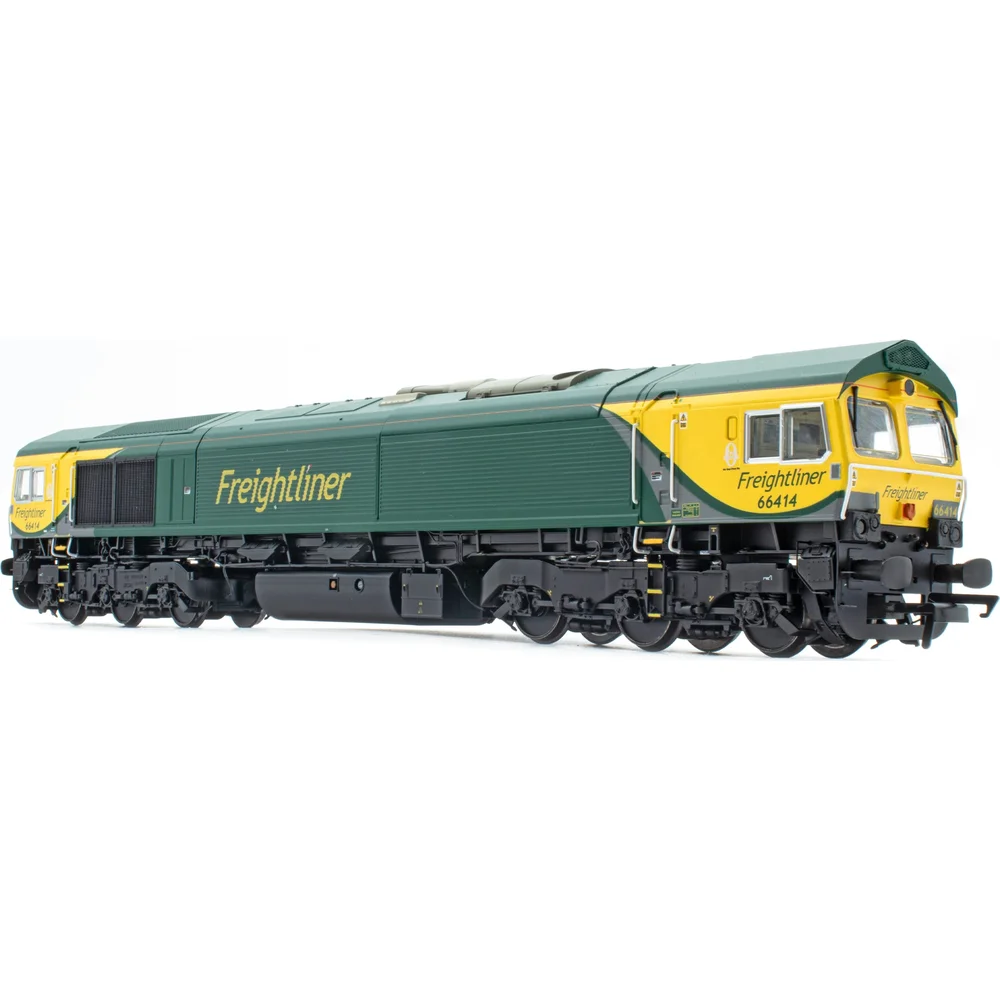
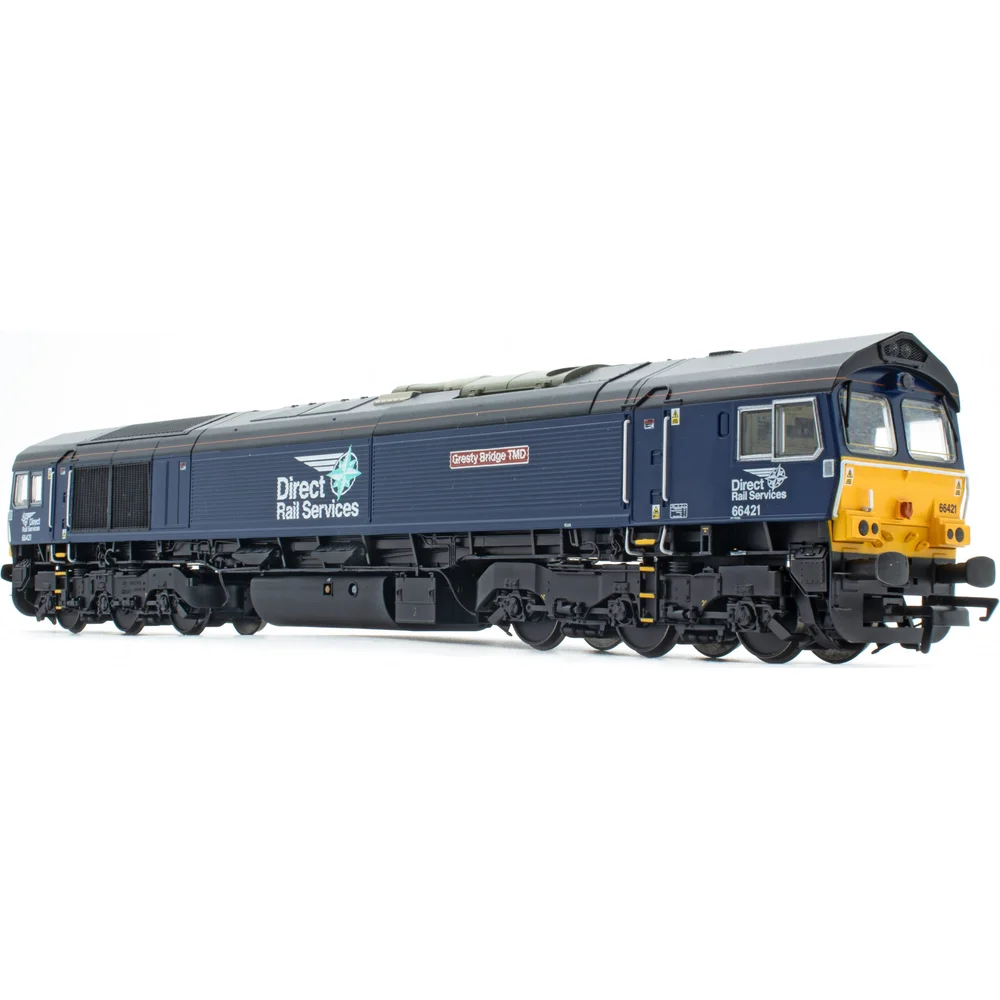
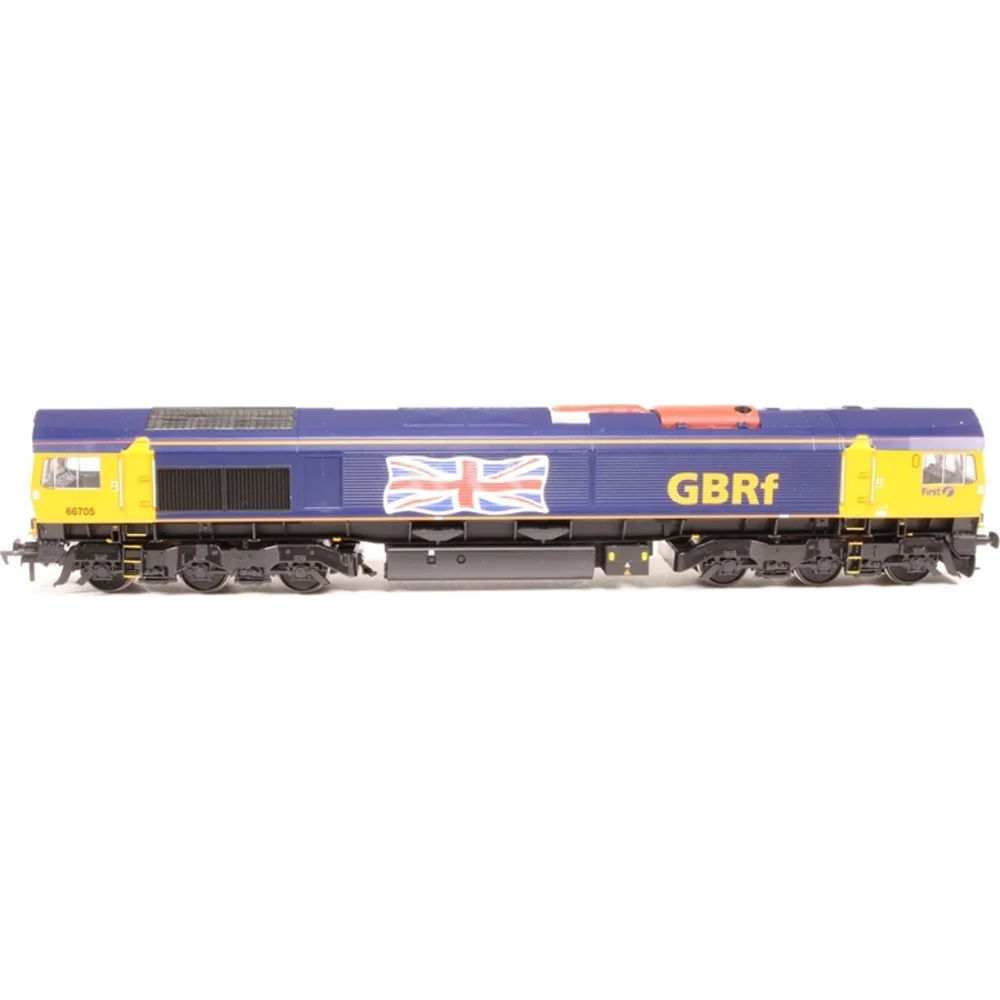
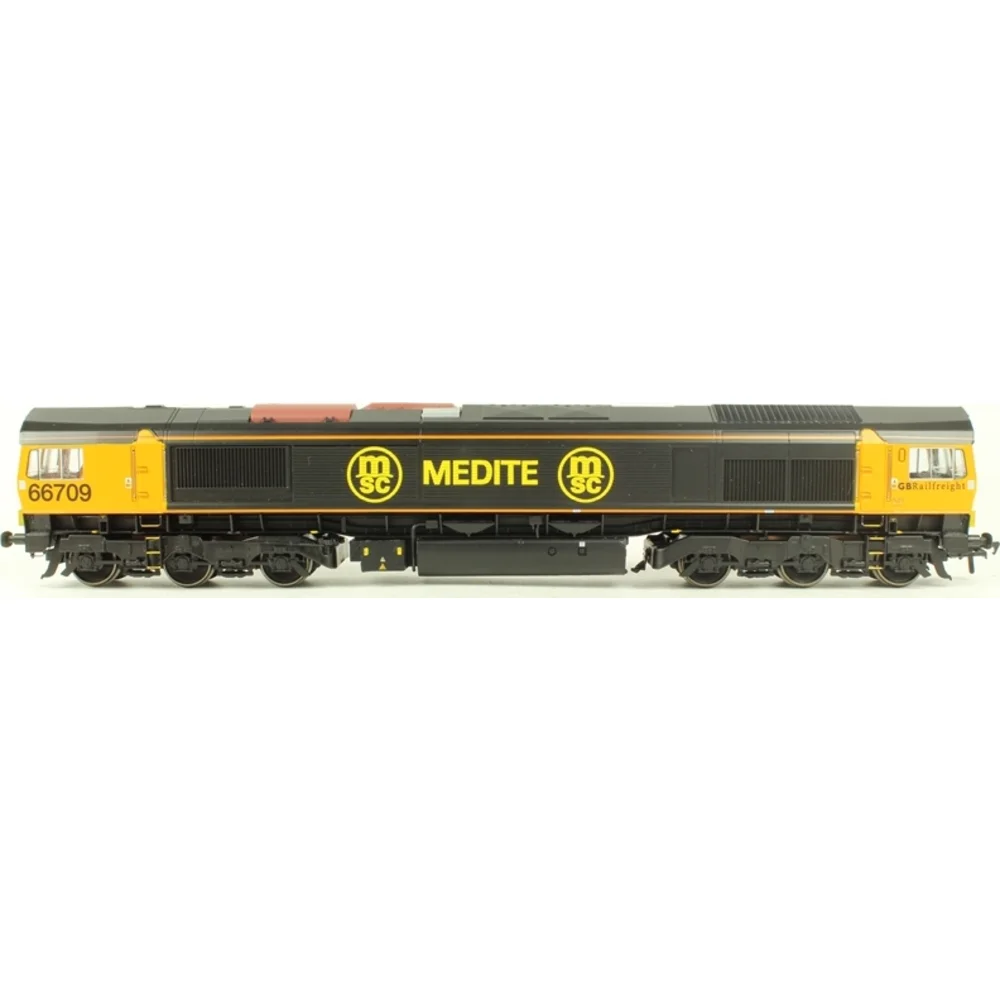
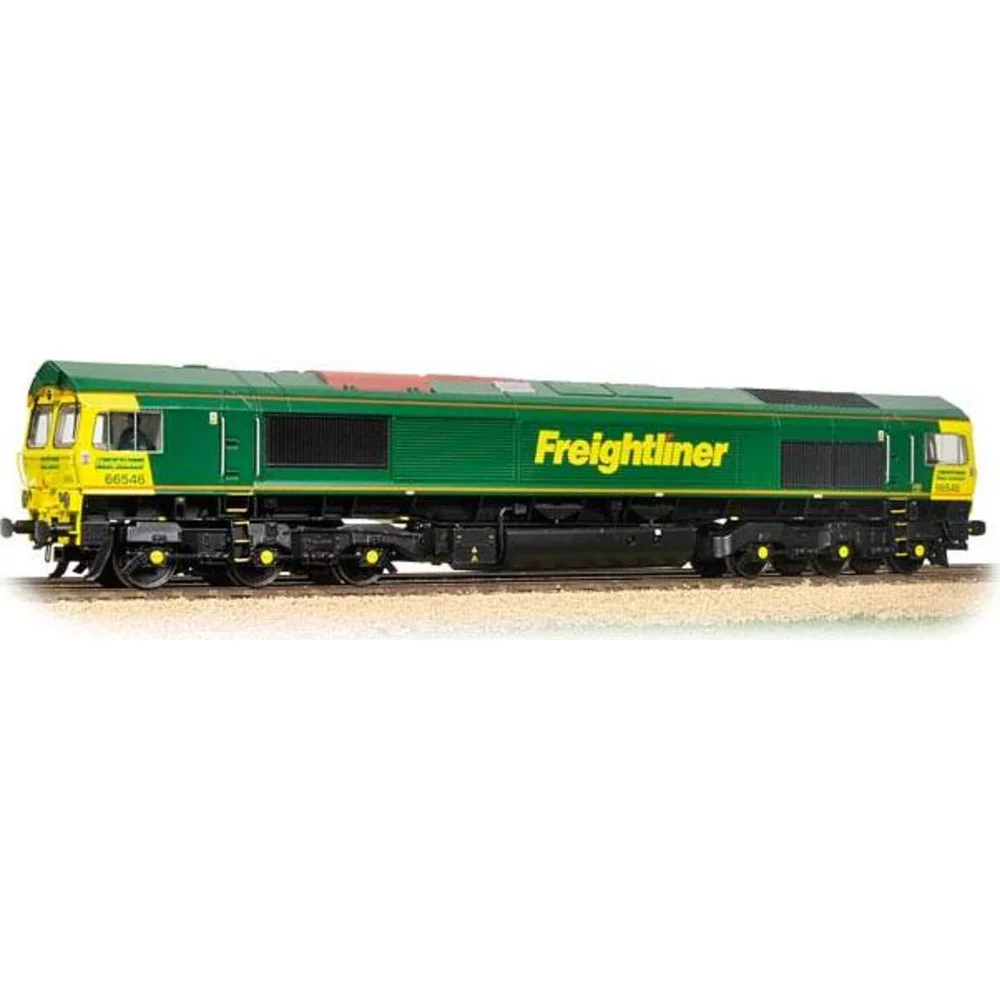
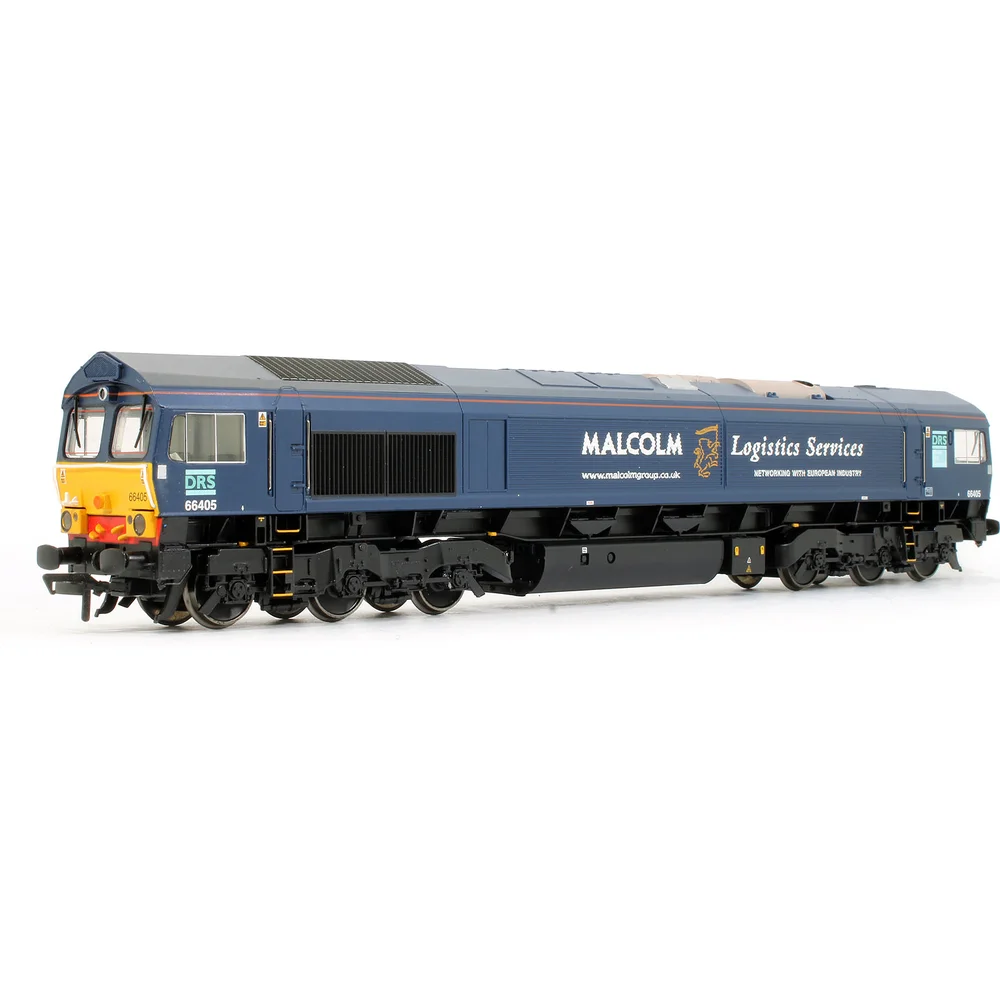
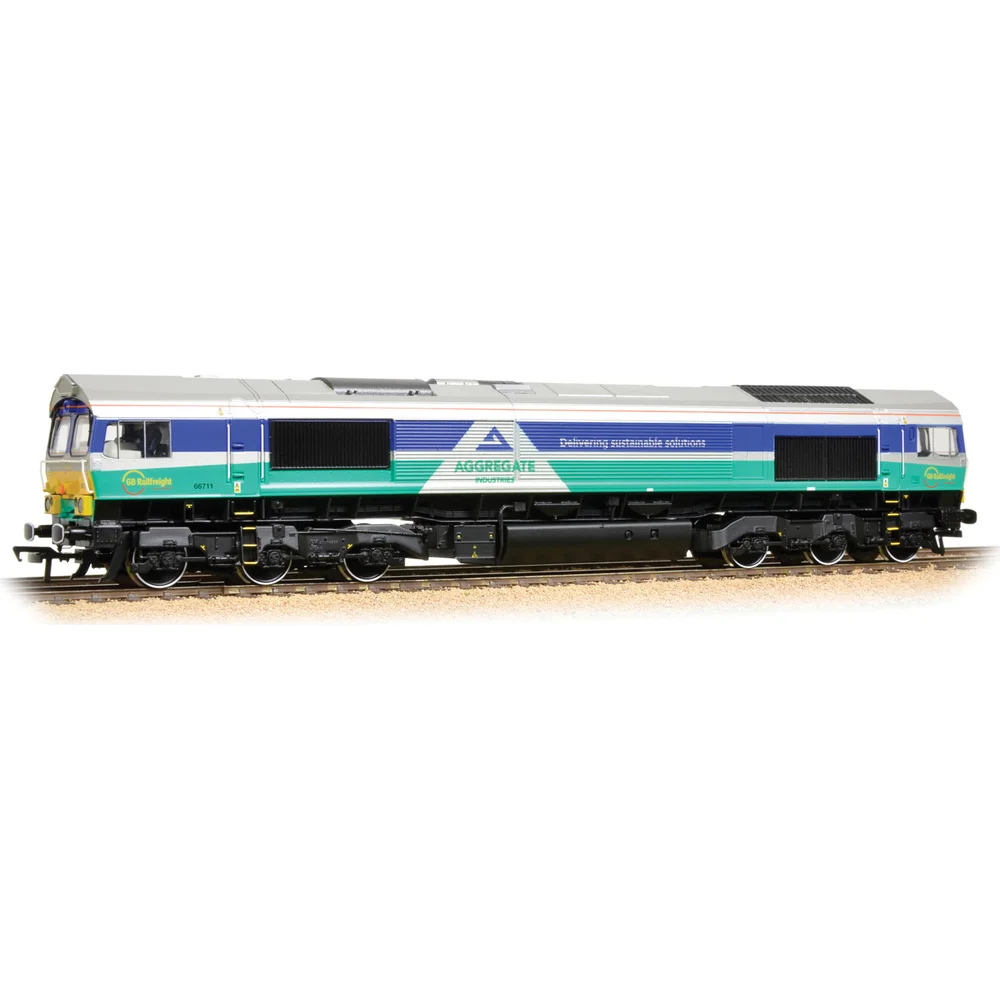
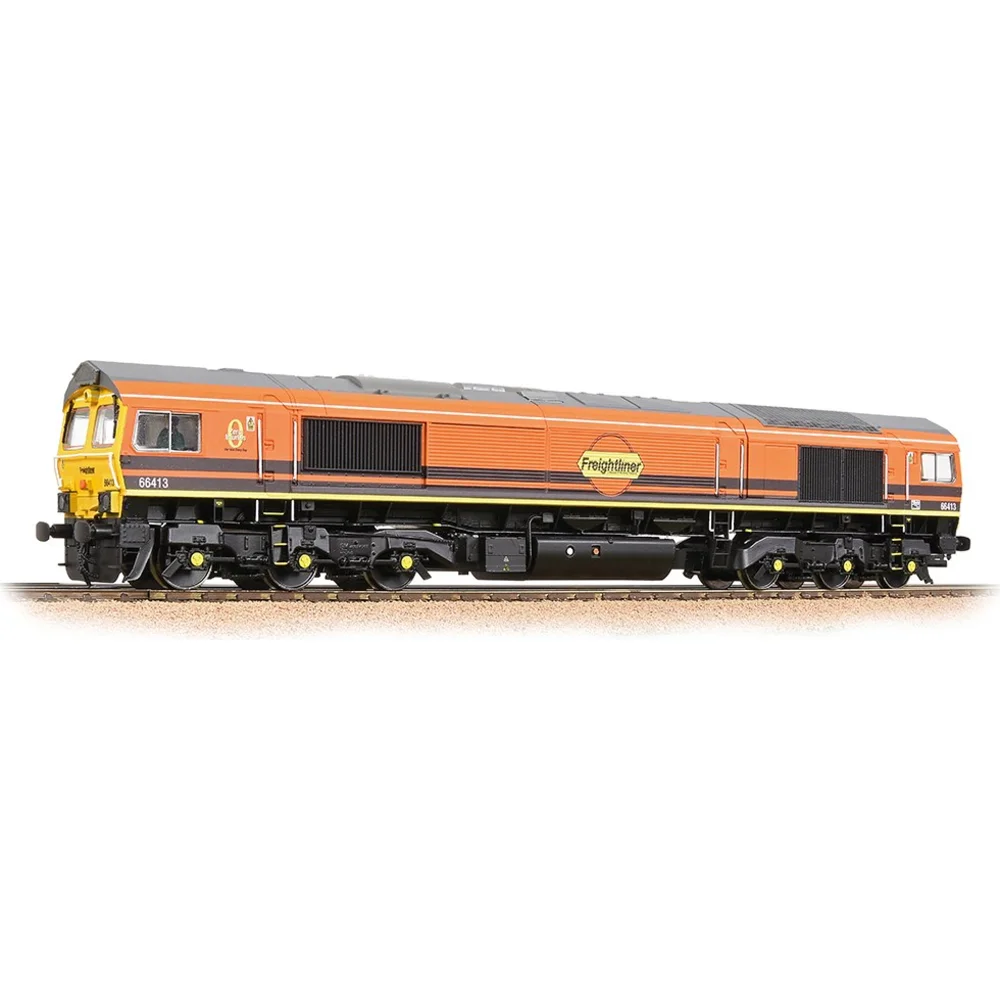
EWS's original 250 Class 66/0s (66001-250) established the type's dominance, but rival operators quickly recognised the design's advantages. Freightliner ordered the first Class 66/5 batch in 1998, eventually operating 108 locomotives including specialized Class 66/6 low-geared heavy haul variants and seven Class 66/9 low-emission models. GB Railfreight entered operations in 2000, building a fleet of 115 locomotives through new orders and European imports. Direct Rail Services acquired 34 units from 2002-2008, though transferring 20 to other operators whilst retaining 14-16 Class 66/4s for nuclear flask traffic and Anglo-Scottish freight. Colas Rail operates five Class 66/8s focused on aggregates, steel and timber.
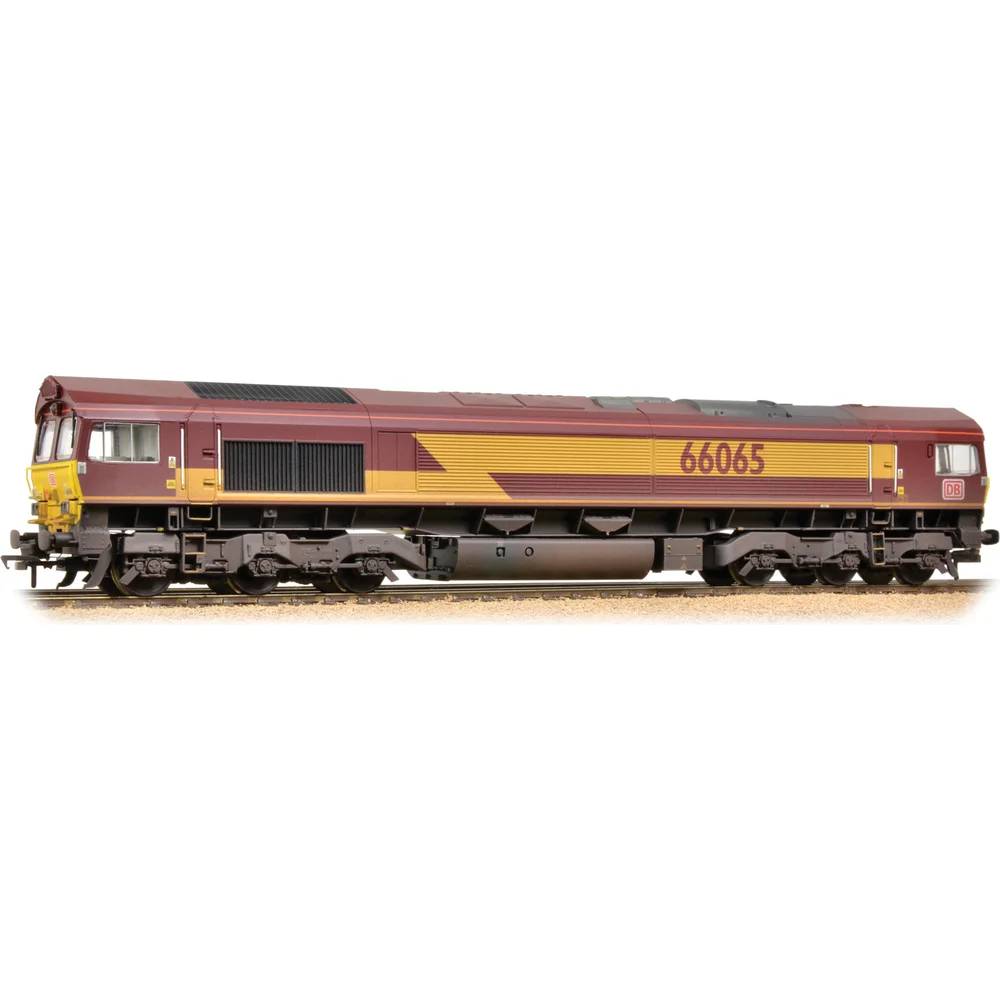
The EWS fleet transformed through successive rebrandings: DB Schenker Rail UK in 2009, then DB Cargo UK in 2016. DB Cargo now operates approximately 165 Class 66s, including specialized variants with Radio Electronic Token Block signalling for Scottish routes and locomotives modified for banking heavy trains over Lickey Incline. Crucially, DB Cargo's conversion programme transforms Class 66/0s into Class 66/6 specification with modified 83:18 gear ratios, increased tractive effort, and reduced 65 mph maximum speed to replace withdrawn Class 60s on heavy bulk traffic.
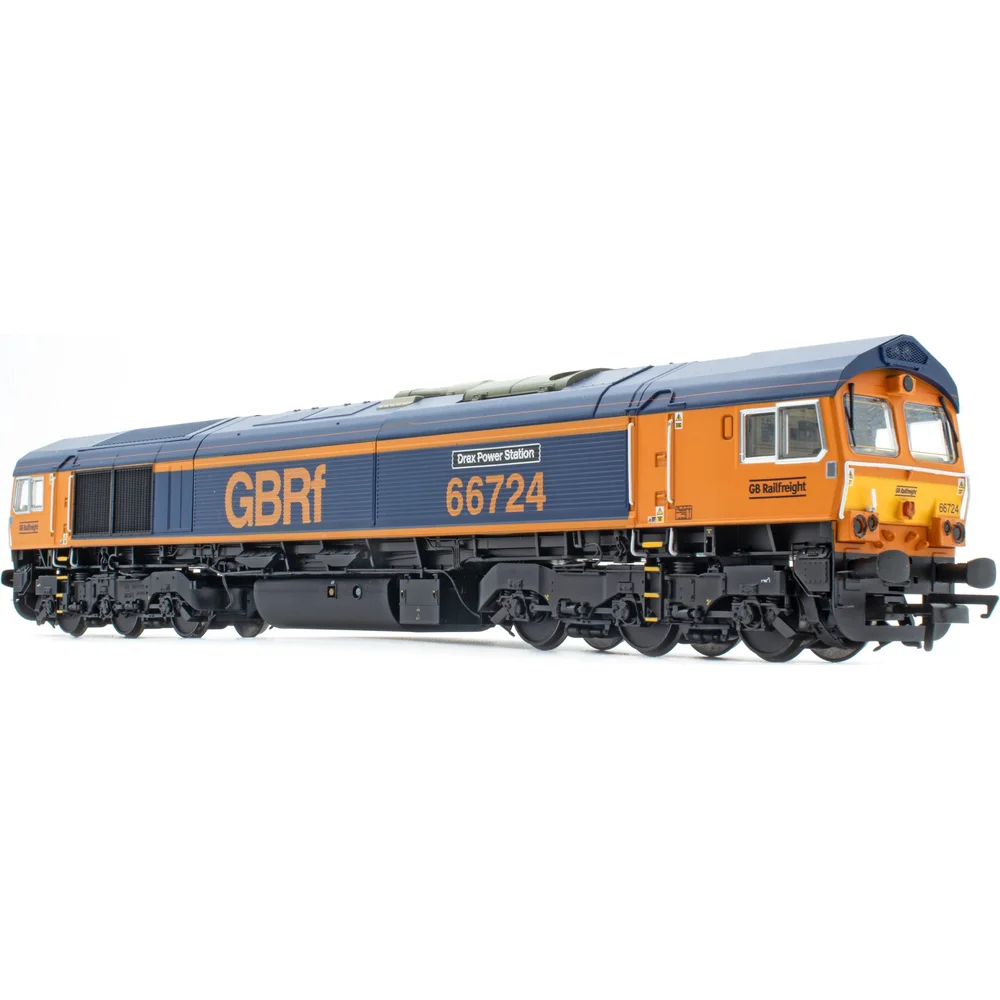
Traffic patterns evolved significantly from coal-dominated operations. In 2025, intermodal container services represent the Class 66's primary role, with daily flows from Felixstowe, Southampton and London Gateway to distribution centres across Birmingham, Manchester, Leeds and the Midlands. Felixstowe handles 4 million TEUs annually, with rail accounting for 30% of inland transport—Freightliner's 775-metre container trains carry 12-14 additional containers versus standard formations, each train removing up to 60 HGVs from roads. Bulk commodity movements remain significant: aggregates from quarries to construction sites, reduced but continuing coal traffic (8.5 million tonnes annually), steel flows between Immingham and Washwood Heath, biomass deliveries to Drax Power Station, cement for construction projects, and timber distribution. DRS specializes in nuclear flask transport from Sellafield, Torness, Hunterston and Sizewell, whilst all operators provide Network Rail infrastructure trains including ballast, track panels and seasonal rail head treatment trains.
Geographic coverage spans all major routes: West Coast Main Line, East Coast Main Line, Great Western Main Line and Midland Main Line, with comprehensive port connections and specialized Scottish operations. The type's versatility across traffic types—from 20-24 container flats on intermodal services to aggregate hoppers, coal wagons, steel coil carriers and biomass hoppers—demonstrates the design's operational flexibility.
Current Operations and Future Prospects Balance Continuity with Innovation
The Class 66 fleet reached maturity in 2025 with no new construction possible. Production ceased in 2016 when EU Stage IIIB emissions regulations mandated exhaust treatment equipment incompatible with Britain's loading gauge—66779 "Evening Star" became the final Class 66 built, delivered to GB Railfreight in special BR lined green livery and promised to the National Railway Museum for eventual preservation. The December 2024 arrival of 66316, a second-hand import from France converted at Loughborough and Longport, represents the likely last "new" Class 66 for UK service.
Despite production ending, the existing fleet faces limited replacement pressure. Class 66s built in 1998-2001 now exceed 25 years old yet maintain exceptional reliability through robust design and comprehensive maintenance. The exemption from modern emissions standards removes the primary regulatory driver for replacement, and no economic incentive exists for wholesale fleet renewal given operating costs remain competitive. Operators may gradually reduce numbers through parts cannibalization, but mass retirement appears unlikely before the 2040s without government mandate.
GB Railfreight's order for 30 Stadler Class 99 bi-mode electro-diesel locomotives represents the first significant challenge to Class 66 dominance. Expected to enter service in late 2025, these 6,170-kilowatt electric mode, 1,790-kilowatt diesel mode locomotives offer 500-kilonewton tractive effort and 75 mph maximum speed, exceeding Class 66 capabilities on partially electrified routes. Operating HVO biofuels in diesel mode, Class 99s promise 470-tonne daily carbon reduction whilst maintaining freight capacity. If successful, competing operators may follow—Freightliner represents the most likely candidate—though DB Cargo's large fleet and conservative approach suggests continued Class 66 reliance.
Ongoing modification programmes demonstrate operators' commitment to maximizing existing assets. DB Cargo UK converts 15 Class 66/0s to Class 66/6 specification (66651-665), whilst GB Railfreight regears 12 locomotives including renumbering 66779 to 66689 after conversion. These heavy haul variants address construction sector demand and coal traffic requirements, extending the type's operational envelope. Environmental considerations may eventually force change: government net-zero 2050 targets and decarbonization pressure could mandate diesel-free railways, though rail freight's 76% lower CO2 emissions per tonne-kilometre versus road transport provides strong sustainability credentials. The Class 66's remarkable quarter-century dominance seems secure for at least another 15-20 years.
Modelling Significance Spans Unprecedented Manufacturer Choice and Technological Innovation
For railway modellers, the Class 66 represents the most extensively modelled British diesel locomotive, with comprehensive ready-to-run options across OO gauge, N gauge, O gauge and European HO scale. This manufacturer diversity reflects both prototype ubiquity and continuous model technology advancement, offering modellers from beginners to experts appropriate options.
OO gauge presents three distinct approaches balancing detail, performance and cost. Hornby's ex-Lima tooling provides the most accessible entry point at £75-110 for DCC-ready models and £120-155 for DCC sound variants. Extensive livery availability covering EWS, DB Cargo, GB Railfreight (including special editions like "The Green Progressor"), Freightliner and Colas Rail makes fleet building economical. The Railroad Plus range adds improved DCC functions and enhanced detail whilst maintaining competitive pricing. However, the aging Lima bodyshell compromises prototype accuracy with incorrect light clusters and missing details on some variants—adequate for operators prioritizing diverse fleet composition over ultimate accuracy.
Accurascale (continuing Hattons Originals) delivers award-winning premium OO gauge models at £169.99 DCC-ready and £259.99 DCC sound fitted. Winner of Model Rail Magazine's "Diesel Loco of the Year" award, this all-new tooling achieves exceptional prototype fidelity through comprehensive variation modelling: two cab interior types (pedestal versus wrap-around desk), two sandpipe fixture styles, appropriate guard iron cut-outs, five-point or seven-point cab front handrails, and low-emission variants. The advanced PCB features pogo connectors, lift-off roof for decoder access, and twin speakers (sugar cube plus Accurathrash bass reflex). With over 100 liveries planned covering all major operators, Accurascale represents the definitive OO gauge Class 66 for detail-conscious modellers.
Heljan's HO scale (1:87) model occupies a unique position, offering very high detail and the only true six-axle drive mechanism amongst Class 66 models. Originally £199-250 but frequently discounted to £125-200, the model features etched fan grilles, extensive separate details, five-pole motor with two flywheels, and comprehensive glazing. However, HO scale incompatibility with British OO gauge (1:76) and reported wheel gauge issues with some track systems—particularly requiring wheel replacement for optimal British OO operation—limit appeal despite impressive appearance and mechanical sophistication.
N gauge currently offers established reliability with next-generation advancement approaching. Graham Farish (Bachmann Europe subsidiary) dominates current N gauge availability with extensive livery coverage at £54-80. Introduced in 2006, the model features five-pole motor, all-wheel pickup, diecast chassis, and adequate detail for the scale. The 371-series catalogue numbers span over 40 variants covering EWS, Freightliner, GBRf, DRS, DB Cargo, Colas Rail and heritage liveries including BR blue and green. Forum discussions note the mechanism isn't Graham Farish's smoothest, but reliability and immediate availability make it the practical choice.
Dapol's "Next Generation" N gauge Class 66 promises significant technological advancement when deliveries commence (originally scheduled Q2 2024, now delayed to late 2025 or 2026). The all-new tooling features iron-cored five-pole motor, Next-18 decoder socket, and revolutionary lighting: independent directional front/rear main lighting with day/night modes across four light clusters, independent directional cab lighting, and machine room illumination—unprecedented in N gauge ready-to-run models. The 2D-066 series spans nine catalogue numbers (£145-173 DCC-ready, £174-205 DCC-fitted, £247-292 DCC sound fitted) covering major operators including the final-built 66779 "Evening Star" in BR green. The superior motor technology and advanced features justify premium pricing, though current unavailability requires patience.
O gauge modellers await Dapol's ambitious project arriving late 2025 or Q1 2026. With decorated samples arriving March 2025, this 1:43 scale model represents the most technologically advanced diesel locomotive in O gauge, priced £395 DCC-ready through £615 deluxe spatial sound. Revolutionary features include dual balanced motors for maximum pulling power, heavyweight diecast chassis with diecast bogie frames, comprehensive lighting (operating front/rear/side lights, independent cab light, illuminated control panel, engine room lighting through etched grilles), and interchangeable buffer beam assemblies accommodating automatic couplers without visible seams.
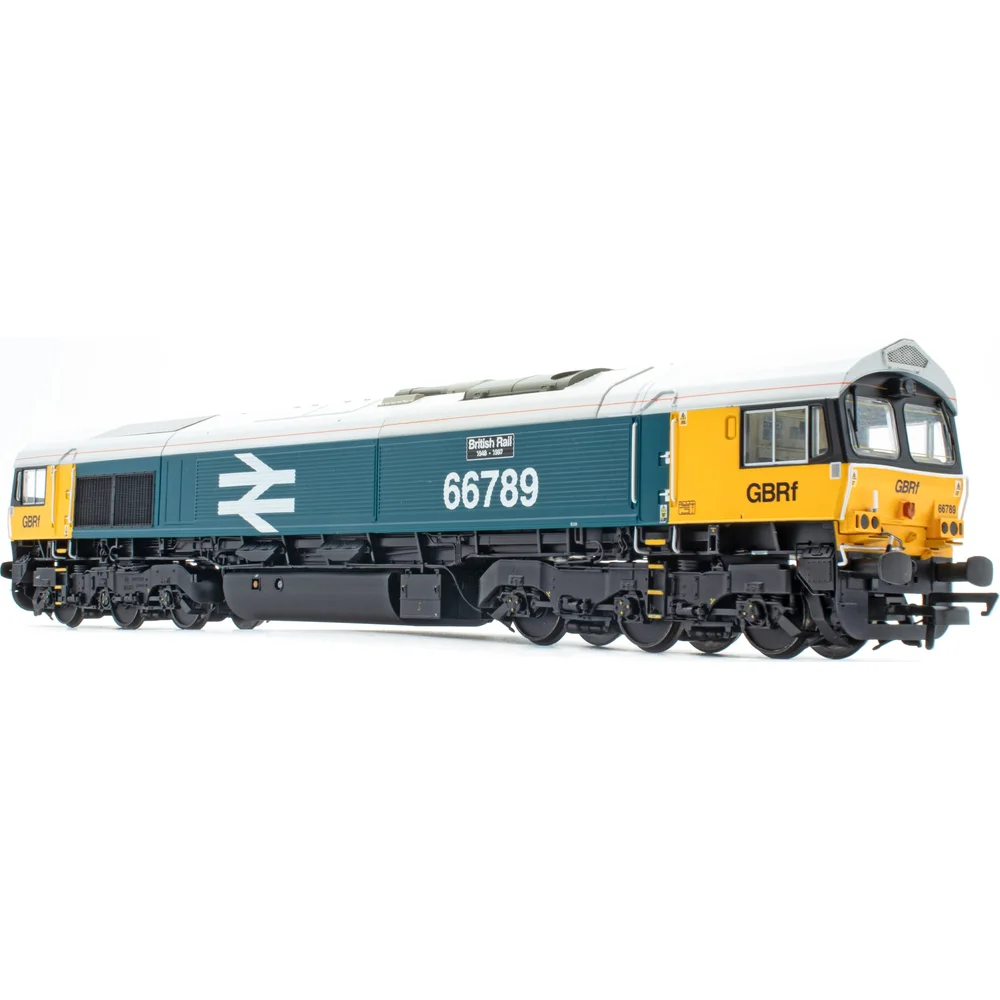
The spatial sound system transforms O gauge sound capabilities: two Zimo PLUX 22 decoders with quad speaker arrangement create true stereo positioning—engine sounds emanate from the engine end, fan sounds from the fan end, with enhanced bass and treble reproduction plus proprietary "RealDrive" feature. Six liveries in the 7D-066 series cover EWS, Freightliner Powerhaul, GBRf (including special "British Rail 1948-1997" BR blue and Biffa "The Flying Dustman"), and DRS. Extensive development through multiple factory changes demonstrates Dapol's commitment to quality, with testing reports indicating "smooth and quiet running with large amount of grunt for hauling heavy loads."
European HO scale modellers can access Continental Class 66 variants through ESU and Heljan. ESU models feature LokSound V4.0 M4 decoders, load-dependent synchronized smoke, complete lighting including Belgian blinking warning lights, and represent European operators (Euro Cargo Rail, DB Cargo, HGK, Captrain) with appropriate modifications: roof-mounted air conditioning, wind shields, rectangular buffers, and certification-specific details for Germany, Netherlands, Belgium, Luxembourg, Sweden, Norway and Poland.
Bachmann's 2025 Revolutionary New Tooling Redefines OO Gauge Diesel Standards
Bachmann Europe's April 2025 announcement ahead of Model World Live at NEC Birmingham represents the most significant Class 66 development in two decades. The entirely new tooling, designed "from the rails up" for the Branchline OO Scale series, incorporates technology establishing this as Bachmann's flagship diesel locomotive model and potentially the most sophisticated diesel ready-to-run model ever produced in OO gauge.
The launch range comprises 12 locomotives, each available in three formats. Standard DCC-ready models (£229.95 RRP) include removable magnetic roof panel for decoder access, Plux22 DCC decoder socket, and pre-fitted speaker. SOUND FITTED models (£339.95 RRP) add ESU LokSound V5 DCC premium sound decoder with dual fitted XL speaker system—enhanced bass reproduction speaker with patented passive radiator design using real locomotive recordings produced exclusively for Bachmann. SOUND FITTED DELUXE models (£369.95 RRP) incorporate auto-release coupling system enabling DCC-operated hands-free uncoupling at both ends, plus tinted windscreen glazing. All SF and SFX models operate on both DCC and analogue control, with Bach-Up Stay Alive capacitor system (DCC only) eliminating stalling, light flicker and sound cut-outs.
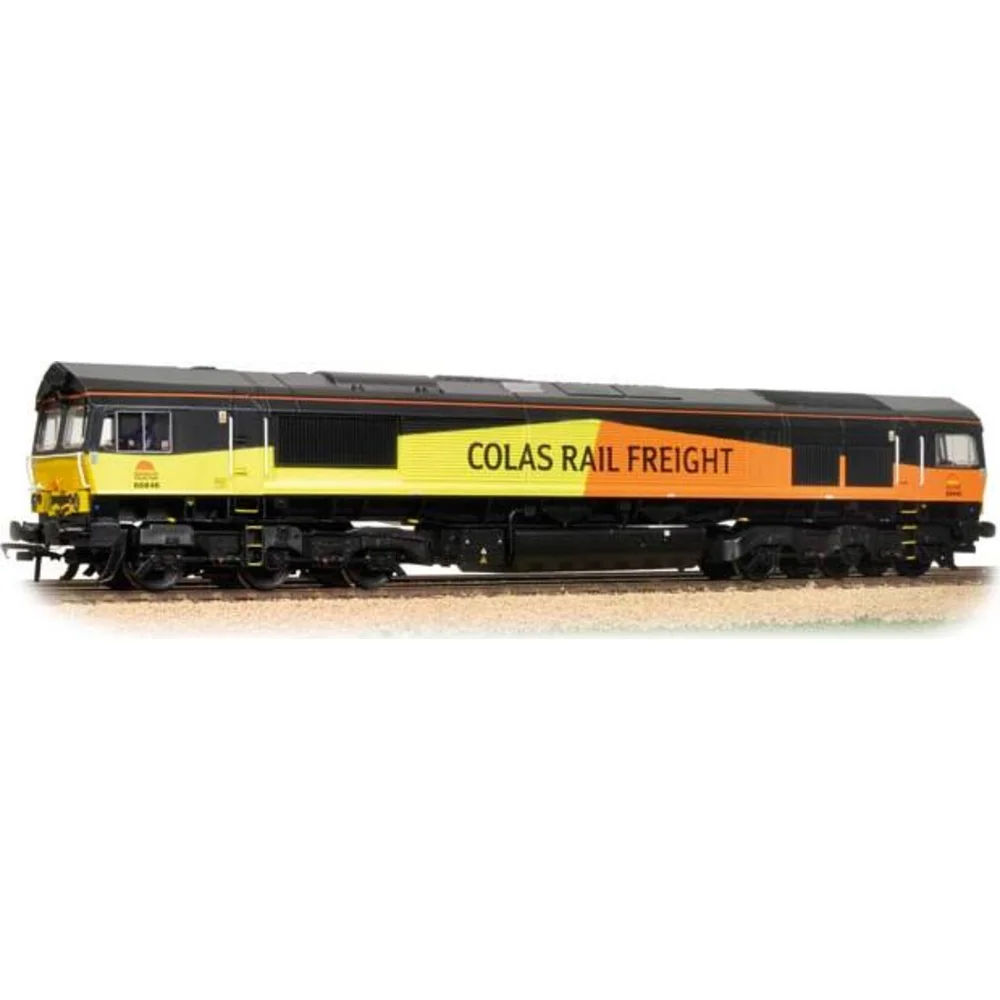
Catalogue numbers span operator diversity: EWS livery (50-000/50-000A: 66015/66096), Freightliner green (50-001: 66515, 50-002: 66606), Freightliner 60th Anniversary orange and green (50-011: 66501, 50-012: 66601), GBRf Europorte (50-003/50-003A: 66761 "Wensleydale Railway Association"/66777 "Annette"), Colas Rail Freight (50-004/50-004A: 66847 "Terry Baker"/66850 "David Maidment OBE"), and DRS Compass small logo (50-009: 66304, 50-010: 66422 "Max Joule 1958-1999"). Retailer discounts typically reduce prices 10-15%, with Rails of Sheffield listing approximately £195.45 standard, £288.95 SF, £314.45 SFX.
The comprehensive lighting package exceeds all competing manufacturers. Independent directional lighting at each end features day/night mode selection (accessible via switches on analogue, DCC-controlled digitally) and stabling lights mode with red tail lights at both ends. Separately switched cab lighting provides two DCC functions for each cab, whilst machine room lighting operates under DCC control. Authentic light colors and temperatures reflect era-appropriate appearance, with extensive variation options: four headlight cluster variations, four top light depth and fitting options, and comprehensive glazing with decorated interiors.
The extensive tooling suite accommodates prototypical variations across 27 years of production: original four-door locomotives (1998-2004) versus five-door low-emission variants (2004 onwards with additional engine compartment door), three-piece cab-side windows with separate quarter lights versus later two-piece double-glazed aluminium-framed versions, optional wing mirrors, front handrails with five or seven mounting points, NRN roof pods (fitted, removed, or with Wi-Fi), multiple sand box and sand pipe bracket versions, and cab interiors with pedestal control desk or wrap-around version. The high-fidelity injection-moulded bodyshell features ribbed bodysides, detailed solebars, separately fitted pipework and cabling, and etched metal grilles revealing multi-layer internal detailing visible through cooler group grilles.
Physical construction emphasizes operational performance: heavy diecast chassis with separate main frames, HTCR radial bogies with multiple components and full relief detail, rotating axle heads on each axle end, sprung metal buffers, five-pole twin-shaft motor with two flywheels, all-axle drive with electrical pickup from all wheels, diecast metal gearboxes for prototypical running speeds, and close coupling mechanism with NEM362 coupling pockets. Designed for curves of second radius (438mm) or greater, the model balances operational flexibility with scale fidelity.
Release schedule targets late 2025 for most models, with Freightliner 60th Anniversary variants expected 2026. Decorated livery samples were revealed 7 May 2025 in Summer 2025 British Railway Announcements, with pre-orders opened April 2025 in limited quantities. This new tooling represents Bachmann's first major Class 66 development since the original 2005 model, marking two decades of continuous production and establishing the definitive OO gauge Class 66 for the next 20 years.
Modelling Tips Maximize Operational Authenticity and Layout Integration
Class 66 modelling offers exceptional prototype fidelity opportunities through careful attention to operational practices, weathering techniques and consist formation. The type's ubiquity across UK freight operations from 1998 onwards makes it essential for any modern image layout, whilst regional variations and specialized traffic flows enable prototype-specific modelling.
Weathering approaches should reflect operational intensity and maintenance standards. Fresh ex-works locomotives appear in pristine livery with clean paintwork and bright lighting—appropriate for recent repaints or newly-delivered models. Light weathering suits intermodal locomotives with regular depot visits: subtle roof dirt accumulation, brake dust around bogies, light fuel staining below filler caps, and minor paintwork scuffing on buffer beams and lower bodysides. Medium weathering represents aggregate and general freight duties: heavier roof grime, significant brake dust, pronounced fuel staining, bodyside dirt streaks from rain runoff, and buffer beam damage. Heavy weathering suits coal and infrastructure locomotives: comprehensive dirt accumulation, obscured livery details, significant paint chips and scratches, rust bleeding around fixtures, and exhaust staining on roof panels. Operators maintain different cleanliness standards—Freightliner and GBRf generally present cleaner locomotives than DB Cargo's extensive coal fleet.
Consist formation varies dramatically by traffic type, enabling diverse operational scenarios. Intermodal trains typically comprise 20-24 KFA/FEA container flats with mixed 20-foot, 40-foot and 45-foot containers in shipping line liveries (Maersk blue, MSC red, CMA CGM blue, Hapag-Lloyd orange, Evergreen green). Southampton and London Gateway 775-metre formations extend to 30+ wagons. Aggregate trains use JHA/JNA/JGA hoppers in 20-24 wagon rakes, often block-coloured in operator liveries or faded grey aggregate company schemes. Coal consists employ HTA/HTO hoppers with appropriate operator branding, whilst steel traffic uses BDA/BYA coil carriers. Biomass trains to Drax feature specialized IIA-D hoppers in GBRf green. Infrastructure trains combine diverse wagon types: MRA/MTA ballast hoppers, OTA/JNA timber carriers, spoil wagons, and engineering support vehicles.
Geographic and operational accuracy enhances layout credibility. West Coast Main Line operations favor intermodal and Anglo-Scottish freight, East Coast Main Line handles diverse traffic including coal, aggregates and intermodal, Great Western Main Line features aggregates and automotive traffic, Midland Main Line serves coal and intermodal, whilst Scottish routes emphasize bulk commodities and nuclear flasks. Port traffic dominates Felixstowe, Southampton and London Gateway approaches with intensive container movements, whilst South Wales emphasizes steel and port freight, and Southwest England handles aggregates and china clay. DRS nuclear flask trains require specialized KFA wagons with distinctive yellow/white livery, typically running as short formations with significant locomotive power relative to train length.
Multiple working capability enables impressive train formations matching modern freight practice. Class 66s can operate in multiple with Classes 59, 66 and 67, with stored control cables visible on buffer beams—double-heading container trains, banking heavy aggregate trains on gradients, or pairing locomotives on infrastructure movements provides operational interest whilst reflecting prototype practice. Period-specific operations vary: 1998-2001 features predominantly EWS maroon/gold livery with diminishing numbers of withdrawn British diesels (Classes 31, 33, 37, 47, 58), 2001-2009 shows diverse EWS sub-fleet liveries and growing Freightliner/GBRf presence, 2009-2016 represents DB Schenker transition, and 2016-2025 displays current operator diversity with specialized liveries, commemorative schemes, and increasing European imports.
Detail enhancements elevate models beyond standard specification: adding crew figures, weathering glazing with subtle streaking, picking out cab instrument details, adding route discs or headboard brackets where appropriate, installing working ditch lights (North American-style auxiliary lights fitted to some locomotives), applying locomotive-specific details (nameplates, depot stickers, modified equipment), and incorporating sound decoders with appropriate EMD two-stroke diesel sounds differentiate individual locomotives within fleet formations.
Finally
The British Rail Class 66's quarter-century dominance of UK freight operations reflects engineering excellence meeting economic necessity—American reliability replacing British inadequacy with dramatic operational improvements that fundamentally transformed rail freight competitiveness. With approximately 412 locomotives still operational in 2025 and replacement unlikely before the 2040s, the Class 66 represents modern freight operations for an entire generation of railway enthusiasts and modellers. The type's operational ubiquity across container terminals, quarries, power stations, steelworks and nuclear facilities makes it indispensable for authentic modern image layouts.
For model railway enthusiasts, the Class 66 offers unprecedented choice across all scales, with manufacturers from budget-conscious Hornby through premium Accurascale to revolutionary Dapol O gauge providing options matching every budget and detail requirement. Bachmann's April 2025 announcement of entirely new OO gauge tooling with ESU LokSound V5 DCC, Bach-Up Stay Alive, comprehensive lighting control, and auto-release coupling demonstrates continued innovation in Class 66 modelling technology—two decades after the first OO gauge models appeared, manufacturers continue investing in this essential prototype. The combination of prototype longevity, operational diversity, extensive livery variations, and technological model sophistication ensures the Class 66 remains central to British railway modelling for decades ahead, mirroring its continued prototype dominance from Penzance to Thurso.
Frequently Asked Questions
Why did British operators choose American locomotives over British designs?
EWS inherited 1,600 aging locomotives averaging 30+ years old with less than 65% availability. Foster Yeoman's American-built Class 59s demonstrated 95% availability and lower operating costs, prompting EWS to order 250 EMD Class 66s. The £375 million investment delivered immediate operational improvements with locomotives arriving service-ready from Canadian docks, contrasting dramatically with British Rail's problematic Class 60 introduction.
What makes the Class 66 so reliable compared to British diesels?
EMD's proven two-stroke 710 engine design with 20+ years development, comprehensive electronic control via EM2000 system, self-steering High Traction Radial Bogies reducing mechanical wear, 95% availability specification with 180 days mean time between failures, and 1.6 million kilometer design life between major rebuilds (versus 7-year Class 47 overhaul cycles) combine to deliver exceptional reliability. Simplified maintenance requirements and standardized components reduce depot complexity.
Are Class 66 locomotives still being built?
No. Production ceased in 2016 with 66779 "Evening Star" as the final unit. EU Stage IIIB emissions regulations mandated exhaust treatment equipment incompatible with Britain's loading gauge, preventing new construction. The December 2024 arrival of 66316—a second-hand French import converted for UK service—represents the likely last "new" Class 66 to enter British operations.
Which operator runs the most Class 66s?
DB Cargo UK operates approximately 165 Class 66s, the largest fleet in Britain. GB Railfreight follows with 115 locomotives, then Freightliner with 108, Direct Rail Services with 14-16, and Colas Rail with 5. The total UK operational fleet numbers approximately 412 locomotives across these five operators.
Will Class 66s be replaced by electric locomotives?
Not immediately. GB Railfreight's 30 Stadler Class 99 bi-mode electro-diesel locomotives entering service late 2025 represent the first significant replacement programme, targeting 6,170-kilowatt electric mode with 1,790-kilowatt diesel capability. However, Class 66s benefit from emissions regulation exemption as existing locomotives, removing the primary driver for wholesale replacement. Continued operation into the 2040s appears likely without government mandate requiring diesel-free railways.
Are any Class 66 locomotives preserved?
Not yet. With most locomotives still in active service 25-27 years after introduction, formal preservation hasn't commenced. GB Railfreight promised 66779 "Evening Star" (the last Class 66 built) to the National Railway Museum's national collection when it retires, estimated around 2056. The locomotive displayed temporarily at NRM York in May 2016 during naming ceremonies before returning to service. Only 2-3 Class 66s have been permanently withdrawn and scrapped, demonstrating exceptional fleet retention.
What's the best OO gauge Class 66 model?
Depends on priorities. Accurascale (£169.99 DCC-ready, £259.99 sound fitted) delivers award-winning prototype accuracy with comprehensive detail variations, superior running characteristics, and twin-speaker installation—the definitive choice for detail enthusiasts. Bachmann's April 2025 new tooling (£229.95 standard, £339.95 sound fitted, £369.95 sound fitted deluxe) incorporates revolutionary technology including ESU LokSound V5, Bach-Up Stay Alive, comprehensive lighting, and auto-release coupling, establishing the new benchmark. Hornby (£75-110) provides budget-friendly option with extensive livery range, ideal for building diverse fleets economically.
Which liveries should I model for a modern freight layout?
For 2020s accuracy, prioritize DB Cargo UK red (largest fleet), GBRf orange/blue and Europorte blue/yellow (highly visible), Freightliner green and Powerhaul orange (intermodal dominance), and DRS Compass blue (Anglo-Scottish traffic). Special liveries add interest: GBRf's "British Rail 1948-1997" BR blue (66789), "Evening Star" BR green (66779/66689), Freightliner 60th Anniversary schemes, and various commemorative nameplates. Weathering intensity should match traffic type—light for intermodal, heavy for coal and aggregates.
Can Class 66 models handle tight radius curves?
Most OO gauge models specify second radius (438mm/17.25 inches) minimum. Graham Farish N gauge operates on Radius 2 curves. Longer rigid wheelbase versus shorter British diesels requires generous curvature—test running recommended before committing to tight radius layouts. The prototype's 80.46-metre minimum curve radius scales to approximately 406mm in OO gauge (1:76), though model compromises typically enable tighter operation.
What sound decoders work best for Class 66 models?
ESU LokSound V5 decoders with Class 66 sound projects deliver authentic EMD two-stroke diesel characteristics with distinctive turbocharger whine, air brake sounds, and horn options. Zimo MX645 and MX648 offer excellent alternative sounds with comprehensive function mapping. Bachmann's 2025 models include factory-fitted ESU LokSound V5 with dual speakers and bespoke sound files. For DIY installations, prioritize bass-capable speakers (sugar cube minimum, bass-reflex ideal) as EMD two-stroke engines produce characteristic low-frequency rumble distinguishing Class 66 from British four-stroke diesels.
How do European Class 66 variants differ from UK versions?
Continental Class 77 variants feature roof-mounted air conditioning, enhanced 450-kilonewton tractive effort (versus 409 kN standard), ECR train protection systems, improved driver facilities (microwave, fridge, better noise insulation), and certification for multiple European countries. These cannot operate in Britain due to incompatible train protection systems. Some European locomotives have returned to UK service (66306-316 from France, 66790-792 from Sweden), often requiring conversion at Loughborough and Longport facilities. ESU and Heljan produce HO scale (1:87) European variants with appropriate modifications.
What freight traffic should Class 66 models haul?
Intermodal: 20-24 container flats (KFA/FEA) with mixed 20/40/45-foot containers in shipping line liveries, up to 30+ wagons on 775-metre trains. Aggregates: JHA/JNA/JGA hoppers in operator or aggregate company liveries, 20-24 wagon rakes. Coal: HTA/HTO hoppers (increasingly rare but still operational to remaining power stations). Steel: BDA/BYA coil carriers between Immingham and Washwood Heath. Biomass: IIA-D hoppers to Drax Power Station (GBRf). Nuclear flasks: Specialized KFA wagons in yellow/white DRS livery. Infrastructure: Mixed MRA/MTA ballast hoppers, timber carriers, spoil wagons, and engineering support vehicles.