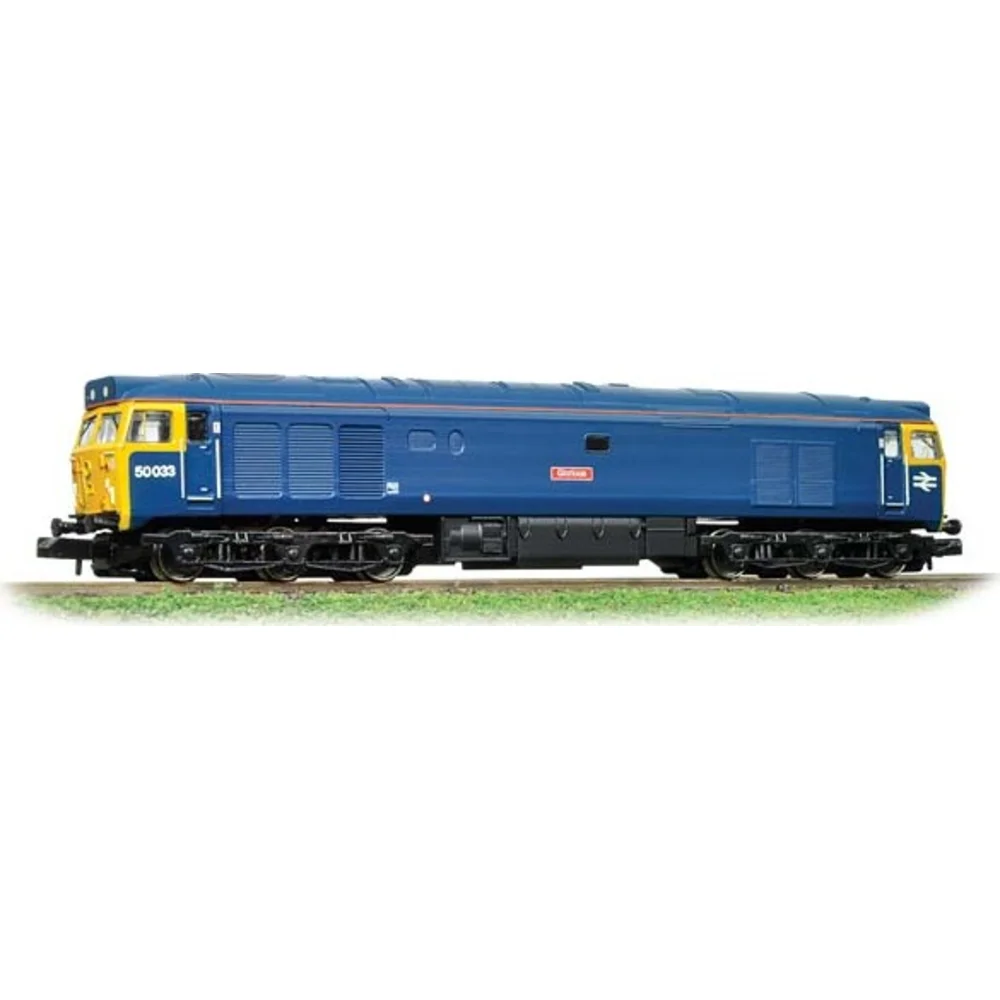
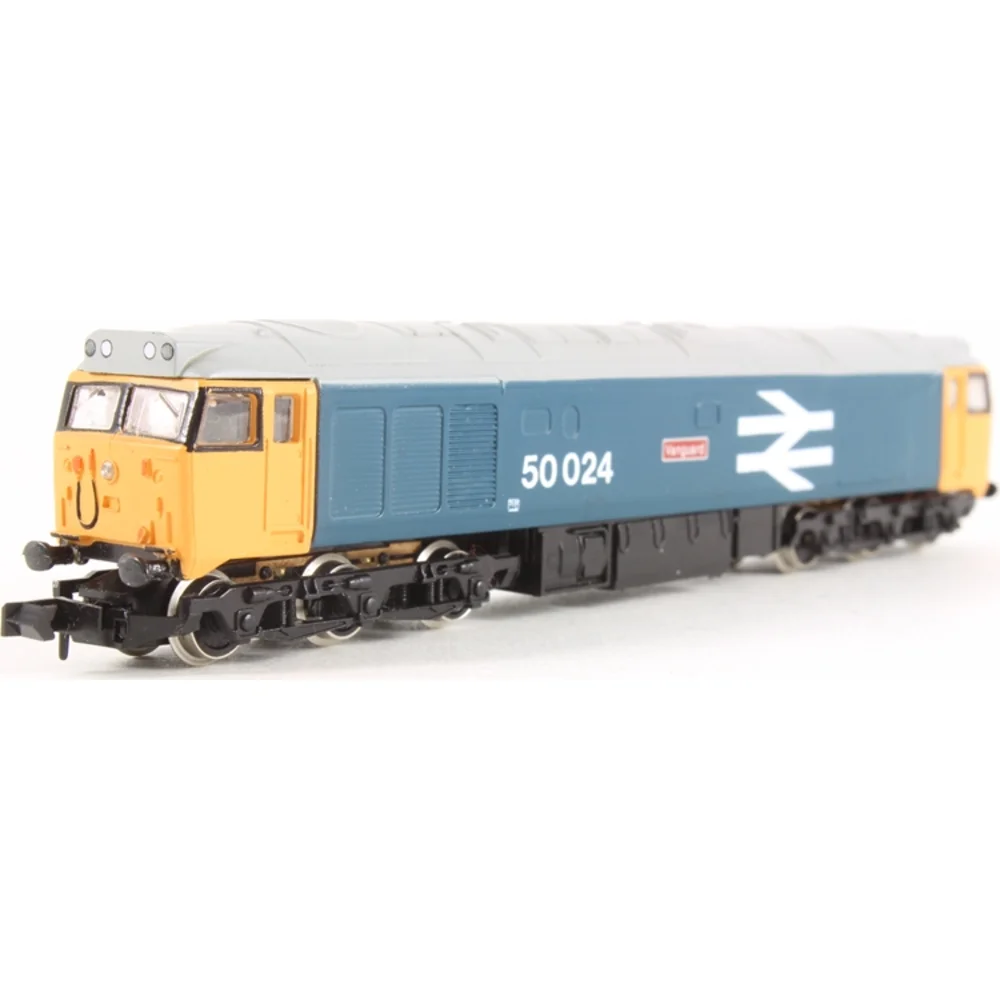
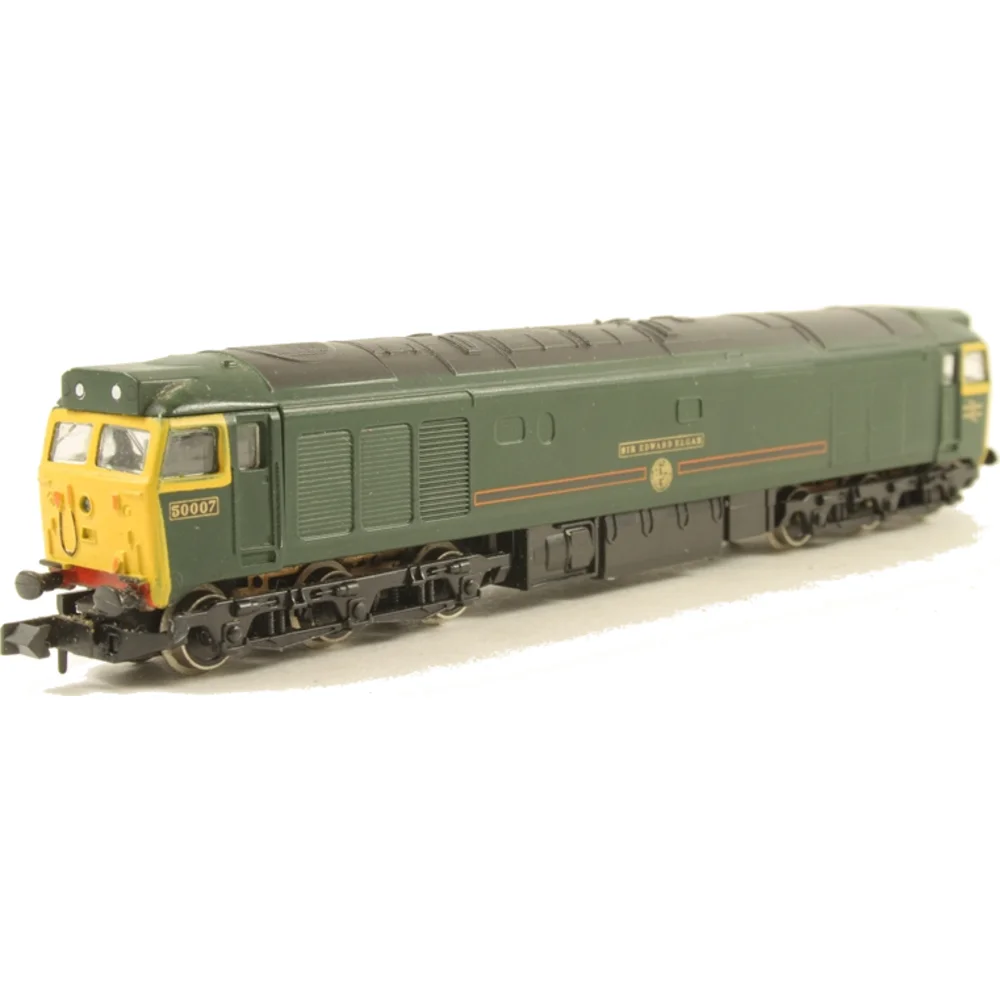
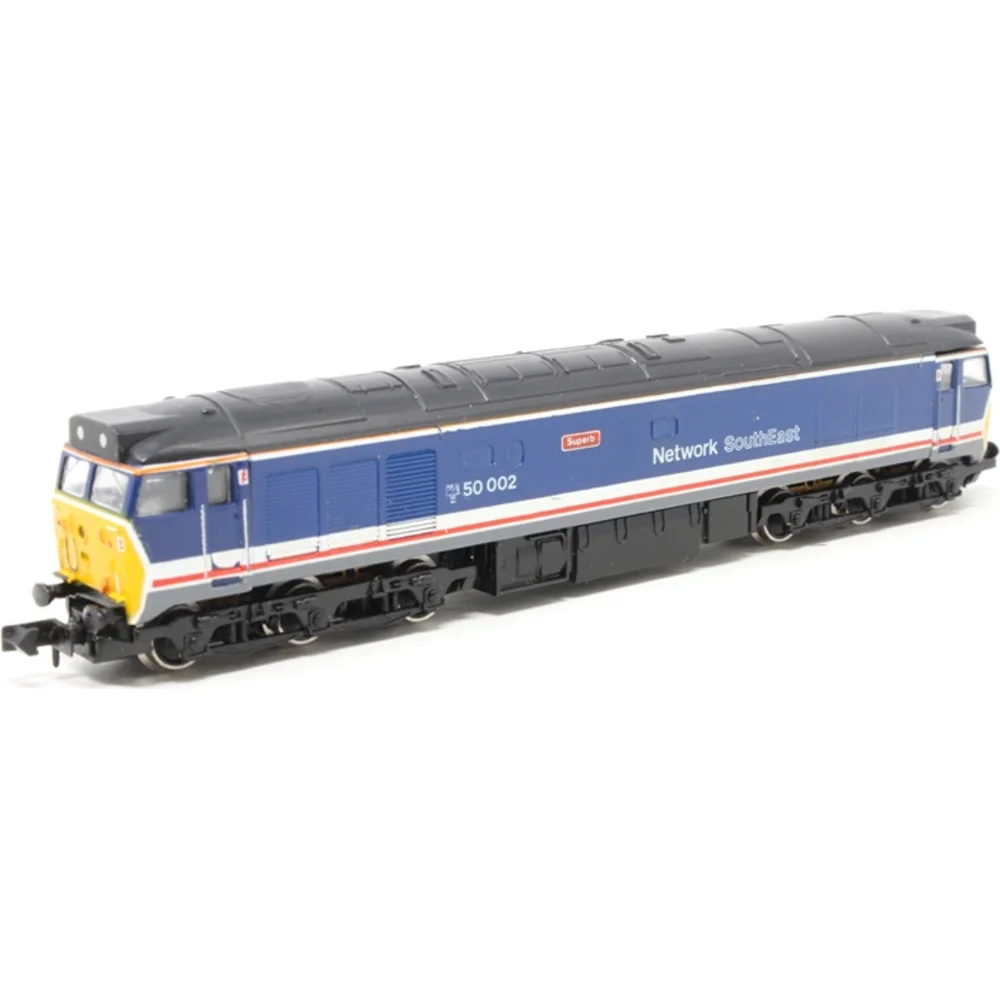
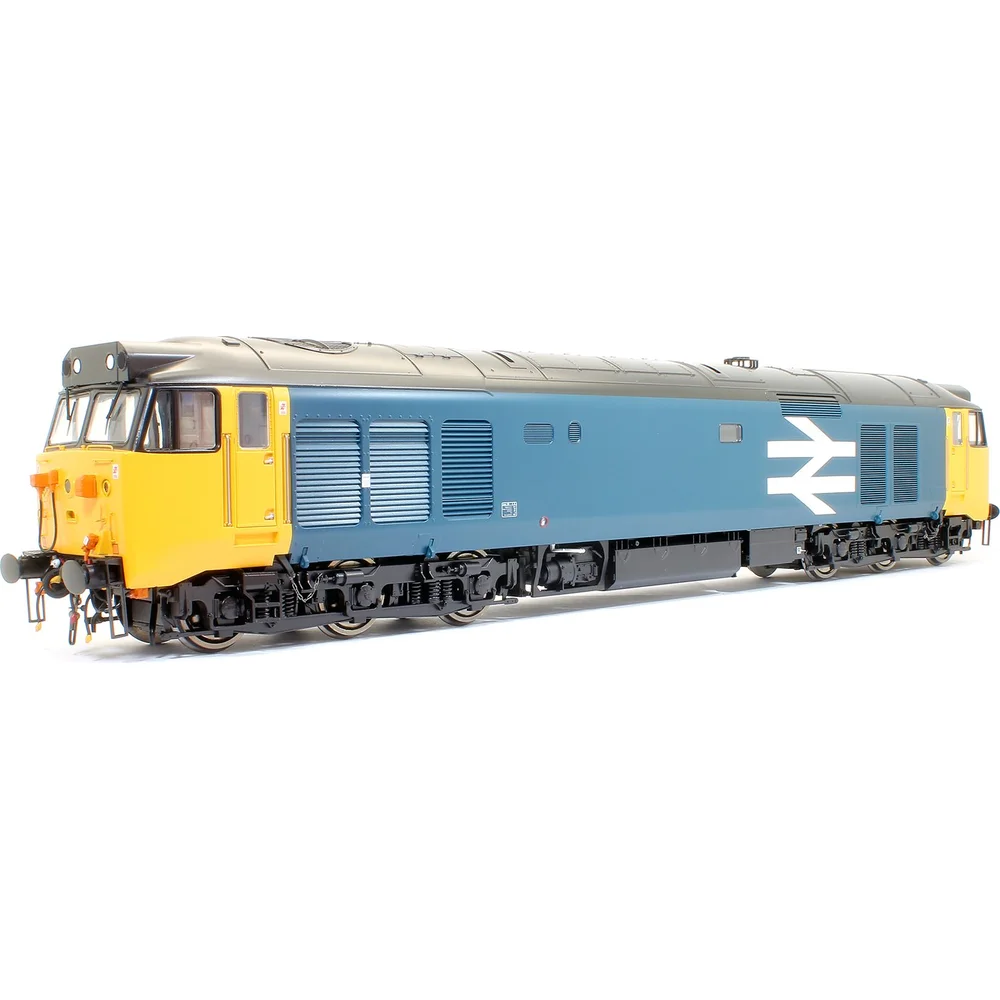
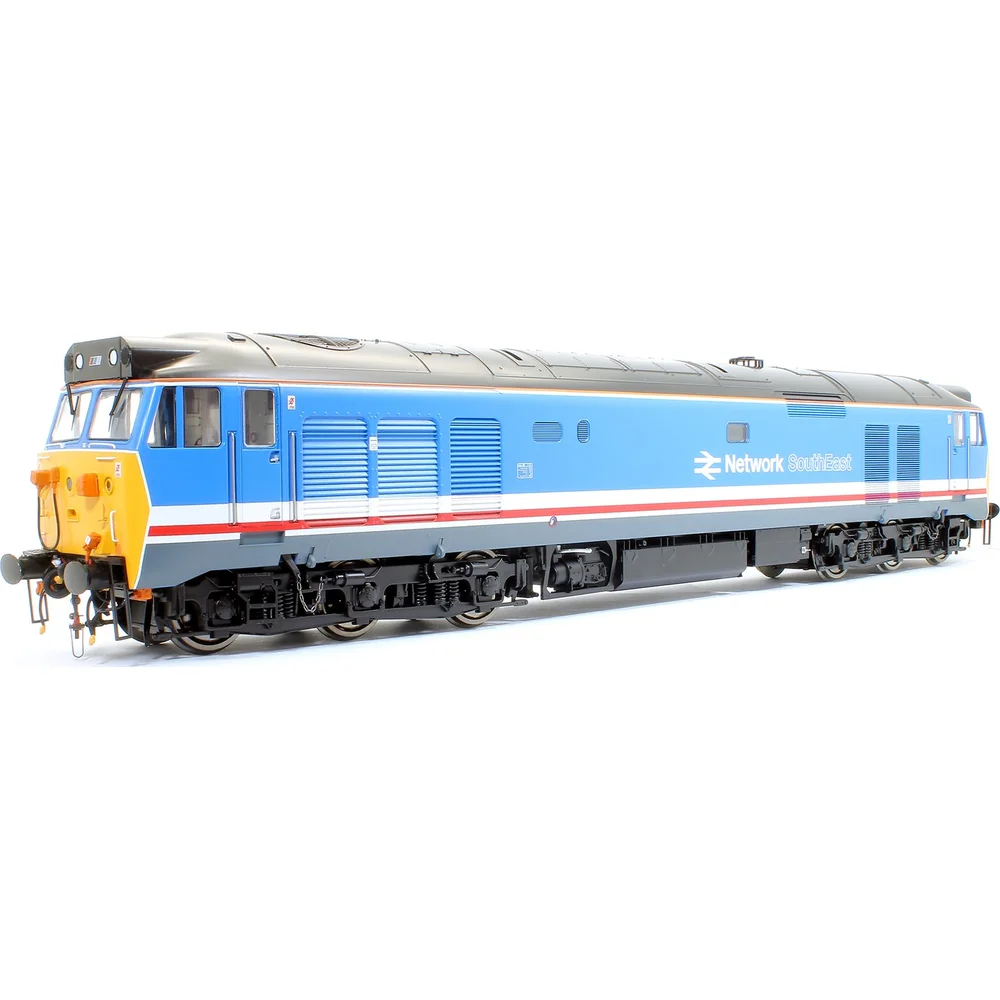
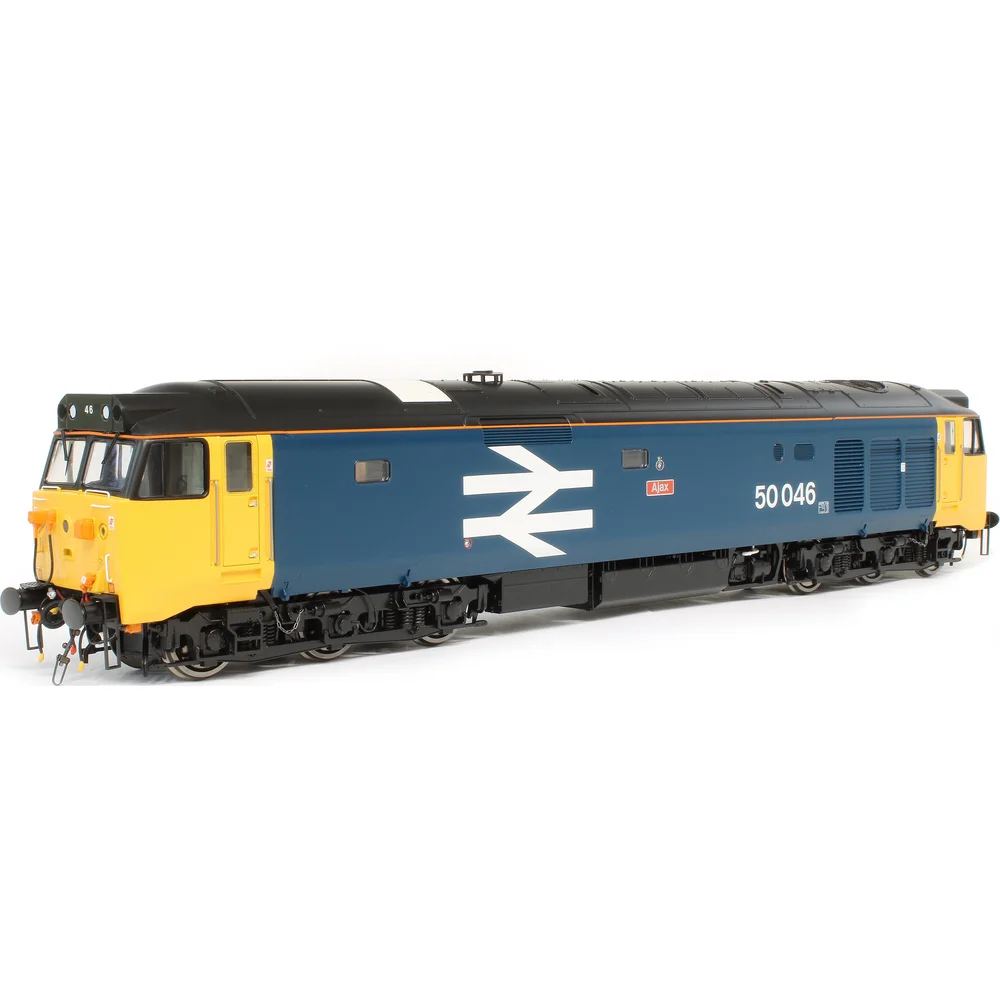
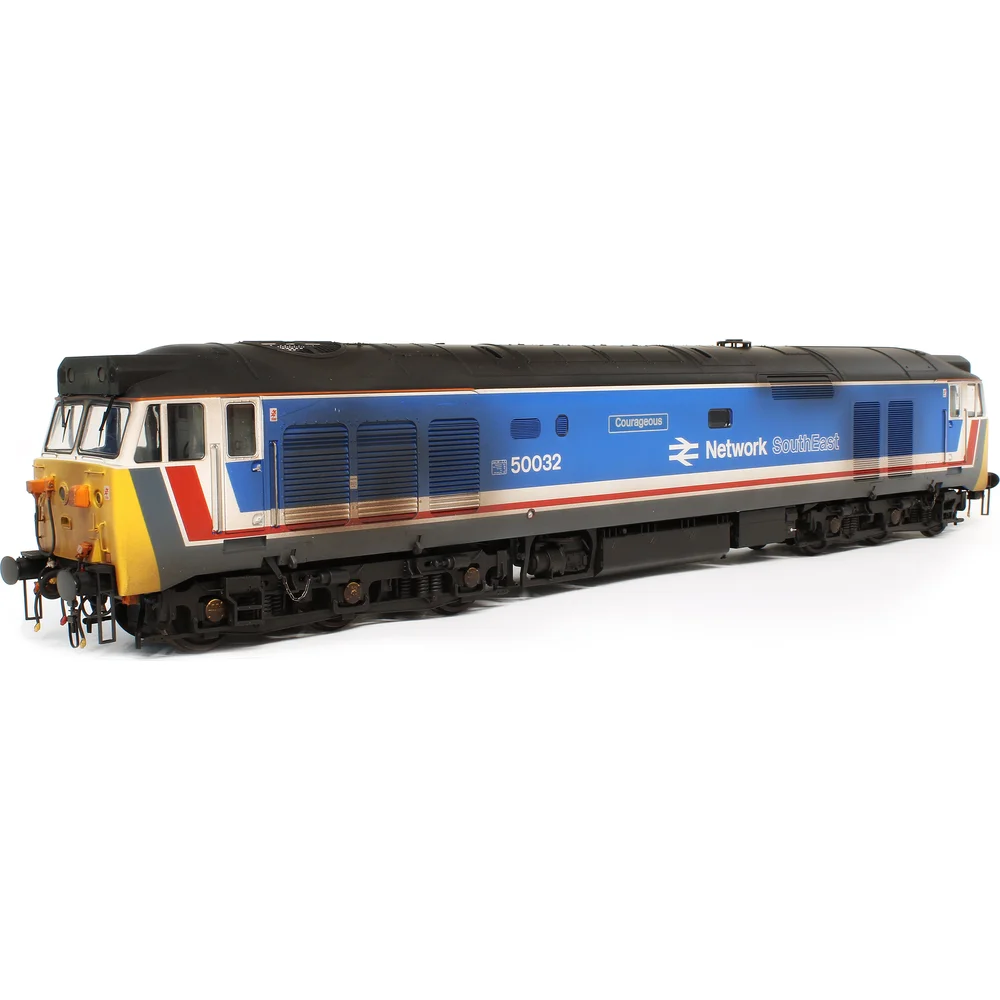
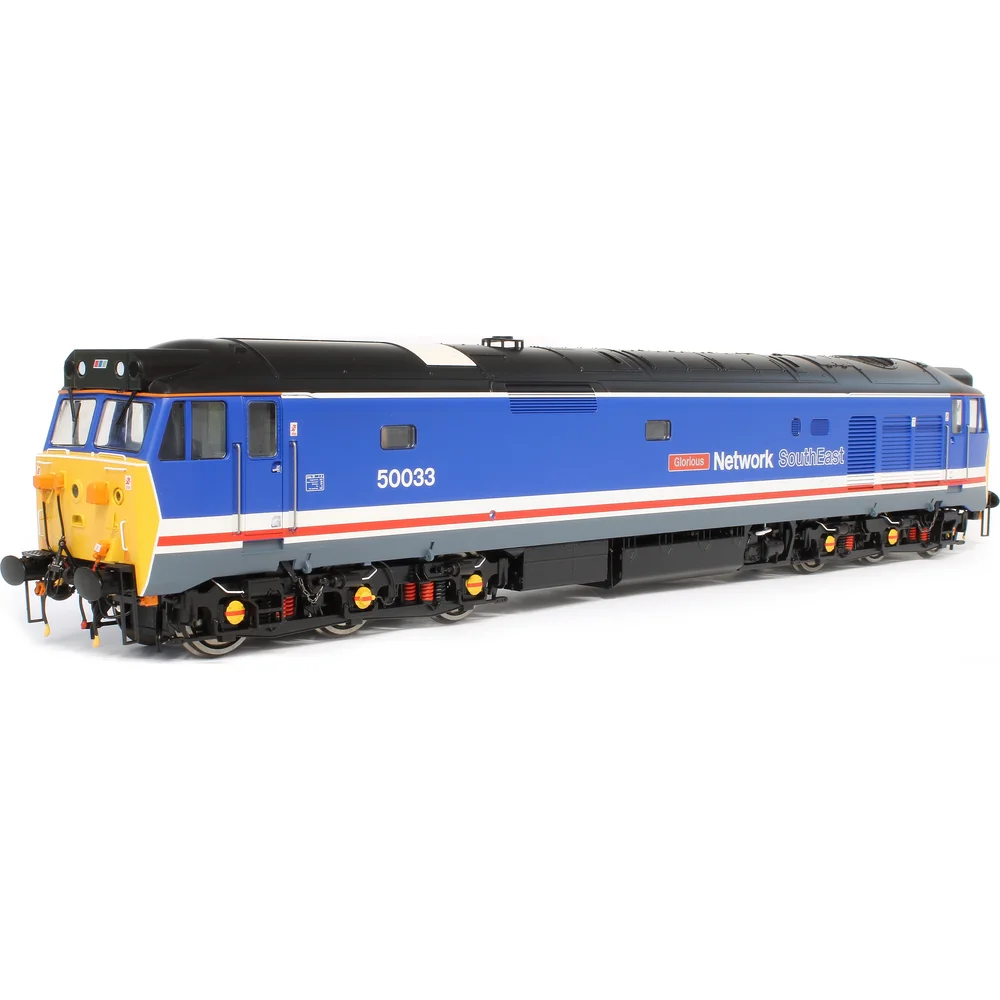
The British Rail Class 50 represents one of the most compelling stories in British diesel traction history. Fifty locomotives built by English Electric at Vulcan Foundry between October 1967 and November 1968, originally intended as a five-year stopgap on the West Coast Main Line, instead carved out a 27-year career spanning three distinct operational eras and becoming — in the eyes of generations of enthusiasts — the definitive express passenger diesel of the 1970s and 1980s. Nicknamed "Hoovers" for the distinctive drone of their inertial air filtration systems, and later for their habit of breaking down and requiring assistance, the Class 50s were loved, exasperating, and ultimately irreplaceable. Eighteen survive in preservation today, five of them mainline-certified, making the class one of the best-represented diesel types in the heritage railway movement.
Quick Takeaways
- Fifty locomotives built: Delivered from Vulcan Foundry, Newton-le-Willows, between October 1967 and November 1968, all entering service in BR Rail Blue
- English Electric 16CSVT engine: A turbocharged and intercooled 2,700 bhp V16 diesel providing more power than the contemporary Class 47 and equal to the Class 52 Western
- Originally leased to British Rail: The entire fleet was owned by English Electric Leasing Ltd on a 10-year arrangement — a forerunner of modern rolling stock financing
- Transferred to the Western Region from 1974: Displacing the entire diesel-hydraulic fleet after WCML electrification, the Class 50s worked Paddington–Plymouth and Waterloo–Exeter services for nearly two decades
- Remarkable 36% preservation rate: Eighteen of the original fifty survive, with five holding current mainline certification — an extraordinary survival record for a first-generation diesel class
- Named after Royal Navy warships: The complete fleet was named in 1978–79, with 50035 Ark Royal the first, at a ceremony attended by HMS Ark Royal's own captain and crew
- Outstanding model railway coverage: Available in OO, N, TT:120, and O gauge from Accurascale, Dapol, Hornby, and Heljan, with multiple livery variants and full DCC Sound options across all scales
Historical Background and Context
The Class 50's origins lie in a single prototype — the DP2, completed by English Electric in May 1962 at Vulcan Foundry. The DP2 used a modified Deltic bodyshell housing a single 16CSVT engine producing 2,700 bhp. Despite covering over 627,000 miles in BR service and demonstrating superior acceleration to many contemporary diesels, the design was initially set aside as the British Transport Commission standardised on the Brush-Sulzer Class 47.
The breakthrough came in 1965 when the National Traction Plan identified a need for additional Type 4 locomotives to eliminate steam and provide diesel traction on the West Coast Main Line north of Crewe, pending full electrification. Crucially, the Class 47 fleet was suffering stress cracking in its Sulzer engines, necessitating derating from 2,750 to 2,580 bhp. English Electric seized the opportunity: the BR Board approved an order for 50 DP2-type locomotives in October 1965, with a formal contract signed in August 1967.
The production machines differed substantially from the prototype. English Electric's engineers wanted to retain DP2's streamlined Deltic-style nose, but BR insisted on the standard flat-fronted cab with headcode boxes. BR also added demanding technical specifications — slow speed control for coal merry-go-round workings, inertial engine room filtration, and electronic wheelslip detection. As EE's chief mechanical engineer at Vulcan Foundry later acknowledged, the final design bore little resemblance to the original DP2 tender.
The fleet was delivered under a unique financial arrangement: all 50 locomotives were owned by English Electric Leasing Ltd and hired to BR at reportedly £99,000 per locomotive annually over 10 years. Each carried a die-cast owner's plate on its bodyside — a commercial arrangement that anticipated the Rolling Stock Companies created at privatisation three decades later. BR purchased the fleet outright in 1973, coinciding with the TOPS renumbering that resequenced D401–D449 as 50001–50049 and gave the first locomotive built, D400, the quirky last number: 50050.
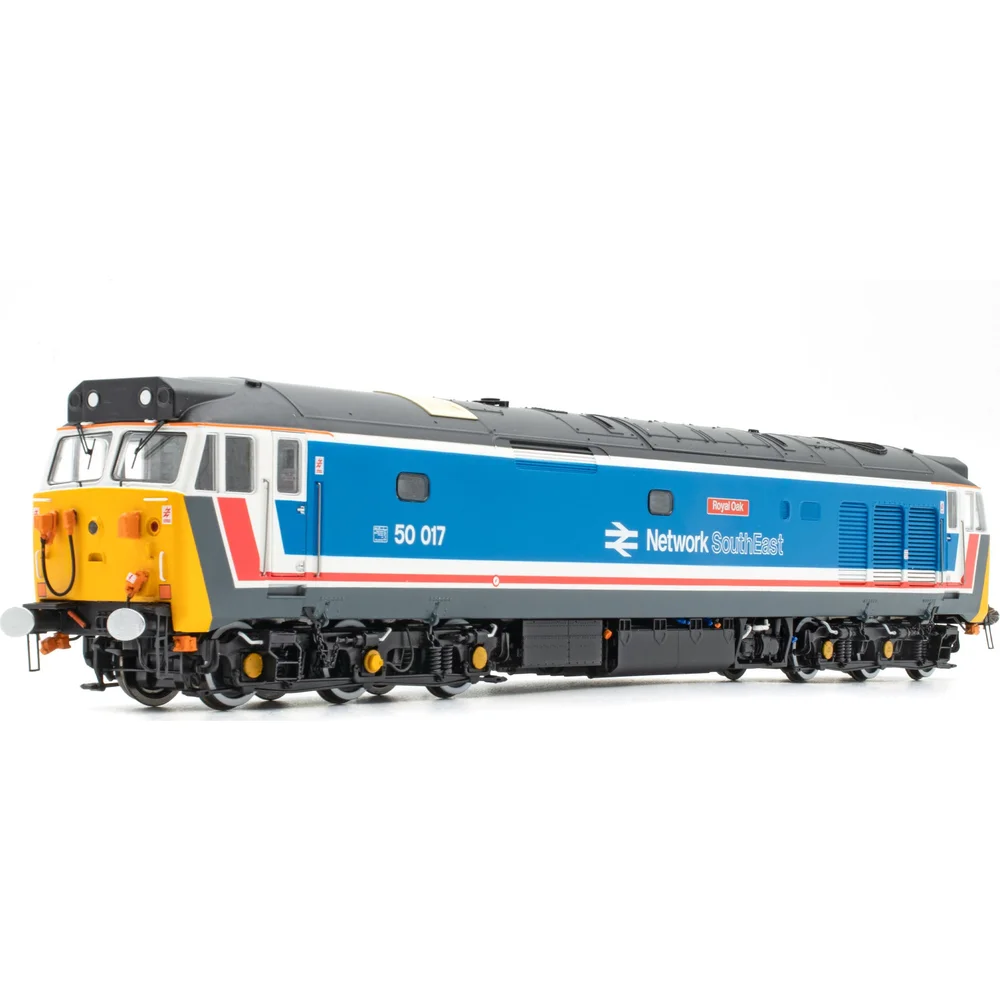
Insider Tip: The DP2 prototype was destroyed at Thirsk on 31 July 1967, colliding with a derailed cement train. Its 16CSVT engine was salvaged, certified, and installed in D417 — which became 50017 Royal Oak — creating a direct mechanical lineage between the prototype and one of the most famous preserved Class 50s.
Design and Technical Specifications
At the heart of the Class 50 sat the English Electric 16CSVT — a turbocharged, intercooled V16 four-stroke diesel with a 10-inch bore, 12-inch stroke, and total displacement of approximately 246 litres. Four turbochargers served pairs of cylinders via individual intercoolers, developing 2,700 bhp at 850 rpm. The engine drove an EE840/8B main generator supplying six EE538/5A nose-suspended DC traction motors — one per axle — identical to those used in the Class 37 and Class 55 Deltic, ensuring useful maintenance commonality across the fleet.
| Specification | Detail |
|---|---|
| Builder | English Electric, Vulcan Foundry |
| Built | 1967–1968 (50 locomotives) |
| Wheel arrangement | Co-Co |
| Engine | English Electric 16CSVT |
| Power output | 2,700 bhp (2,010 kW) at 850 rpm |
| Transmission | Diesel-electric |
| Length | 68 ft 6 in (20.88 m) |
| Weight | 115–117 long tons |
| Maximum speed | 100 mph (161 km/h) |
| Maximum tractive effort | 48,500 lbf (216 kN) |
| Continuous tractive effort | 33,000 lbf at 23.5 mph |
| Fuel capacity | 1,055 imperial gallons (4,796 litres) |
| Train heating | Electric Train Heat (ETH) |
| Brakes | Dual air and vacuum; rheostatic (removed at refurbishment) |
| Route availability | RA6 |
The cast steel bogies were shared with the Deltic and some Class 37 locomotives, supplied by English Steel Castings. As delivered, the Class 50 was equipped with rheostatic braking — particularly useful for controlled descents of Shap and Beattock on Anglo-Scottish duties — as well as automatic wheelslip detection and slow speed control. The inertial filtration system kept abrasive particles out of the engine room but produced the characteristic droning note that earned the class its "Hoover" nickname. Unfortunately, British humidity caused moisture to gum up the filters, eventually starving the main generator of cooling air and triggering failures — a systemic design flaw that would necessitate an expensive refurbishment within a decade.
Compared to its contemporaries, the Class 50 offered a compelling specification. The derated Class 47 produced 2,580 bhp against the Class 50's 2,700 bhp; the diesel-hydraulic Class 52 Western matched the power output but could not provide Electric Train Heat for air-conditioned coaching stock. On comparative tests at Whiteball Summit, a Class 50 recorded 2,115 equivalent drawbar horsepower — more than any other Type 4 diesel tested. The 100 mph maximum speed matched only the Deltic among contemporary locomotives.
Technical Insight: Why the ETH mattered The Class 52 Western locomotives were non-ETH-fitted, meaning they could not power the newly introduced air-conditioned Mk2d/e/f coaches that BR was rolling out from the early 1970s. This single specification difference effectively sealed the Westerns' fate: when Class 50s arrived on the Western Region in 1974, they could work the new coaching stock immediately, accelerating the Westerns' withdrawal. The ETH capability was not an afterthought — it was the decisive factor in the Class 50's Western Region deployment.
Service History and Operations
The Class 50's operational story falls into three distinct chapters: WCML express work, Western Region dominance, and the Network SouthEast decline.
D400 entered service on 17 October 1967 from Crewe (Camden) Traction Maintenance Depot. The fleet worked principally north of Crewe, taking over from electric locomotives and hauling Anglo-Scottish expresses to Glasgow Central, Edinburgh, and occasionally Perth and Aberdeen. From May 1970, eight diagrams called for double-headed Class 50 working to maintain six-hour schedules for the Royal Scot — a spectacular and noisy spectacle that generated enormous enthusiast interest. The locomotives were initially based at Crewe Electric TMD, later at Longsight Manchester.
The transfer west began in 1972 with D400's arrival at Bristol Bath Road for crew training. Mass transfer followed from May 1974 as WCML electrification was completed and new Class 87 electrics made the Class 50s redundant in the north. The final moves were made in May 1976.
On the Western Region, the fleet were based primarily at Laira (Plymouth) and Old Oak Common (London), working Paddington to Bristol, Plymouth, and Penzance. The Cornish Riviera Express was their flagship duty from 1975: a locomotive-hauled working of genuine prestige, serving stations along the Great Western main line and the spectacular coastal Dawlish sea wall. The last locomotive-hauled Cornish Riviera ran on 5 August 1979 behind 50039 Implacable, displaced by InterCity 125 HSTs. Secondary duties followed on Paddington–Oxford–Hereford, Birmingham–Bristol cross-country, and from 1986 the Waterloo–Exeter route under Network SouthEast management.
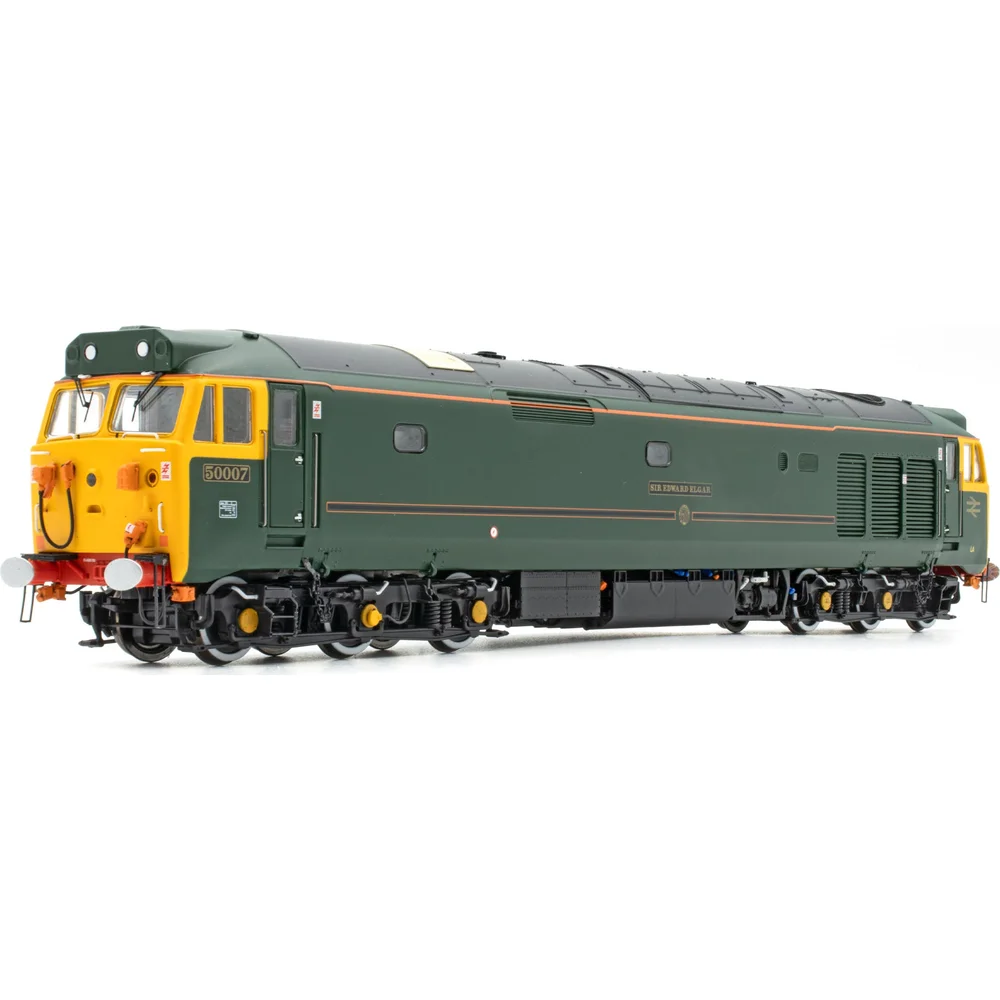
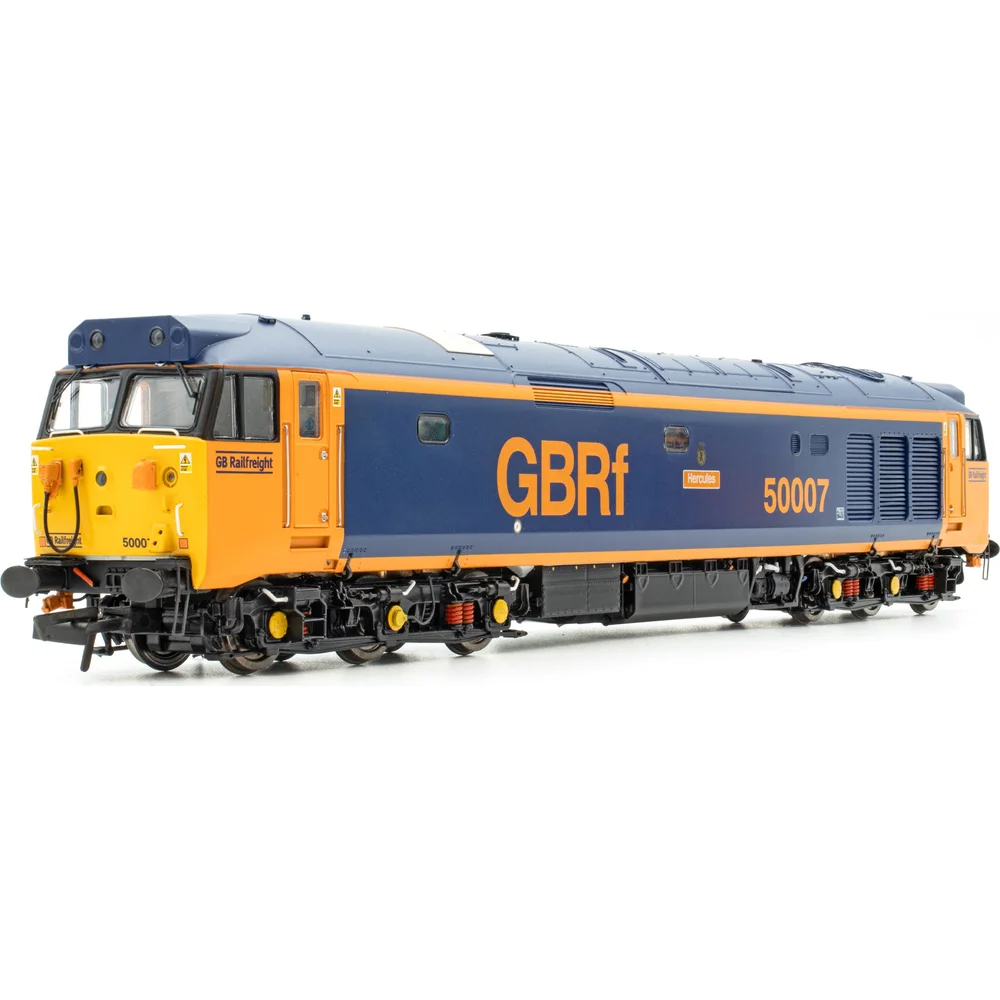
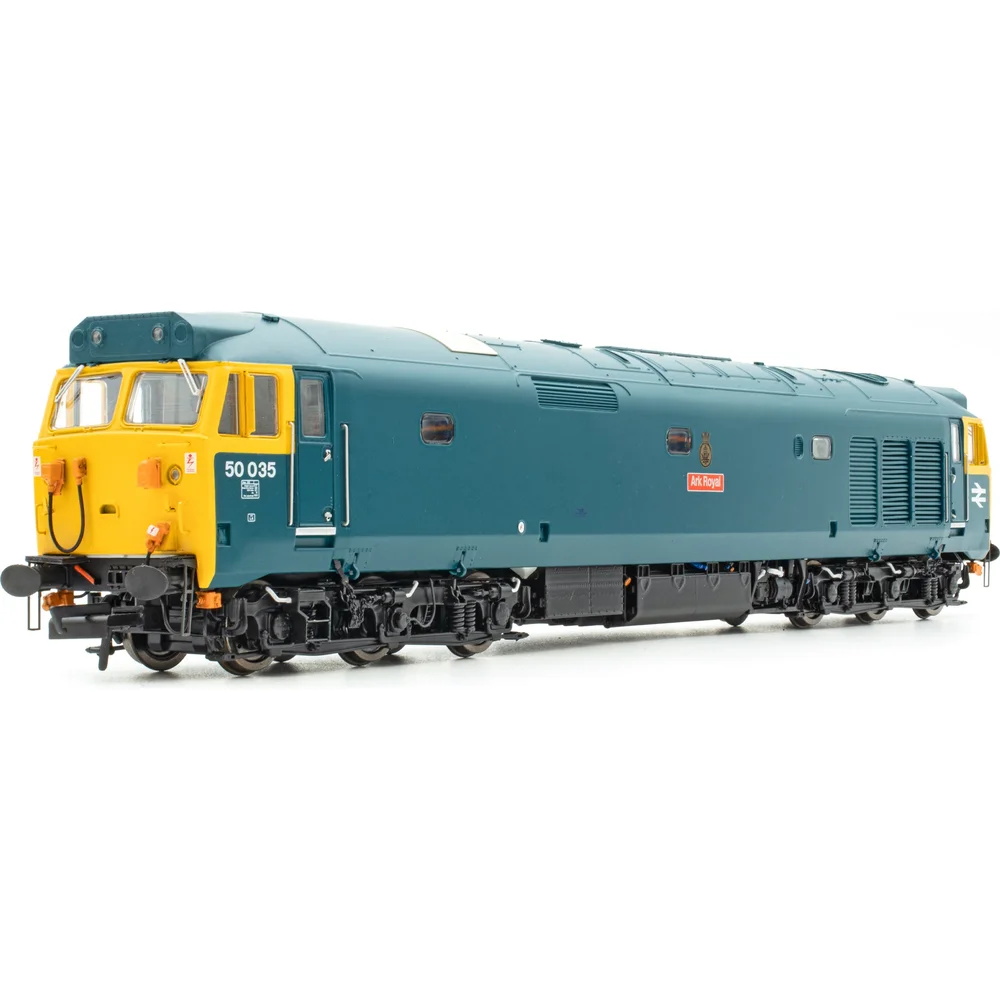
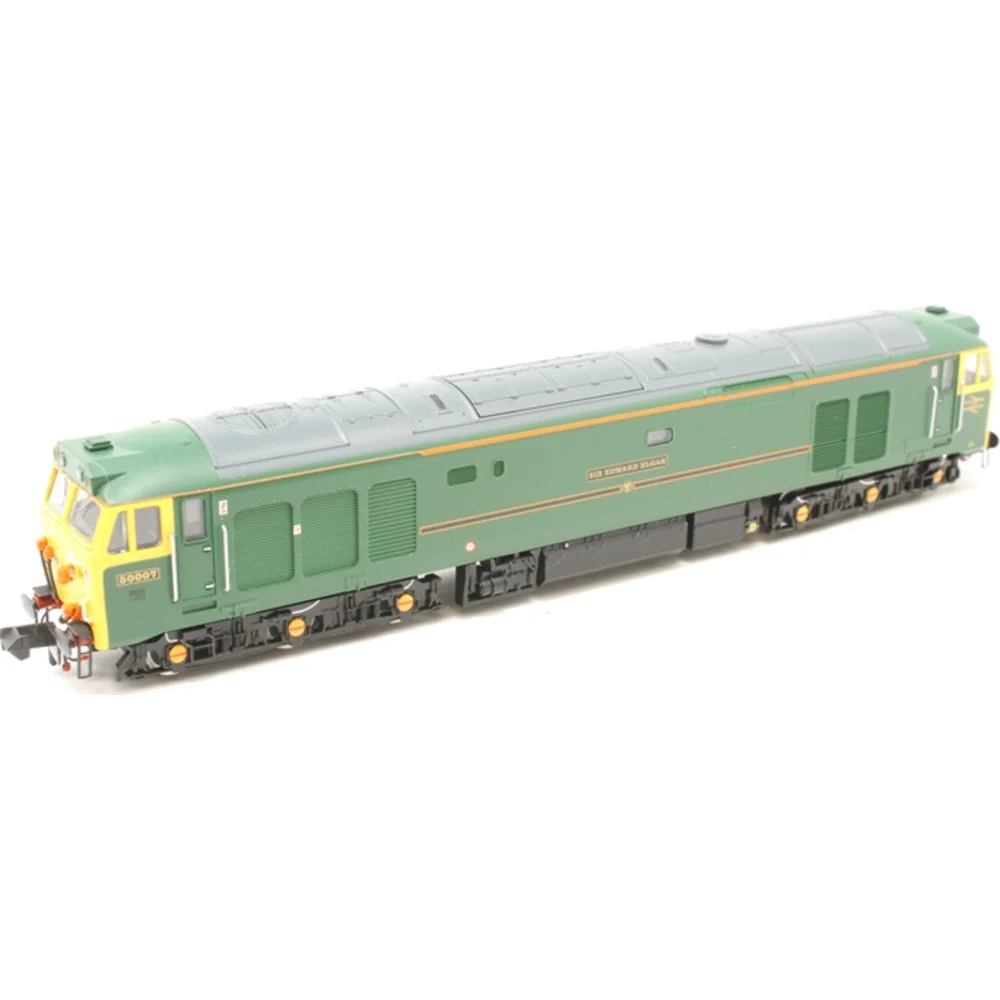
The naming programme in 1978–79 gave all 50 locomotives names of Royal Navy warships with distinguished war records — Dreadnought, Superb, Temeraire, Fearless, Valiant, Hood, Ark Royal, and more. The first naming, 50035 Ark Royal at Plymouth on 17 January 1978, was performed by the captain and crew of HMS Ark Royal itself. One exception came on 25 February 1984 when 50007 Hercules was renamed Sir Edward Elgar and repainted in lined Brunswick green to mark the GWR's 150th anniversary — a change that prompted a formal enthusiast petition but produced one of the most striking locomotive liveries of the decade.
The Doncaster refurbishment programme (1979–1983) transformed the fleet's reliability by simplifying the complex electronics and redesigning the air filtration system. But by the late 1980s, availability on the Waterloo–Exeter pool fell to crisis levels — at times as few as six of twenty dedicated locomotives were serviceable. Class 50s were removed from Waterloo–Exeter diagrams in May 1992. Three were retained for railtours; the final BR working, "The 50 Terminator" on 26 March 1994, saw 50050 and 50007 work to Penzance and return to Paddington, before both were officially withdrawn on 31 March 1994.
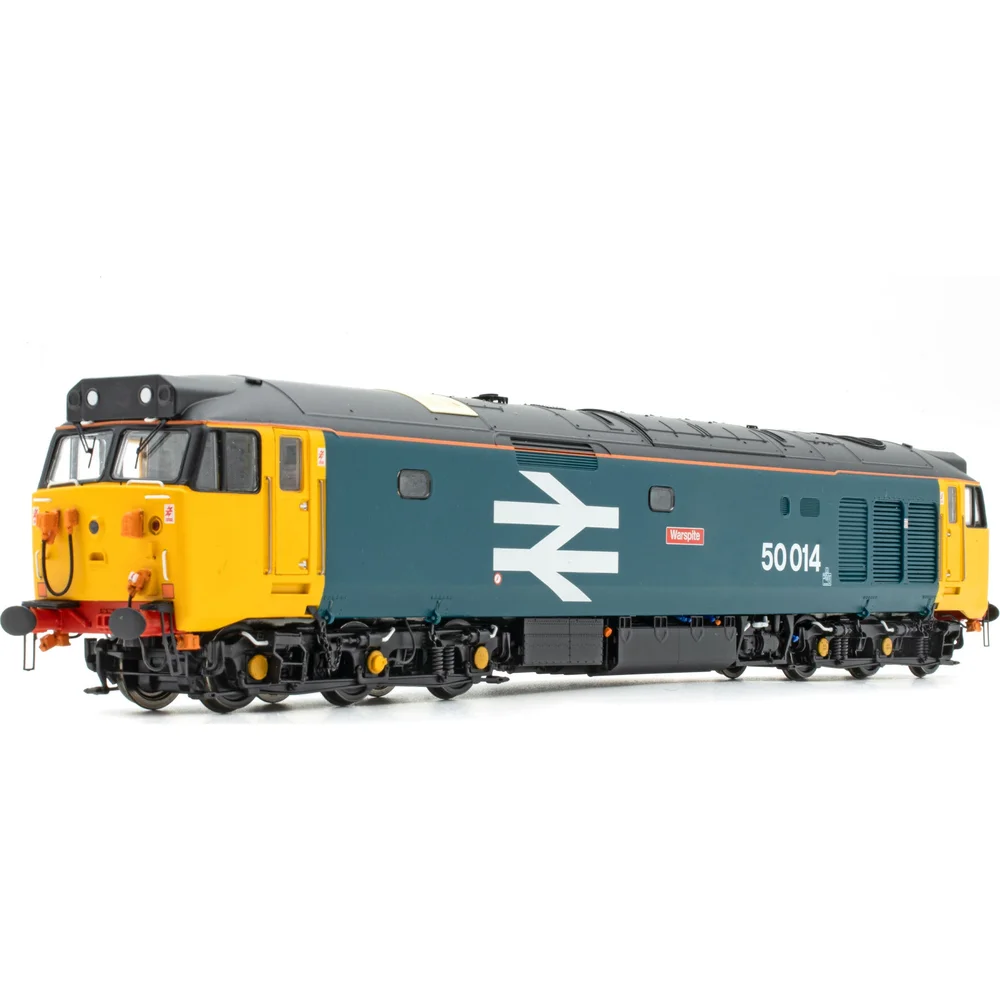
Operational Insight: The Laira Black Roof Laira depot, Plymouth — the Class 50's principal Western Region home — adopted a distinctive maintenance practice of painting locomotive roofs black rather than the standard grey. Exhaust deposits rapidly stained grey roofs, and the dark paint disguised the inevitable soiling between washes. If you're weathering a Class 50 model allocated to Laira in Large Logo Blue, a dark grey or black roof is entirely authentic and visually striking.
The Doncaster Refurbishment – Saving the Fleet
By 1978, Class 50 availability had fallen to 63% with a mean distance between failures of just 8,300 miles — alarmingly poor for a fleet only a decade old. The root cause was the complex electronics and inertial filtration system specified by BR's Chief Mechanical & Electrical Engineer, which proved unable to cope with British humidity. The main generator, starved of cooling air by gummed-up filters, was the principal failure mode.
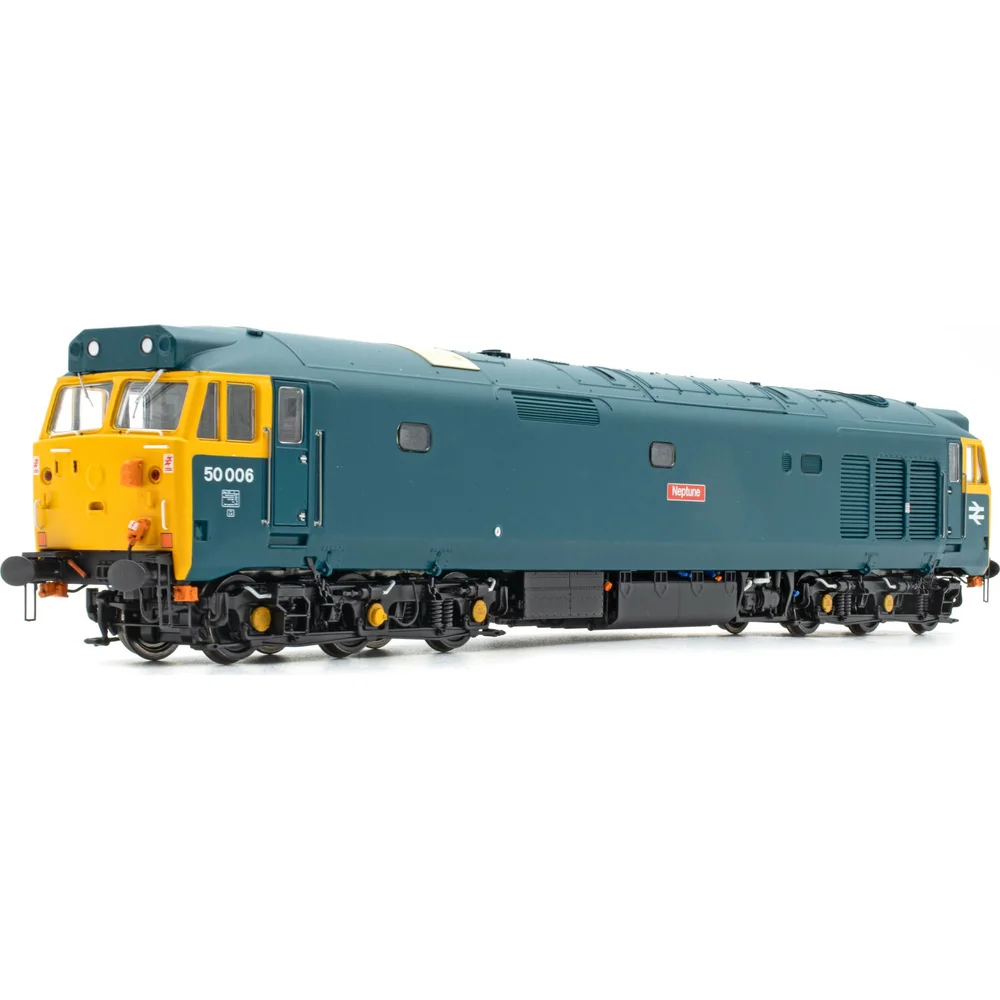
BREL Doncaster Works undertook a comprehensive rebuilding programme from November 1979 (when 50006 Neptune emerged as the first example) to December 1983 (50014 Warspite, the last). Every one of the fifty locomotives passed through Doncaster. The principal modifications were:
- Removal of slow speed control, rheostatic braking, and complex electronic wheelslip detection — dramatically simplifying the electrical systems
- Complete redesign of the air filtration system, eliminating the "Hoover" drone but solving the contamination problem
- Central high-intensity headlights replacing the four-character headcode boxes (plated over with flush panels)
- Bodyside modifications including filled sandbox recesses and revised ventilation louvres
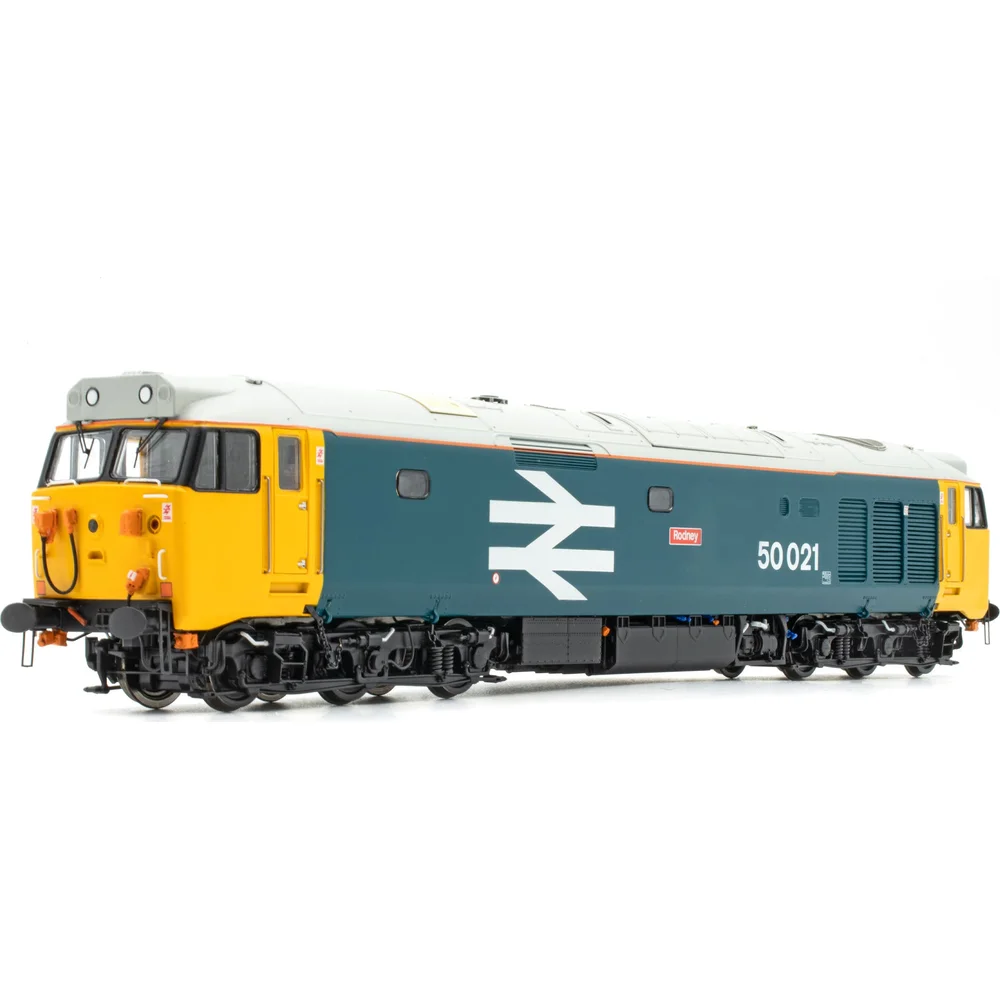
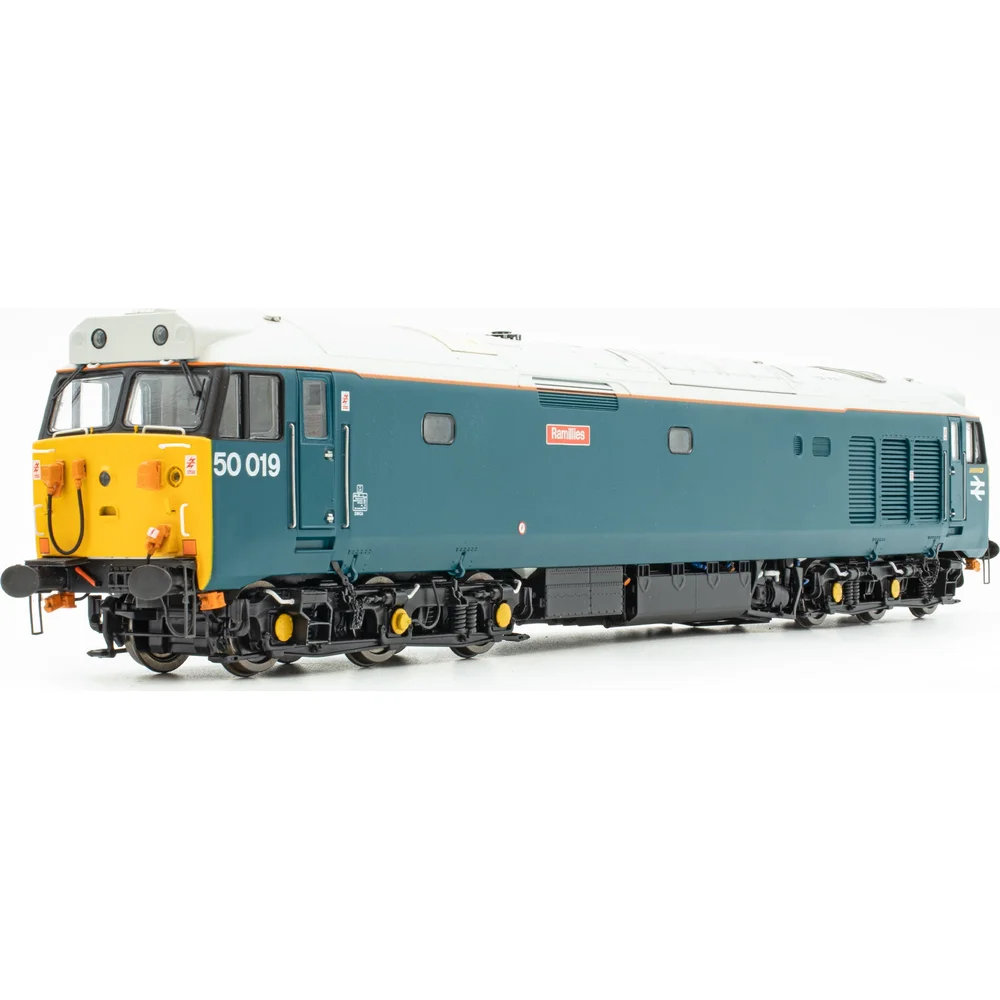
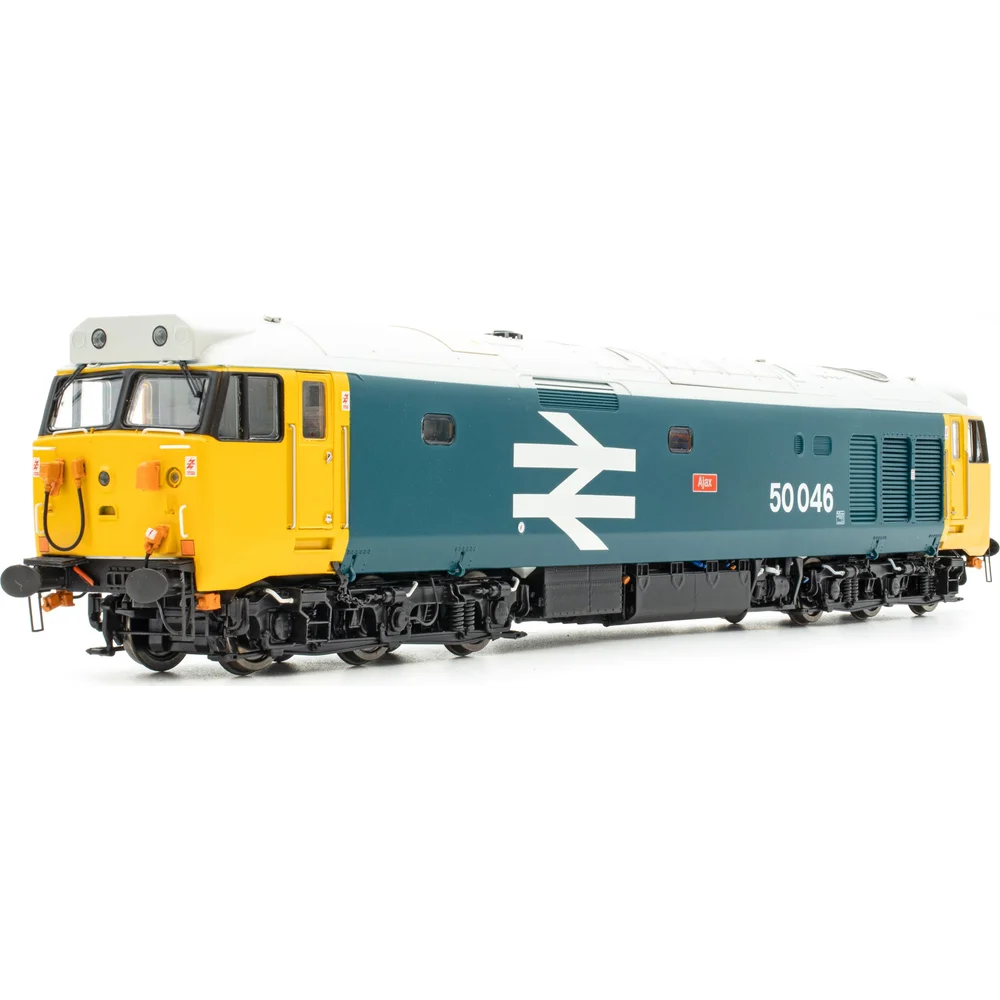
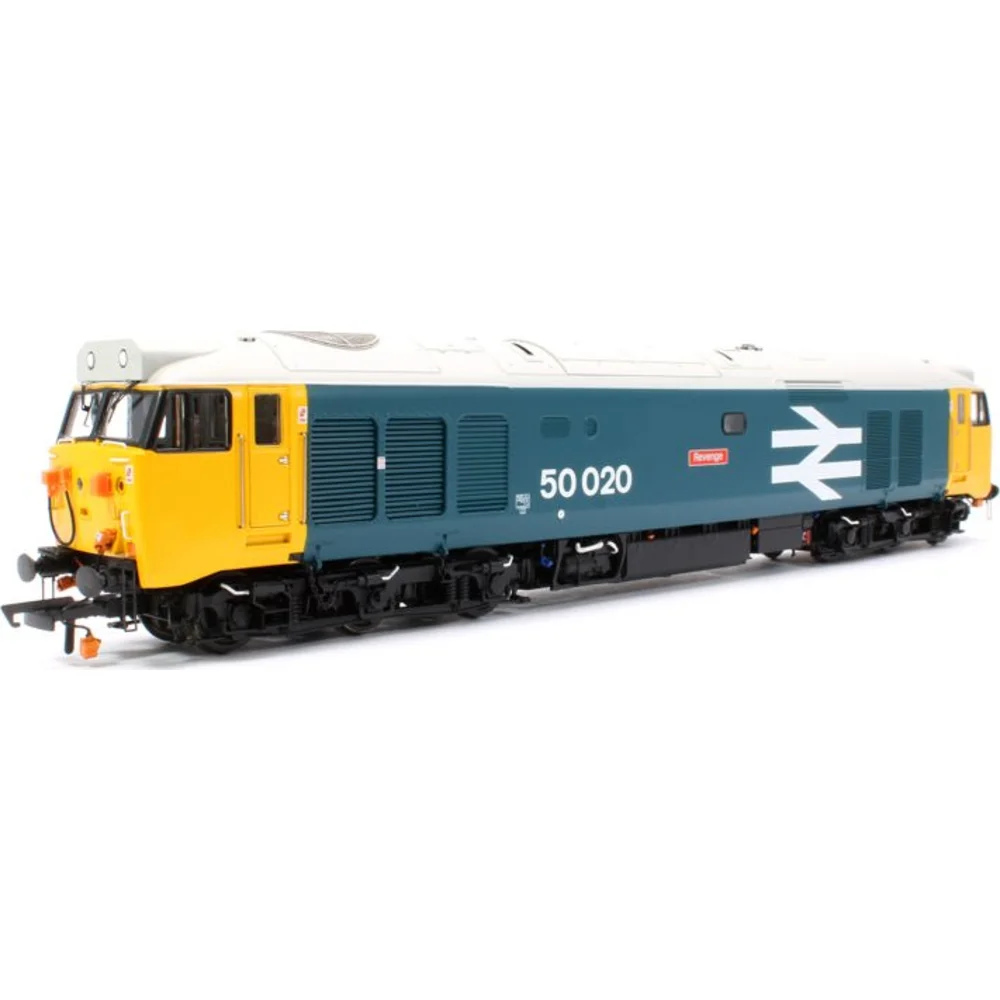
- New livery — the first six emerged in Rail Blue, but from August 1980 the rest received the iconic Large Logo Blue: grey roof, wrap-around yellow cabs, black cab window surrounds, and the full-height BR double-arrow logo
The decision not to replace the main generator with a modern alternator is widely regarded as a missed opportunity; contamination problems persisted and ultimately contributed to the class's operational decline in the late 1980s. Nevertheless, the refurbishment extended the fleet's working life by approximately ten years as intended, enabling the productive Network SouthEast chapter that followed.
Withdrawal, Preservation, and Legacy
The first withdrawal was 50011 Centurion in February 1987. Withdrawals accelerated through the early 1990s as reliability on the Waterloo–Exeter route remained chronically poor. By 1992, only eight locomotives were in traffic; by March 1994, three had been retained solely for charter and railtour work.
What happened next was remarkable. Enthusiast groups had been purchasing withdrawn locomotives since 1991, beginning with 50035 Ark Royal acquired by the Fifty Fund. The recovery of 18 locomotives — 36% of the entire class — established the Class 50 as one of the best-preserved first-generation diesel types in Britain. The Class 50 Alliance, formed in 2006 from the merger of the Fifty Fund and Project Defiance Limited, operates from Kidderminster TMD on the Severn Valley Railway, maintaining six locomotives and holding five between the group and associated owners with current mainline certification.
Notable preserved examples include:
- 50007 (Hercules/Sir Edward Elgar) – Class 50 Alliance, SVR; mainline certified; wore GBRf livery for spot-hire duties
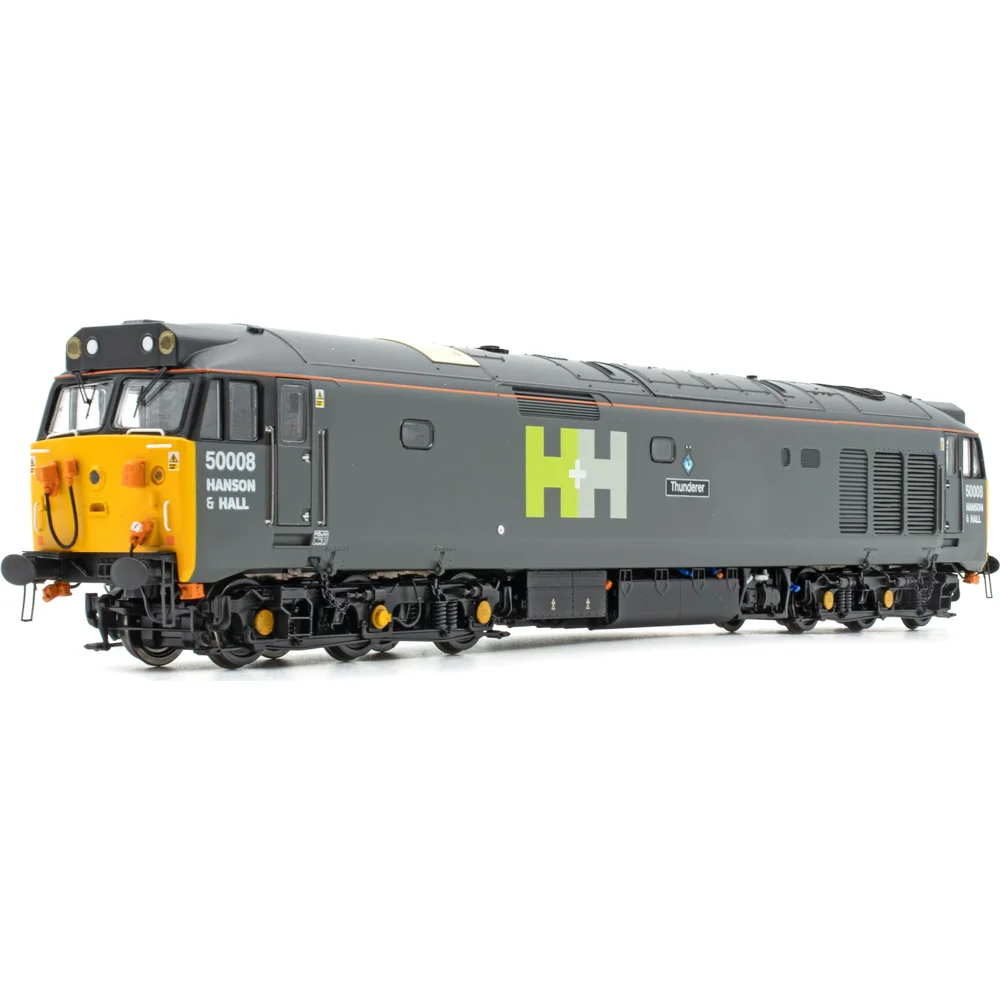
- 50008 (Thunderer) – Hanson & Hall; mainline certified; worn "Laira Blue" special livery
- 50031 (Hood) – Class 50 Alliance; the first Class 50 to return to the mainline in preservation (November 1997)
- 50035 (Ark Royal) – Class 50 Alliance; the first locomotive to be preserved, acquired 1991
- 50044 (Exeter) – Class 50 Alliance; mainline certified
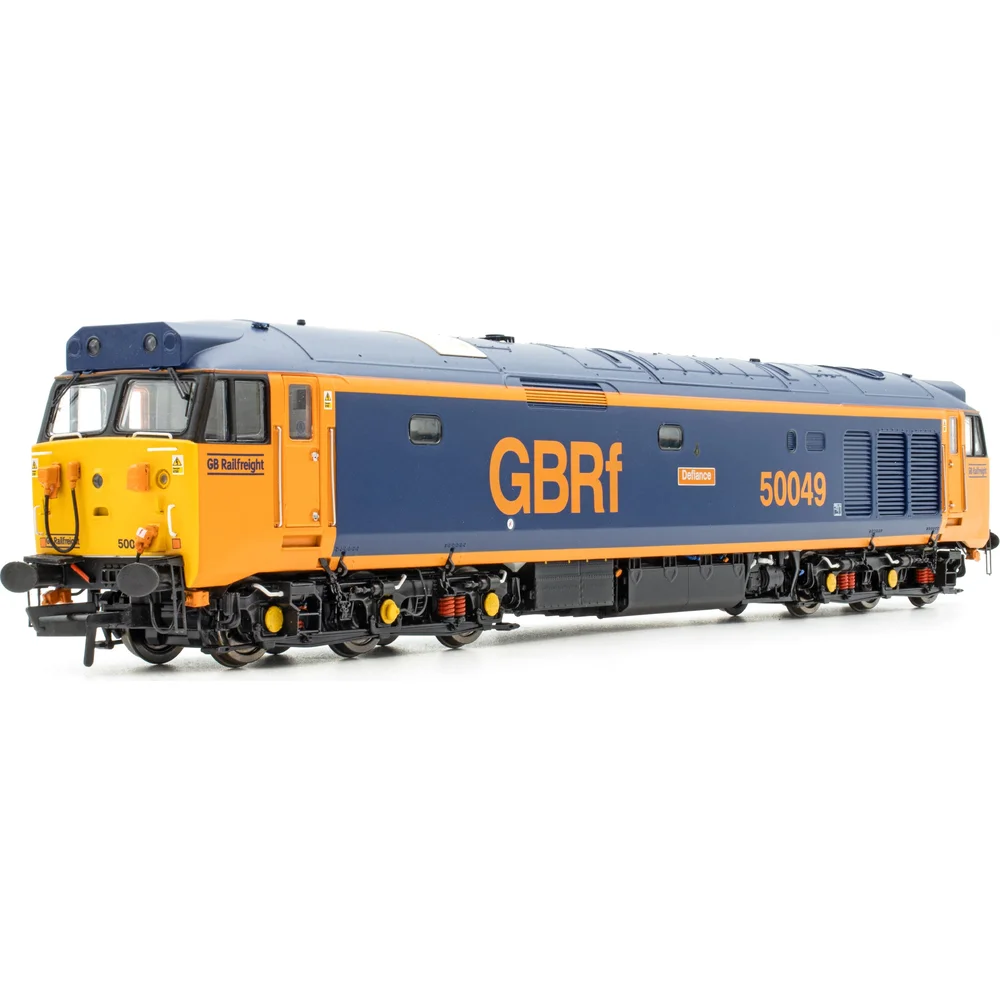
- 50049 (Defiance) – Class 50 Alliance; mainline certified; has worn GBRf blue/orange
- 50050 (Fearless) – Boden Rail Engineering; mainline certified
The Class 50 Alliance reached its 100th railtour in September 2023 ("Pilgrim Centurion"), and in September 2021 achieved the extraordinary feat of triple-headed mainline passenger haulage with 50007, 50044, and 50049. The October 2018 SVR Class 50 Golden Jubilee attracted 11 of 18 survivors to Kidderminster — described as the largest gathering of a single locomotive type in preservation history.
Preservation Note: 50015 Valiant wore the Civil Engineers "Dutch" grey and yellow livery at withdrawal — a scheme rarely modelled but available from Heljan in O gauge. If you want something genuinely unusual on your layout, a Dutch-liveried Class 50 on an infrastructure train is entirely prototype-based.
Modelling Significance and Scale Replications
The British Rail Class 50 has never been better served by model railway manufacturers than it is today. All four major British scales now have purpose-built, finely detailed models available, spanning the class's full livery range from unrefurbished Rail Blue to preservation and special liveries.
OO Gauge: Accurascale sets a new standard
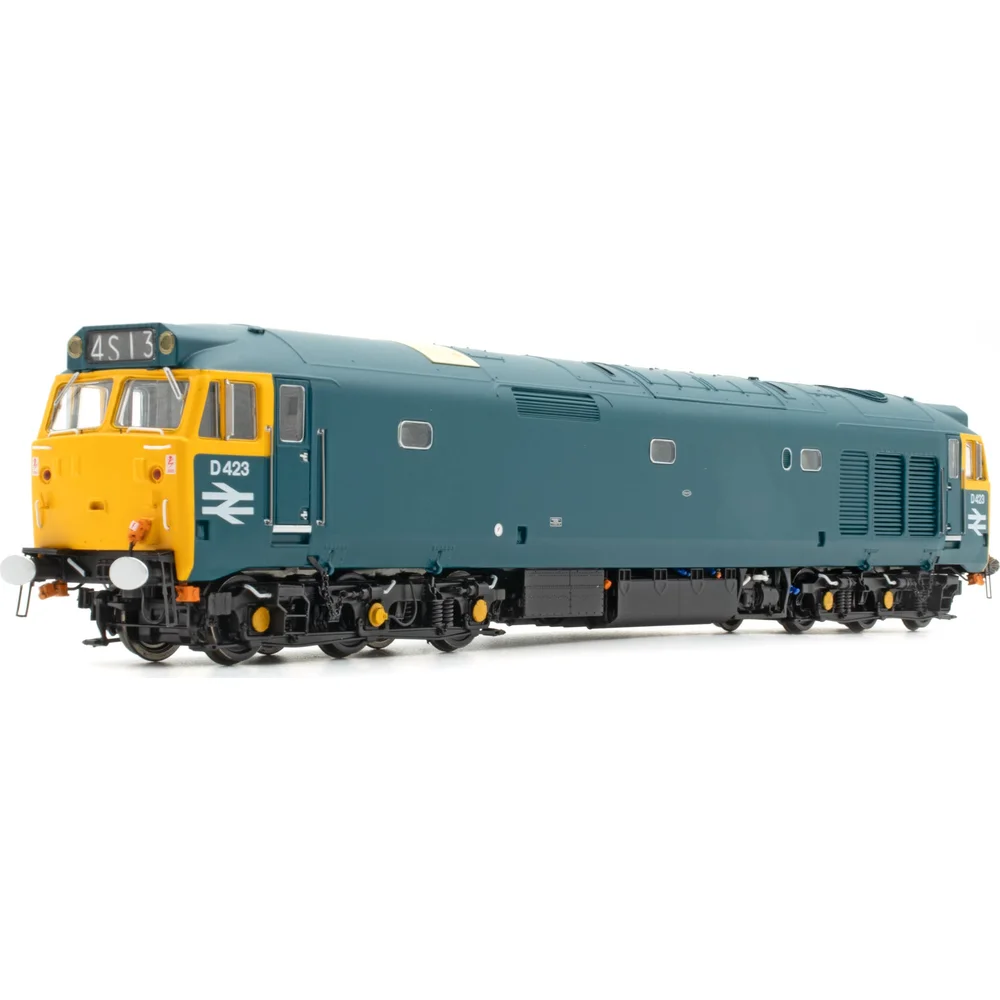
Accurascale released an all-new laser-scanned Class 50 in 2025–26, based on detailed measurements of 50017 Royal Oak. This is the most detailed ready-to-run Class 50 ever produced in OO gauge (1:76), featuring a motorised working radiator fan with variable speed, twin-speaker sound system, hall-effect flange squeal sensor on DCC models, comprehensive directional and cab lighting, RP25-110 profile wheels with P4/EM re-gauging provision, and separately applied etched metal handrails and grille details.
| Catalogue No. | Locomotive | Livery | Format |
|---|---|---|---|
| ACC2209 | D423 | BR Blue (unrefurbished) | DC / DCC Ready |
| ACC2210 | 50006 Neptune | BR Blue (refurbished) | DC / DCC Sound |
| ACC2213 | 50014 Warspite | Large Logo Blue (black roof) | DC / DCC Sound |
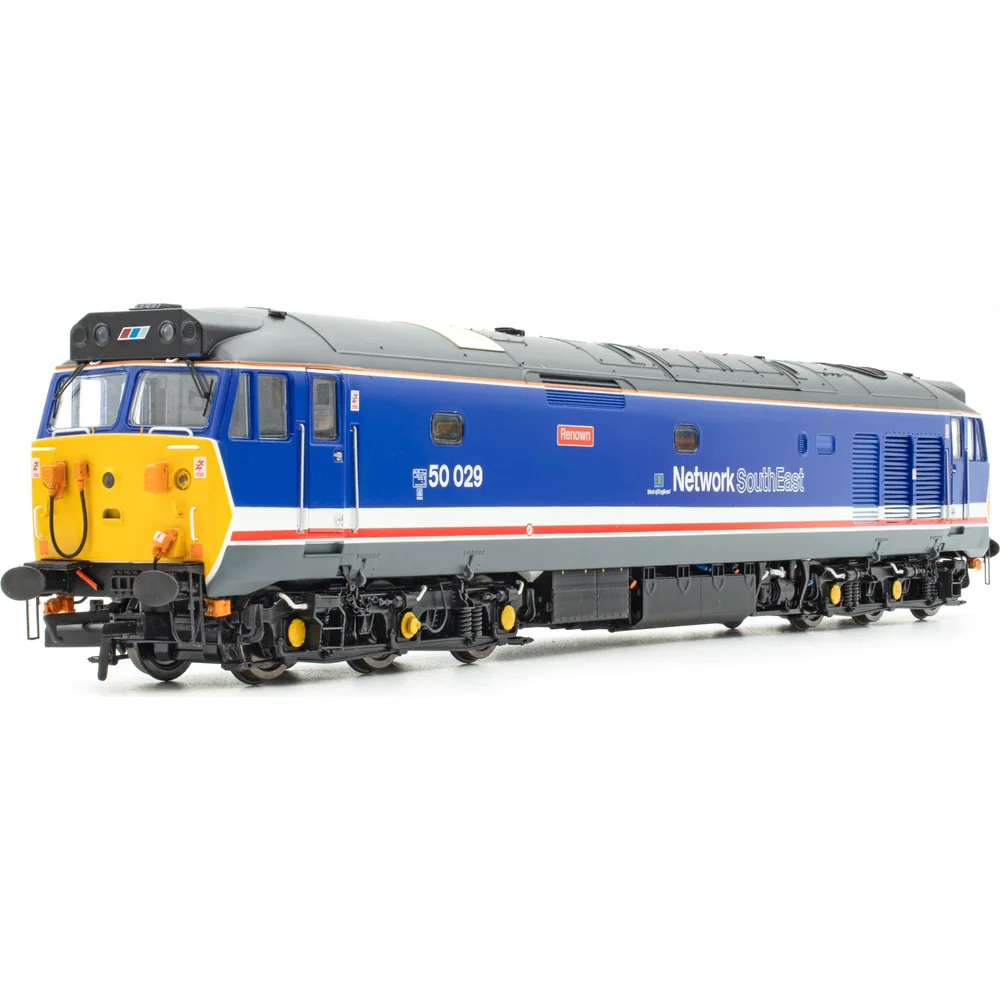
| ACC2214 | 50017 Royal Oak | Original NSE | DC / DCC Sound |
| ACC2215 | 50021 Rodney | Large Logo Blue (grey roof) | DC / DCC Sound |
| ACC2211 | 50007 Sir Edward Elgar | GWR 150 Brunswick Green | Accurascale exclusive |
| ACC2212 | 50008 Thunderer | Hanson & Hall Grey | Accurascale exclusive |
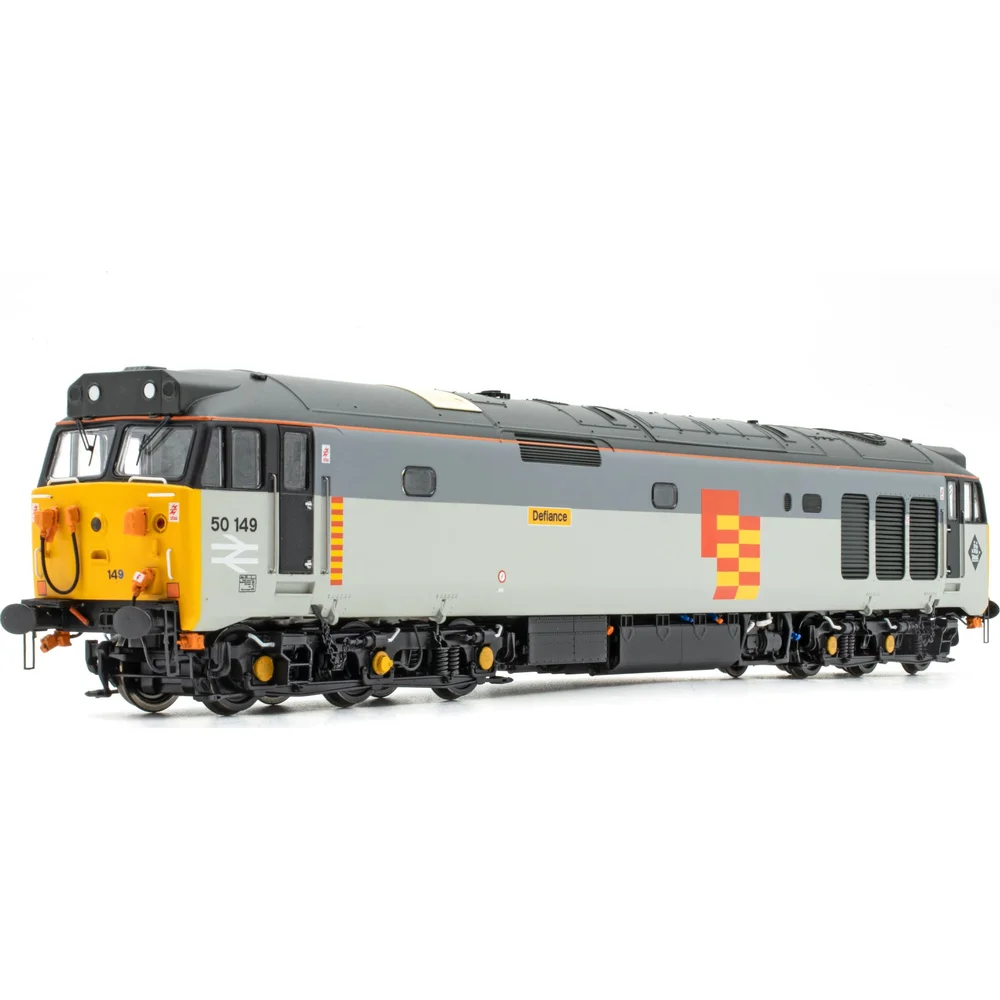
| ACC2216 | 50149 Defiance | Railfreight General | Accurascale exclusive |
DCC Ready models retail at approximately £189.99; DCC Sound versions at £299.99. A second production run covering BR Blue, Large Logo, Laira Blue, and Revised NSE liveries is announced for Q4 2026. All models use 21-pin DCC sockets, five-pole motors, and twin flywheels.
Hornby continues to produce Class 50s from upgraded 2004 tooling with 21-pin DCC sockets. Current releases include R30153 (50044 Exeter, NSE, ~£170 discounted) and R30154 (50042 Triumph, Large Logo Blue, ~£170). Hornby also produces an all-new Class 50 tooling in TT:120 scale (1:120, 12 mm gauge): TT3013M (50007 Sir Edward Elgar, GWR Green, £167.99), TT3013TXSM (DCC Sound, £222.99), plus Large Logo, GBRf, and BR Blue variants in the TT range.
N Gauge: Dapol's modern tooling
Dapol's "Next Generation" Class 50 (released 2019) comprehensively replaced the elderly 1983 Graham Farish model and remains the benchmark in N gauge (1:148, 9 mm). A five-pole iron-cored motor with twin flywheels and Next18 decoder socket gives excellent slow-speed running. Key catalogue numbers:
- 2D-002-000 – D406, BR Blue (unrefurbished), DC ~£131
- 2D-002-002 – 50040 Leviathan, Large Logo Blue, DC ~£131 / DCC Sound ~£185
- 2D-002-003 – 50037 Illustrious, Original NSE, DC ~£131
- 2D-002-005 – 50149 Defiance, Railfreight General, DCC Sound ~£200
- 2D-002-KM1 – GBRf twin pack (50007 + 50049), Kernow Model Rail Centre exclusive
Dapol also supplies DCC-fitted versions using their Imperium decoder at ~£155–165.
O Gauge: Heljan's impressive heavyweight
Heljan's O gauge (1:43.5, 32 mm) Class 50 — produced since 2019 across three batches — weighs nearly 2.5 kg with twin motors and all-wheel electrical pickup. Over 15 livery variants cover BR Blue (refurbished and unrefurbished), Large Logo with grey and black roof options, three NSE versions, GWR 150 Green, Railfreight General, GBRf, Civil Engineers Dutch, and Hanson & Hall Grey. Catalogue numbers use a 4000-series format: 4001 (BR Blue unrefurbished), 4010 (Large Logo grey roof), 4021 (Large Logo black roof), 4030 (Original NSE). RRP is £699–729, with discounts available at specialist retailers. Models are DCC-ready with screw terminals; aftermarket ESU LokSound 5 XL or Zimo MX690 installations are widely recommended.
Modeller's Tip: Choosing the right tooling variant Accurascale's OO models distinguish between refurbished (post-1979, plated-over headcode boxes, central headlight) and unrefurbished (as-built, working headcode boxes, original louvre positions) examples. If you are modelling a pre-1979 WCML or early Western Region layout, you need the unrefurbished variant — the bodyshell changes are very visible. The same distinction applies to Dapol N gauge and Heljan O gauge models. Always check the catalogue description carefully before ordering.
Unique Modelling Tips and Layout Integration
Successfully incorporating a Class 50 into your layout means understanding the specific operational context that made these locomotives distinctive — and choosing the right era, coaching stock, and scenic setting to bring that context to life.
Selecting your era
The Class 50's operational history divides into three modelling eras, each with distinct requirements:
Era 5 (1967–74, WCML): Rail Blue locomotive with initially small yellow warning panels (later full yellow ends), double-headed working on Anglo-Scottish services, Mk1 and Mk2a/b/c coaches in maroon transitioning to blue/grey. Formations ran to 10–12 vehicles, always including a Mk1 miniature buffet car (no Mk2 catering vehicles were ever built). A pair of unrefurbished Class 50s with a long mixed-livery Mk1/Mk2 rake captures this era superbly.
Era 6 (1974–86, Western Region): Refurbished locomotive in Large Logo Blue (from 1980), Mk2d/e/f air-conditioned coaches in blue/grey for Paddington–Plymouth services, typically 9–11 vehicles. Mk1 stock in blue/grey for secondary Oxford and Hereford services. A Class 47 is the essential companion — the two types worked interchangeably throughout this period.
Era 7 (1986–94, Network SouthEast): NSE-liveried locomotive (any of the three sub-versions), Mk2B coaches in NSE livery, six- or nine-car formations for Waterloo–Exeter. Grimy, careworn weathering entirely appropriate for the late period — availability was chronically poor, and locomotives received minimal cosmetic attention.
Coaching stock
- Paddington–Plymouth/Penzance (1974–79): Mk2d/e/f air-conditioned coaches, blue/grey livery, 9–11 cars. Hornby and Bachmann both produce suitable Mk2f coaches.
- Paddington–Oxford (1980–86): Mk1 coaches in blue/grey, 5–8 cars — consider a rake of Hornby or Bachmann Mk1 suburban coaches.
- Waterloo–Exeter (1986–92): Mk2B coaches in NSE livery, 6 or 9 cars. Mix open seconds with a buffet or restaurant car. No Mk3 vehicles ever appeared on this route.
Scenic settings
The iconic Class 50 landscapes are instantly recognisable. Dawlish — red sandstone cliffs, sea wall running, occasional spray — is the defining Western Region image and works beautifully as a scenic break on a layout. The Royal Albert Bridge at Saltash is a natural centrepiece for Cornish layouts. For WCML modellers, the Lune Gorge and Shap Summit justify the effort of scenic hillside construction, particularly with double-headed working. The Waterloo throat with Southern multiple units in the background provides authentic NSE-era atmosphere.
Weathering techniques
- Rail Blue era: Blue faded to a lighter, slightly violet shade within two to three years. Use a light grey mist over dry blue to replicate sun-fading. Full yellow ends were often dirtier than bodysides, accumulating grime from lineside vegetation and exhaust.
- Large Logo era: Roof staining from exhaust runs aft from the No. 1 end ventilation grilles. On Laira-allocated examples, weather the roof dark grey or near-black. White cab surrounds on the headcode box area discoloured to cream or pale grey quickly.
- NSE era: The blue faded and chalked noticeably. Red stripes remained more saturated than the blue, creating an uneven appearance by the early 1990s. Heavy general grime is entirely appropriate — these were not well-maintained machines in their final years.
Finally
The British Rail Class 50 defies easy categorisation. It was ordered as a temporary measure, proved unreliable within a decade, was expensively rebuilt, and then spent its final years struggling on a secondary route before a farewell railtour into retirement. By any rational assessment it should be a footnote — yet it is instead one of the most beloved diesel locomotive classes in British railway history, with a preservation society, five mainline-certified survivors, and more currently available model railway products than almost any other British diesel.
The reasons are not hard to find. The Class 50 was powerful, fast, and handsome — arguably the best-looking of the first-generation BR diesels, with a balanced profile that worked in every livery from Rail Blue through Large Logo to NSE. It worked the most scenic routes in Britain: Dawlish, Shap, the Cornish Riviera, the Royal Albert Bridge. It was the locomotive that replaced the beloved diesel-hydraulic Westerns and, in the minds of a generation of Western Region enthusiasts, filled that void with honour. And it ended its BR career not quietly but with a genuine farewell — packed railtours, naming ceremonies, and the drama of 50050 shutting down at Newton Abbot and limping home one last time.
For model railway enthusiasts, there has never been a better time to model the Class 50. Accurascale's laser-scanned OO gauge models set a new benchmark for detail and functionality; Dapol's N gauge tooling provides superb performance at a compact scale; Heljan's O gauge heavyweight delivers physical presence that makes other locomotives look slight. Choose your era, select the right coaching stock, weather your model to reflect the operational realities of its period, and you have a locomotive around which an entire layout narrative can be built — from the drama of a double-headed run over Shap to the bittersweet last days at Waterloo, the Class 50 has a story worth telling.
Frequently Asked Questions
How many British Rail Class 50 locomotives were built, and when?
Fifty locomotives were constructed at English Electric's Vulcan Foundry, Newton-le-Willows, between October 1967 and November 1968. All entered service in BR Rail Blue livery. They were originally numbered D400–D449 and renumbered 50001–50049 and 50050 under TOPS in 1973. The Class 50 was the last first-generation main line diesel class ordered by British Railways.
What made the Class 50 different from the Class 47?
The Class 50 used the English Electric 16CSVT engine producing 2,700 bhp, compared to the derated Sulzer 12LDA28C in the Class 47 at 2,580 bhp. The Class 50 also offered Electric Train Heat capability and a 100 mph maximum speed. The Class 47 was far more numerous at 512 examples and used diesel-electric transmission like the Class 50, but the EE design proved more powerful on Western Region express duties.
Why were Class 50s transferred to the Western Region?
The completion of West Coast Main Line electrification to Glasgow in 1974 made the Class 50 redundant in the north, as new Class 87 electric locomotives took over Anglo-Scottish services. Simultaneously, the Western Region needed ETH-capable Type 4 diesels to work new air-conditioned Mk2 coaching stock — something the existing diesel-hydraulic Class 52 Westerns could not provide. The Class 50 solved both problems at once, enabling the Westerns' rapid withdrawal.
What was the Doncaster refurbishment and why was it needed?
The refurbishment, carried out by BREL Doncaster Works between 1979 and 1983, was a comprehensive rebuild of all 50 locomotives to address a severe reliability crisis. Mean distance between failures had fallen to 8,300 miles by 1978. The complex electronic systems specified at construction, combined with an air filtration system unsuited to British humidity, caused chronic main generator failures. Doncaster simplified the electronics, redesigned the filtration, added central headlights, and applied the iconic Large Logo Blue livery.
How many Class 50s have been preserved, and where can you see them?
Eighteen of the original fifty locomotives survive in preservation — a remarkable 36% survival rate. The Class 50 Alliance at Kidderminster TMD on the Severn Valley Railway is the principal base, operating six locomotives including 50035 Ark Royal, 50033 Glorious, and 50044 Exeter. Other preserved examples are at the Mid Hants Railway (50027 Lion), Bodmin & Wenford Railway (50042 Triumph), and Peak Rail (50029 Renown and 50030 Repulse, under restoration). Five locomotives — 50007, 50008, 50044, 50049, and 50050 — hold current mainline certification.
Can preserved Class 50s still be seen on the main line?
Yes. Five Class 50s hold current mainline certification and work railtour and spot-hire duties. The Class 50 Alliance reached its 100th railtour in September 2023. In September 2021, 50007, 50044, and 50049 operated triple-headed on a mainline passenger charter — a historic achievement. 50008 Thunderer works spot-hire duties for Hanson & Hall, and 50050 Fearless (owned by Boden Rail Engineering) is also mainline active. Check Class 50 Alliance announcements at fiftyfund-alliance.co.uk for upcoming railtours.
What OO gauge Class 50 models are currently available?
Accurascale produces the current benchmark OO gauge Class 50 (from 2025), with catalogue numbers ACC2209–ACC2216 covering BR Blue, Large Logo, NSE, GWR Green, Railfreight General, and special liveries. DCC Ready models retail at approximately £189.99; DCC Sound at £299.99. Hornby offers Class 50s from upgraded tooling: R30153 (50044 Exeter, NSE) and R30154 (50042 Triumph, Large Logo), available at £130–170 discounted. A second Accurascale run is announced for Q4 2026.
Is the Class 50 available in N gauge?
Yes. Dapol produces an all-new N gauge Class 50 (from 2019), widely regarded as the best N gauge diesel currently available. The range spans BR Blue (unrefurbished, 2D-002-000), Large Logo Blue (2D-002-002), Original NSE (2D-002-003), and Railfreight General (2D-002-005), with DC (£131), DCC fitted (£155), and DCC Sound (~£185–200) versions. Specialist retailer and preservation society exclusive variants are also available, including a Kernow Model Rail Centre GBRf twin pack.
What about O gauge and TT:120 scale?
Heljan produces an O gauge (7 mm scale, 1:43.5) Class 50 across 15+ livery variants, RRP £699–729. The model weighs approximately 2.5 kg with twin motors and is DCC-ready. Hornby produces an all-new Class 50 tooling in TT:120 scale (1:120, 12 mm gauge): TT3013M (50007 Sir Edward Elgar, GWR Green, £167.99) and TT3013TXSM (DCC Sound, £222.99), alongside Large Logo, GBRf, and BR Blue variants. No Bachmann OO or Graham Farish N gauge Class 50 exists or has been announced.
What coaching stock should I use with a Class 50 model?
Era is everything. For WCML operation (1967–74), use Mk1 and Mk2a/b/c coaches in maroon and/or blue/grey — always with a Mk1 miniature buffet car. For Western Region Paddington–Plymouth services (1974–79), use Mk2d/e/f air-conditioned coaches in blue/grey, 9–11 vehicles. For secondary Western Region services (1980–86), Mk1 coaches in blue/grey are correct. For Waterloo–Exeter NSE workings (1986–92), use Mk2B coaches in NSE livery, six or nine cars. No Mk3 vehicles were used on Class 50-hauled services.
How does the Class 50 compare with the Class 52 Western it replaced?
Both produced 2,700 bhp, but the Class 52 used diesel-hydraulic transmission versus the Class 50's diesel-electric. The Western weighed 108 tonnes against the Class 50's 117 tonnes and lacked Electric Train Heat. The Western's B-B bogie configuration provided lighter axle loads but the hydraulic transmission was non-standard and incompatible with BR's standardisation policy. The Class 50 was ultimately more reliable in its refurbished form, offered ETH for modern coaching stock, and aligned with BR's long-term standardisation on diesel-electric traction.
What is the best way to weather a Large Logo Blue Class 50?
Focus on three areas: the roof (dark grey staining running aft from exhaust grilles at the No. 1 end — use near-black on Laira-allocated examples), the cab fronts (yellow panels collect grime around windscreen surrounds and buffer beams; a dirty wash in ochre-brown tones works well), and the lower bodysides (brake dust and track grime along the solebars and bogie sides). Avoid over-weathering — well-maintained 1981–85 examples were kept reasonably clean. Save heavy grime for late-1980s and early 1990s NSE examples, where faded chalky blue and soiled stripes are entirely authentic.