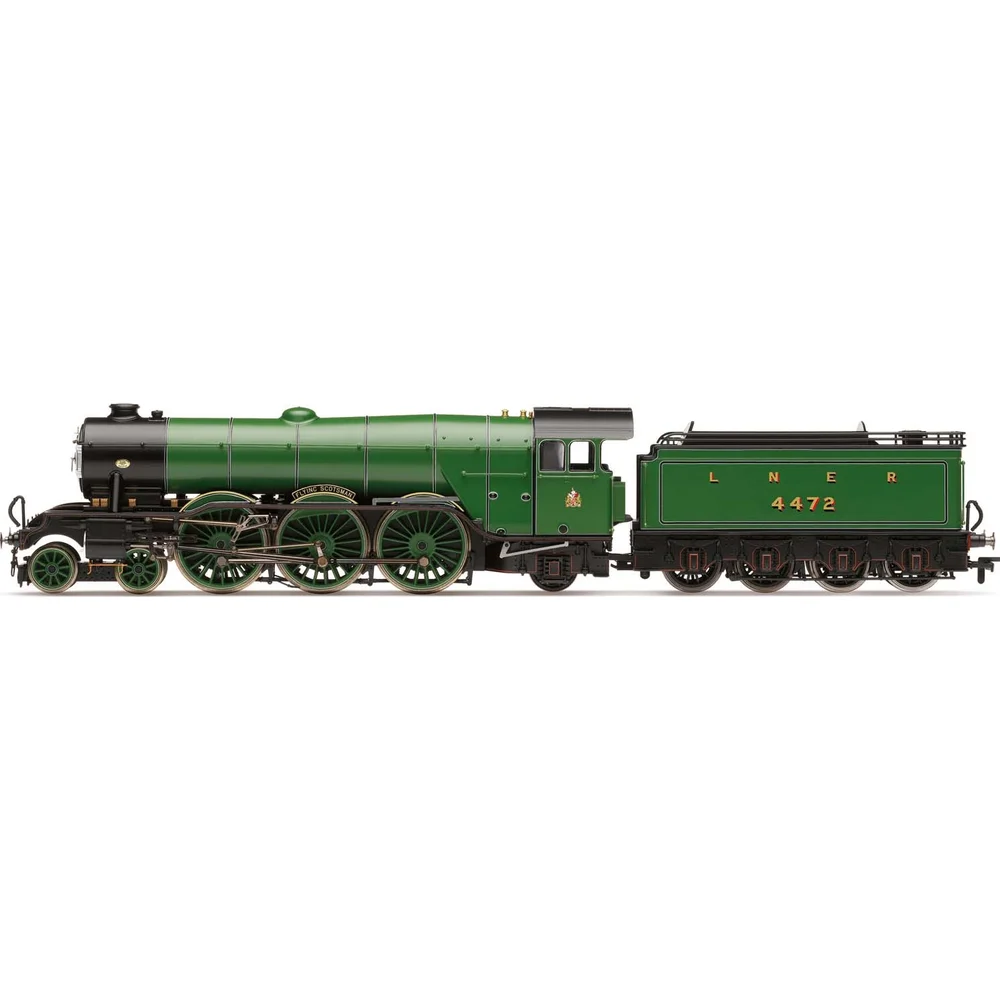
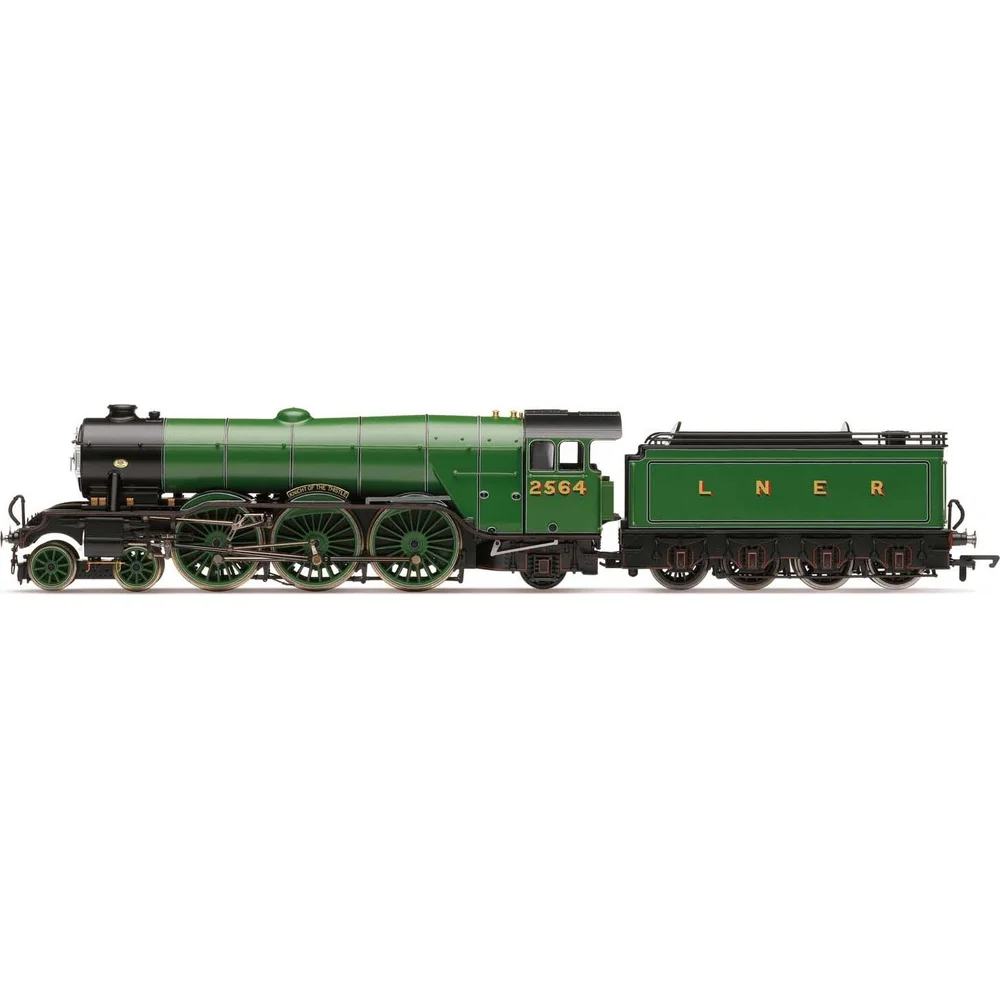
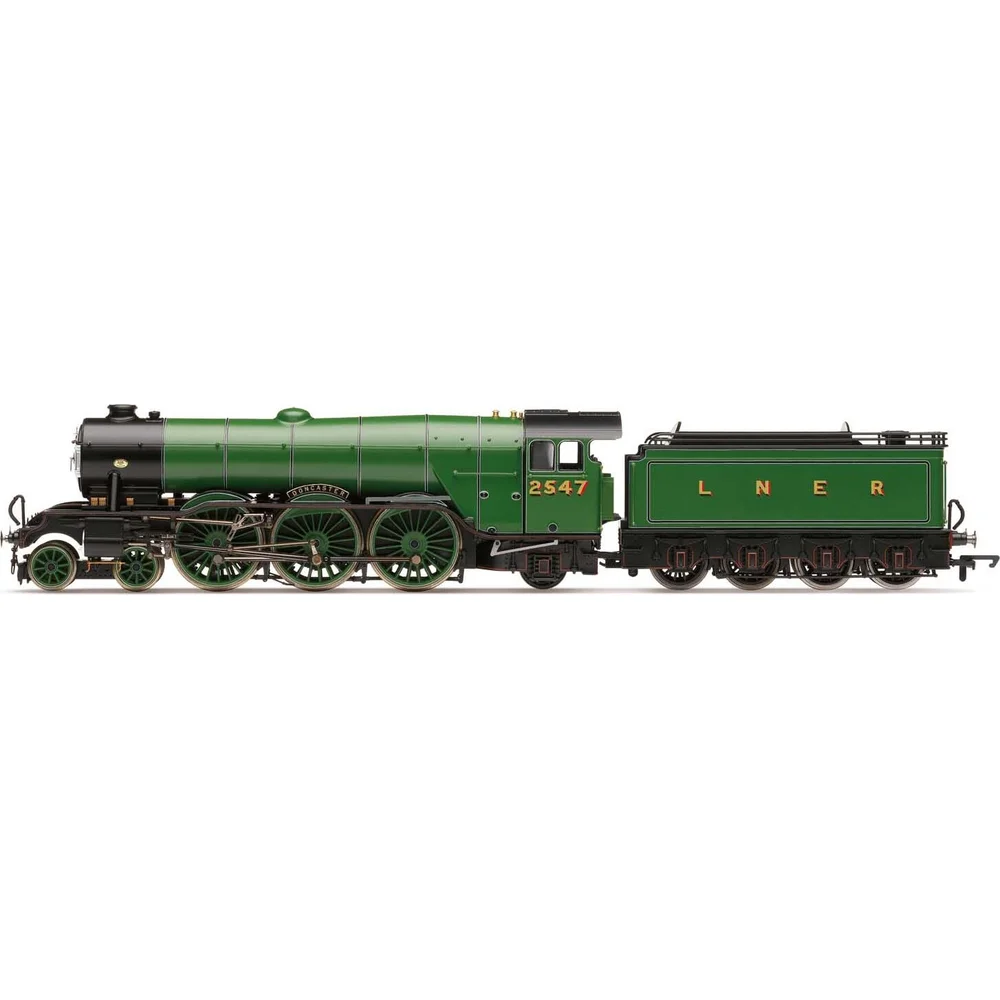
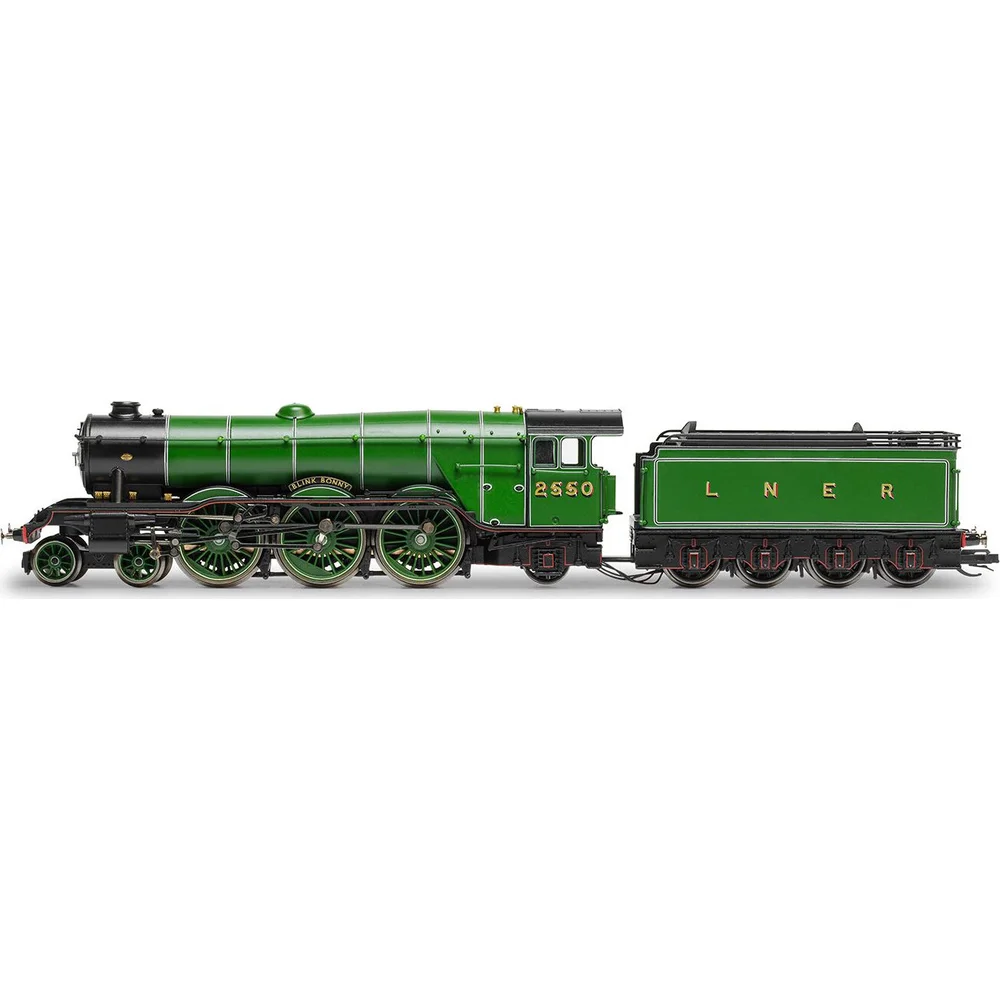
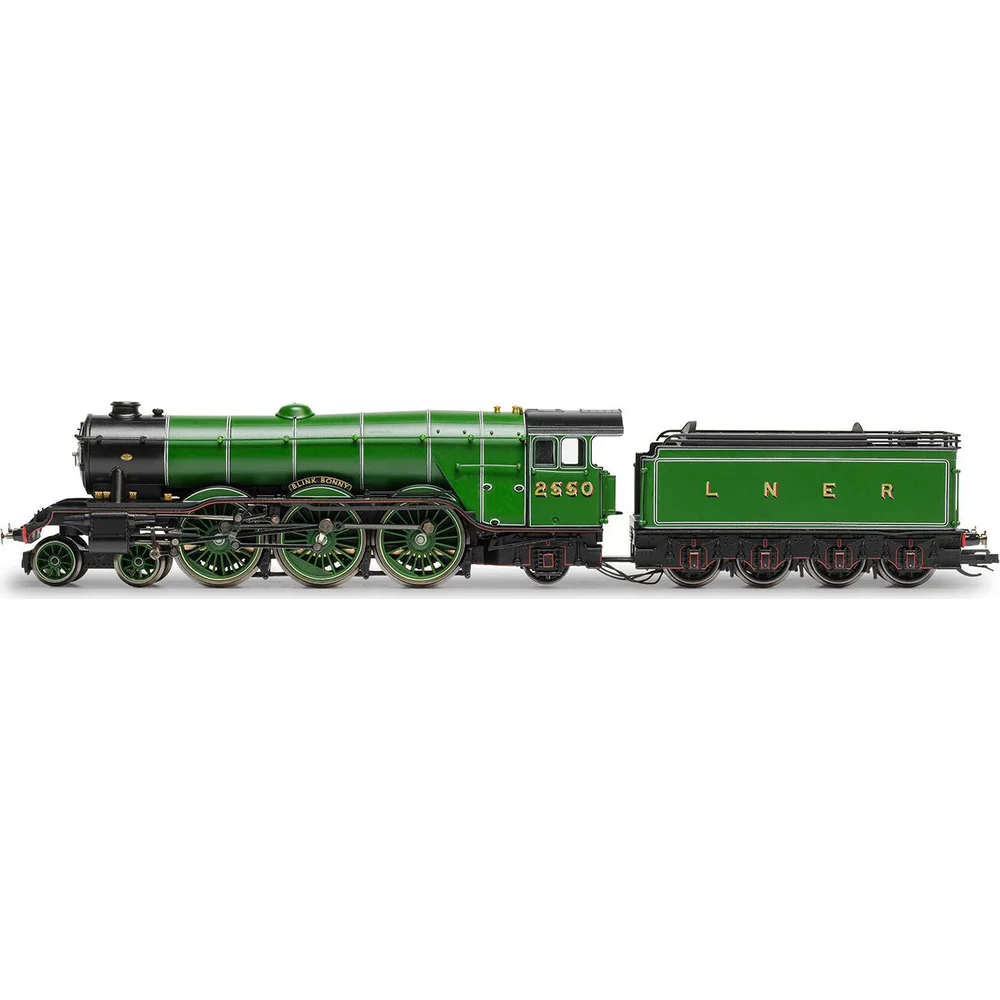
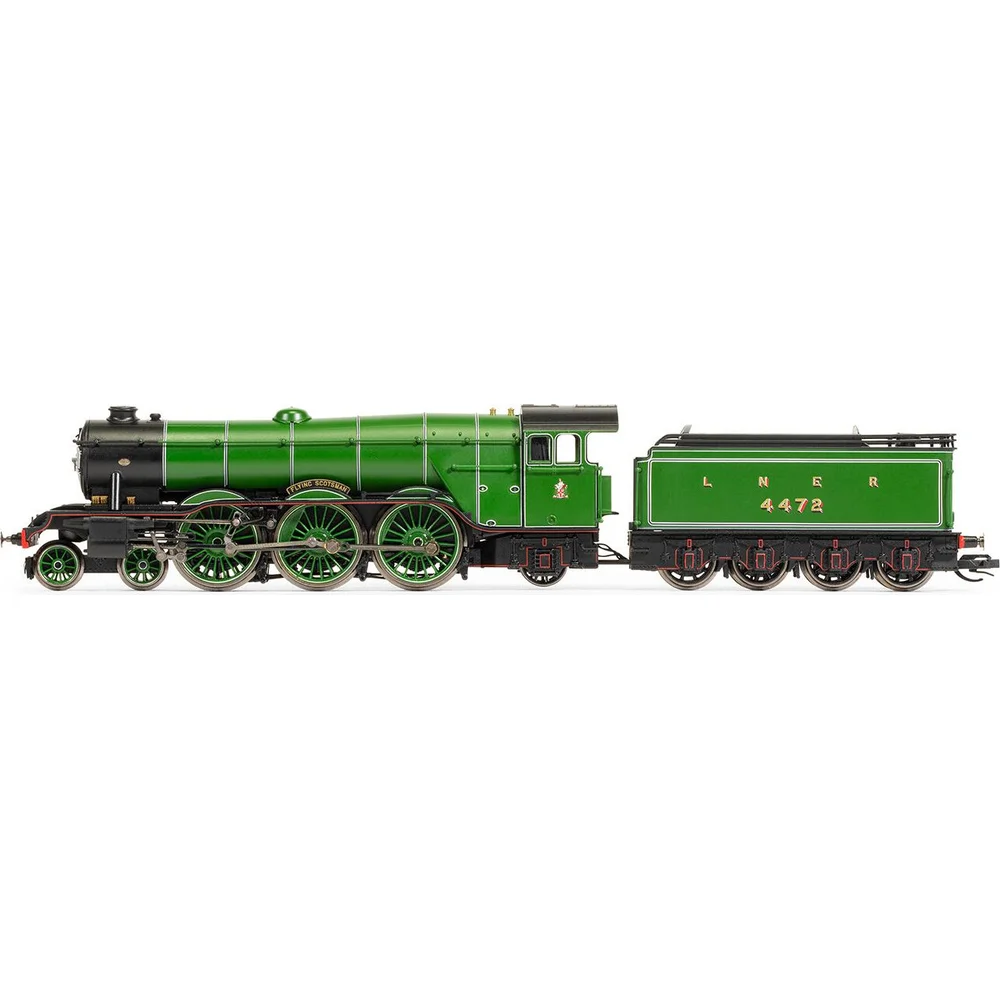
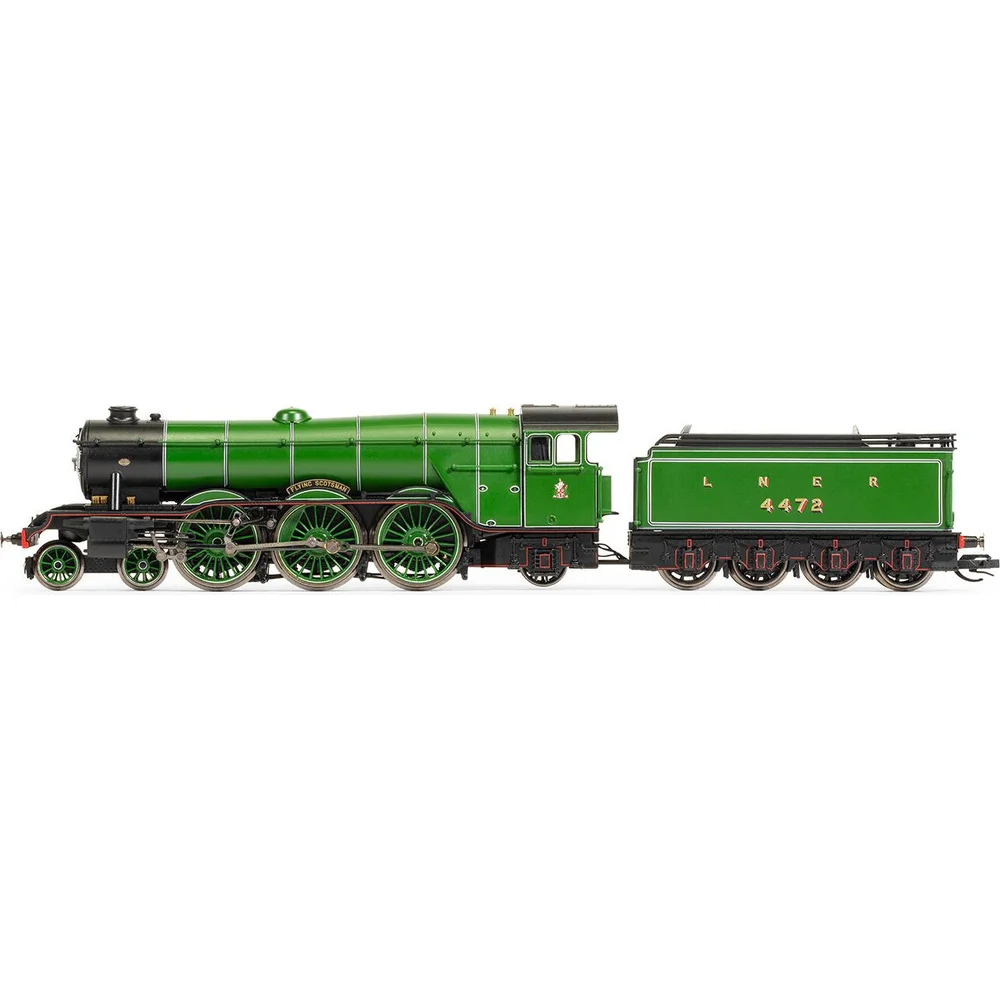
The LNER A1 Class stands as one of the defining moments in British locomotive history. When Great Northern emerged from Doncaster Works in April 1922, Nigel Gresley had produced something Britain had never seen before: a genuine Pacific — a 4-6-2 express passenger locomotive with the power, the boiler, and the firebox area to match the accelerating weight of East Coast expresses. Over the following three decades the design would evolve into the Gresley A3, produce the first authenticated 100 mph steam run in Britain, and underpin East Coast Main Line supremacy for forty years. Yet the original A1 is, in a very real sense, a lost class. Every single locomotive was either rebuilt into the superior A3 configuration or, in one notorious case, dismembered by Gresley's successor. Not one survives in original form. Understanding exactly what the A1 was — and how it differs from the A3, the Thompson rebuild, and the Peppercorn design that borrowed its name — is essential both for the railway historian and for the modeller choosing between the bewildering range of ready-to-run Pacific models on the market today.
Quick Takeaways
- 52 locomotives built as A1 (1922–1925): Constructed at Doncaster Works across the GNR and early LNER period, with a further 27 new-built to evolved A3 specification from 1928
- Three-cylinder conjugated valve gear: Gresley's 2:1 lever arrangement drove the inside cylinder from the two outside valve spindles — elegant in theory but problematic at high mileage
- 1925 GWR exchange trials: Comparative running against Pendennis Castle exposed the A1's inefficiency and directly drove the long-travel valve conversion that created the A3
- No original A1 survives: Every locomotive was rebuilt to A3 specification by 1948 or radically reconstructed; the sole preserved example, 60103 Flying Scotsman, is an A3
- Multiple RTR scales available: Hornby dominates OO gauge across nine generations of tooling; Dapol leads in N gauge; Heljan/Hattons produced the definitive O gauge model
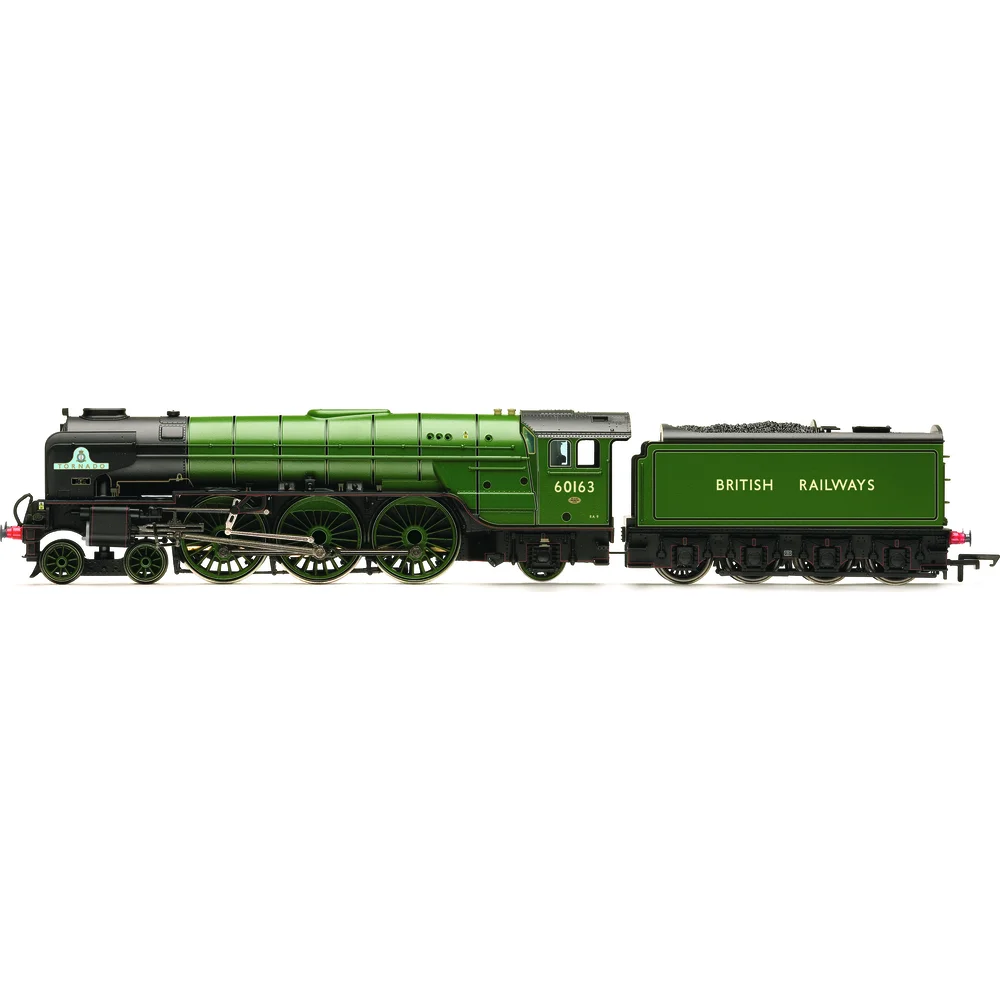
- Four separate "A1" classes exist: Gresley A1 (1922), Thompson A1/1 (1945 rebuild, one locomotive), and Peppercorn A1 (1948) are distinct — Tornado is a Peppercorn, not a Gresley
- Corridor tender innovation: From 1928, specially-built tenders with an internal gangway allowed crew changes on the non-stop London–Edinburgh working without stopping the train
Historical Background and Context
By 1920, the Great Northern Railway's express passenger fleet was approaching a crossroads. Henry Ivatt's large-boilered C1 Atlantics — the finest British 4-4-2s ever built — had been the East Coast's workhorse for fifteen years, but rising train weights were beginning to expose the fundamental limitation of a two-coupled-axle locomotive: limited adhesive weight. Nigel Gresley, who had taken over as GNR Locomotive Engineer in 1911, had been watching developments abroad with great interest.
Gresley's design thinking drew on two key sources. The first was American practice, particularly the Pennsylvania Railroad's K4 Pacific of 1914, from which he borrowed the wide firebox carried over a trailing axle, the tapered boiler, and a combustion chamber extending the firebox into the barrel to improve efficiency. The second was his own developing work on three-cylinder propulsion. His 1918 GNR Class O2 2-8-0 had proved the principle; the 1920 GNR H4 (later LNER K3) 2-6-0, built with 1,000 examples eventually ordered, validated three-cylinder working at express speeds. The Pacific was the logical next step.
The conjugated valve gear arrangement Gresley chose had been independently developed by Harold Holcroft of the South Eastern & Chatham Railway and refined in collaboration with Gresley's team. The 2:1 lever mechanism derived the motion of the inside valve from the two outside valve spindles, eliminating the need for a third independent set of gear buried inaccessibly between the frames. It was a neat solution — but one with a critical flaw that would only become apparent at high mileage.
No. 1470 Great Northern entered traffic in April 1922, followed by Sir Frederick Banbury (No. 1471) in July. The locomotive was immediately impressive: the 6 ft 8 in driving wheels, the wide-grate boiler generating 29,835 lbf of tractive effort, and the smooth three-cylinder exhaust beat announced a new era. Ten more were ordered before the GNR ceased to exist as an independent company; these emerged from Doncaster in 1923 as LNER Nos. 1472–1481, including the locomotive that would become the most famous steam engine in the world: 4472 Flying Scotsman.
Insider Tip: The GNR vs LNER Build Distinction
The first two locomotives (1470 and 1471) were authorised and designed under the GNR; the ten that followed (1472–1481) were ordered by the GNR but delivered under the new LNER. All twelve are sometimes called "GNR Pacifics" but only 1470 and 1471 were actually GNR-funded. A further forty locomotives followed as LNER orders in 1924–25 (Nos. 2543–2582). When recreating an authentic early LNER consist, note that the first true LNER-owned A1s carried standard GNR-pattern bogie tenders rather than the later corridor type.
A further forty LNER-ordered A1s emerged in 1924–25 (Nos. 2543–2582), bringing the total to 52 locomotives. All were built at Doncaster. The naming convention — racehorse winners, predominantly of the Derby, St Leger, and 2000 Guineas — was established from 1925 onward, replacing the early practice of commemorative names. Engines like Lemberg, Manna, Cameronian, Pretty Polly, and Humorist gave the class a distinctive character that persists in model names to this day.
Design and Technical Specifications
The original 1922 A1 specification represents a carefully balanced machine, but one whose design was not yet fully optimised. The three cylinders measured 20 in × 26 in, all driving the same coupled axle — a layout that, combined with the 2:1 conjugated gear, created significant maintenance issues once the lever pivots wore. Boiler pressure was 180 psi with a round-top firebox; heating surface was 2,930 sq ft evaporative, with a 525 sq ft Robinson superheater (32 elements). The grate area of 41.25 sq ft gave the wide firebox breathing room for sustained high-power outputs, though the short-travel valves choked the exhaust at speed and pushed coal consumption unnecessarily high.
The problem with the conjugated gear emerged in service. With short-travel valves, the 2:1 lever wore at its main pivot (not originally ball-raced), and thermal and dynamic flex in the outside valve spindles was mechanically amplified into over-travel of the middle valve at speed. The inside cylinder consequently developed disproportionate power and chronically overloaded its big-end. The issue was not the conjugated principle itself but the short valve travel Gresley had specified — something the 1925 exchange trials made unmistakably clear.
The 1925 locomotive exchange with the GWR is one of the pivotal events in twentieth-century British railway engineering. In April 1925, GWR Castle Class No. 4079 Pendennis Castle ran King's Cross–Doncaster in competition with A1 No. 4475 Flying Fox; simultaneously A1 No. 4474 Victor Wild worked Paddington–Plymouth against GWR engines. Despite being smaller, the Castle's long-lap, long-travel valves delivered markedly better acceleration, significantly lower coal consumption, and cleaner exhaust. Gresley responded with characteristic decisiveness: long-travel valves were fitted to 4477 Gay Crusader in 1926, and by 1927 the first full rebuild — with a 220 psi boiler, enlarged 19 in cylinders, and a 706 sq ft 43-element superheater — had produced what was formally classified the Gresley A3. Conversion of the remaining A1s continued progressively through to 1948.
| Specification | Original A1 (1922) | A3 Rebuild |
|---|---|---|
| Wheel arrangement | 4-6-2 | 4-6-2 |
| Cylinders | 20 in × 26 in | 19 in × 26 in |
| Boiler pressure | 180 psi | 220 psi |
| Driving wheel diameter | 6 ft 8 in | 6 ft 8 in |
| Tractive effort | 29,835 lbf | 32,909 lbf |
| Grate area | 41.25 sq ft | 41.25 sq ft |
| Evaporative heating surface | 2,930 sq ft | 2,930 sq ft |
| Superheater surface | 525 sq ft (32 elements) | 706 sq ft (43 elements) |
| Locomotive weight | 91.35 tons | 96 tons |
| Overall length (with tender) | 70 ft 5 in | 70 ft 5 in |
| Maximum height | 13 ft 1 in | 13 ft 1 in |
| Coal capacity (bogie tender) | 8 tons | 9 tons |
| Water capacity | 5,000 gallons | 5,000 gallons |
The original eight-wheel non-bogie tender was replaced from 1928 by the celebrated corridor tender — a purpose-built design with an internal gangway allowing crew changes while the locomotive was in motion. This innovation made the non-stop London–Edinburgh working operationally possible and remains one of the most ingenious tender designs in British railway history. Modellers representing the non-stop Flying Scotsman service must use a corridor tender-fitted example, a distinction several manufacturers have tooled correctly.
Service History and Operations
The A1 entered service on the East Coast Main Line's hardest diagrams almost immediately, working the principal expresses between King's Cross and Leeds, Newcastle, and Edinburgh. The locomotive's free-running characteristics at speed suited the East Coast's long, relatively level racing ground from Hitchin northward. Initial performance was impressive — until the exchange trials revealed how much better it could be.
Post-1926, as long-travel valves were progressively fitted and 220 psi boilers replaced original fittings, the class transformed. The defining operational milestone came on 1 May 1928, when the 10 am Flying Scotsman departed King's Cross for Edinburgh without a scheduled stop — 392 miles in around eight hours, the world's longest regular non-stop steam working. Three A1s and two A3s rotated through the service in the first season, the crew change at speed made possible by the corridor tender. This was a genuine public spectacle: crowds gathered at lineside to watch the train thunder through without pausing.
Speed records followed as the A3 rebuild gathered momentum. No. 4472 Flying Scotsman — by now converted to long-travel valves though not yet a full A3 by boiler standard — is officially credited as the first steam locomotive to reach 100 mph on an authenticated run, achieving this south of Little Bytham on 30 November 1934 with a 208-ton test train. Then, on 5 March 1935, A3 No. 2750 Papyrus recorded 108 mph between King's Cross and Newcastle, still the authenticated world record for a non-streamlined steam locomotive. Both runs were directly organised to build the commercial case for a new streamlined express locomotive — the A4 that would follow in September 1935.
Operational Insight: The Leeds Timing Challenge
The inter-war LNER used the King's Cross–Leeds run as the benchmark for Pacific performance, with the best expresses covering 185.7 miles in under three hours. When A1s were on their best form with freshly adjusted valve gear, they achieved net times of 170–175 minutes regularly. When the conjugated gear was worn, the same locomotive could be 15 minutes slower on the same schedule — a vivid illustration of why valve maintenance mattered so acutely to this class.
By 1935 the A4 Pacifics had taken the glamour workings, but A1s and A3s continued to handle the bulk of East Coast express passenger work throughout the remainder of the LNER era and into early British Railways ownership. Allocations were concentrated at King's Cross (34A), Gateshead (52A), Haymarket (64B), and Heaton (52B), with smaller numbers at Doncaster, Copley Hill (Leeds), and Neville Hill. The locomotives that had not yet received full A3 rebuilds continued in front-line service until conversion, with the last unrebuilt A1 — 60068 Sir Visto — receiving its A3 boiler in 1948, by which time the class designation had officially ceased to exist.
The Thompson A1/1: Variant and Controversy
No account of the Gresley A1 is complete without confronting the most controversial episode in LNER locomotive history. In September 1945, Gresley's successor Edward Thompson rebuilt the pioneer locomotive — 4470 Great Northern — as the prototype for a proposed new Pacific design, using the original engine as the donor in what many regarded as a deliberate act of institutional demolition.
Very little of the 1922 engine survived the transformation. The driving wheels, parts of the Cartazzi trailing truck, and the tender frames were retained; everything else was new. The result featured an A4-type 250 psi boiler with double blastpipe, divided drive (outside cylinders onto the second coupled axle, inside cylinder onto the first), and three fully independent sets of Walschaerts valve gear — the conjugated motion was gone entirely. The wheelbase was extended to 38 ft 5 in. Externally the locomotive was ungainly, with an awkwardly long front-end and a cab that sat uncomfortably with the extended frames.
The selection of the pioneer Gresley Pacific for such radical surgery — against the expressed wishes of the Chief Draughtsman — generated bitterness that persisted for decades. O.S. Nock described it as "the most disappointing and tactless act in Thompson's short and stormy career as CME." Initially classified Class A1, the rebuild was reclassified A1/1 in 1947 when Peppercorn's new A1s were ordered, to avoid confusion. As BR No. 60113, the locomotive ran until 19 November 1962. Attempts to save it for preservation failed and it was scrapped at Doncaster. There was one, and only one, Thompson A1/1.
Withdrawal, Preservation, and Legacy
The chain of events that ensured no original Gresley A1 survives is brutally simple. The entire class was progressively rebuilt into A3 configuration between 1927 and 1948; those that were not converted had already been scrapped. There was no period in which an unrebuilt A1 and a functioning preservation movement coexisted.
The one locomotive preserved from the Gresley Pacific lineage is 4472 / 60103 Flying Scotsman — built at Doncaster in February 1923 as an A1, rebuilt to A3 in January 1947, retired by British Railways on 14 January 1963, and purchased from scrap for £3,000 by Alan Pegler. The National Railway Museum acquired her in 2004; after a lengthy and expensive overhaul she returned to main-line steam in 2016 in BR Brunswick green as 60103. She is preserved as an A3. The boiler she carries belonged to scrapped sister locomotive 2506 Salmon Trout; the corridor tender came from 2573 Harvester. She is an assembly of parts from three locomotives, unified into the most visited steam locomotive in the world — but she is not a 1922-specification A1 and should not be presented as one.
The engineering legacy of the A1 is nonetheless profound. The class established the 4-6-2 as Britain's definitive express passenger wheel arrangement for thirty years. The 1925 exchange trials forced a re-examination of valve gear design whose effects rippled through LMS, SR, and BR standard locomotive design. The non-stop Flying Scotsman service demonstrated what a well-organised railway could do with good equipment and intelligent operating practice. And the 100 mph milestones achieved by A1 and A3 locomotives between 1934 and 1938 established an expectation of high-speed performance that shaped British railway modernisation for decades. No original survives, but the influence is everywhere.
Preservation's Lost Opportunity
The last unrebuilt Gresley A1, No. 60068 Sir Visto, received its A3 boiler in 1948 — thirteen years before the first heritage railway (the Talyllyn) opened and fifteen before the Bluebell Railway rescued its first main-line locomotive. Timing alone denied the class any preservation prospect. The Thompson A1/1 (60113) was withdrawn in 1962 with the preservation movement beginning to gather momentum, but its radical departure from original A1 design made it of limited appeal to those focused on preserving Gresley's achievement. There is no new-build Gresley A1 project; the sole new-build Pacific in this lineage, 60163 Tornado, is a Peppercorn A1 — a fundamentally different, post-war design.
Modelling Significance and Scale Replications
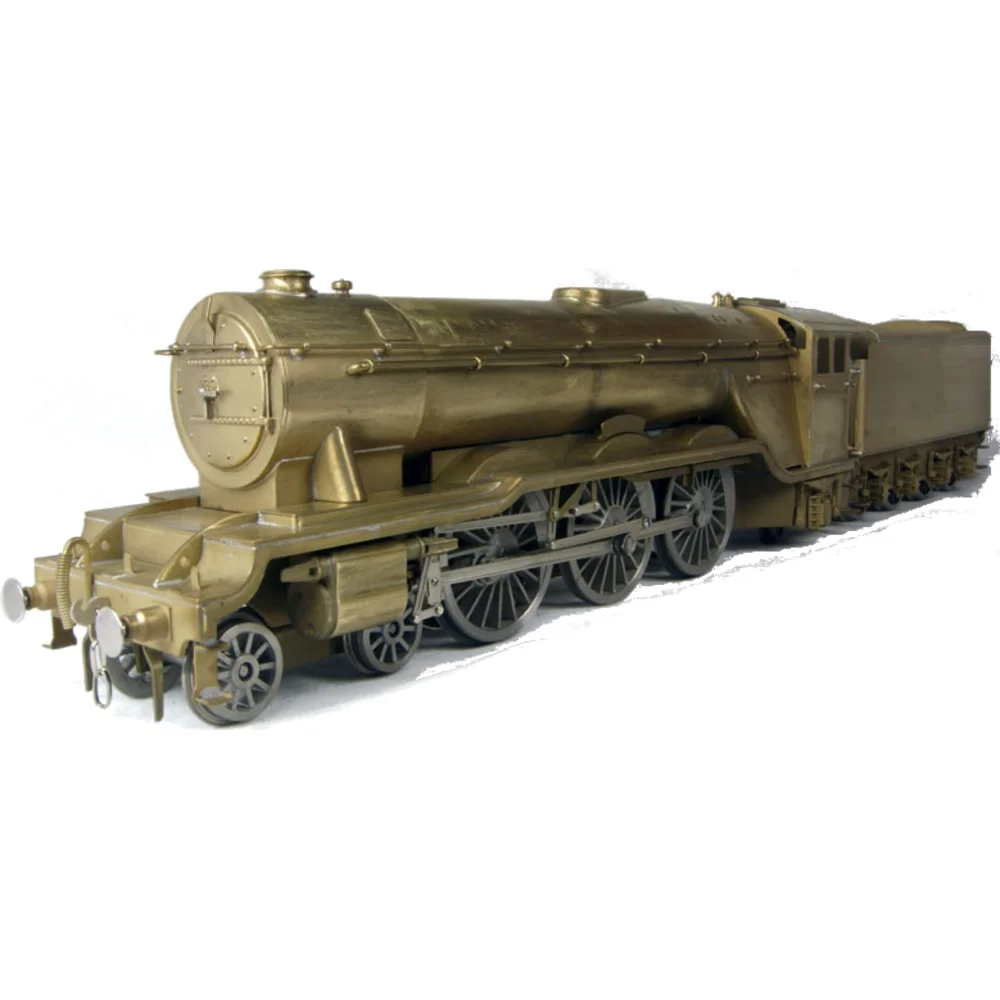
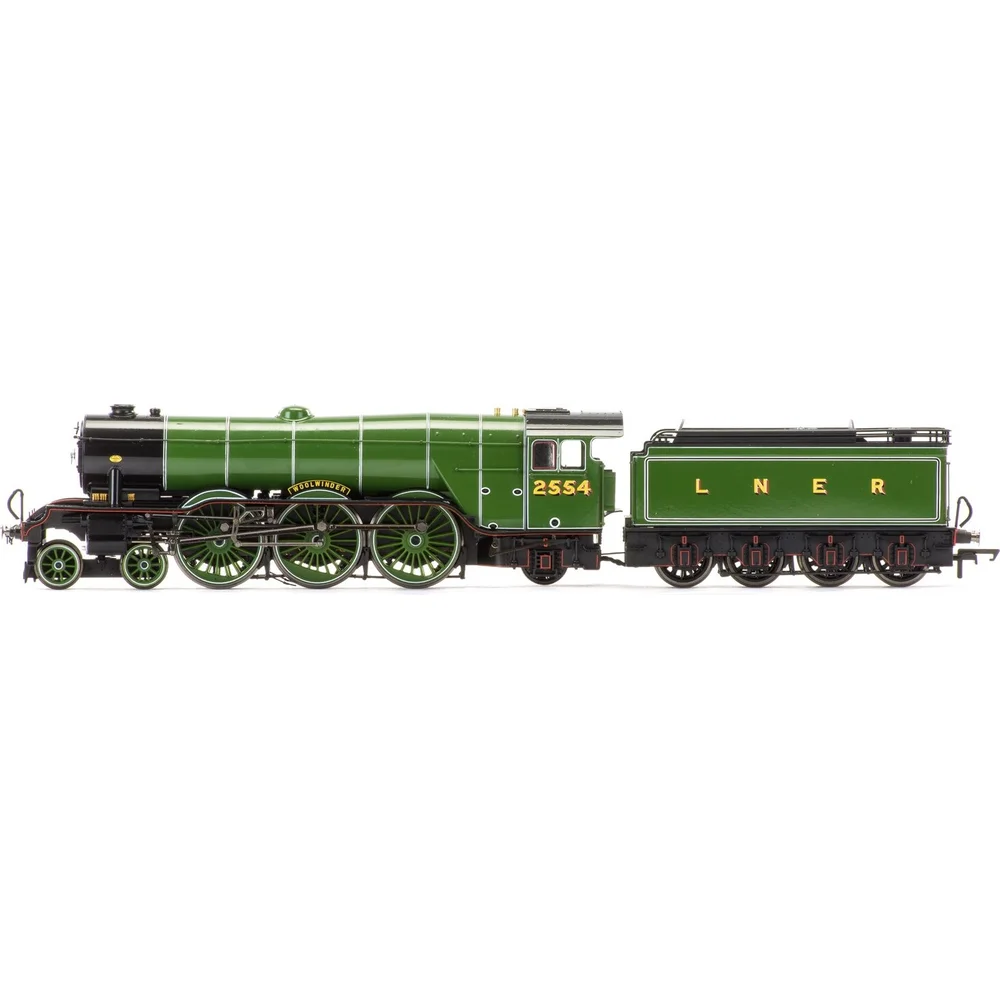
The Gresley Pacific family is one of the most heavily modelled subjects in British ready-to-run history, but it comes with a caveat that every serious modeller needs to understand before purchasing: no manufacturer has tooled the as-built 1922 A1 specification. Every current RTR model uses A3-family tooling featuring the 220 psi boiler profile, square superheater-header covers, and A3-pattern cab. This is appropriate for a locomotive representing the rebuilt A1/A3 from the late 1920s onward, but it is not the original 1922 configuration with round-top firebox, Robinson 32-element superheater, and 180 psi fittings. Modellers wanting strict pre-1927 accuracy need a kit builder or scratch-build.
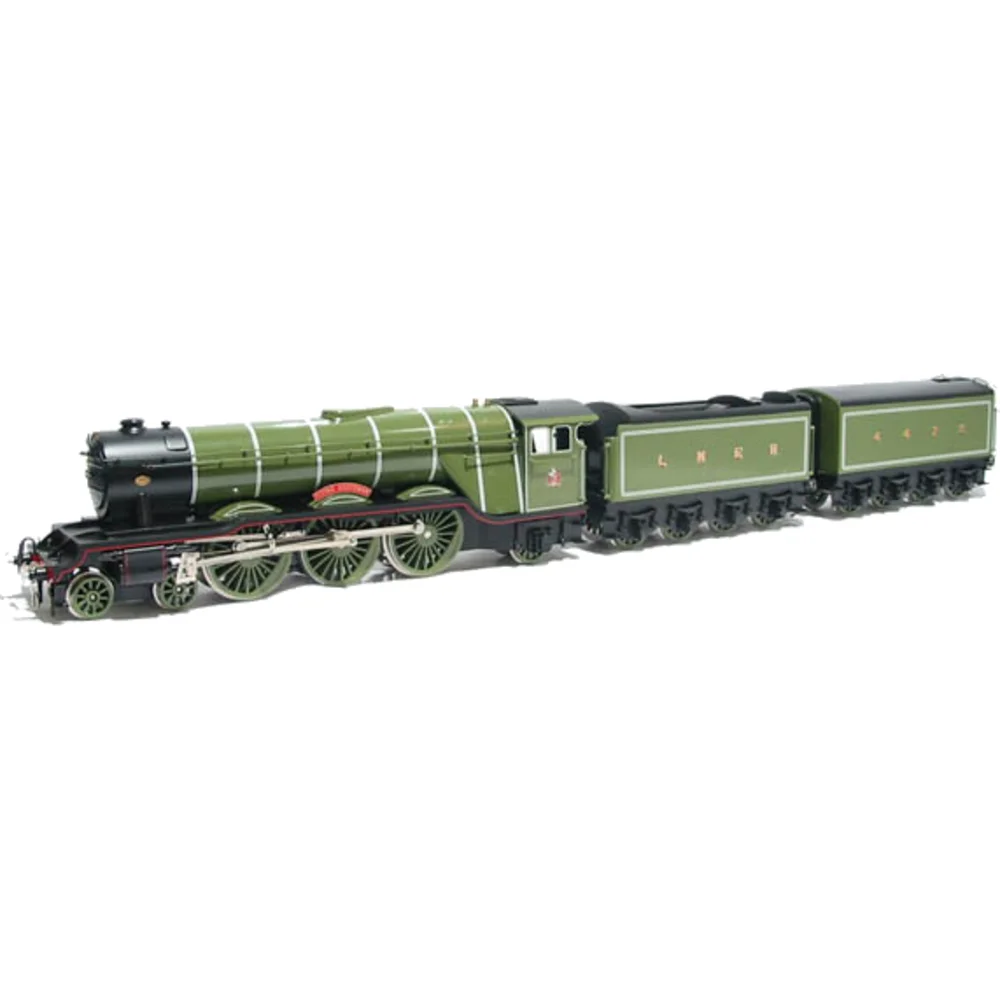
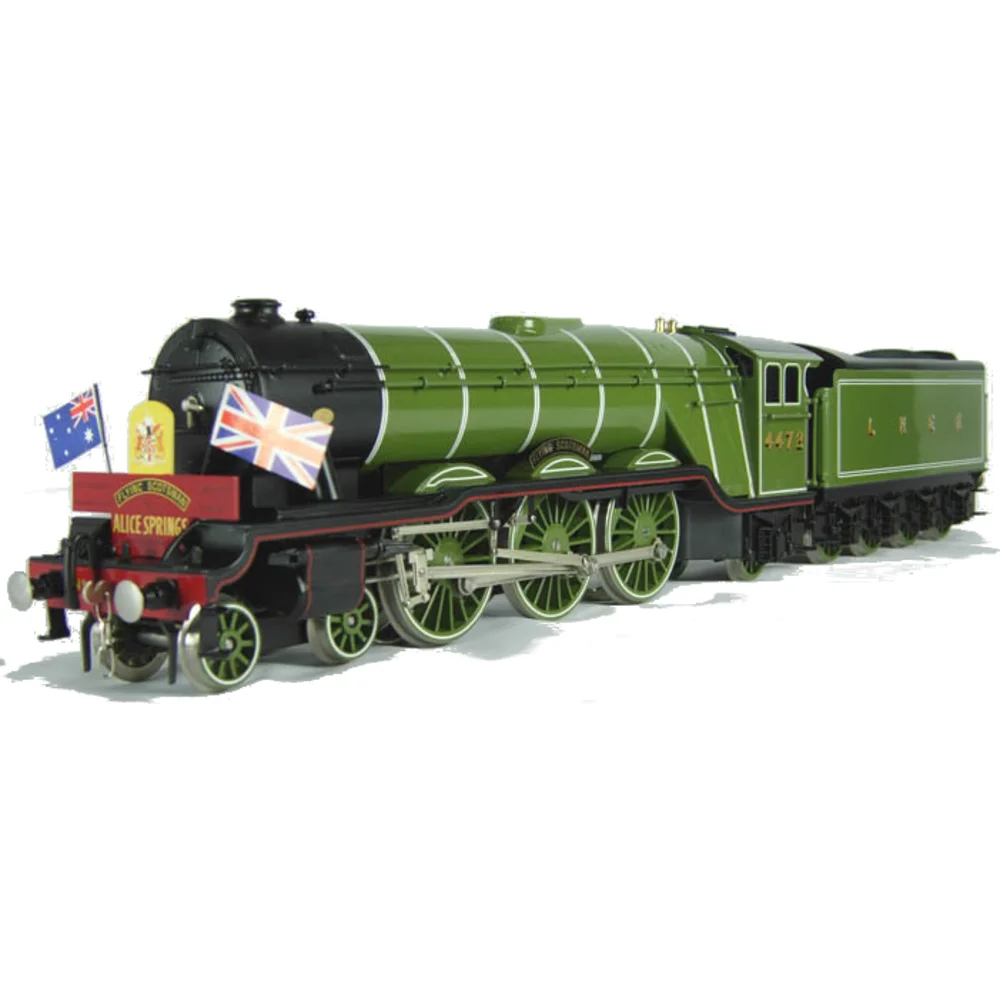
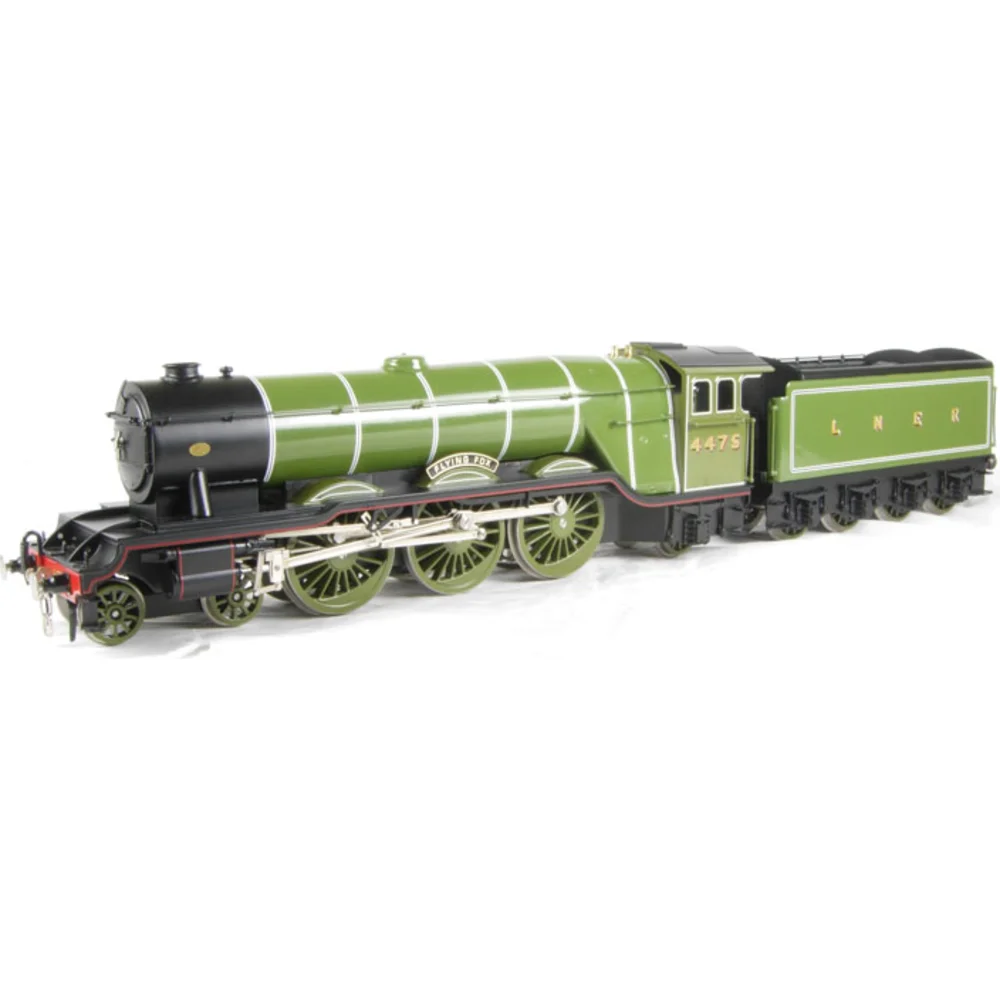
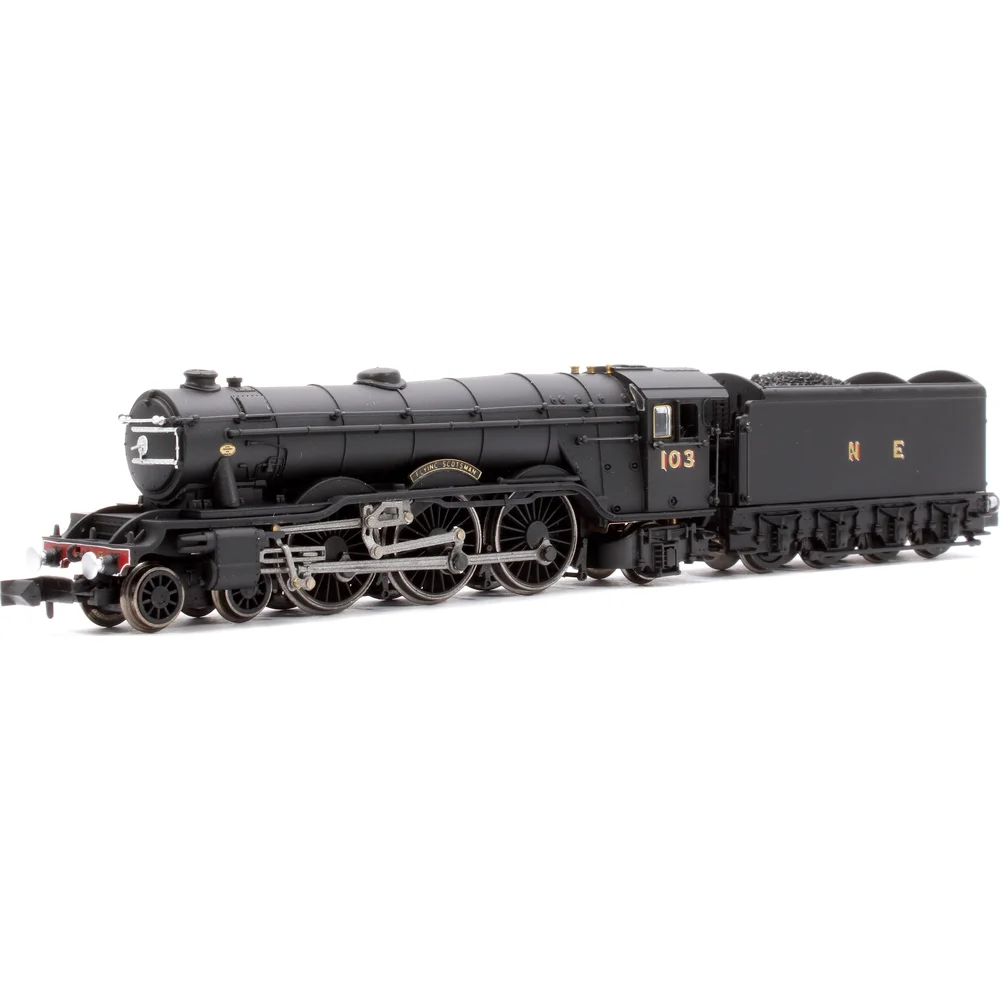
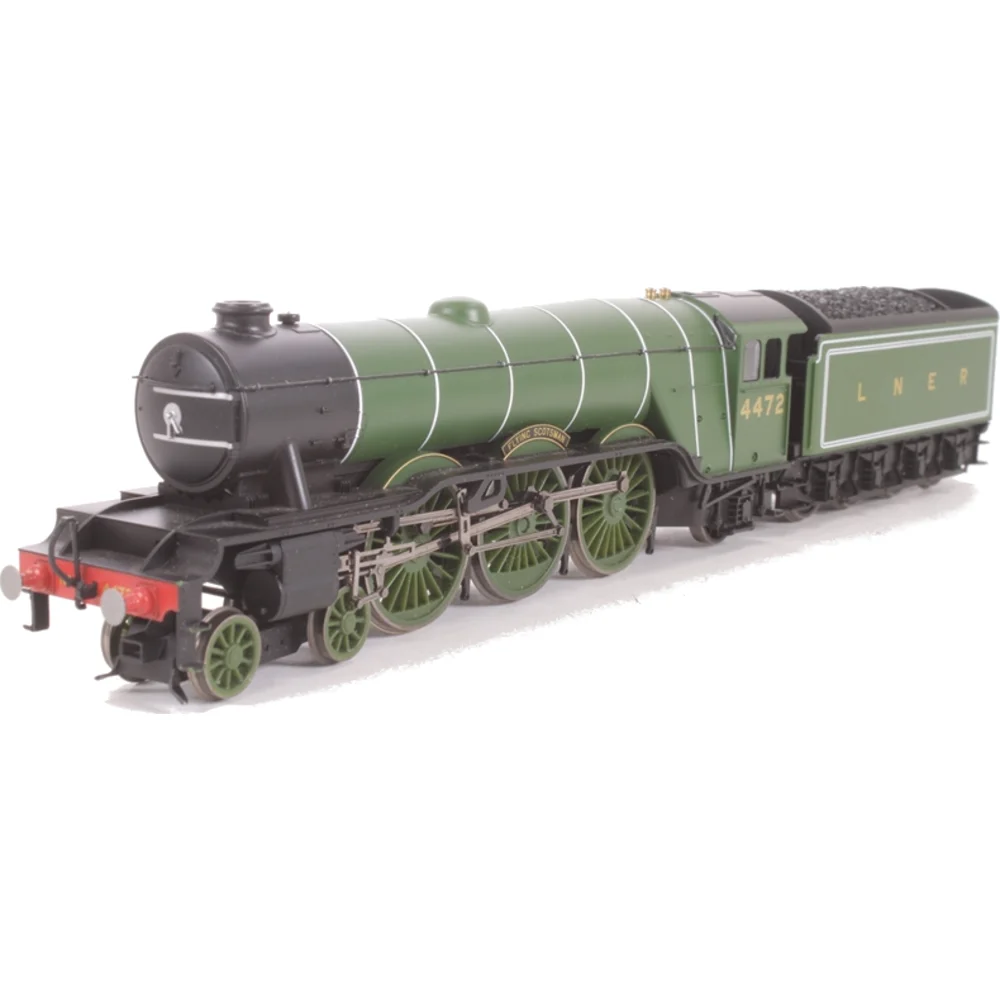
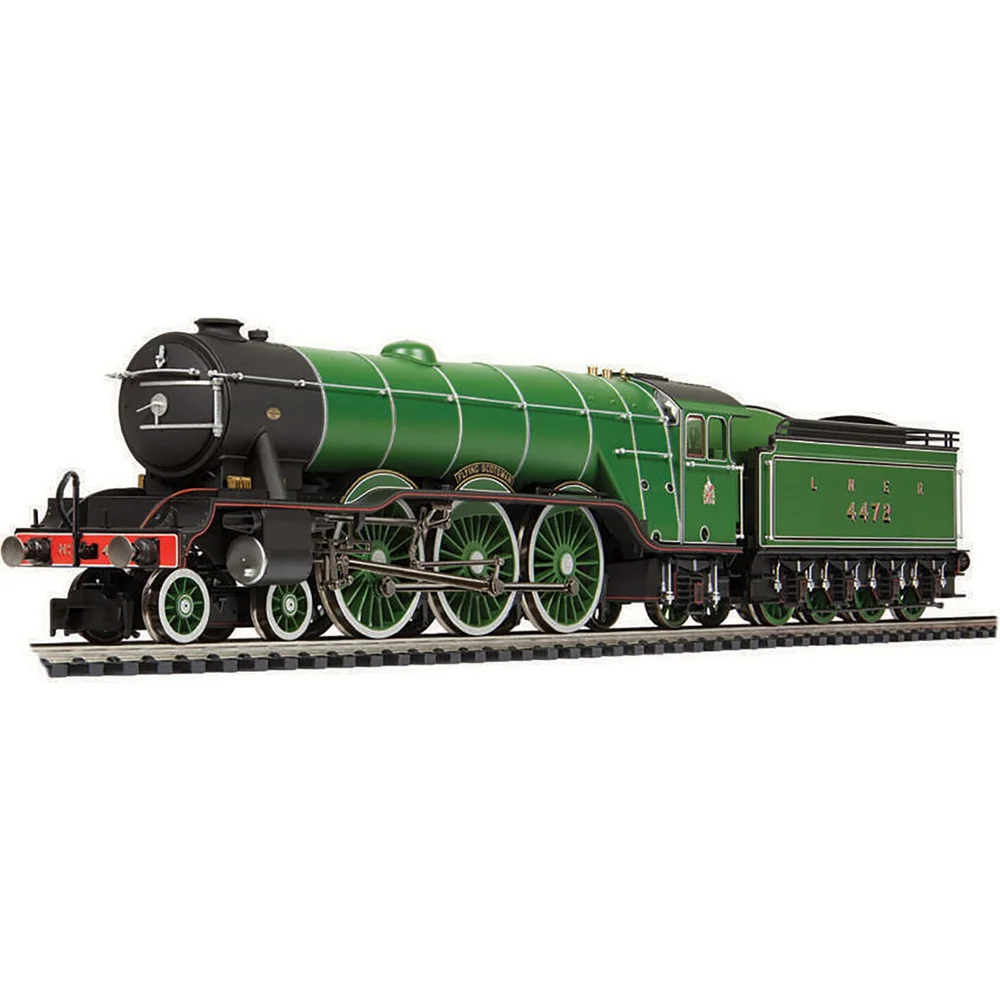
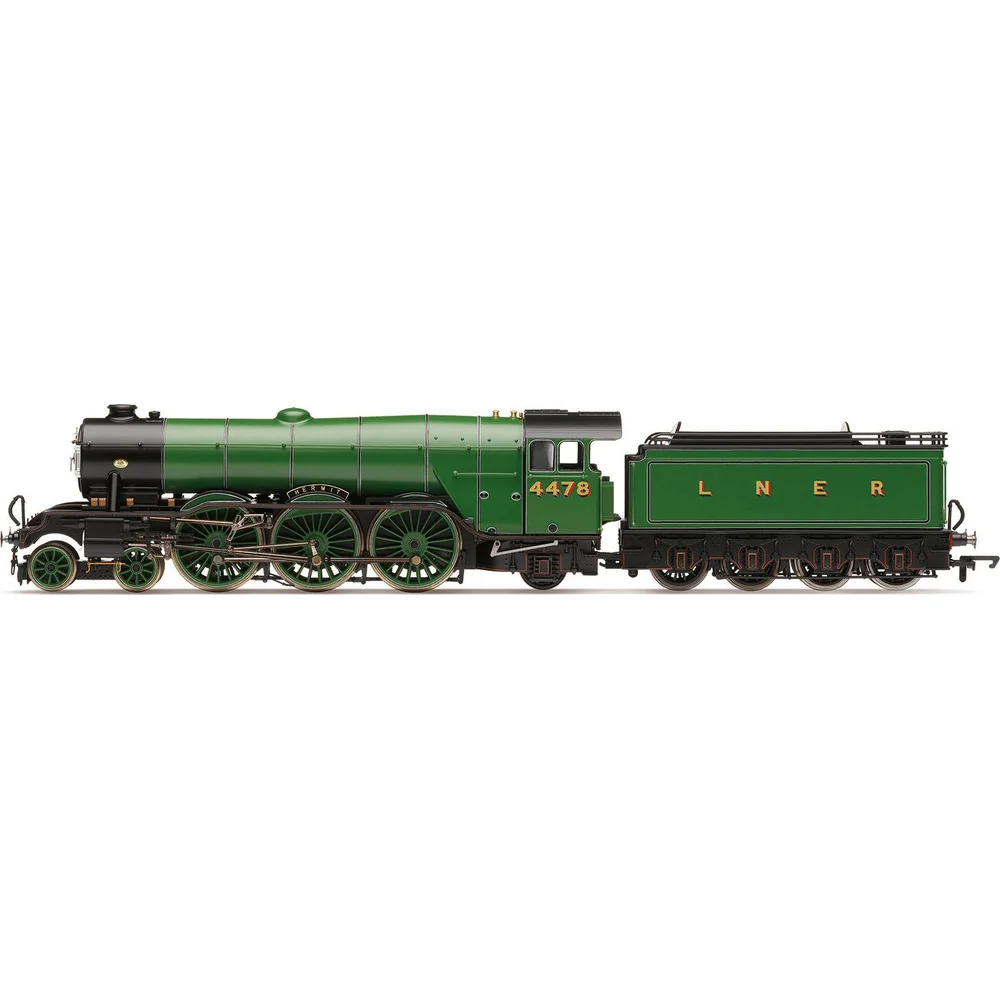
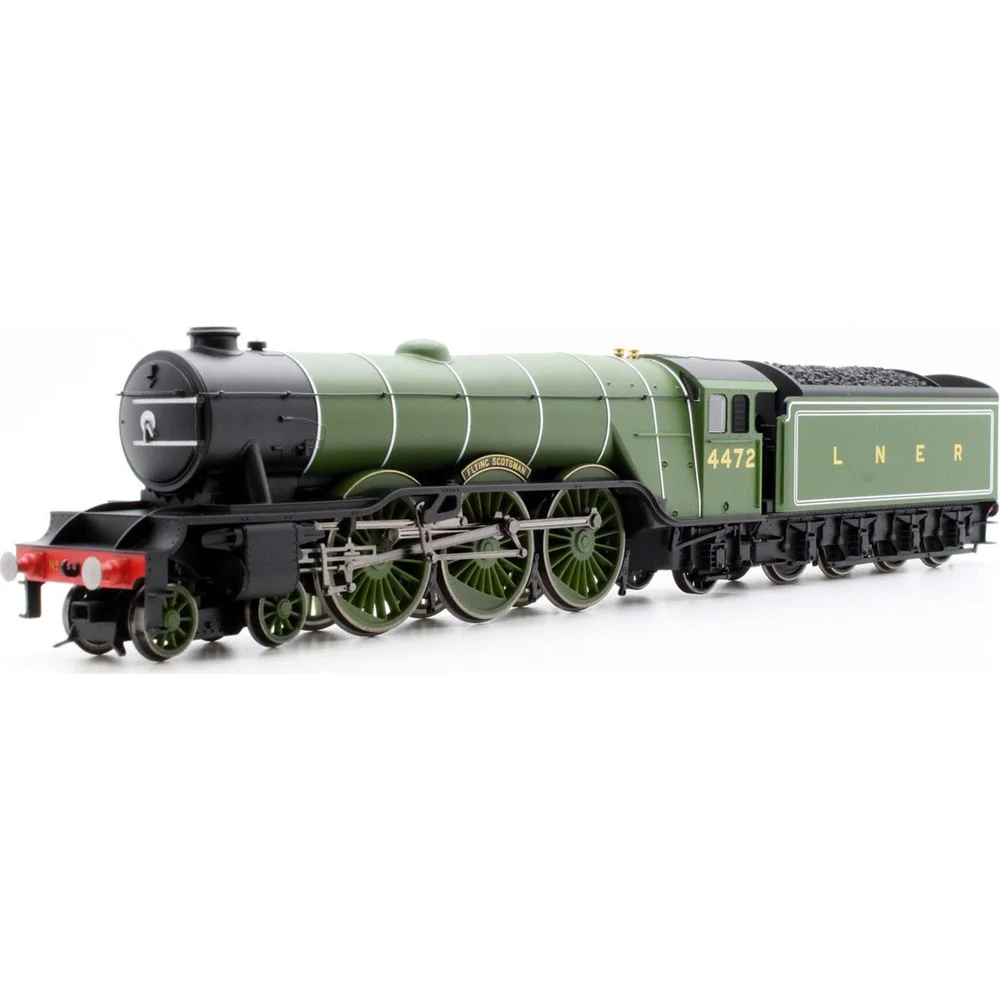
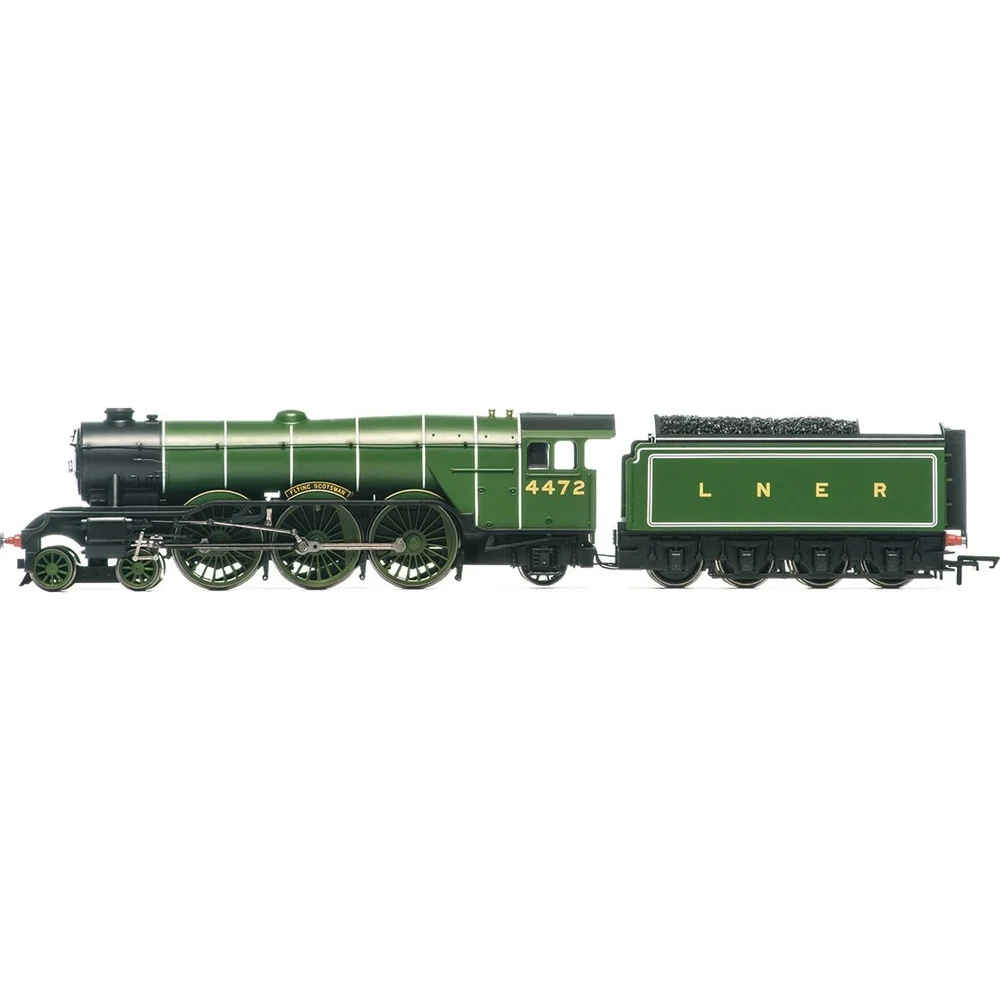
Hornby dominates OO gauge representation of the Gresley Pacific family and is on its ninth generation of Flying Scotsman tooling. The 2005 super-detail tool remains the basis of most current production releases and represents good value at its price point. The budget RailRoad range (e.g. R3086, LNER apple green 4472) retails around £100–£130 and suits new entrants or secondary locomotives on a large layout. Super-detail variants with diecast footplate, working flickering firebox, and factory-fitted glazing typically retail £210–£320; the TXS sound-fitted versions run to £320-plus.
For the 2023 centenary of Flying Scotsman's naming, Hornby produced a prestige Hornby Dublo diecast series limited to 500 units each, covering the locomotive's major historical phases. These are notable because they represent specific configurations rather than generic livery variants:
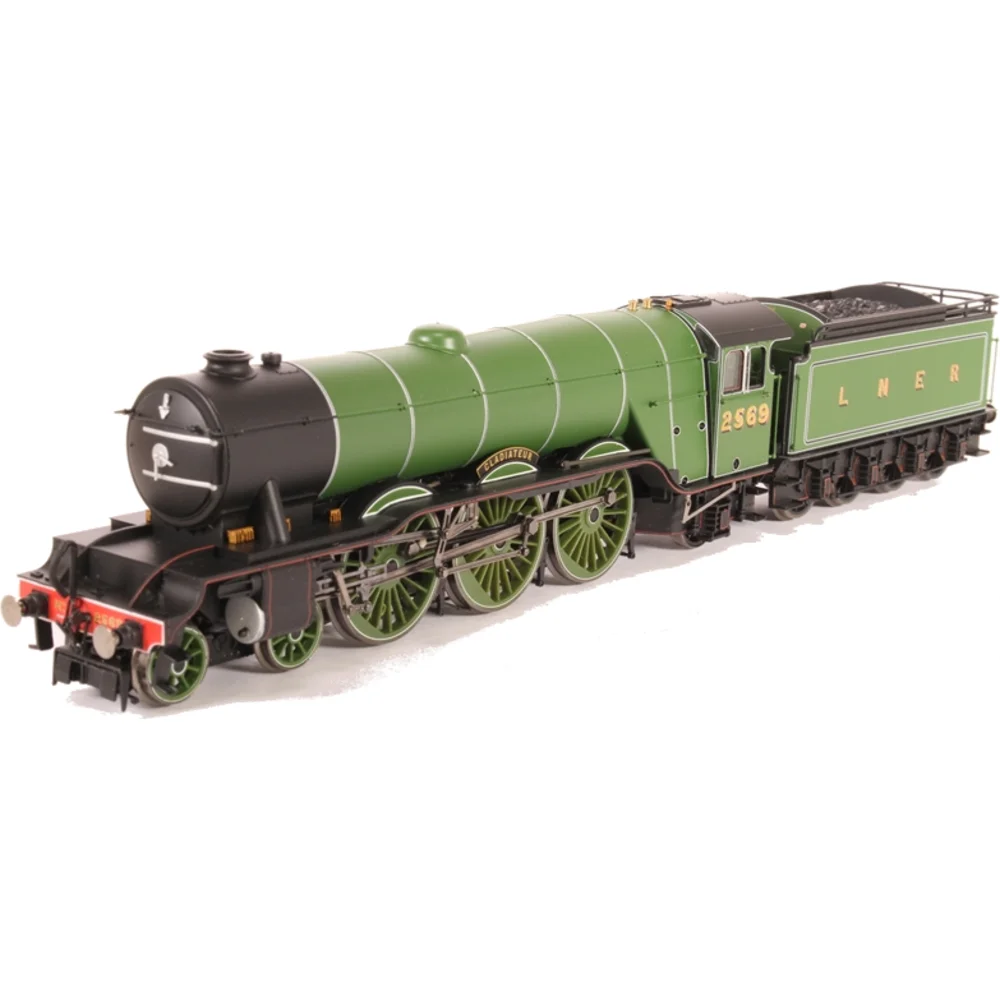
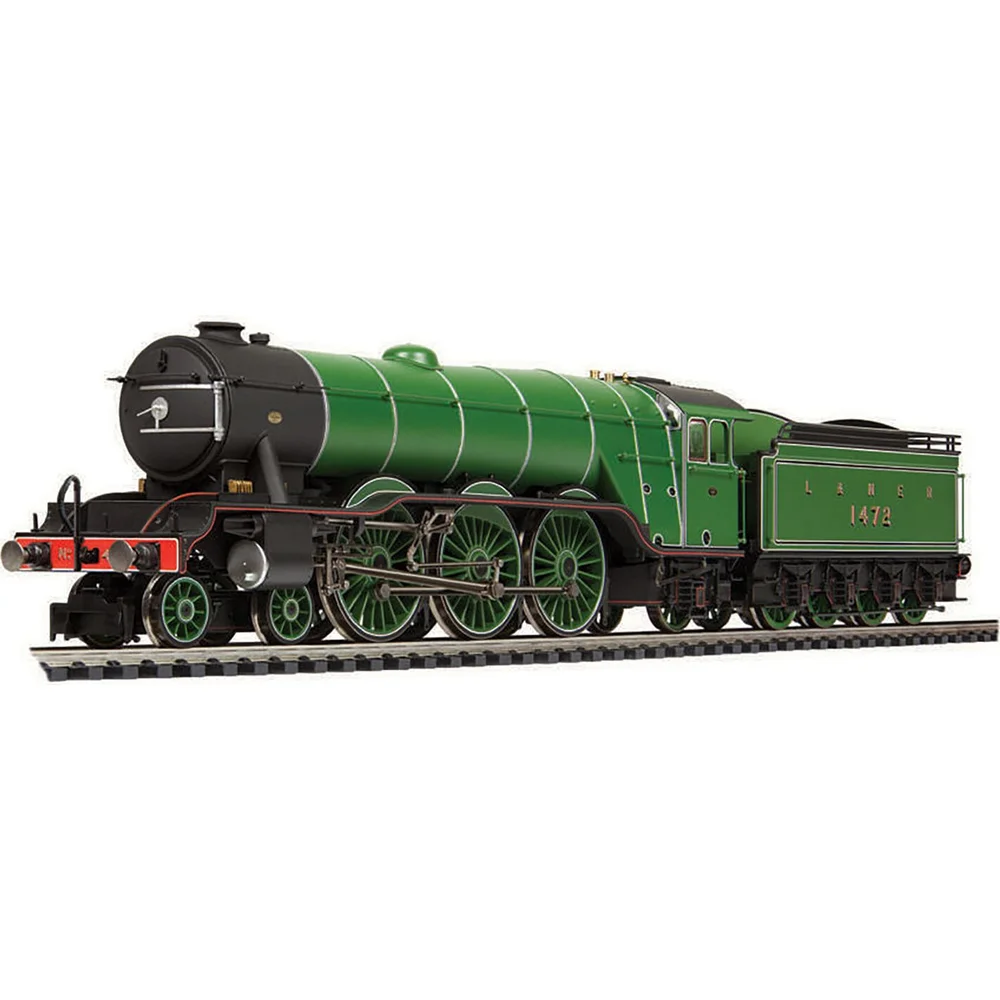
- R30206 — LNER A1 No. 1472 (unnamed, 1923 condition), LNER lined green
- R30207 — LNER A1 4472 Flying Scotsman, 1924 British Empire Exhibition condition
- R30208 — A3 4472 in 1969 US tour guise with double tender, bell, and cow-catcher
- R30209 — A3 4472 in Alan Pegler's 1963 preservation livery
- R30211 — BR A3 60103 in current NRM operating condition with German smoke deflectors
Other confirmed Hornby super-detail releases include R30087 (LNER wartime black A3 No. 45 Lemberg), R3336 (LNER lined green 4472 with smoke deflectors and corridor tender), and R3437 (LNER A3 2503 Firdaussi). Bachmann has never produced a Gresley Pacific in any scale; the OO market is entirely Hornby's.
In TT:120, Hornby has produced TT3004M (LNER A1 4472, £194.99 RRP) and TT3004TXSM (with Triplex sound, £222.99), with BR A3 variants under TT3005 and TT3006. This represents a genuinely new tooling for the scale and offers a credible LNER Pacific for modellers building TT:120 East Coast layouts.
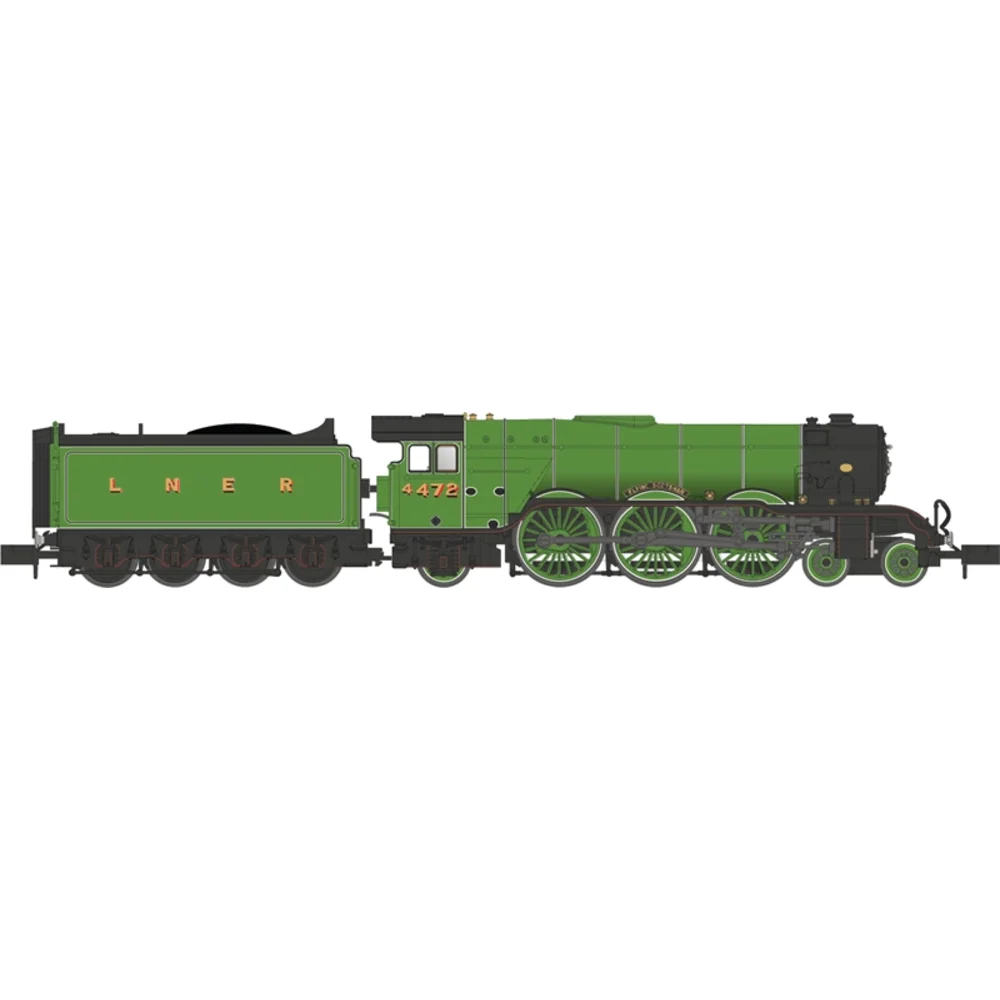
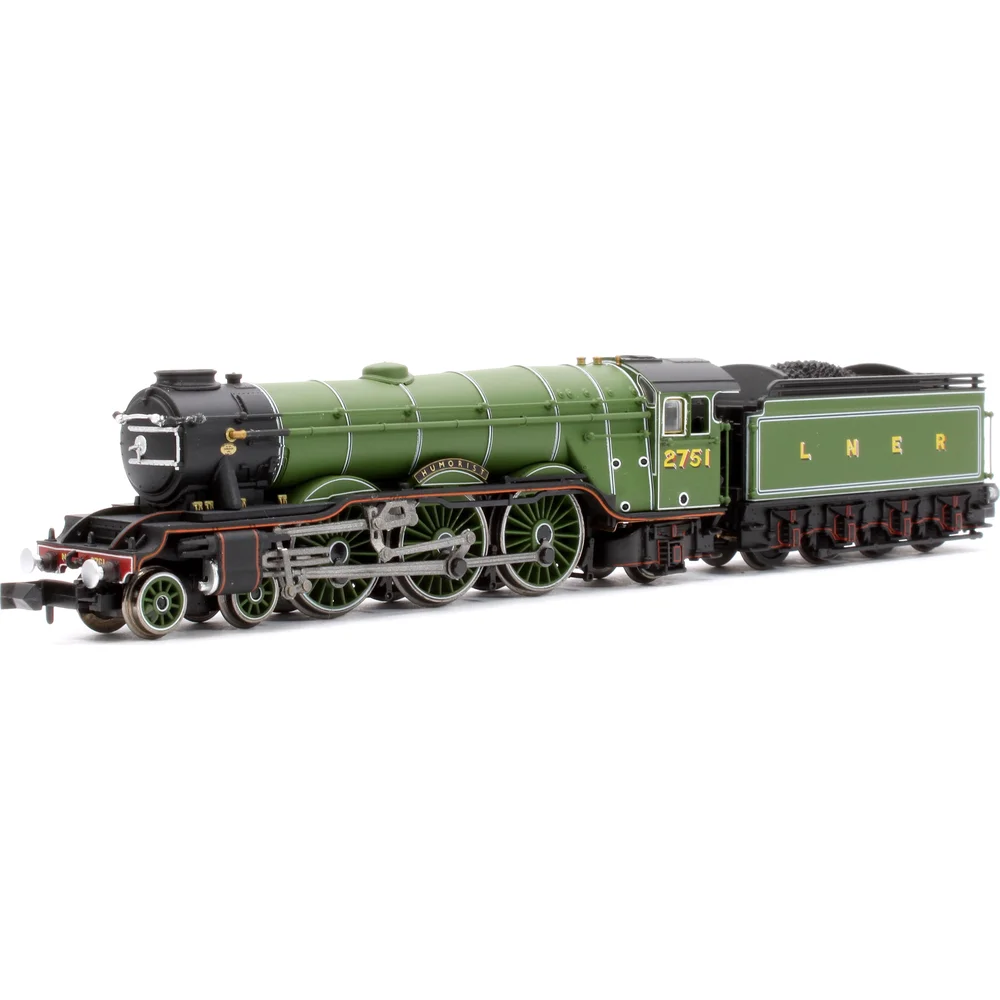
In N gauge, Dapol's 2S-011 series is the current reference product, with DC and DCC-fitted variants covering Flying Scotsman as A1 (LNER green, 4472), as A3, and as preserved 60103, plus A3 Humorist (2S-011-011). RRPs run £200–£230 DC and £260–£290 DCC-fitted. Graham Farish produced A3 variants in the 372-378/379 series but these are effectively discontinued; second-hand examples are readily available.
In O gauge (7 mm scale), the Heljan H7-A3 range produced through Hattons Originals (2022–24) is the definitive RTR product. Key variants include H7-A3-002 (LNER green 4472 without deflectors), H7-A3-003B (LNER wartime black, unnumbered), and H7-A3-007 (BR lined green 60103 with German smoke deflectors and corridor tender). With Hattons' closure to new trade in January 2024, remaining stock has passed to retailers including Rails of Sheffield at clearance prices. Ace Trains produces a coarser-scale 3-rail collectors' range across multiple Flying Scotsman eras (£1,000–£1,600 new). Kit-built options for 7 mm include DJH, David Andrews, and Martin Finney; in 4 mm, Proscale and SE Finecast allow construction of a genuinely accurate original-specification A1 that no RTR manufacturer provides.
Advanced Modelling: Identifying the Correct Variant
The Hornby Dublo R30206 (No. 1472, unnamed, 1923 condition) is as close as any RTR model comes to representing the as-built A1. For pre-1925 layouts you should use this or the R30207 British Empire Exhibition version — and pair it with pre-1928 non-corridor GNR-pattern bogie tenders. From 1928, corridor-tender-fitted examples become appropriate. From the late 1920s onward, A3-specification fittings (square superheater covers, taller dome profile) are correct. Single chimney is correct for all locomotives until the late 1950s double-chimney conversion programme; smoke deflectors only appeared from 1961. Matching the correct combination of chimney, deflectors, tender type, and cab window arrangement to your chosen era is the critical accuracy challenge for this class.
Unique Modelling Tips and Layout Integration
Incorporating Gresley A1 (and A3) models authentically into layout operation requires thinking carefully about both era and operational context. These are express passenger locomotives designed for one specific role: hauling heavy named trains at sustained high speed over long distances. Unlike the Midland 1532 Class, which suited a wide variety of modest suburban workings, a Gresley Pacific on a branch line is immediately anachronistic. Your layout setting should justify the locomotive's presence.
For pre-Grouping and early LNER period layouts (1922–1927), the only strictly accurate configuration is round-top boiler, Robinson superheater, non-corridor tender, 20 in cylinders, and GNR-green or early LNER apple-green livery. No current RTR model achieves full accuracy here — the Hornby Dublo R30206 and R30207 get closest, and paired with Gresley teak-finish coaches (Hornby does teak-liveried LNER coaches) produce a convincing 1920s East Coast express.
For mid-LNER period layouts (1928–1938), the corridor tender becomes appropriate for locomotives rostered to non-stop workings, and the progressive shift to A3-specification boilers and long-travel valves is underway. Livery should be LNER apple green for express passenger, though wartime would shortly bring plain black. This is the era in which most super-detail Hornby models sit most naturally.
For late LNER and early BR layouts (1945–1957), the locomotives are in various states of modification. Wartime black (correct 1942–1946) is modelled by Hornby's R30087 Lemberg. Single chimney, no smoke deflectors, and BR blue (1950–51) or early BR green with "BRITISH RAILWAYS" lettering represent the early nationalisation period. This is a relatively under-represented era in RTR releases — good news if you want an unusual and conversation-starting locomotive.
For late BR period layouts (1958–1966), the double Kylchap chimney (fitted fleet-wide from 1957–60) and German-style trough smoke deflectors (from 1961) are both correct. The locomotives are now in their final, best-performing form — the preserved Flying Scotsman as currently seen. Hornby's R3991 and the Hattons O gauge H7-A3-007 represent this configuration well.
Coaching stock choices matter enormously with these locomotives. In LNER period, Gresley teak coaches — the articulated Tourist sets or the more formal first/third corridor stock — are the authentic choice. British Railways period demands the standard BR Mk 1 crimson and cream or later maroon, with a minimum of eight vehicles to avoid the consist looking under-powered for the locomotive. Running a Gresley Pacific with three coaches looks wrong; eight to ten coaches looks right.
Sound-fitted models reward careful DCC programming for Gresley Pacifics. The three-cylinder exhaust beat — slightly uneven due to the 240°/120° crank angles — is distinctive and quite different from the even beat of a two-cylinder machine. ESU LokSound decoders in current Hornby and Dapol models capture this characteristic; ensure the beat is programmed to noticeably quicken during the acceleration phase from station stops.
Weathering should reflect high-mileage express passenger service rather than heavy freight duty. Focus on exhaust staining above the smokebox, graduated oil streaking along the running plate valances, coal dust around the tender top, and light road grime on the lower body and bogies. The upper body, cab roof, and boiler cladding of a well-maintained express Pacific would be comparatively clean — these locomotives were turned out to a high standard at their parent depots because they were public-facing flagship machines.
Finally
The LNER A1 (Gresley) occupies a unique and slightly melancholy position in British locomotive history. It was the design that proved Britain could build Pacifics; the design whose weakness was exposed by a smaller, better-valved rival; and the design that responded to that challenge by evolving into something genuinely great — the A3, from which Flying Scotsman and Mallard both descend. Yet because the A1 improved itself entirely out of existence, the class as originally constituted is today accessible only through the historical record and, imperfectly, through ready-to-run models.
For the modeller, the central lesson is clarity about classification. The locomotive in a Hornby box labelled "A1 4472 Flying Scotsman" represents a 1923-built engine in early configuration — not the 1922 specification, and not the A3 it eventually became. The Hornby Dublo centenary series brings that early configuration closer to accuracy than anything previously available in RTR form. The Hattons/Heljan O gauge A3 is the finest scale representation of the mature Gresley Pacific yet produced. And if you want the absolute original — a round-top boilered, 180 psi, short-travel-valve A1 as Gresley put it into traffic at Doncaster in April 1922 — a 4 mm kit from SE Finecast or Proscale remains the only honest answer.
What the Gresley A1 ultimately represents, beyond the technical detail and the classification arguments, is the moment British express passenger locomotive design stepped definitively into the modern era. The wide firebox, the three-cylinder layout, the 6 ft 8 in drivers pulling twelve coaches across the flat Yorkshire plain at 80 mph — these things announced a capability that the East Coast Main Line would build upon for the next four decades, through A3, A4, and the diesel revolution that eventually displaced them all. The locomotives are gone. The story isn't.
Frequently Asked Questions
How many LNER A1 Class locomotives were built?
Fifty-two locomotives were built to original A1 specification between 1922 and 1925, all at Doncaster Works. The first two (Nos. 1470–1471) were authorised by the Great Northern Railway; ten more were ordered before Grouping (Nos. 1472–1481, delivered 1923) and forty followed as LNER orders (Nos. 2543–2582, 1924–25). A further 27 locomotives were new-built directly to the evolved A3 specification from 1928 onwards.
What was the conjugated valve gear and why did it cause problems?
Gresley's 2:1 conjugated gear derived the inside cylinder's valve motion from the two outside valve spindles via a lever mechanism, avoiding a third inaccessible set of gear between the frames. In service, the main pivot wore rapidly, and thermal flex in the outside spindles was amplified into middle-valve over-travel at speed. Combined with Gresley's original short valve travel, this caused the inside cylinder to overload its big-end and pushed coal consumption unnecessarily high.
What happened at the 1925 locomotive exchange with the GWR?
GWR Castle Class No. 4079 Pendennis Castle ran King's Cross–Doncaster against LNER A1 No. 4475 Flying Fox in April 1925. Despite being smaller and less powerful on paper, the Castle returned markedly better coal figures and acceleration. The cause was its long-lap, long-travel valves versus the A1's short-travel arrangement. Gresley responded immediately; long-travel valves were fitted to 4477 Gay Crusader in 1926, beginning the evolution into the A3.
What is the difference between the Gresley A1 and the Gresley A3?
The A3 is the rebuilt and improved version of the A1, featuring a 220 psi boiler (versus 180 psi), 19 in cylinders (versus 20 in), a larger 43-element superheater, and long-travel valves correcting the original's valve-gear deficiency. Externally, A3s are identifiable by square superheater-header cover plates on the smokebox sides. All 52 original A1s were eventually rebuilt to A3 specification; 27 further locomotives were new-built as A3s from 1928.
Does any original Gresley A1 survive in preservation?
No. Every original A1 was either rebuilt to A3 configuration between 1927 and 1948, or — in the single case of No. 4470 Great Northern — radically reconstructed by Edward Thompson in 1945. The most famous survivor, 60103 Flying Scotsman, was built as an A1 in 1923 but rebuilt to A3 in January 1947 and is preserved in A3 form. There is no new-build Gresley A1 project; No. 60163 Tornado is a Peppercorn A1, a separate post-war design.
Where can I see a preserved example related to the Gresley A1?
The National Railway Museum in York is home to 60103 Flying Scotsman when it is not on tour or working main-line excursions; it is the only preserved locomotive from the direct Gresley A1/A3 lineage. The NRM also holds the static sectioned LNER A4 Dwight D Eisenhower and records covering Gresley Pacific history. Flying Scotsman operates main-line excursions several times a year; the NRM website lists forthcoming appearances.
Which OO gauge model best represents the original 1922 A1 configuration?
The Hornby Dublo limited edition R30206 (LNER A1 No. 1472, unnamed, 1923 condition) is as close as any current RTR model comes to early A1 specification. The standard Hornby super-detail tool (used across the main Flying Scotsman range) represents an A3-specification boiler and is most accurate for post-1927 examples. No manufacturer has tooled the strictly original round-top firebox, 32-element Robinson superheater configuration; kit options from SE Finecast or Proscale remain the only route to fully accurate 1922-specification modelling.
Are Gresley A1/A3 models available in N gauge?
Yes. Dapol's 2S-011 series is the current production N gauge range, available in DC and DCC-fitted variants covering Flying Scotsman in LNER A1 condition (4472), A3 configuration, and preserved BR 60103, plus A3 Humorist (2S-011-011). Graham Farish produced the 372-378 and 372-379 series (A3 4472 with double chimney and smoke deflectors) but these are discontinued; second-hand examples are readily available through specialist retailers.
What coaching stock should I pair with Gresley A1 and A3 models?
In the LNER period (1923–1947), pair the locomotive with Gresley teak-liveried corridor coaches — the articulated Tourist sets or standard first/third corridor stock. Hornby produces authentic teak-finish LNER coaches. In BR period (1948–1966), BR Mk 1 coaches in crimson and cream (1956–1965) or maroon (from 1956) are correct. Train length should reflect prototype practice: a minimum of eight coaches is appropriate for any main-line express, and up to twelve for prestige workings.
What is the Thompson A1/1 and how does it relate to the Gresley A1?
The Thompson A1/1 was a single locomotive — No. 60113 (formerly 4470 Great Northern) — produced in 1945 when CME Edward Thompson radically rebuilt the pioneer Gresley Pacific using very little of the original engine. The rebuild featured an A4-type 250 psi boiler, divided drive, and three independent sets of Walschaerts valve gear replacing the conjugated motion. Reclassified A1/1 in 1947 to free the "A1" designation for Peppercorn's new Pacifics, it ran until 1962 and was scrapped.
How does the Gresley A1 compare with contemporary Pacific designs?
The 1922 A1 was broadly comparable with the GWR's 1923 Castle Class in tractive effort but substantially more powerful in terms of boiler capacity and firebox area — the Castle's 30.28 sq ft grate versus the A1's 41.25 sq ft tells the key story. Against the LMS's first Pacific, the Fowler Royal Scot (actually a 4-6-0, not a Pacific), the A1 had a decisive size advantage. The more meaningful comparison is with the LNWR's 1921 Claughton rebuilds and the early LMS Patriot Class — both considerably inferior in boiler power, confirming the A1 as the most capable express passenger locomotive in Britain at its introduction.
Is No. 60163 Tornado a Gresley A1?
No. Tornado is a Peppercorn A1 — the 50th member of a class designed by Arthur Peppercorn and built 1948–49 as BR locomotives. Although it carries the A1 classification, the Peppercorn design differs fundamentally from Gresley's: three independent sets of Walschaerts gear replace the conjugated motion, the driving wheel arrangement differs, boiler pressure is 250 psi, and the overall proportions are significantly different. Tornado was completed by the A1 Steam Locomotive Trust in 2008 and is the first standard-gauge main-line steam locomotive built in Britain since 1960.