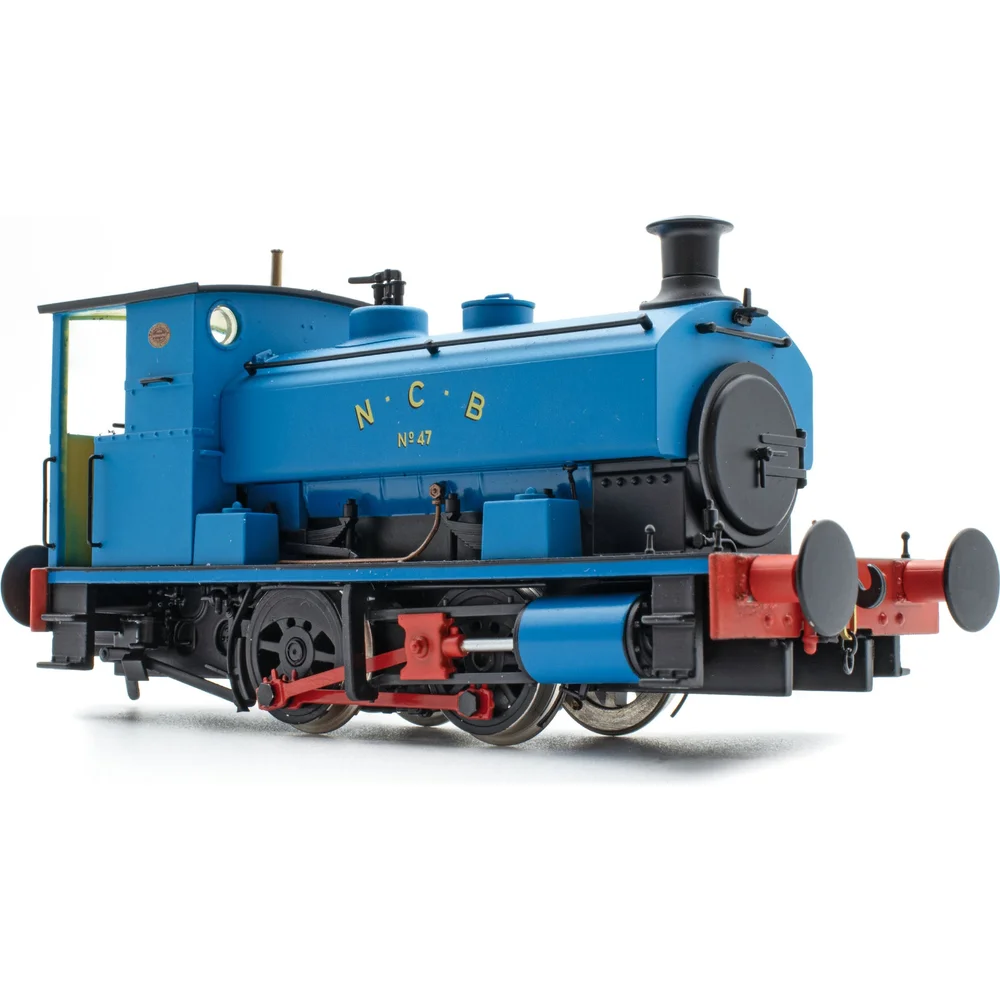
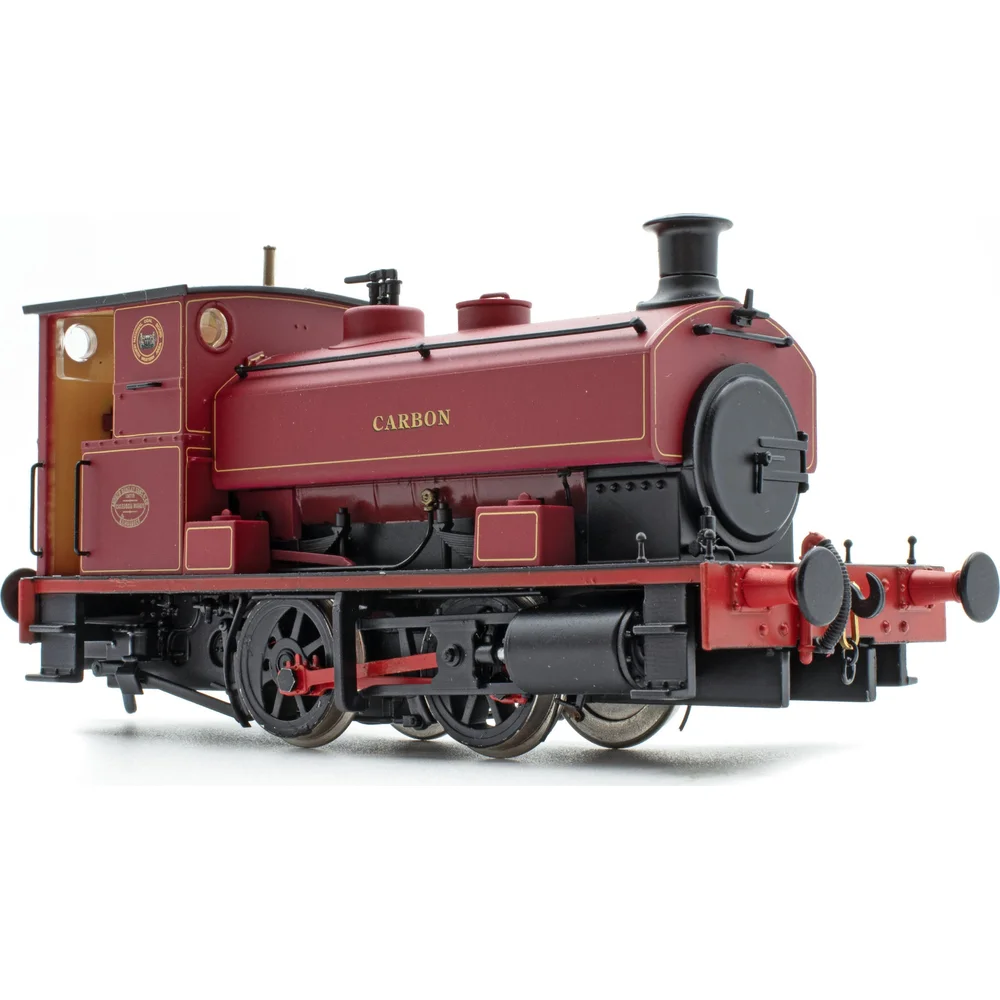
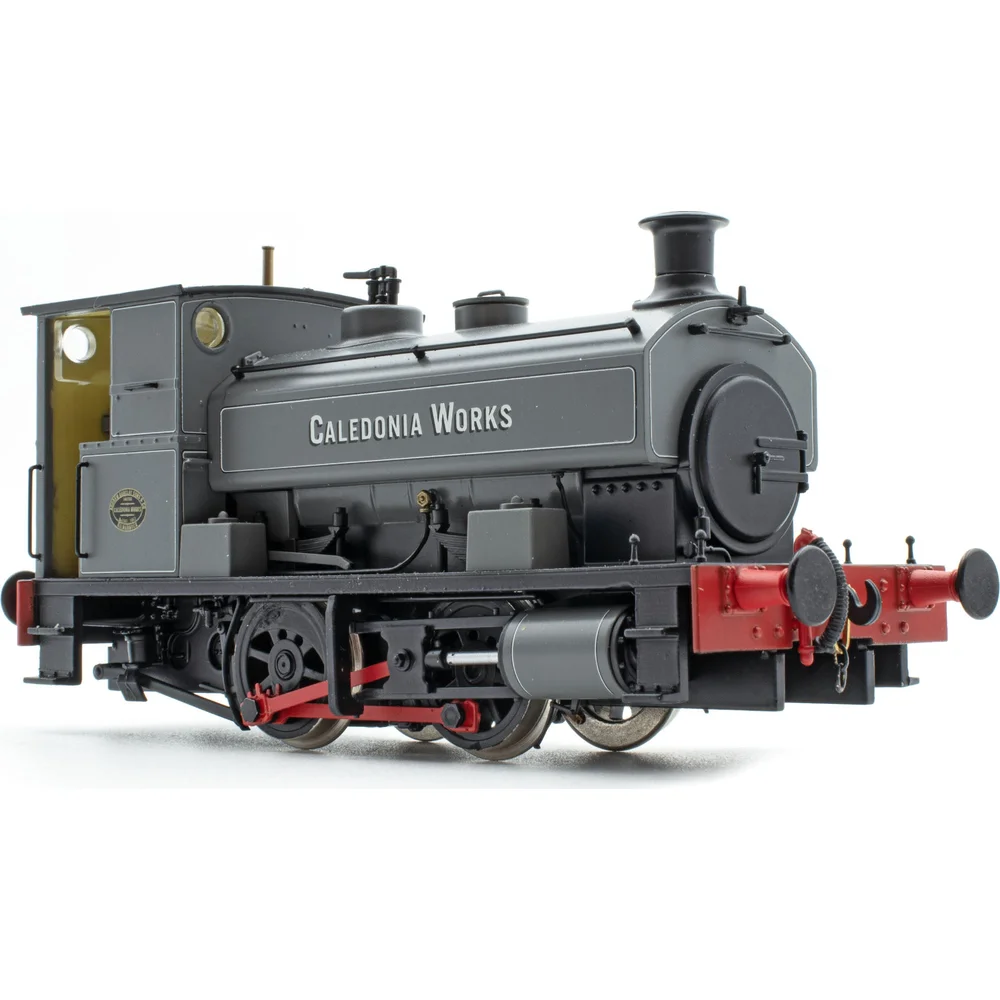
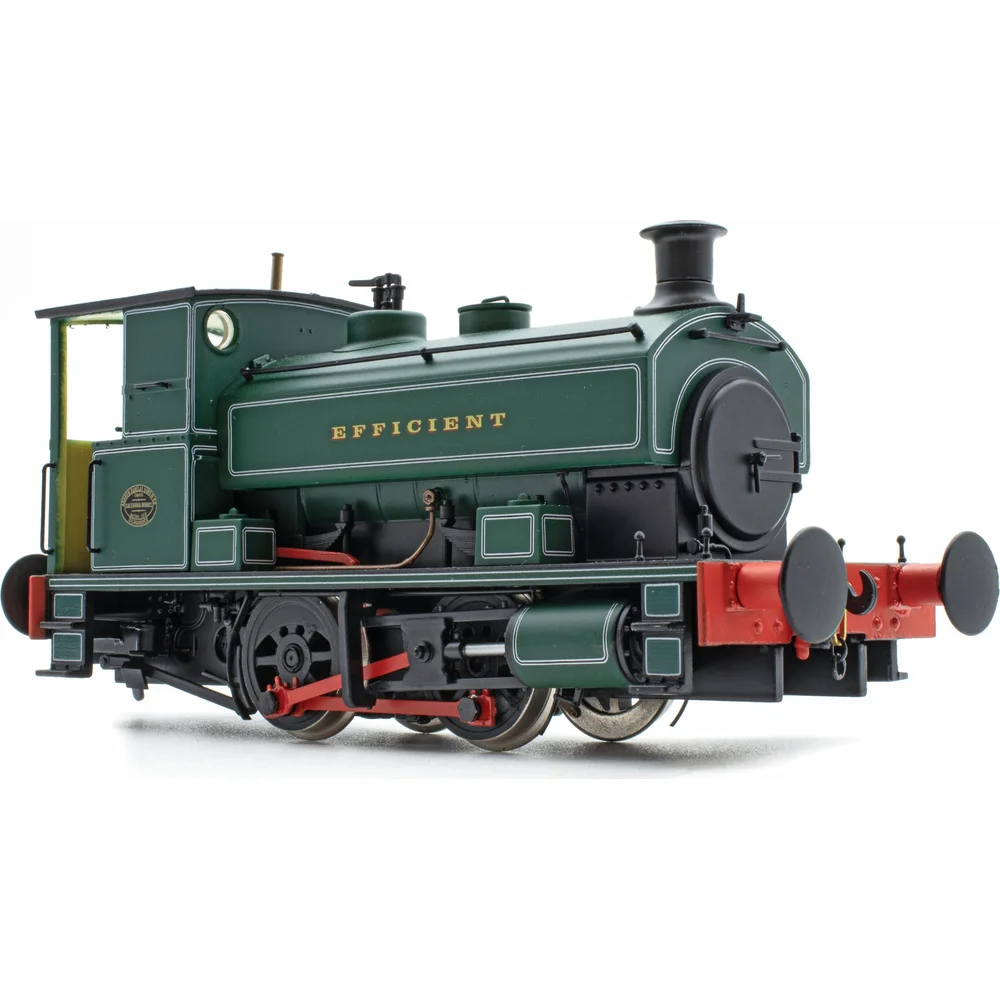
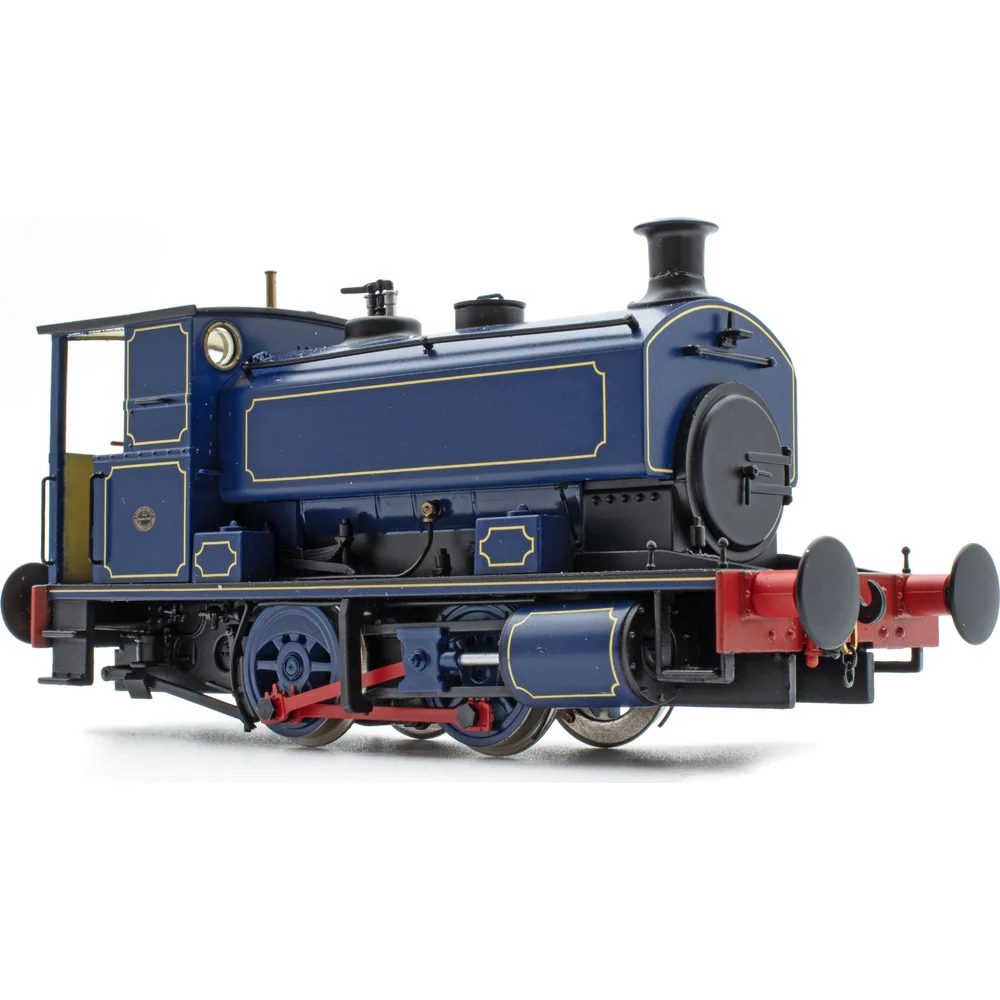
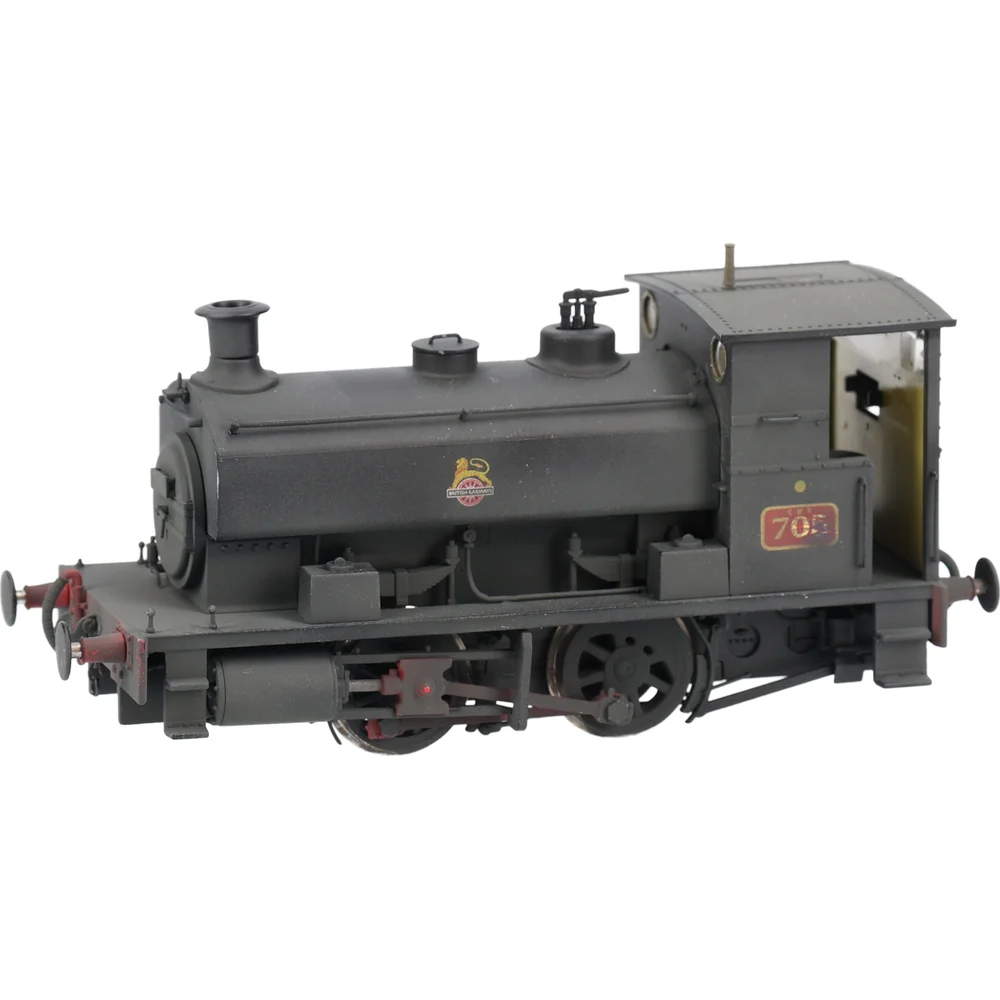
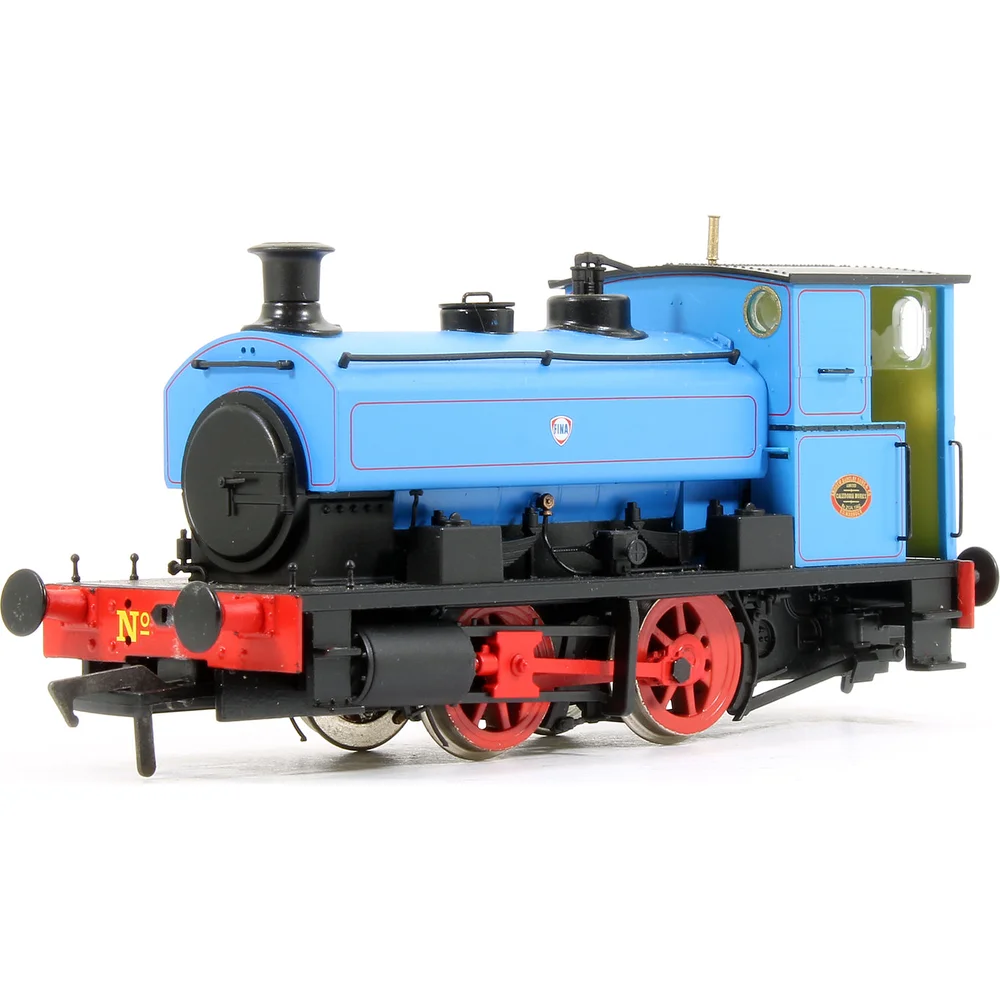
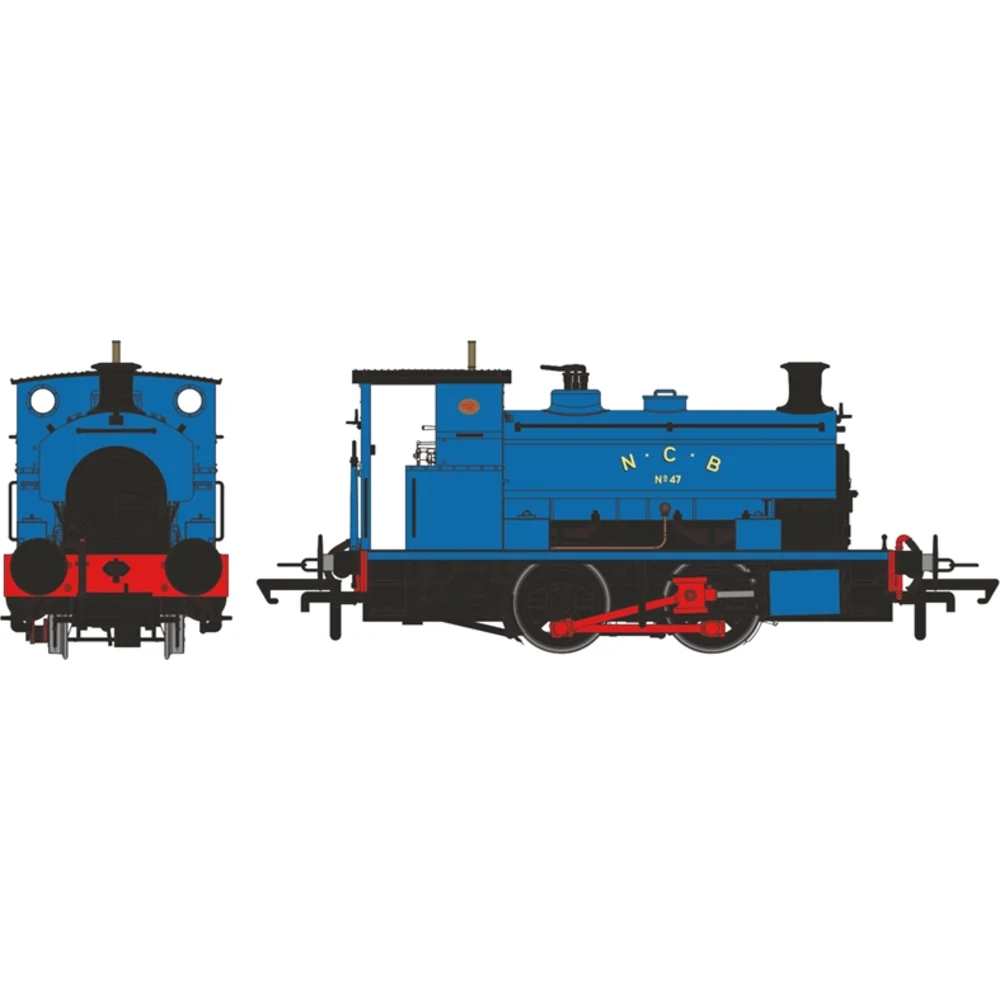
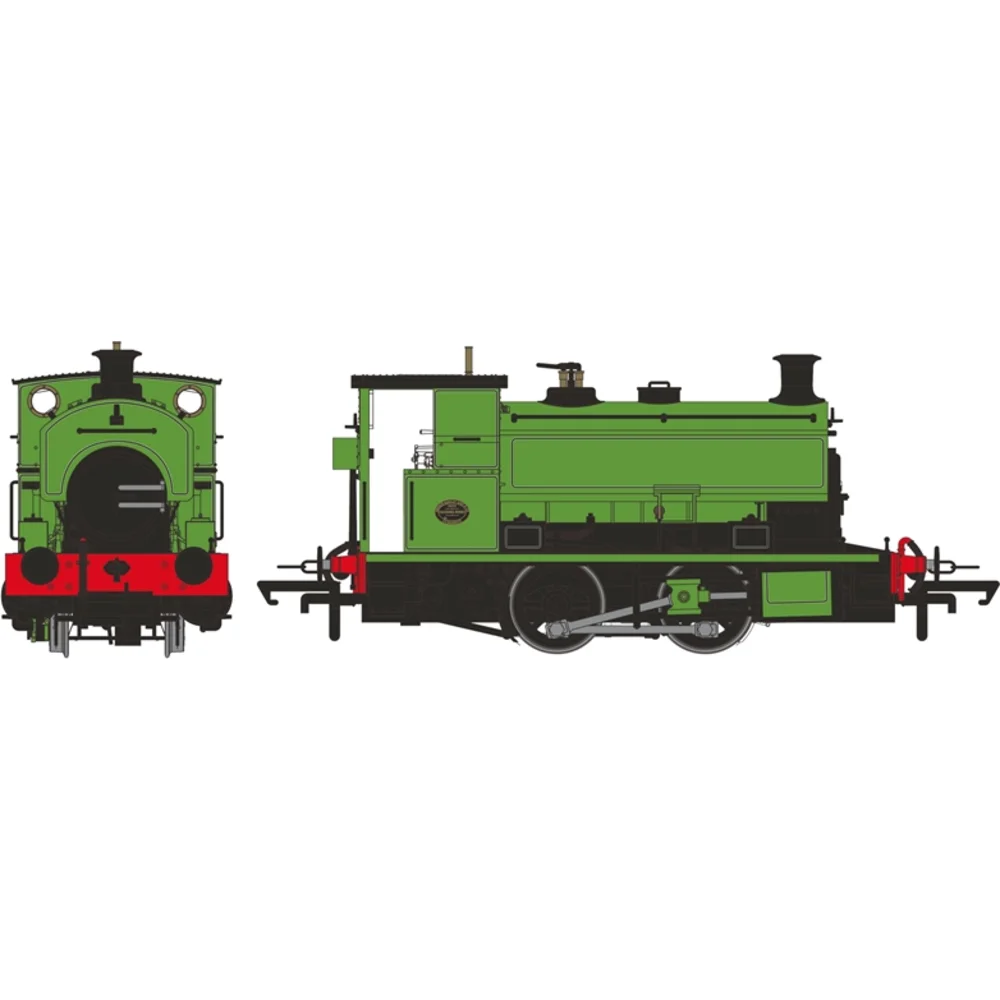
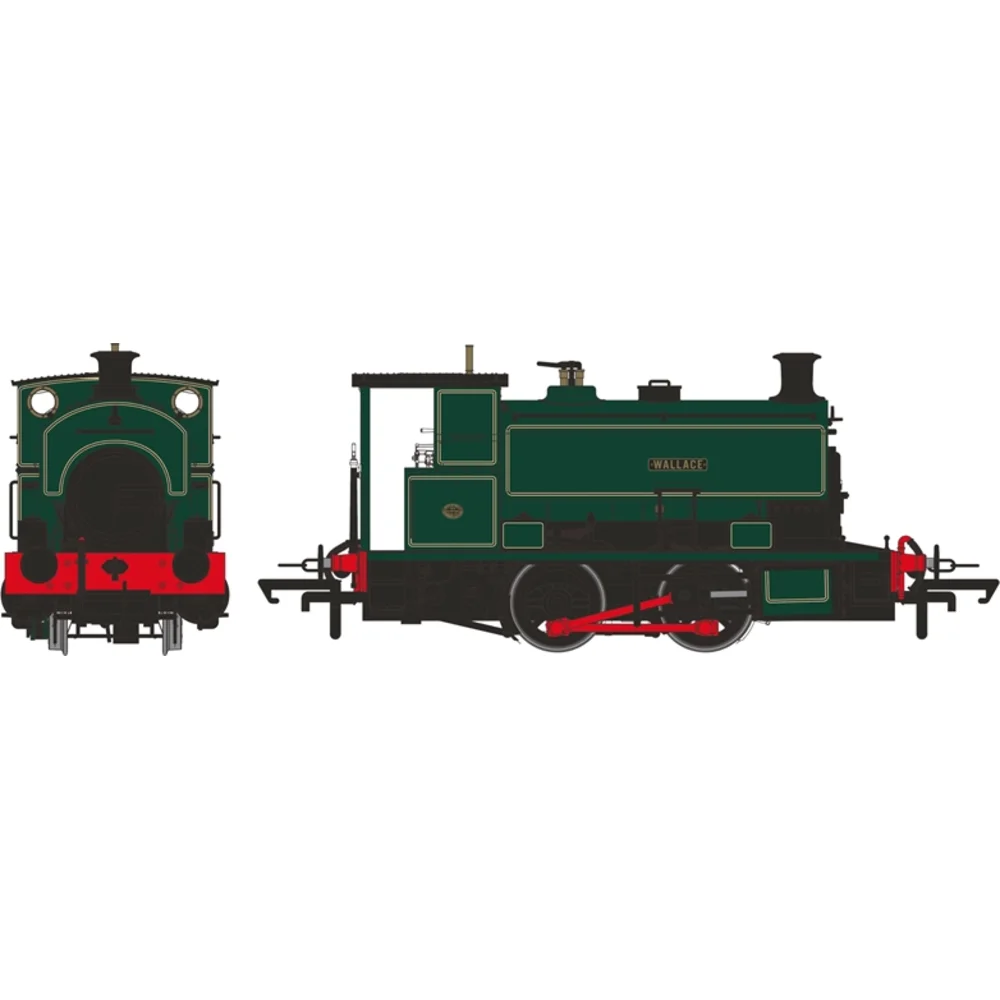
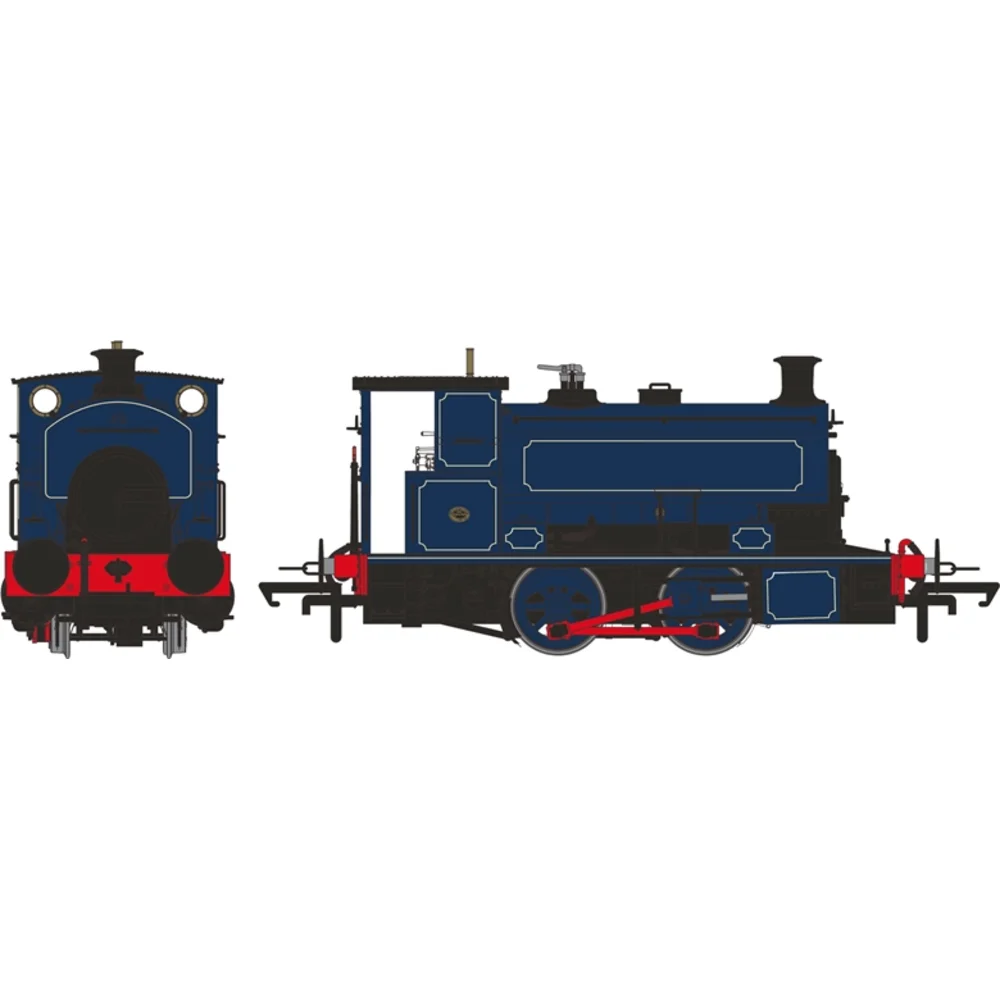
The Andrew Barclay 0-4-0ST is one of the most important and prolific locomotive families ever produced in Britain. Built at Kilmarnock's Caledonia Works across five standard cylinder sizes — 10", 12", 14", 16" and 18" — from the late 1890s through to 1955, these compact saddle tanks served collieries, steelworks, gasworks, docks, distilleries and power stations from Aberdeen to Cornwall for the better part of a century. Over a thousand examples of the combined family emerged from Andrew Barclay Sons & Co. across more than fifty years of near-unchanged production, and around 80 survive in UK preservation today — more than almost any other British industrial class.
The 14" and 16" cylinder variants were by far the most numerous and widespread, serving as the general-purpose light and medium industrial shunters respectively across virtually every sector of British heavy industry. It is these two sizes that have attracted the attention of the model railway market: Hattons Model Railways produced the first RTR OO gauge Andrew Barclay in 2018, and Accurascale relaunched the tooling in November 2024 with nine corrected variants. Whether you are building a gritty NCB colliery scene, a Victorian dockside cameo or a post-war power station exchange siding, few locomotives offer the prototype authenticity, layout flexibility and operational charm of a Barclay saddle tank.
Quick Takeaways
- Five standard cylinder sizes: The Barclay 0-4-0ST family ran from 10" (light tramway work) through 12", 14", 16" and up to 18" (heavy steelworks duty), sharing common frames, motion and saddle tank profile across the range.
- Over fifty years of production: Andrew Barclay Sons & Co. built 0-4-0STs at Kilmarnock continuously from the late 1890s to 1955, with the design fundamentals essentially unchanged throughout.
- 14" and 16" are the mainstream sizes: These two variants account for the great majority of production, serving British industry across collieries, gasworks, steelworks, power stations, docks and distilleries.
- 67-year working life on record: Bon Accord (AB 807/1897) worked Aberdeen Corporation Gas Works for 67 continuous years until 1964 — arguably the longest-serving industrial saddle tank of its era in Britain.
- Around 80 preserved in the UK: The class survives in exceptional numbers, with working examples at Bo'ness & Kinneil, Ribble Steam Railway, Tanfield Railway and many other heritage sites.
- Accurascale's nine-variant OO range: Catalogue numbers ACC2994–ACC3002 at £99.95 each cover both 14" and 16" prototypes across NCB, industrial and named liveries; a further run is planned for 2026.
- Ideal inglenook locomotive: The short wheelbase, Radius 2 curve capability and high tractive effort make the Barclay the definitive small OO industrial shunter for layouts of almost any size.
Historical Background and Context
Andrew Barclay (1814–1900) established himself as a mill-shaft maker in Kilmarnock around 1840, set up independently in 1842, and was building winding engines for the Ayrshire coal industry by 1847. The firm delivered its first locomotive in 1859 to the Portland Iron Co. and had produced approximately 420 engines by 1870. After financial difficulties in the 1870s and 1880s, the business relaunched as Andrew Barclay Sons & Co. in 1886 and was incorporated as a limited company in 1892. Total steam output across the firm's lifetime is generally given as approximately 2,052 locomotives, making Barclay one of Scotland's most prolific builders of industrial motive power.
The standard 0-4-0ST family crystallised during the mid-to-late 1890s as a coherent range of five cylinder sizes — 10", 12", 14", 16" and 18" — all sharing the same immediately recognisable squared-off saddle tank profile, outside cylinders, inside plate frames and Stephenson link motion. This family concept gave Barclay a decisive commercial advantage: buyers could specify exactly the power output their industry required whilst the works built, maintained and spared locomotives as a standardised system rather than a collection of one-off designs. It is the approach of a manufacturer who understood his customers' economics as well as their engineering requirements.
The 10" and 12" variants were primarily aimed at the lightest tramway, brickworks and quarry duties, where minimum weight and tight curve capability mattered more than raw tractive effort. The 14" and 16" occupied the mainstream of British industrial locomotive demand — collieries, gasworks, steelworks, chemical plants and docks — and together account for the overwhelming majority of Barclay 0-4-0ST production. The 18" served the heaviest steelworks and large-scale colliery work where the 16" was felt insufficient, though this size was ordered in much smaller numbers.
What sustained the family across more than half a century without fundamental redesign was precisely its conservatism. Hunslet, Peckett, Robert Stephenson & Hawthorns and Kitson all competed for the same contracts, but Barclay's dominance in Scotland was near-total and its penetration of the English market was steadily consistent. Industrial buyers — coal owners, ironmasters, dock companies — demanded interchangeable spares, easy maintenance by their own fitters, and a short rigid wheelbase suited to rough, sharply curved yard track. The Barclay delivered all three across the entire cylinder-size range, and it kept delivering them without interruption from the late Victorian era to the mid-1950s.
The company passed to the Hunslet Group in August 1972, becoming Hunslet-Barclay. It subsequently passed to LH Group (2003), Brush Traction (2007) and Wabtec (2011), which closed the Caledonia Works in July 2020. The site was immediately acquired and reopened by Brodie Engineering Ltd — in which Porterbrook took a 49% stake in February 2024 — so locomotive engineering continues in Kilmarnock to this day, 185 years after Barclay first set up shop.
Insider Tip: The Fireless Footnote Alongside its coal-fired saddle tanks, Andrew Barclay became Britain's largest builder of fireless locomotives, producing 114 fireless engines between 1913 and 1961 for explosive-risk environments such as distilleries, chemical plants and ammunition factories. Rapido Trains UK has recently tooled the Andrew Barclay fireless 0-4-0 in OO gauge (catalogue numbers from 965001), making a natural companion to the Accurascale coal-fired saddle tank on any industrial layout. The fireless and the saddle tank were genuine stable mates in prototype service — ICI at Widnes, for instance, operated both types simultaneously.
Design and Technical Specifications
The genius of the Andrew Barclay 0-4-0ST lay in what it deliberately avoided: complexity. Two outside cylinders with slide valves and Stephenson link motion placed the entire running gear in full view of any competent fitter. Inside plate frames of heavy section provided rigidity for decades of intensive shunting. The saddle tank — that immediately recognisable squared-off profile sitting astride the boiler — held between approximately 400 and 1,000 gallons depending on variant, providing ample water for a typical shift. Piston valves and Walschaerts gear were never applied to the standard 0-4-0ST family; Stephenson motion and slide valves were considered entirely adequate and were maintained at lower cost.
The five standard cylinder sizes each occupied a distinct place in the industrial market. The 10" was the lightest Barclay saddle tank, typically with driving wheels of around 2 ft 9 in and a working weight below 15 tons — ordered for very light brickworks and quarry tramways, dock shed lines and internal works railways where loading gauge or axle-weight restrictions ruled out anything heavier. The 12" stepped up to driving wheels around 3 ft 0 in–3 ft 2 in and working weight in the 18–22 ton range, serving light colliery screens, gas retort houses and pottery works. Both smaller sizes remained in the catalogue throughout the production period but were considerably less common than the 14" and 16".
The 14" with 3 ft 5 in–3 ft 6 in driving wheels was the general-purpose light-to-medium industrial shunter — the size around which the Barclay commercial reputation was built. Tractive effort ran from approximately 13,962 lbf at 160 psi on earlier builds to around 19,900 lbf on late high-pressure examples at 180 psi. Working weight was typically 25–35 tons. The 16" with 3 ft 7 in–3 ft 8½ in driving wheels offered meaningfully more capability — approximately 18,990 lbf at 160 psi for a typical post-war example such as Katie (AB 2226/1946) — with working weight of 33–36 tons. The post-war "Fife class" 16" builds for the NCB adopted a 7 ft wheelbase (versus the standard 6 ft), a larger firebox and revised injector arrangements, creating a visually distinct late variant. The 18" was the most powerful standard variant, built in the smallest numbers and used primarily in the heaviest steelworks settings.
| Specification | 10" Variant | 12" Variant | 14" Variant | 16" Variant | 18" Variant |
|---|---|---|---|---|---|
| Cylinders | ~10 in × 15 in | ~12 in × 18 in | 14 in × 22 in | 16 in × 24 in | ~18 in × 26 in |
| Driving wheels | ~2 ft 9 in | 3 ft 0 in – 3 ft 2 in | 3 ft 5 in – 3 ft 6 in | 3 ft 7 in – 3 ft 8½ in | ~3 ft 9 in – 4 ft 0 in |
| Wheelbase | ~4 ft 6 in | ~5 ft 0 in | 5 ft 6 in | 6 ft 0 in (7 ft 0 in Fife) | ~7 ft 6 in |
| Boiler pressure | 150–160 psi | 150–160 psi | 160–180 psi | 160–180 psi | 160–180 psi |
| Tractive effort | ~5,000–8,000 lbf | ~9,000–12,000 lbf | ~14,000–19,900 lbf | ~18,990–22,000 lbf | ~24,000+ lbf |
| Working weight | <15 tons | 18–22 tons | 25–35 tons | 33–36 tons | 40+ tons |
| Water capacity | ~400 gal | ~500–600 gal | 650–780 gal | 800–1,000 gal | ~1,000+ gal |
| Coal capacity | ~0.5 ton | ~0.75 ton | 1.0–1.25 tons | 1.25–1.5 tons | ~1.5–2.0 tons |
| Valve gear | Stephenson, slide valves | Stephenson, slide valves | Stephenson, slide valves | Stephenson, slide valves | Stephenson, slide valves |
| Frames | Inside plate | Inside plate | Inside plate | Inside plate | Inside plate |
Note: 10", 12" and 18" figures are approximate; individual orders varied. 14" and 16" figures reflect confirmed prototype data.
Barclay's flexibility within this standard framework was a genuine competitive advantage. Spark arrestors for coke ovens, side skirts for street running (as on the Aberdeen Gas Works locomotives), oil firing, condensing gear, cab extensions for tunnel work and crane-tank conversions were all supplied to order. This bespoke approach within a standardised family — essentially the same principle that has guided the most successful locomotive manufacturers of any era — explains why the works list ranges from municipal gas departments and Royal Naval dockyards to whisky distilleries and power stations alongside the expected coal mines.
Service History and Operations
The Andrew Barclay 0-4-0ST in its various cylinder sizes went everywhere Britain made, moved or consumed heavy goods. The 14" and 16" variants — by far the most numerous — served virtually every major sector of British heavy industry across eight decades.
In the coal industry, pre-nationalisation customers for the 14" and 16" included Fife Coal Co., Lothian Coal, Wemyss Coal, Dalmellington Iron Co., Horden Collieries and South Derwent Coal. After vesting day in 1947, the National Coal Board operated large 14" and 16" Barclay fleets in Scotland, the North East, Yorkshire, Cumberland and South Wales. The 18" appeared at the largest collieries; the 12" served light screens and pit-top duties. Iron and steel users of the 16" and 18" included Stewarts & Lloyds (Harlaxton, Woolsthorpe, Bilston and Newport), Stanton Ironworks, Skinningrove, Carron Iron and Appleby-Frodingham. The 14" served lighter steelworks internal lines and rolling-mill yard duties.
Chemical industry customers included ICI at Huddersfield and Widnes — which operated both the fireless and conventional saddle-tank types simultaneously — alongside Shell, BP Chemicals and Glaxo. Power stations provide some of the most well-documented late-service histories: Little Barford (the prototype for the Hattons H4-AB14-006 model), Goldington, Acton Lane, Stourport and Braehead all kept 14" Barclays in service long after BR steam ended in 1968. Royal Naval Dockyards at Chatham and Rosyth took mainly 16" examples; distilleries such as Aberfeldy, Balmenach and North British favoured the 12" and 14" for internal yard movements.
Typical service lives across the range ran 30 to 60 years, and several dramatically exceeded that. AB 807 Bon Accord (1897, 14") worked Aberdeen Corporation Gas Works for 67 continuous years until 1964 — a span that bridges Jubilee Day and the early Beatles. AB 1398 Lord Fisher (1915, 16") passed through five industrial owners — Royal Naval Airship Station Rochester, RAE Farnborough, Camberley Gasworks, Hilsea Gasworks and Longmoor — across half a century. AB 1598 Efficient (1918, 14") spent its entire working life at McKechnie Brothers' copper smelter in Widnes before preservation at Ribble Steam Railway.
The NCB connection gives the class its most remarkable late-service footnote. AB 2369 (1955, 16") — the last steam locomotive purchased new by the NCB — and several of its classmates remained in daily coalfield use in Scotland until approximately 1982, fourteen years after the end of BR steam. The Andrew Barclay 0-4-0ST was, in all likelihood, the last design of conventional British industrial steam locomotive in daily revenue service.
Operational Insight: Why Most Barclays Carried No Name The majority of Barclay 0-4-0STs in service carried only a fleet number painted on the cabside — no nameplate, no embellishment. This was a deliberate industrial preference: naming a shunter cost money, created no operational benefit, and was inconsistent with the culture of a colliery or steelworks where locomotives were numbered assets. Named examples tend to mark unusual customers — naval establishments (Lord Fisher, Victory), major corporate orders (Katie), or locomotives that received names retrospectively in preservation. When modelling an authentic colliery or works scene, a plain running number is almost always more prototypically correct than a nameplate.
Preservation and Legacy
The Andrew Barclay 0-4-0ST survives in exceptional numbers. Approximately 80 standard-gauge Andrew Barclays are recorded in UK preservation, the great majority being 14" or 16" saddle tanks. The total exceeds 100 when export examples, fireless locomotives and narrow-gauge types are included — making the Barclay 0-4-0ST among the best-represented British industrial locomotive families in preservation.
The largest working collections are concentrated in Scotland and Northern England. Bo'ness & Kinneil Railway operates AB 2043 No. 4 (1937, 16", in steam) alongside AB 1937 Clyde Mill No. 3 and AB 2046 BA Co. No. 3. The Scottish Industrial Railway Centre at Dunaskin (Doon Valley) cares for AB 1116, AB 1614, AB 2244 NCB No. 10, AB 2260 NCB No. 23 (a post-war Fife-class 16") and AB 2368 — arguably the finest single collection of Barclays anywhere.
Ribble Steam Railway in Preston offers another outstanding collection: AB 1147 John Howe, AB 1598 Efficient (14", the prototype for Accurascale ACC2997), AB 1865 Alexander, AB 1969 JN Derbyshire (16", returned to steam 2024) and AB 2343 British Gypsum No. 4. Tanfield Railway maintains AB 1659 Stanley, which returned to steam in 2023 after decades in colliery service. Buckinghamshire Railway Centre at Quainton Road holds the oldest confirmed survivor, AB 699 Swanscombe of 1891 — a pre-standard-family example — alongside AB 1477 and AB 2243. Churnet Valley Railway is home to AB 2226 Katie (16"), one of the locomotives that inspired both the Hattons H4-AB16-003 and the Accurascale ACC3001 models.
Several Barclays preside over parks and museum displays rather than running lines. AB 2239 Mr Therm (14", 1947, Aberdeen Gas Works) sits in Seaton Park, Aberdeen; AB 1996 is displayed at Pittencrieff Park, Dunfermline. Kilmarnock itself retains AB 2086 Drake at the former Barclay works site. The scrapyard of Thomas Muir in Kirkcaldy holds four stored examples — AB 946, 1069, 1807 and 2262 — known informally to preservationists as the "Forgotten Four", whose long-term futures remain uncertain.
Preservation Tip: Study the Prototypes Before You Model Them The variety visible across the preserved fleet is directly useful to the modeller. Different saddle tank heights, cab roof styles, chimney patterns, footstep arrangements and buffer types all appeared across the cylinder-size range and across the production years. A visit to Ribble Steam Railway to compare AB 1598 Efficient (14") with AB 1969 JN Derbyshire (16") side by side is worth a hundred reference photographs. Both prototypes correspond to models in the current Accurascale range, making the comparison particularly rewarding for anyone planning detailed weathering or renumbering work.
Modelling Significance and Scale Replications
For most of the twentieth century, modellers wanting an Andrew Barclay 0-4-0ST in OO had to build one from a kit or accept an approximation. The nearest mainstream RTR substitute — Hornby's long-running "Smokey Joe" (R3064 and its predecessors) — represents the Caledonian Railway 264 Class "Pug", a similar wheel arrangement but a distinctly different prototype. Hornby's R30038 "T. Brown Distilleries" 0-4-0ST is a side-tank locomotive entirely. Hattons Model Railways ended the compromise in April 2018, delivering the first OO gauge ready-to-run Andrew Barclay — genuinely the first RTR model of this type in any major scale.
The Hattons Originals range covered twelve variants under the H4-AB14- and H4-AB16- prefixes, with separately tooled 14" and 16" bodies giving the correct proportions for each prototype. The 16" model is visibly longer with a larger saddle tank, accurately reflecting the size difference between the two cylinder variants. Original RRP was £99, and the specification included a die-cast chassis, five-pole motor with flywheel, all-wheel pickup, sprung buffers, separately applied detail parts and a 6-pin NEM 651 DCC socket. No sound-fitted variants were produced.
When Hattons ceased trading in January 2024, Accurascale acquired the tooling and unfulfilled order book, corrected the lining application and upgraded the packaging before delivering the relaunched range in November 2024. The current nine-variant Accurascale range (ACC2994–ACC3002) retails at £99.95 direct from Accurascale and through all major UK retailers. A further production run is confirmed for 2026, though specific new liveries had not been announced at the time of writing.
| Cat. No. | Cylinder | Livery | Running No. / Name | Prototype Notes |
|---|---|---|---|---|
| ACC2994 | 14" | NCB lined blue | 47 | ex-Hattons H4-AB14-009 |
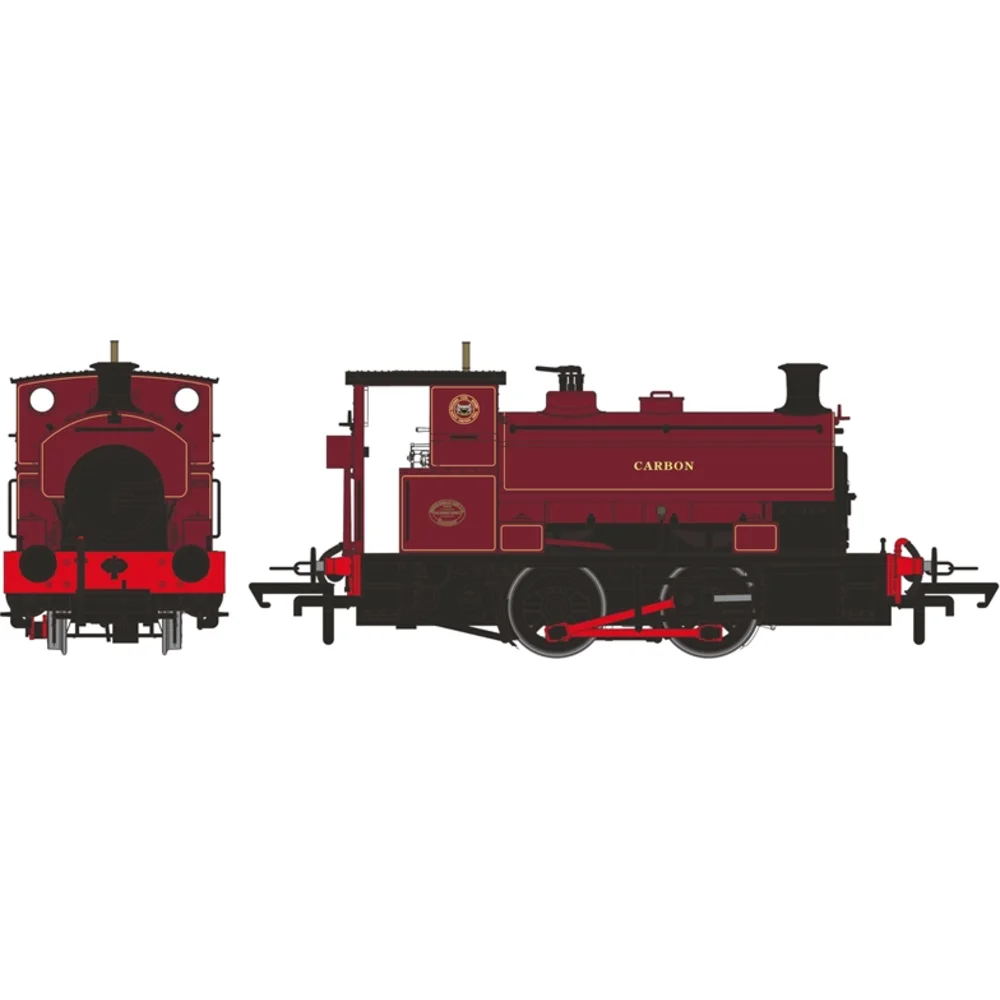
| ACC2995 | 14" | NCB lined maroon | Carbon | ex-Hattons H4-AB14-010 |
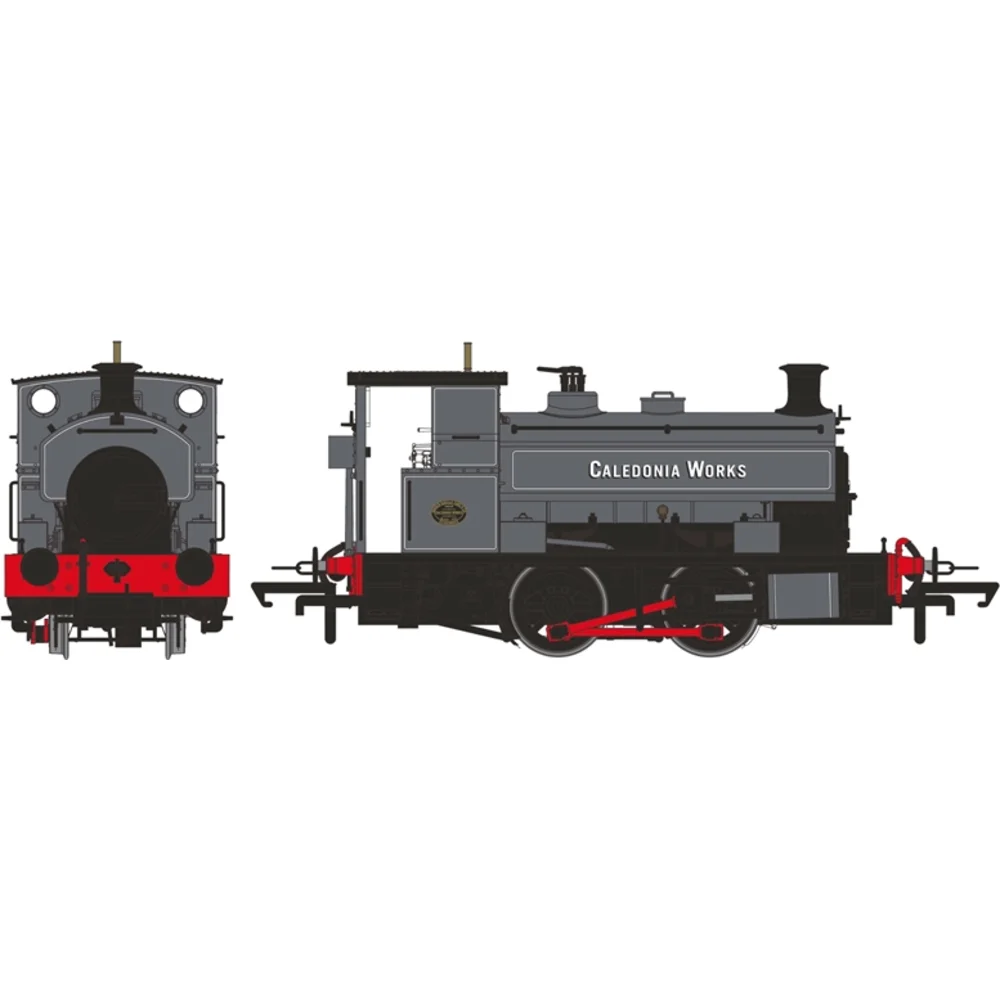
| ACC2996 | 14" | Caledonia Works lined grey | Unnumbered | ex-Hattons H4-AB14-011 |
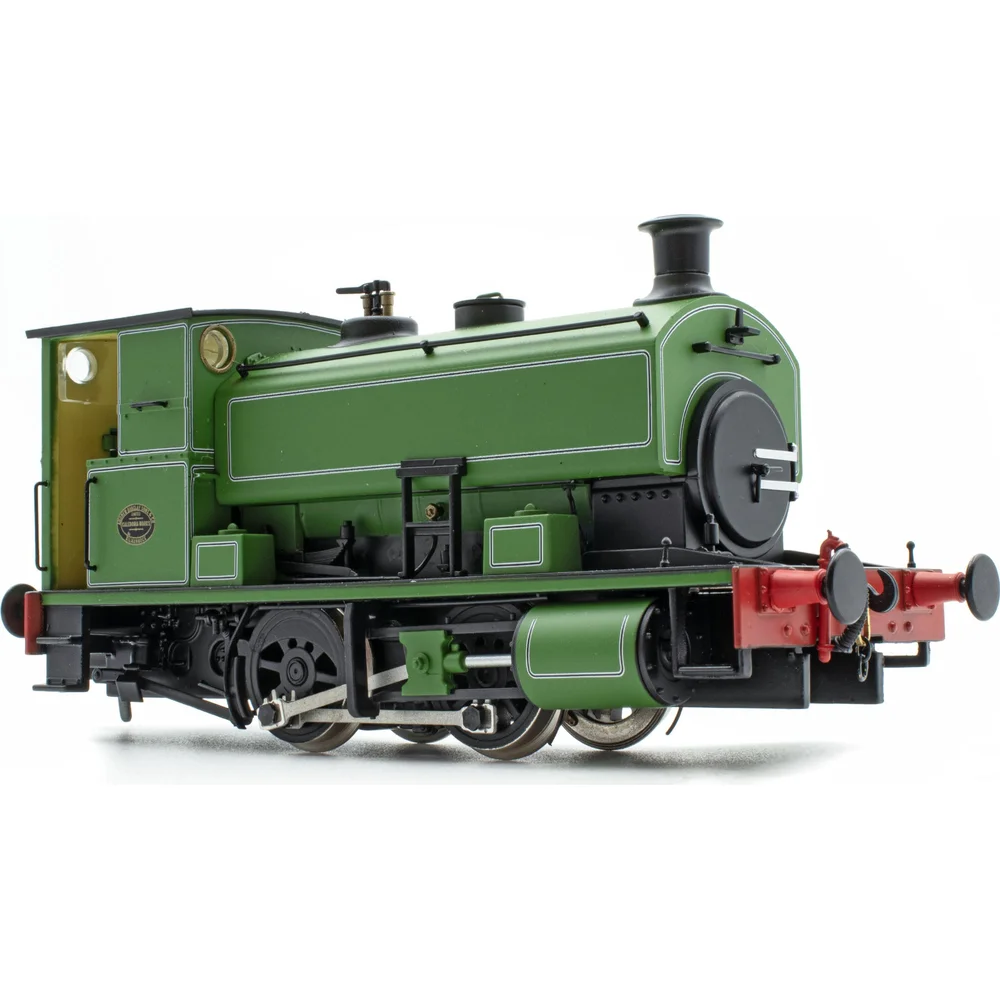
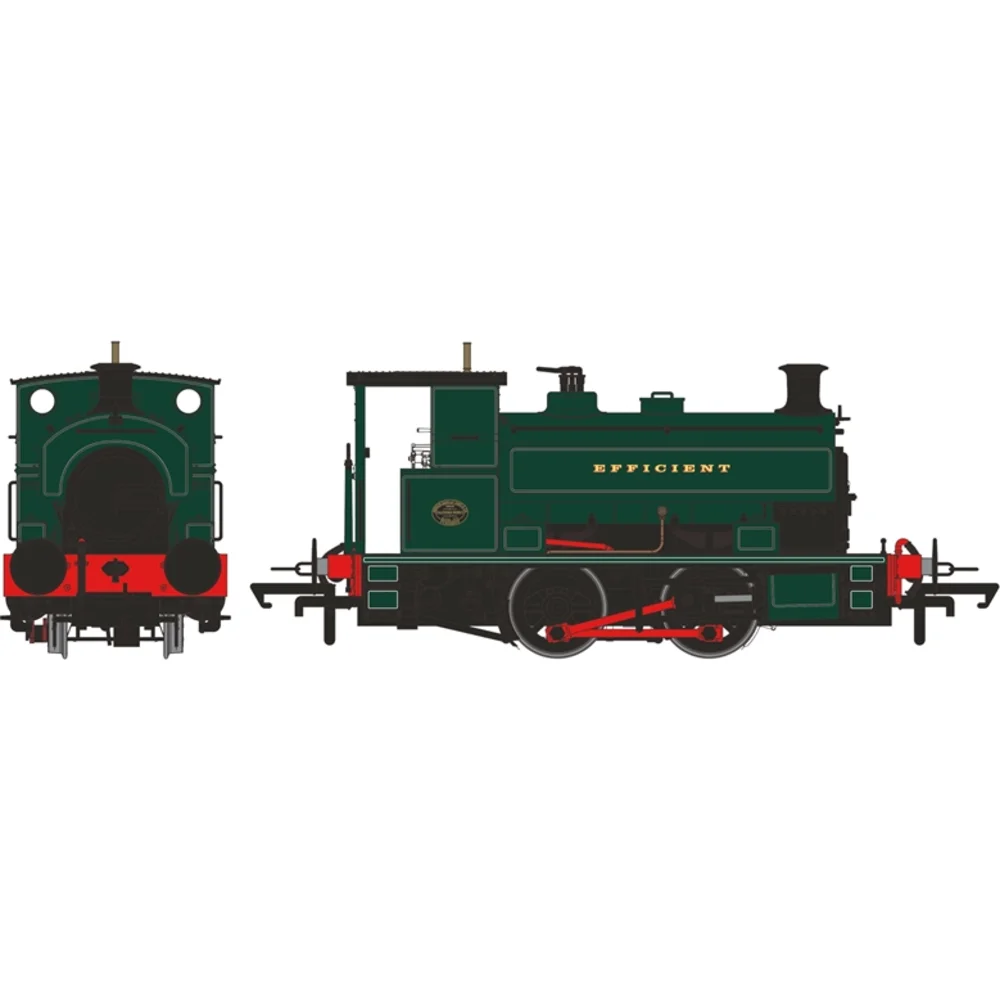
| ACC2997 | 14" | Lined green | Efficient (AB 1598/1918) | Prototype at Ribble Steam Railway |
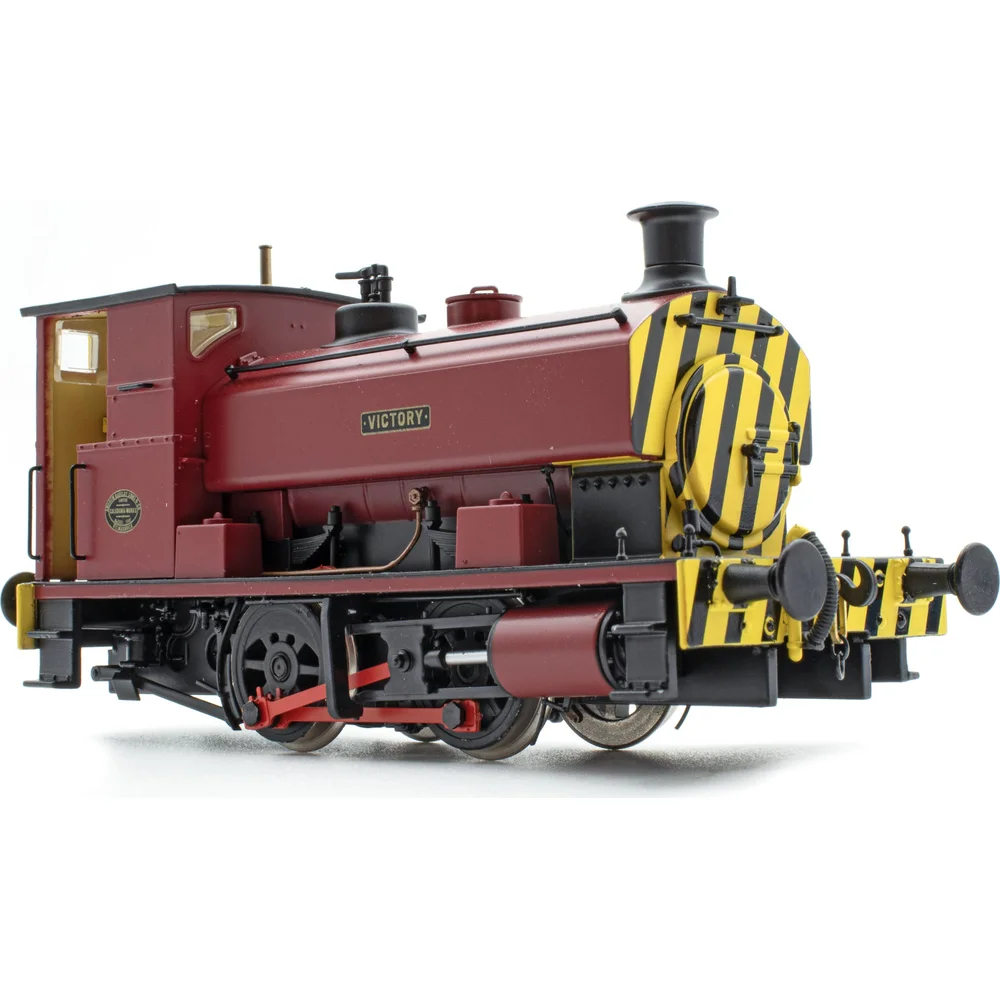
| ACC2998 | 14" | Plain maroon, wasp stripes | 2201 Victory | Stewarts & Lloyds, Newport |
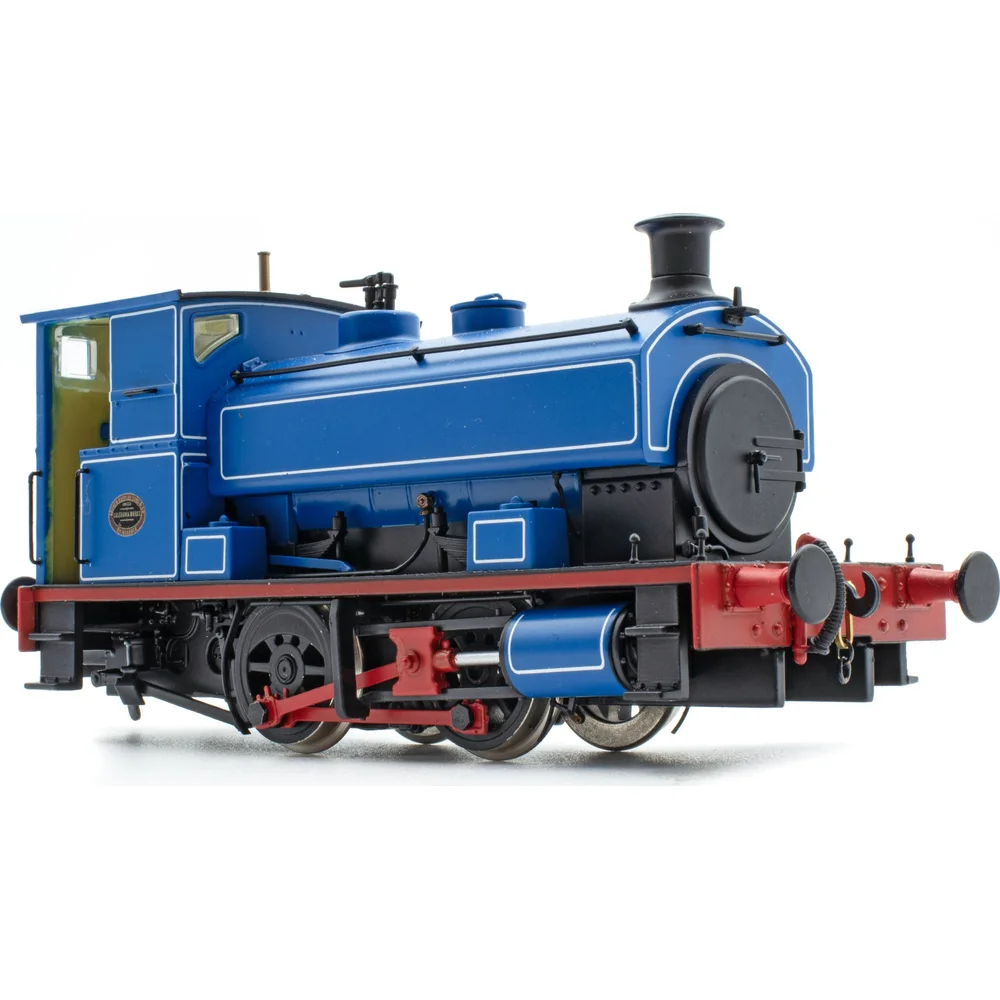
| ACC2999 | 14" | Lined light blue | Unnumbered | Generic industrial |
| ACC3000 | 16" | Lined apple green | Unnumbered | Generic industrial |
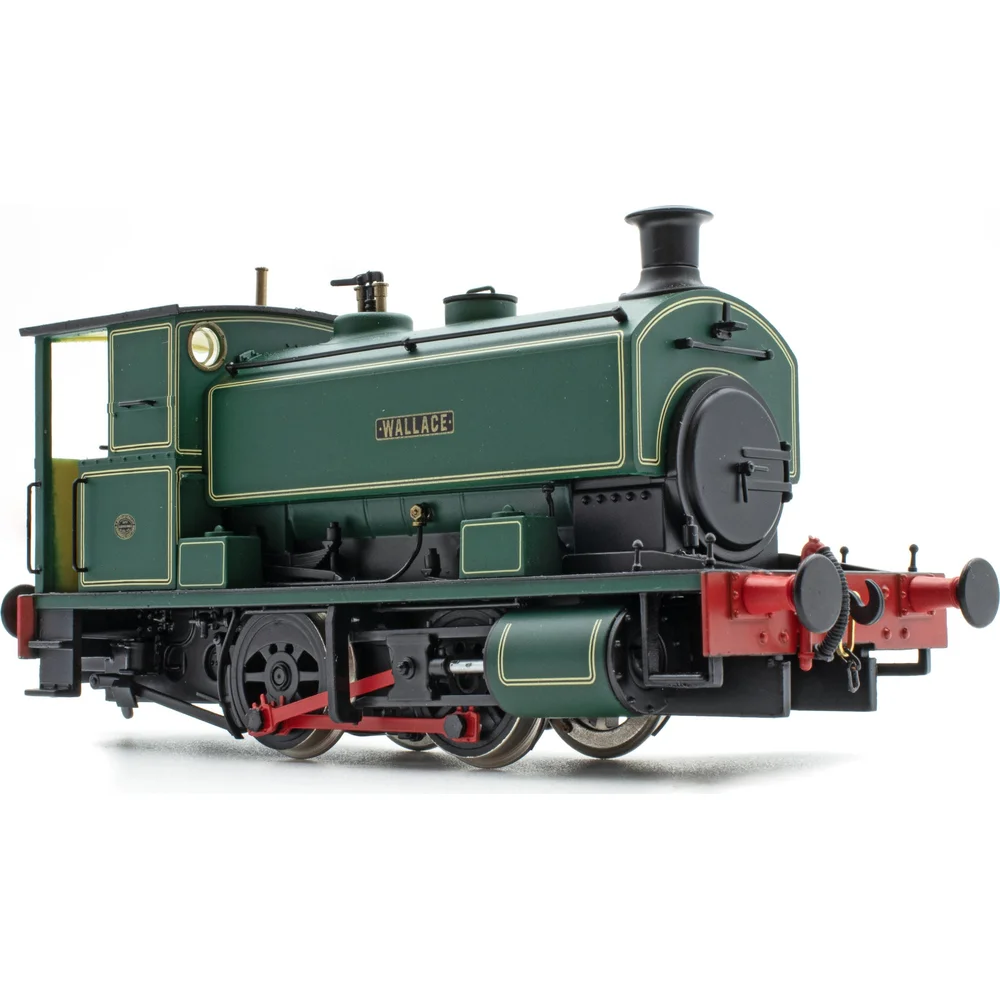
| ACC3001 | 16" | Lined green | Wallace (AB 2266/1949) | ICI Gaskell Marsh, Widnes |
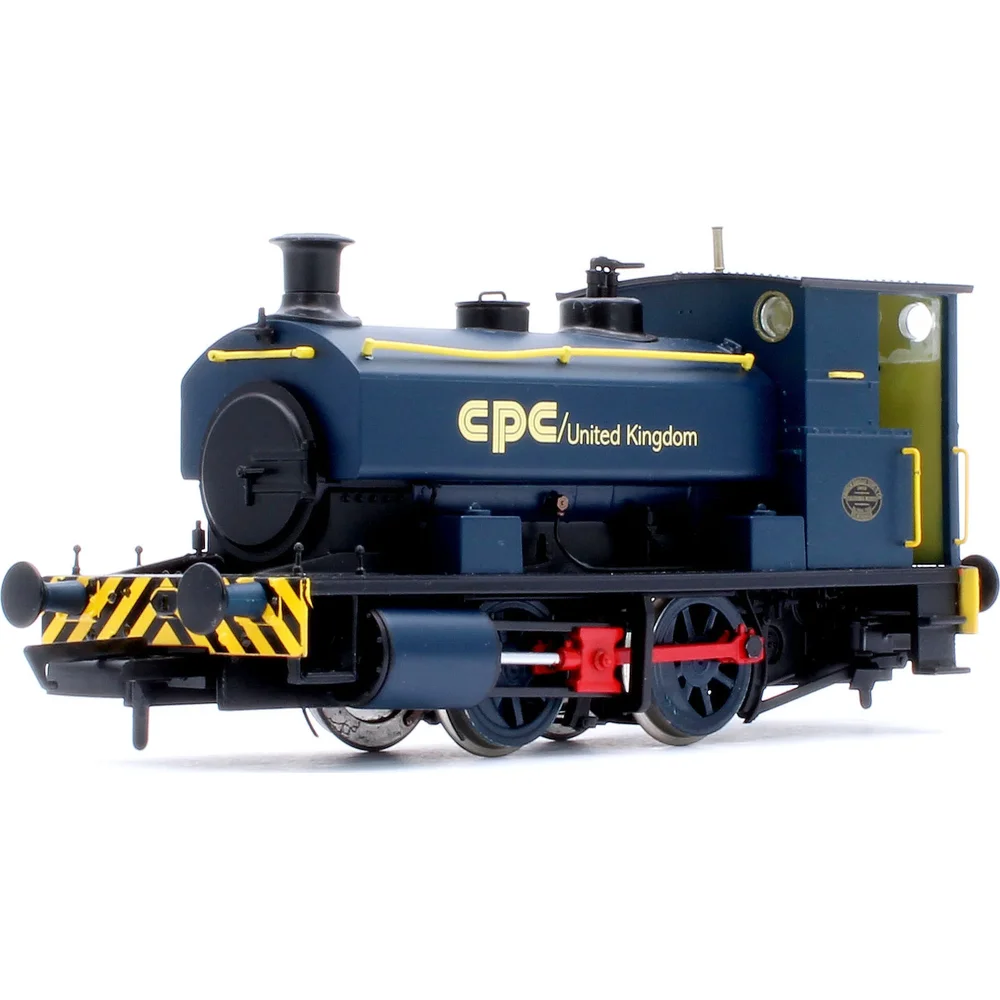
| ACC3002 | 16" | Lined dark blue | Unnumbered | Generic industrial |
No other manufacturer — Hornby, Dapol, Heljan, Bachmann or Graham Farish — has produced or announced an Andrew Barclay 0-4-0ST in any scale. The 10", 12" and 18" cylinder sizes remain entirely unmodelled in RTR form. In N gauge, 3D-printed Shapeways bodies exist to fit donor chassis but no commercial manufacturer has announced a model. O gauge and TT:120 are similarly unserved. The Hattons variants are now available pre-owned only, typically at £60–85 at model railway shows and online.
Planet Industrials produces 3D-printed detailing kits to convert the OO tooling into short-cab NCB and Devonport Dockyard variants, broadening the modelling possibilities considerably. Rapido Trains UK's separately tooled Andrew Barclay fireless in OO (from catalogue number 965001, RRP £139.95 DCC Ready / £249.95 DCC Sound) is the natural industrial companion, representing a type that shared the same yards as the coal-fired saddle tank across many British industrial sites.
Unique Modelling Tips and Layout Integration
The Andrew Barclay 0-4-0ST in OO is arguably the most versatile small steam locomotive in the current British RTR catalogue. Rated for Radius 2 (438 mm / 17¼ in) curves, it will negotiate track geometry that defeats a Pannier tank or a Jinty, and its short wheelbase, high tractive effort for its size and compact footprint make it equally at home on a 6 ft exhibition layout and a 2 ft bedroom-corner cameo.
Choosing the right setting shapes everything else. The 14" model (ACC2994–ACC2999) is most authentic in light colliery sidings, municipal gasworks, power station coal stages, small dockside quays, distillery tramways and brewery yards. The 16" model (ACC3000–ACC3002) suits heavier colliery surface workings with loaded 16-ton minerals, steelworks internal railways, large chemical-plant exchange sidings and NCB area concentration depots. Mixing both sizes on a larger layout is entirely prototypical — many industrial sites operated both the 14" and 16" simultaneously — and the two Accurascale body variants are visibly distinct enough to read as different locomotives on the layout.
The Inglenook shunting puzzle (5-3-3 wagon capacity, roughly 6–8 ft by 1 ft in OO) is the definitive format for a Barclay layout. It enforces realistic three-to-six wagon trains and generates absorbing operating sessions from a tiny footprint. For a more expansive scene, a coal concentration depot with BR exchange sidings allows a 14" or 16" Barclay to work alongside an Accurascale or Bachmann Class 08 for handover movements — a thoroughly authentic post-1955 arrangement.
Wagon selection matters greatly for period authenticity. For the NCB era, Accurascale's 16-ton Mineral wagons (triple packs ACC1026–ACC1062, around £75) are the finest RTR match currently available. Hornby and Bachmann 16-ton Minerals supplement these effectively. For pre-nationalisation Private Owner colliery scenes, Oxford Rail's seven-plank PO wagons — OR76MW7006 Arley Colliery, OR76MW7009 Shirebrook, OR76MW7011 Crippin's Arley — at around £12–15 each are outstanding value. For gasworks and chemical-plant settings, Dapol tankers and Hattons Bogie Tank Wagons provide appropriate variety. A grounded tender or short wagon body used as a match truck is a period-accurate detail for reaching elevated coal stages.
Weathering Tip: The Two Industrial Traditions Barclay 0-4-0STs divided into two distinct camps in service. Colliery and steelworks examples were almost universally filthy: apply thinned enamel washes of brown-black into recesses and mid-grey on raised faces, simulate oil staining on the motion with diluted Tamiya Clear Yellow, add weathering powders for coal dust on horizontal surfaces, and finish with a dark grey exhaust streak forward of the chimney across the saddle tank. Brewery, distillery, dockyard and power-company locomotives were the notable exception — often kept immaculate with polished brass domes, whitened buffer heads and gloss or satin varnish. The Accurascale Efficient (ACC2997) and Wallace (ACC3001) represent this smarter tradition well, and minimal weathering — a light dusting of powders on the underframe — produces an entirely authentic result.
DCC fitting requires careful attention on a four-wheel locomotive. With only four pickup wheels, voltage interruptions on dirty track or insulated point frogs will cause hesitation without a stay-alive capacitor. The DCC Concepts Zen Blue+ 6-pin Direct (DCD-ZN6D.2) with matching Zen Stay-Alive is the most widely recommended combination on RMweb. The Zimo MX617N gives the finest low-speed motor control for shunting work. A permanently coupled match truck provides additional internal space for both capacitor and speaker if sound fitting is desired — the only realistic route to sound given the tight body dimensions.
For detailing and personalisation, Modelu produces 1:76 seated and standing crew figures suited to the open Barclay cab. Narrow Planet supplies etched works plates and shed plates. Fox Transfers and Phoenix Precision Paints Barclay-specific sheets allow renumbering to a confirmed preserved prototype. Planet Industrials' short-cab 3D conversion kit transforms the standard body into Devonport Dockyard and early NCB variants with a noticeably different appearance, meaningfully extending the range's prototype diversity at modest cost.
Finally
The Andrew Barclay 0-4-0ST — in all five of its standard cylinder sizes — represents a particular kind of engineering achievement that is easily overlooked in a world of Pacifics and Garratts. These are locomotives that succeeded not through glamour or novelty but through disciplined, repeatable excellence precisely matched to what industrial Britain actually needed. From the tiny 10" tub-tramway shunter to the muscular 18" steelworks hauler, the family offered a coherent range of solutions to a coherent set of industrial problems, keeping them — with barely a modification — for over fifty years without interruption.
The 14" and 16" variants were the commercial heart of that story. They went to Aberdeen gasworks and Ayrshire collieries, to Newport steelworks and Widnes chemical plants, to Royal Naval dockyards and Lancashire power stations. Individual examples worked for 60 and 67 years. The last Barclays in NCB service did not retire until 1982. That is a depth of industrial impact that no other British locomotive family of comparable size can match.
For the model railway enthusiast, Accurascale's nine-variant OO gauge range at £99.95 provides access to this story with accuracy, mechanical reliability and genuine value. Both the 14" and 16" body variants are correctly proportioned, the die-cast chassis gives satisfying weight and stability, and the confirmed 2026 follow-up run promises further liveries. Pair the 16" Efficient (ACC2997) with a rake of Accurascale 16-ton Minerals and a gritty NCB shed scene, add a stay-alive to the decoder socket, and you have one of the most authentically satisfying British industrial layouts achievable at modest cost.
Visit Ribble Steam Railway or Bo'ness & Kinneil Railway to see working examples in steam; check accurascale.co.uk for current stock of ACC2994–ACC3002; and if you encounter a pre-owned Hattons H4-AB14 or H4-AB16 at a model railway show, do not hesitate — they share the same tooling and run just as well. The Andrew Barclay 0-4-0ST richly deserves its place at the head of any industrial locomotive roster.
Frequently Asked Questions
How many standard cylinder sizes did the Andrew Barclay 0-4-0ST family include?
Five: 10", 12", 14", 16" and 18", all sharing the same basic design of outside cylinders, inside plate frames, Stephenson link motion and squared-off saddle tank. The 14" and 16" cylinder variants were by far the most numerous, serving the mainstream of the British industrial locomotive market from the late 1890s to 1955 across collieries, gasworks, steelworks, docks and chemical plants.
What is the practical difference between the 14" and 16" cylinder variants?
The 14"×22" variant used 3 ft 5 in–3 ft 6 in driving wheels and produced around 14,000–19,900 lbf tractive effort, suiting light-to-medium industrial work including gasworks, power stations and lighter collieries. The 16"×24" variant, with 3 ft 7 in–3 ft 8½ in wheels and approximately 19,000–22,000 lbf, served heavier steelworks, large collieries and chemical plants. The 16" is physically longer with a larger saddle tank — a difference accurately captured in the separate Hattons and Accurascale OO toolings.
When was the Andrew Barclay 0-4-0ST first produced and when did production end?
The standard five-size family crystallised from the mid-to-late 1890s. Production continued essentially without design change to works number 2369 in 1955, which was also the last steam locomotive purchased new by the National Coal Board. Total output of Andrew Barclay Sons & Co. across all locomotive types is approximately 2,052 engines, of which the 14" and 16" 0-4-0STs account for the substantial majority.
How many Andrew Barclay 0-4-0STs survive in preservation?
Approximately 80 standard-gauge examples are preserved in the United Kingdom, the majority being 14" or 16" saddle tanks. The figure exceeds 100 when exports, fireless locomotives and narrow-gauge types are included. Major collections are held at the Scottish Industrial Railway Centre (Dunaskin), Bo'ness & Kinneil Railway, Ribble Steam Railway, Tanfield Railway and Buckinghamshire Railway Centre at Quainton Road, among many others.
Where can I see a working preserved Andrew Barclay 0-4-0ST in steam?
Ribble Steam Railway in Preston and Bo'ness & Kinneil Railway at Bo'ness in Scotland are the most reliable destinations for regularly steamed examples. Ribble operates AB 1969 JN Derbyshire (16", returned to steam 2024) among others; Bo'ness runs AB 2043 No. 4 (16"). The Scottish Industrial Railway Centre at Dunaskin holds the largest collection, though steaming days are less frequent — always check the railway's website before travelling.
What OO gauge ready-to-run Andrew Barclay 0-4-0ST models are currently available?
Accurascale currently produces nine OO gauge variants (ACC2994–ACC3002) at £99.95 each, covering both 14" and 16" cylinder prototypes. All feature a 6-pin NEM 651 DCC socket, die-cast chassis and five-pole motor with flywheel. The original Hattons Originals twelve-variant range (H4-AB14-001 to H4-AB16-004) is out of production but widely available pre-owned. A further Accurascale production run is confirmed for 2026.
Are Andrew Barclay 0-4-0ST models available in N gauge, O gauge or TT:120?
No mainstream RTR model exists in any scale other than OO. In N gauge, 3D-printed Shapeways bodies can be adapted to donor chassis, but no commercial manufacturer has announced a model. O gauge and TT:120 are similarly unserved. The 10", 12" and 18" cylinder sizes are unmodelled in any scale. The Hattons/Accurascale OO tooling remains the only commercially produced ready-to-run representation of the class.
What DCC decoder and stay-alive do you recommend for the Accurascale model?
Given the short 0-4-0 wheelbase and four-wheel current collection, a stay-alive is strongly recommended. The DCC Concepts Zen Blue+ 6-pin Direct (DCD-ZN6D.2) with the matching Zen Stay-Alive capacitor is the most widely used combination reported on RMweb. The Zimo MX617N offers the finest low-speed motor control for shunting work. A permanently coupled match truck provides additional space for both capacitor and a small speaker if sound fitting is desired.
What industries most commonly operated the 14" and 16" Andrew Barclay?
The 14" was favoured by collieries (lighter surface work), municipal gasworks, power stations, distilleries and smaller dock operations. The 16" served heavier colliery surface workings, steelworks internal railways, large chemical plants and major dock installations. Both sizes also appeared at Royal Naval Dockyards, Ordnance Factories, brewing companies and a wide variety of other undertakings. Export customers included South African collieries and Bord na Móna in Ireland.
What wagon types are most appropriate with the Accurascale Barclay?
For NCB-era scenes, Accurascale 16-ton Mineral wagons (triple packs ACC1026–ACC1062) are the finest RTR match. Hornby and Bachmann 16-ton Minerals supplement these well. For pre-nationalisation Private Owner colliery scenes, Oxford Rail seven-plank wagons (OR76MW7006–OR76MW7011 series) at around £12–15 each are outstanding value. For gasworks and chemical-plant settings, Dapol tankers and Hattons Bogie Tank Wagons provide appropriate variety.
How do the 14" and 16" Barclays compare to equivalent Peckett or Hunslet designs?
All three builders offered outside-cylinder 0-4-0STs in similar size ranges competing for the same customers. Barclay was dominant in Scotland; Peckett (Bristol) was strongest in South and West England; Hunslet (Leeds) was strongest in Yorkshire and the East Midlands. Technically all three used Stephenson motion and slide valves. Visually, the Barclay's distinctively squared-off saddle tank and compact cab give it an unmistakable outline immediately distinguishable from the more rounded Peckett or the rangier Hunslet profile.
Was the Andrew Barclay 0-4-0ST the last steam locomotive type in regular British industrial service?
NCB examples continued working at Barony Colliery, Ayrshire until approximately 1982 — fourteen years after the end of BR steam — making the class a very strong contender for that distinction. AB 2369 (NCB No. 8/1955), the last steam locomotive purchased new by the NCB, also worked into the early 1980s. Several examples at power stations and chemical plants remained in service into the early-to-mid 1970s. The Andrew Barclay 0-4-0ST almost certainly remained in more widespread British industrial use for longer than any other steam locomotive design.