Bachmann 35-529PF

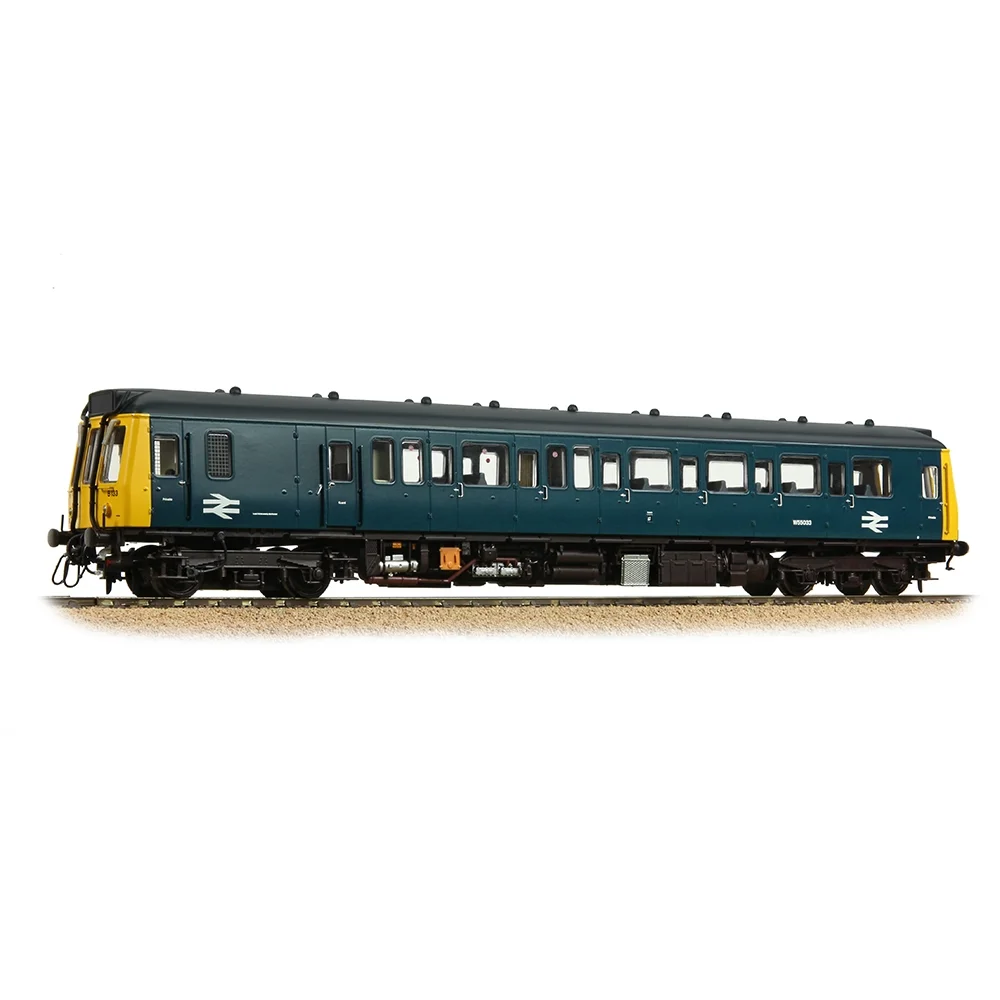
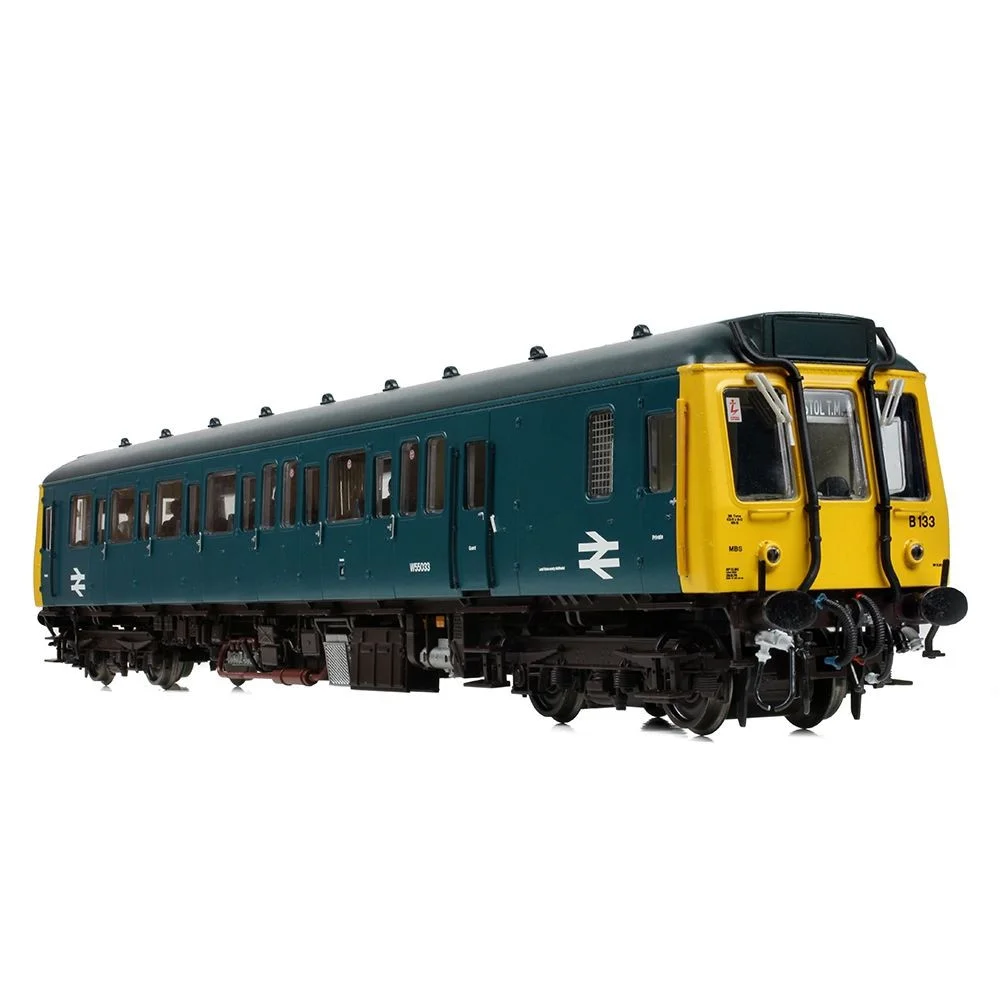
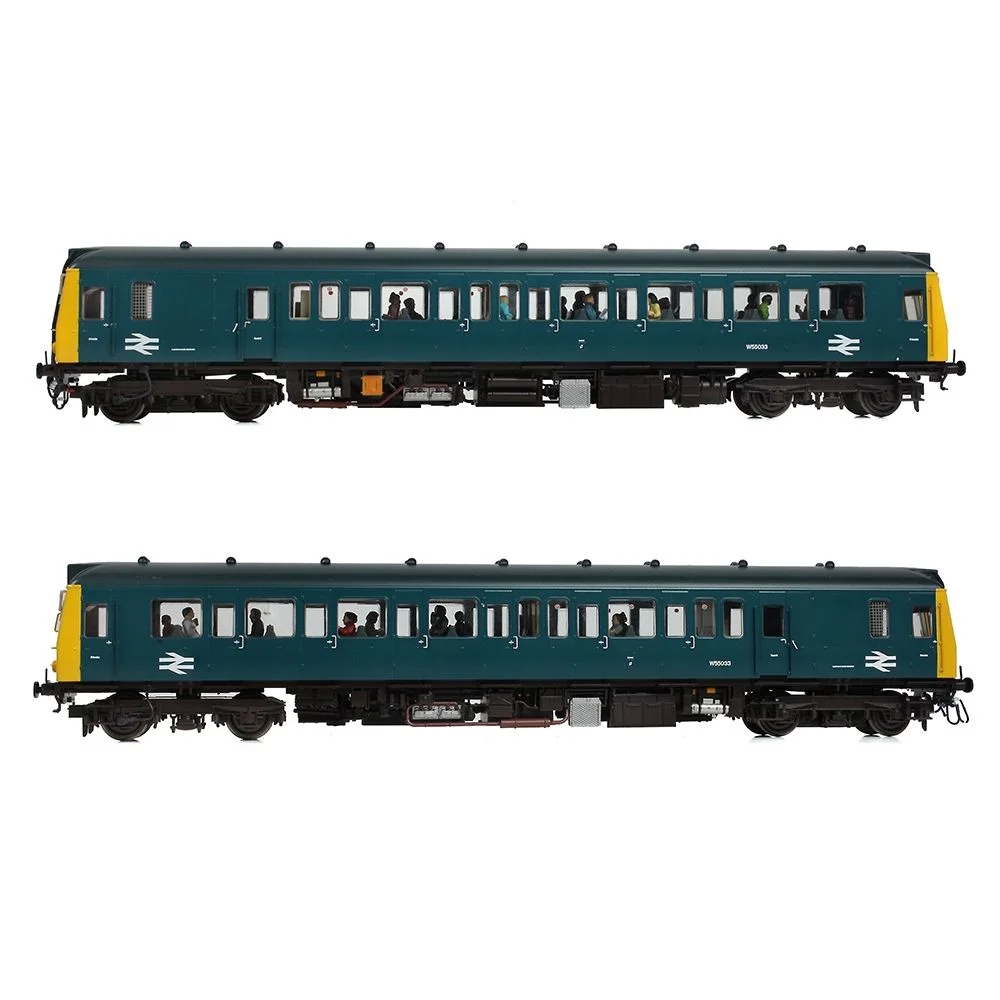
British Rail Class 121 W55033 British Rail Blue

Tooling

The Bachmann Branchline Class 121 "Bubble Car" received entirely new tooling in 2020, bringing to life the iconic single-car British Rail DMU in OO gauge. Representing the prototype built by Pressed Steel from 1959–1961, this model captures the charm and utility of the real-life units which were built for branch-line working on the Western Region and served in mainline and heritage roles until 2017.

The Bachmann Class 121 tooling has been widely praised across the model railway community. Publications such as World of Railways highlighted the underframe detailing and compact motor installation as among the best seen on a DMU in OO gauge. Hornby Magazine and Key Model World noted the inclusion of sprung buffers, speedometer cable, detailed pipework, and the comprehensive lighting suite as standout features. Online reviewers, including popular YouTube channels like Sam'sTrains and InterCityBR, commended the smooth running, high-quality finish, and ease of DCC upgrades. Comparisons with competing models from other manufacturers often place Bachmann's offering at the top for accuracy and refinement.

Social media and video platforms have played a major role in showcasing the Class 121's capabilities. YouTube demonstrations frequently focus on the multi-function lighting, interior illumination, and sound-fitted versions, with viewers praising the realism and operational authenticity. On RMweb and similar forums, enthusiasts have expressed strong approval for the tooling, citing its suitability for compact branch-line layouts and preserved-era scenes. The model has become a popular choice for collectors and operators alike, with many considering it one of the most successful DMU releases in recent years.

The 2020 tooling of the Class 121 "Bubble Car" represents a high-water mark in Bachmann's OO DMU range: detailed, mechanically refined, DCC-ready, and line-up-diverse. Whether running solo on tight branch curves or as part of preserved-era formations, the model delivers both prototype fidelity and model railway versatility.

Detailing: Factory-fitted separate components including door handles, windscreen wipers, lamp irons, exhaust pipes, cab handrails and footplate detail. Glazed windows reveal an interior with saloon seating, partitions, guard's compartment and realistic cab controls. detailing pack featuring interchangeable screwlink couplings, bufferbeam pipework, jumper cables and scenic extras.

Class & Prototype

  • Running Number: W55033

The British Rail Class 121 "Bubble Car" single-car DMU operated for 57 years from 1960-2017, making it Britain's longest-serving diesel multiple unit. Built by Pressed Steel Company, just 16 DMBS power cars served Western Region branches including the Greenford shuttle, Henley, Marlow, and Severn Beach line. Distinctive "antler" exhausts curving around illuminated headcode boxes set them apart from similar Class 122 designs. Originally AEC-powered, the fleet was re-engined with Leyland 680 units during 1971-1980. Following privatisation, units worked for Silverlink on the Marston Vale Line before Chiltern Railways' remarkable 2003-2017 renaissance extended their career. Twelve vehicles survive in preservation. Available as models from Bachmann (OO), Dapol (OO/N/O), and Heljan (O gauge) in numerous authentic liveries.

Operator & Livery

  • Operator: British Rail
  • Livery: Blue
  • Era: 7 - British Rail Blue TOPS

British Rail (1965-1997) transformed Britain's railways through revolutionary modernisation, introducing the iconic double arrow logo, Rail Blue livery, and business sectorisation. BR pioneered high-speed rail with the InterCity 125 and Advanced Passenger Train, electrified major routes, and created profitable divisions like InterCity and Network SouthEast. From steam succession through diesel and electric development to privatisation preparation, British Rail's diverse locomotive fleet, multiple livery schemes, and operational scenarios provide unparalleled variety for railway modellers across all scales and periods.

BR Blue, also known as Rail Blue or Monastral Blue, was introduced in 1965 as part of British Rail's comprehensive corporate identity overhaul that accompanied the rebranding from British Railways to British Rail. The colour was officially defined by British Standards BR28/6001 (airless spray finish) and BR28/5321 (brush finish), representing a dark, greyish blue tone specifically chosen to hide dirt and weathering effects well.

The livery was prototyped on the experimental XP64 train in 1964 before becoming the standard scheme from 1 January 1965. Rail Blue was applied to all diesel and electric locomotives with yellow warning panels (initially small, then extending to full yellow ends from 1966). The standardised application included the iconic double arrow logo and Rail Alphabet typeface, creating one of the most successful transport corporate identities of the 20th century.

The livery dominated British Rail operations for over two decades until sectorisation in the 1980s began fragmenting the unified appearance. Despite initial colour fading problems in early applications, these were resolved by the late 1970s when the Large Logo variant was introduced featuring extended yellow areas and full-height double arrow symbols. Rail Blue's enduring appeal among railway enthusiasts reflects its role as the definitive British Rail image during the organisation's most unified period.