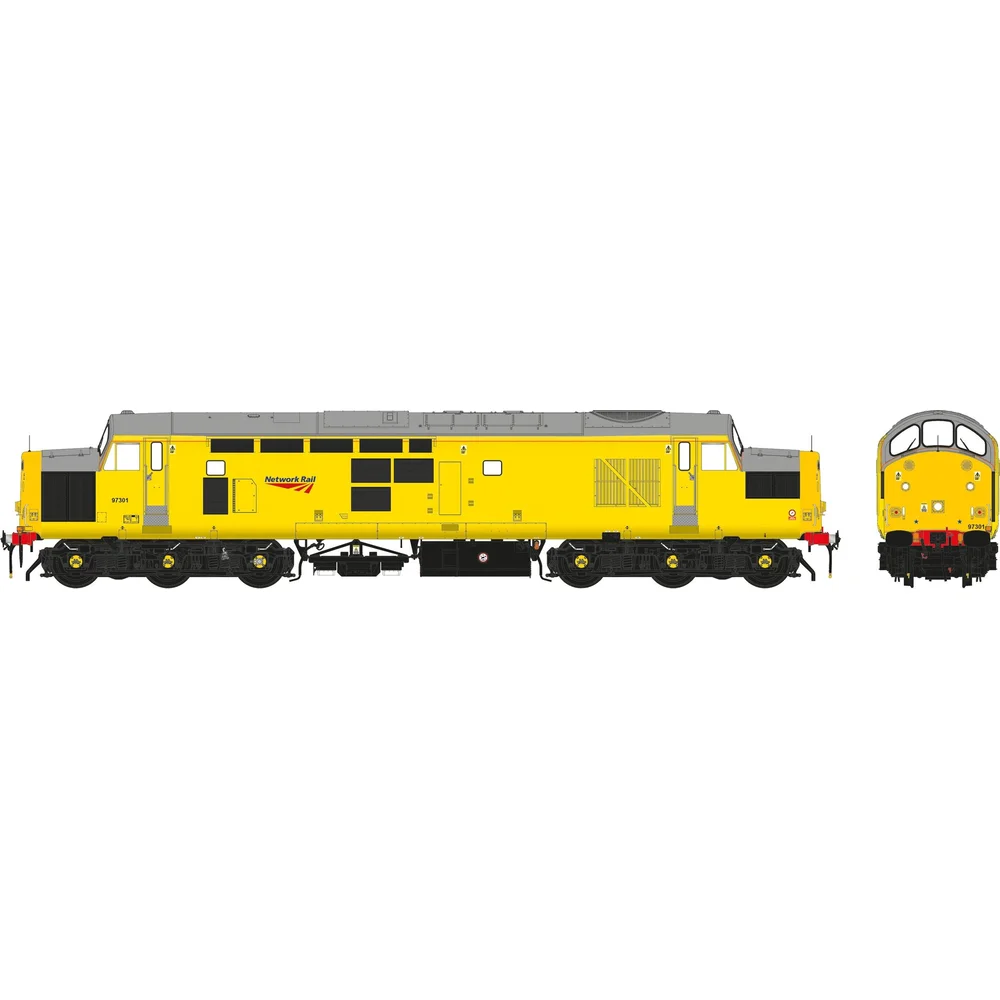
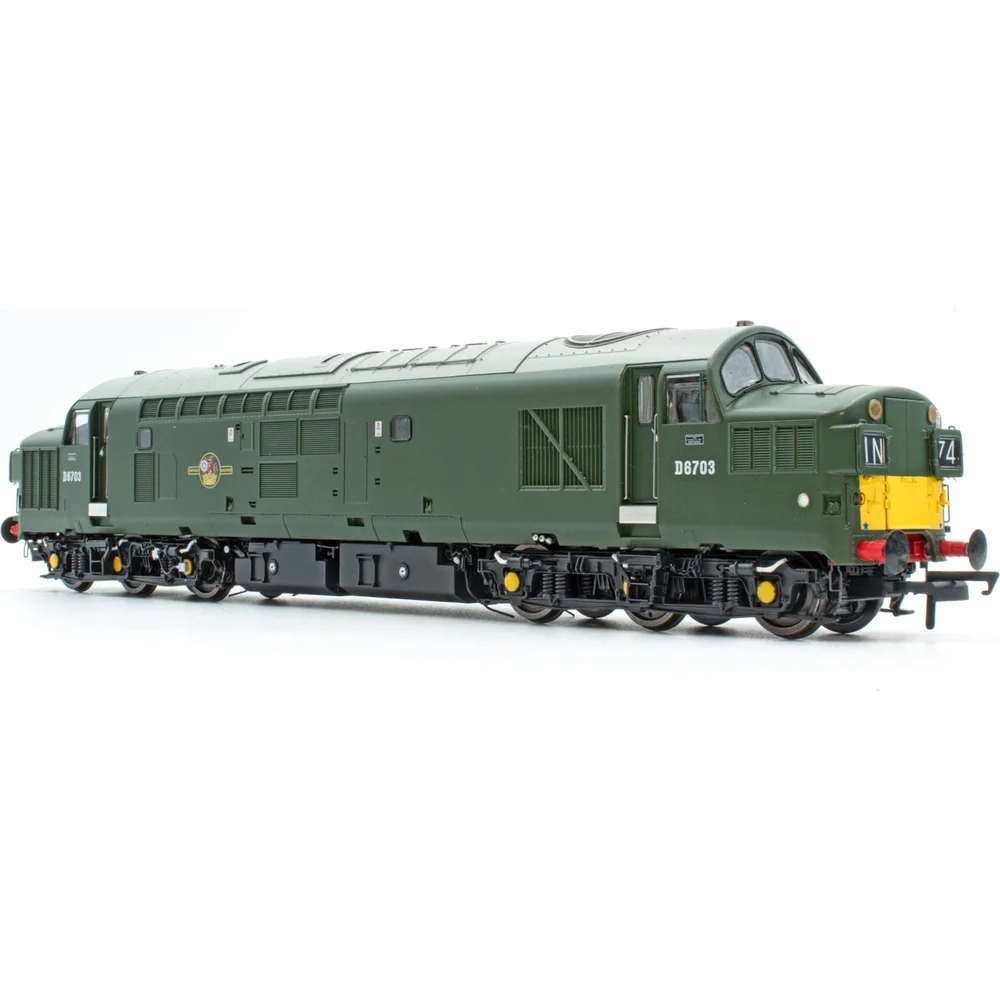
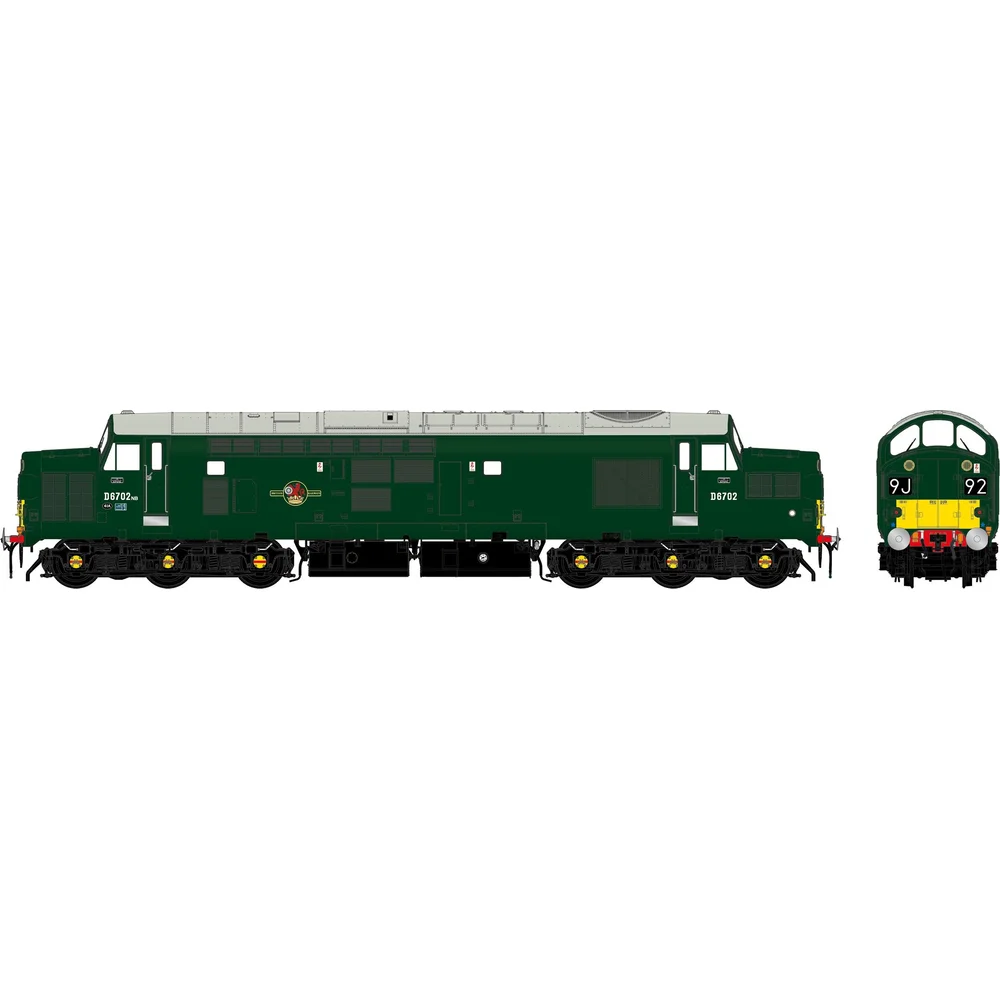
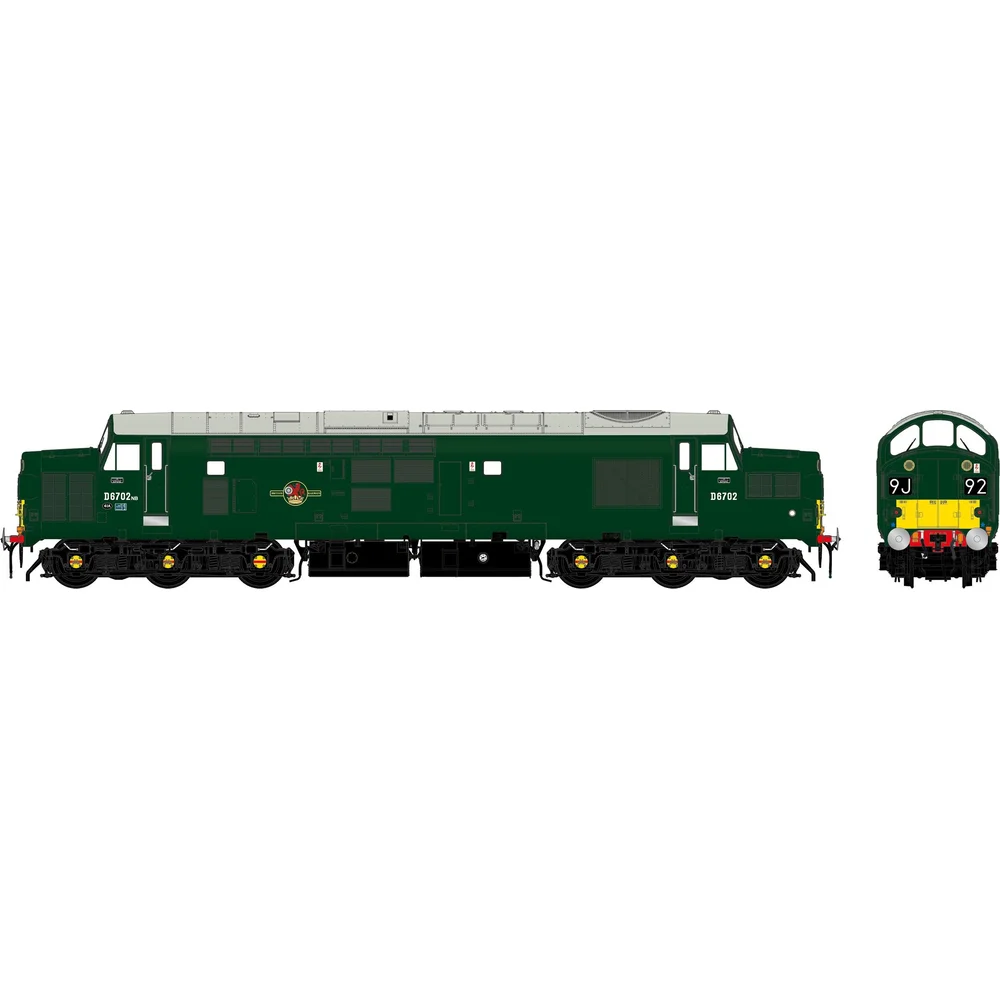
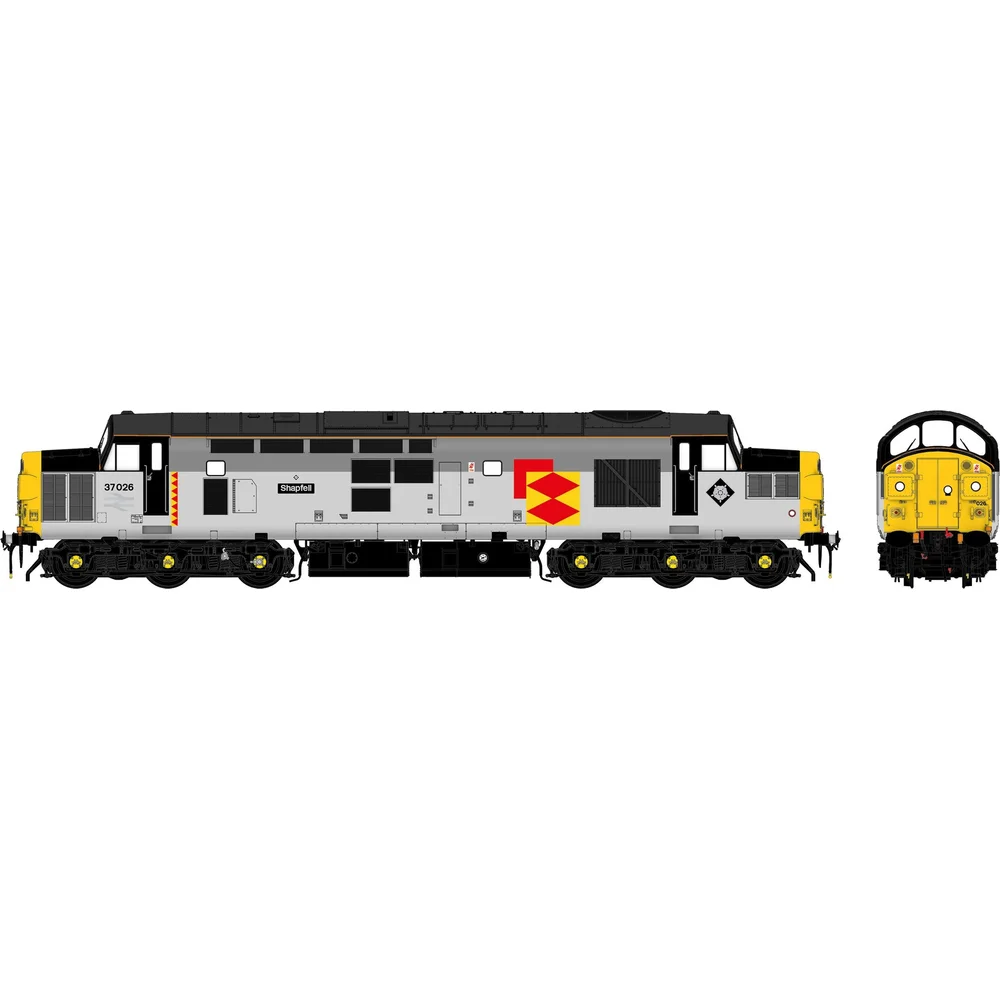
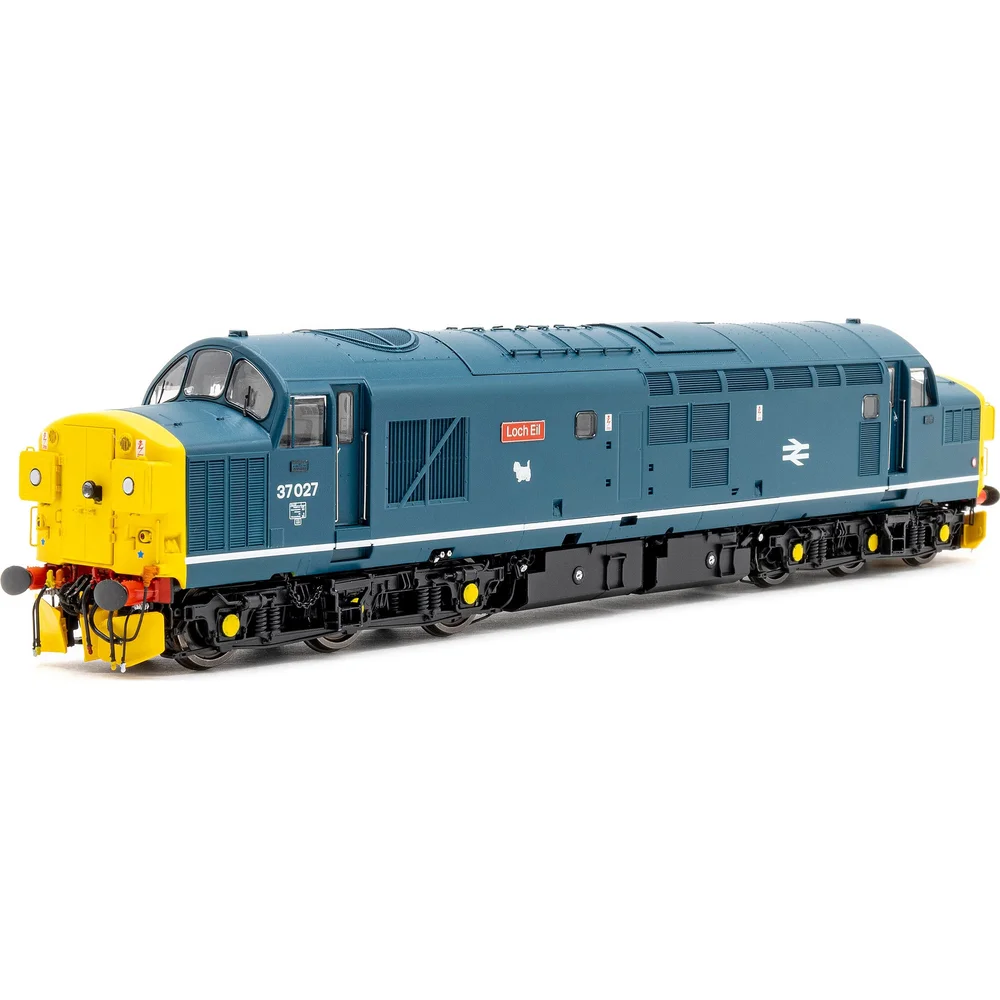
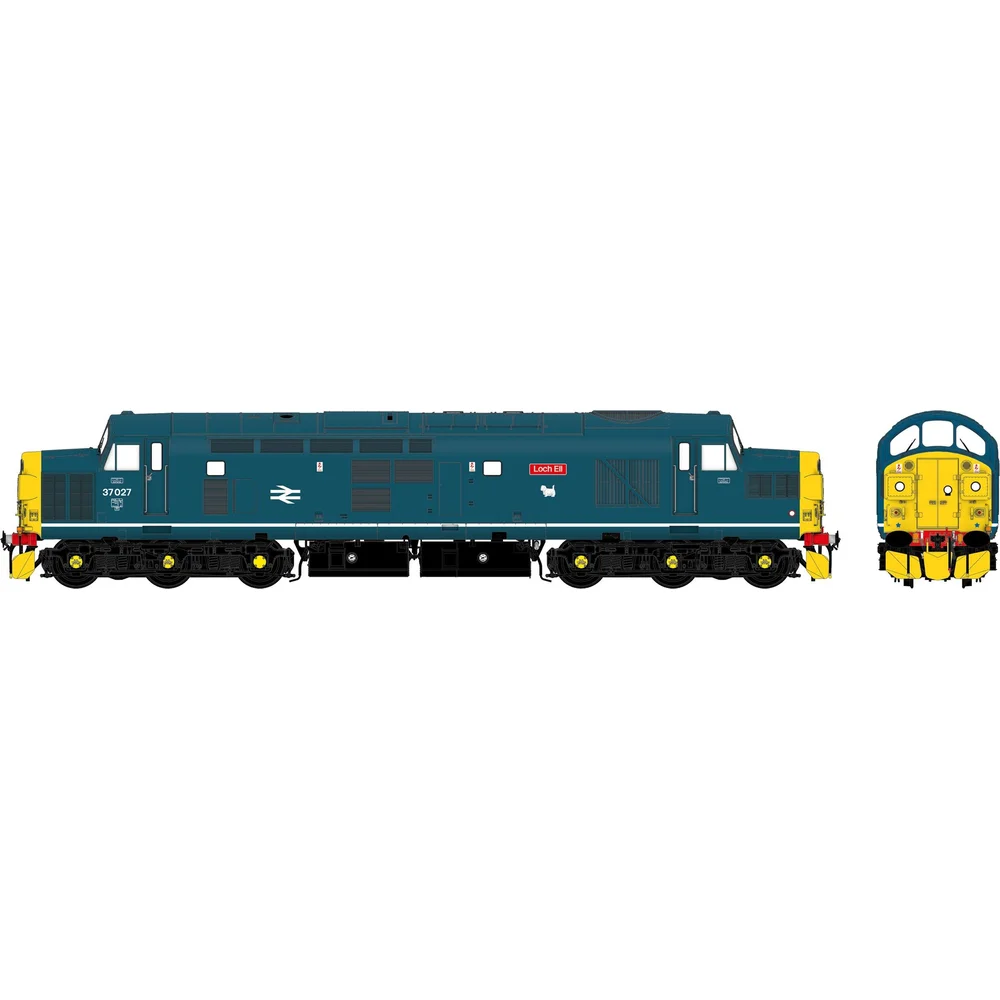
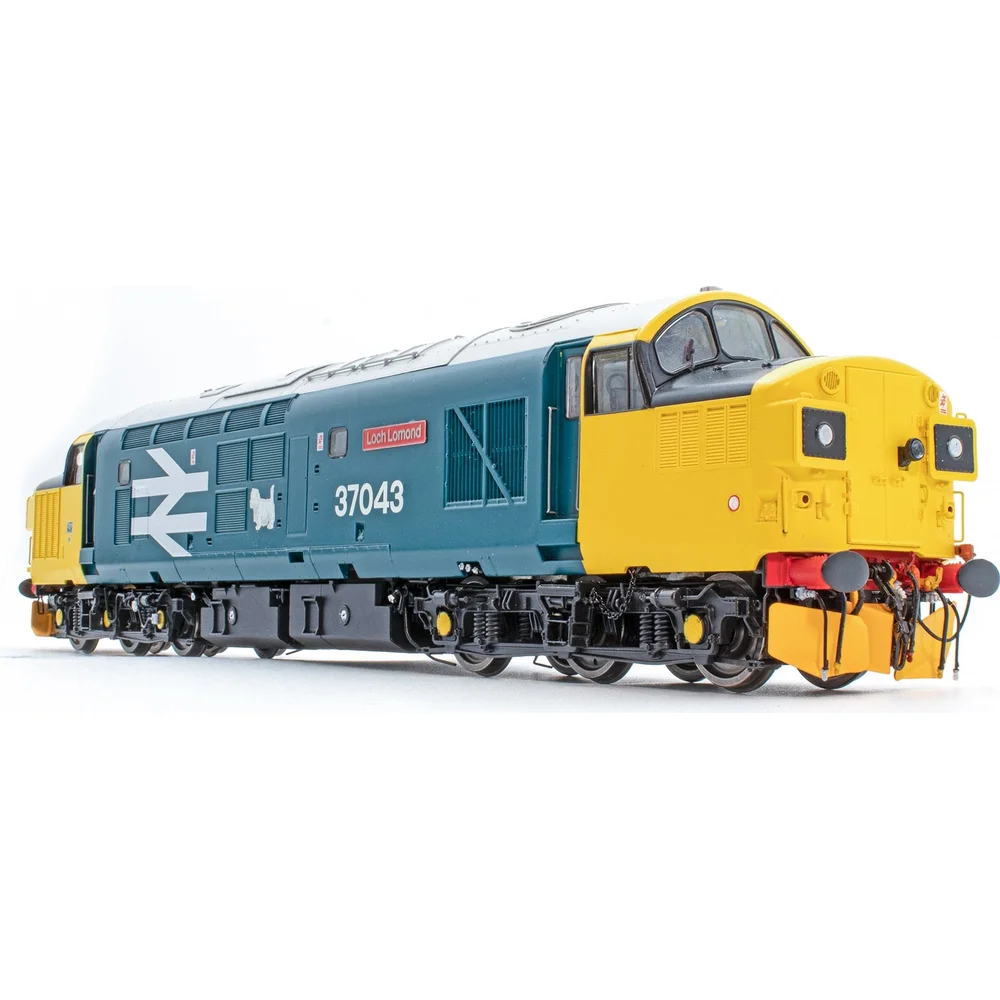
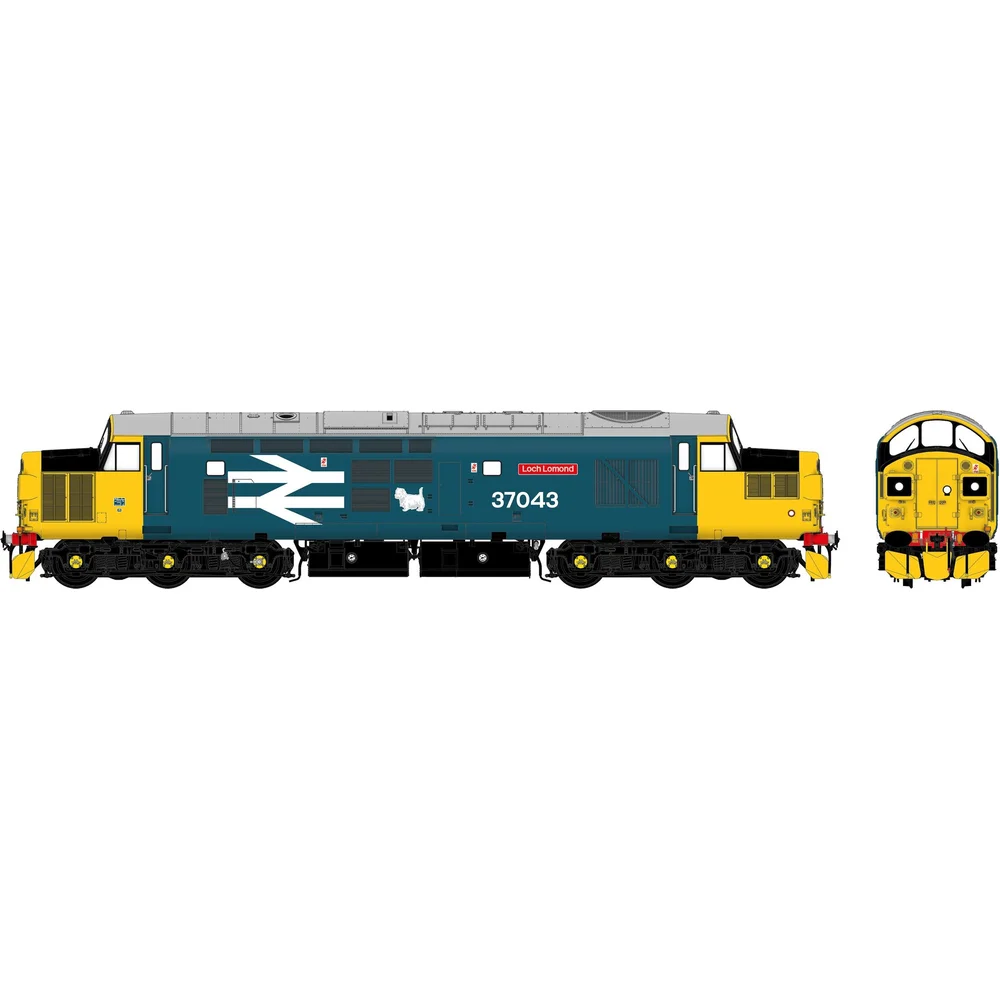
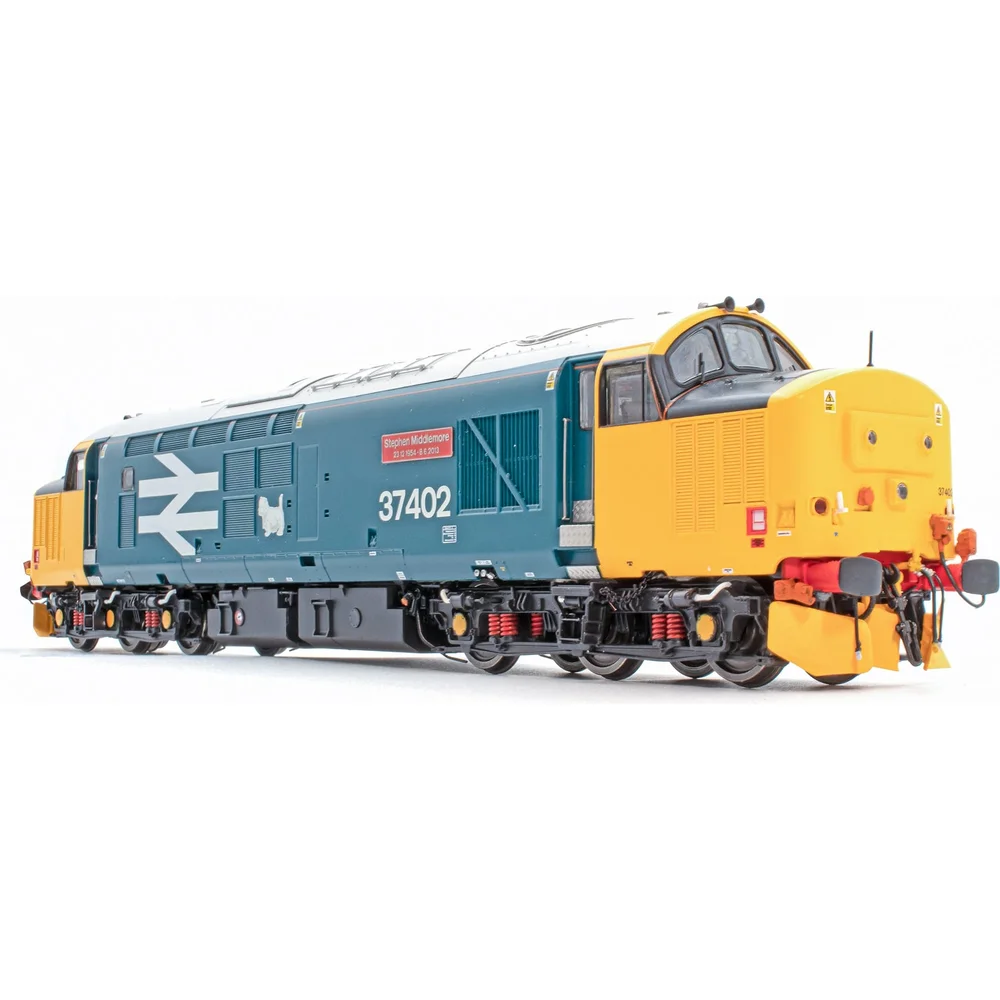
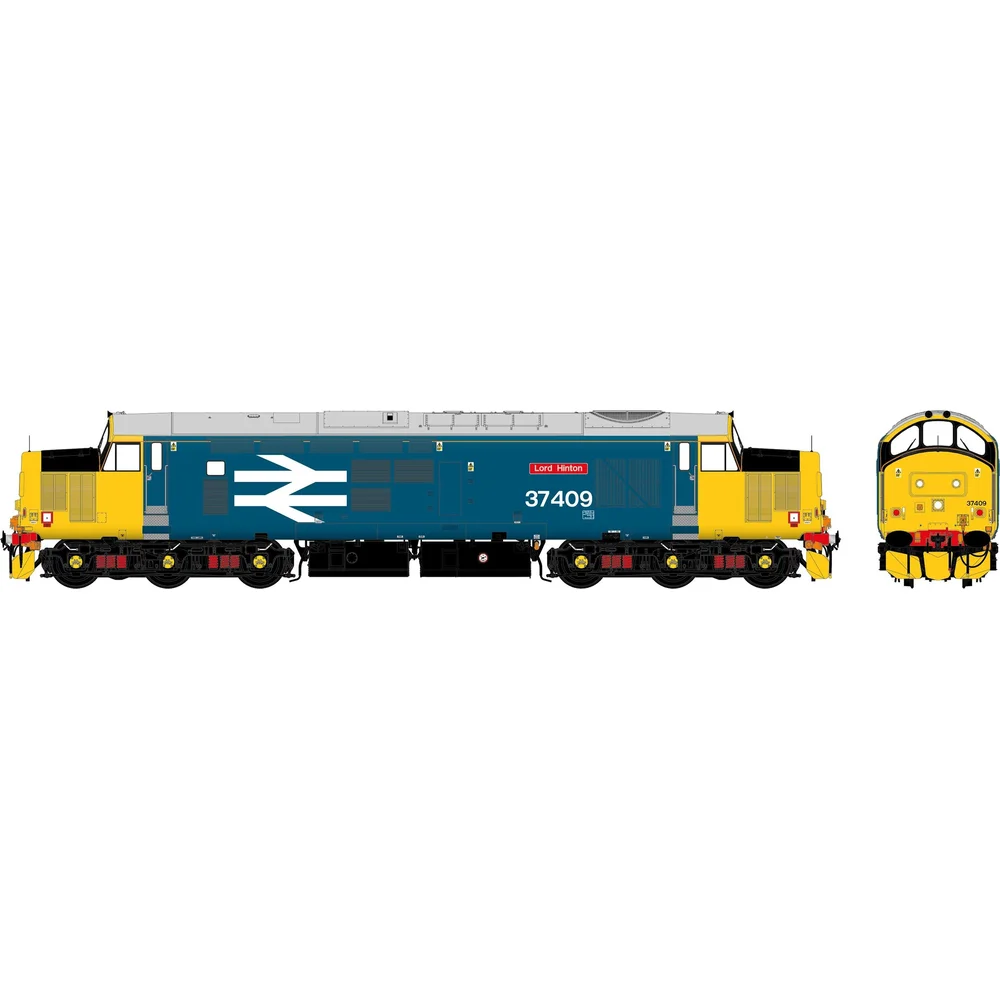
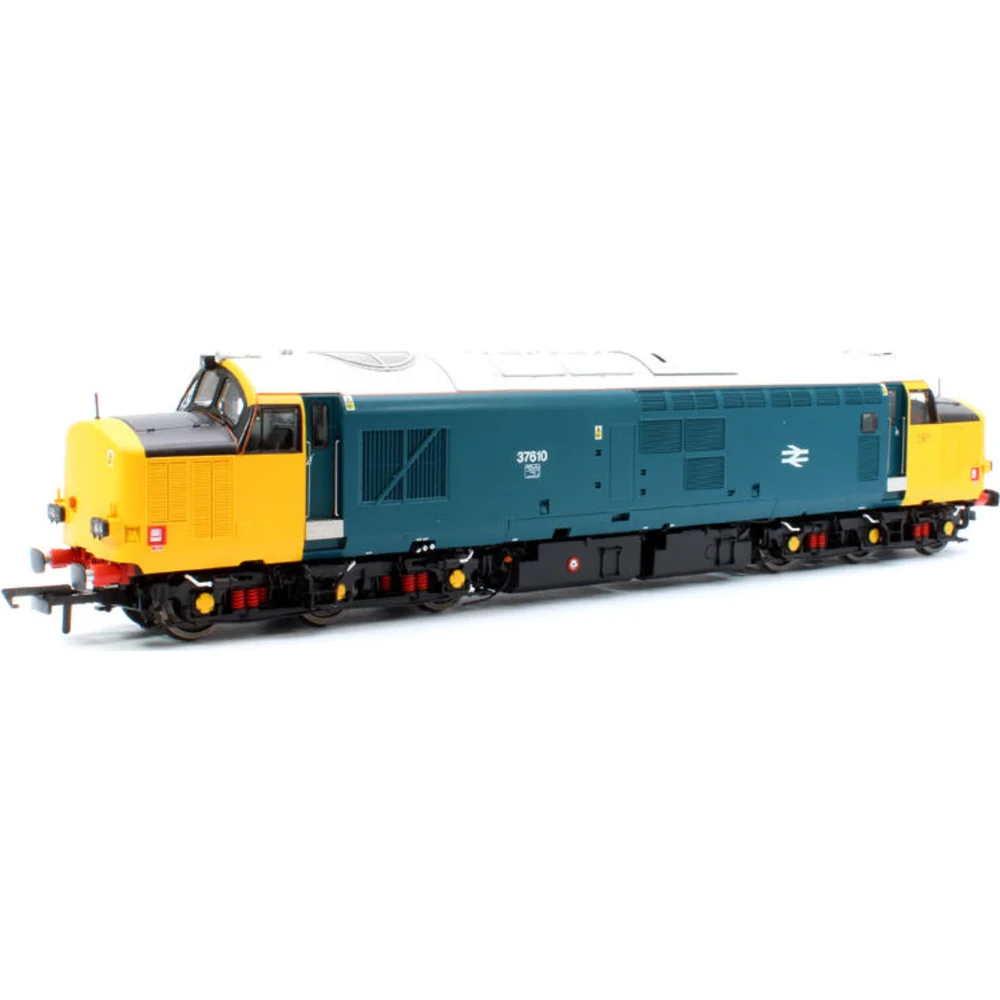
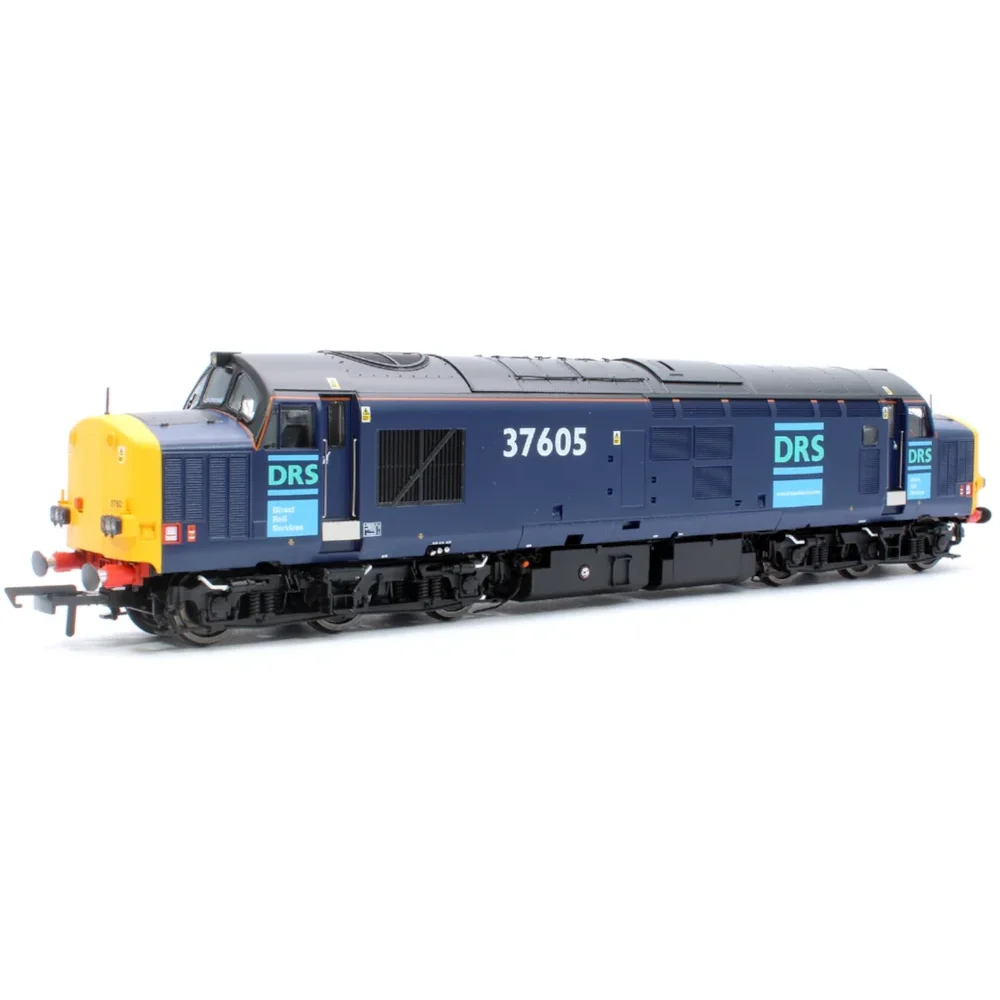
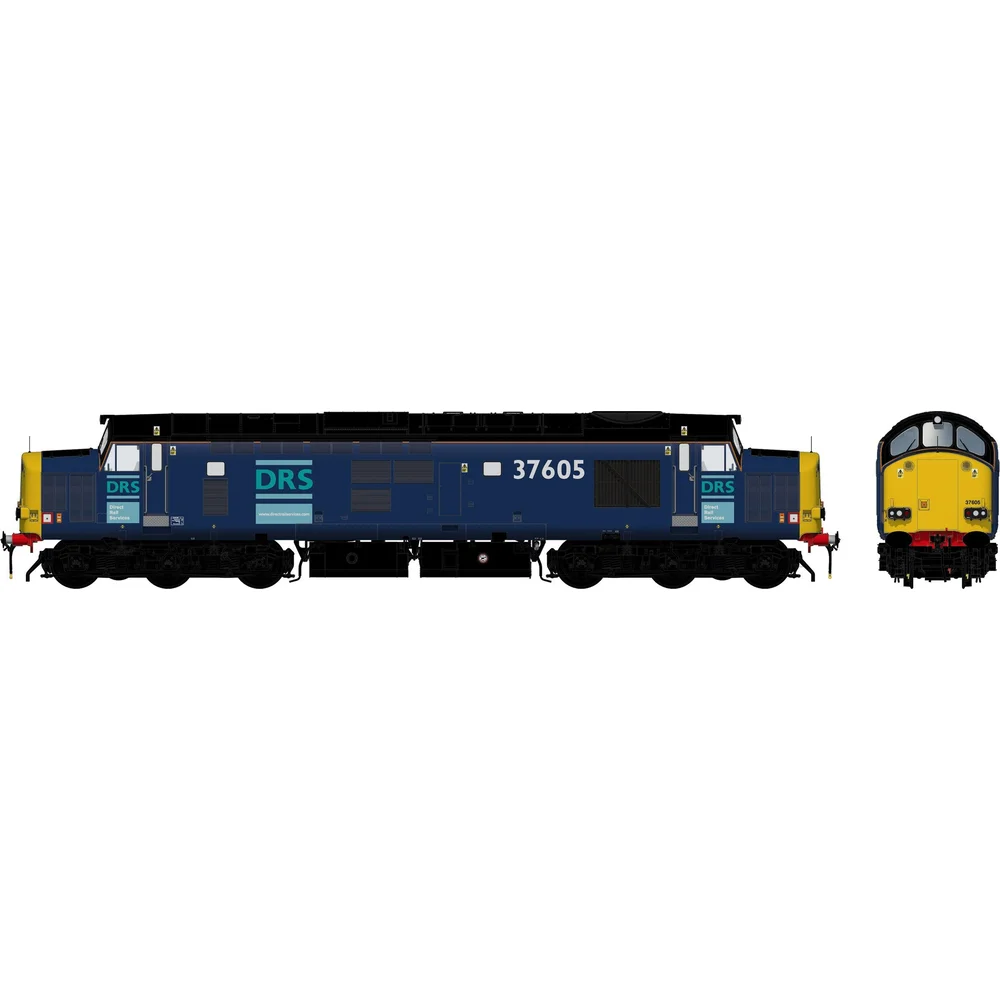
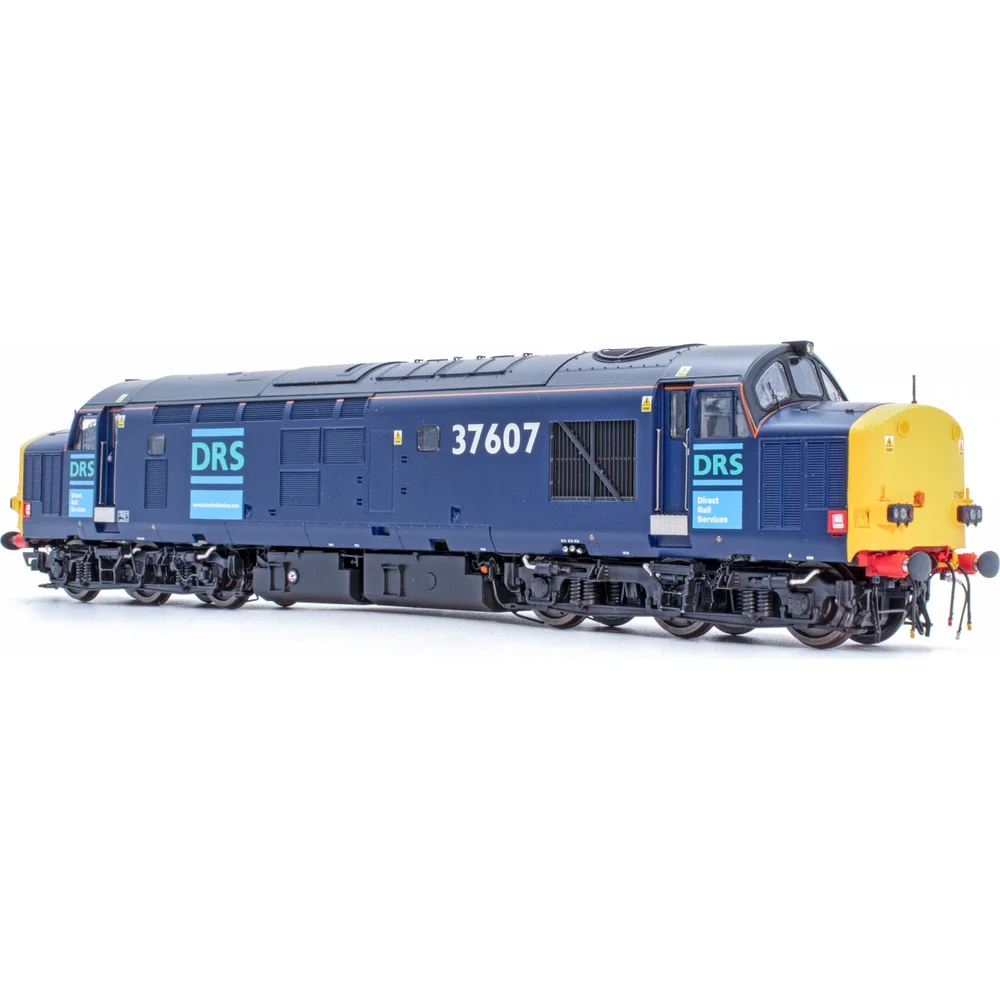
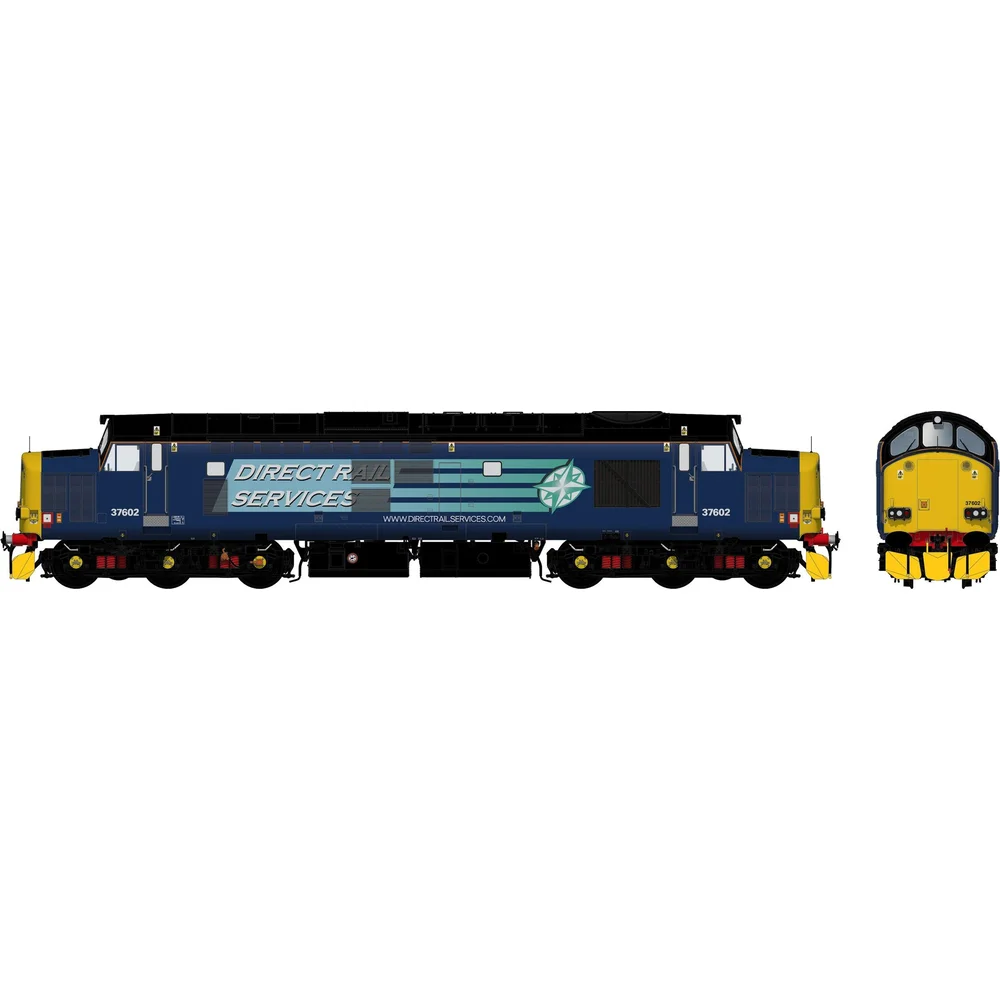
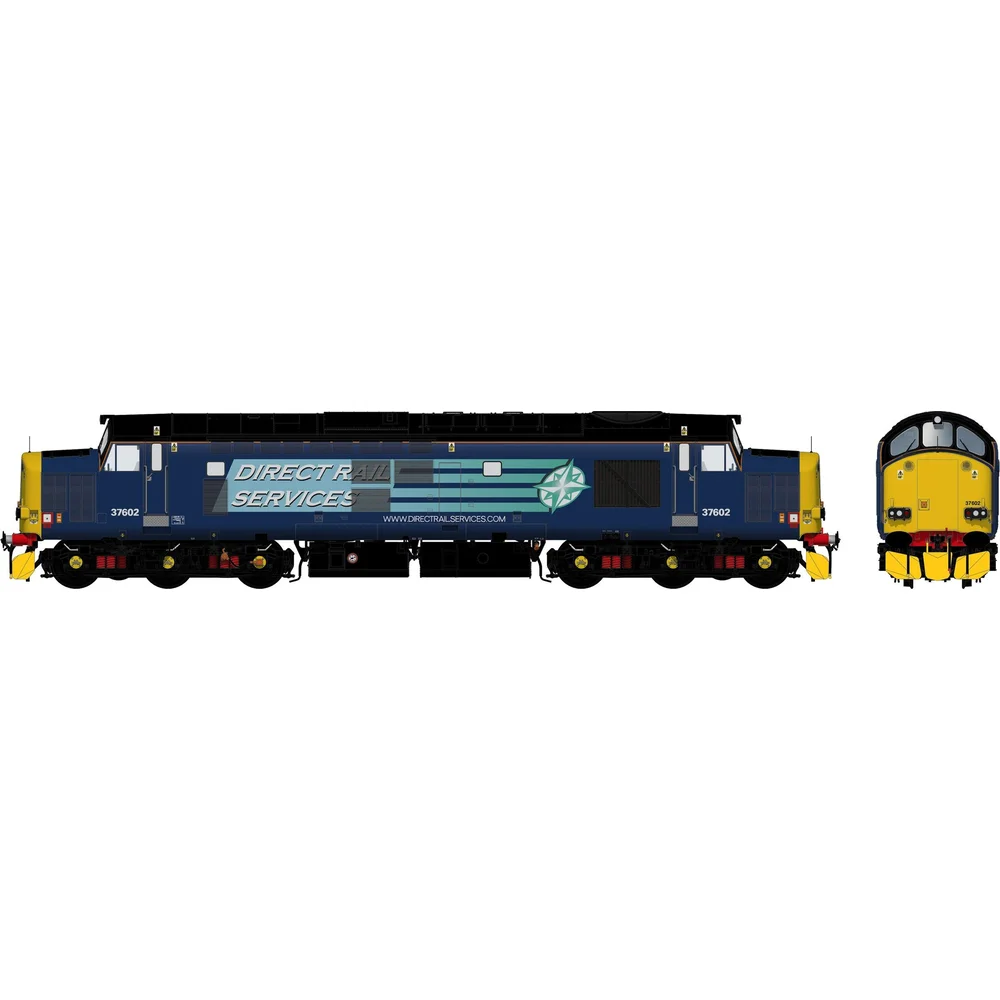
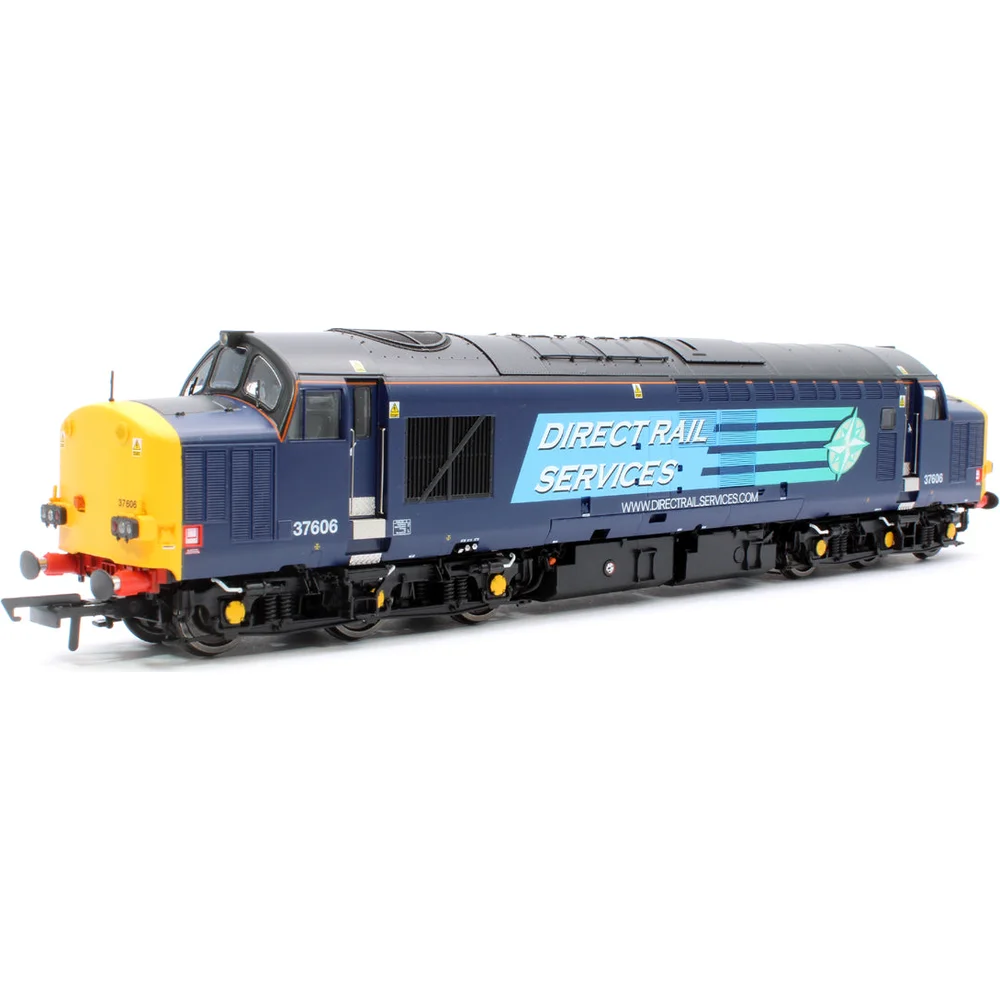
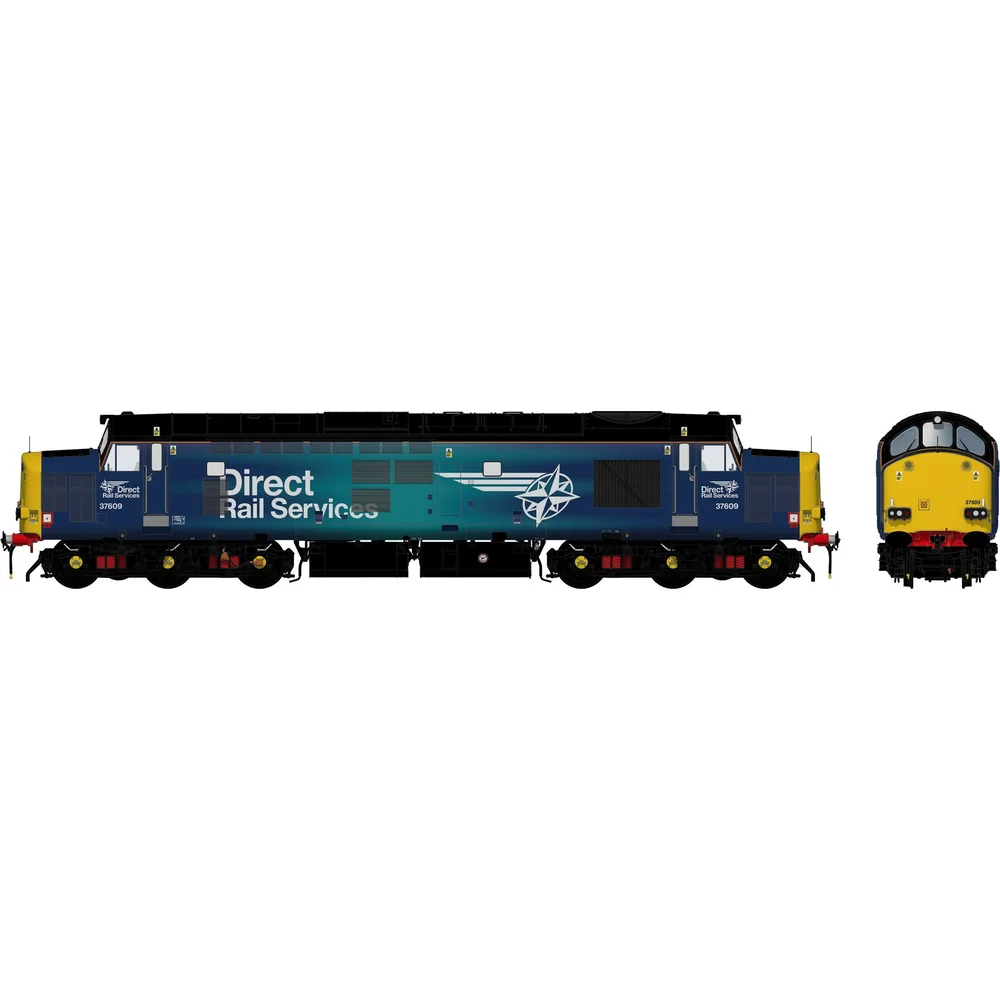
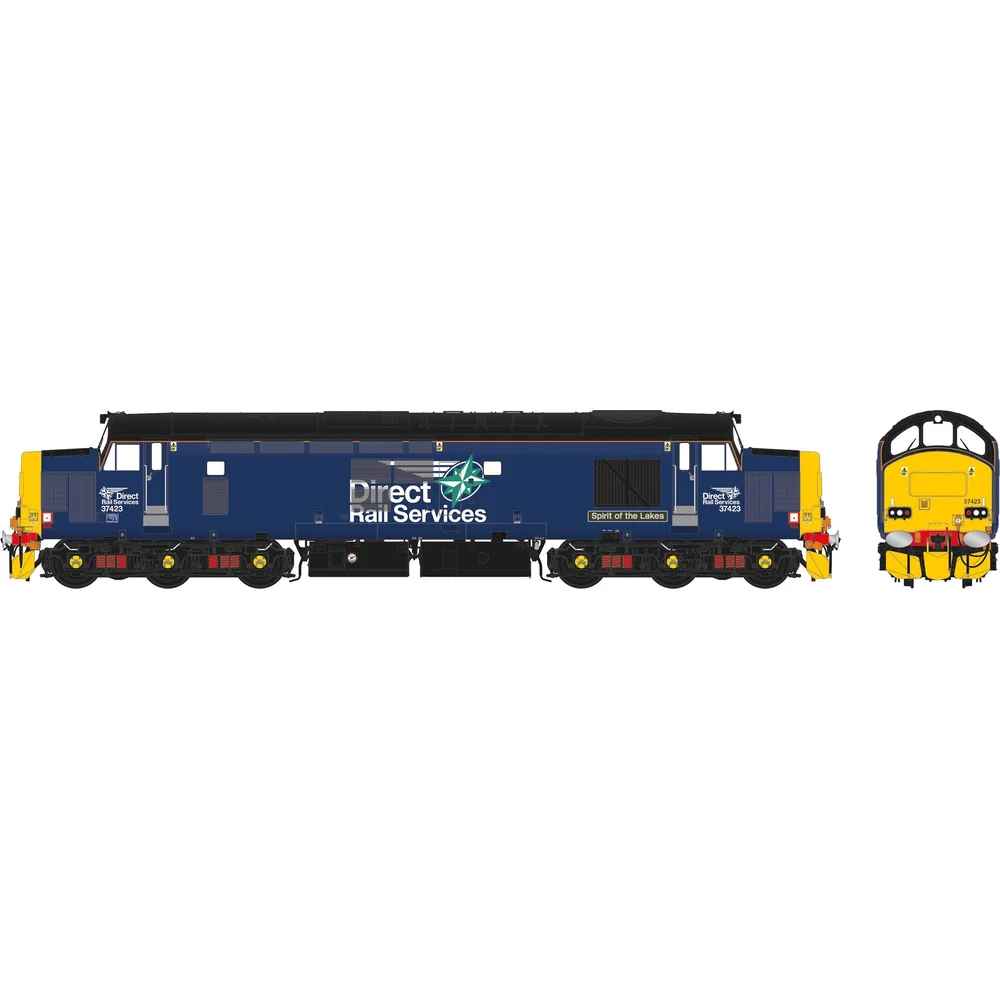
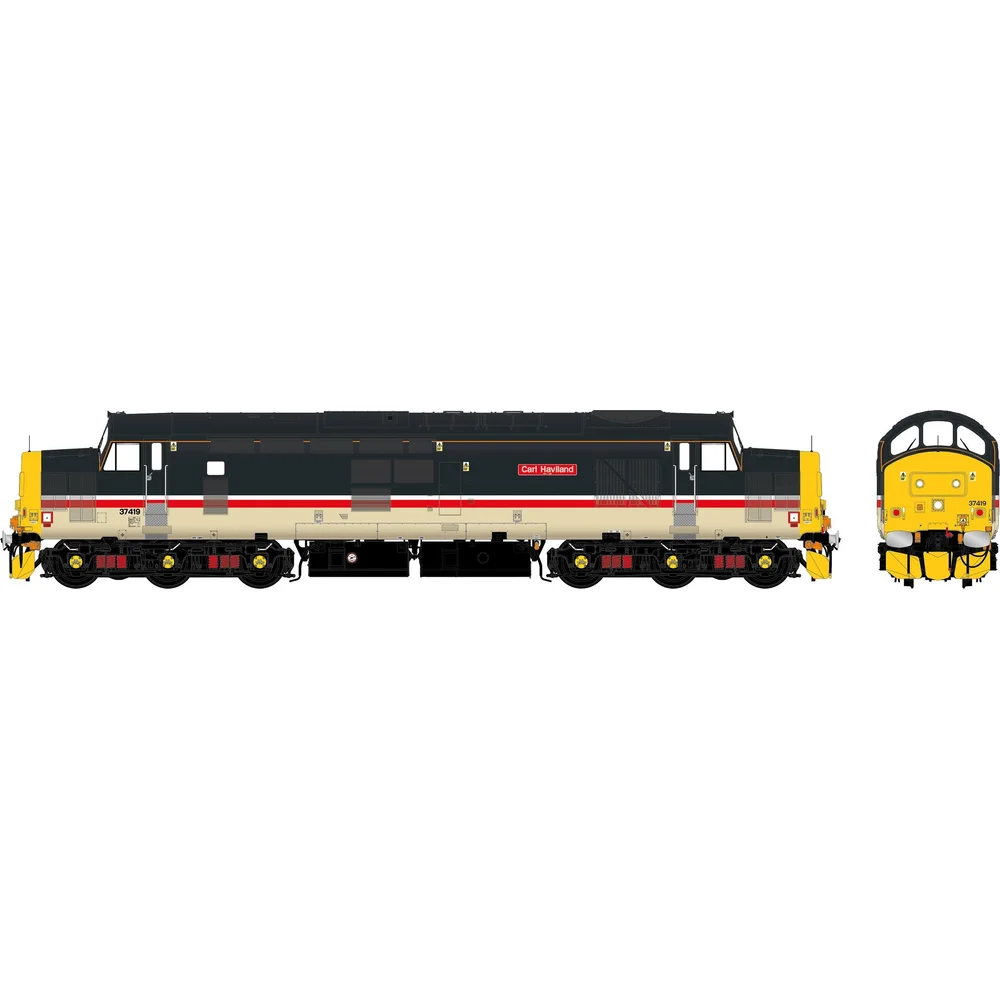
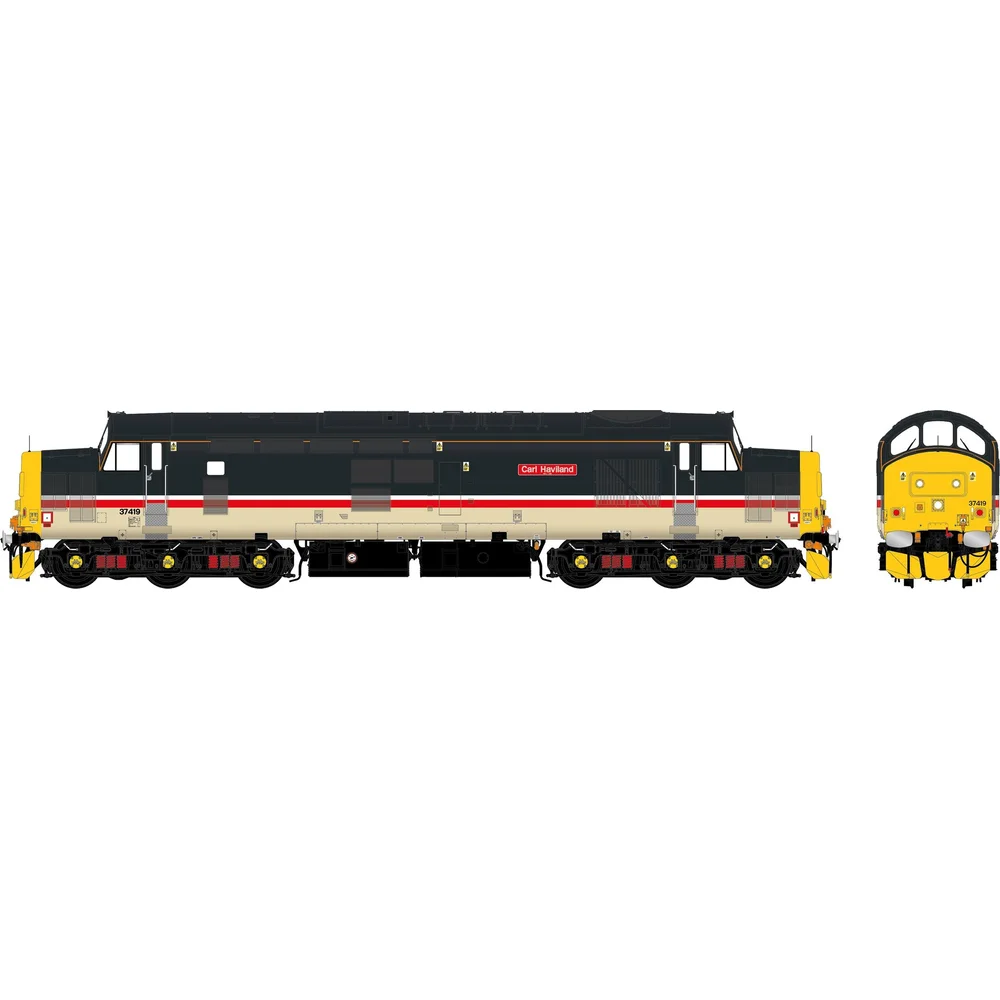
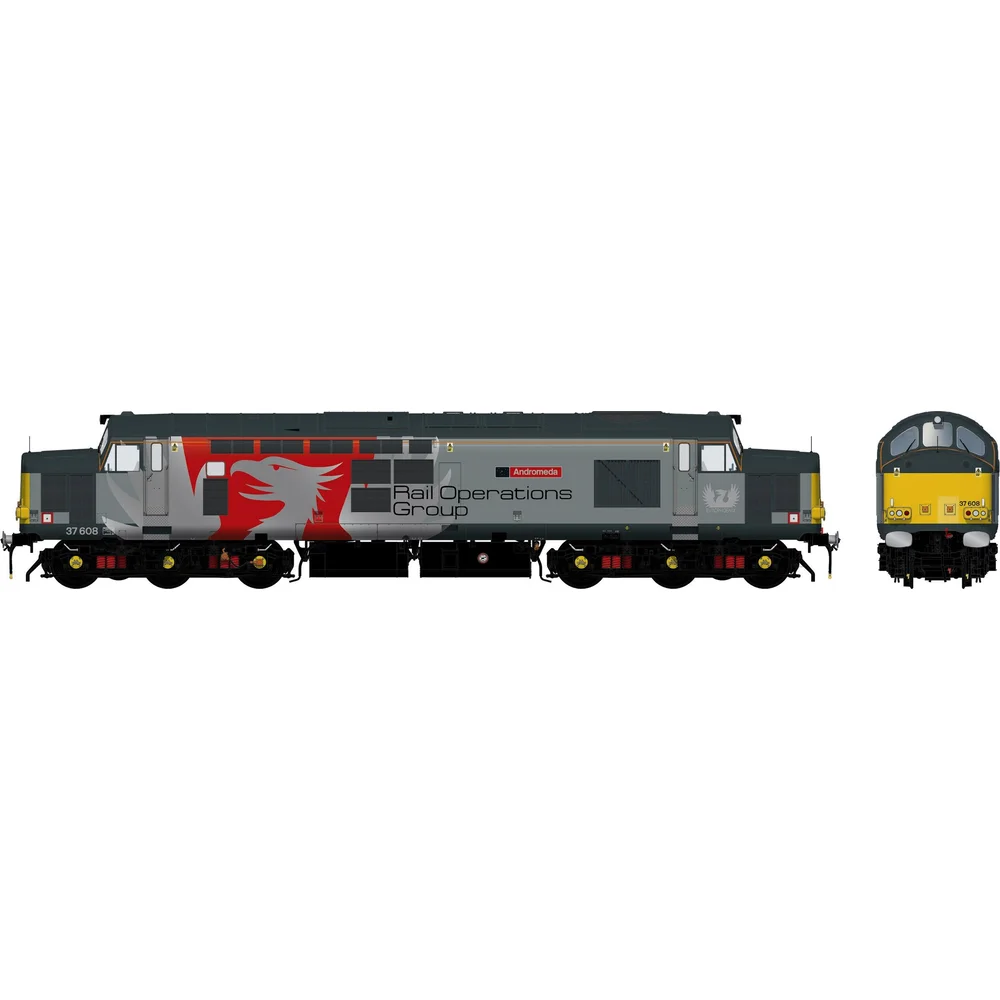
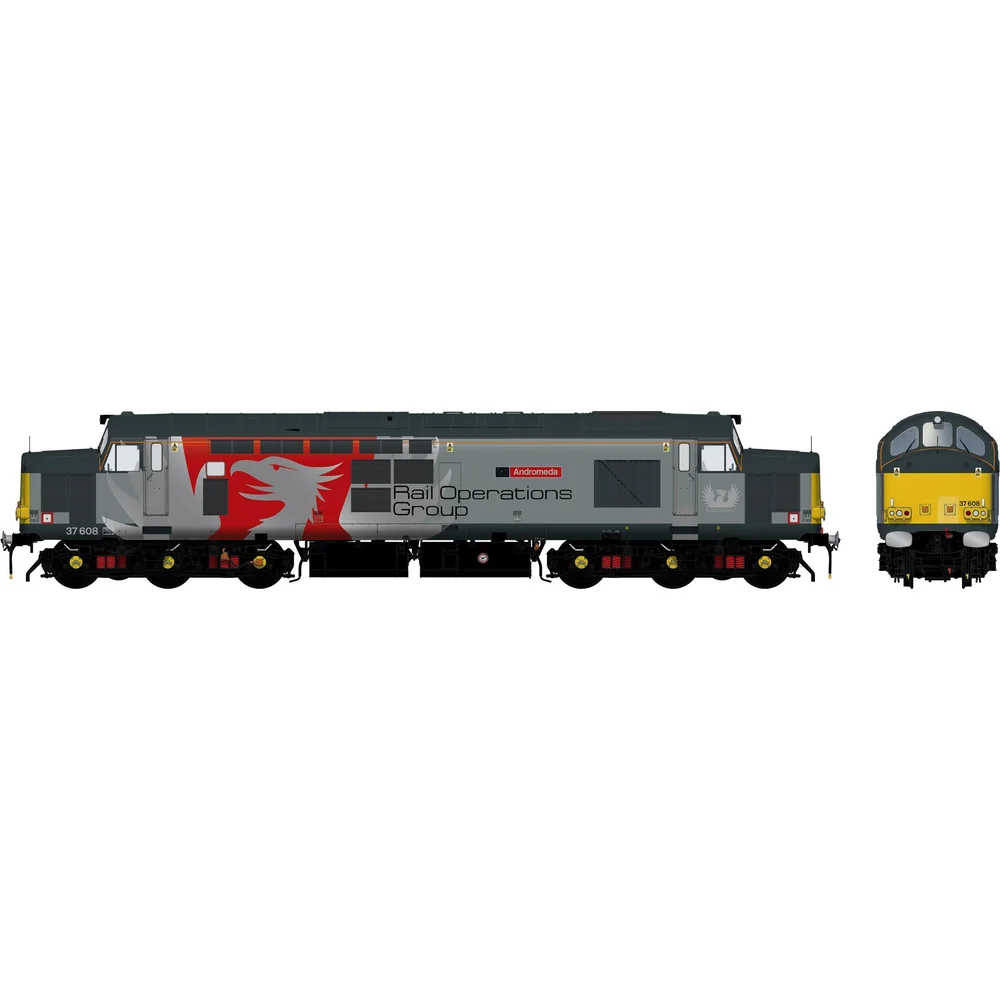
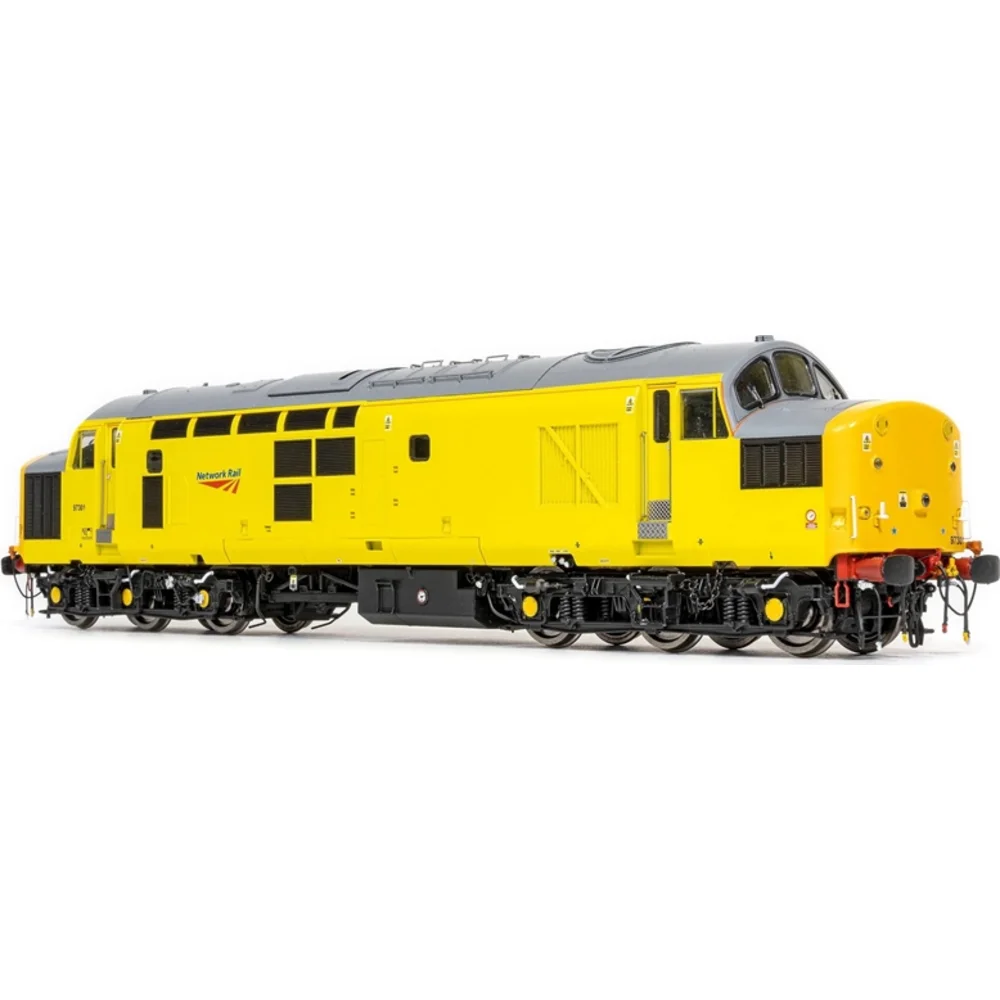
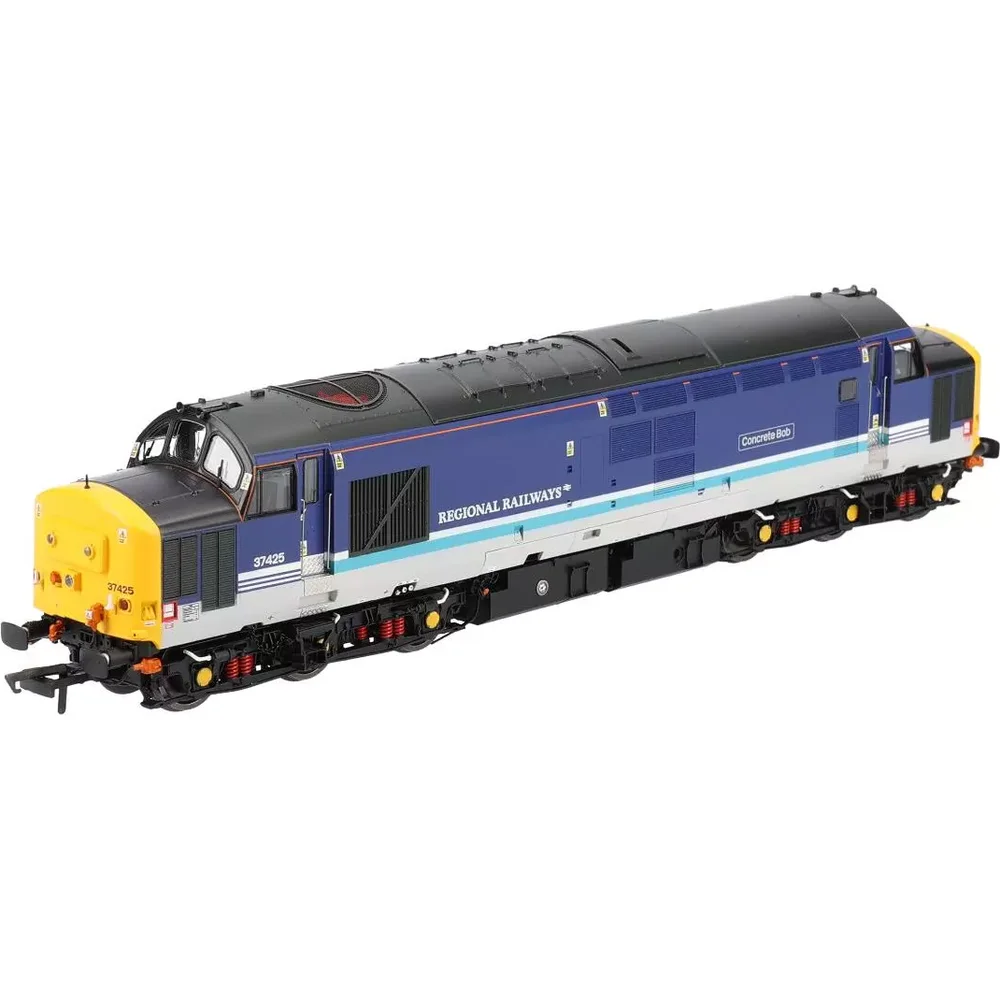
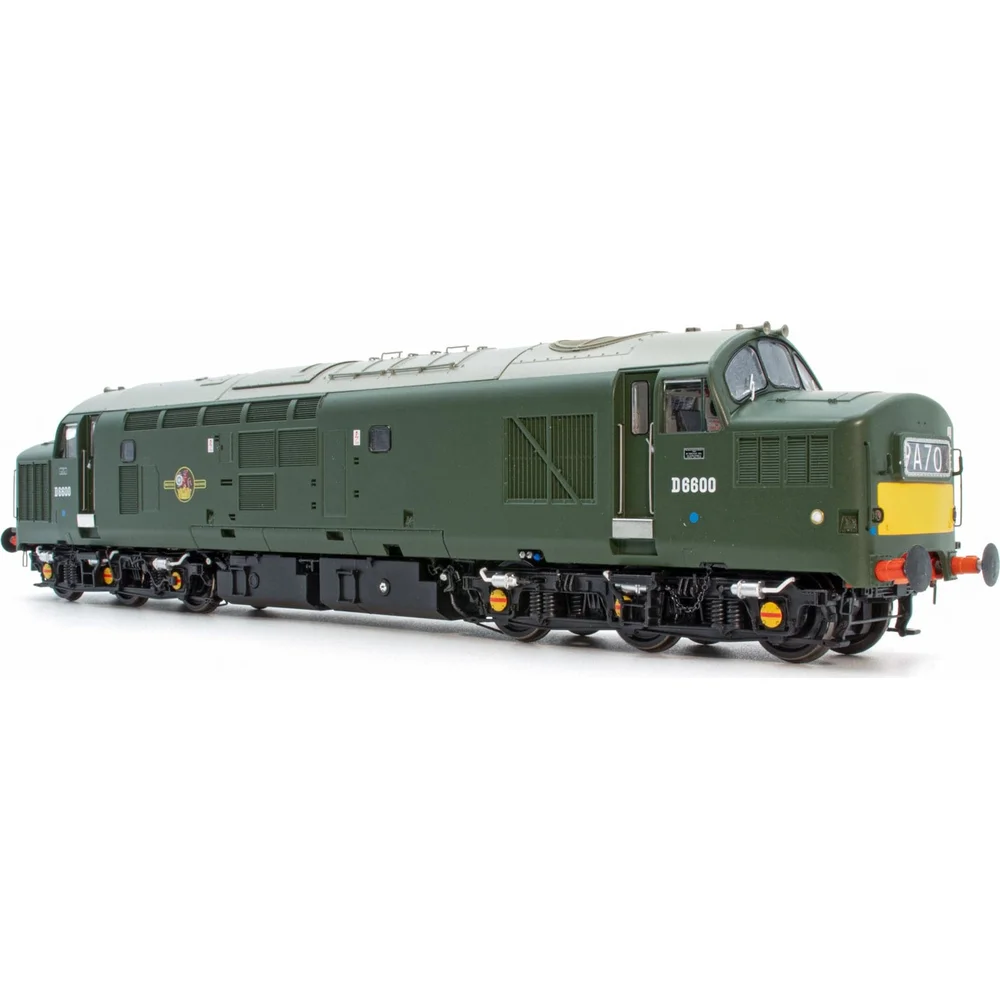
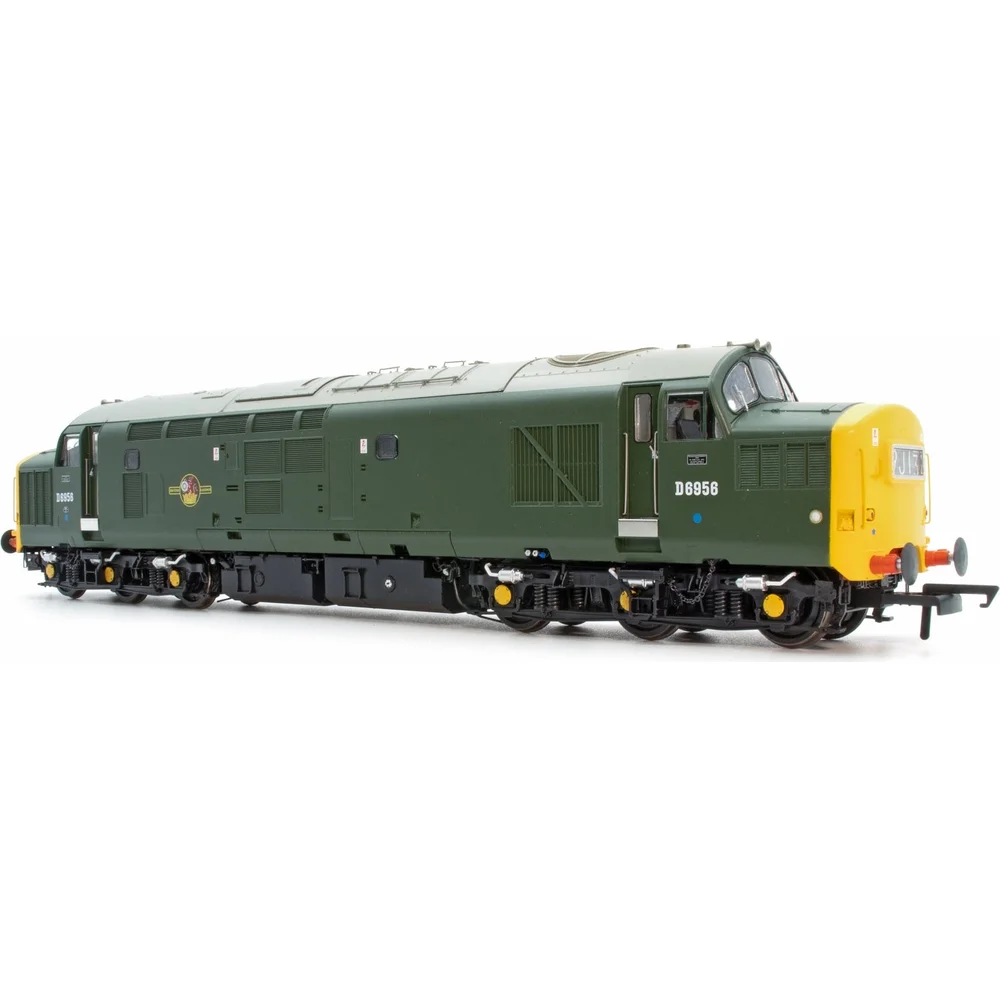
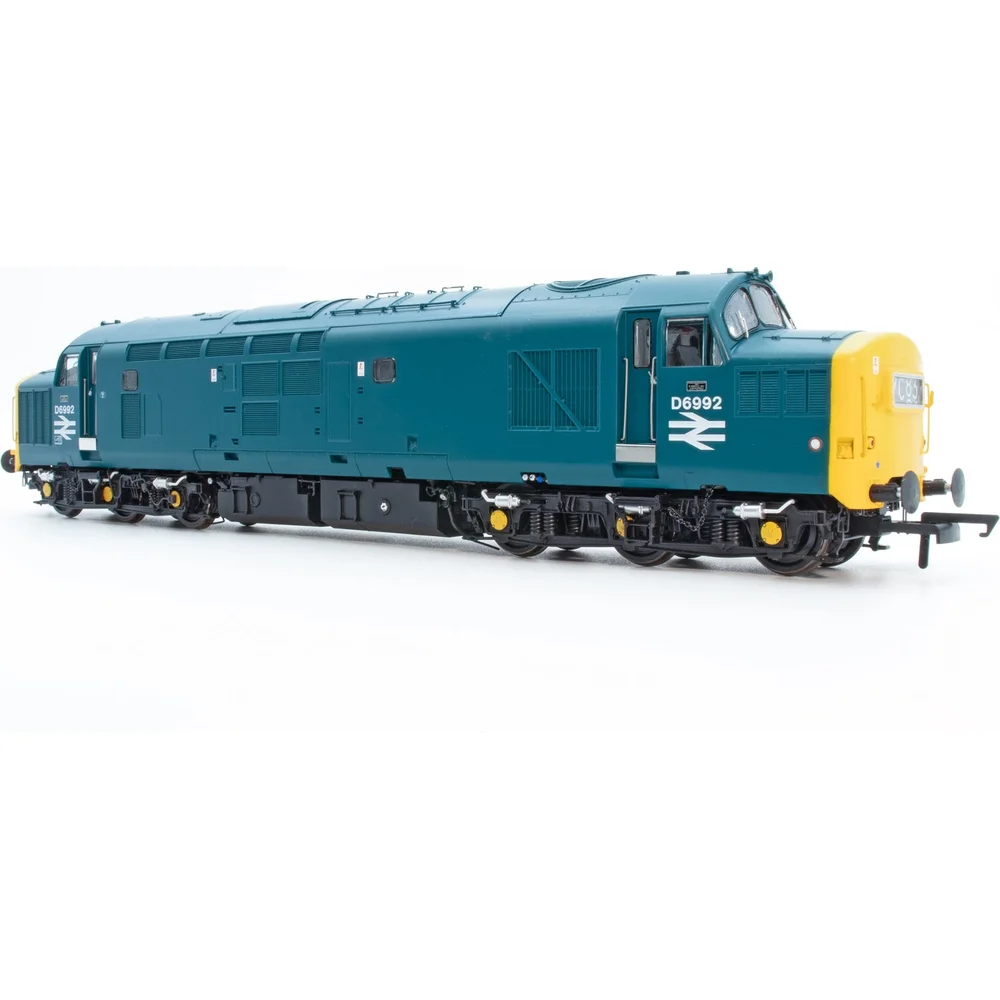
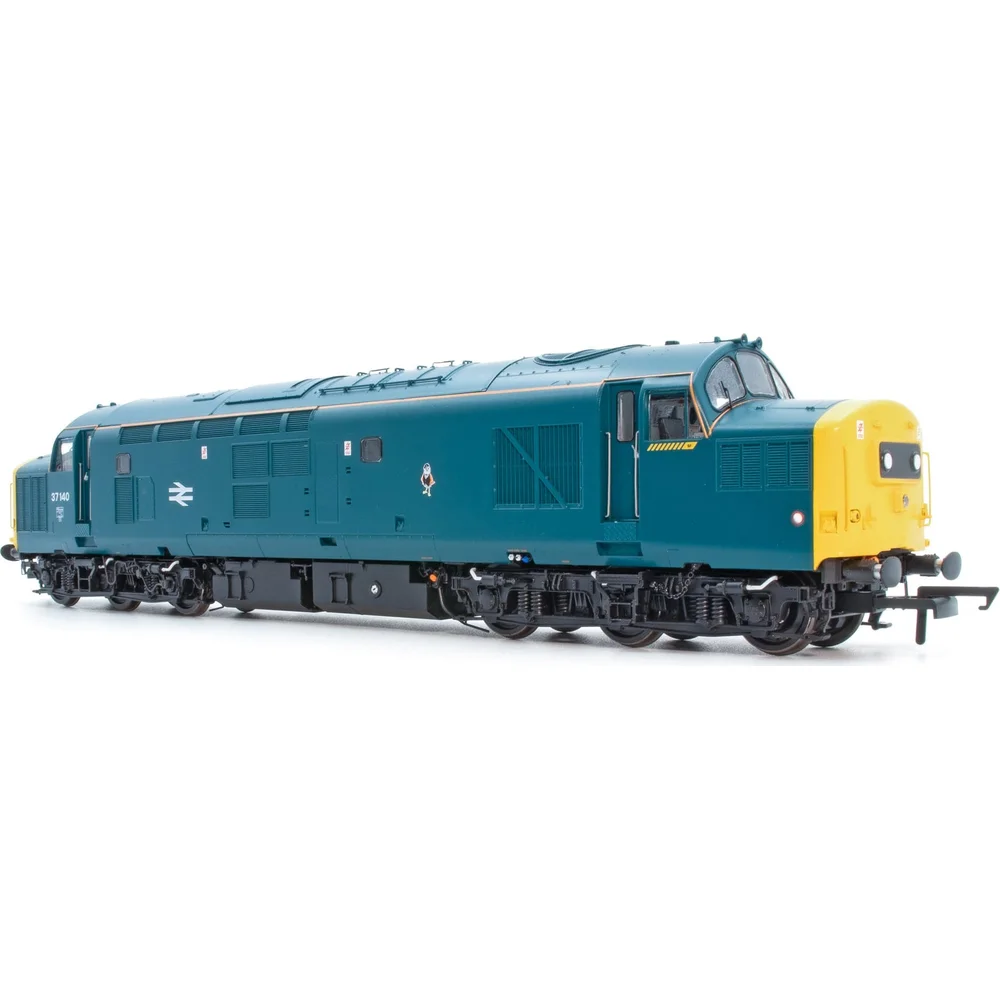
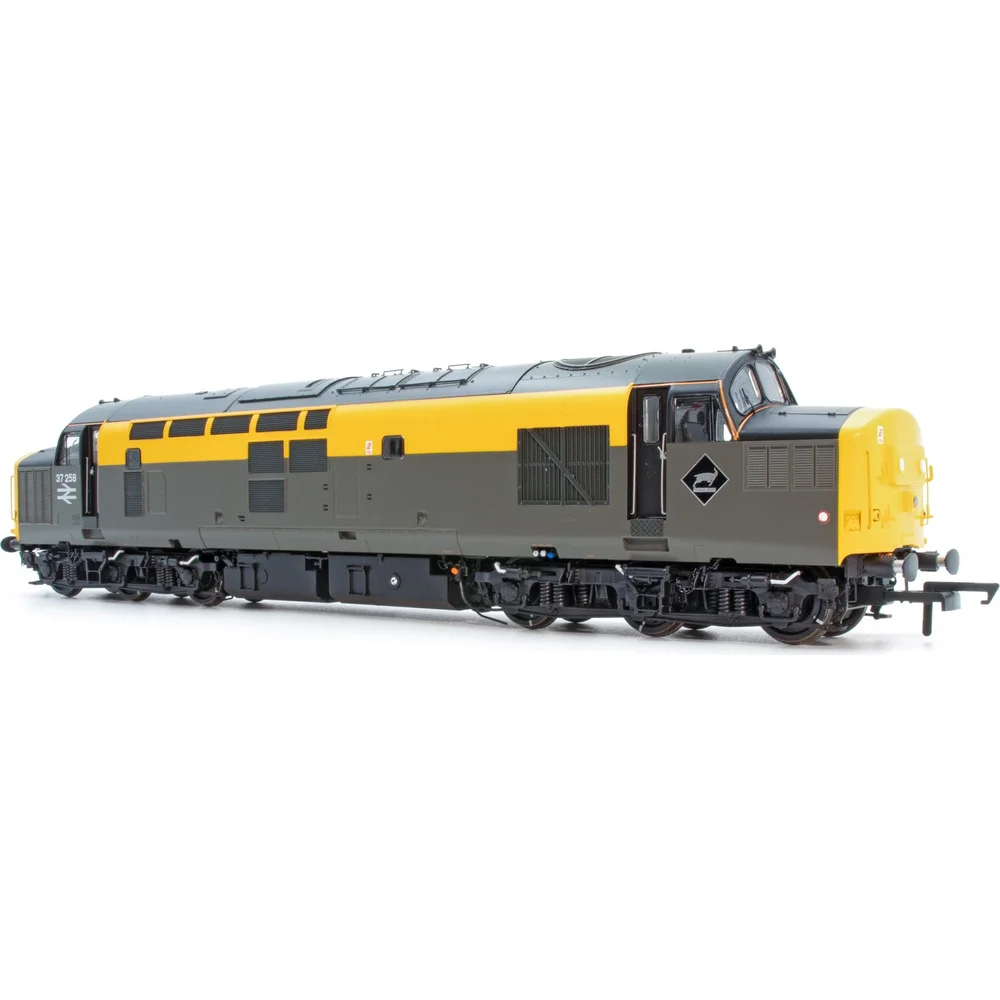
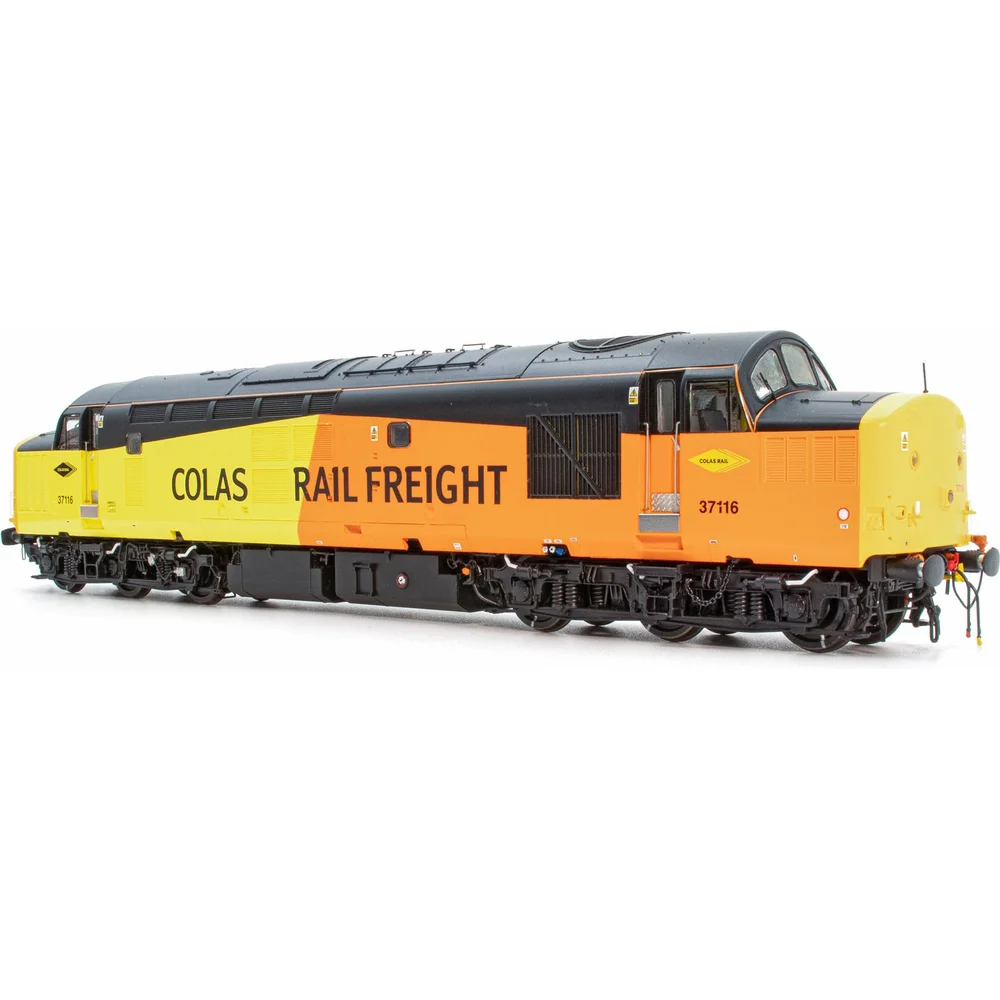
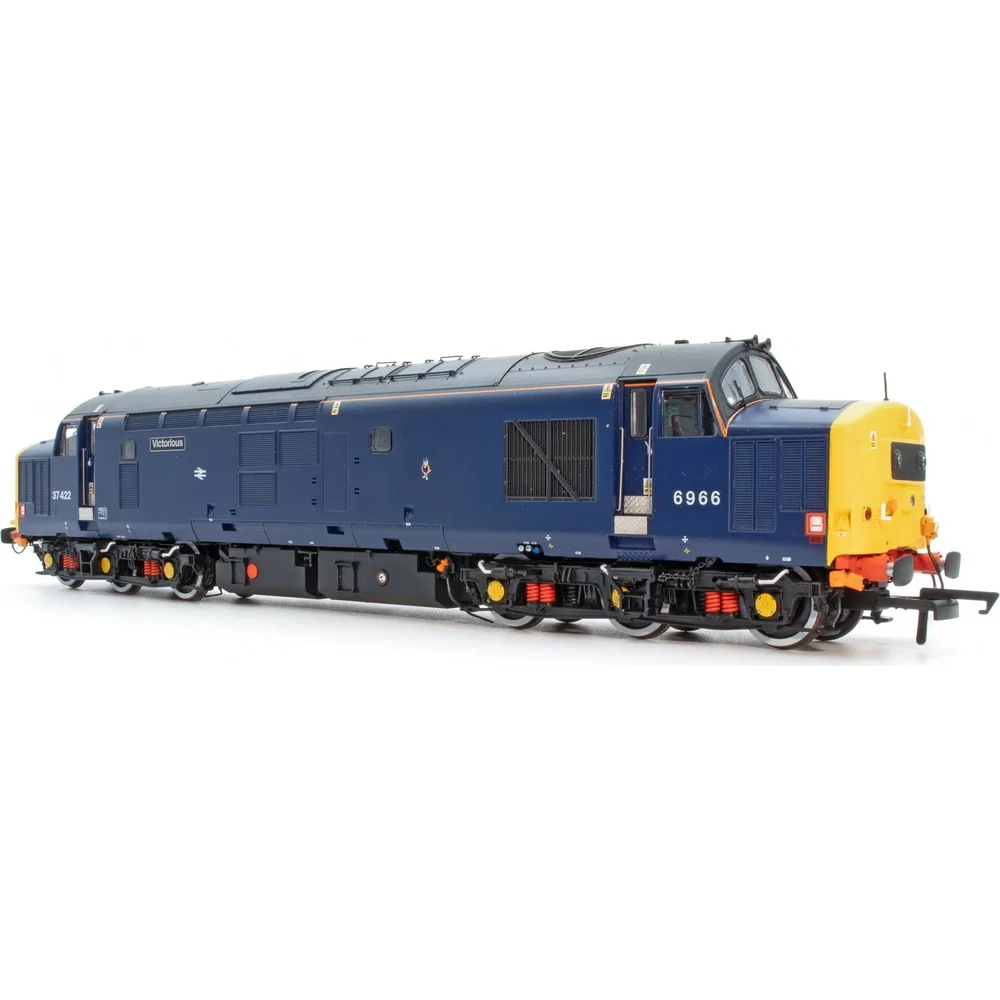
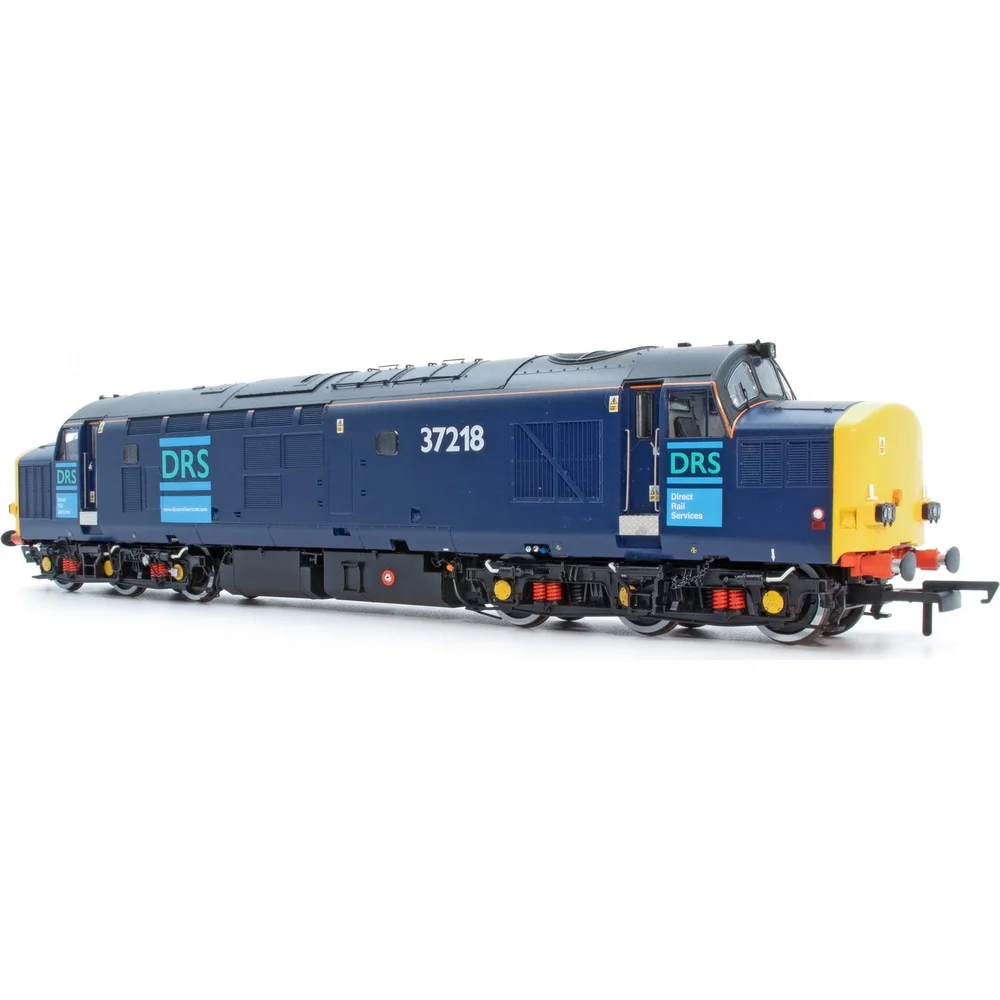
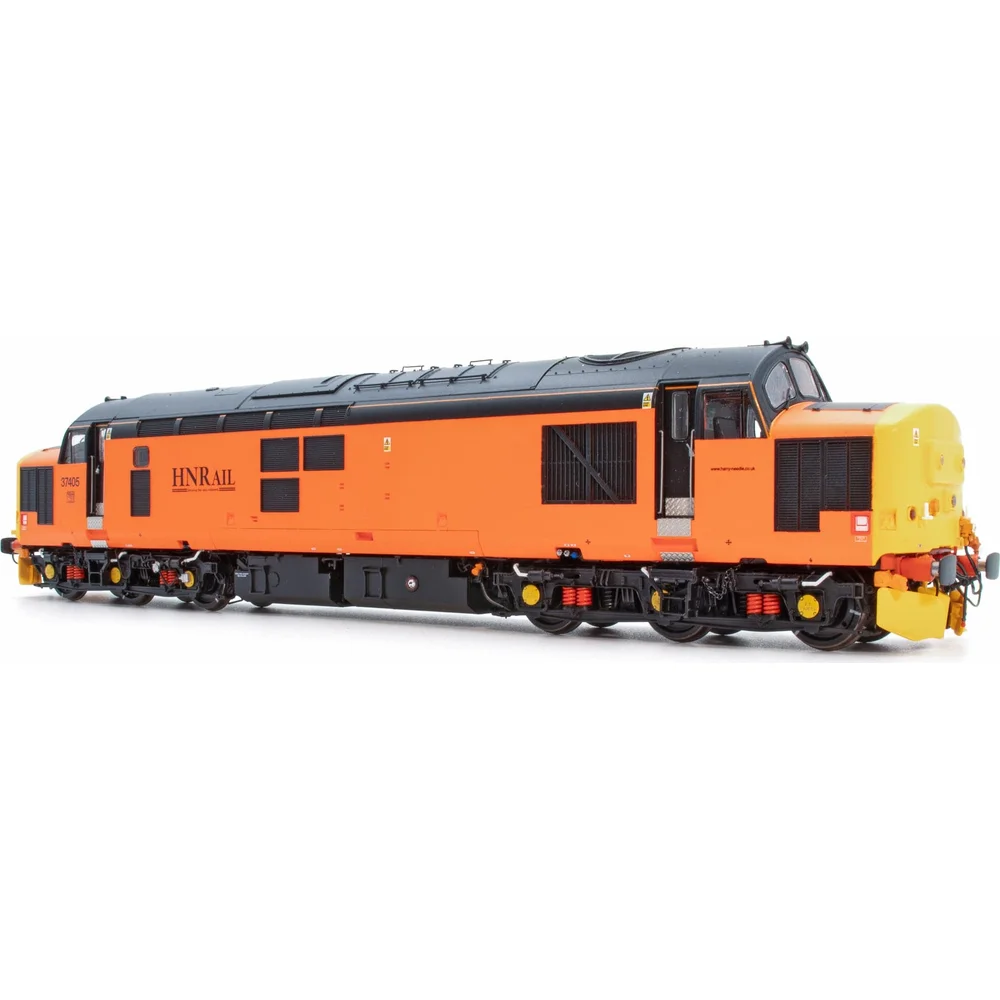
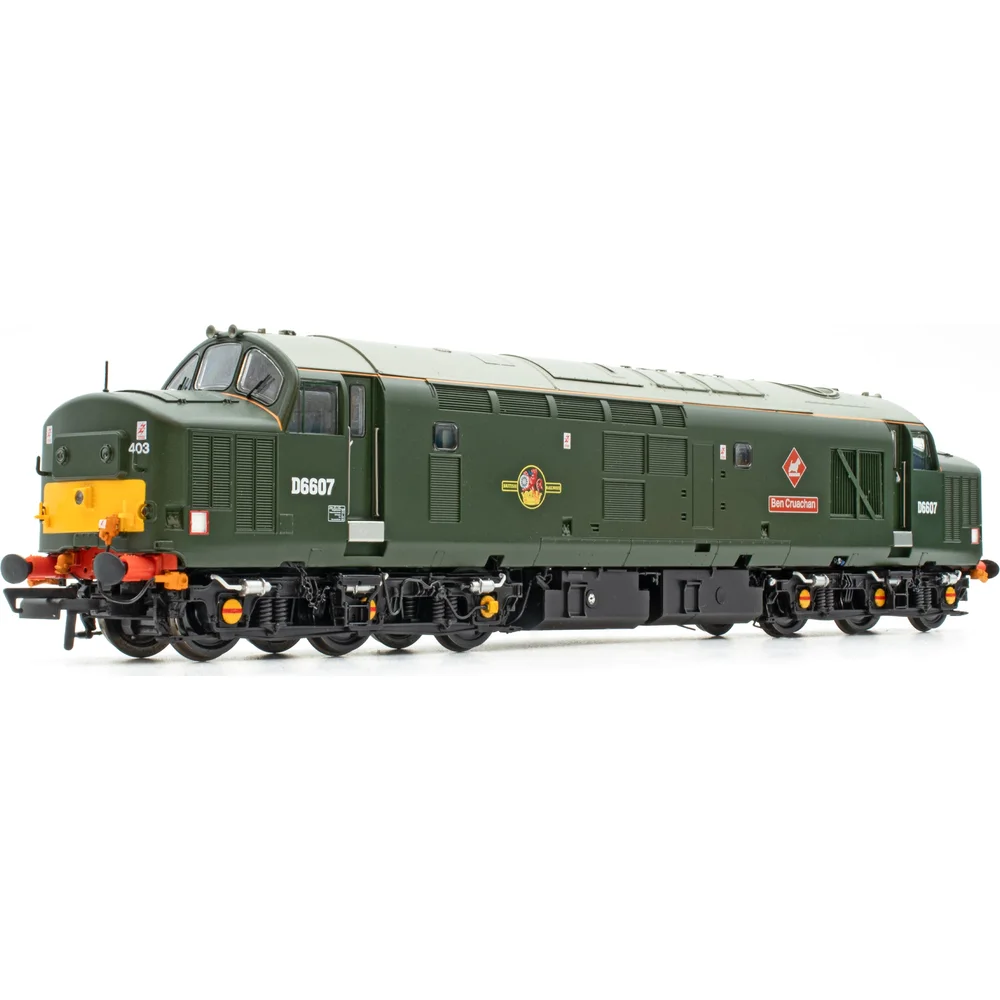
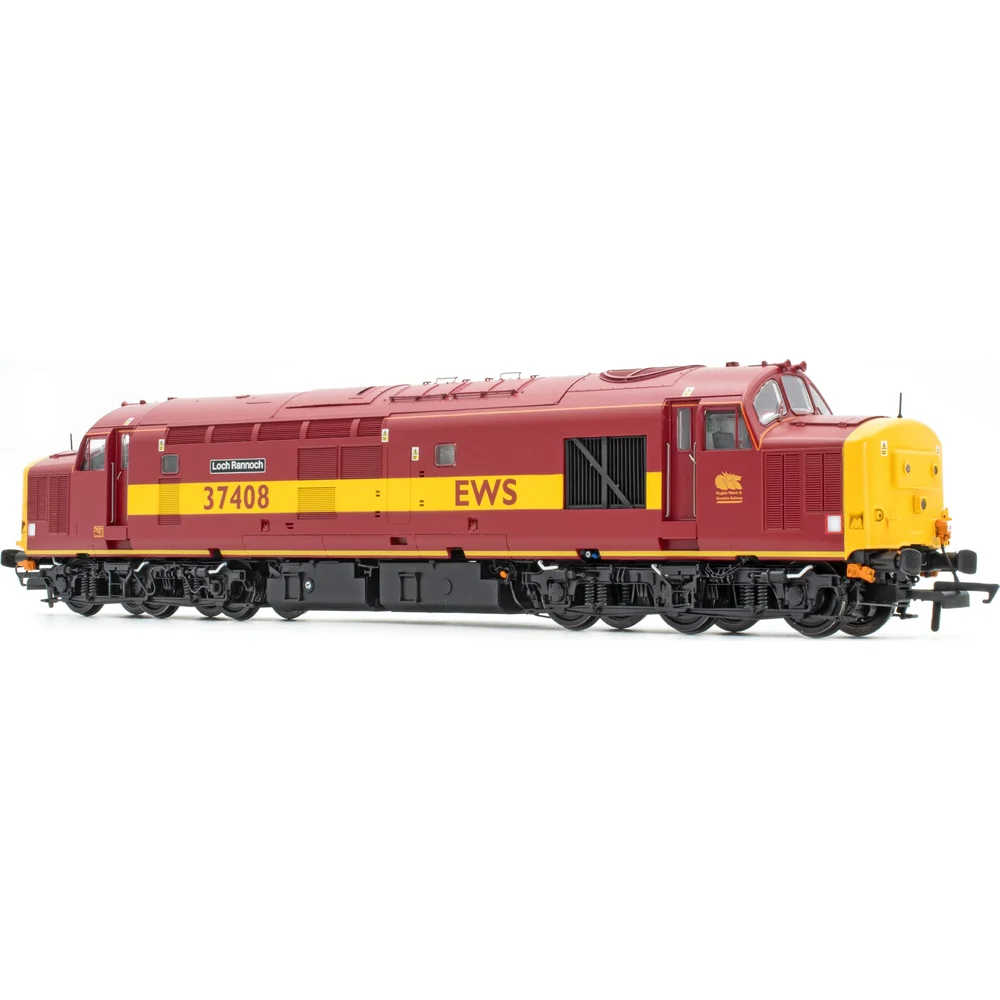
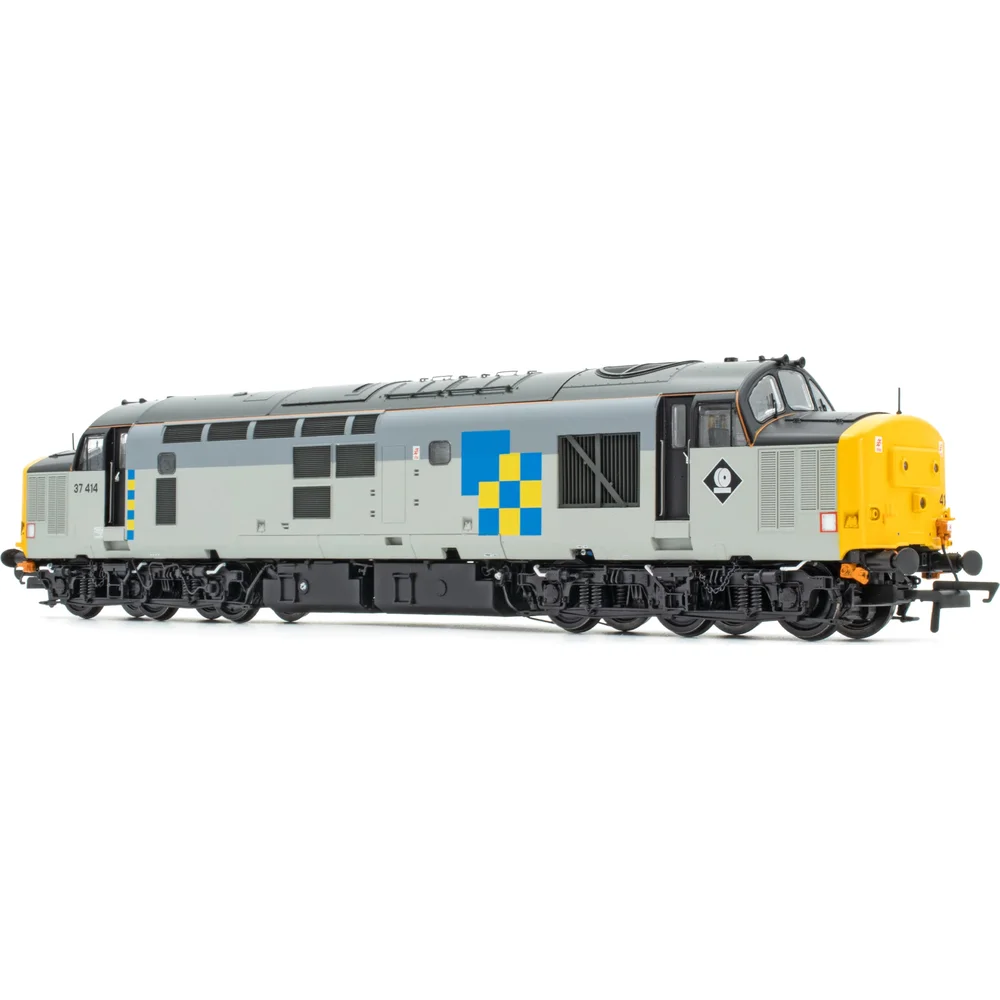
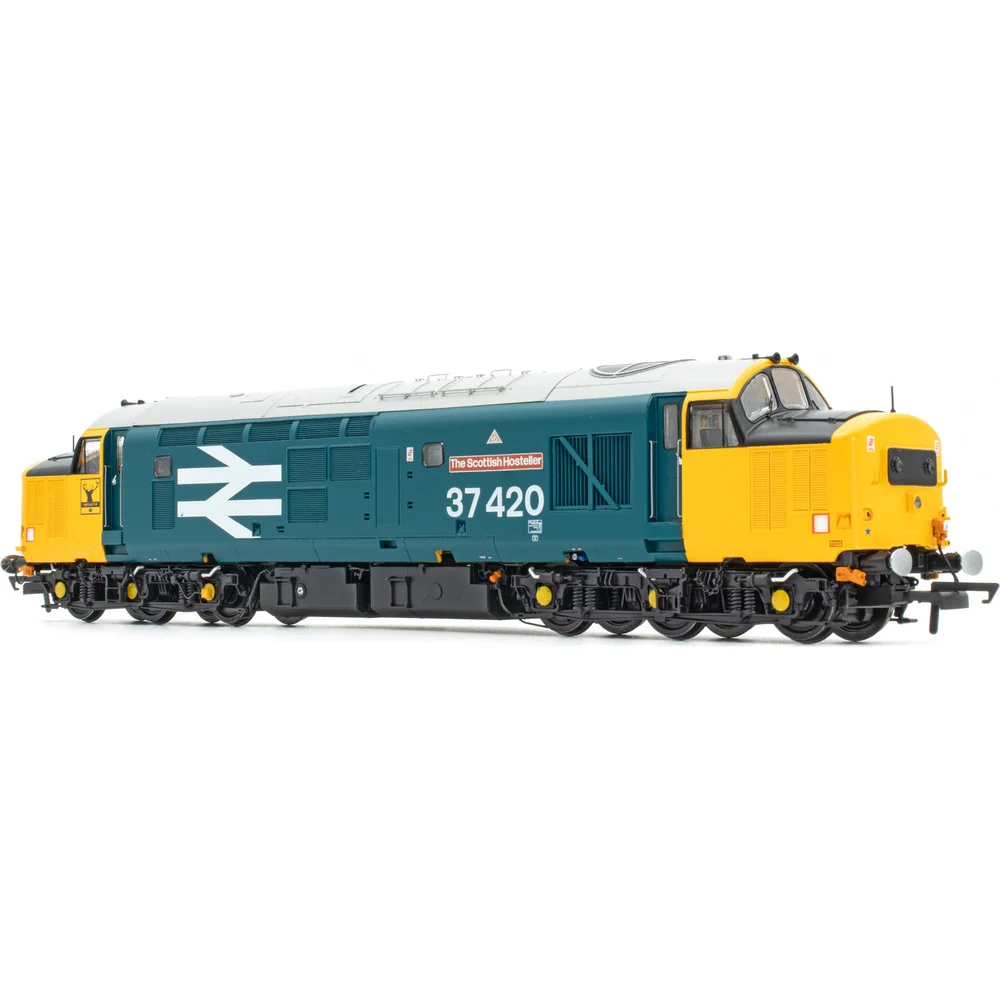
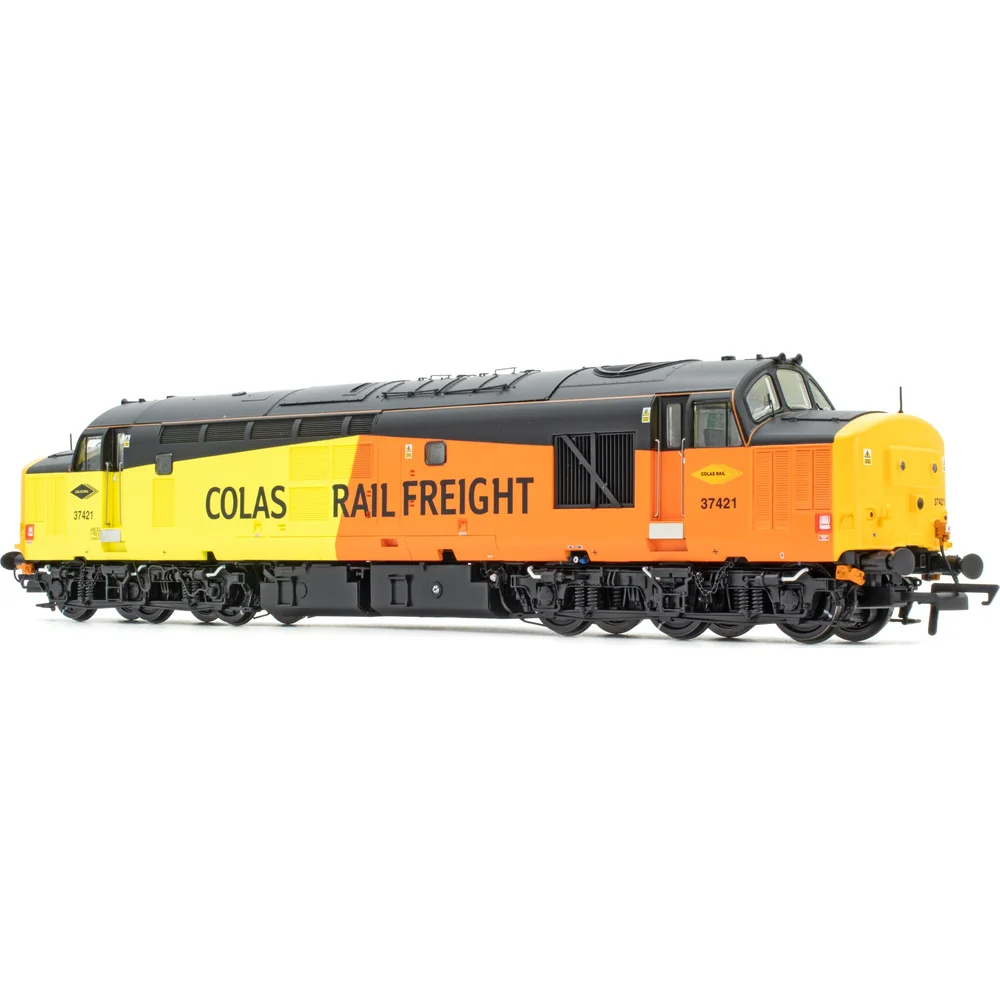
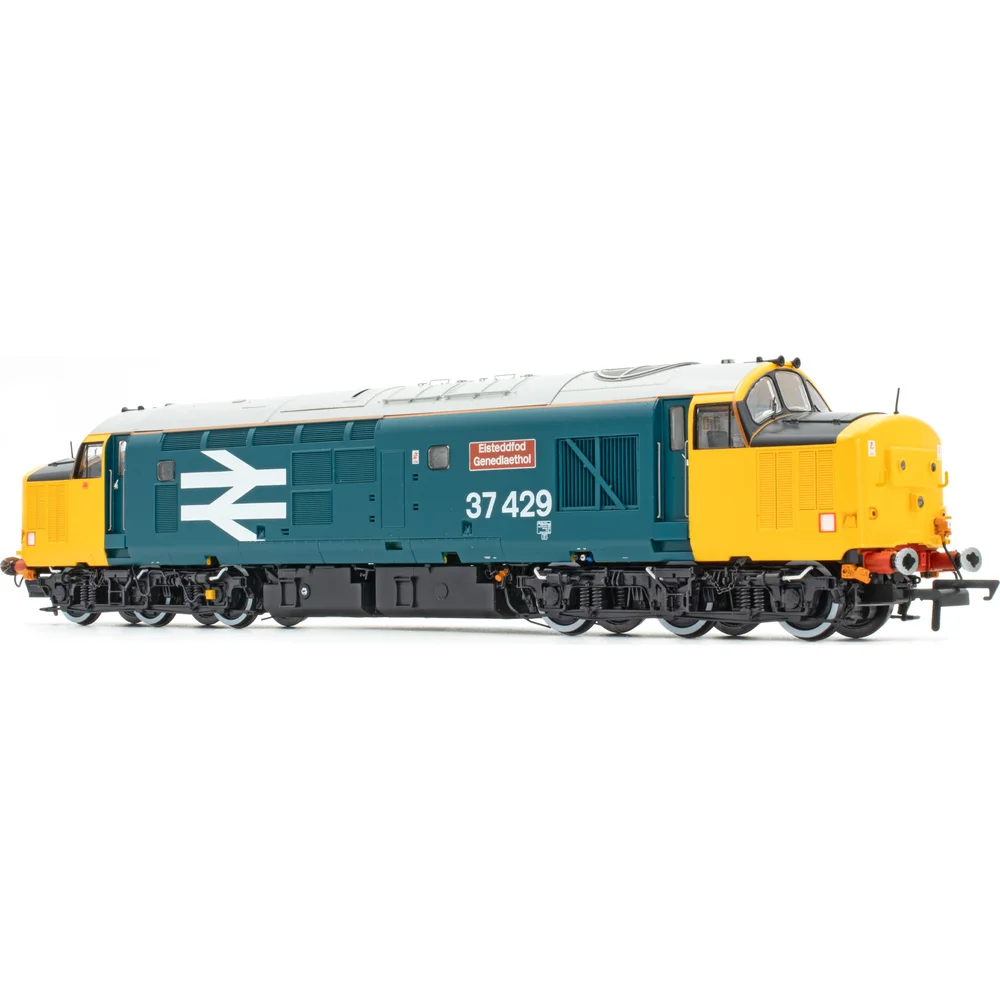
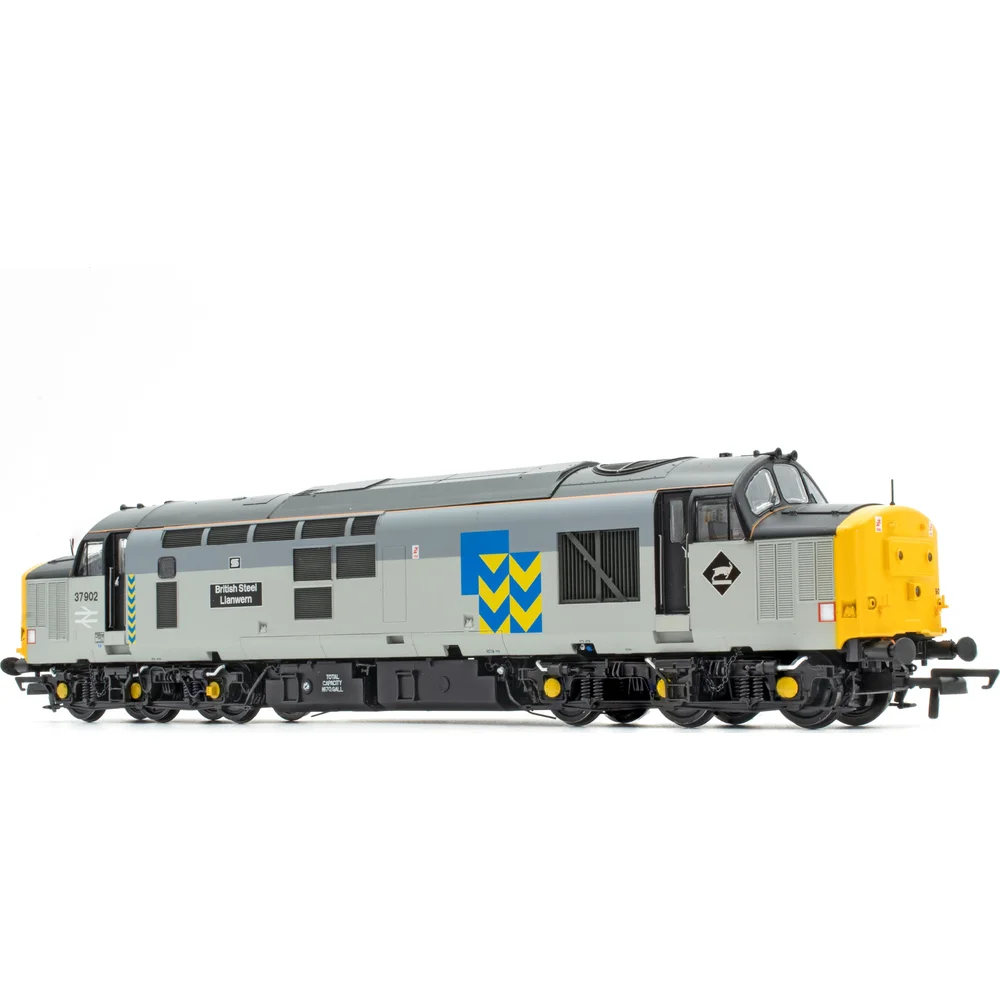
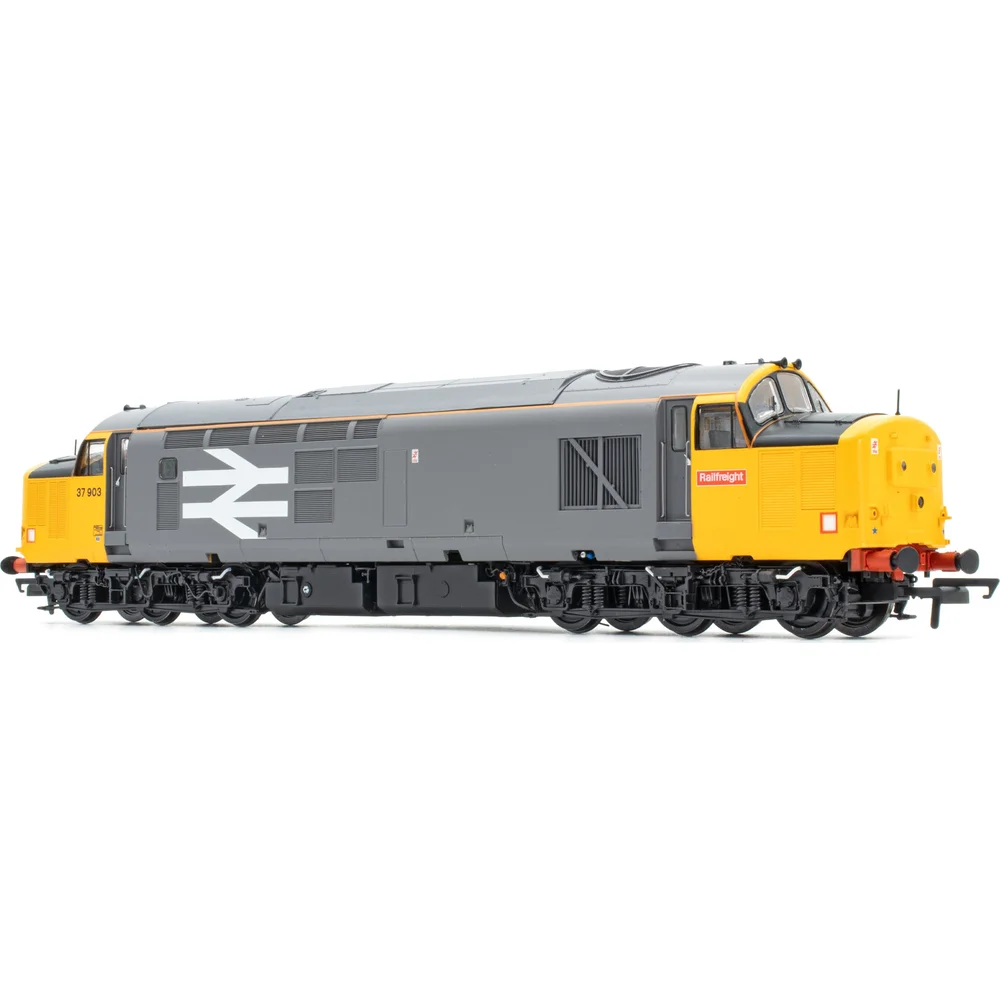
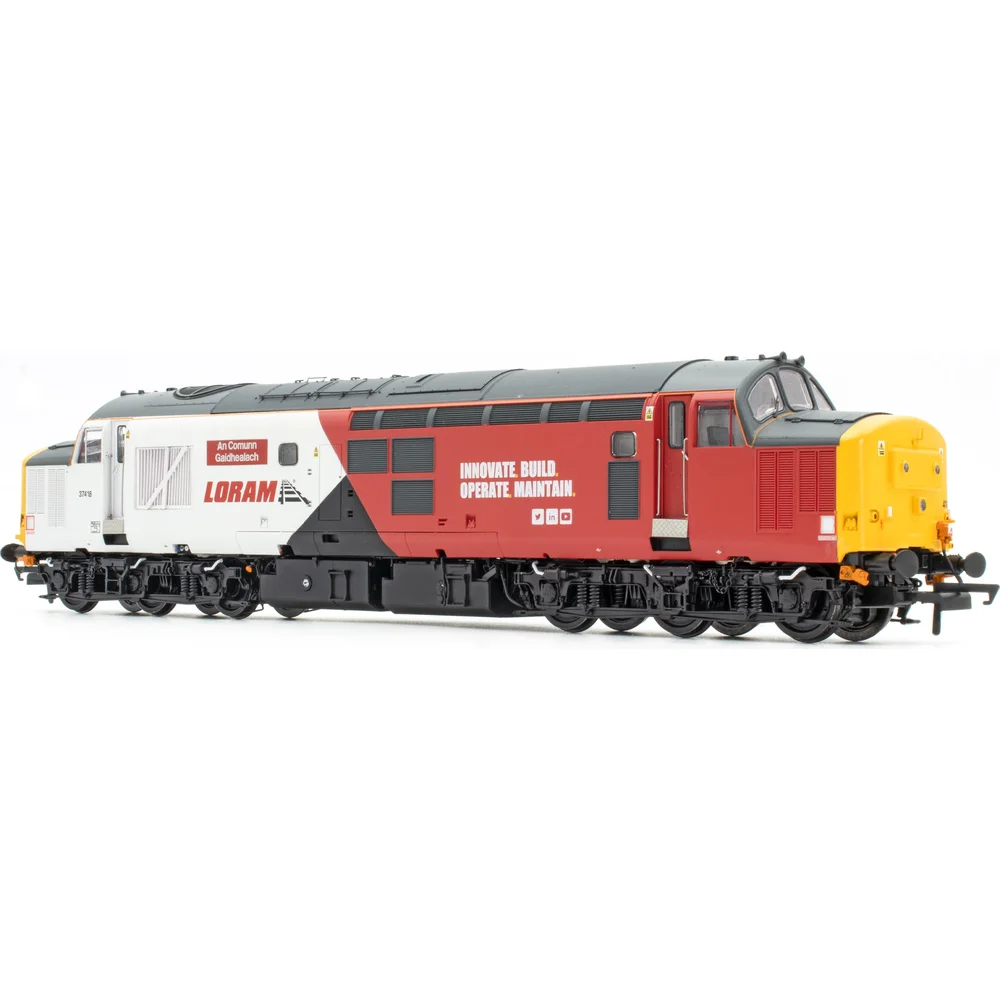
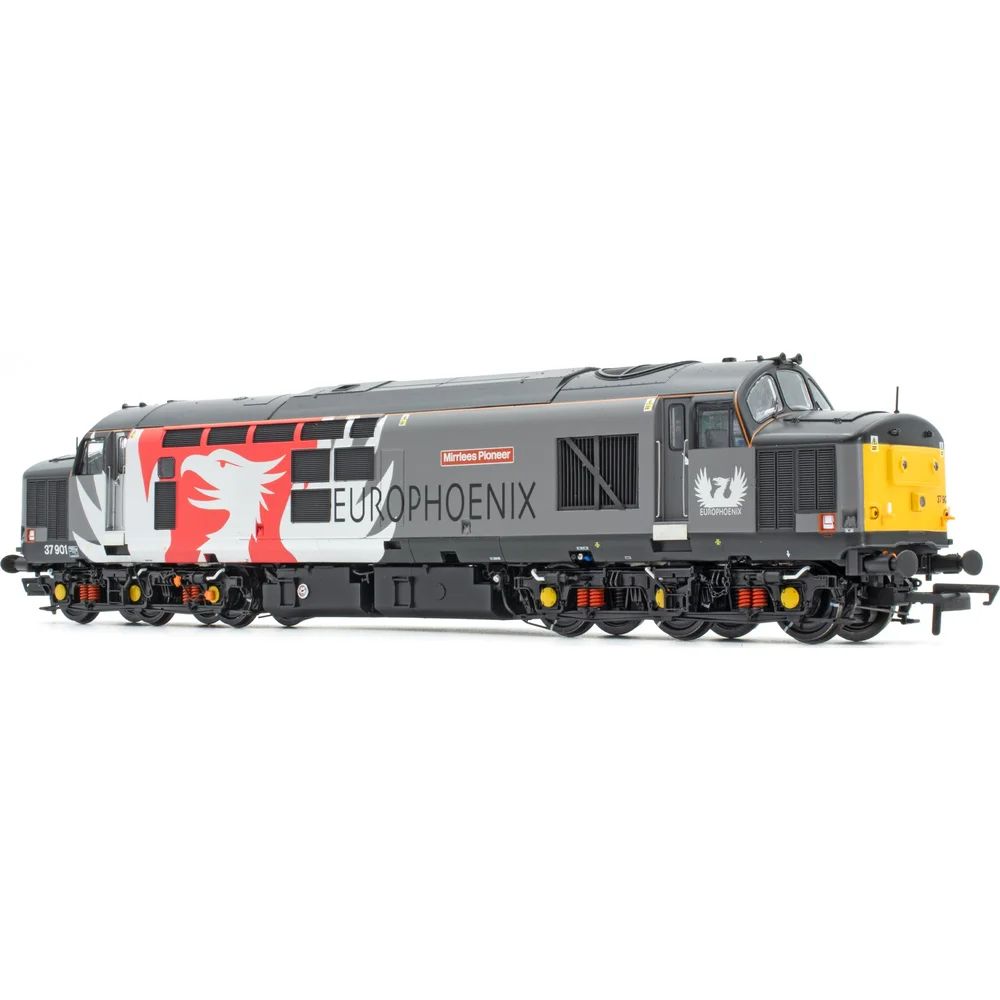
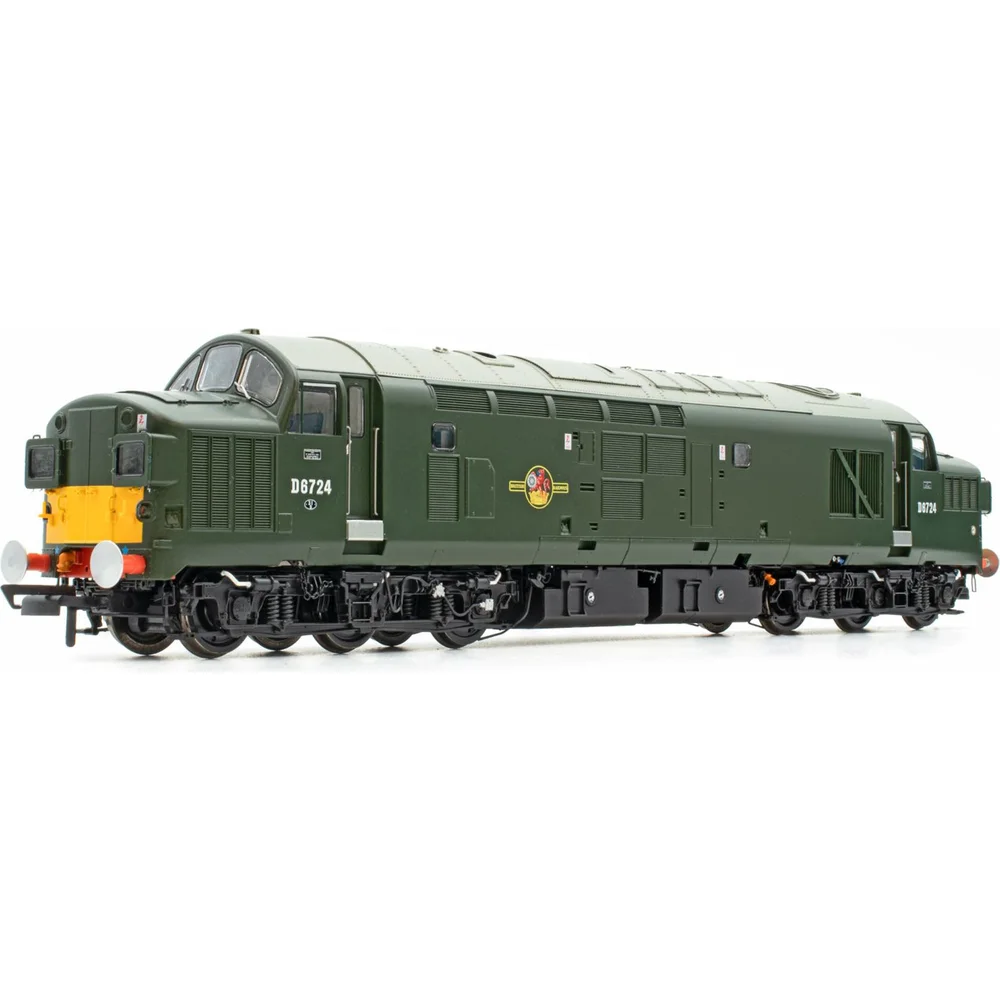
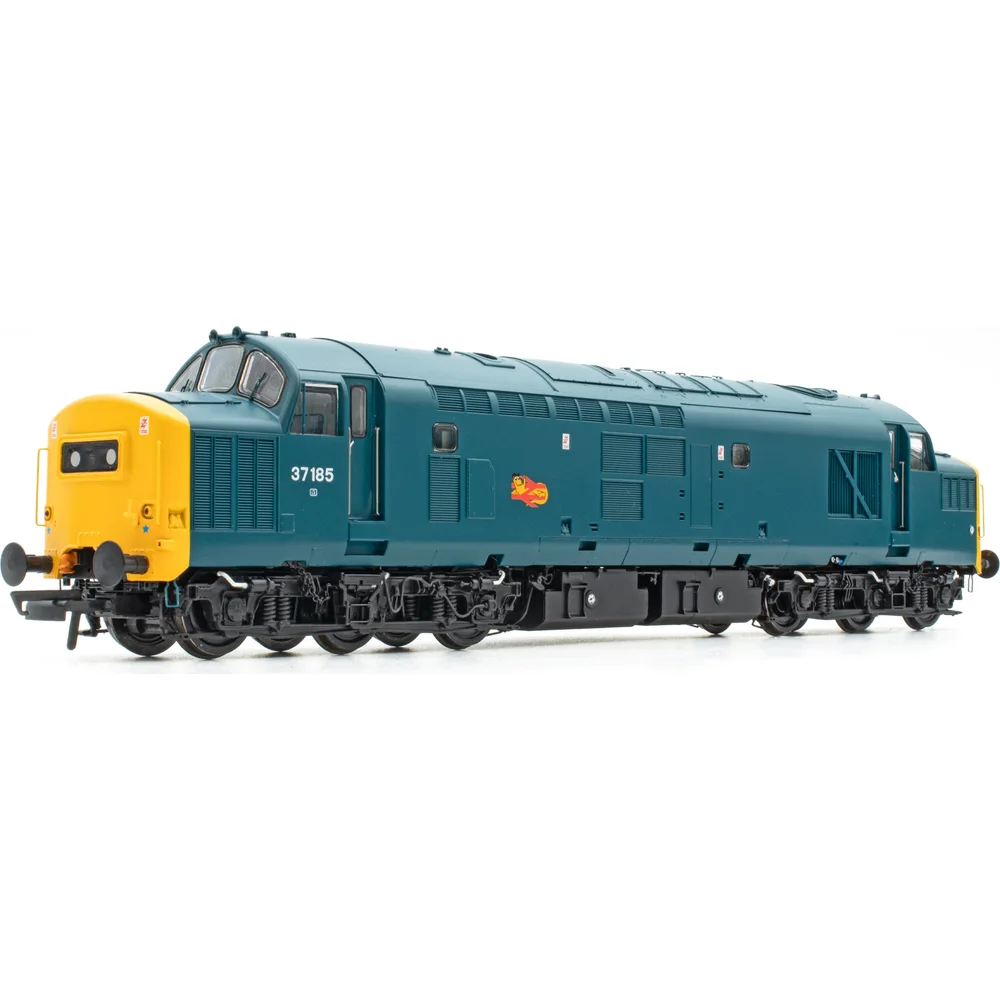
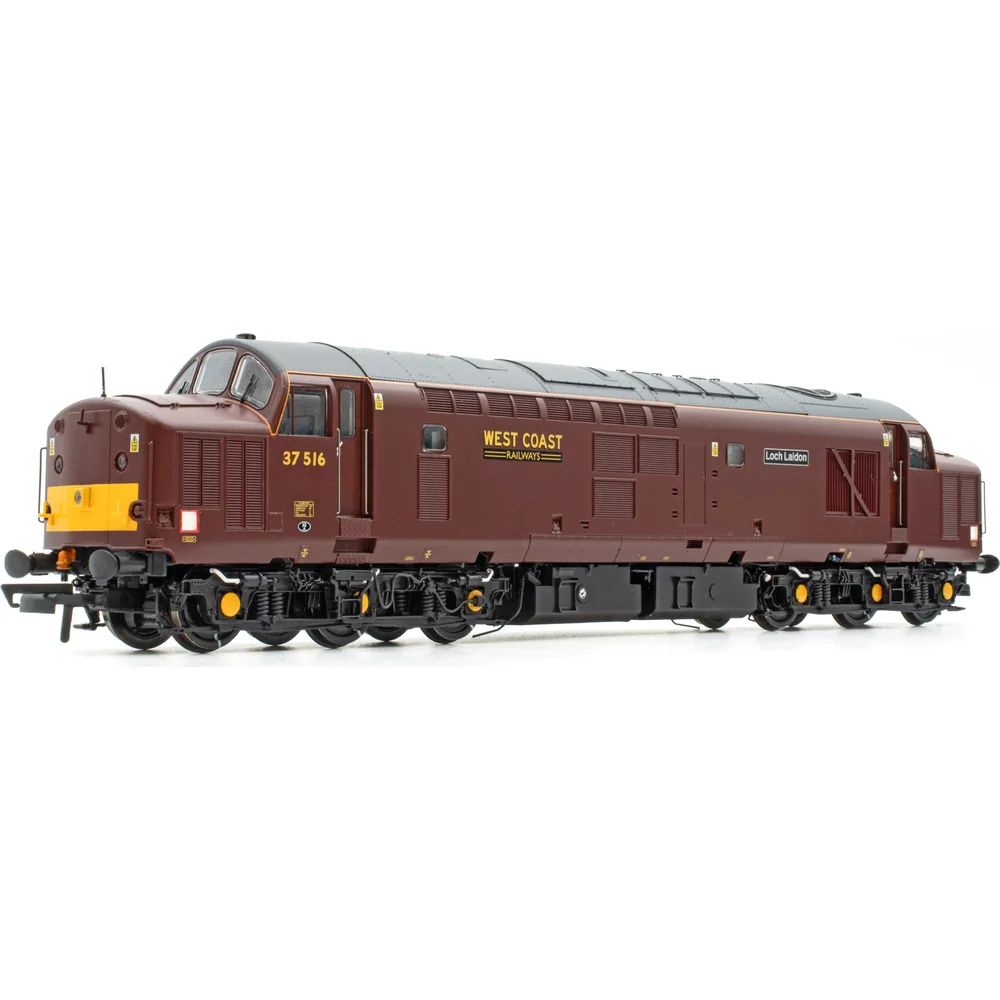
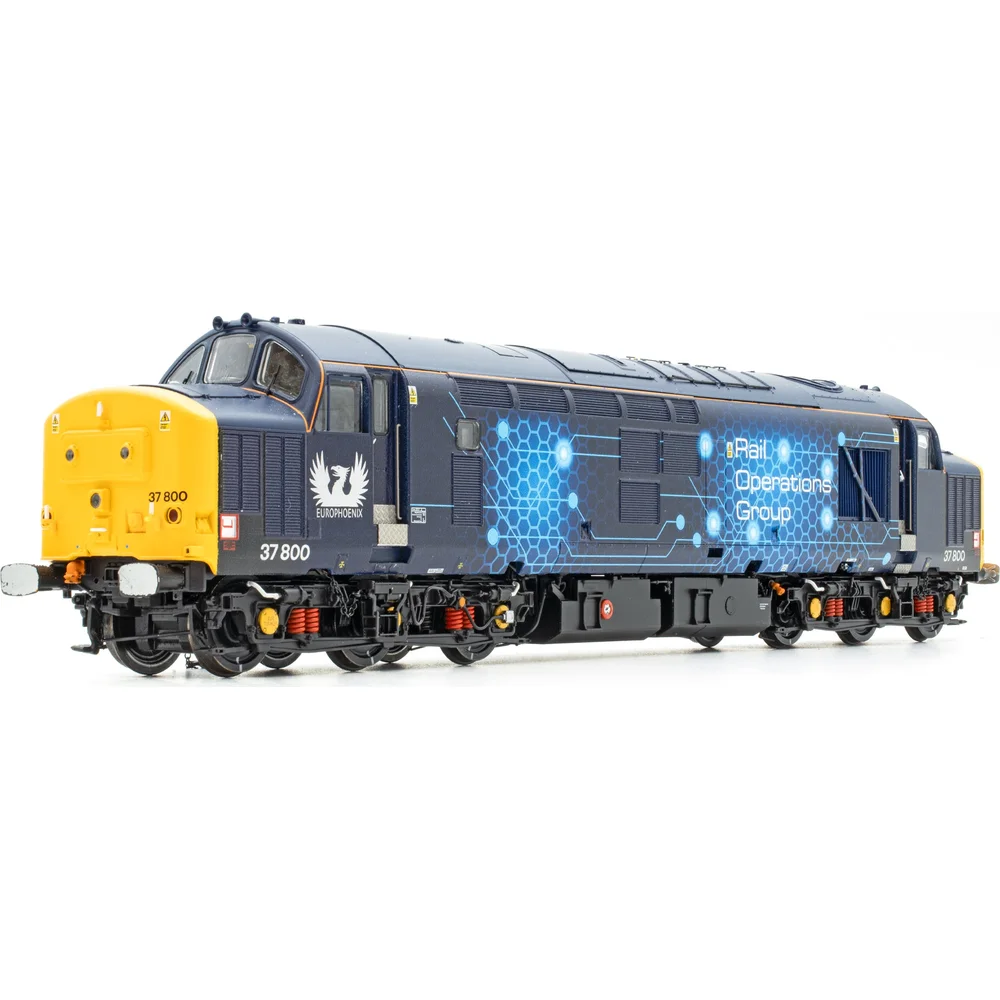
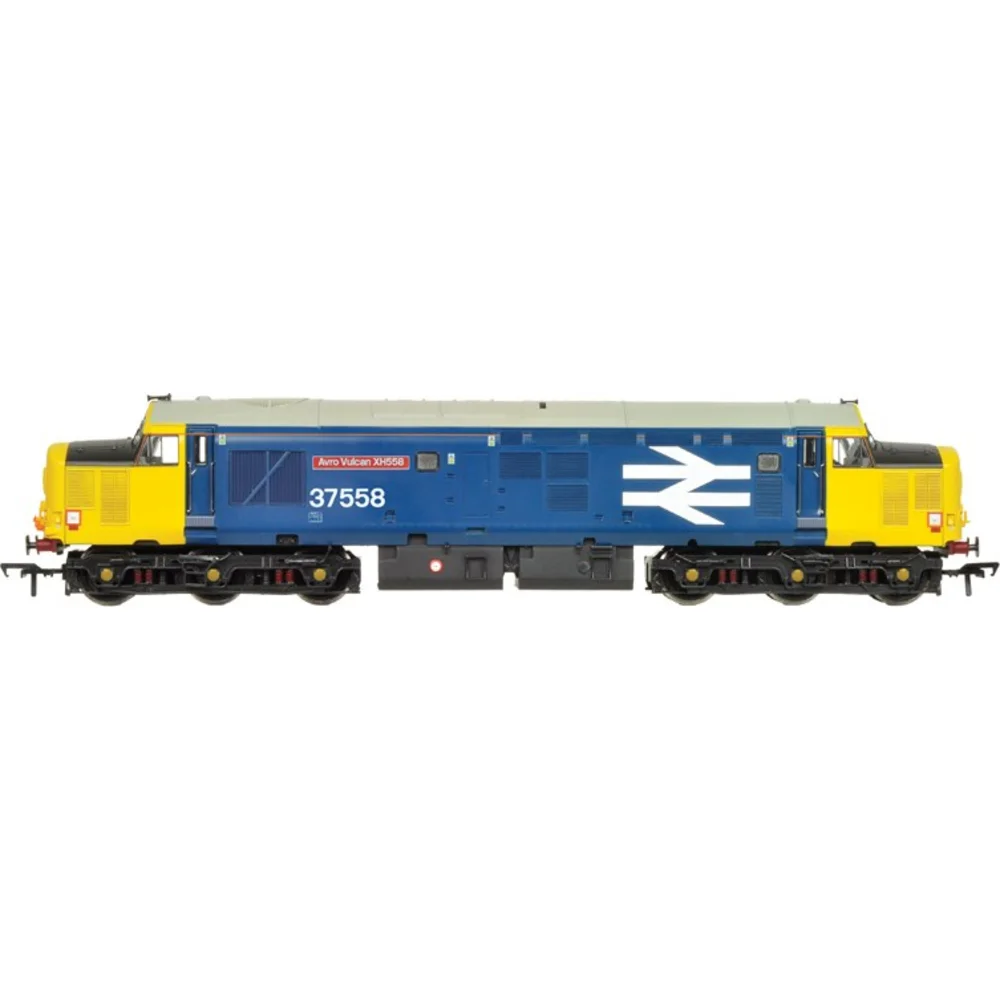
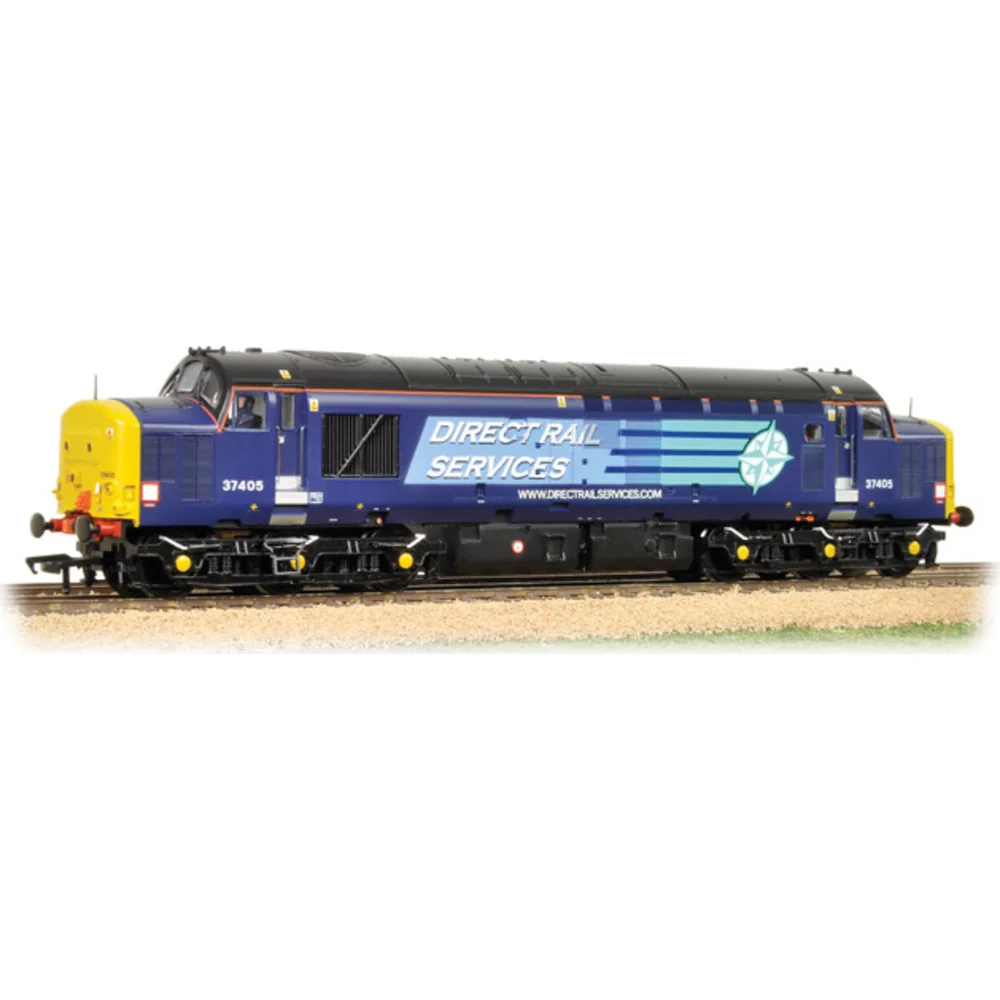
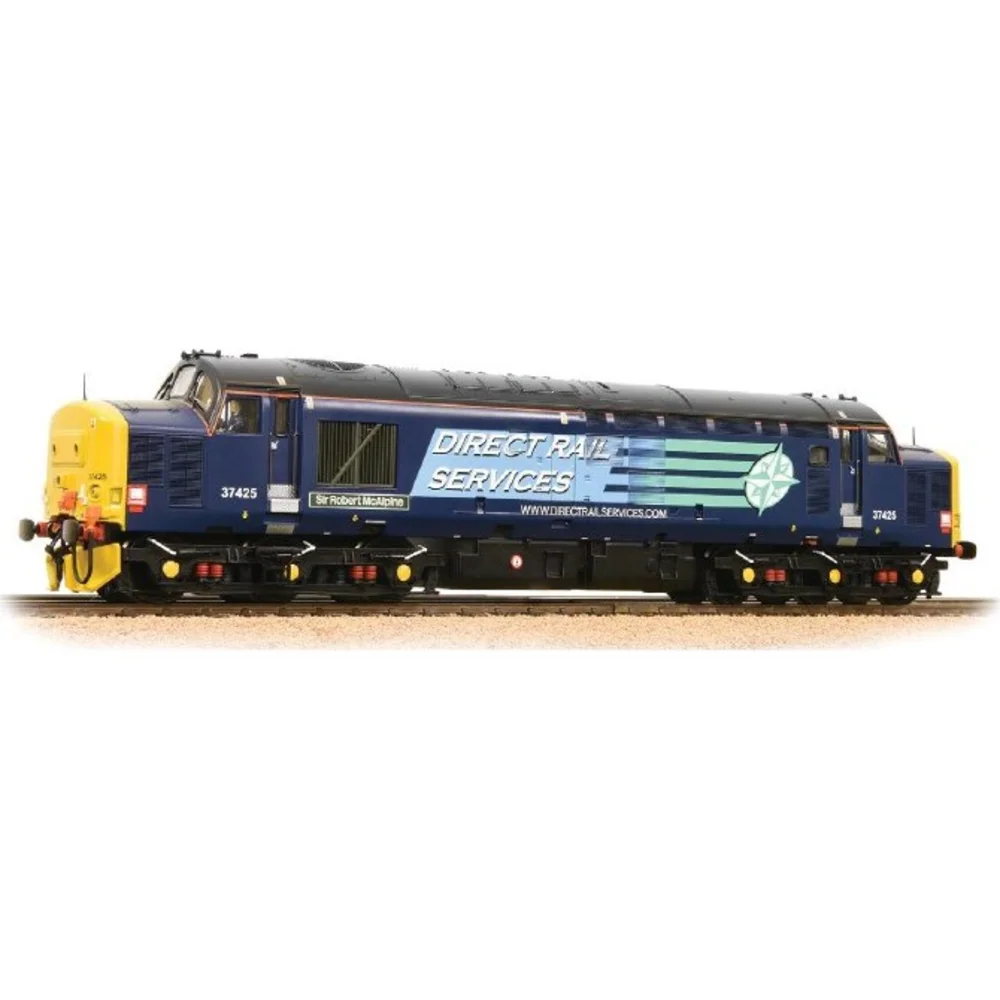
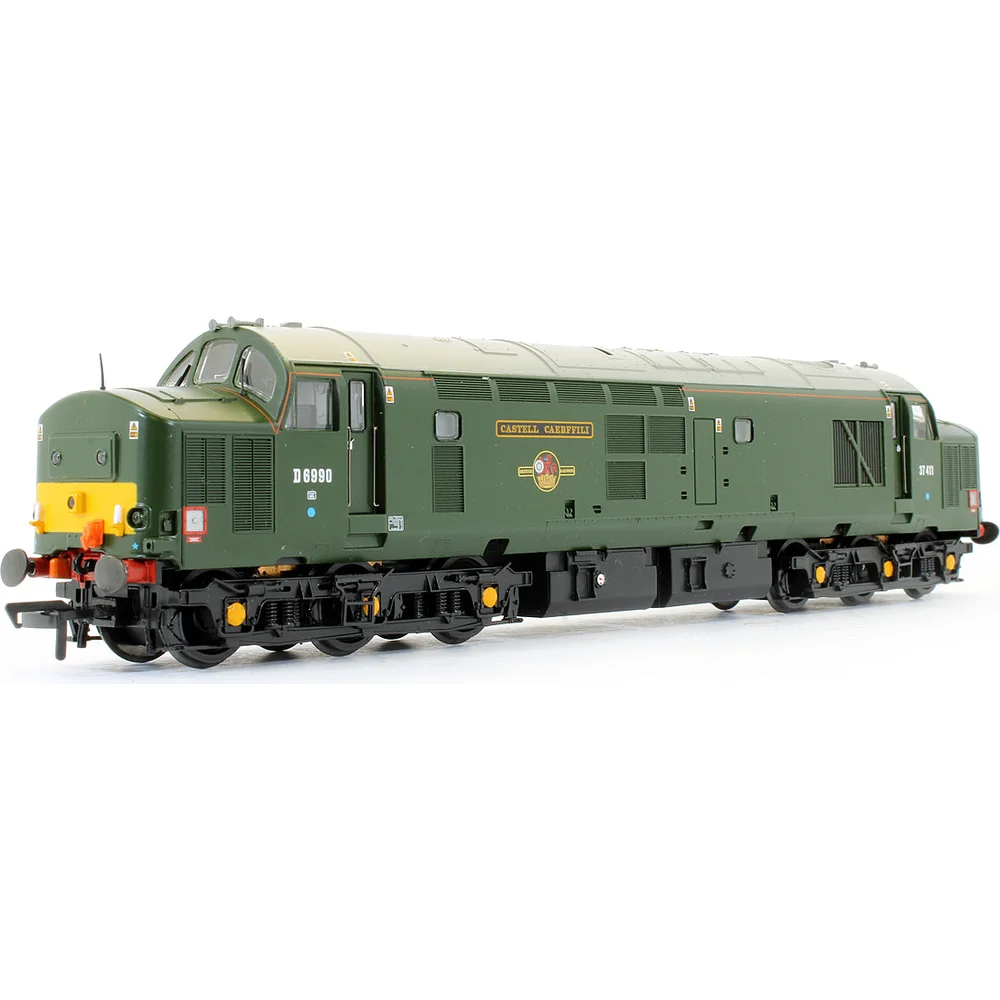
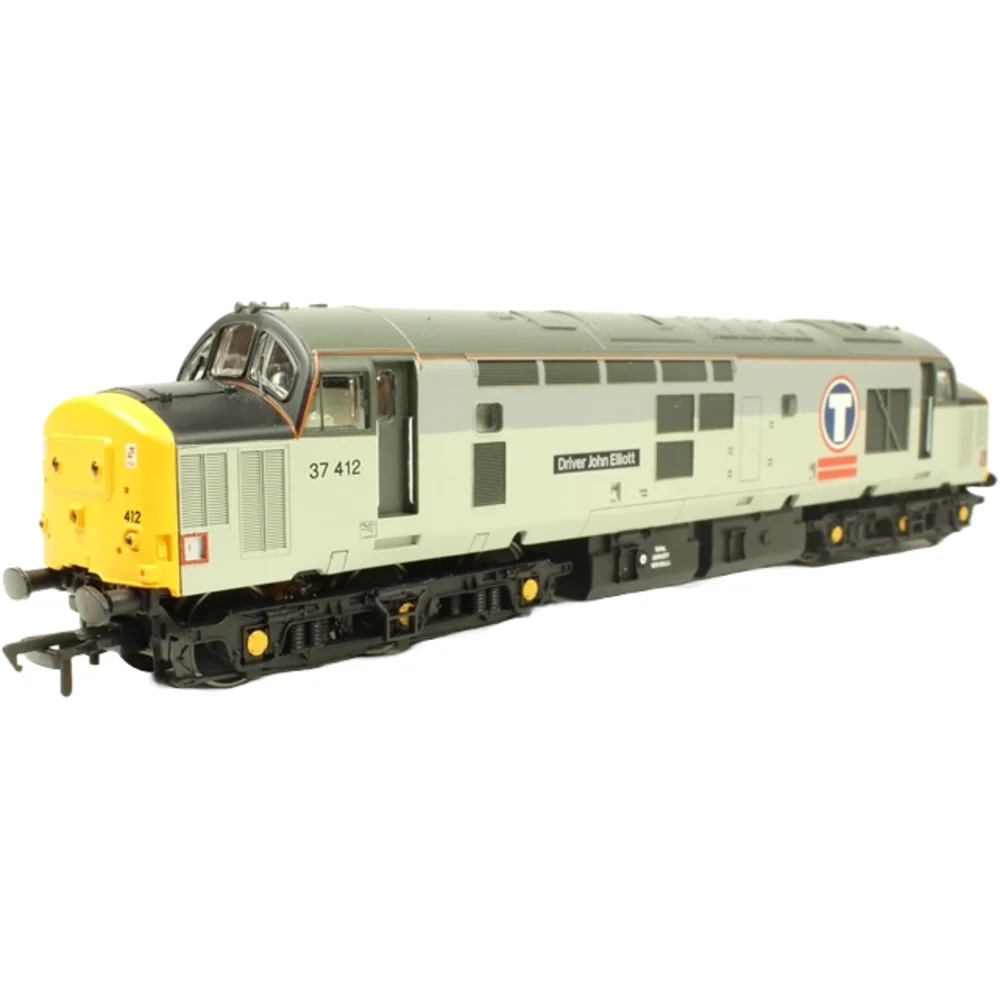
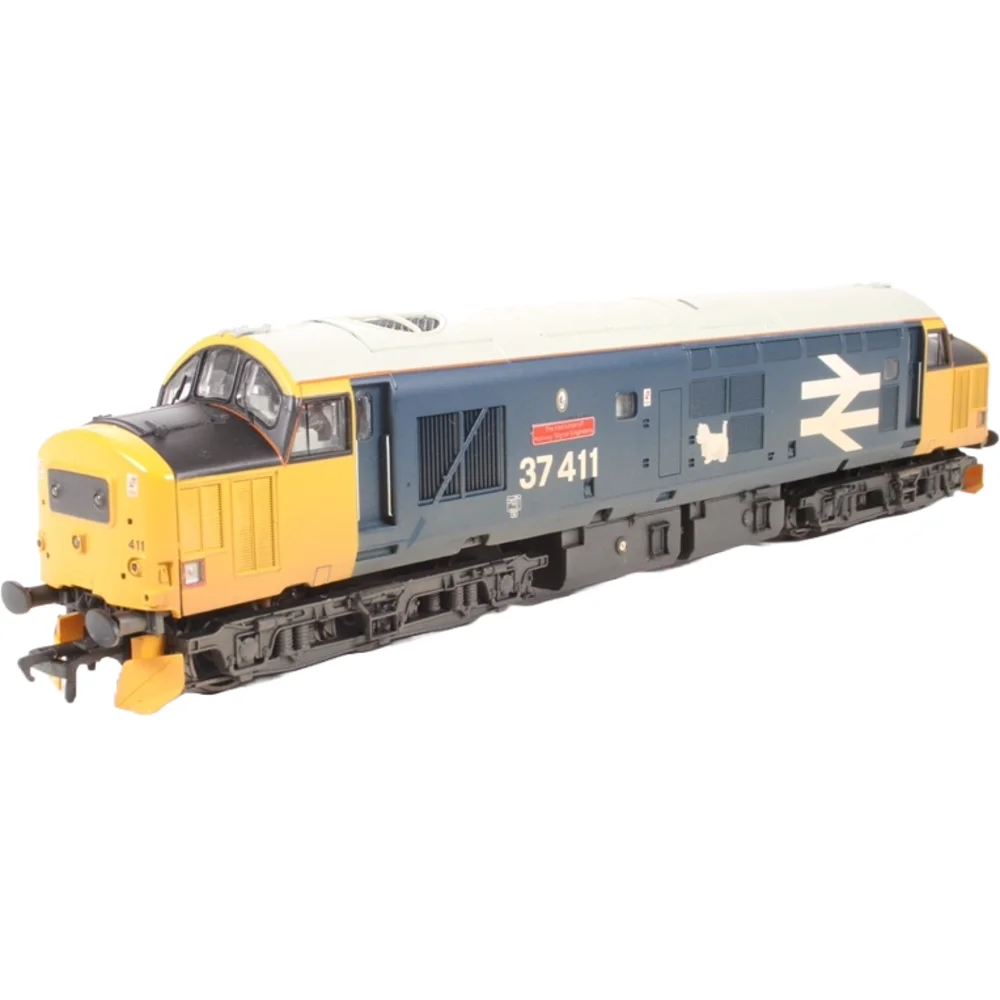
The British Rail Class 37 stands as one of British Railways' most successful and enduring diesel locomotive designs. With 309 locomotives built between 1960 and 1965, this iconic Co-Co diesel has served for over six decades across freight, passenger, and mixed-traffic duties. Known affectionately as "Tractors" or "Growlers" for their distinctive agricultural-sounding exhaust note, these workhorses remain operational today on heritage railways and in commercial service, whilst providing endless modelling opportunities for railway enthusiasts.
For model railway enthusiasts, the BR Class 37 offers unparalleled versatility: six decades of operational history spanning BR green through privatisation liveries, applications from heavy freight to express passenger service, operations across the entire British railway network, and presence on preserved heritage railways. Whether recreating 1960s East Anglian expresses, 1980s West Highland Line services, or modern nuclear flask operations, the Class 37 provides authentic prototypical operations with excellent ready-to-run model availability.
The Class 37's versatility across multiple eras, extensive livery variety, and continued preservation make it essential for any British diesel-era layout. From hauling coal trains through Welsh valleys to powering overnight sleeper services through the Scottish Highlands, these English Electric Type 3 locomotives epitomised the BR Modernisation Plan's ambitions—proving that thoughtful engineering and conservative design philosophy can create machines serving far beyond their original design life.
Quick Takeaways
- Three hundred and nine locomotives built: Constructed at Vulcan Foundry and Robert Stephenson & Hawthorns between 1960-1965, numbered D6700-D6999 and D6600-D6608
- English Electric 12CSVT diesel engine: Turbocharged 12-cylinder powerplant producing 1,750 bhp, proven in East African service with 93% availability rate
- Co-Co wheel arrangement advantages: All six axles powered providing excellent adhesion and Route Availability 5 classification enabling operation on lightly-laid branch lines
- 65-year operational span: From December 1960 debut until 2025, encompassing BR, sectorisation, privatisation, and modern heritage/commercial operations
- Extensive refurbishment programmes: 1980s Crewe Works conversions created 37/4 ETH passenger variants, 37/5 freight, 37/6 Nightstar, 37/7 heavy freight, and 37/9 experimental subclasses
- Approximately 60 mainline certified: Colas Rail, Rail Operations Group, Network Rail, West Coast Railways, and spot-hire operators maintain active commercial fleet in 2025
- Comprehensive model availability: Bachmann, Accurascale, and Hornby offer OO gauge; Graham Farish provides N gauge; Heljan produces O gauge ranges with extensive livery options
Historical Background and Context
The story of the BR Class 37 begins not in Britain, but in East Africa. English Electric had achieved remarkable success supplying robust diesel locomotives to East African Railways, where they achieved an impressive 93% availability rate in extreme conditions. This proven design featured a 2,024 hp diesel engine producing 1,840 hp when working at 9,000 feet above sea level, demonstrating the fundamental soundness of the engine, generator, traction motors, and control gear.
When the British Transport Commission published the BR Modernisation Plan in December 1954, it called for massive investment of £1.2 billion to replace all steam traction with diesel and electric locomotives. The plan identified a need for Type 3 locomotives with power output between 1,500 hp and 1,999 hp for mixed-traffic operations. English Electric responded by offering their proven African design with a de-rated engine producing 1,750 hp at rail—powerful enough for heavy freight yet suitable for secondary passenger services.
The 1,750 hp rating was deliberately conservative, ensuring reliability and longevity. This power output placed one Type 3 as equivalent to one Stanier Black Five steam locomotive, making it ideal for replacing steam on mixed-traffic duties. The low gearing suited both freight work and passenger trains on secondary routes, whilst the moderate power rating meant the engine wasn't highly stressed, contributing to the class's legendary reliability.
Remarkably, English Electric was so confident in their African design that they proceeded directly to production without building a prototype—an audacious decision that proved entirely justified. British Railways placed the first order for 42 locomotives in January 1959, with D6700 delivered in November 1960 and entering service on 2 December 1960 at Stratford depot. Production continued through seven separate orders until D6608, the final locomotive, was delivered on 9 November 1965.
Modelling Insight: Production Variations
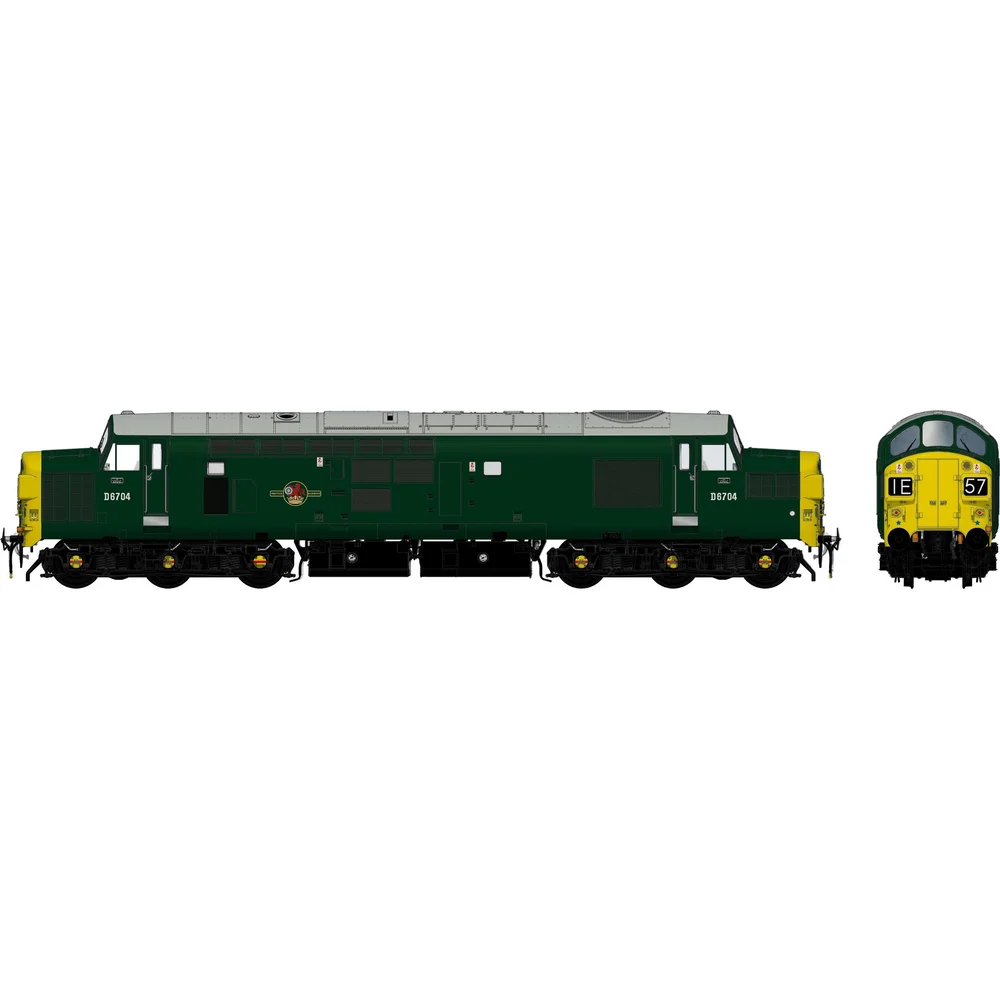
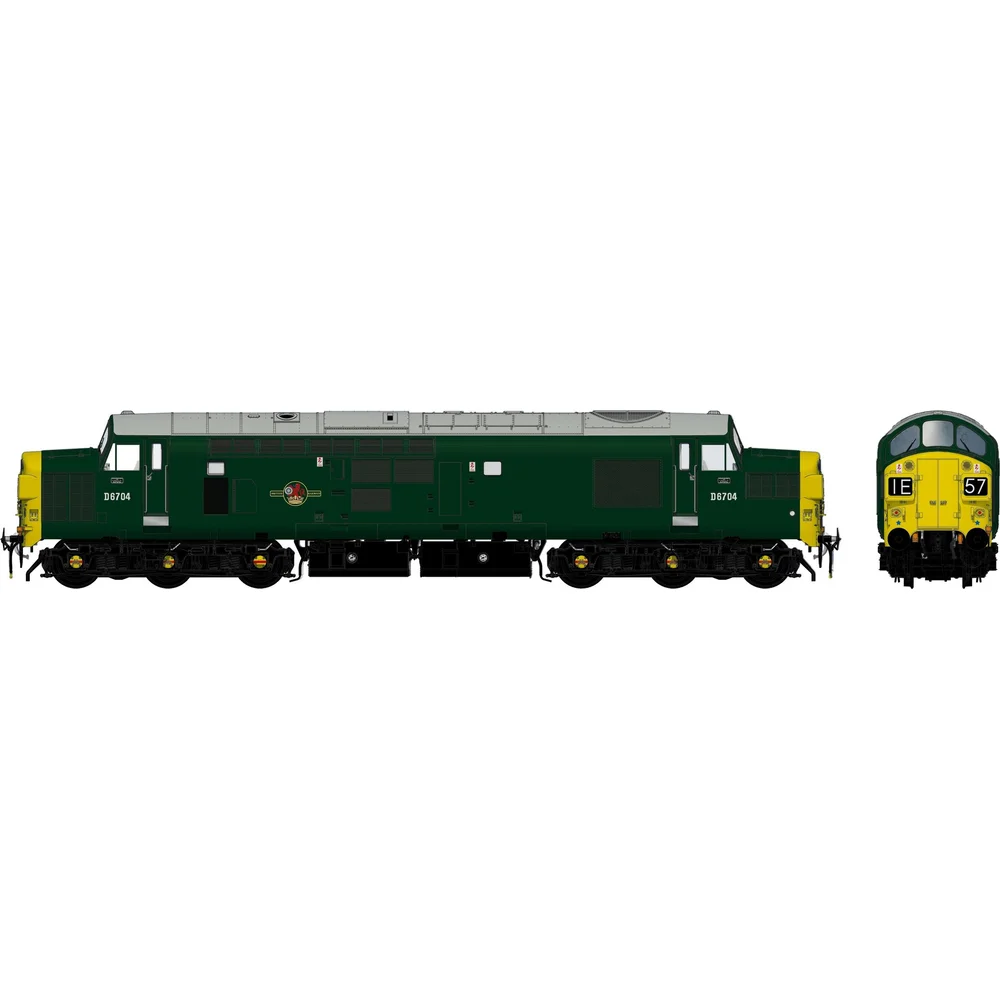
The production variations between early and late builds offer excellent modelling opportunities. The first 119 locomotives (D6700-D6818) featured split headcode boxes with nose-end connecting doors, whilst later builds had central headcode panels and roof-mounted horns. These differences allow period-specific accuracy on your layout.
Manufacturing was split between two facilities to meet BR's urgent need for steam replacement: Vulcan Foundry at Newton-le-Willows, Lancashire (the primary facility) and Robert Stephenson & Hawthorns at Darlington. The total build of 309 locomotives was originally numbered D6700–D6999 and D6600–D6608, before TOPS renumbering in 1973 created the 37001–37308 series we recognise today.
Compared to competing Type 3 designs like the Brush Type 2 (Class 31), the English Electric Type 3 proved vastly superior. The Class 31, with only 1,250 hp originally (later 1,470 hp after re-engining) and an A1A-A1A wheel arrangement, suffered from unreliable Mirrlees engines requiring expensive replacement. The BR Class 37's all-axle Co-Co configuration, higher power output, and proven engine design made it the clear winner, ultimately becoming the standard Type 3 when other types were withdrawn in the 1980s.
Design and Technical Specifications
At the heart of every BR Class 37 lies the English Electric 12CSVT diesel engine—a 12-cylinder V-type powerplant with 10-inch bore and 12-inch stroke. The designation CSV denotes its key features: C for intercooler, S for supercharger/turbocharger, and V for V-configuration. Running at 750-900 rpm, this turbocharged and intercooled engine produced a reliable 1,750 bhp (1,305 kW), delivering approximately 1,250 hp at the rail.
The electrical system originally comprised an English Electric EE822/10G main generator and EE911/5C auxiliary generator, both DC units, feeding power to six English Electric 538/1A nose-suspended DC traction motors—one per axle in the Co-Co arrangement. Later refurbished locomotives (37/4, 37/5, 37/6, 37/7 subclasses) received Brush alternators instead, improving reliability and efficiency for modern service.
The Co-Co wheel arrangement proved crucial to the Class 37's versatility. With all six axles powered across two three-axle bogies, the locomotive distributed its weight evenly whilst providing excellent adhesion for both starting heavy freight trains and maintaining speed on passenger services. The CP7 cast-frame bogies were interchangeable with Class 50 and Class 55 Deltic locomotives, and featured the same basic design—so much so that fittings for Deltic cab steps are visible on Class 37 bogies.
| Specification | Details |
|---|---|
| Power Output | 1,750 bhp (1,305 kW) engine; 1,250 hp (932 kW) at rail |
| Engine Type | English Electric 12CSVT, 12-cylinder V-type, turbocharged and intercooled |
| Maximum Speed | 90 mph (145 km/h) original; 80 mph (130 km/h) with regeared CP7 bogies |
| Weight | 102-105 tons (104-107 tonnes) as built; 120 tons (122 tonnes) for 37/7 and 37/9 ballasted variants |
| Length | 61 feet 6 inches (18.75 metres) |
| Width | 8 feet 1 inch (2.47 metres) |
| Height | 12 feet 9 inches to 13 feet (depending on horn mounting) |
| Wheel Arrangement | Co-Co (six powered axles) |
| Axle Loading | Route Availability 5 (RA 7 for heavy 37/7 and 37/9 variants) |
| Fuel Capacity | 950 imperial gallons (4,318 L) original; 1,750 imperial gallons (8,000 L) extended |
| Brake System | Dual air/vacuum brakes; 50 tonnes brake force |
| Tractive Effort | 55,500 lbf (247 kN) maximum; 35,000 lbf (156 kN) continuous at 13.6 mph |
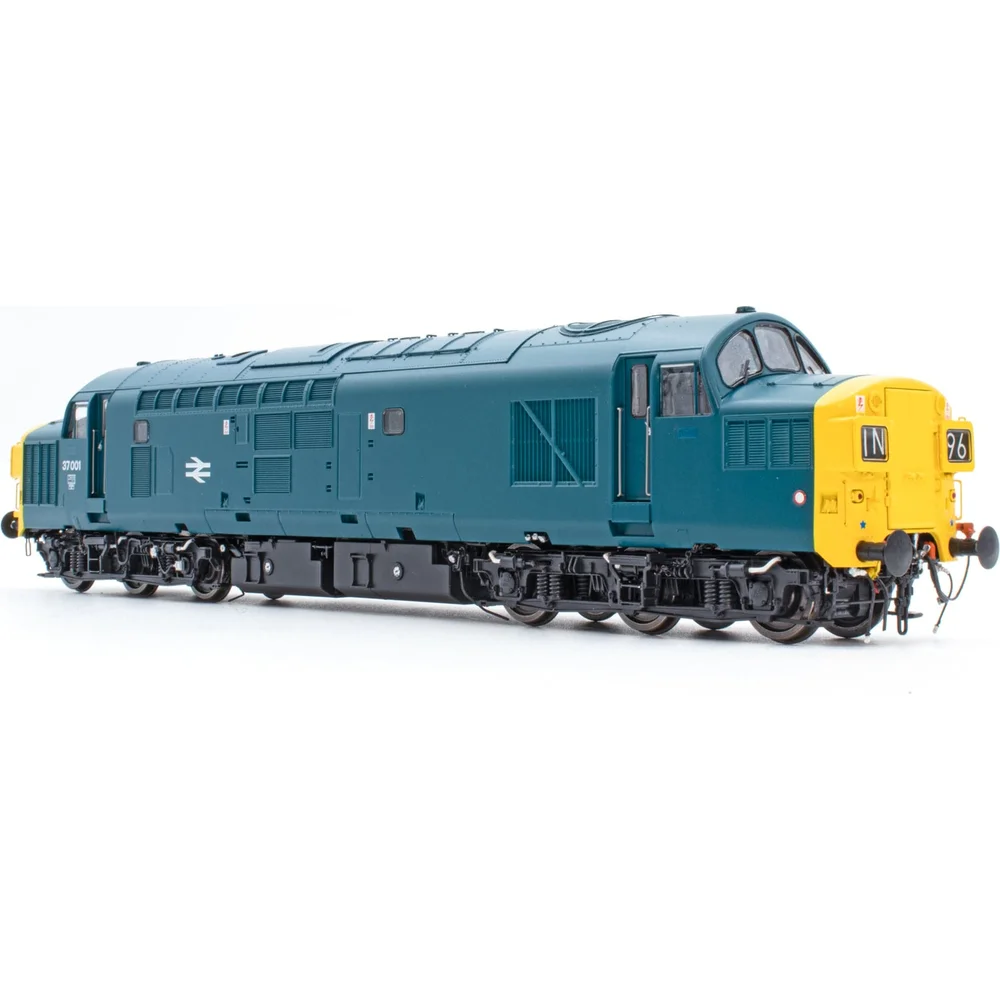
The distinctive bodyside grilles became an iconic recognition feature of the BR Class 37, providing adequate cooling for the 12CSVT engine in all conditions. The utilitarian 1960s design featured a strong family resemblance to other English Electric designs like the Class 40 and Class 23 Baby Deltic, with symmetrical stepped driving compartments at each end and prominent rectangular doors along the locomotive sides for cabin access.
Technical Innovation: The Proven African Heritage
The Class 37 design's roots in East African Railways locomotives proved decisive to its success. The 12CSVT engine had already demonstrated 93% availability in temperatures exceeding 40°C at altitudes of 9,000 feet—far more demanding conditions than Britain. This proven reliability meant English Electric could confidently proceed to production without a prototype, accelerating BR's steam replacement programme whilst delivering exceptional dependability throughout the class's 65-year service career.
Early builds featured split headcode boxes (two square boxes containing four digits total) with nose-end connecting doors designed to allow crew exchange whilst in motion. From D6819 onwards, a single centrally-placed headcode panel replaced the split arrangement, nose-end doors were eliminated, and horns moved from body mounting to roof mounting. These variations provide excellent period-specific detail opportunities for modellers.
The relatively low axle loading for size and power made the BR Class 37 invaluable for lines with weight restrictions, becoming the only mainline locomotive type available in significant numbers for such routes. This Route Availability 5 classification meant Class 37s could operate on lightly-laid branch lines where heavier locomotives couldn't venture—a key factor in their long operational life and continued utility into the 21st century.
Service History and Operations
The BR Class 37 entered service in December 1960 with initial allocations focused on the Eastern Region. Stratford depot received D6700–D6704, D6709–D6720, and D6725–D6729, immediately putting them to work on passenger services from Liverpool Street to Norwich, Cambridge, Harwich International, and Clacton-on-Sea. The first passenger use came on 6 January 1961 when D6700 substituted for a failed Class 31 on The Fenman, with regular services commencing on 9 January 1961. These locomotives maintained an exclusive preserve on Harwich International boat trains for over 20 years.
The North Eastern Region received substantial allocations with Thornaby operating 50 locomotives—one of the largest single depot allocations. Hull Dairycoates, Gateshead, and Sheffield Darnall/Tinsley depots operated Class 37s on a variety of freight and secondary passenger duties, including Pullman services to London King's Cross and Harwich boat trains via the Woodhead Tunnel route.
The Western Region's adoption of the Class 37 proved decisive to the design's success. Trial of D6742 and D6743 in late 1962 proved so successful that within two years, over 100 Class 37s were allocated to Western Region depots. Cardiff Canton received 51 locomotives whilst Landore, Swansea operated 47—the two largest depot allocations. These locomotives handled heavy coal and metals traffic in South Wales on short, steeply-graded branch lines to collieries like Tower, Coedbach, and Cwmbargoed, typically hauling 32-wagon rakes of 32-ton HAA hoppers in merry-go-round operation. From 1964, pairs of Class 37s replaced Hymeks on banking duties up the notorious Lickey Incline. Between 1965 and 1967, eighteen locomotives (D6875–D6892) were modified for 100 mph trials on Western Region express services.
Operational Insight: West Highland Line Operations
By 1981, all passenger turns on the West Highland Line were operated by Class 37s, with Eastfield depot operating 44 locomotives and Inverness allocating 9 by 1985. The sight and sound of a Class 37/4 hauling Mark 2 coaches through dramatic Highland scenery became iconic, making this era particularly popular with modellers recreating Scottish operations.
The 1980s refurbishment programme at BR Engineering's Crewe Works transformed the Class 37 fleet and extended operational life by decades. Multiple specialist subclasses emerged from this programme. Class 37/4 locomotives received Electric Train Heating (ETH) equipment for passenger work, requiring replacement of DC generators with Brush alternators. Thirty-one locomotives were converted between 1985 and 1986 specifically for Scottish passenger services on the West Highland Line, Far North Line (Inverness-Thurso/Wick), and Kyle of Lochalsh line. These locomotives received ETH capacity sufficient for modern Mark 2 air-conditioned coaching stock, finally eliminating the need for intermediate ETHEL vehicles.
Class 37/5 received similar refurbishment to the 37/4 but without train heating equipment, designating them for freight-only use. Class 37/6 were modified for the aborted Nightstar Channel Tunnel sleeper services, with twelve locomotives converted with special coupling equipment for continental operations. Class 37/7 heavy freight variants received extra ballast increasing weight to 120 tons and modified gearing, with 44 built for intensive South Wales coal and steel traffic. Class 37/9 represented an experimental re-engineering programme testing alternative engines (Mirrlees MB275Tt and Ruston RK270Tt) for a proposed Class 38, though only six were built between 1986 and 1987 and all were withdrawn by 1999-2000.
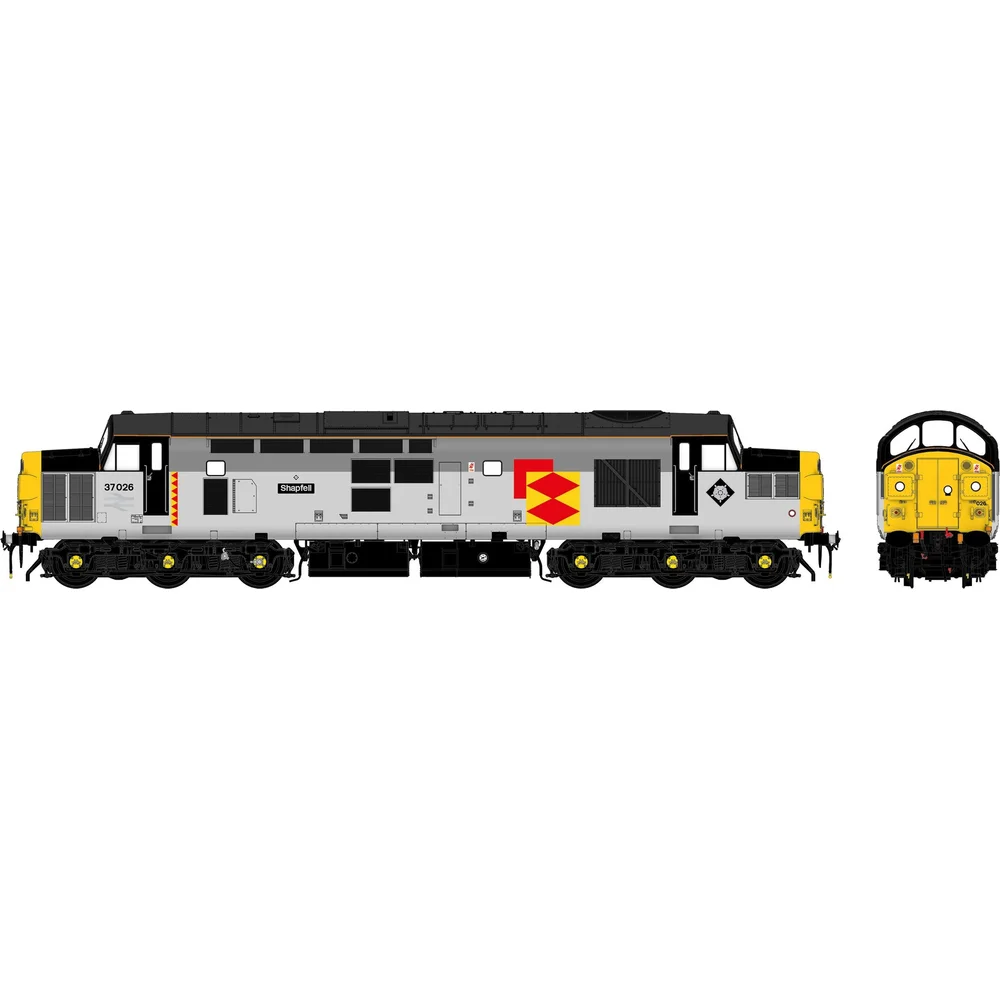
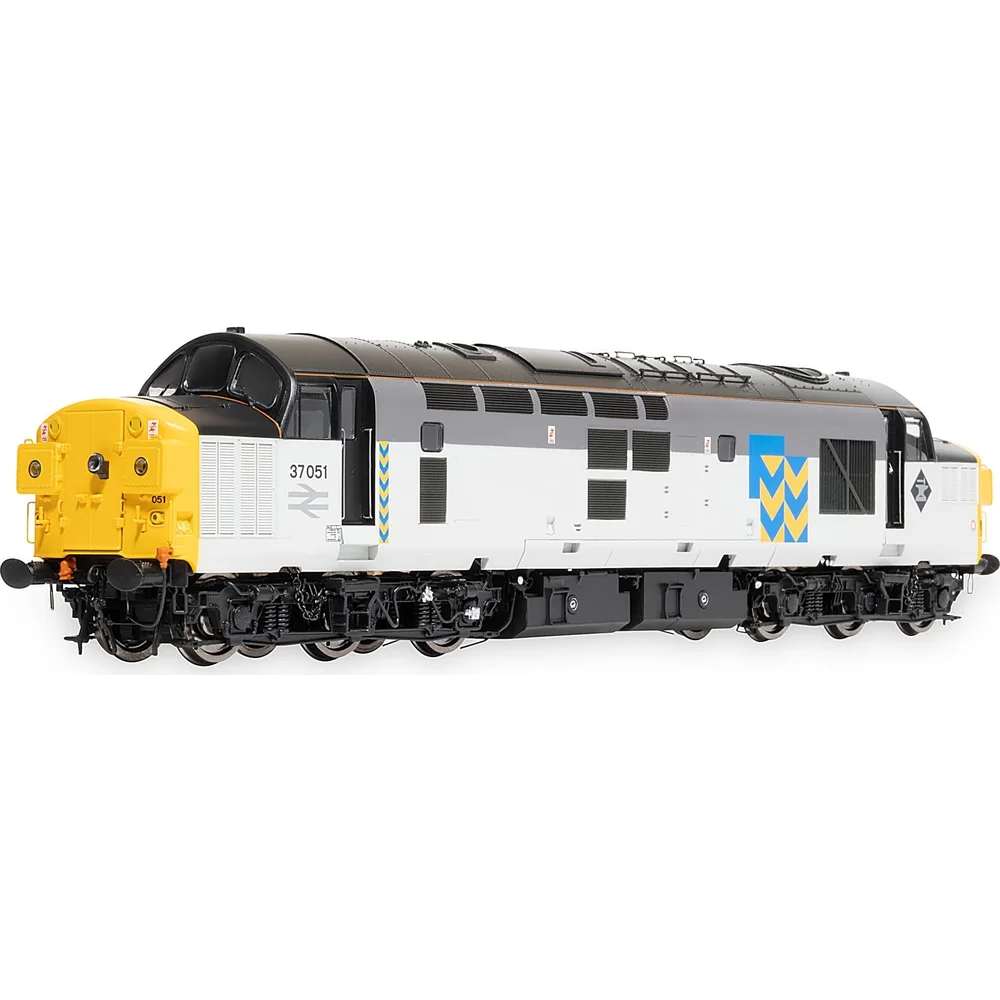
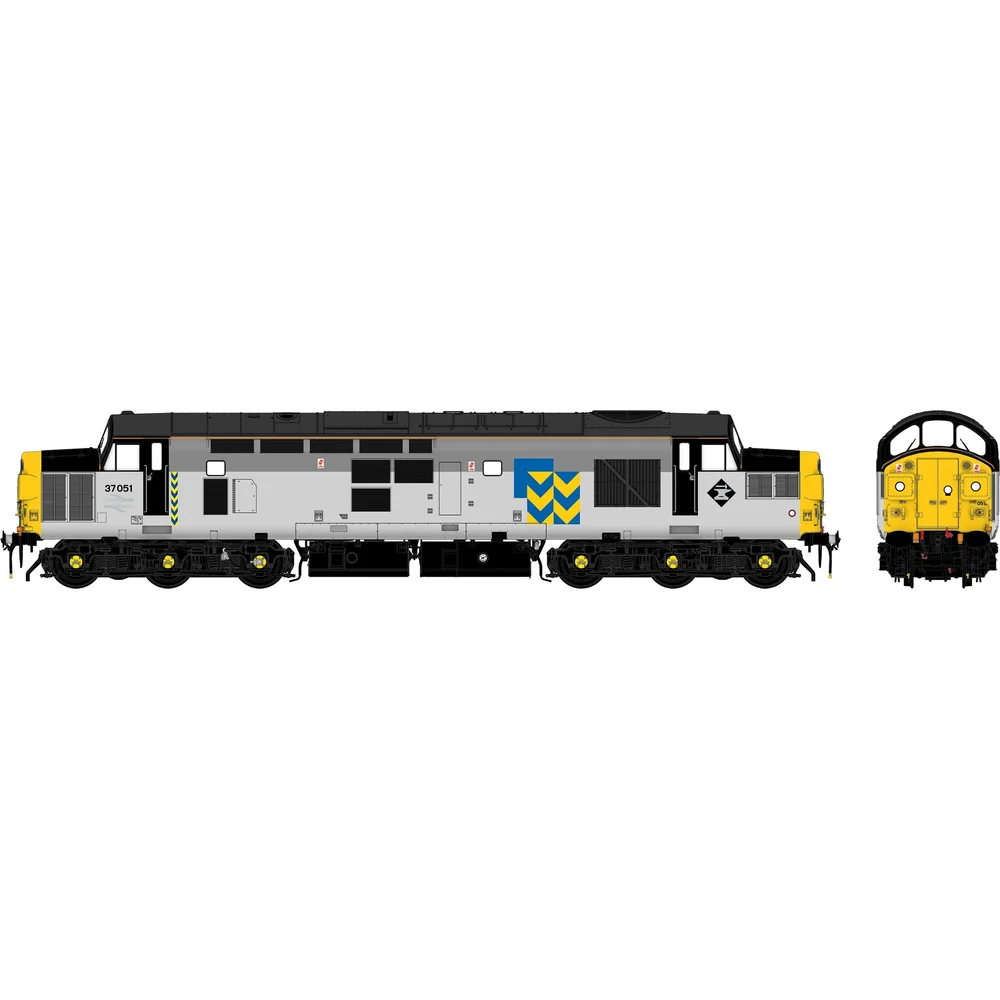
Throughout their operational life, BR Class 37 locomotives worked notable services including Anglo-Scottish expresses, West Highland Line tourist trains, North Wales coast passenger services, Cambrian line trains to Aberystwyth, Heart of Wales line services (with specially fitted headlamps), and intensive coal, steel, and china clay freight operations. The transition through BR blue livery era, Railfreight sector identities (grey with red stripe, then triple grey sector logos for Coal, Metals, Petroleum, Distribution, and Construction), and privatisation saw the class adapted to each new operational requirement.
Withdrawal and Preservation Legacy
Withdrawals began tragically early when D6983 was destroyed in a December 1965 collision at Bridgend—the only Class 37 never to receive a TOPS number. However, systematic withdrawals didn't commence until the 1980s, accelerating dramatically through the 1990s and 2000s as the introduction of Class 66 locomotives from 1998 onwards displaced Class 37s from freight duties. EWS acquired 250 Class 66s, leading to mass withdrawals of older traction including the bulk of the Class 37 fleet.
Final regular passenger workings ended progressively: Cardiff-Rhymney services concluded in April 2005 with specially painted 37411 and 37425, whilst the Fort William Caledonian Sleeper—the last daily Scottish Class 37 passenger work—ended in June 2006 with replacement by Class 67 locomotives. Direct Rail Services announced retirement of its Class 37 fleet in 2024-2025, with replacement by Class 68 and Class 88 locomotives, marking the effective end of six decades of frontline commercial service.
Yet remarkably, approximately 60 BR Class 37 locomotives remain in mainline service as of 2025, testament to their robust design and continued utility. Current commercial operators include Colas Rail (7 operational locomotives handling rail head treatment trains and infrastructure work), Rail Operations Group (6 locomotives leased from Europhoenix for EMU movements), Network Rail (3 Class 97/3 conversions for ERTMS testing on the Cambrian Line), and various spot-hire companies. West Coast Railways maintains 11 locomotives (5-6 operational) for charter train operations, particularly on Scottish routes like the West Highland Line where their Route Availability 5 classification allows operation where heavier locomotives cannot venture.
Preservation Success Story
Approximately 30 locomotives are preserved on heritage railways, with both the first-built (D6700) and last-built (37308) secured for the national collection. Severn Valley Railway hosted ten Class 37s for the 65th anniversary Autumn Diesel Bash in October 2024, attracting 4,100 visitors over four days—demonstrating the enduring enthusiast appeal of these iconic diesels.
Heritage railways operating Class 37s include Severn Valley Railway (37263, 37308), Great Central Railway (D6700, 37714), Keighley & Worth Valley Railway (37075, which appeared as Class 40 D326 in the BBC drama "The Great Train Robbery"), North Yorkshire Moors Railway (37264), Caledonian Railway (37097 "Old Fettercairn"), Bo'ness & Kinneil Railway (37175), and over fifteen other heritage lines. Several preserved locomotives maintain mainline certification for charter work, ensuring the distinctive "Tractor" sound continues to grace Britain's railways.
The engineering legacy of the BR Class 37 extends beyond preserved examples. The experimental Class 37/9 Mirrlees engine programme influenced the Class 60 design, whilst the successful 1980s refurbishment programme demonstrated the value of life-extension over new-build—a lesson applied to other locomotive classes. The low axle loading concept influenced later designs for restricted routes, and the ETH conversion model pioneered on 37/4s was subsequently applied to Classes 31/4 and 47/4.
Modelling Significance and Scale Replications
OO gauge modellers enjoy an embarrassment of riches when selecting BR Class 37 models. Three manufacturers currently offer comprehensive ranges with varying levels of detail, features, and pricing to suit every budget and requirement.
Bachmann Branchline launched their all-new Class 37 range in 2022, designed from scratch using original drawings and laser scans. This award-winning model features a five-pole twin-shaft motor with dual flywheels, all-wheel drive with electrical pickup from all twelve wheels, PLuX22 DCC decoder socket, and dual fitted speaker system on all models. Directional lighting includes high-intensity headlights, cab lighting, and engine room lighting (on DCC), plus 'Yard Light' mode for marker/tail lights. Standard DCC Ready models (catalogue numbers 35-301 through 35-338) retail at £169.50-£195.95, whilst Sound Fitted variants with Zimo MS450P22 decoders cost £275.95. The premium Sound Fitted Deluxe range (£299.95) adds motorised radiator fans synchronised to sound and tinted windscreen glazing. Four distinct sound projects cover Original 37/0, Thermostatically controlled fans, 37/4, and DRS-modified variants. Available liveries span BR green (D6710, D6829), BR blue, Large Logo blue, Railfreight sectors, Civil Engineers 'Dutch', Regional Railways, InterCity Mainline, DRS, and Colas Rail.
Accurascale entered the market in 2023 with unprecedented detail levels using 3D laser scanning to capture accurate tumbleholme, nose curves, and cab roof profiles. Their 21-pin DCC socket models feature timeframe-specific details including split headcode displays with selectable four-character codes, operating roof fans synchronised to DCC sound, and comprehensive tooling variations for different eras and regions. Standard models retail at £169.99 with DCC Sound Fitted versions at £259.99. However, Accurascale produces limited runs of just 25-50 units per variant, making pre-ordering essential. Batch 1 (2023) sold out rapidly, Batch 2 delivered in early 2024 with Western Region variants featuring unique lamp irons, and Batch 3 is scheduled for Q4 2025 introducing the first OO gauge Class 37/9 Mirrlees-powered variants alongside additional 37/4 models in EWS, Colas, and other privatisation-era liveries.
Hornby continues producing their original 1980 tooling in the Railroad Plus range, offering a budget entry point at £85-£95 (catalogue number R30185). Whilst lacking the sophisticated features of Bachmann or Accurascale models, Hornby locomotives provide reliable basic operation and wide secondary market availability of older releases in various liveries.
Advanced Modelling: Choosing the Right Variant
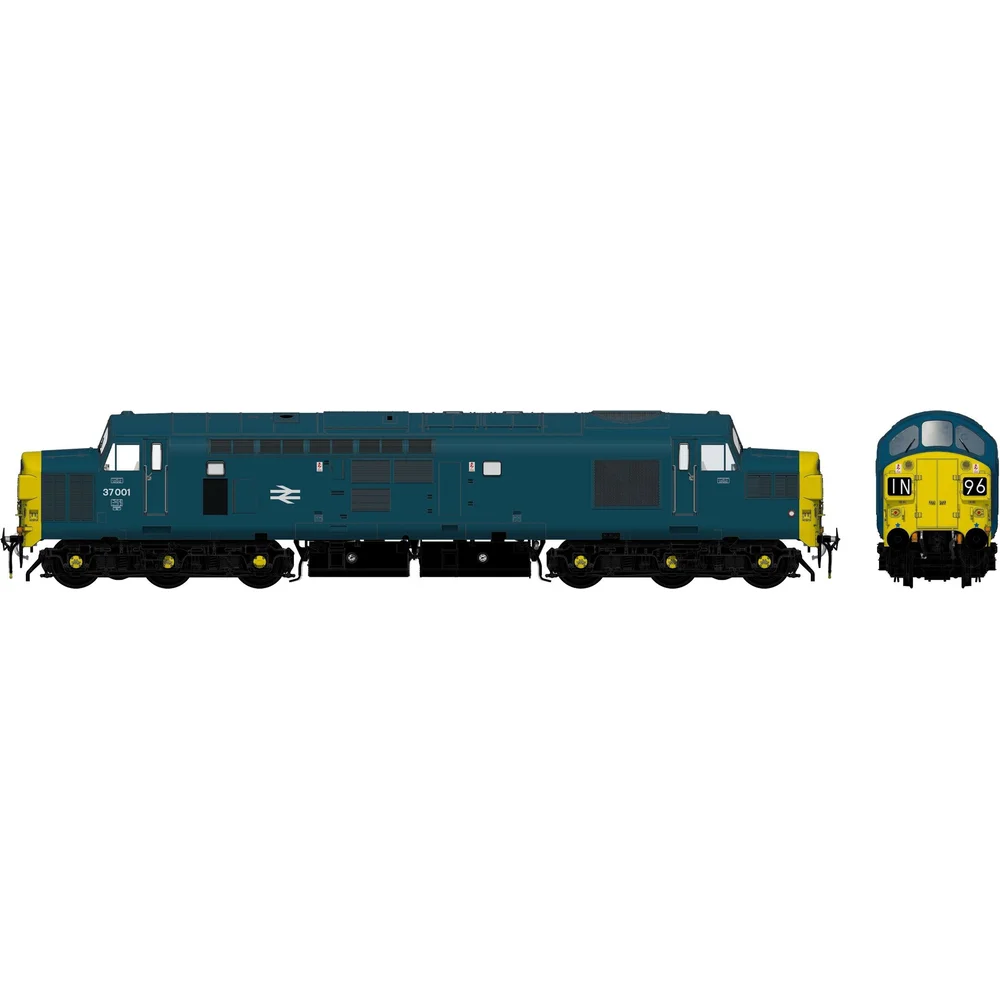
Period-specific accuracy demands matching locomotive variants to your layout era. Split headcode models (D6700-D6818) suit 1960s-early 1970s scenes in BR green or early blue. Centre headcode variants represent mid-1970s onwards. Refurbished 37/4s with Eastfield white stripe or Large Logo blue represent 1980s Scottish passenger operations. Railfreight triple grey sector liveries define the late 1980s-early 1990s. Privatisation-era DRS compass, Colas orange, and EWS maroon represent 2000s-2020s operations.
N gauge modellers rely primarily on Graham Farish (Bachmann Europe's 2mm scale brand) for ready-to-run BR Class 37 models. The current tooling introduced in 2014 features a 5-pole motor with twin flywheels, diecast chassis block, all-wheel electrical pickup, 12-wheel drive, and 6-pin DCC decoder socket. Directional lighting includes high-intensity headlights on refurbished locomotive variants. The 371-xxx series catalogue offers Class 37/0 centre headcode variants and Class 37/4, 37/5, 37/6 refurbished subclasses across extensive livery options: BR Large Logo blue, Railfreight Grey/Red Stripe, Railfreight sector triple greys (Distribution, Petroleum, Metals, Construction), Regional Railways, DRS (multiple versions), West Coast Railways maroon, and Colas Rail orange/black. Pricing ranges from £131.70 to £154.95 (RRP). Special editions include the Avro Vulcan Collector's Pack (370-375) featuring 37558 "Avro Vulcan XH558" with a pair of Avro Vulcan aircraft models.
O gauge enthusiasts can choose Heljan's comprehensive range of 7mm scale models. The 2024 retooled split headcode range (catalogue numbers 3720-3728) represents the pinnacle of O gauge Class 37 modelling with twin five-pole motors (one per bogie), brass flywheels, ESU XL decoder socket/DCC Ready with screw terminals, LED directional lighting, powered roof fan (motorised), interior and exterior LED lighting, provision for large speaker and smoke unit, sprung buffers, finescale metal screw link couplings, factory-fitted bufferbeam cables/hoses, and etched metal grilles. Multiple tooling variations accurately represent cast/fabricated bogies, boiler-fitted/isolated configurations, and nose-end variations across different production batches. Available liveries include BR Green (various yellow panel configurations), BR Blue, Large Logo Blue, Railfreight sectors, Civil Engineers 'Dutch', DRS, and EWS Red/Gold, both numbered and unnumbered options. Prices range from £495 to £669 depending on specification and features. Earlier 2017-2019 centre headcode variants remain available offering alternative subclass representations.
Unique Modelling Tips and Layout Integration
The versatility of the BR Class 37 across six decades provides limitless modelling scenarios. For 1960s operations, recreate initial Eastern Region deployment with Class 37/0s (D-prefix numbers, BR green with small yellow panels or early BR blue) hauling Mark 1 coaching stock in blood & custard or blue/grey liveries on Liverpool Street-Norwich expresses, Harwich boat trains, or Cambridge stopping services. North Eastern Region freight operations featured Class 37s on coal, steel, and general merchandise trains with various wagon types. Western Region operations saw intensive South Wales coal traffic with pairs of Class 37s hauling 32-wagon rakes of HAA hoppers up steep valley branches—an operationally intensive and visually impressive scenario perfect for compact layouts with severe gradients.
The 1980s refurbishment era offers spectacular passenger modelling opportunities. Scottish Highland operations with Class 37/4s (BR Large Logo blue with Saltire flags or white Eastfield stripe) hauling 6-8 coach rakes of Mark 2 air-conditioned stock through dramatic scenery on the West Highland Line to Fort William and Mallaig, or Far North Line services from Inverness to Thurso and Wick. Welsh operations saw 37/4s on Cambrian Line services to Aberystwyth with Mark 2 coaches, Heart of Wales line trains (locomotives fitted with special headlamps between nose lamp brackets), and South Wales valleys passenger services. Freight modelling benefits from the comprehensive Railfreight sectorisation liveries: triple grey with sector logos (Coal, Metals, Petroleum, Distribution, Construction) on appropriate train consists—coal hoppers for Coal sector, steel carriers for Metals, tank wagons with barrier wagons for Petroleum, container flats for Distribution.
Operational Authenticity: Multiple Working
Class 37s featured Blue Star multiple working capability with 27-pin electrical connectors between locomotives for single-driver operation. Double-heading was standard for heavy freight (coal, iron ore, steel trains), with triple-heading employed on Port Talbot-Llanwern iron ore services from 1979. Top-and-tail configurations became common for passenger services, eliminating need for run-around moves. DRS nuclear flask trains mandated double-heading for redundancy. On DCC layouts, consist addressing makes multiple working simple and realistic.
Achieving authentic weathered finishes transforms model Class 37s from toy-like to museum-quality replicas. Preparation involves applying gloss varnish base coat, adding waterslide decals, sealing with matt varnish, then curing for one month before weathering commences. Fading effects begin with white enamel paint liberally applied and wiped vertically downward to simulate rain-washed weathering patterns and sun-bleached paintwork—particularly effective on 1980s Railfreight grey liveries which faded dramatically in service.
Dirt layers build up gradually through multiple thin coats of browns and greys, applied and wiped vertically, leaving residue in panel recesses and around details. Detail weathering employs fine brushwork for individual marks and damage spots. Rust progression starts with light browns for staining effects around radiator grilles, droplights, and ex-nameplate positions, progressing to darker browns and blacks for concentrated rust spots and metal degradation. Airbrushing provides subtle effects: roof dirt with greys/blacks (blue tint around exhaust areas), grubby bonnet tops, track dirt along lower bodysides, and brake dust on bogies and underframe.
Era-specific weathering intensity varies significantly: 1960s-1970s BR Green/Early Blue locomotives suit moderate weathering with well-maintained appearance, lighter rust, minimal fading, and clean brake dust. 1980s BR Blue/Railfreight Grey examples warrant heavier weathering with faded logos (bleached nearly white in extreme cases), roof grime accumulation, significant brake dust, oil/fuel stains, and rust around droplights and radiator surrounds. 1990s-2000s Privatisation Era locomotives permit extreme weathering with multiple repaint layers showing through, heavy rust, peeling paint, ghosting of removed nameplates, and varied livery conditions reflecting different operators' maintenance standards.
DCC sound decoder installation captures the distinctive "Tractor" exhaust note essential for authentic Class 37 character. ESU LokSound V5 decoders provide multiple Class 37 sound projects with authentic 16-bit quality recordings capturing high and low horn variations, turbocharger whine, engine notching, curve squeal, brake sounds, and coach door effects. Programming tips emphasise adjusting momentum/inertia CV settings to replicate heavy freight locomotive acceleration/deceleration characteristics, configuring engine notching CVs so the powerplant spools up and down realistically with throttle changes, and setting up shunting mode with reduced inertia for yard operations.
Finally
The BR Class 37 stands among the most successful diesel locomotive designs in British railway history. From first delivery in 1960 to continued operations in 2025, these versatile Co-Co diesels have served for 65 years across every conceivable railway duty. The conservative engineering, robust English Electric 12CSVT engine, and adaptable design allowed extensive refurbishment programmes extending operational life far beyond original expectations. With approximately 60 locomotives still certified for mainline service and around 30 preserved examples, the "Tractor's" distinctive growl continues resonating across Britain's railways.
For railway modellers and enthusiasts, the BR Class 37 offers unparalleled versatility: six decades of operational history spanning BR green through privatisation liveries, applications from heavy freight to express passenger service, operations across the entire British railway network (except Southern Region south of London), and presence on preserved heritage railways maintaining living history. Whether recreating 1960s East Anglian expresses, 1980s West Highland Line tourist trains, or modern nuclear flask operations, the Class 37 provides authentic prototypical operations with excellent ready-to-run model availability across OO, N, and O gauges from Bachmann, Accurascale, Hornby, Graham Farish, and Heljan.
The engineering legacy endures through influence on subsequent locomotive classes, demonstrated value of refurbishment programmes, and continued commercial utility into 2025. As Direct Rail Services retires its fleet and other operators reduce Class 37 operations, preservation assumes increasing importance. With both first-built (D6700) and last-built (37308) secured, representative sub-classes preserved, and strong enthusiast support maintaining operational examples, the future for preserved Class 37s remains bright. Heritage railways report strong visitor interest at diesel galas featuring multiple Class 37s, whilst mainline charter operators maintain locomotives specifically for enthusiast-supported tours.
For the model railway enthusiast, no British diesel era layout is complete without at least one BR Class 37. Its distinctive appearance, operational versatility, comprehensive model availability, and extensive documentation make it essential whether your interests lie in freight operations, passenger services, branch line modelling, or main line express trains. The Class 37 represents British Railways' modernisation ambitions realised, proving that thoughtful engineering and conservative design philosophy can create machines serving far beyond their original design life—a railway legend that continues rumbling into the future.
Frequently Asked Questions
Why are BR Class 37 locomotives nicknamed "Tractors" or "Growlers"?
The BR Class 37 earned these affectionate nicknames due to the distinctive agricultural-sounding exhaust note of their English Electric 12CSVT diesel engines. The characteristic rumble at idle and under load resembles a large farm tractor, creating a unique audible signature that became synonymous with 1980s British Railways operations, particularly in East Anglia, Scotland, and Wales. The sound is instantly recognisable to railway enthusiasts.
What is the English Electric 12CSVT engine specification?
The 12CSVT is a 12-cylinder V-type turbocharged and intercooled diesel engine with 10-inch bore and 12-inch stroke. The CSV designation denotes C=intercooler, S=supercharger/turbocharger, V=V-configuration. Running at 750-900 rpm, it produces 1,750 bhp (1,305 kW) with approximately 1,250 hp delivered at rail. This proven design originated from East African Railway locomotives where it achieved 93% availability in extreme conditions, demonstrating exceptional reliability.
Which heritage railways currently operate preserved BR Class 37 locomotives?
Over twenty heritage railways operate Class 37s including Severn Valley Railway (37263, 37308), Great Central Railway Loughborough (D6700, 37714), Keighley & Worth Valley Railway (37075), North Yorkshire Moors Railway (37264), Caledonian Railway (37097), Bo'ness & Kinneil Railway (37175), and North Norfolk Railway (D6732). West Coast Railways maintains eleven locomotives for mainline charter operations. The National Railway Museum owns first-built D6700, currently on operational loan. Approximately thirty locomotives are preserved total.
Where can I see static display BR Class 37 examples in museums?
Static display examples are limited as most preserved Class 37s remain operational or under restoration for operation. Crewe Heritage Centre displays 37109, whilst the National Railway Museum's D6700 is on operational loan rather than static display. The One:One Collection in Margate stores 37190. Most preservation societies prefer maintaining operational capability given continued enthusiast interest in seeing and hearing these locomotives running, making static displays relatively uncommon compared to operational preservation.
Which manufacturers produce OO gauge BR Class 37 models and what are their catalogue numbers?
Three manufacturers offer OO gauge Class 37 models: Bachmann Branchline (catalogue 35-301 through 35-338 series, £169-£299 depending on specification), Accurascale (ACC23xx series, £169.99 standard or £259.99 DCC Sound), and Hornby Railroad Plus (R30185, £85-£95 budget option). Bachmann and Accurascale represent current state-of-the-art tooling with comprehensive features, whilst Hornby uses older 1980 tooling offering affordable entry-level models. All three manufacturers provide extensive livery variety across multiple eras.
What N gauge BR Class 37 models are available and from which manufacturer?
Graham Farish (Bachmann Europe's N gauge brand) is essentially the only current manufacturer of ready-to-run N gauge Class 37 models. Their 371-xxx series catalogue introduced in 2014 features 5-pole motors, all-wheel drive, 6-pin DCC sockets, and directional lighting. Available variants include Class 37/0 centre headcode and Class 37/4, 37/5, 37/6 refurbished subclasses across extensive liveries: BR blue, Railfreight sectors, DRS, Colas Rail, West Coast Railways, and Regional Railways. Prices range £131-£155 RRP.
Are O gauge BR Class 37 models available and what level of detail do they offer?
Heljan produces comprehensive O gauge (7mm scale, 1:43.5) Class 37 ranges with multiple generations. The 2024 retooled split headcode range (3720-3728 series, £495-£669) features twin five-pole motors, powered roof fans, ESU XL decoder sockets, comprehensive LED lighting (directional, interior, exterior), sprung buffers, finescale couplings, factory-fitted bufferbeam details, and etched metal grilles. Multiple tooling variations accurately represent different production batches, bogie types, and equipment configurations. Earlier centre headcode variants remain available offering alternative subclass representations.
What were the major BR Class 37 sub-classes and their purposes?
Major subclasses include: 37/0 (original build, 309 locomotives), 37/4 (31 locomotives fitted with Electric Train Heating for passenger work, particularly Scottish Highland services 1985-86), 37/5 (freight-only refurbished variants without train heating), 37/6 (12 locomotives modified for aborted Nightstar Channel Tunnel services), 37/7 (44 heavy freight variants with extra ballast increasing weight to 120 tons), and 37/9 (6 experimental locomotives testing Mirrlees/Ruston engines for proposed Class 38, withdrawn 1999-2000). Each subclass suited specific operational requirements.
Are BR Class 37 locomotives still in commercial mainline service today?
Yes, approximately sixty BR Class 37 locomotives remain mainline certified as of 2025, though numbers are declining. Current operators include Colas Rail (7 operational for infrastructure work), Rail Operations Group (6 for EMU movements), Network Rail (3 Class 97/3 ERTMS conversions), West Coast Railways (5-6 operational for charters), and various spot-hire companies. Direct Rail Services announced fleet retirement in 2024-25 after decades operating nuclear flask trains, marking the effective end of six-decade frontline commercial service, though other operators continue using the type.
What notable passenger services did BR Class 37 locomotives operate during their career?
Notable passenger workings included Liverpool Street-Norwich/Cambridge/Harwich express services (maintaining exclusive preserve on Harwich International boat trains for twenty-plus years), West Highland Line services to Fort William and Mallaig (from 1977, all passenger turns by 1981), Far North Line services Inverness-Thurso/Wick (from summer 1982), Kyle of Lochalsh line (from autumn 1982), Caledonian Sleeper (until June 2006), Cardiff-Rhymney services (until April 2005), Cambrian Line to Aberystwyth, Heart of Wales line, and various Anglo-Scottish expresses during the 1960s-1980s.
What refurbishment programmes extended BR Class 37 operational life in the 1980s?
The major refurbishment programme at BR Engineering's Crewe Works through the 1980s created multiple specialist subclasses extending operational life by decades. Works included Electric Train Heating conversions (creating 37/4 subclass with Brush alternators replacing DC generators), freight-optimised 37/5 variants, heavy freight 37/7s with extra ballast and modified gearing, and experimental 37/9s testing alternative engines. Extended fuel tanks (1,750 vs 950 imperial gallons), updated electrical systems, bogie refurbishment, and comprehensive mechanical overhauls transformed ageing 1960s locomotives into modern traction suitable for 1990s-2000s operations.
How does the BR Class 37 compare to the competing Brush Type 2 (Class 31)?
The BR Class 37 proved vastly superior to the Brush Type 2 (Class 31). The Class 37 featured 1,750 hp versus Class 31's original 1,250 hp (later 1,470 hp after expensive re-engining), Co-Co all-wheel drive versus A1A-A1A (only four motors, two idler axles), and proven reliable English Electric 12CSVT engine versus unreliable Mirrlees engines requiring complete fleet re-engining. The Class 37 became the standard Type 3 when other types withdrew in the 1980s, demonstrating its superior design, operational versatility, and engineering excellence.