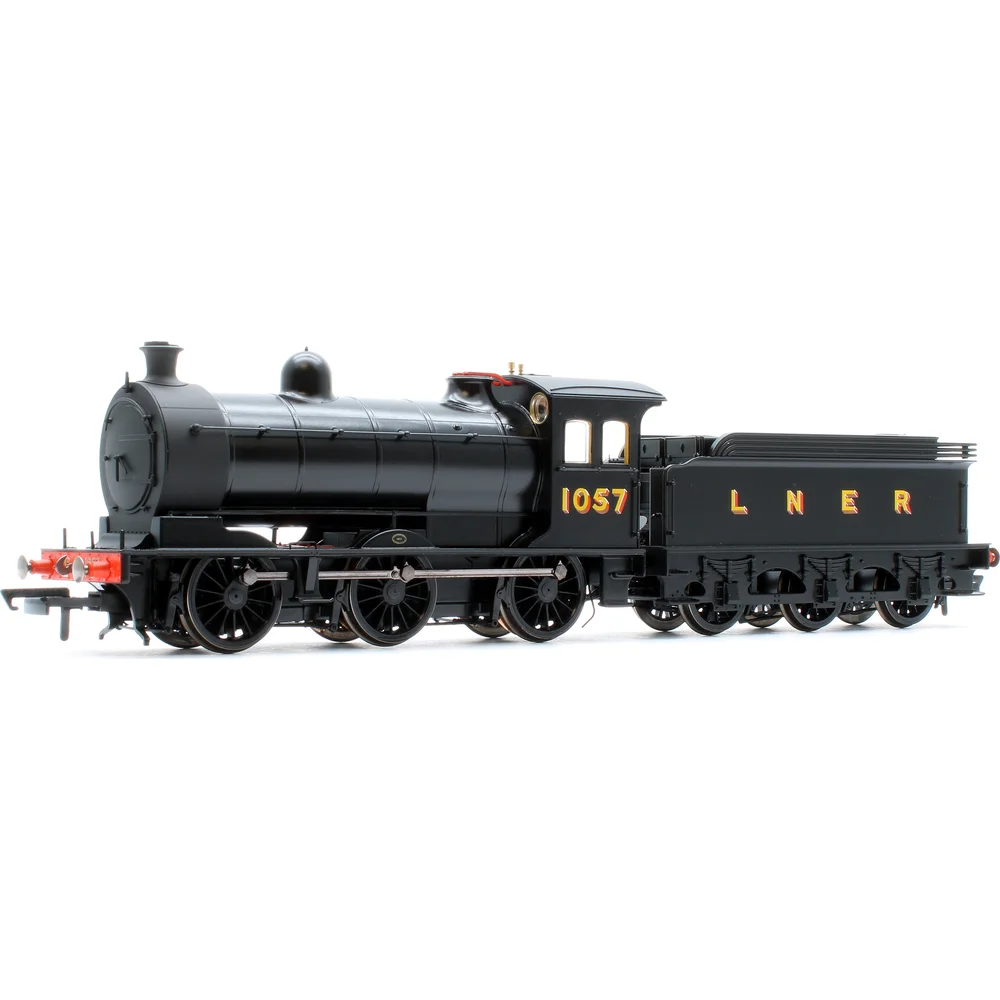
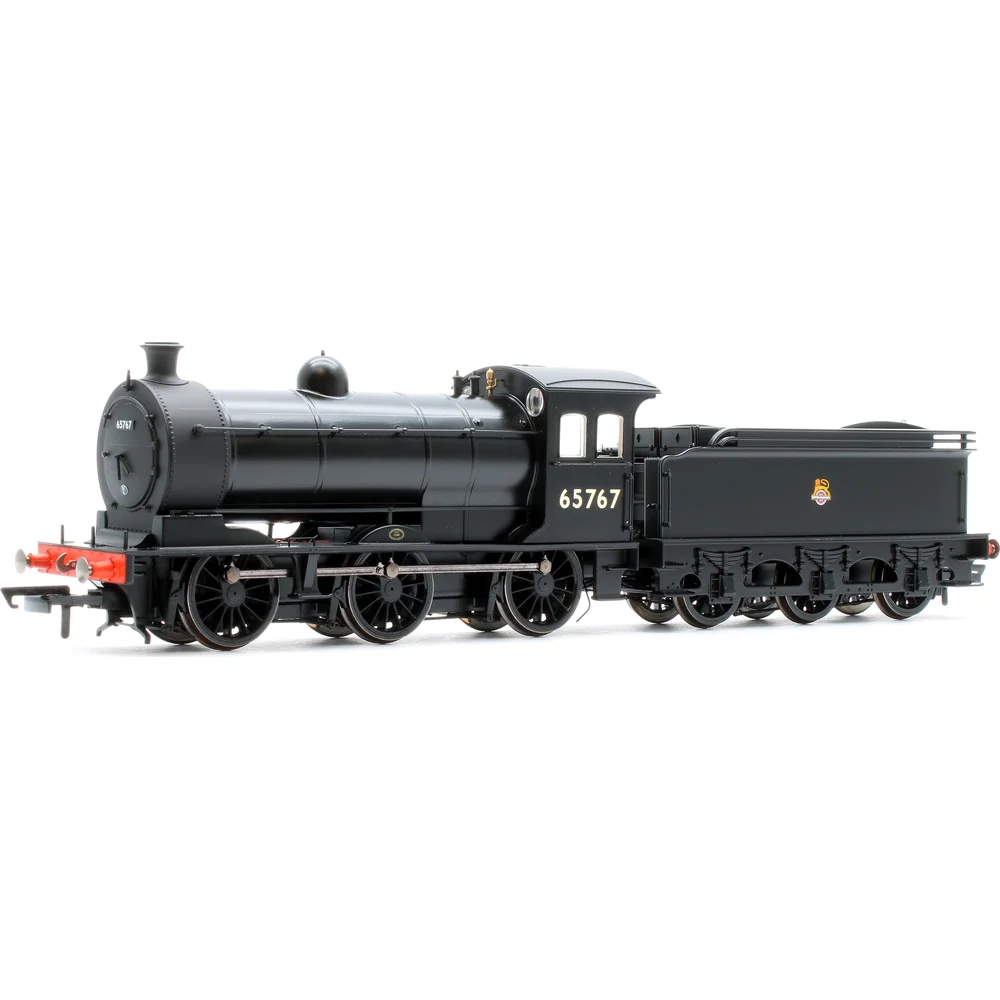
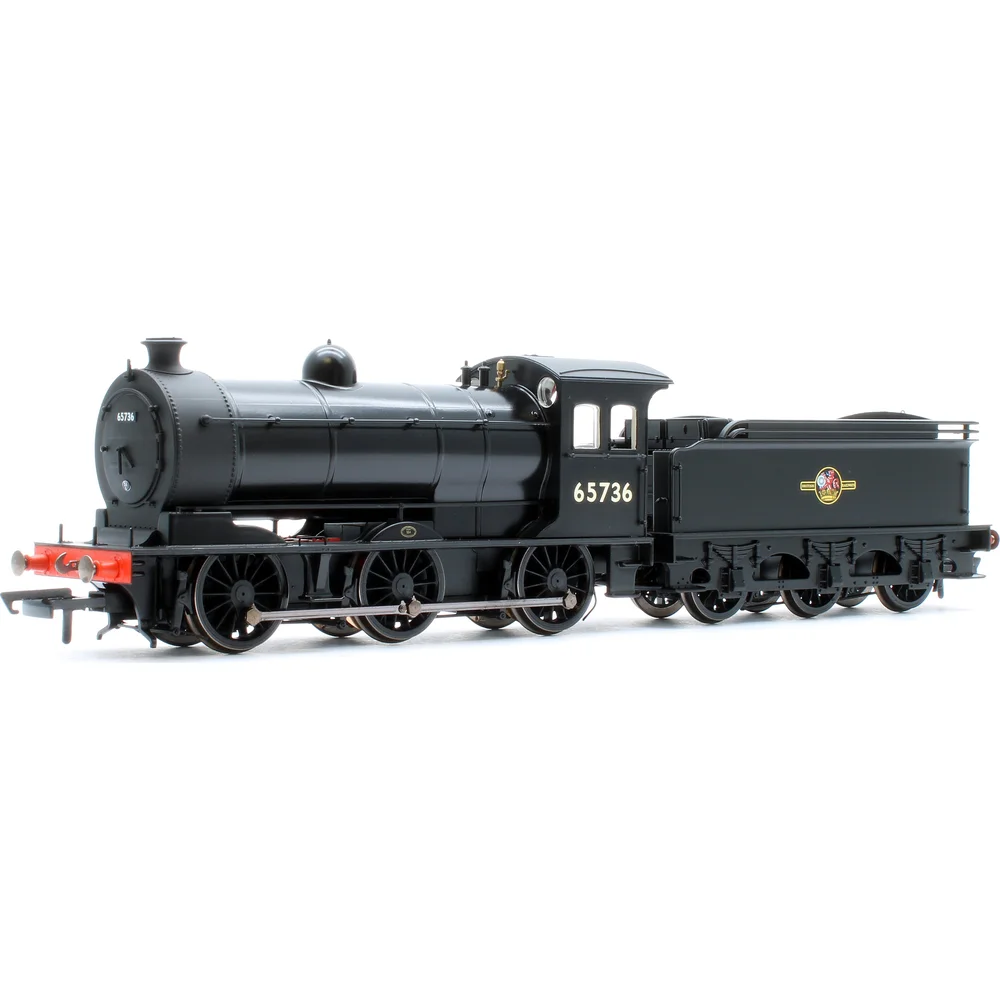
In the annals of British railway history, few locomotive classes embody the spirit of industrial innovation quite like the North Eastern Railway Class P2. Born from the visionary thinking of Wilson Worsdell and the commercial pressures of an expanding coal trade, these remarkable 0-6-0 freight locomotives represented a bold leap forward in steam technology at the dawn of the 20th century.
When the first P2 emerged from Darlington Works in 1904, it caused quite a stir among railway engineers and enthusiasts alike. Here was a locomotive that challenged conventional wisdom with its massive 5ft 6in diameter boiler – a full 15 inches larger than anything the North Eastern Railway had previously constructed. This wasn't merely evolutionary development; it was revolutionary engineering that would influence freight locomotive design for decades to come.
The story of the NER Class P2 is ultimately one of triumph and tragedy. Triumph in their exceptional service record, with all fifty locomotives serving faithfully for nearly six decades through company amalgamations, world wars, and the eventual nationalization of Britain's railways. Tragedy in their complete extinction, with not a single example surviving the scrapper's torch – a loss that ranks among railway preservation's greatest oversights.
For today's railway enthusiasts and model railway hobbyists, the P2 represents both a fascinating historical study and an exciting modelling opportunity. Recent developments in scale reproduction, particularly Oxford Rail's detailed OO gauge models, have brought these long-lost giants back to life for a new generation. Whether you're drawn to their innovative engineering, their operational significance, or their modelling potential, the NER Class P2 offers rich rewards for detailed exploration.
Quick Takeaways
- Fifty Locomotives Built: All constructed between 1904-1905 at Darlington and Gateshead works for heavy freight duties
- Revolutionary Boiler Design: Featured massive 5ft 6in diameter boiler, 15 inches larger than predecessor Class P1
- Extended Service Life: All 50 locomotives survived into British Railways ownership in 1948, serving until 1962
- Complete Extinction: None preserved due to scrapping between 1952-1966, making models especially significant
- modelling Renaissance: Oxford Rail recently introduced detailed OO gauge models with DCC sound
- Engineering Innovation: First NER design requiring frame extension and sloping fire grate to accommodate enlarged firebox
- Contemporary Significance: Directly influenced development of more successful Class P3 (J27) locomotives in 1906
Historical Background and Context
The dawn of the 20th century brought unprecedented challenges to Britain's railway network, as industrial expansion demanded ever-larger freight trains to feed the nation's growing appetite for coal and raw materials. The NER Class P2 emerged from this crucible of necessity, born from a pivotal 1901 fact-finding mission to America by the North Eastern Railway's General Manager, George S. Gibb.
Gibb's American expedition revealed the transformative potential of larger, more powerful freight locomotives. Upon his return, the NER committed to a fundamental shift in locomotive philosophy - the principle of "bigger boiler, better brakes" that would define Wilson Worsdell's subsequent designs. The Class P2 represented the first tangible result of this new thinking, marking a decisive break from traditional British freight locomotive practice.
Within the broader context of North Eastern Railway development, the P2 occupied a crucial evolutionary position. It built directly upon the proven foundation of the Class P1 (LNER J25), which had served reliably since 1898, but addressed the growing inadequacy of existing motive power for the region's expanding coal traffic. The Yorkshire and Durham coalfields were experiencing unprecedented production levels, requiring locomotives capable of hauling substantially heavier trains over the challenging gradients of the North Eastern system.
The timing of the P2's introduction proved fortuitous, coinciding with the NER's expansion of freight train sizes and the modernization of signalling systems that could accommodate longer consists. This locomotive class would serve as a crucial bridge between 19th-century freight locomotive practice and the larger, more sophisticated designs that would follow, including the immediately succeeding Class P3 and the mighty Q6 0-8-0s that would eventually supersede both classes in heavy freight service.
Design and Technical Specifications
Wilson Worsdell's design for the NER Class P2 represented a masterclass in locomotive engineering evolution rather than revolution. While fundamentally based on the successful Class P1 design, the P2 incorporated dramatic changes that challenged contemporary locomotive construction practices and established new benchmarks for freight locomotive power.
The most revolutionary aspect of Worsdell's design lay in the dramatically enlarged boiler, which necessitated unprecedented engineering solutions. The massive 5ft 6in diameter boiler could no longer fit between the rear driving wheels using conventional mounting methods, forcing Worsdell to develop an innovative sloping fire grate arrangement. This solution, while mechanically sound, created a distinctive 1-foot slope that became a defining characteristic of the class.
Engineering Insight: The Sloping Fire Grate Solution
The P2's sloping fire grate represented a compromise between power and practicality. While it enabled the fitment of a much larger firebox, the steep slope created challenges for firemen, who had to master new techniques for maintaining an even fire across the grate. This innovation directly influenced the improved, shallower grate design adopted for the subsequent Class P3.
Construction quality reflected the NER's high engineering standards, with locomotives built to exceptionally robust specifications. The extended frames required careful stress analysis to ensure structural integrity under the increased loads imposed by the enlarged boiler and firebox. Both Darlington and Gateshead works contributed to the production run, maintaining consistent quality standards despite the challenging new design requirements.
The initial working pressure of 200 psi represented ambitious engineering, pushing contemporary materials and construction techniques to their limits. However, practical experience quickly revealed the wisdom of reducing this to 180 psi in May 1905, a modification that significantly improved reliability while maintaining adequate performance for the intended heavy freight applications.
Service History and Operations
The operational career of the NER Class P2 locomotives unfolded across six decades of British railway history, spanning the golden age of steam freight through to the twilight years of coal-powered traction. From their inaugural duties in 1904 through to the last withdrawal in 1962, these locomotives carved out a distinctive niche in the complex hierarchy of North Eastern motive power.
Initially deployed on the NER's most demanding long-distance goods and mineral services, the P2s found their natural home hauling heavy coal trains from the Yorkshire and Durham coalfields to the ports of the North East coast. Their enlarged boilers proved particularly effective on the challenging gradients between the mining districts and coastal terminals, where sustained steaming capability proved more valuable than outright speed.
The class distribution at the 1923 Grouping revealed the strategic importance of these locomotives within the NER system. York shed commanded the largest allocation with eleven locomotives, reflecting the city's central position in the regional freight network. West Hartlepool followed with nine, serving the crucial coal export trade, while Haverton Hill's seven locomotives handled heavy industrial traffic along the Tees Valley corridor.
Operational Excellence: The Newport Allocation Story
Newport shed's allocation of six P2s exemplified their versatility, handling everything from coal trains to general merchandise. Several Newport locomotives, including No. 65756 and 65774, later transferred to the newly-opened Thornaby shed in 1958, demonstrating the class's continued value even in the final years of steam operation.
As newer and more powerful locomotives entered service, the P2s gracefully transitioned from premier freight duties to secondary roles. The introduction of the Q6 0-8-0s from 1913 onwards gradually displaced them from the heaviest mineral trains, while the B15 and B16 4-6-0s took over many mixed freight services. Rather than relegating the P2s to redundancy, this evolution allowed them to excel in roles perfectly suited to their capabilities: medium-weight freight, local mineral trains, and shunting duties at major yards.
The LNER period brought standardization initiatives that significantly modified the class. Between 1910 and 1925, all P2s received the improved Class P3 boiler design, designated Diagram 57, which addressed many of the operational challenges associated with the original steep fire grate. This conversion required minor stay modifications but resulted in notably improved performance and reduced maintenance requirements.
A further significant modification occurred in 1937 with the introduction of Diagram 57A boilers, featuring a single-plate barrel construction and repositioned dome. These boilers, with their 273 tubes and 1,655.6 square feet of heating surface, represented the final evolution of the P2 design. Remarkably, some locomotives continued to receive these upgraded boilers as late as 1958, testament to their enduring value in British Railways' fleet planning.
Withdrawal and Legacy
The twilight years of the NER Class P2 locomotives reflected the broader transformation of British Railways during the 1950s and early 1960s, as diesel traction systematically displaced steam power across the former LNER network. Unlike many contemporary classes that left representatives for preservation, the P2s faced complete extinction, making their story both poignant and historically significant.
Withdrawals commenced in 1952, marking the beginning of a gradual process that would span a full decade. The systematic nature of these withdrawals reflected British Railways' methodical approach to fleet modernization, with the oldest and most work-worn examples departing first. By 1958, the pace of withdrawal accelerated as diesel locomotives proved their superiority in the freight roles that had long been the P2s' domain.
The final chapter closed in 1962 with the withdrawal of the last active P2, bringing to an end nearly six decades of continuous service. All 50 locomotives had remarkably survived into British Railways ownership in 1948, a testament to their robust construction and continued utility. However, the post-war railway modernization program showed no sentiment for aging steam locomotives, regardless of their historical significance.
Preservation Tragedy: The Lost Opportunity
The complete scrapping of all 50 P2 locomotives represents one of railway preservation's greatest losses. Unlike their sister class P3, which preserved No. 2392 (BR 65894) now operates on the North Yorkshire Moors Railway, no foresight existed to save a representative P2. This absence makes surviving photographs, drawings, and model reproductions infinitely precious to railway historians.
The legacy of the P2 class extends far beyond their operational contributions. Their design innovations, particularly the solutions developed for accommodating enlarged boilers within existing loading gauge constraints, influenced subsequent locomotive development throughout the LNER system. The lessons learned from the P2's sloping fire grate directly informed the superior design of the Class P3, while their robust frame construction techniques found application in later, larger locomotive classes.
Modern railway historians increasingly recognize the P2s as representing a crucial evolutionary step in British freight locomotive development. They bridged the gap between 19th-century practice and 20th-century requirements, demonstrating that substantial improvements in performance could be achieved through careful enhancement of proven designs rather than radical departures from established practice.
The complete absence of preserved examples has inadvertently elevated the importance of documentary evidence, including detailed drawings, photographs, and technical records maintained by the National Railway Museum and various railway societies. These resources prove invaluable for both historical research and the creation of accurate scale models, ensuring that the P2's memory remains vivid despite the physical extinction of the class.
Modelling Significance and Scale Replications
The NER Class P2 occupies a unique position in the model railway world, where its complete extinction in preservation has transformed accurate scale replications into vital historical documents. For modellers seeking to recreate authentic North Eastern Railway operations, the P2 represents both an essential prototype and a fascinating modelling challenge, particularly given the recent arrival of high-quality commercial models.
The modelling significance of the P2 extends beyond mere representation to encompass the broader story of early 20th-century freight operations. These locomotives epitomize the transition period when railways grappled with increasing traffic demands while working within existing infrastructure constraints. For modellers of the 1904-1960 period, P2s provide authentic motive power for coal trains, mixed freight consists, and local goods services that formed the backbone of regional railway economics.
Oxford Rail has revolutionized P2 modelling with their recently announced OO gauge range, catalogue numbers OR76J26004 through OR76J26007. These models represent the first mass-produced, accurately detailed representations of the class, featuring separate handrails, coal rails, lamp irons, and other fine details that capture the distinctive character of Worsdell's design. The availability of both DCC-ready and DCC-sound variants (catalogue numbers ending in XS) caters to modellers across the technological spectrum.
Scale Accuracy Breakthrough: Oxford Rail's Research
Oxford Rail's P2 models benefit from extensive primary source research, including access to original NER drawings and surviving photographs. Their attention to detail includes accurate representation of the distinctive sloping fire grate arrangement, proper spectacle plate variations, and era-appropriate livery differences. Early pre-production samples suggest exceptional fidelity to the prototype.
For alternative scales, the modelling options expand considerably. Caledonia Works has produced highly regarded N gauge etched kits that capture the P2's distinctive proportions with remarkable accuracy. These kits appeal to serious modellers who appreciate the challenge of detailed assembly and the satisfaction of creating unique models. The etched brass construction allows for exceptional detail levels, including separate spectacle plates and accurate boiler mountings.
The recent emergence of 3D printing technology has opened new possibilities for P2 modelling across multiple scales. Specialist designers have created highly detailed files for 1:76 (OO), 1:87 (HO), 1:100 (TT), and 1:43 (O) scales, allowing modellers with 3D printing access to produce their own locomotives. These digital models often incorporate alternative detail variations, enabling representation of different phases of the locomotives' operational lives.
Historical modelling accuracy demands attention to the various modifications applied throughout the P2s' service lives. Early models should feature circular spectacle plates, Ramsbottom safety valves in brass trumpets, and the original Diagram 57 boiler arrangement. Later representations might incorporate the shaped spectacle plates fitted to 22 locomotives, Ross Pop safety valves, and the modified Diagram 57A boiler with its repositioned dome.
Layout integration considerations favour the P2's moderate size and appropriate operational characteristics. Unlike larger express locomotives that can appear oversized on smaller layouts, P2s suit a wide range of modelling scales and space constraints. Their freight-focused role eliminates the need for high-speed running characteristics, making them ideal for layouts emphasizing switching operations, industrial themes, or authentic period freight movements.
Unique Modelling Tips and Layout Integration
Successfully incorporating NER Class P2 locomotives into your model railway requires understanding both their operational characteristics and the specific modelling challenges they present. These locomotives reward modellers who appreciate authenticity over glamour, offering opportunities to recreate the essential but often overlooked freight operations that sustained Britain's industrial economy.
When weathering P2 models, focus on the distinctive patterns created by coal dust and freight service grime. The enlarged firebox and extended frames accumulated dirt differently from smaller locomotives, with particular attention needed around the sloping fire grate area and frame extensions. Use appropriate weathering techniques that reflect the locomotive's primary role in coal service - subtle rust streaks, coal dust accumulation, and oil stains rather than the dramatic weathering appropriate for express locomotives.
Insider Tip: Spectacle Plate Modifications
Create authentic variety by modifying some models to represent the mixed spectacle plate arrangements. Twenty-two P2s received shaped plates while twenty-eight retained circular types throughout their careers. This detail-conscious approach adds historical accuracy and visual interest to multiple locomotive consists.
Operational programming for DCC-equipped models should emphasize the P2's freight characteristics. Configure acceleration and deceleration rates to reflect heavy train handling, with gradual speed changes appropriate for coal and mineral traffic. Sound-equipped models benefit from extended idling periods and realistic brake applications that mirror prototype freight operations.
Layout integration strategies should capitalize on the P2's versatility across different operational periods. Early scenes (1904-1920) can feature P2s on premier freight duties, hauling long coal trains and heavy mineral consists. Later periods (1920-1940) suit secondary freight roles, local goods services, and yard switching duties. The British Railways era (1948-1962) offers opportunities for depicting the class in its final years, often relegated to local freight and industrial switching.
Consist planning requires attention to appropriate freight stock for different eras and regions. Early NER period trains might feature wooden mineral wagons, cattle trucks, and general merchandise vans in North Eastern Railway liveries. LNER period consists could incorporate standardized wagon designs across multiple former companies. British Railways era trains should reflect the transition to more modern freight stock while maintaining the authentic character of coal and general freight operations.
Scenic integration benefits from understanding the P2's geographic distribution and operational environment. Yorkshire and Durham coalfield scenes provide natural settings, with appropriate colliery buildings, coal preparation facilities, and connecting tramways. Coastal port scenes at places like West Hartlepool showcase the locomotives' role in coal export traffic, while urban freight terminals demonstrate their versatility in general goods handling.
For maximum authenticity, research specific locomotive allocations and modify models accordingly. Shed plates, number variations, and minor detail differences can transform generic models into representations of specific prototypes. This approach particularly benefits operators interested in recreating particular locations or time periods with documentary accuracy.
Maintenance scheduling on layouts can incorporate realistic locomotive rotation patterns. P2s typically worked intensive freight schedules requiring regular servicing, creating opportunities for depot scenes, locomotive exchanges, and the operational complexity that adds interest to formal operating sessions. This attention to prototype practice elevates model railway operations beyond simple train running to encompass authentic railway management challenges.
Finally
The NER Class P2 stands as a remarkable testament to early 20th-century locomotive engineering ambition and the evolution of British freight railway operations. Wilson Worsdell's bold design, with its revolutionary large boiler and innovative engineering solutions, bridged the gap between Victorian railway practice and modern steam technology, establishing principles that would influence locomotive development for decades to come.
From their introduction in 1904 through their final withdrawal in 1962, these fifty locomotives served with distinction across six decades of railway history. They witnessed the transition from independent railway companies through the Big Four grouping to British Railways nationalization, adapting to changing operational requirements while maintaining their essential character as reliable freight workhorses. Their complete operational life span of nearly sixty years speaks to the fundamental soundness of Worsdell's engineering approach.
The tragic absence of any preserved examples transforms surviving documentation, photographs, and now high-quality scale models into precious historical artifacts. For railway enthusiasts and modellers, the P2 represents both a significant gap in preservation history and an opportunity to maintain the class's memory through careful research and accurate representation. The recent emergence of detailed commercial models from Oxford Rail and other manufacturers ensures that future generations of railway enthusiasts can appreciate these remarkable locomotives.
Whether you're drawn to the P2's innovative engineering, its operational versatility, or its modelling potential, this class offers rich rewards for detailed study. Their story encompasses themes that resonate throughout railway history: technological innovation, operational evolution, economic necessity, and the eventual triumph of modernization over tradition. In capturing the essence of early 20th-century freight railroading, the NER Class P2 locomotives continue to educate, inspire, and fascinate more than six decades after their final departure from British metals.
Frequently Asked Questions
How many NER Class P2 locomotives were built and what happened to them?
Fifty NER Class P2 locomotives were constructed between 1904-1905, with thirty built at Darlington Works and twenty at Gateshead Works. All survived into British Railways ownership in 1948 but were gradually withdrawn between 1952-1962. Sadly, none were preserved, making them completely extinct today.
What made the P2's boiler design so revolutionary for its time?
The P2 featured a massive 5ft 6in diameter boiler, 15 inches larger than its predecessor Class P1. This required innovative engineering including frame extensions and a sloping fire grate design to fit within loading gauge constraints, representing ground-breaking freight locomotive engineering for 1904.
Are there any preserved NER Class P2 locomotives in museums?
Unfortunately, no NER Class P2 locomotives survive in preservation. All fifty were scrapped between 1952-1966, making this one of railway preservation's most significant losses. Only photographs, technical drawings, and scale models preserve their memory today.
Where can I find accurate scale models of the NER Class P2?
Oxford Rail recently released highly detailed OO gauge P2 models (catalogue numbers OR76J26004-007) available in both DCC-ready and DCC-sound versions. Alternative options include Caledonia Works N gauge etched kits and various 3D-printed models for multiple scales from specialist designers.
What types of freight services did P2 locomotives typically handle?
P2s primarily handled coal trains from Yorkshire and Durham coalfields, mineral traffic to coastal ports, and general freight services. Initially used on premier long-distance goods trains, they later transitioned to local freight, yard switching, and secondary mineral traffic as larger locomotives entered service.
How did the P2 design influence later locomotive development?
The P2's innovations directly influenced the improved Class P3 design of 1906, particularly the superior fire grate arrangement. Their large boiler principles and frame extension techniques informed later NER designs including the successful Q6 0-8-0 class and various passenger locomotive developments.
What operational challenges did the original sloping fire grate design create?
The steep 1-foot slope fire grate made it difficult for firemen to maintain even coal distribution across the grate surface, leading to irregular steaming and increased fuel consumption. This issue was resolved in the improved Class P3 design with a shallower grate arrangement.
When were the last NER Class P2 locomotives withdrawn from service?
The final P2 locomotive was withdrawn in 1962, ending nearly sixty years of continuous service. Withdrawals began in 1952 and accelerated during the late 1950s as British Railways modernized its freight operations with diesel locomotive power replacing steam traction.
What livery variations did P2 locomotives carry throughout their careers?
P2s wore multiple liveries including original NER lined black, LNER lined black with various numbering schemes, wartime plain black, and finally British Railways lined black with late crest variations. Oxford Rail models accurately represent these different livery periods for authentic layout operation.
How do P2 locomotives compare in size to other contemporary freight engines?
P2s were significantly larger than earlier NER freight locomotives but smaller than later designs like the Q6 0-8-0s. Their 0-6-0 wheel arrangement and moderate length made them versatile for various freight duties while fitting most locomotive facilities and turntables of the period.
What modifications were made to P2 locomotives during their service lives?
Major modifications included boiler changes from original Diagram 57 to improved versions, replacement of Ramsbottom safety valves with Ross Pop types, and spectacle plate updates for 22 locomotives. Some received Diagram 57A boilers as late as 1958, featuring repositioned domes and improved heating surfaces.
Which railway sheds had the largest allocations of P2 locomotives?
At the 1923 Grouping, York shed had the largest allocation with eleven P2s, followed by West Hartlepool with nine, and Haverton Hill with seven. Other significant allocations included Newport with six locomotives, reflecting their importance in coal traffic and general freight operations across the North Eastern system.