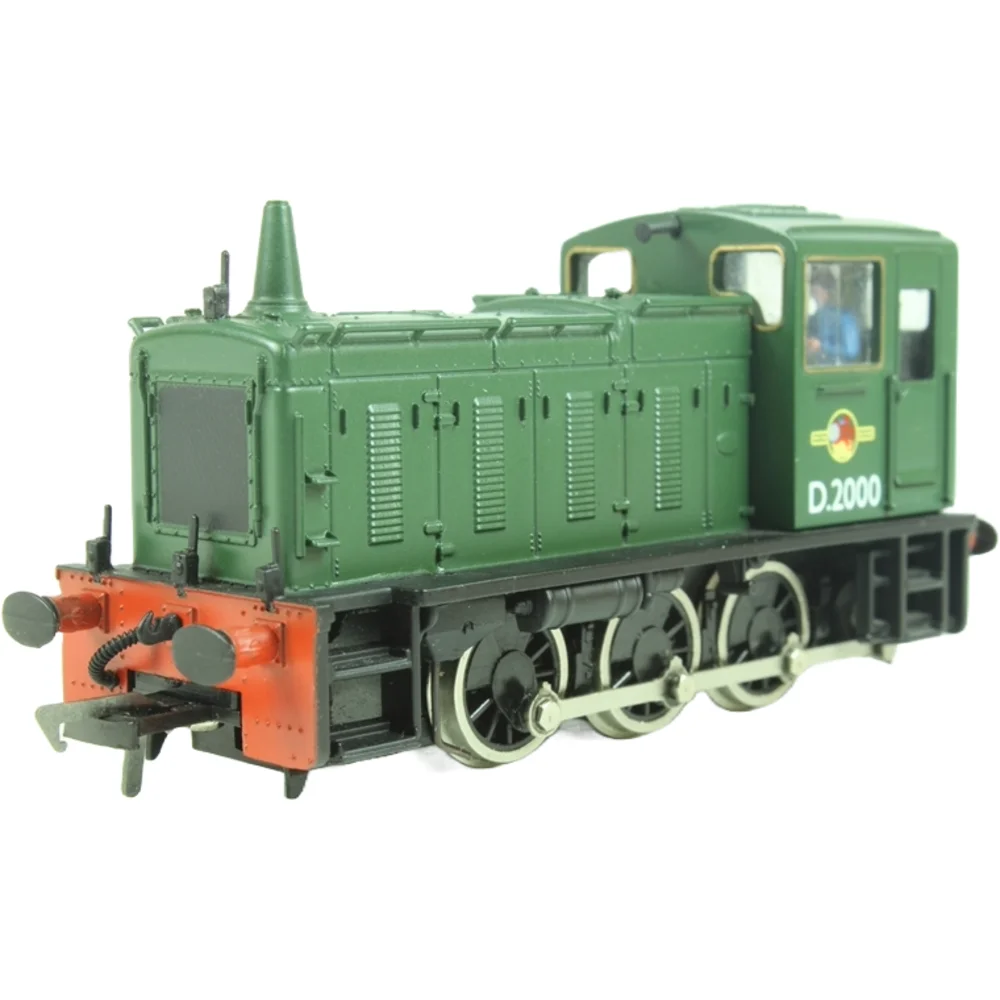
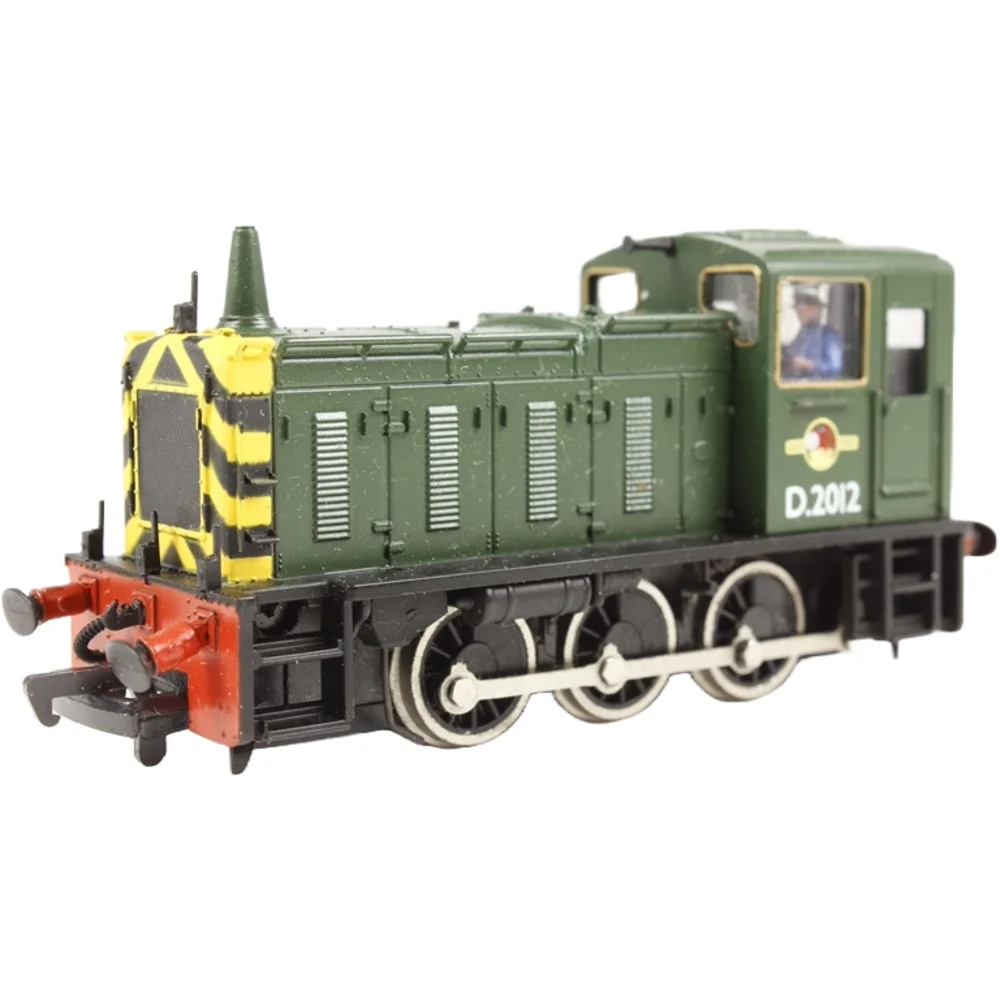
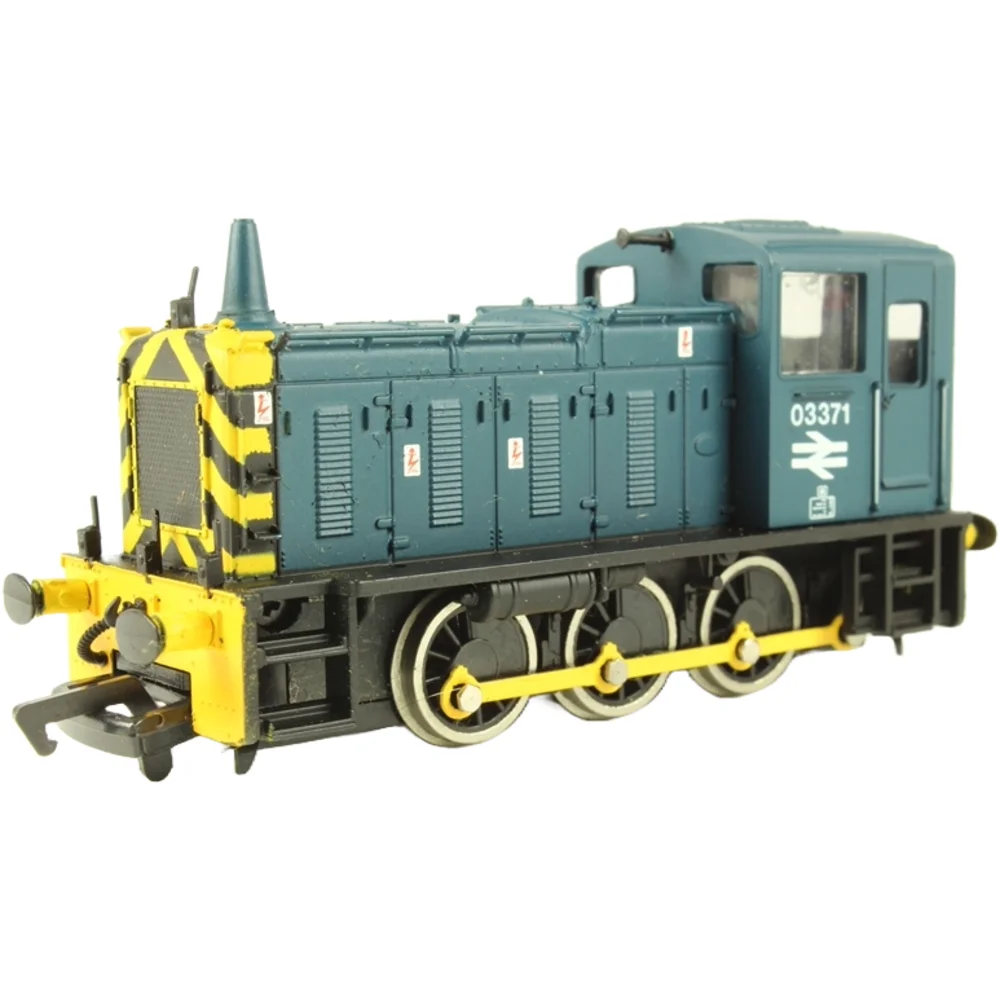
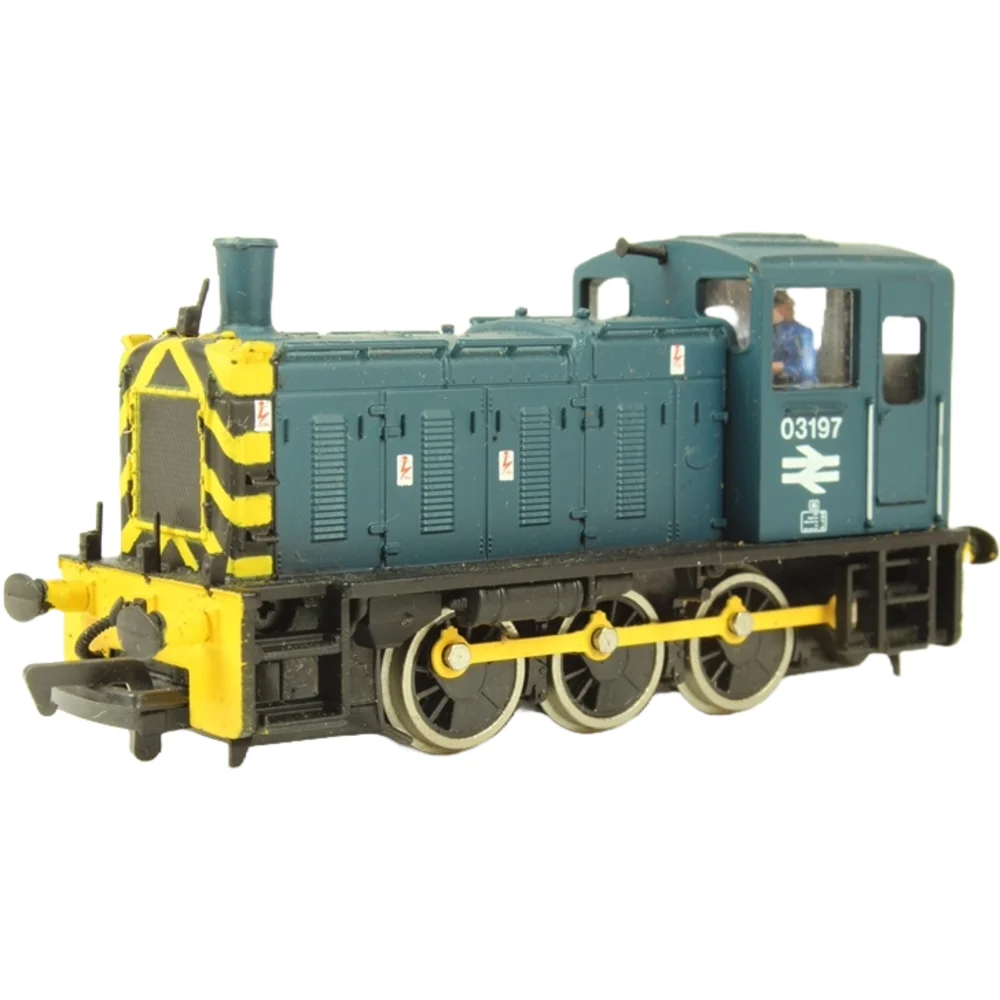
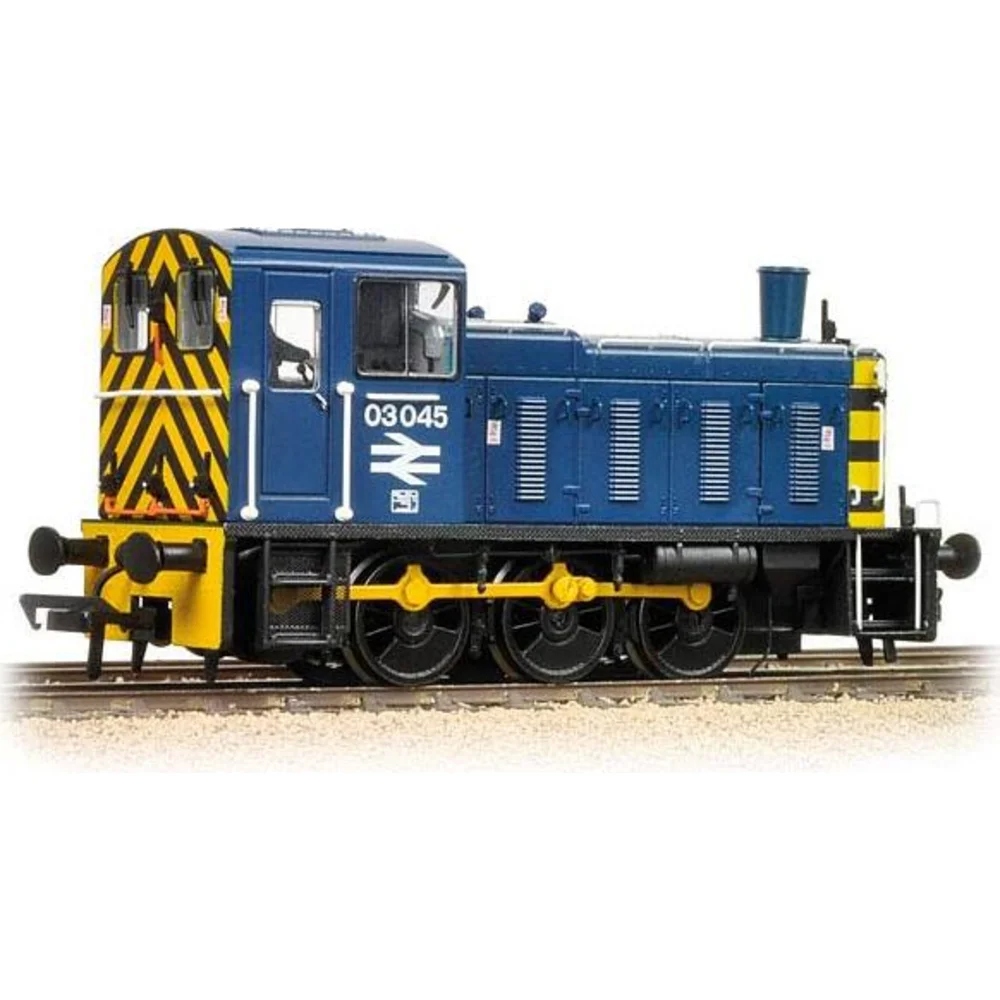
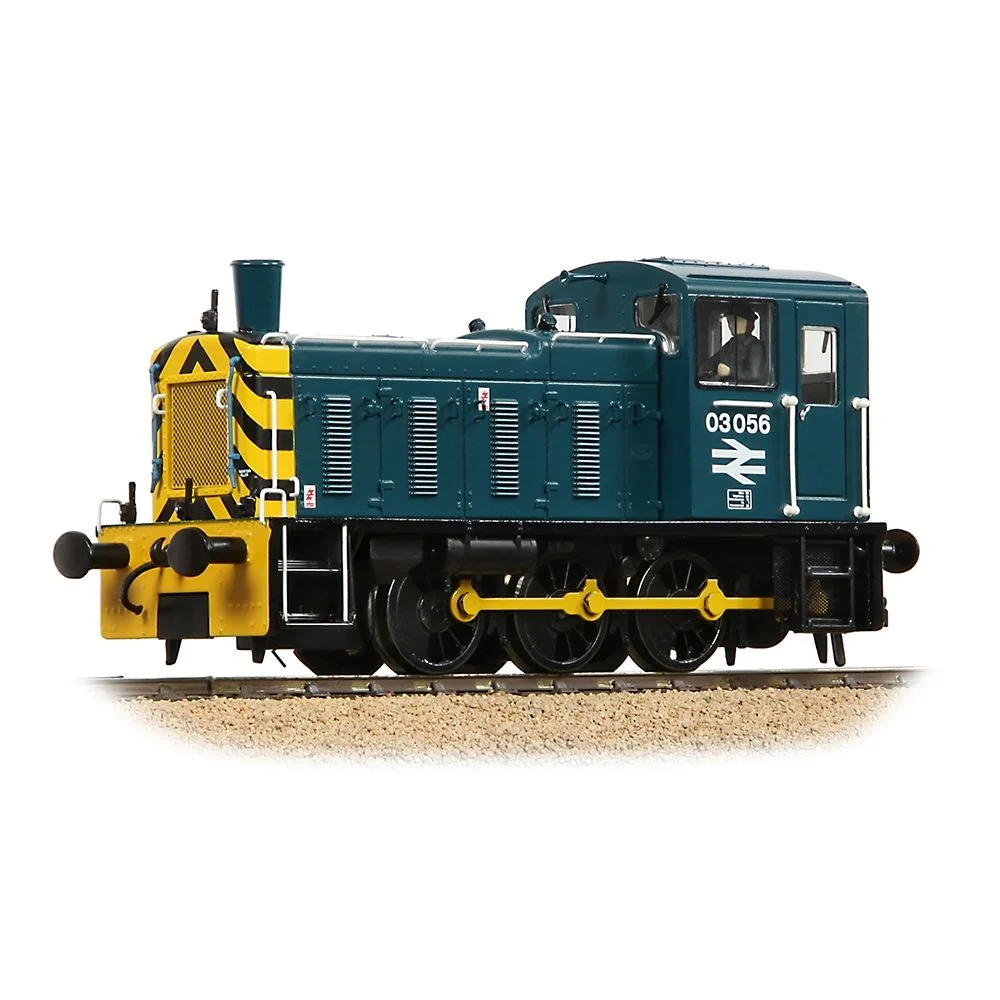
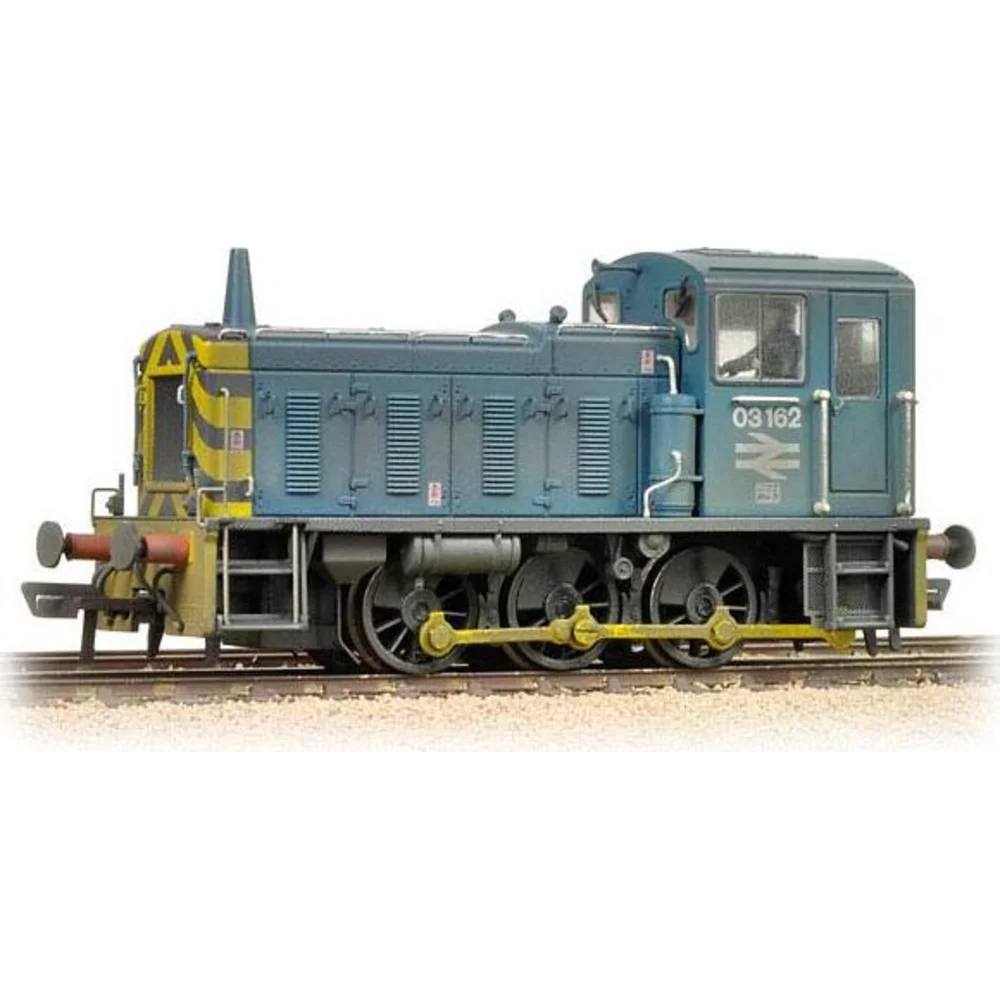
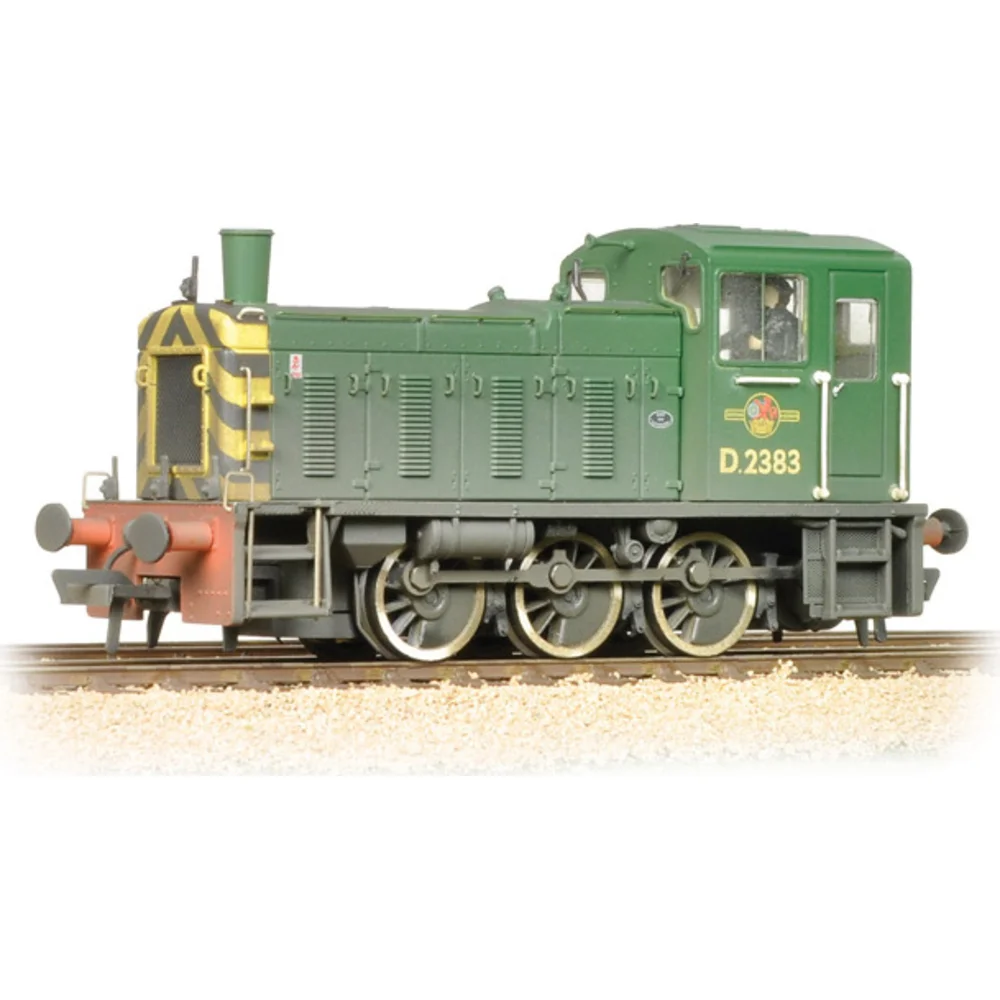
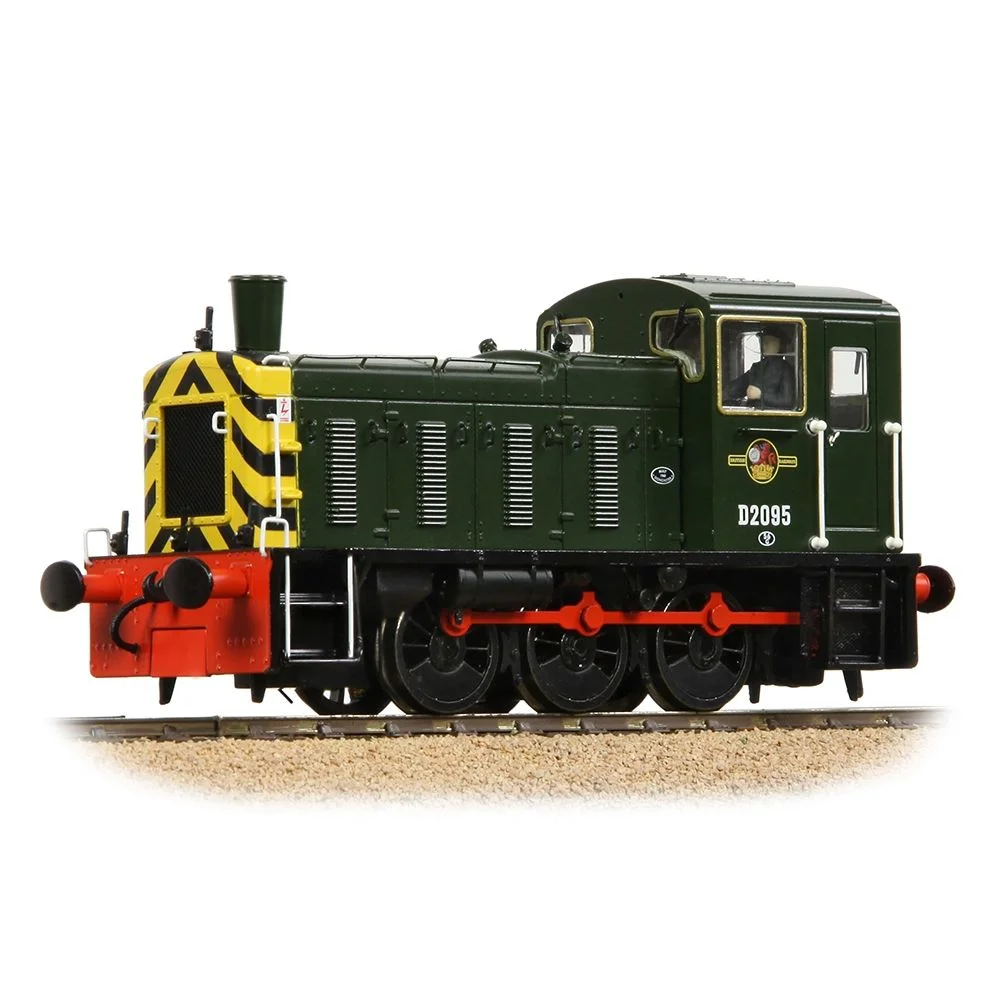
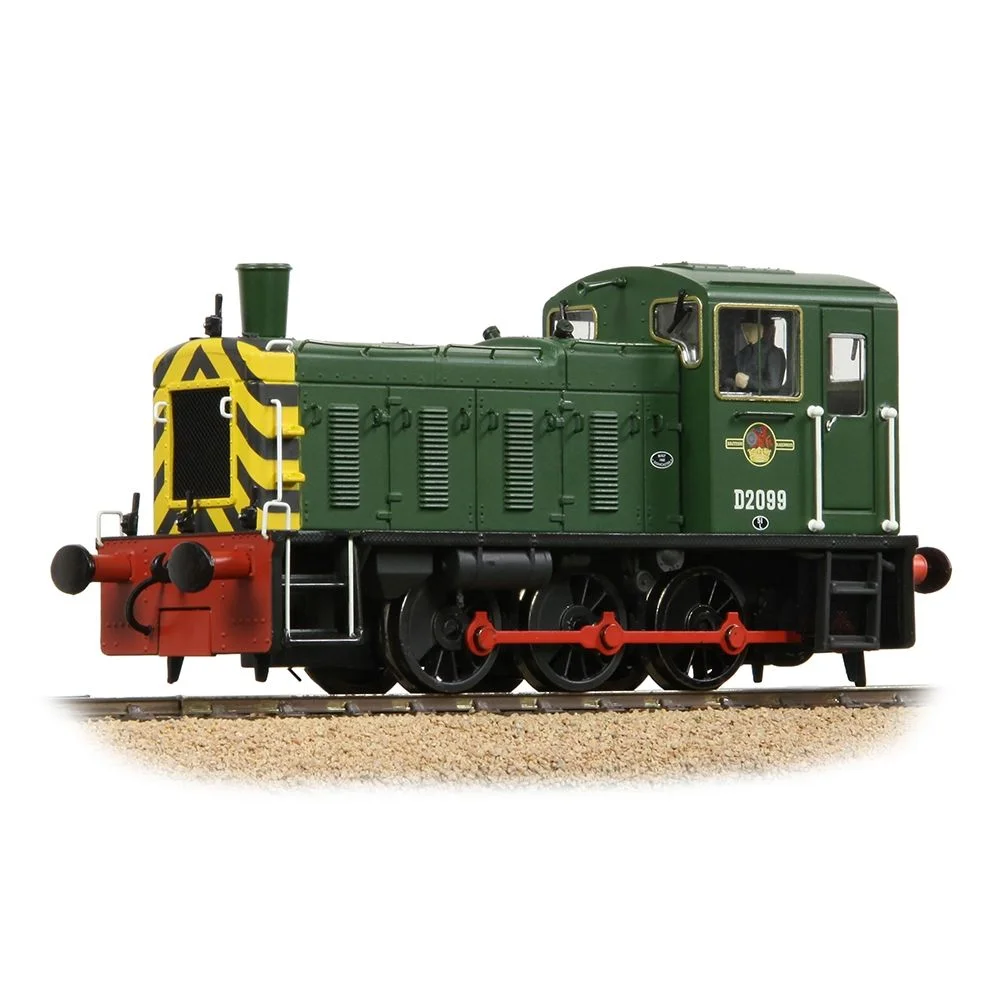
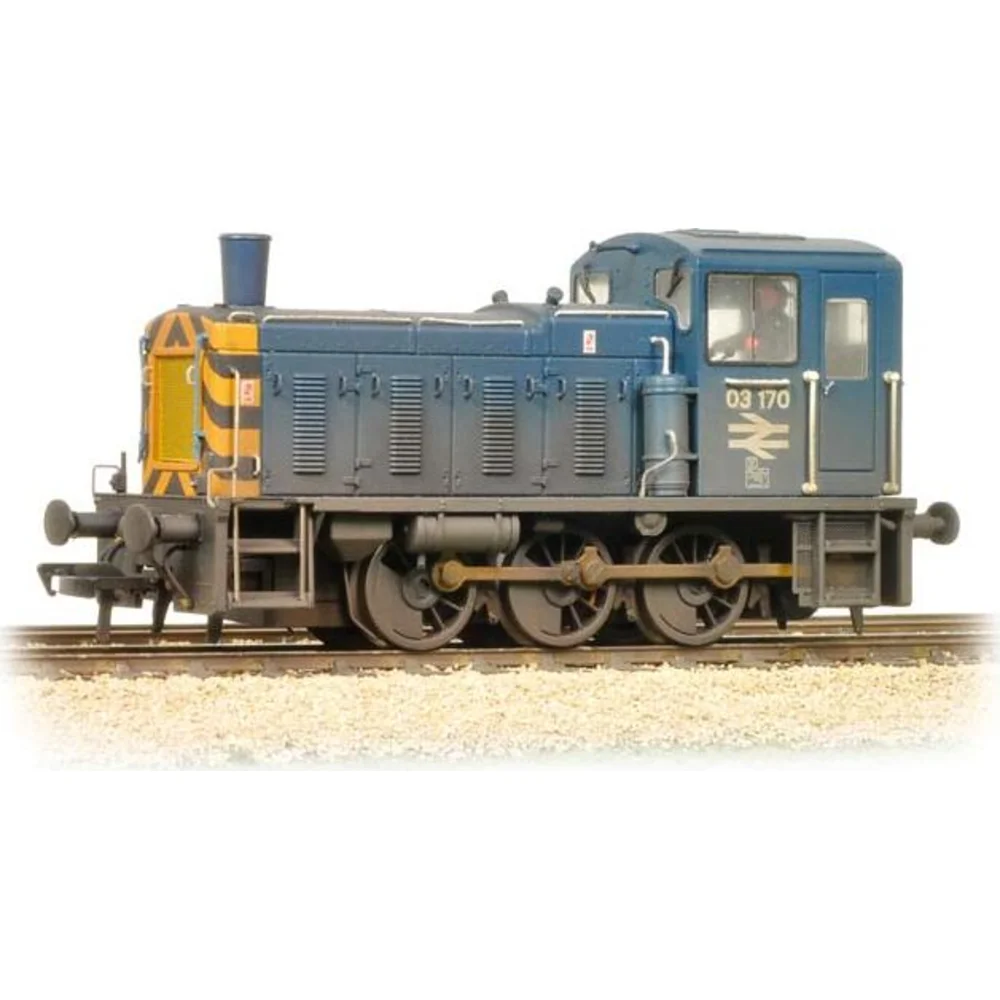
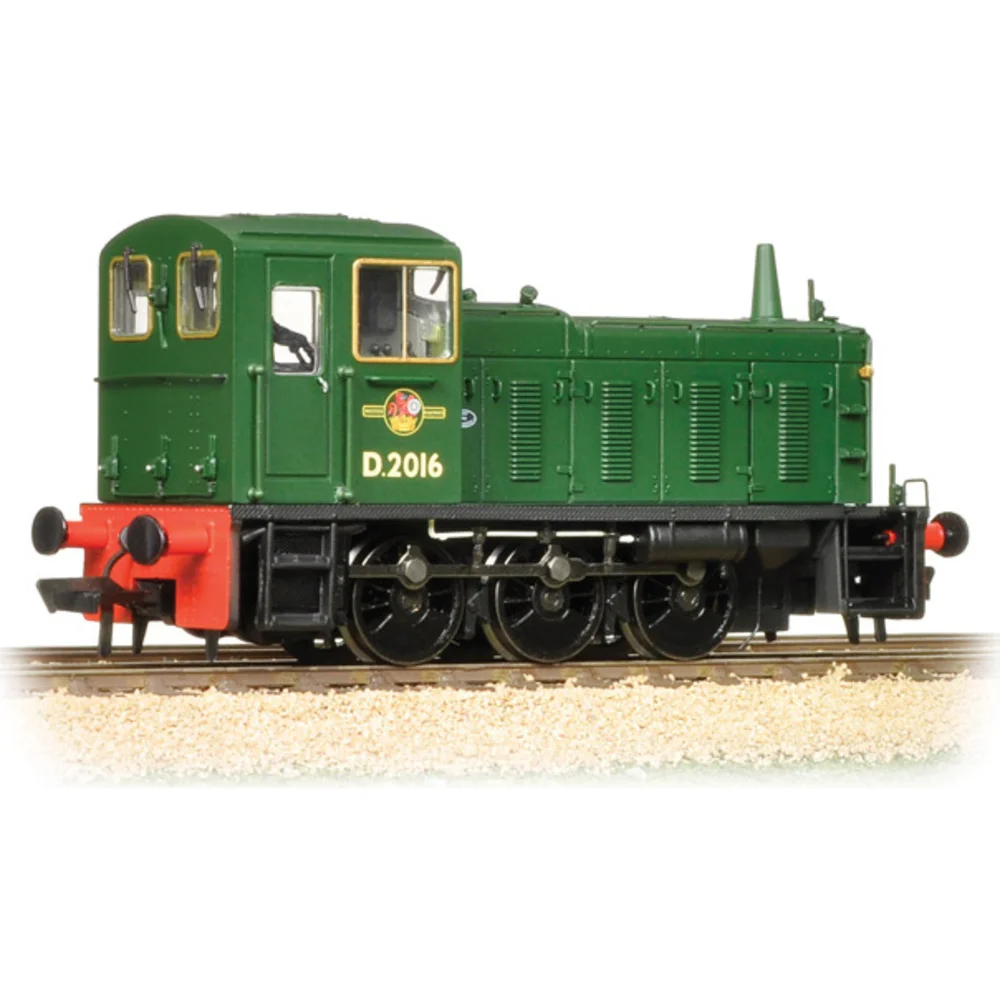
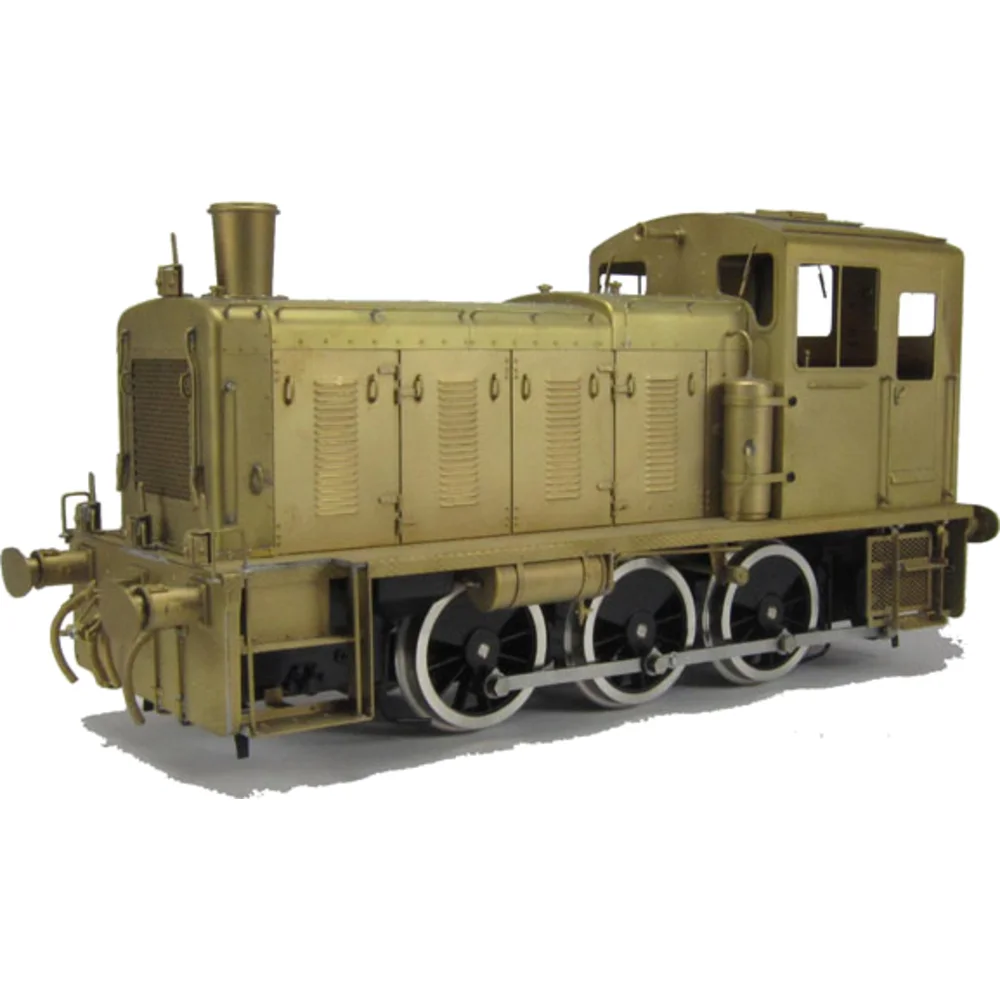
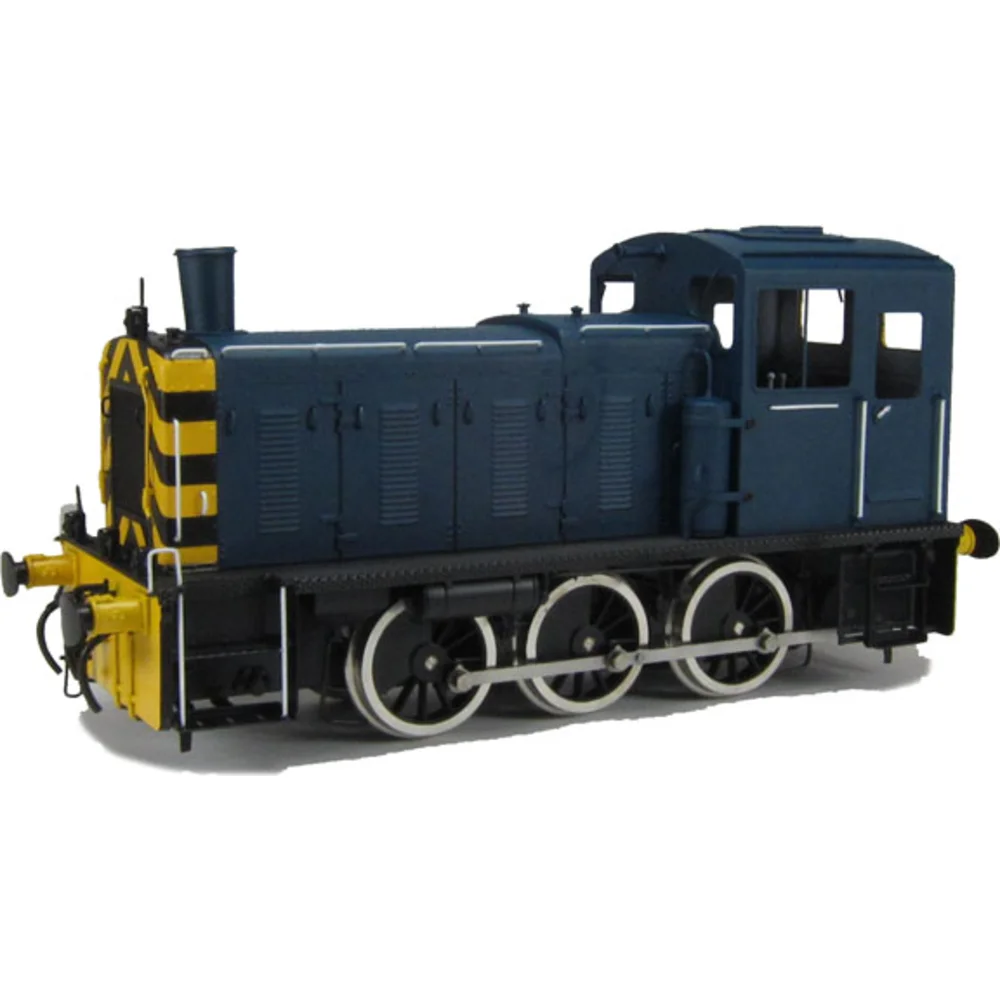
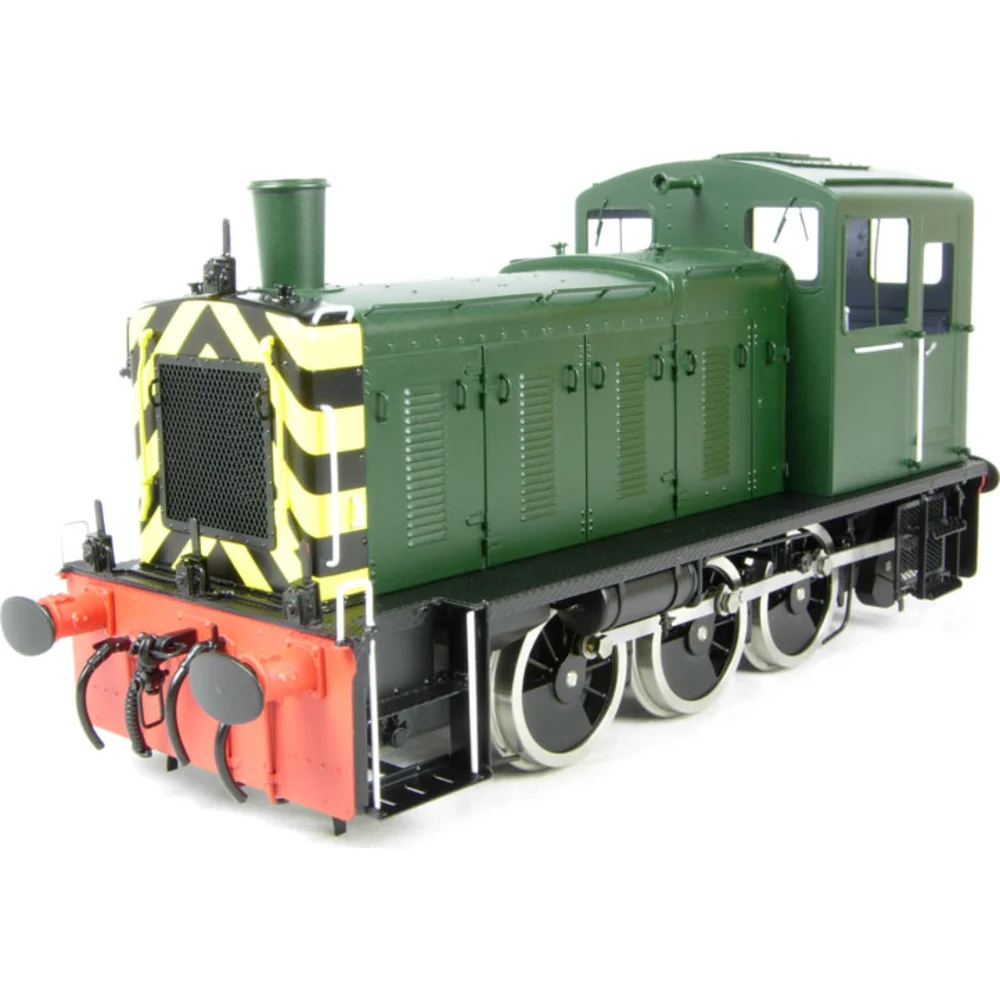
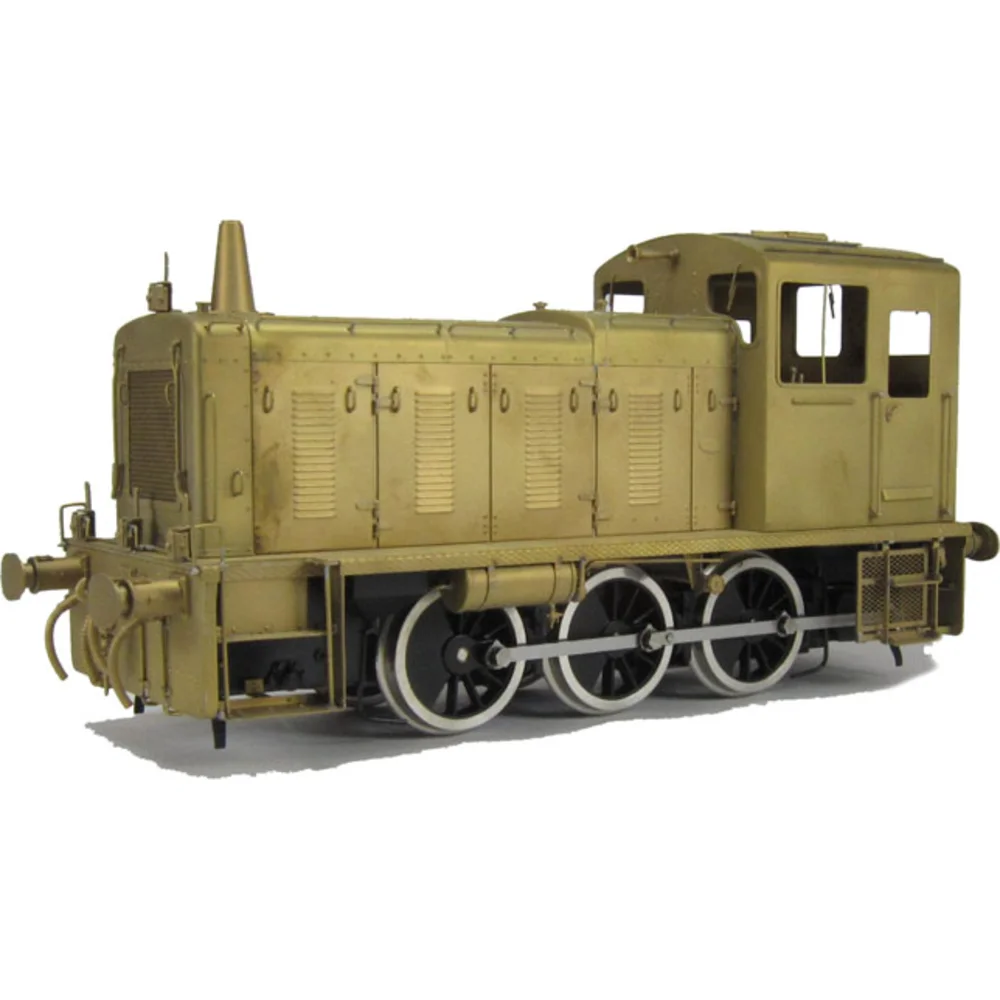
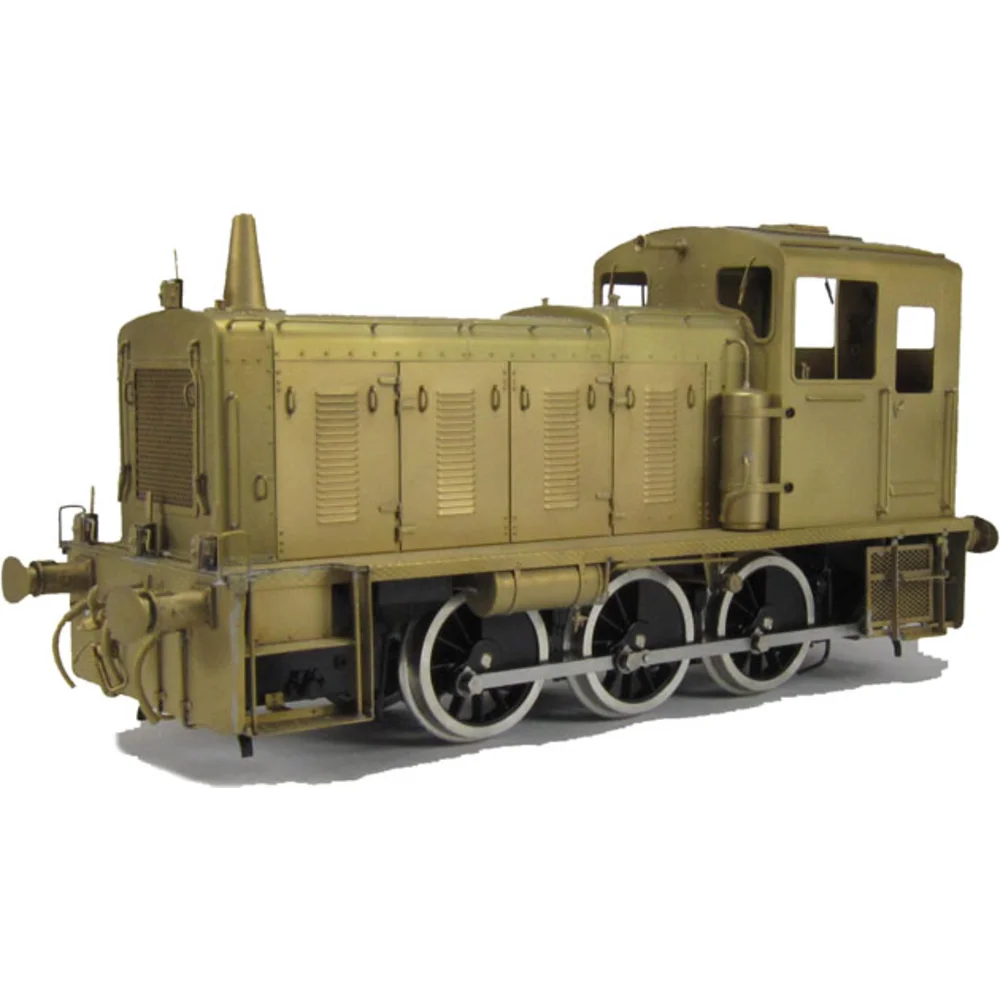
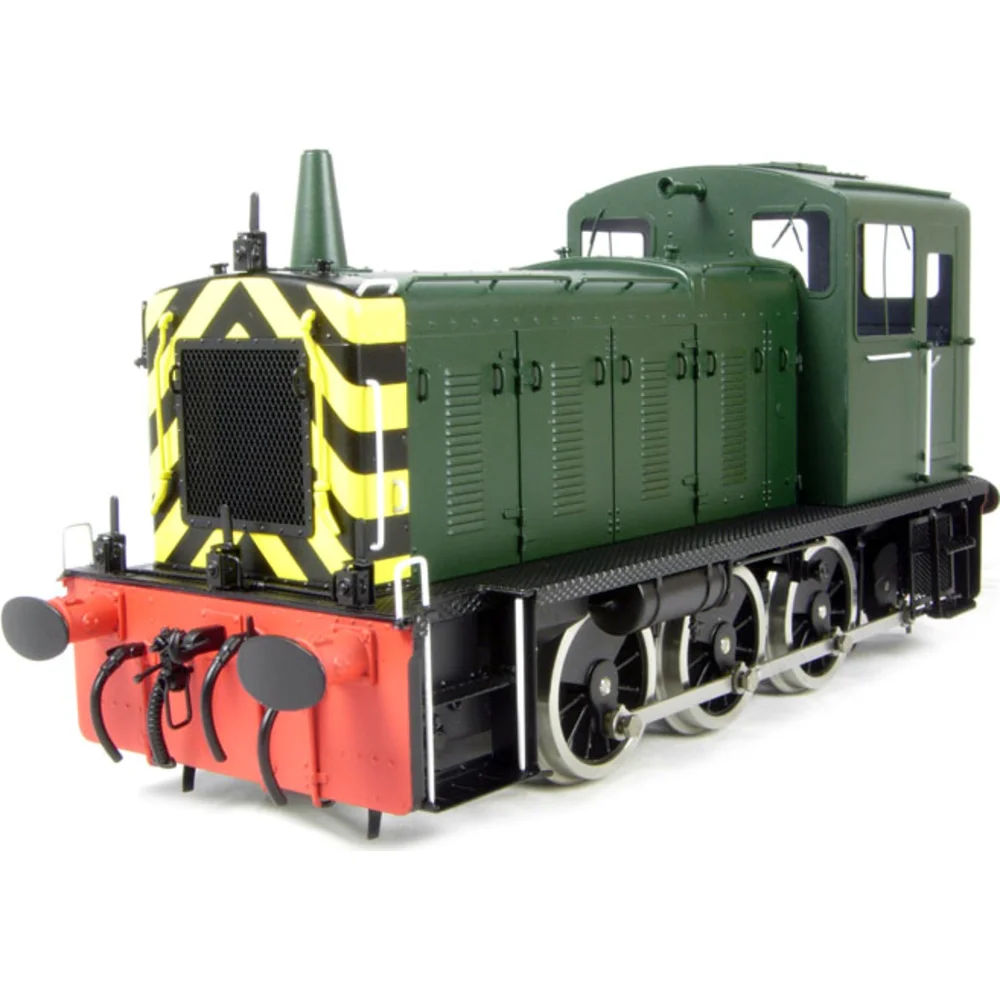
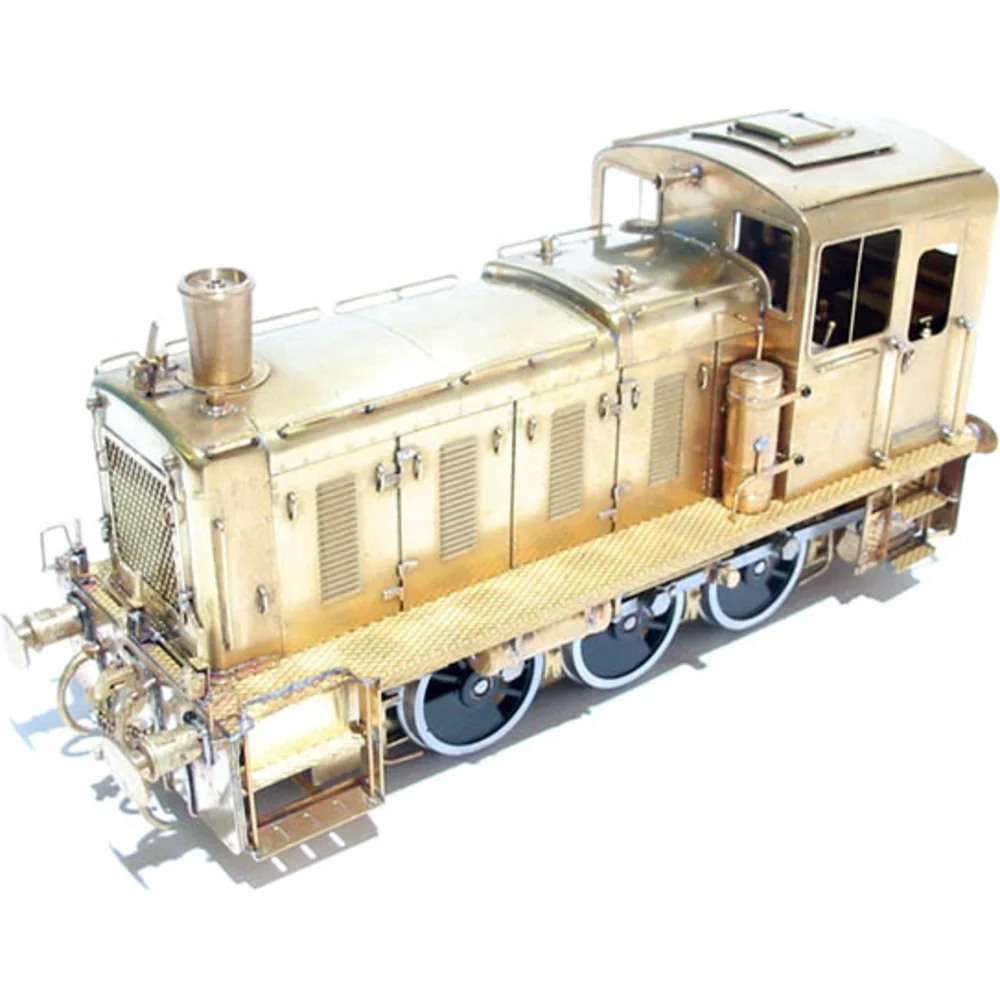
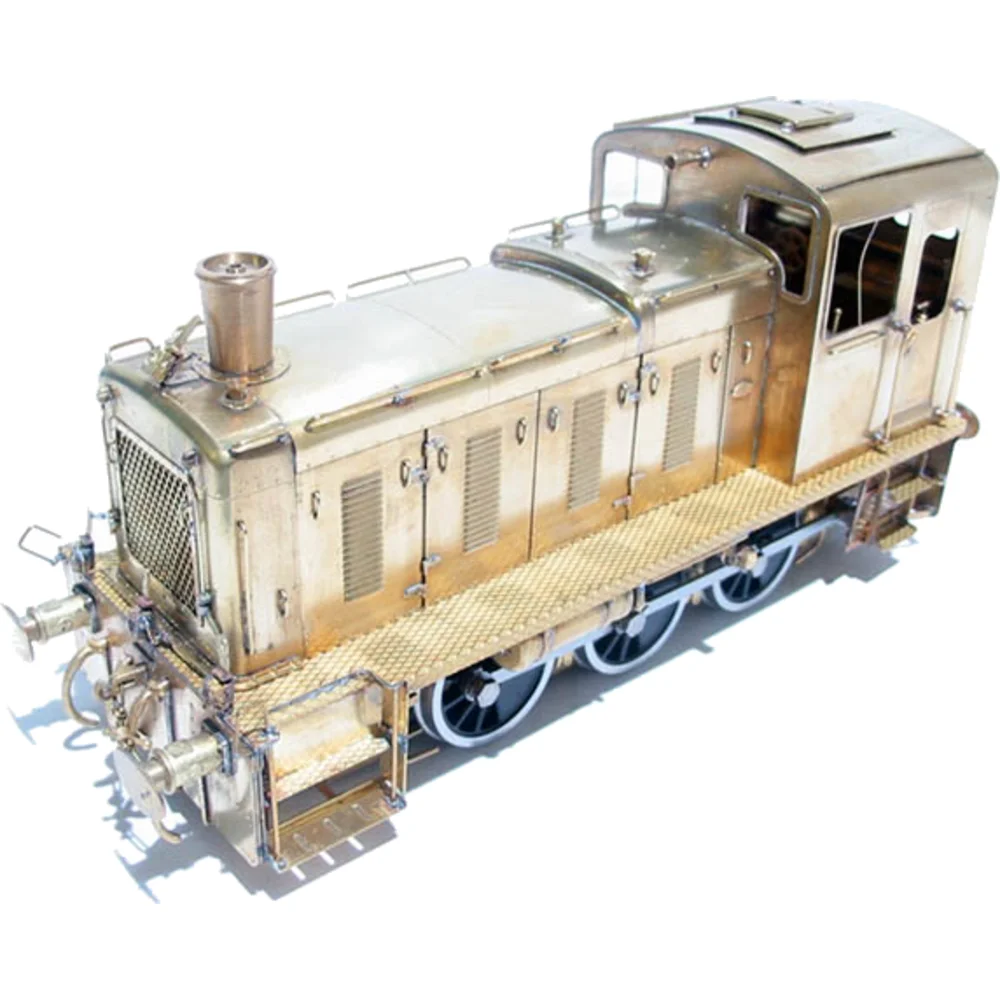
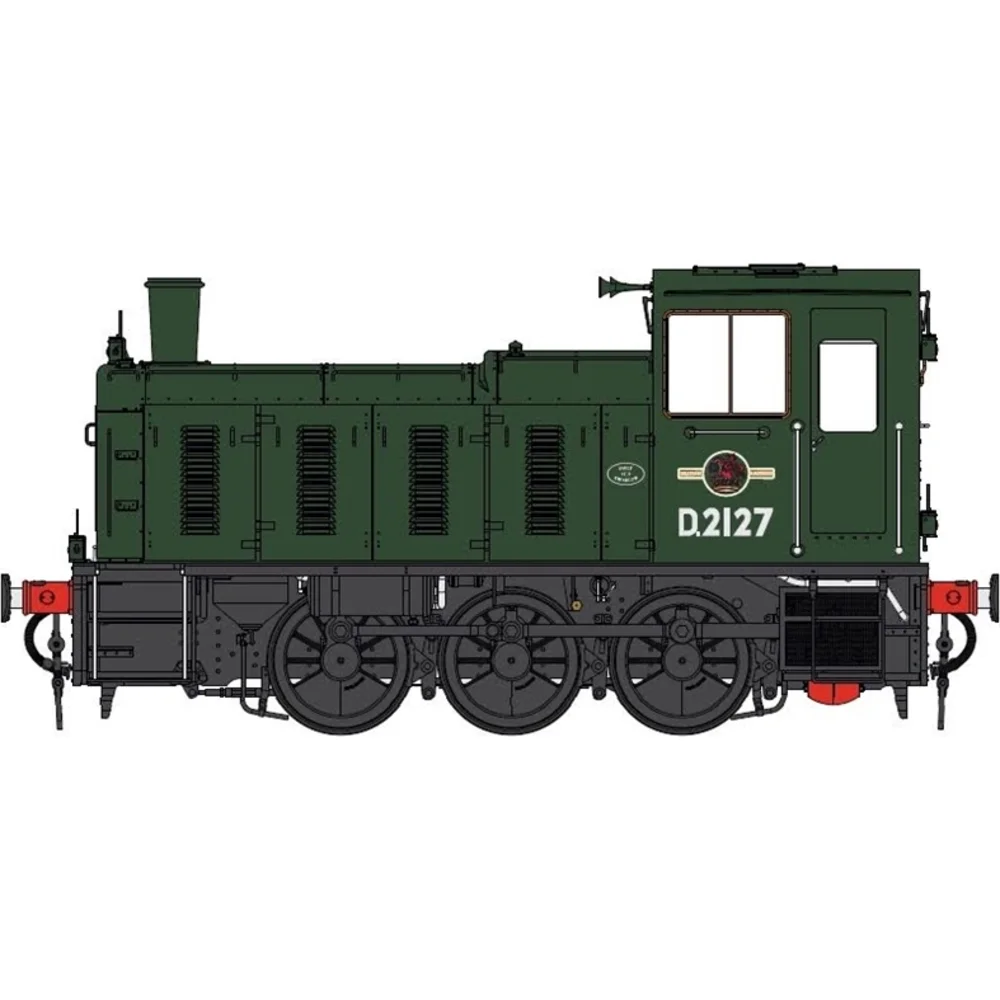
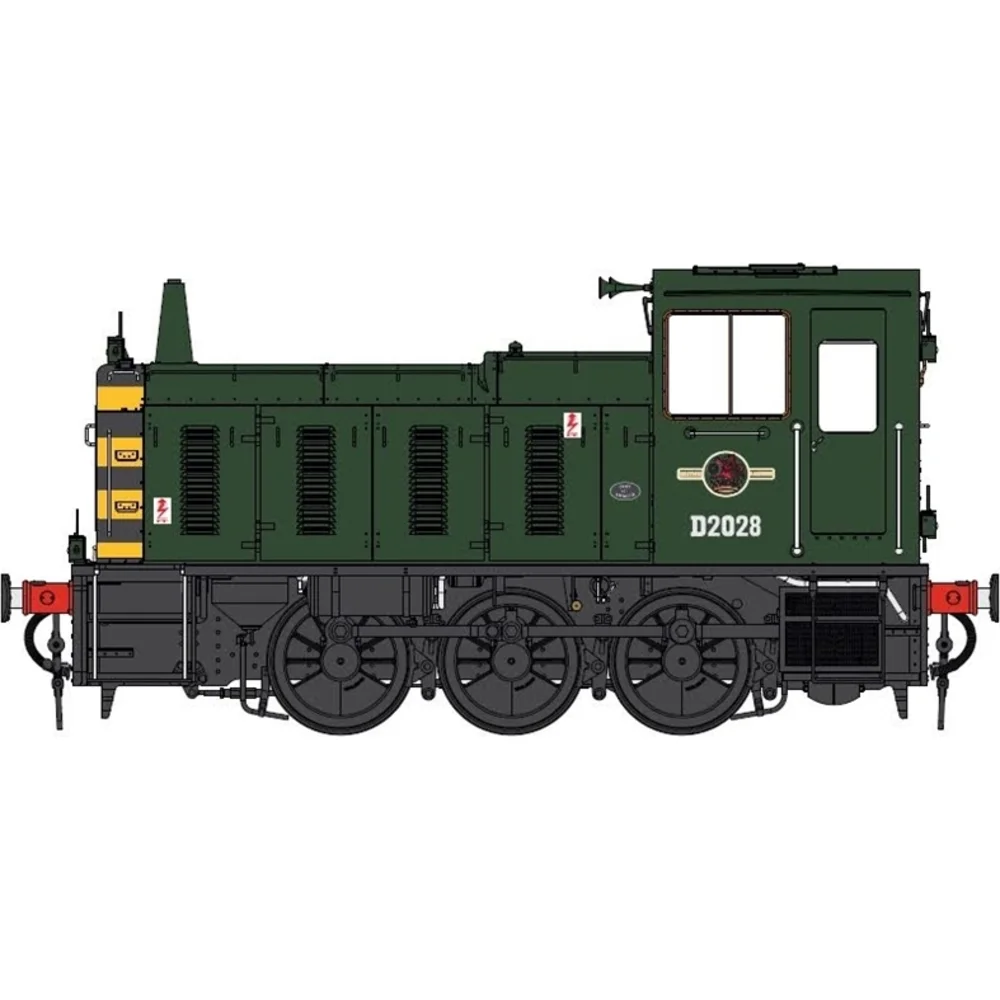
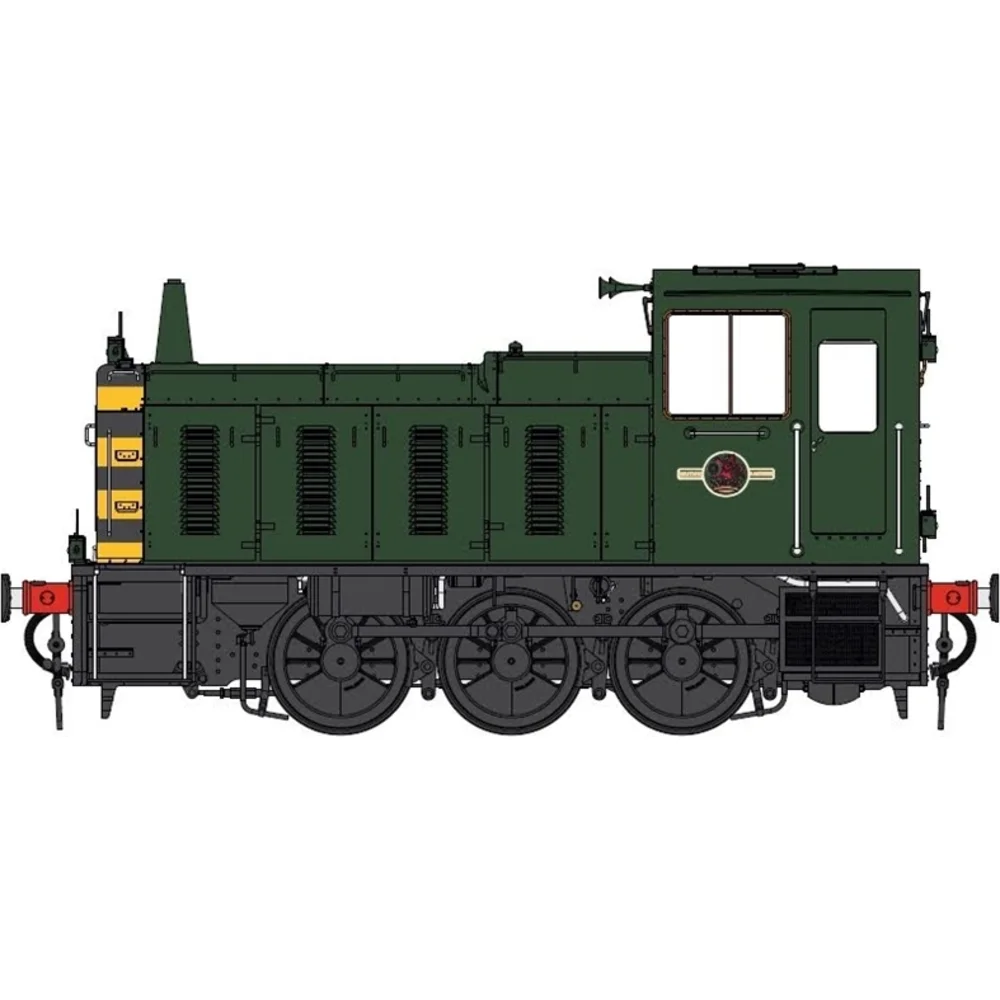
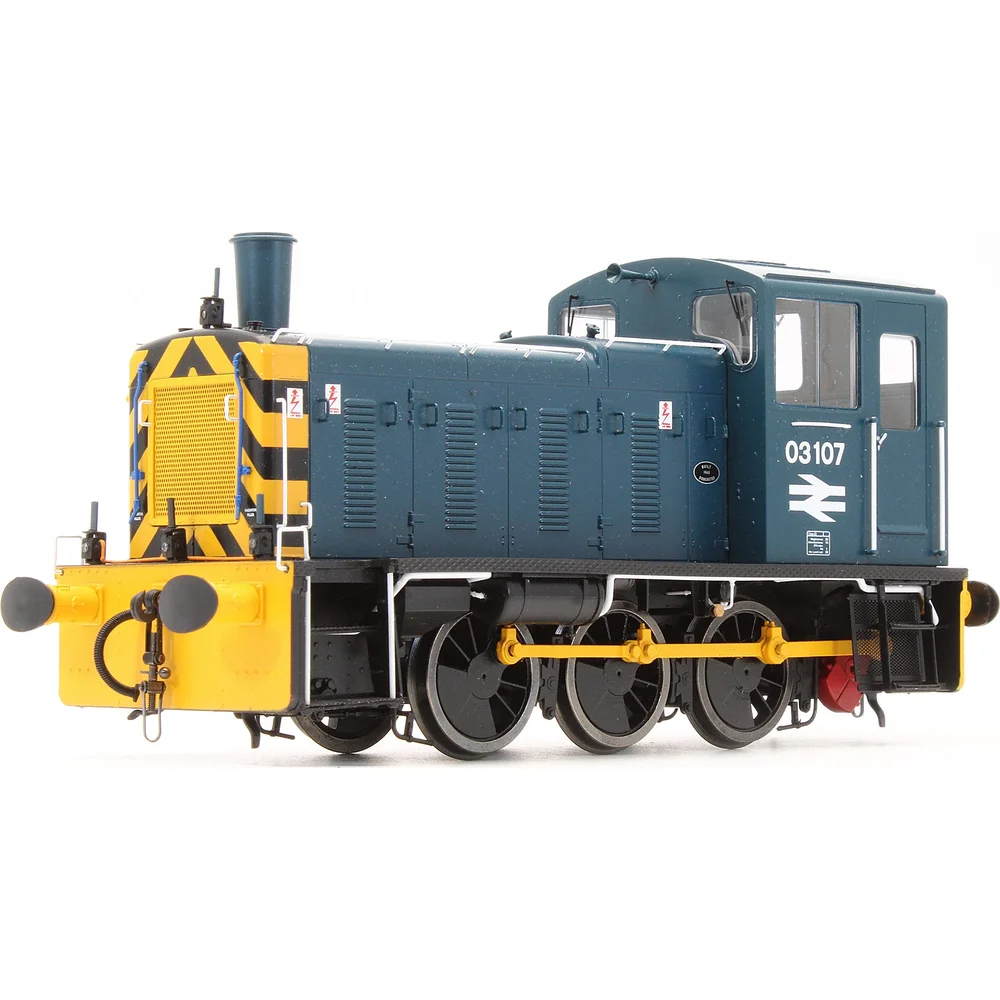
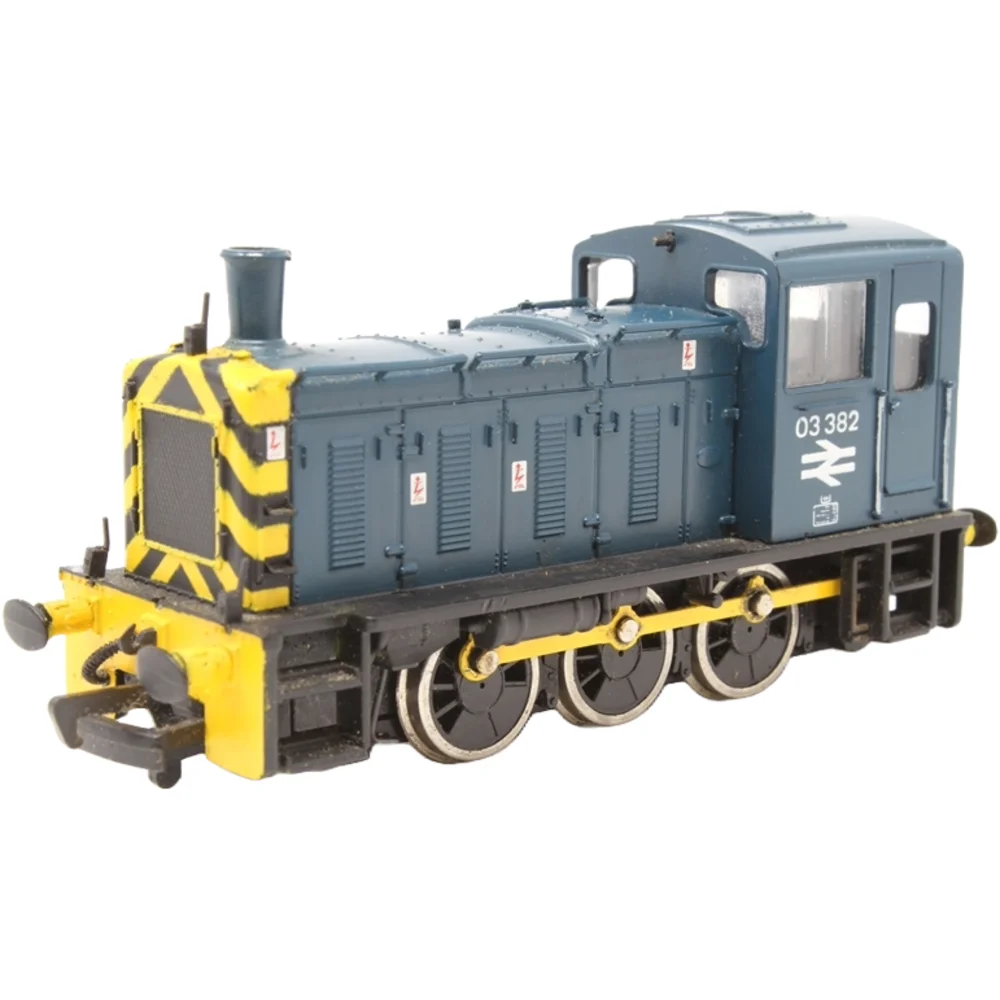
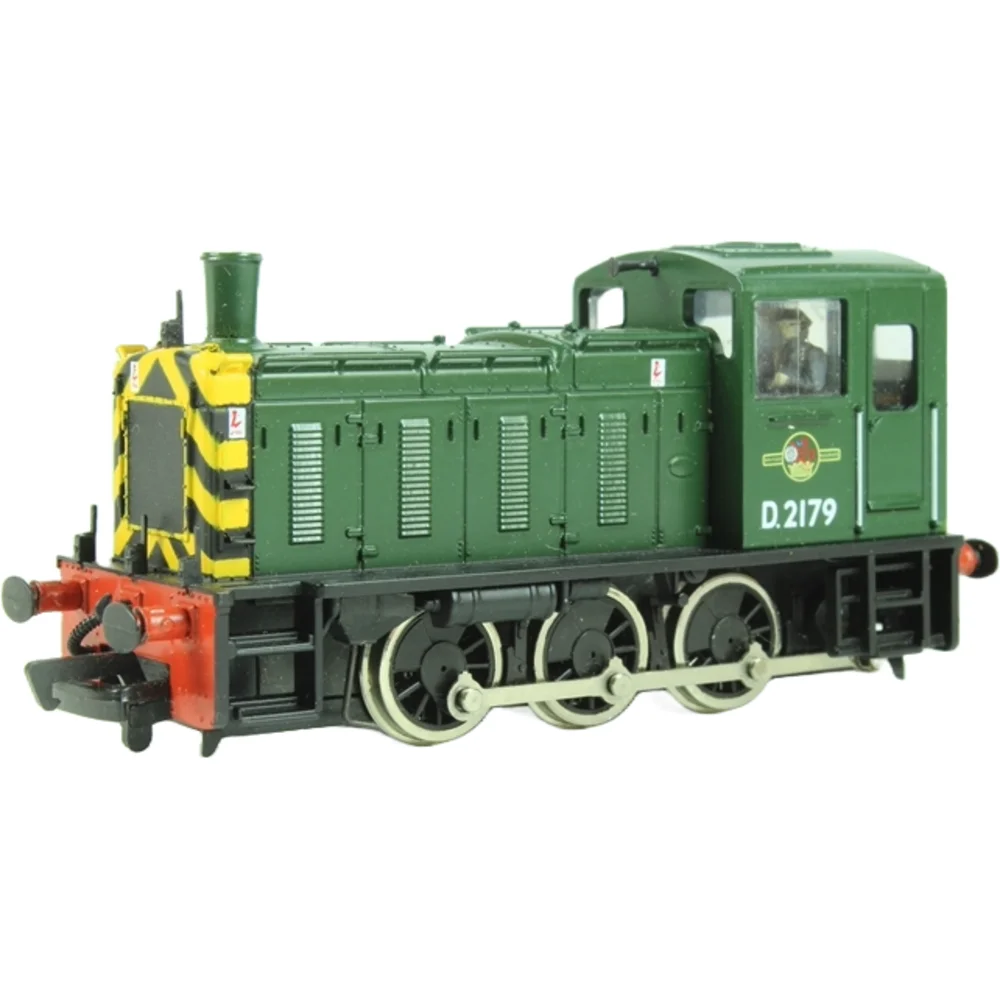
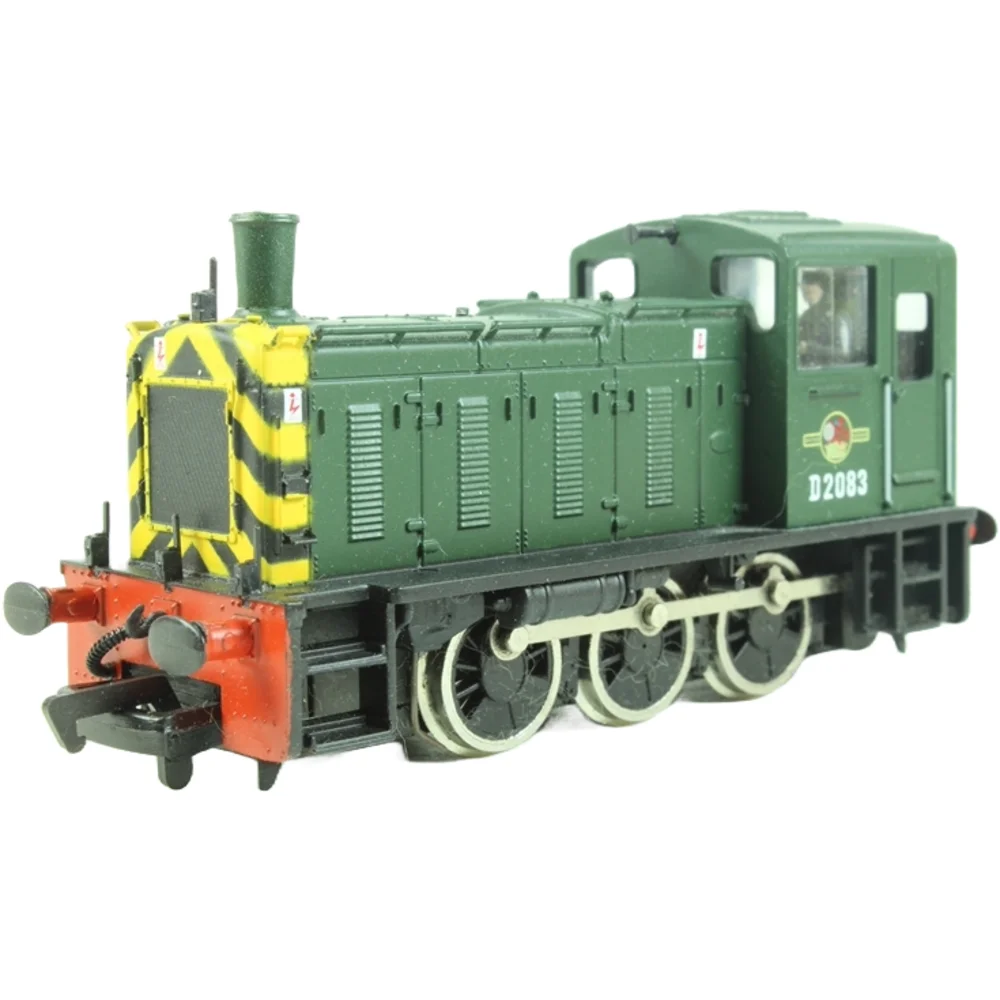
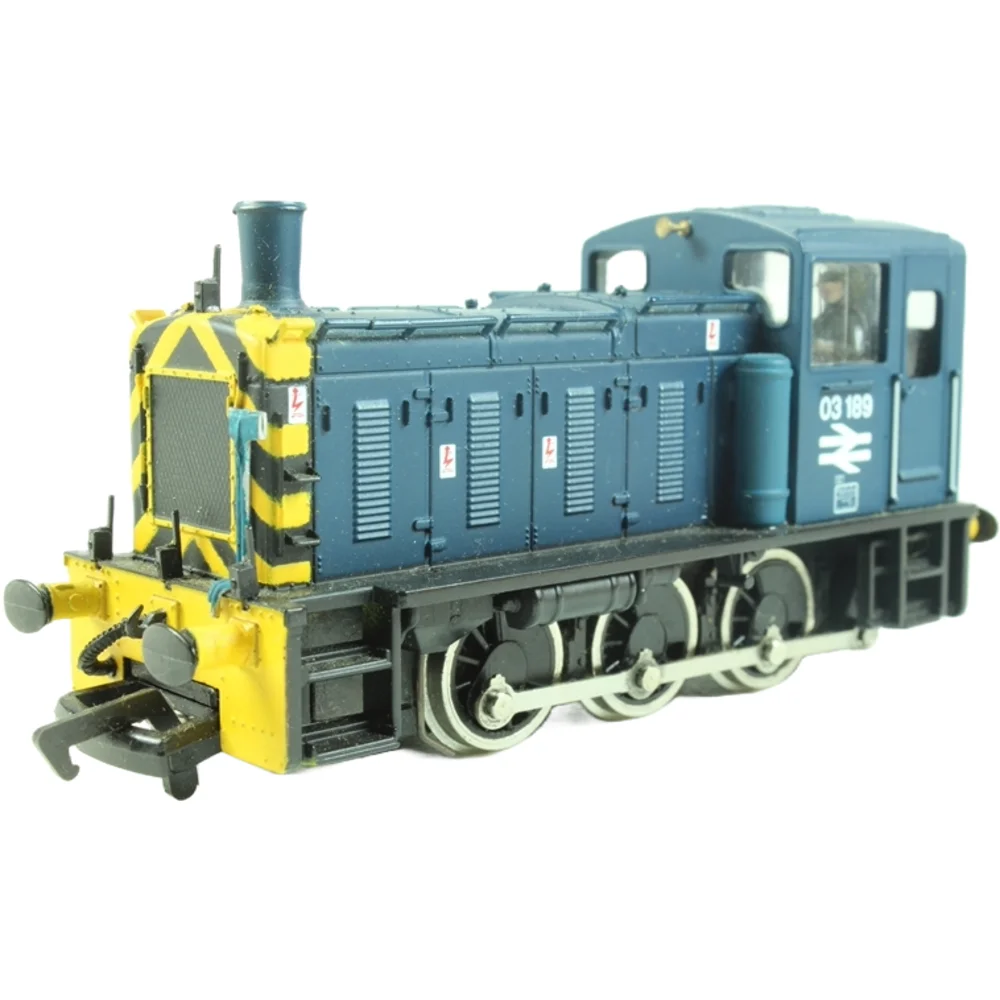
The British Rail Class 03 diesel-mechanical shunter represents one of the most successful and beloved small locomotive designs in UK railway history. Built in-house at Doncaster and Swindon Works between 1957 and 1962, these compact 30-ton workhorses became indispensable for light duties across England and Wales. For model railway enthusiasts, the Class 03 offers exceptional operational interest, preservation heritage, and widespread availability across multiple scales—making it an essential addition to any BR-era layout.
With 230 locomotives constructed and an impressive 56 examples preserved (24% survival rate), the Class 03 provides abundant prototype reference material. From triple-headed coal trains in Welsh valleys to street-running boat train duties at Weymouth, from Isle of Wight tunnel operations to being the last Class 03 in mainline service until 2008, these locomotives accumulated fascinating stories that bring authenticity to model layouts.
From hauling Channel Islands boat trains along Weymouth's street tramway to navigating tight industrial sidings where heavier Class 08s couldn't venture, the Class 03 proved that smaller could be smarter. The final survivor operated until 2008—an extraordinary 51-year service career that vindicated BR's decision to build these versatile machines as the standard light diesel-mechanical shunter.
Quick Takeaways
- 230 locomotives built: Constructed at Doncaster and Swindon Works between 1957-1962, representing BR's standardised light diesel-mechanical shunter design
- Gardner 8L3 reliability legend: 204 bhp 8-cylinder diesel engine renowned for exceptional fuel efficiency and longevity, paired with Wilson-Drewry 5-speed epicyclic gearbox
- Jackshaft drive distinction: Unique mechanical transmission with coupling rods connecting all wheels, providing excellent low-speed tractive effort of 16,850 lbf
- Weight-restricted specialist: At 30 tons (18 tons lighter than Class 08), these locomotives accessed docks, industrial sidings, and lines where heavier shunters couldn't operate
- Modified variants: Nine locomotives received cut-down cabs for Burry Port & Gwendraeth Valley Railway coal trains; two for Isle of Wight tunnel clearance
- 56 locomotives preserved: Exceptional 24% survival rate ensures abundant prototype reference at heritage railways nationwide, with multiple examples operational
- Comprehensive model availability: Bachmann OO gauge (DCC Ready and Sound Fitted), Graham Farish N gauge, and Heljan O gauge provide quality ready-to-run options across all major scales
Historical Background and Context
The Class 03 emerged directly from Britain's ambitious 1955 Modernisation Plan, which called for £1.2-1.6 billion investment to completely replace steam traction. British Railways needed efficient shunting locomotives for the giant new marshalling yards envisaged at Tinsley, Carlisle and elsewhere. Diesel shunters could operate continuously without coal or water stops, required smaller crews, and promised substantial cost reductions compared to maintaining diverse steam shunter fleets.
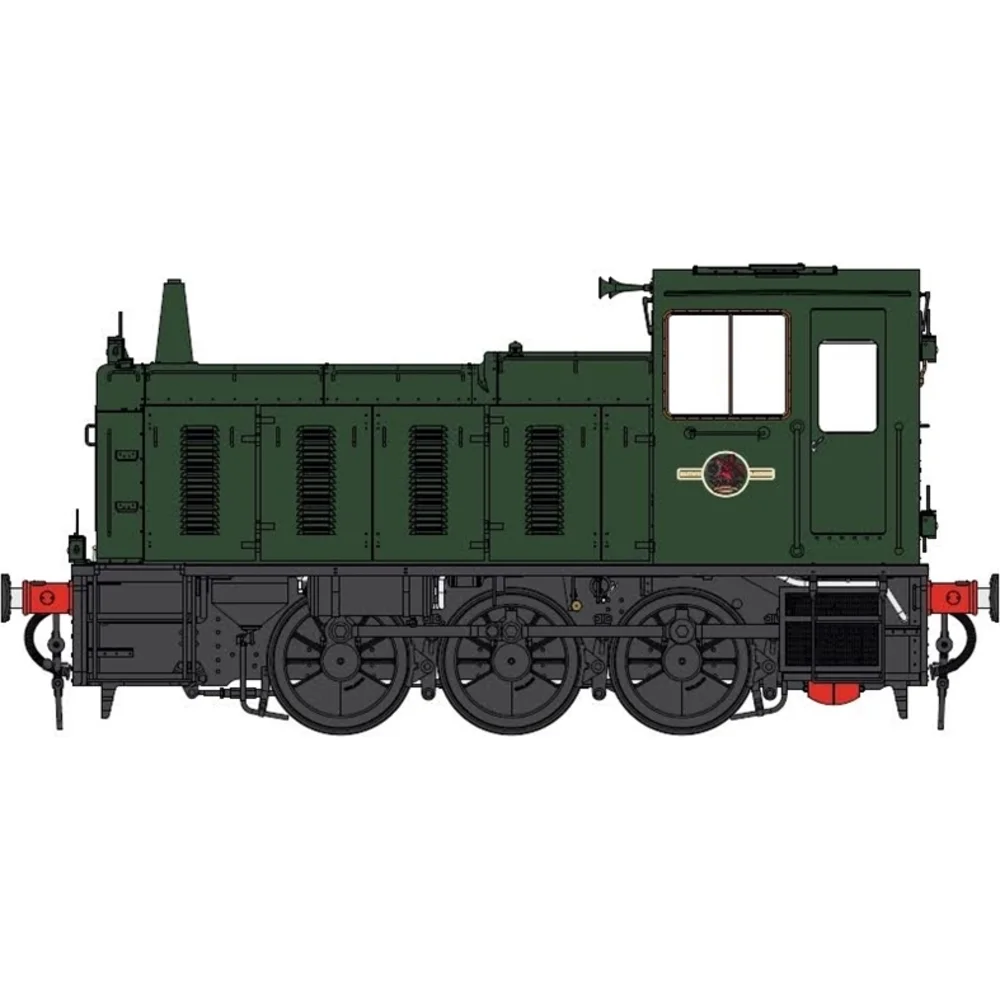
Rather than relying entirely on external suppliers, BR developed the Class 03 as an in-house refinement of the successful Class 04 design supplied by Drewry Car Company. The key improvements included a bulged rear bonnet accommodating a larger 300-gallon fuel tank, providing extended operational range, and a refined cab design with curved roof meeting the sides smoothly. These modifications created the distinctive appearance that differentiates Class 03s from their Class 04 predecessors at a glance.
The 230-strong fleet was numbered D2000-D2199 and D2370-D2399 initially, later renumbered 03004-03399 under the TOPS system in the 1970s. Construction ran from December 1957 through June 1962, with both Doncaster and Swindon Works contributing to the build program. Ironically, many became surplus within a decade as the Modernisation Plan's assumptions proved overly optimistic—marshalling yards became uneconomic with declining wagonload freight, branch line closures reduced station pilot requirements, and containerization transformed traditional shunting operations.
Within the BR shunter family (Classes 01-09), the Class 03 occupied a specific niche as the standardised light diesel-mechanical shunter. At 30 tons, it complemented the heavier 50-ton Class 08 diesel-electric, BR's standard general-purpose shunter with 996 examples. Where Class 08s handled heavy marshalling yard work, Class 03s excelled on weight-restricted lines, tight curves, and light industrial trackwork. The short 15 ft 6 in wheelbase allowed navigation of curves impossible for longer locomotives, though this sometimes necessitated coupling to a "shunters' truck" (runner wagon) to reliably trigger track circuits.
Insider Tip: Shunters' Truck Recognition
Class 03 locomotives frequently operated coupled to a "shunters' truck" or "runner wagon"—a simple open wagon providing additional wheelbase length to reliably trigger track circuits. The Class 03's short 15 ft 6 in wheelbase often failed to activate these safety systems, requiring the truck solution. When modelling 1960s-1970s operations, including a runner wagon behind your Class 03 adds authentic period detail whilst providing operational justification for an extra vehicle in yard movements.
The genesis of the Class 03 lay in BR's systematic evaluation of the Class 04, which had proven highly successful since introduction in 1952. The Drewry Car Company design, built by Vulcan Foundry and Robert Stephenson and Hawthorns, provided the mechanical basis. BR engineers at Derby Works studied operational experience and identified specific improvements: increased fuel capacity for extended range, refined cab ergonomics for improved crew comfort, and standardised construction methods suited to railway workshops rather than commercial locomotive builders.
Contemporary railway periodicals praised the new design's robust construction and operational flexibility. The distinctive appearance—bulged rear bonnet, rounded cab profile, and compact dimensions—created an immediately recognisable silhouette that epitomised BR's modernisation philosophy during the transition from steam. The Gardner 8L3 engine's legendary reliability and the mechanical simplicity of jackshaft drive promised low maintenance costs, a critical consideration for locomotives intended for intensive daily use in harsh shunting environments.
Design and Technical Specifications
The engineering excellence of the British Rail Class 03 lay in the perfect balance between performance requirements and operational economy. At the heart of the design was the Gardner 8L3 diesel engine, an 8-cylinder 4-stroke powerplant producing 204 bhp at 1,200 rpm. This engine earned legendary status throughout British industry for exceptional fuel efficiency, reliability, and longevity. The 24-litre displacement provided ample torque for shunting duties whilst maintaining remarkably low fuel consumption compared to contemporary designs.
Power transmission followed diesel-mechanical principles through a Wilson-Drewry CA5 R7 5-speed epicyclic gearbox. This sophisticated transmission allowed the driver to select appropriate ratios for different operating conditions, with a Vulcan-Sinclair fluid coupling providing smooth power delivery and protecting the drivetrain from shock loads during frequent starting and stopping. The mechanical transmission proved ideally suited to shunting work, providing positive drive and excellent control at low speeds.
The jackshaft drive system represented the Class 03's most distinctive mechanical feature. Power from the gearbox drove a centrally-mounted jackshaft, which connected to all three axles via coupling rods—exactly like a steam locomotive. This arrangement ensured all wheels contributed to tractive effort, maximizing adhesion and providing the 16,850 lbf pulling power essential for moving heavy wagons from standing starts. The coupling rods' rhythmic motion created a mechanical symphony that delighted enthusiasts and made Class 03s instantly recognisable in operation.
The 0-6-0 wheel arrangement utilised 3 ft 7 in diameter driving wheels, providing the ideal compromise between tractive effort and speed for shunting operations. All three axles were coupled and powered, ensuring maximum adhesion on the 30-ton locomotive weight. The compact 15 ft 6 in wheelbase allowed navigation of exceptionally tight curves found in docks, industrial sidings, and older railway infrastructure where longer locomotives couldn't operate.
| Specification | Value |
|---|---|
| Power output | 204 bhp at 1,200 rpm |
| Engine type | Gardner 8L3, 8-cylinder 4-stroke diesel (24 litres) |
| Transmission | Wilson-Drewry CA5 R7 5-speed epicyclic gearbox, Vulcan-Sinclair fluid coupling |
| Drive system | Jackshaft drive with coupling rods to all axles |
| Maximum speed | 27-28.5 mph |
| Tractive effort | 16,850 lbf |
| Weight | 30 long tons |
| Length | 28 ft 5 in |
| Width | 8 ft 6 in |
| Height | 12 ft 8.5 in (standard); 11 ft 3 in (cut-down cab variants) |
| Wheel arrangement | 0-6-0 (three coupled driving axles), 3 ft 7 in diameter |
| Wheelbase | 15 ft 6 in |
| Fuel capacity | 300 imperial gallons |
| Braking | Vacuum brake standard; 21 locomotives later fitted with dual air/vacuum |
Weight distribution was carefully calculated to maximise adhesion whilst remaining within axle loading restrictions that characterised much older railway infrastructure. The locomotive's 30-ton weight represented a crucial advantage over the 50-ton Class 08, enabling operation on weight-restricted lines, older bridges, dock tramways, and industrial sidings where heavier locomotives were prohibited. This capability made Class 03s indispensable at locations like Ipswich Docks, where bridge weight restrictions prevented Class 08 access entirely.
The frame construction employed substantial inside plate frames of typical BR workshop quality, ensuring rigidity sufficient for decades of intensive shunting operation. The robust construction withstood the constant impacts, vibrations, and stresses inherent in shunting work—repeatedly coupling to standing wagons, hauling heavy loads from standing starts, and absorbing buffer impacts during marshalling operations. This durability contributed significantly to the class's longevity and high preservation survival rate.
Technical Innovation: Cut-Down Cab Modifications
Nine Class 03 locomotives received cut-down cabs reducing height from 12 ft 8.5 in to approximately 11 ft 3 in for specialised duties. Six (03119, 03120, 03141, 03142, 03144, 03145) plus later additions (03151, 03152, 03382) worked the Burry Port & Gwendraeth Valley Railway where low bridges necessitated reduced clearance. Two (03079, 03179) served the Isle of Wight with cut-down cabs for Ryde tunnel clearance. These unique variants represent fascinating modelling subjects, with several preserved examples ensuring prototype reference availability.
Cab design prioritised functionality for intensive shunting duties. The compact cab accommodated a driver and shunter, with controls positioned for easy access during frequent direction changes. Forward and rear visibility was excellent, essential for precise coupling operations and reversing movements. The curved roof design improved headroom whilst maintaining the compact overall height necessary for restricted clearances. Heating and ventilation systems provided reasonable crew comfort during long shifts in all weather conditions.
During later service life, 21 locomotives received dual brake equipment (both air and vacuum systems) to enhance operational flexibility. These included 03059, 03063, 03066, 03073, 03078, 03084, 03086, 03089, 03094, 03112, 03152, 03158, 03162, 03170, 03179, 03180, 03196, 03197, 03371, 03397, and 03399. The dual brakes enabled these locomotives to work both vacuum-braked traditional freight stock and newer air-braked vehicles, extending their utility during the transition period between braking systems.
Service History and Operations
The British Rail Class 03 quickly established itself across England and Wales, with deployment patterns revealing both the versatility of the design and the geographic diversity of BR operations. Initial allocations from the first batches saw locomotives dispersed to all regions except Scotland, where BR standardised on Class 08s for Scottish depots. The distribution reflected careful planning to position Class 03s where their light weight and short wheelbase provided operational advantages over heavier shunters.
East Anglia became a major stronghold, with substantial allocations to Norwich, Ipswich, and Lowestoft. At Ipswich, bridge weight restrictions prevented Class 08s from reaching the docks, making Class 03s essential for this lucrative traffic. The locomotives handled fish trains, general cargo, and container movements with aplomb. In 1980, a Class 03 at Ipswich performed the unusual booked duty of shunting the 23:20 Peterborough-Liverpool Street onto the rear of the 23:45 Norwich-Liverpool Street—a testament to the class's operational flexibility.
Northern England operations included depot pilots at Hull Botanic Gardens and Bradford Hammerton Street DMU depots, station pilots at Newcastle Central, Hull Paragon, Bradford Exchange and Sunderland, plus yard work at Tweedmouth near Berwick-upon-Tweed. Tyne Yard allocated examples for trips to Team Valley Branch and various sidings. The Midlands saw allocations to Bescot (opened spring 1967), Lincoln engineers' yard, and Boston for yard shunting and trips to Boston Docks.
Welsh operations provided some of the Class 03's most distinctive work. Nine locomotives received cut-down cabs specifically for the Burry Port & Gwendraeth Valley Railway: 03119, 03120, 03141, 03142, 03144, 03145, 03151, 03152, and 03382. These modified examples worked coal trains from valley pits, frequently operating triple-headed with 30-wagon consists weighing hundreds of tons. Crews regularly drove "down a line that was several inches under water" due to chronic flooding. The Class 03's robust Gardner engine and mechanical transmission coped better with these conditions than diesel-electric locomotives, which suffered electrical problems in wet conditions.
Operational Insight: The Weymouth Harbour Tramway
Southern Region Class 03s hauled Channel Islands boat trains along the Weymouth Harbour Tramway through town streets to the harbour during the early 1970s, displacing the last GWR 1366 Class pannier tanks. This street-running duty required warning equipment for public safety and exemplified the Class 03's versatility. The sight of a small diesel locomotive threading through Weymouth's streets with coaches full of passengers created one of the most photogenic railway operations in Britain, now immortalised in countless photographs and providing excellent modelling inspiration.
Southern Region duties extended beyond Weymouth to allocations at Bournemouth, Eastleigh, Taunton, Swindon, Bristol, Hither Green, and Norwood. These locomotives handled carriage shunting, station pilot duties, engineers' trains, and light freight movements. The wide geographic spread demonstrated the Class 03's fundamental suitability for diverse passenger and freight support work encompassed by BR's shunting requirements.
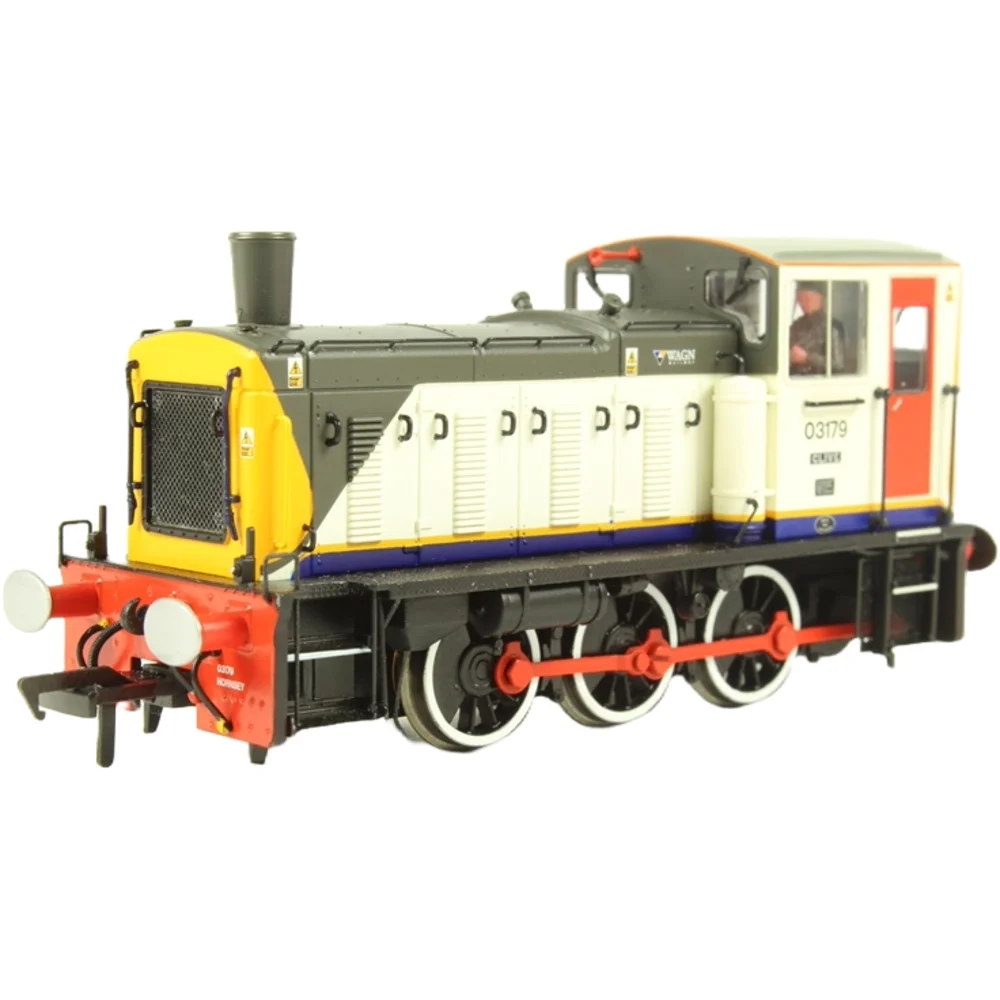
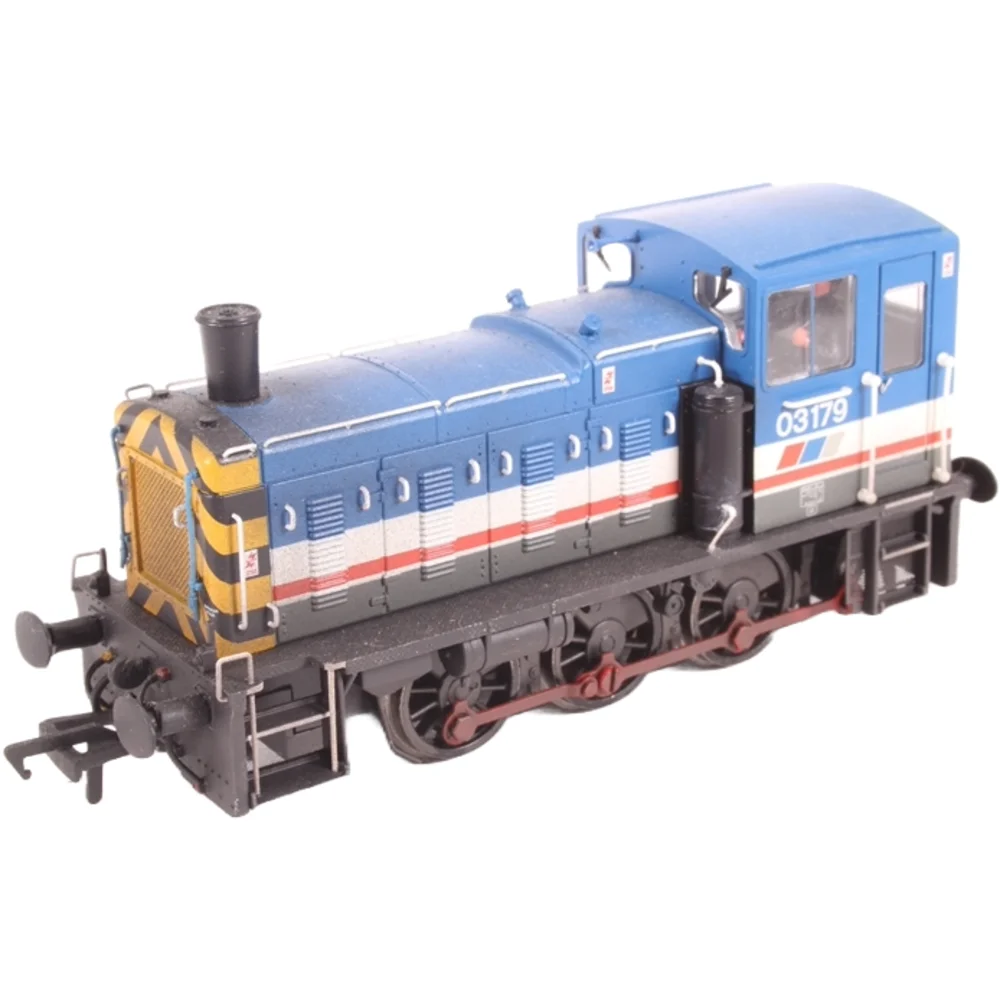
The Isle of Wight received two specially modified examples with cut-down cabs for Ryde tunnel clearance: 03079 and 03179. The latter achieved remarkable longevity, serving BR until 1993, then being reinstated by WAGN in 1998 for Hornsey depot in North London—making it the only Class 03 active on the national network in the late 1990s. Named "Clive" after a 43-year depot employee, it wore distinctive Network SouthEast and later First Capital Connect liveries before final withdrawal in 2008 after an astonishing 51 years of service.
Birkenhead North TMD became the last mainland bastion of Class 03 operations. Working Cavendish Sidings, trips to Bidston Docks, Egerton Dock, Shore Road, and the Pan-Ocean Oil Terminal, the final three mainland examples (03073, 03162, 03170) survived until May 23, 1989. Locomotive 03162 had been named "Birkenhead South 1879-1985" and repainted BR green on January 8, 1987, wearing a non-standard cone chimney and vertical air horn—creating a unique appearance that has been commemorated in preservation.
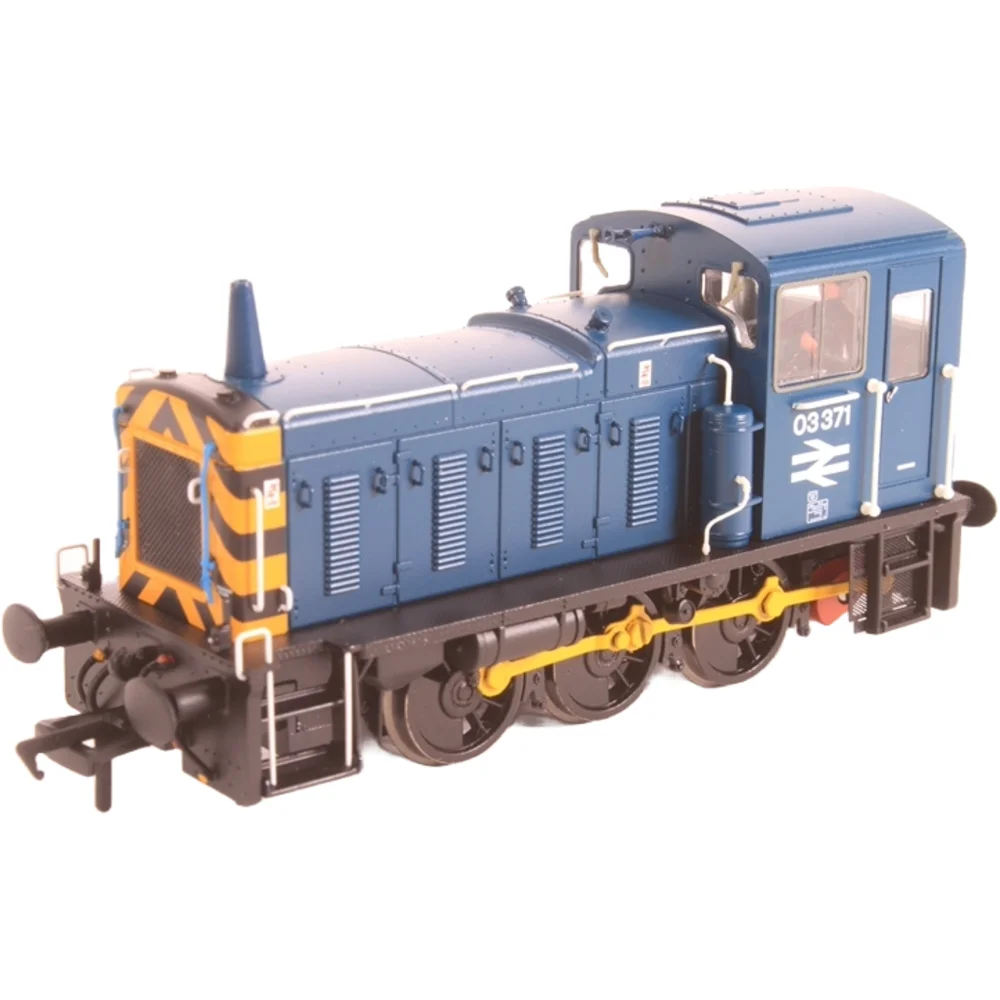
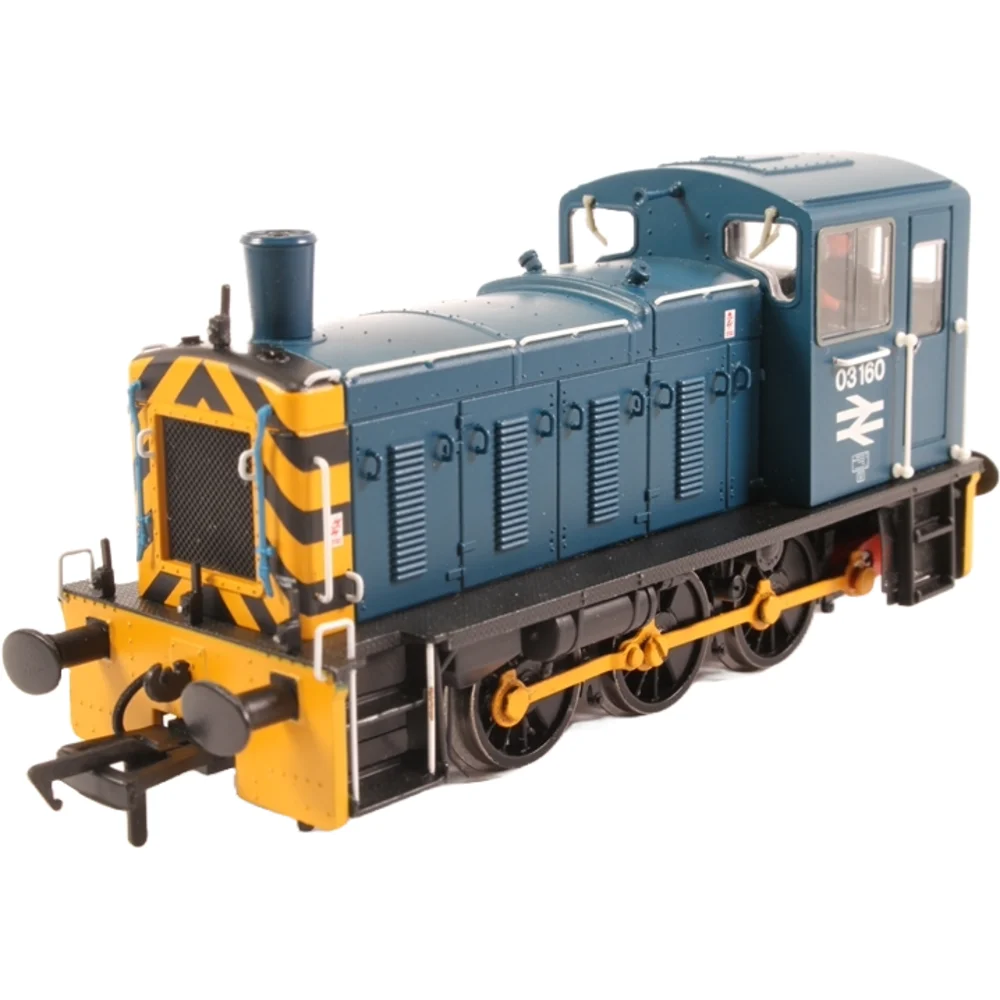
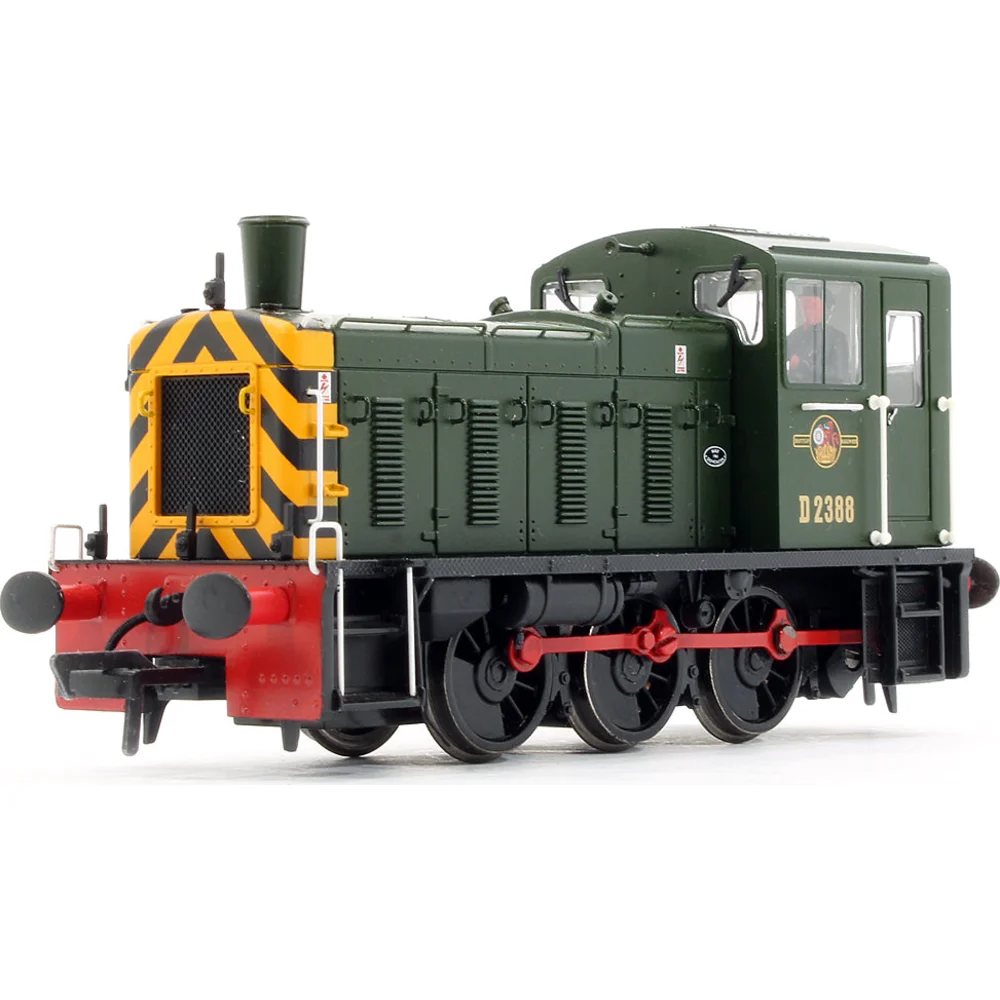
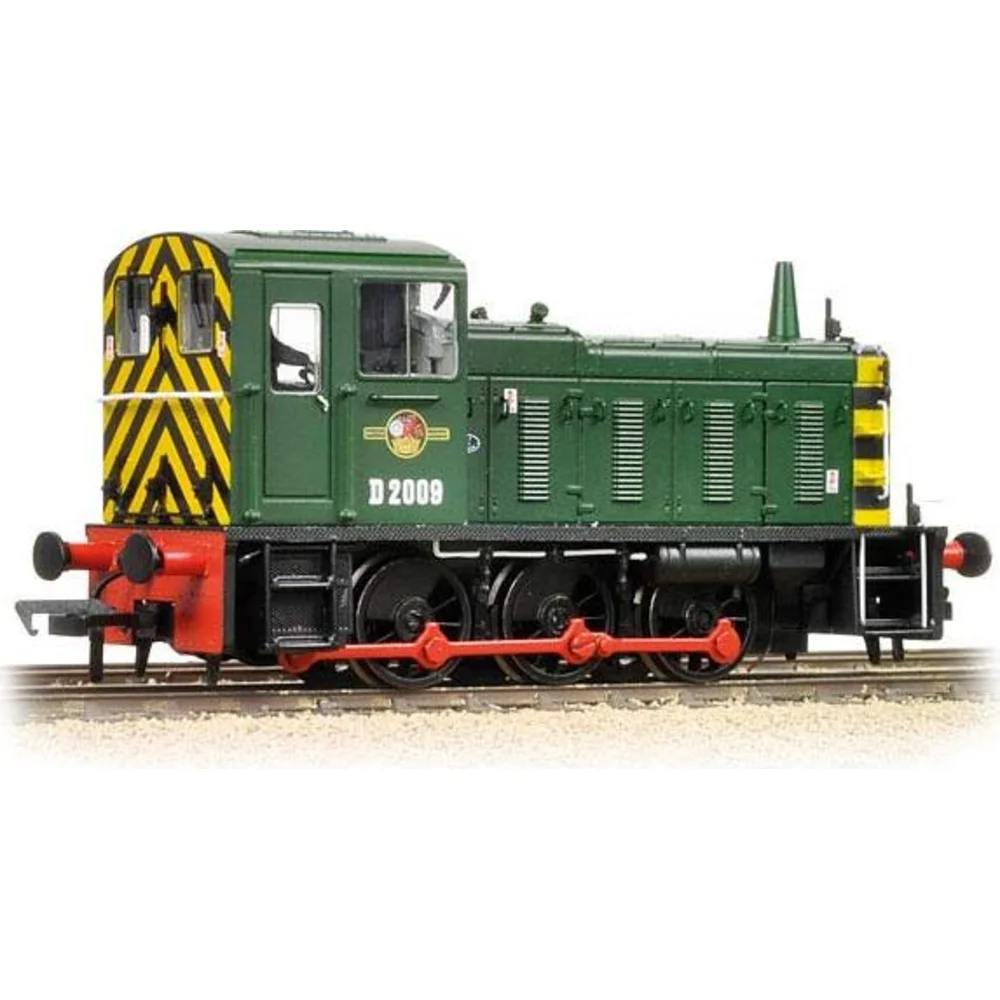
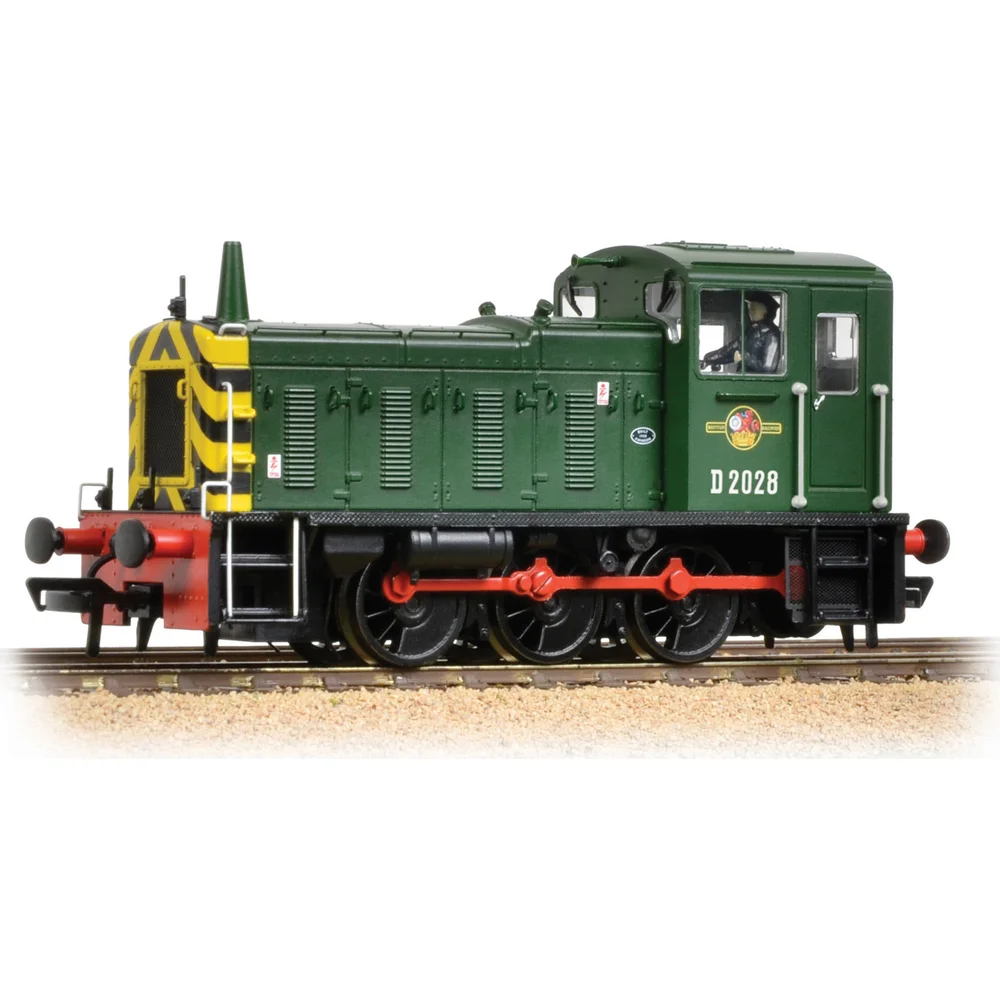
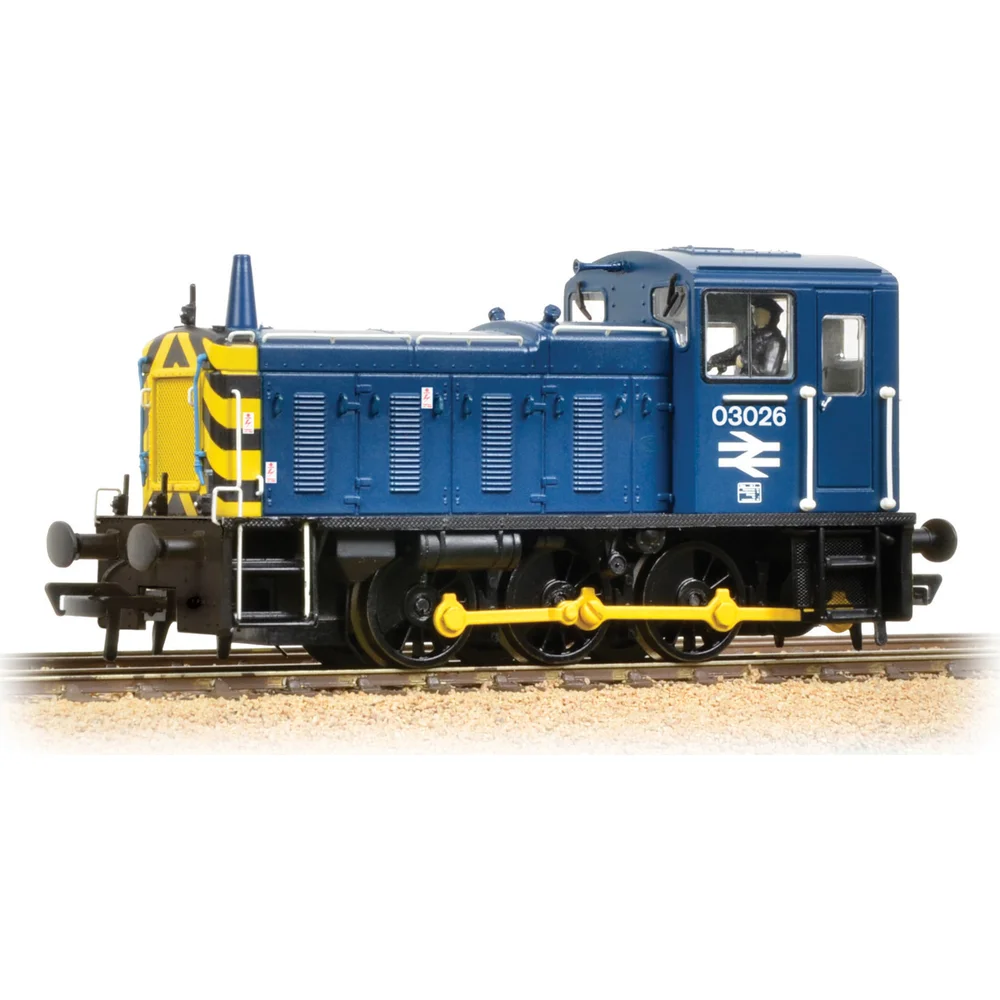
Livery progression followed BR's corporate identity evolution. Initial deliveries wore BR Brunswick green with small yellow warning panels and original D-prefix numbers. The BR Rail Blue era from the late 1960s brought full yellow ends (nicknamed "wasp stripes"), TOPS renumbering to 03xxx series, and the BR double-arrow symbol. Some received all-over departmental yellow for engineering duties. Network SouthEast livery appeared on 03179 for Isle of Wight service in 1988, creating a distinctive modelling subject that bridges BR and privatisation eras.
Progressive withdrawals began in 1968—just 10 years after introduction—as declining freight traffic reduced shunting requirements. The initial optimism of the Modernisation Plan had evaporated as branch line closures accelerated, marshalling yards closed, and containerization reduced traditional wagon-load freight. Sales to industry accelerated from the early 1970s, with locomotives finding new homes at power stations, chemical works, collieries, and scrapyards. Four were exported to Italy, three to Belgium, creating international careers for these British-designed machines.
Industrial operators appreciated the Class 03's mechanical simplicity, fuel efficiency, and robust construction. The Gardner engine's legendary reliability translated into low maintenance costs, whilst the mechanical transmission required no complex electrical systems. Many industrial examples operated for decades after BR withdrawal, with some still working into the 2000s. These extended careers vindicated the fundamental soundness of the design and demonstrated that modern preservation wasn't the only path to survival.
{{LOCOMOTIVES}}
Withdrawal and Preservation Legacy
The withdrawal history of the British Rail Class 03 reflects both the gradual obsolescence of traditional shunting operations and the surprising longevity achieved through robust construction and operational versatility. Unlike many contemporary designs that faced rapid scrapping following declining traffic, selected Class 03s continued earning their keep for decades through adaptation to changing railway requirements and transfer to industrial operators.
Early withdrawals began in 1968 with just 10 years of BR service, as the reality of declining wagon-load freight and accelerating branch line closures reduced shunting requirements dramatically below Modernisation Plan projections. The pattern accelerated through the 1970s and 1980s as containerization transformed freight operations, marshalling yards closed, and BR rationalised locomotive fleets. By the late 1980s, only scattered examples remained in BR service, concentrated at specific locations where their unique capabilities remained essential.
The final mainland survivors operated from Birkenhead North TMD until May 23, 1989, when 03073, 03162, and 03170 were withdrawn. These three locomotives had become local celebrities, with 03162 receiving BR green repaint and naming "Birkenhead South 1879-1985" in recognition of community heritage. Their withdrawal marked the end of an era for traditional dock shunting operations that had employed thousands of railway workers during the freight railway's heyday.
Locomotive 03179 achieved extraordinary distinction as the last Class 03 in mainline service. After initial BR service on the Isle of Wight until 1993, this cut-down cab variant was reinstated by WAGN in 1998 for Hornsey depot duties in North London. Wearing Network SouthEast livery initially, then First Capital Connect colours, it worked carriage shunting and depot movements until final withdrawal in 2008—a remarkable 51-year career spanning four different operators and representing the longest service life of any Class 03.
Preservation's Triumph
The Class 03 preservation story represents one of British railway preservation's greatest successes. With 56 of 230 locomotives (24%) surviving, the class boasts an exceptional preservation rate. This success stems from multiple factors: robust construction facilitating restoration, compact size suiting heritage railway facilities, operational versatility enabling diverse duties, and the enthusiastic following attracted by their charming appearance and fascinating histories. Heritage railways nationwide employ Class 03s for authentic yard operations, carriage marshalling, demonstration freights, and diesel gala events.
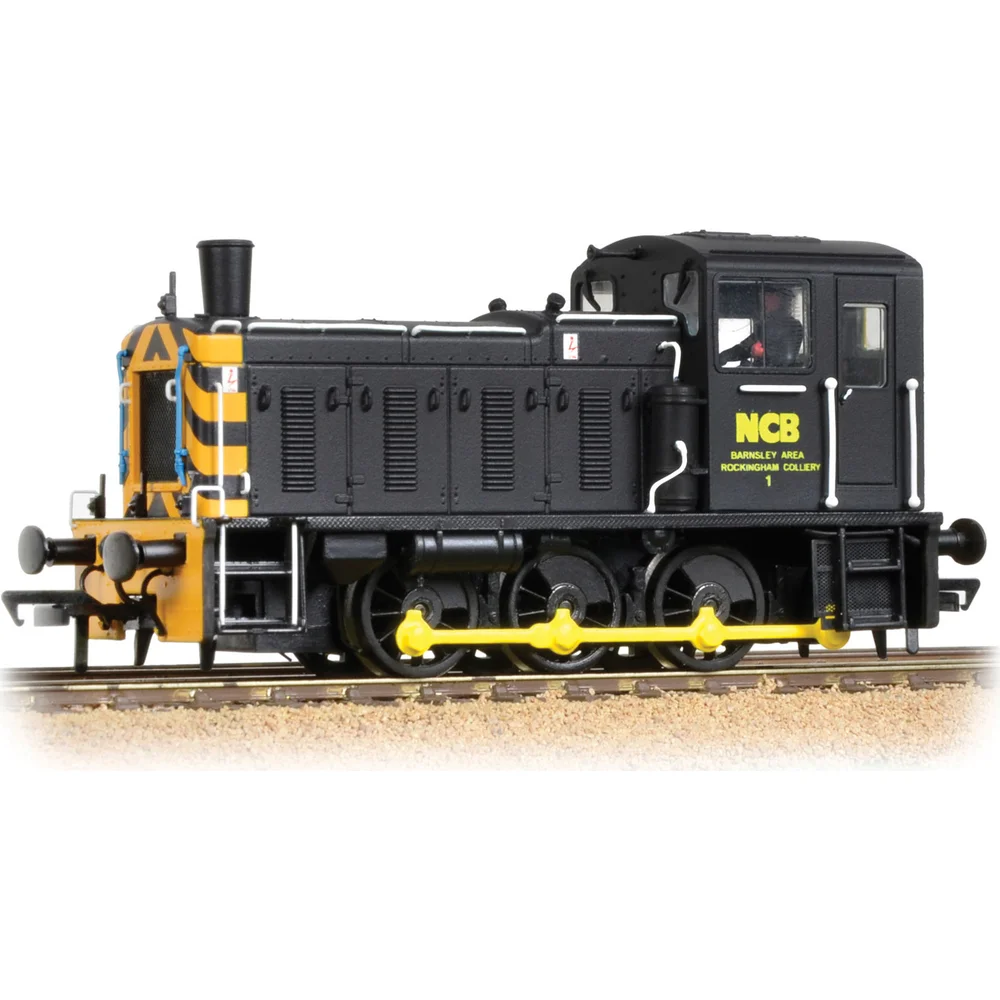
Heritage Shunters Trust at Peak Rail, Rowsley, maintains the most comprehensive BR shunter collection worldwide, including five Class 03s: 03027, 03099, 03113, 03180, and D2199. The Trust offers depot tours and runs locomotives at diesel galas, providing opportunities for enthusiasts to experience these machines in operation. D2199 has a remarkable story—smashed up by pickets during the 1984 miners' strike to render it unusable at Rockingham Colliery, it survived to become a limited-edition Bachmann model in NCB dark petrol blue livery.
Operational preserved examples include 03023 and 03089 at Mangapps Railway Museum (regularly hauling passenger shuttles), 03078 at Embsay & Bolton Abbey Railway (frequent use for shunting and passenger trains), D2133 at West Somerset Railway, and recently restored D2069 at Vale of Berkeley Railway. Many heritage railways employ Class 03s for authentic yard operations, carriage marshalling, engineering trains, and diesel gala events, demonstrating the operational utility that made them successful during BR service.
Notable preservation stories abound throughout the 56-strong survivor fleet. D2139 was rescued from Monckton Coking Plant in appalling condition and painstakingly restored to exact Mid Brunswick green livery, now considered "the best presented green liveried 03 in preservation." Locomotive 03113 was saved from Milford Haven Maritime Museum where children used it as a climbing frame, receiving mammoth restoration to its Scarborough station pilot condition in Rail Blue. The Birkenhead trio (03073, 03162, 03170)—the last mainland examples—all survive, a significant preservation achievement ensuring this final chapter of BR Class 03 operations is permanently commemorated.
The eight cut-down cab variants hold special historical significance. Six Burry Port examples (03119, 03120, 03141, 03144, 03145, 03152) and both Isle of Wight variants (03079, 03179) were preserved, ensuring this unique chapter of Class 03 history survives for future generations. Locomotive 03179 is currently being restored at Rushden and returning to Isle of Wight Steam Railway in October 2025 in Network SouthEast livery—a homecoming for one of the class's most remarkable survivors after its extended service with WAGN and First Capital Connect.
The engineering legacy extends beyond individual preserved locomotives. The Class 03 validated design principles that influenced subsequent BR diesel development: mechanical simplicity enabling economic maintenance, standardised components facilitating parts availability, conservative loadings extending service life, and versatile capabilities allowing adaptation to changing operational requirements. These lessons informed BR's entire approach to diesel traction through the remainder of its existence.
Modelling Significance and Scale Replications
The British Rail Class 03 presents exceptional modelling significance due to its position spanning the entire BR diesel era, combined with distinctive visual appearance, fascinating operational stories, and geographic diversity. For railway modellers seeking authentic period atmosphere, these locomotives provide compelling prototype appeal enhanced by operational versatility and extensive preservation ensuring abundant photographic reference.
The modelling landscape flourished with the arrival of quality ready-to-run models across multiple scales. Early offerings from Mainline Railways in 1983 provided OO gauge modellers their first taste of Class 03 availability, though these split-chassis models suffered electrical issues problematic for DCC conversion. The tooling passed through Replica Railways to Bachmann, who ultimately produced an entirely new model in 2010 that set new standards for British diesel shunter representation.
Bachmann Branchline produces the current standard OO gauge model with exceptional detail quality and comprehensive technical specifications. The range encompasses multiple livery variations organised into coherent series representing the class across its entire service life. Models feature coreless motors, Next18 DCC decoder sockets, and space for speaker installations enabling sound conversion. Both DCC Ready and DCC Sound Fitted variants address different sophistication levels and budgets.
The OO gauge models demonstrate exemplary commitment to prototype authenticity. The detailed chassis accurately depicts the jackshaft drive arrangement with visible coupling rods connecting all axles. Sandboxes, sandpipes, and complete underframe equipment create visual depth. The high-fidelity bodyshell features numerous separately-fitted detail parts including bonnet door handrails, cab handrails, running plate handrails, lamp irons, windscreen wipers, flowerpot chimney, and turned metal air horn. Factory-fitted glazing includes cab interior detail visible through windows.
{{MODELS}}
Advanced Modelling: DCC Sound Installation
DCC sound installation in OO gauge Class 03s requires careful component selection due to limited internal space. ESU LokSound 5 Micro decoders pre-programmed with Gardner 8L3 engine sounds are recommended, available from UK specialists for approximately £142 including speaker upgrade. A sugar cube speaker (15mm x 11mm) fits in the roof or underframe. Sound files from Legomanbiffo, Jamie Goodman, or Sound on Wheels Depot provide authentic Gardner diesel audio. Avoid early Mainline/Replica split-chassis models for DCC due to electrical problems causing decoder failures.
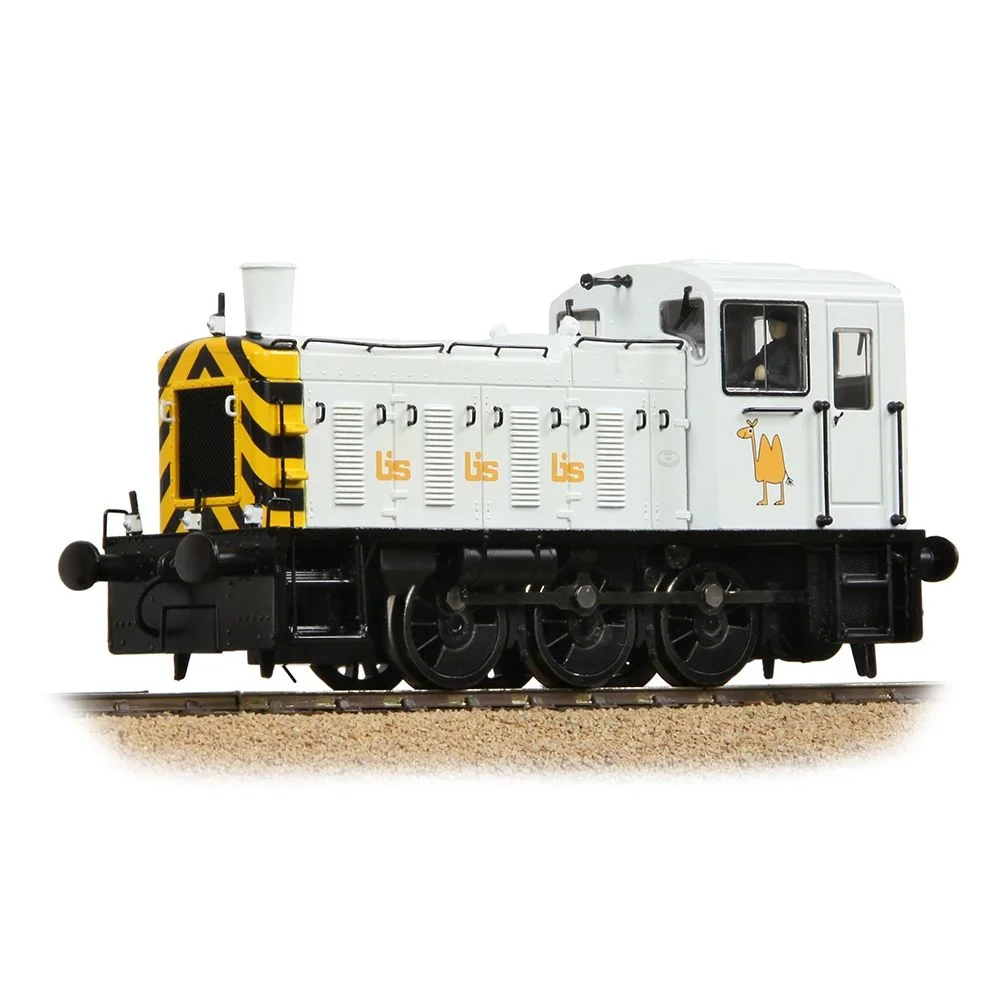
Available OO gauge liveries span the complete BR era and beyond. BR Brunswick green appears with both early and late crests, small yellow warning panels, and correct lining. BR Rail Blue with full yellow ends ("wasp stripes") represents the 1970s-1980s corporate image. Departmental yellow suits engineering duties. Industrial liveries commemorate private operator examples including NCB dark petrol blue. Preserved railway schemes enable heritage layout representation. Network SouthEast livery on 03179 provides unique privatisation-era appeal.
Pricing for OO gauge models reflects quality and features. DCC Ready versions typically retail £100-130 depending on livery and retailer. DCC Sound Fitted variants command £150-180 with pre-installed ESU LokSound decoders providing 20+ functions including authentic Gardner engine sounds, horn, brake squeal, and coupling effects. Pre-owned Bachmann models sell for £70-90, offering economical entry points. Major retailers including Rails of Sheffield, Hattons Model Railways, and Kernow Model Rail Centre stock comprehensive selections.
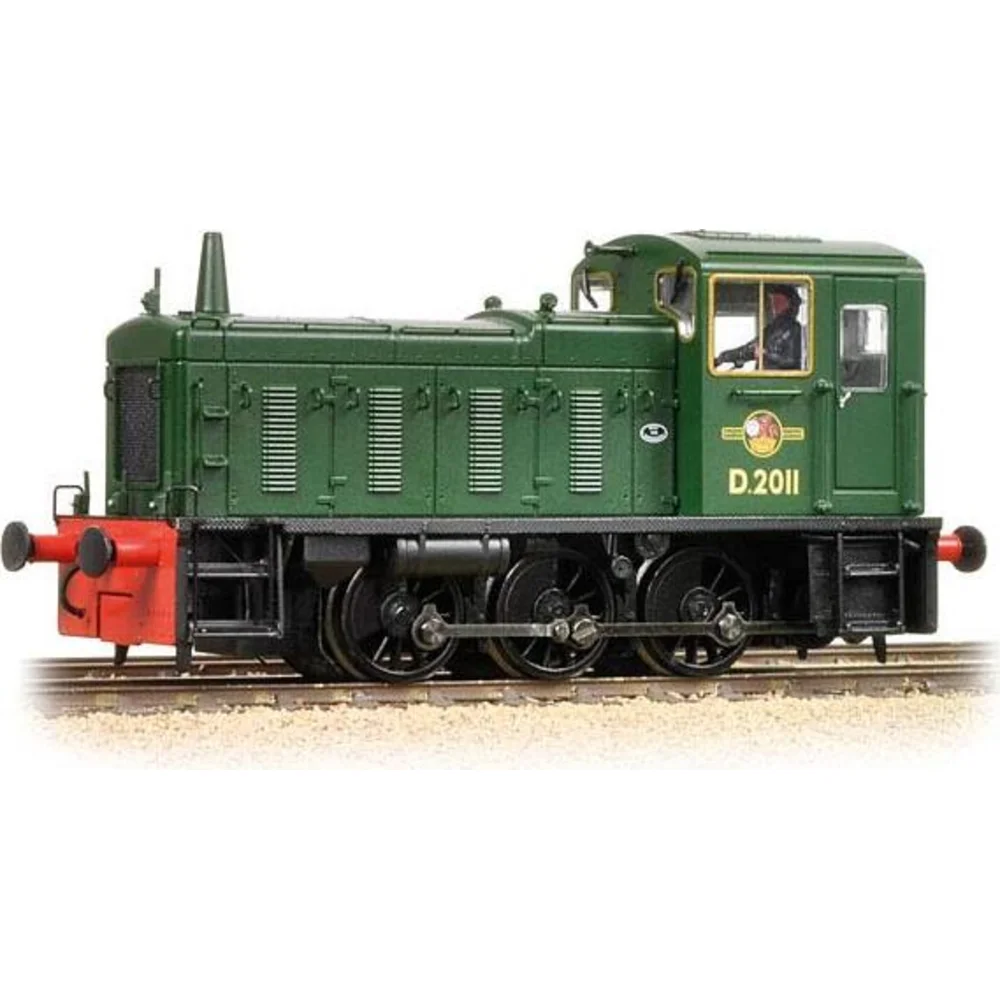
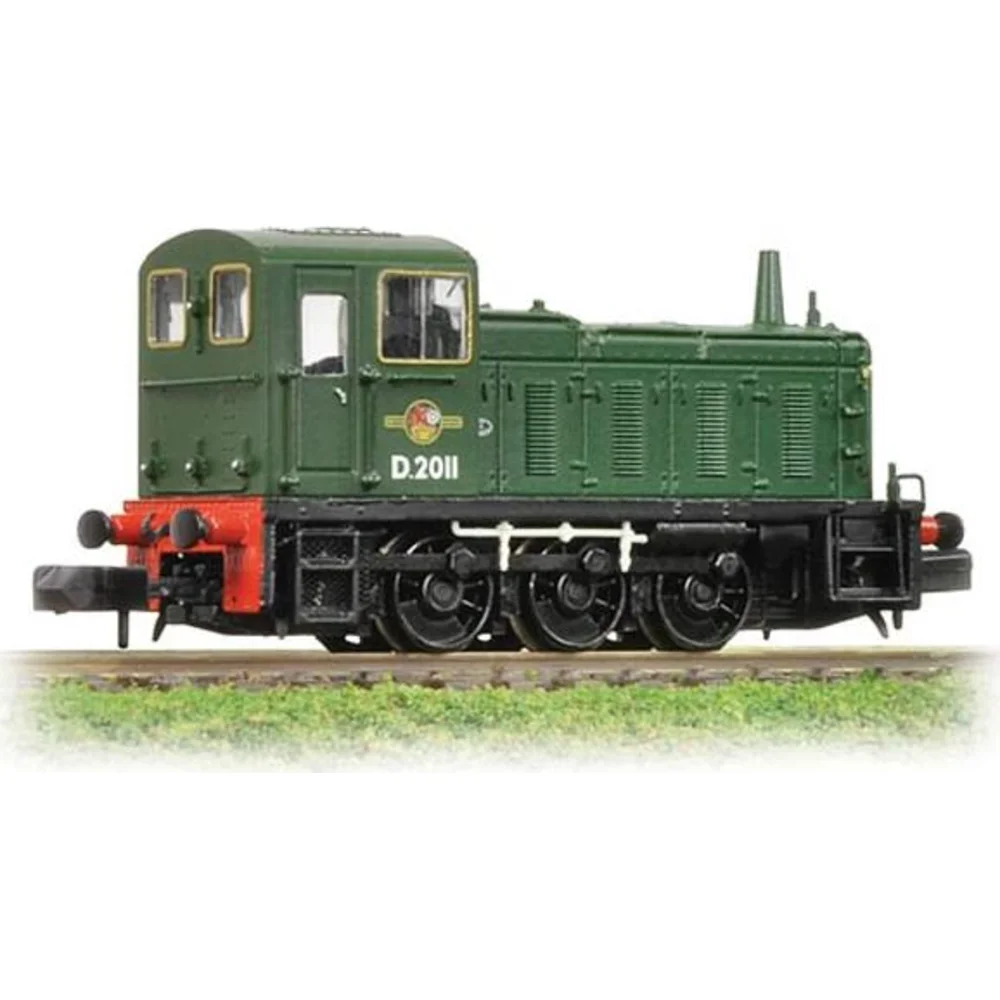
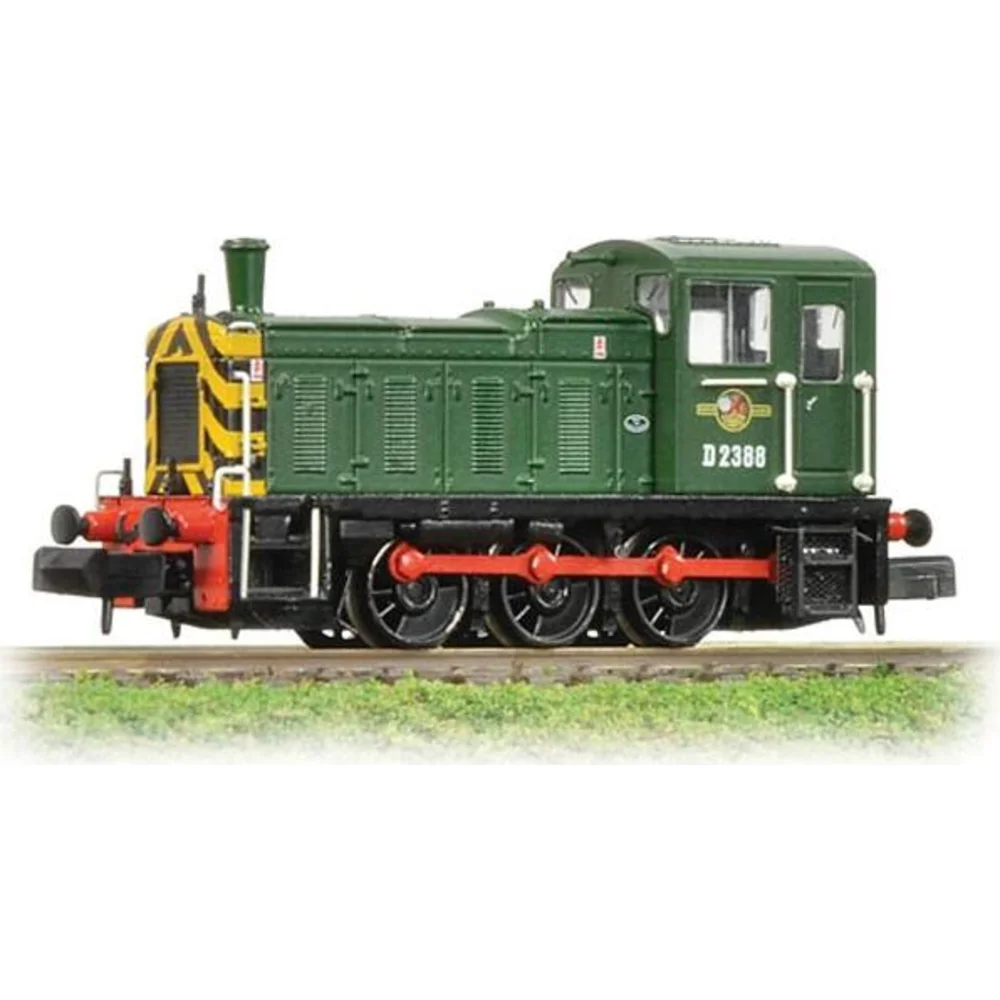
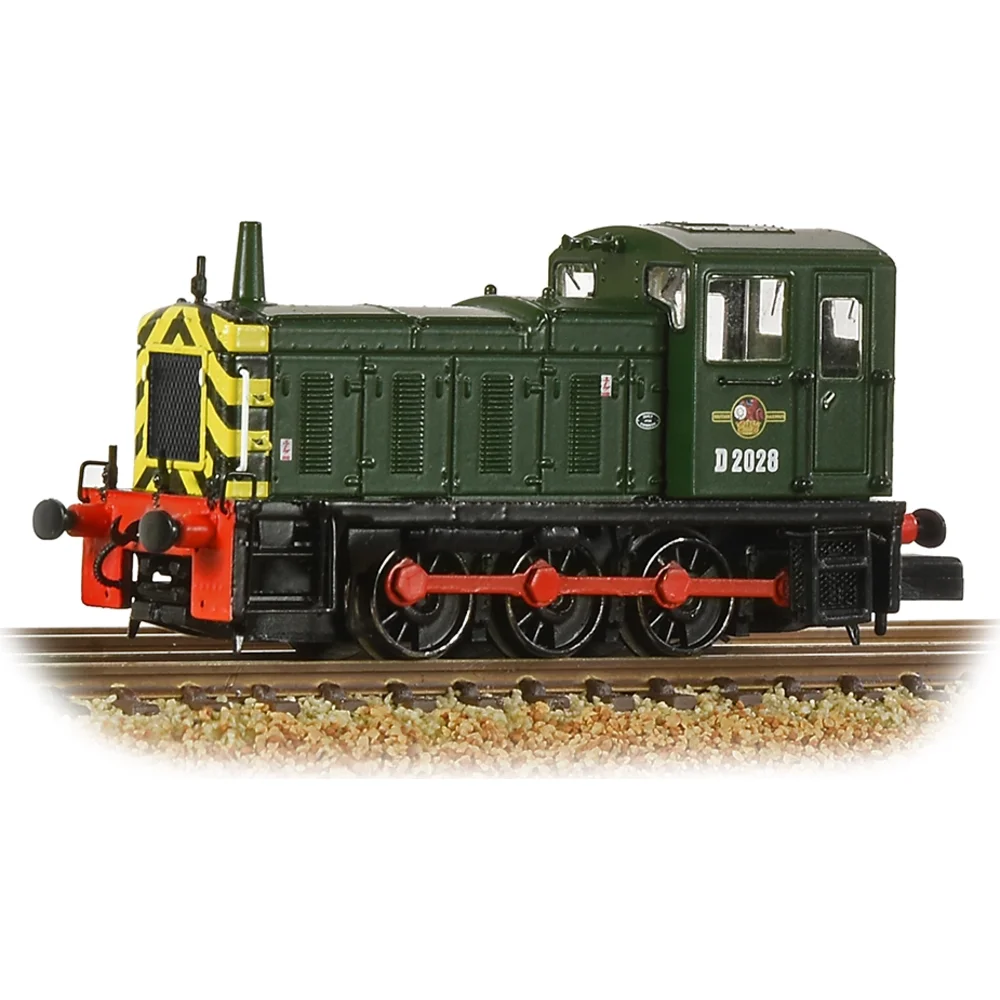
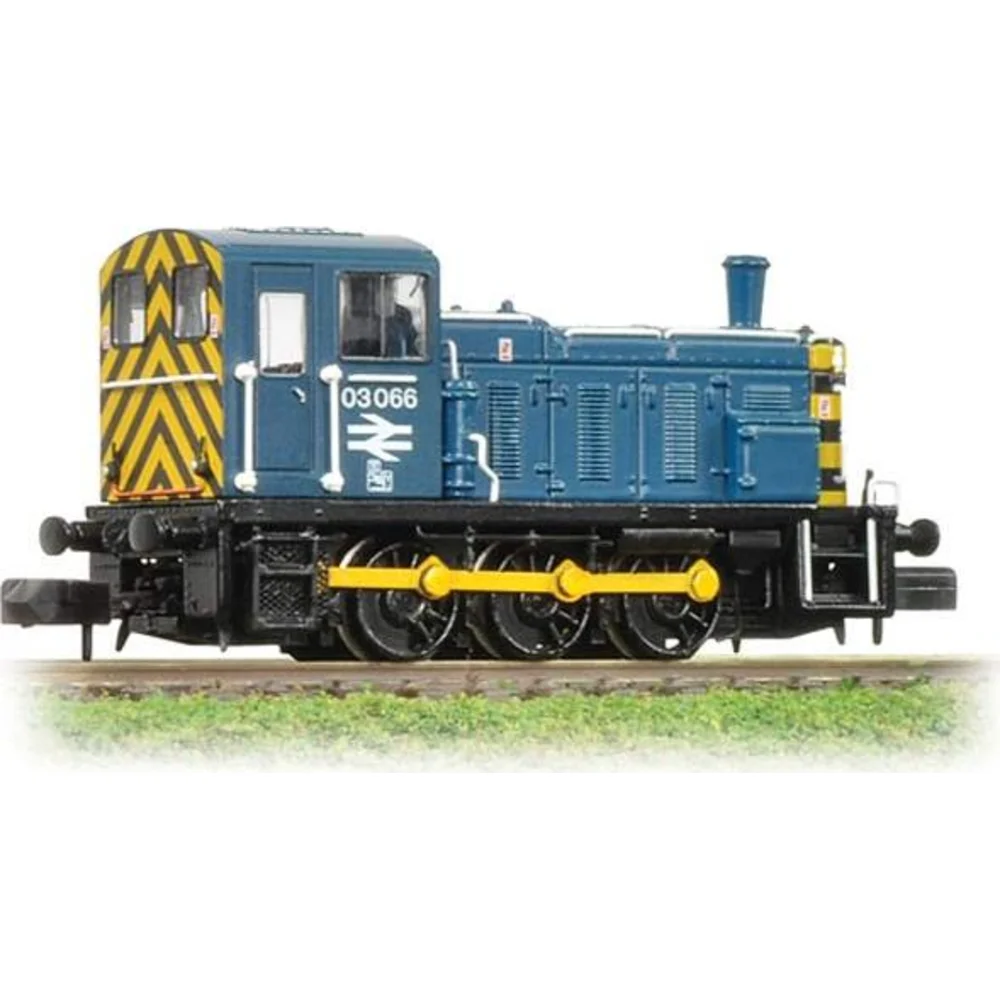
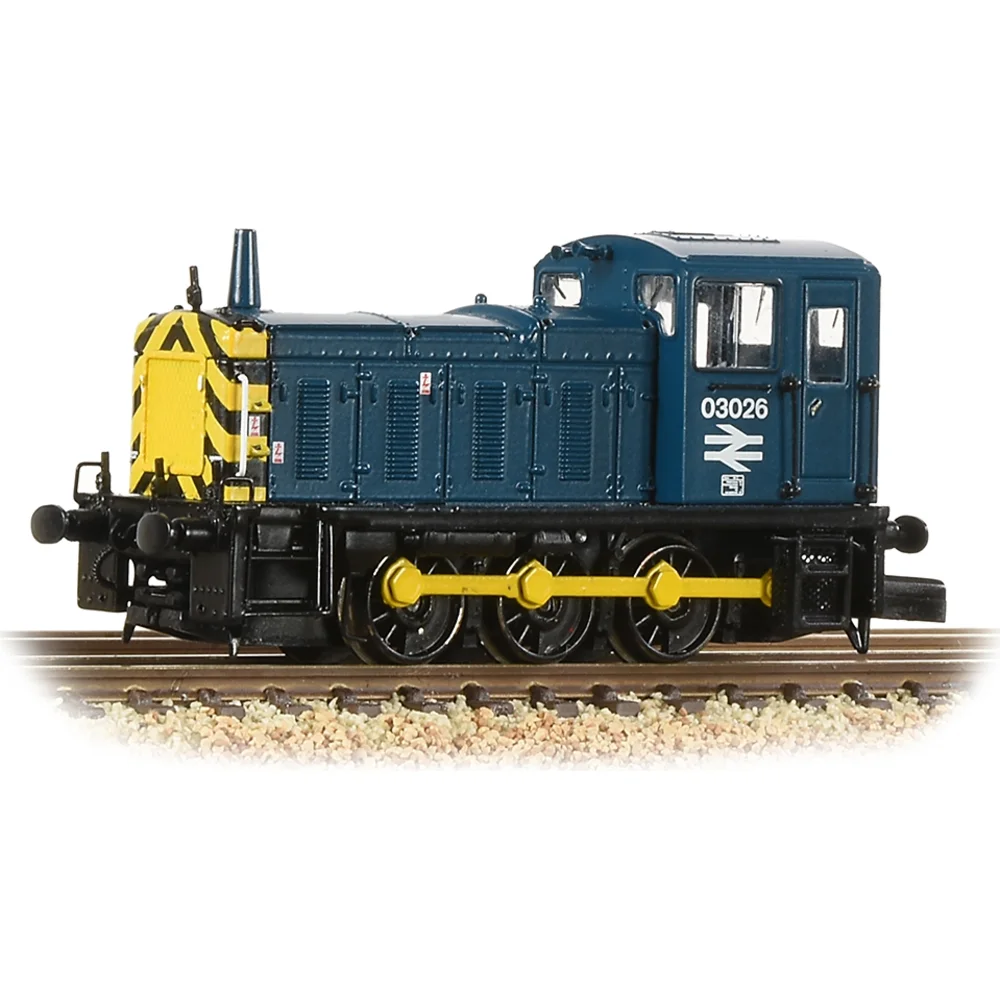
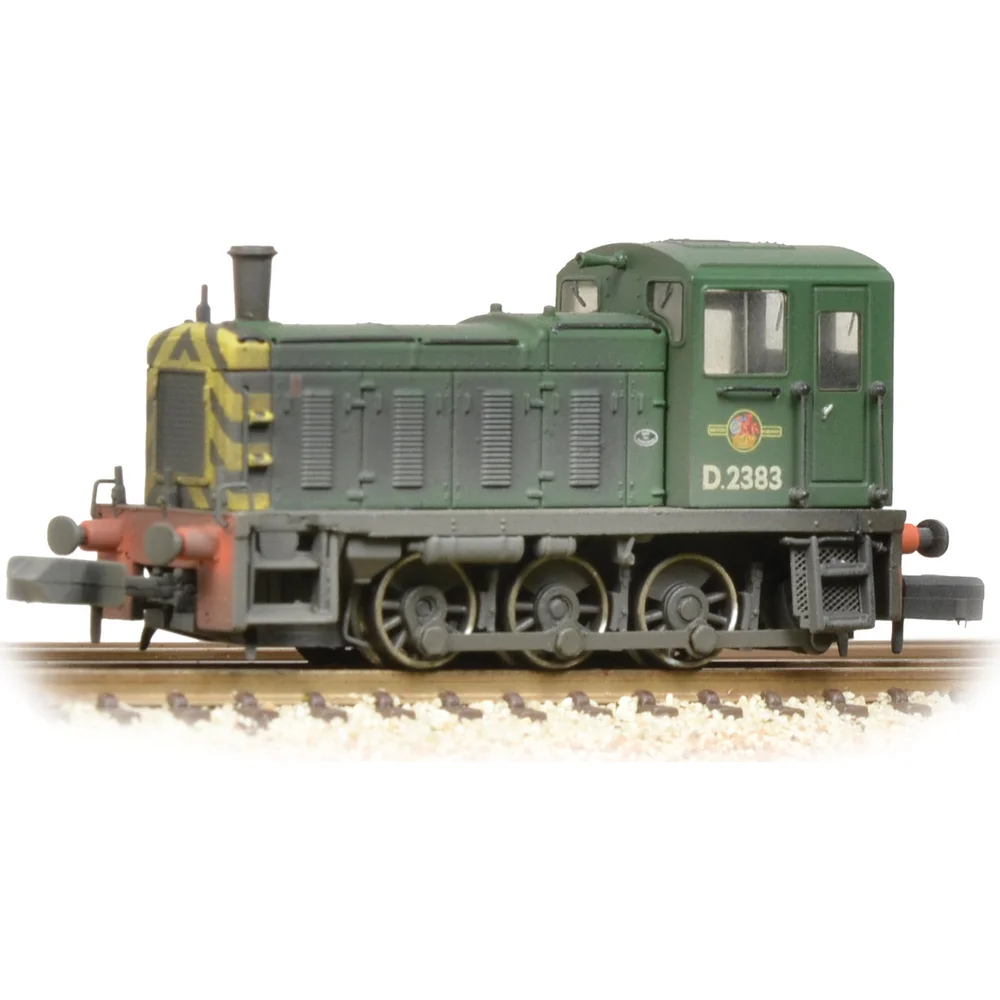
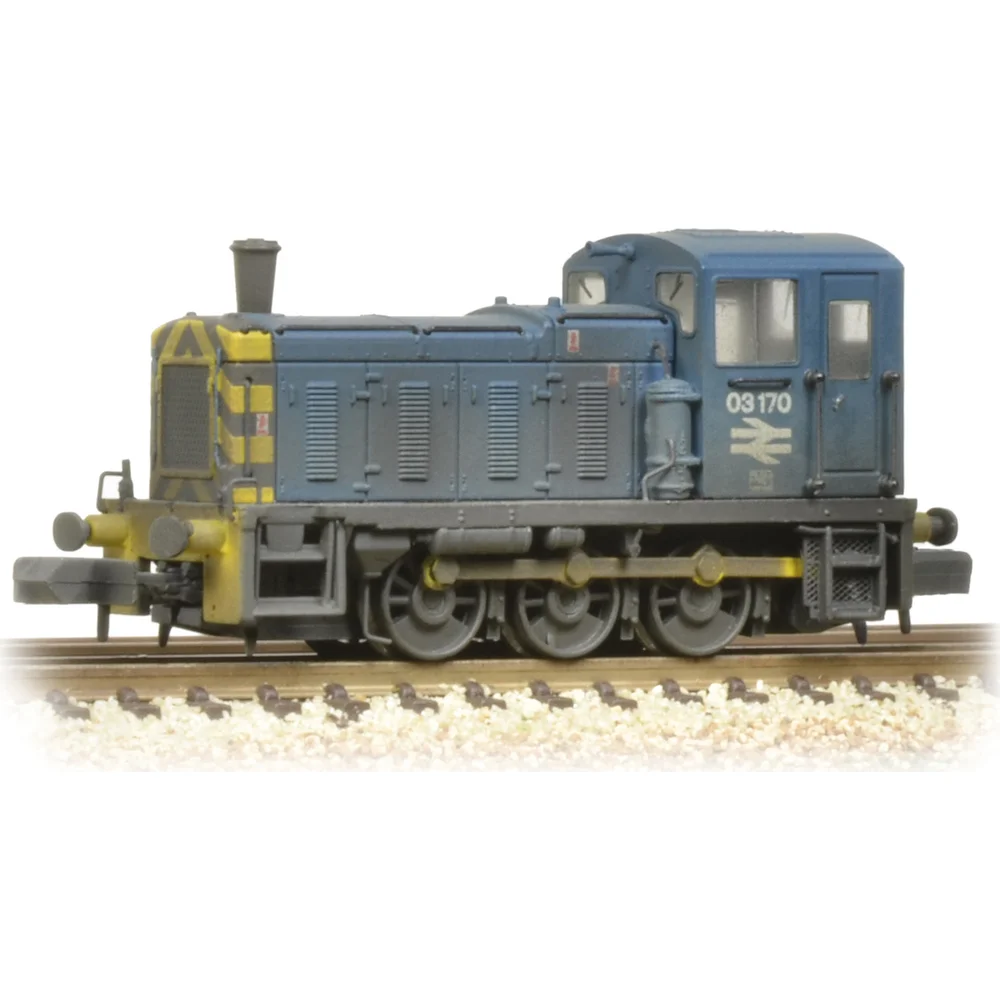
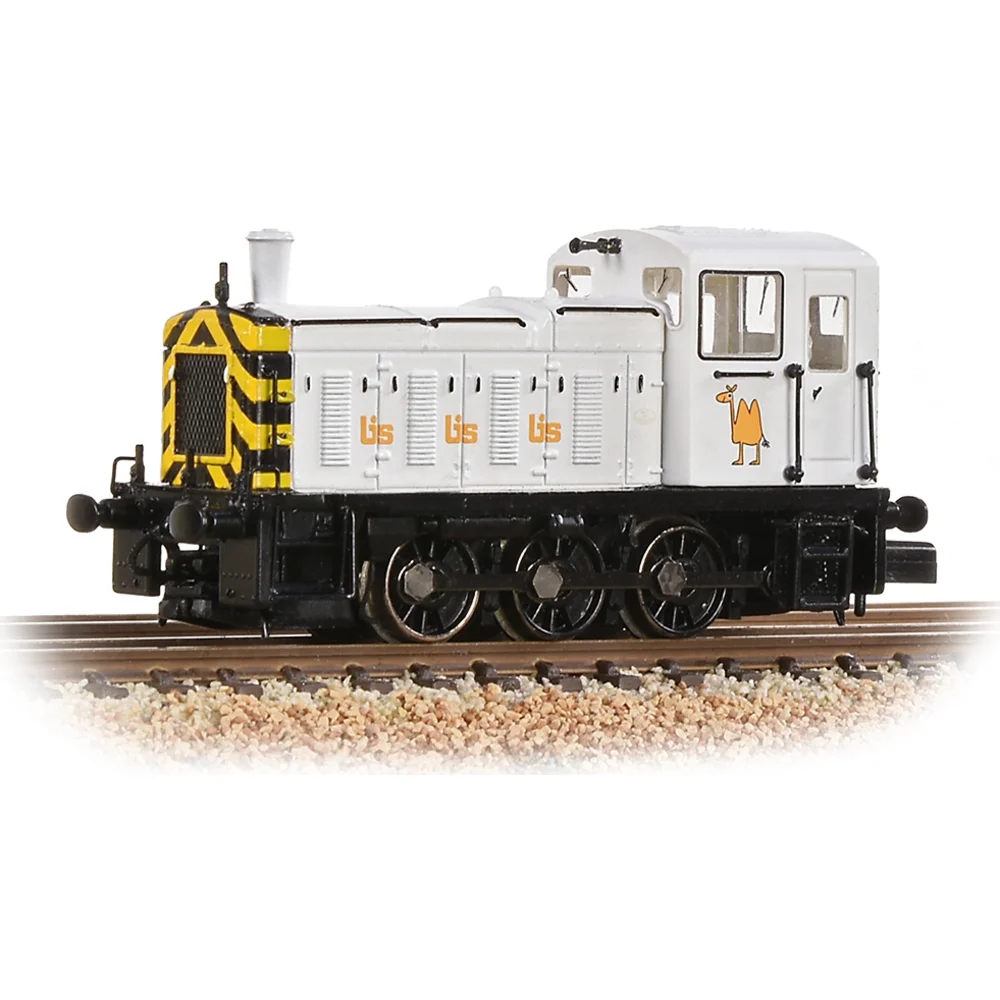
Graham Farish (Bachmann's N gauge brand) produces N gauge Class 03 models with quality appropriate to 2mm scale. Current offerings feature 6-pin DCC sockets, fine detail, and directional lighting. Catalog numbers include 371-060 (D2011 BR Green), 371-061 (D2388 BR Green with wasp stripes), 371-062 (03066 BR Blue with wasp stripes), and exclusive variants like 371-064Z (03179 in NSE livery, Kernow Model Rail Centre exclusive). Retail pricing ranges £50-65, providing excellent value for compact layout modellers.
The N gauge models deliver impressive detail considering the diminutive scale. The jackshaft drive and coupling rods remain visible, creating authentic appearance. Separate handrails, lamp irons, and chimney maintain visual fidelity. The coreless motor provides smooth operation at realistic speeds. All-wheel pickup ensures reliable electrical performance. Multiple livery options enable era-specific authenticity from 1950s green through 1980s blue to preserved railway schemes.
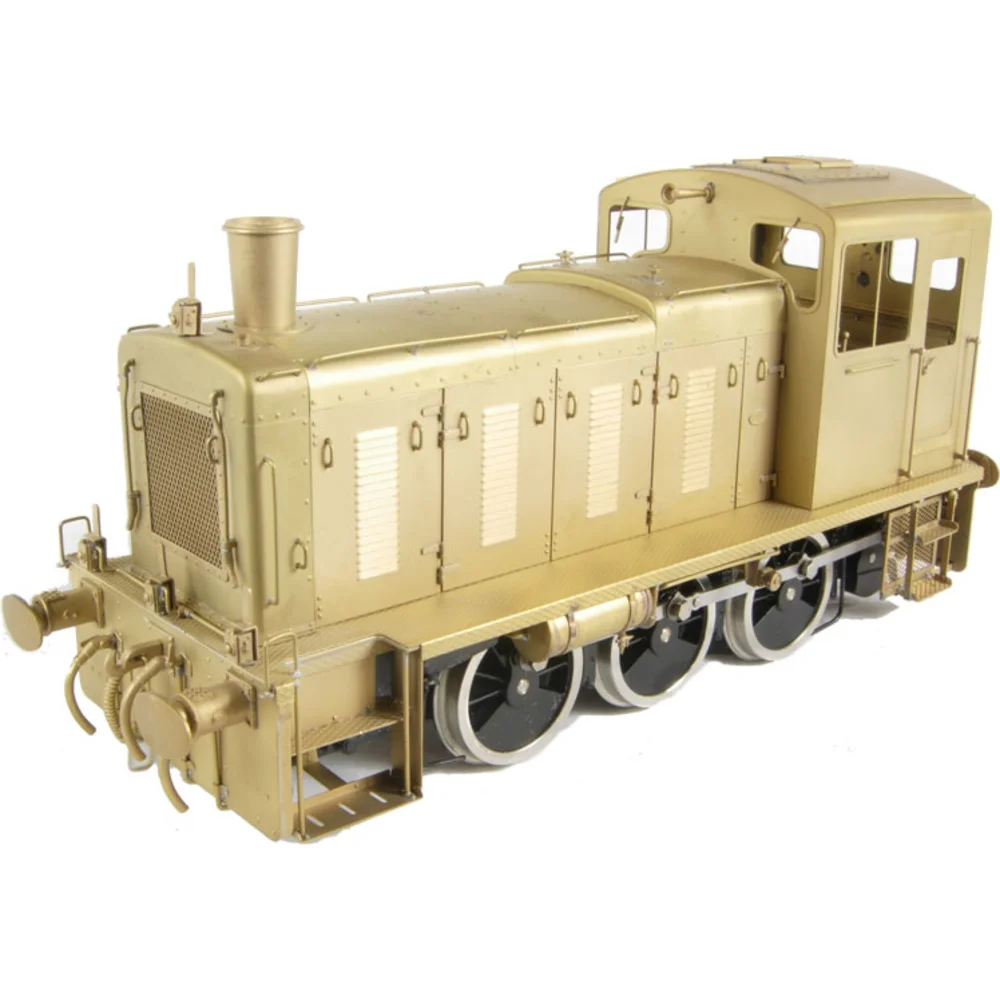
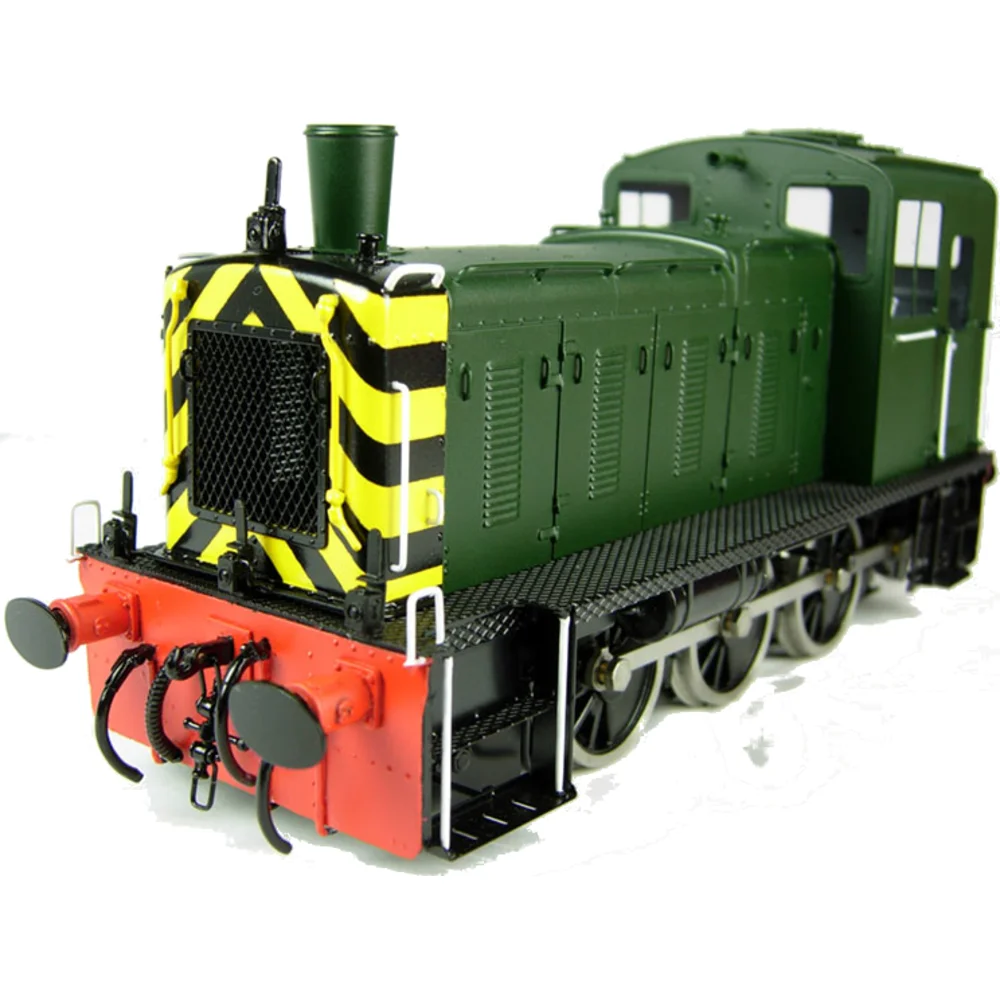
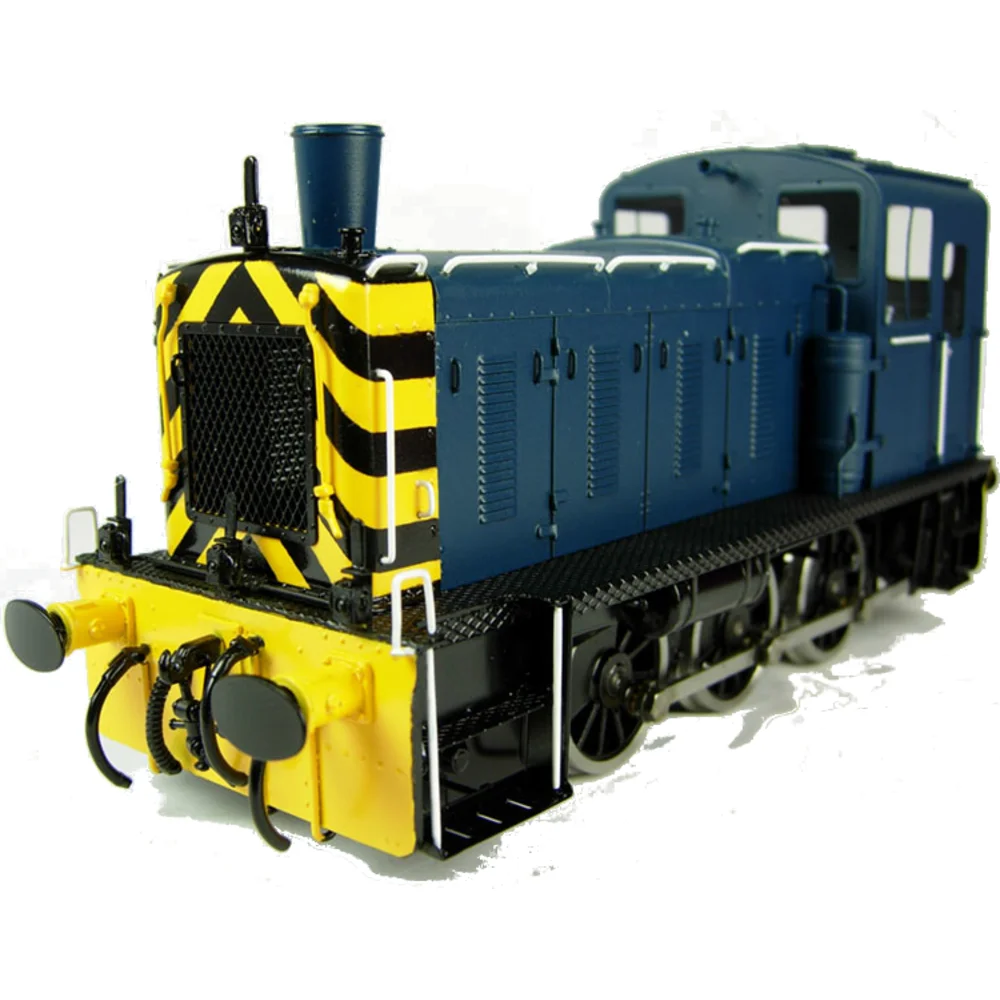
Heljan serves O gauge (7mm scale) enthusiasts with ready-to-run models, catalog numbers HJ2051-HJ2075 covering 10 different liveries. RRP is £395, with models supplied un-numbered and with separate detailing parts, allowing purchasers to finish locomotives to their own preference. This approach suits O gauge modellers who typically prefer personalising models through additional detailing, weathering, and custom finishing.
Available O gauge liveries include BR green with conical or flowerpot chimney and red buffer beams, BR blue with chevrons and yellow buffer beams, industrial yellow with conical chimney, and industrial blue with flowerpot chimney. Reviews praise the excellent underframe detail, accurate jackshaft drive, coupling rods, comprehensive cab interior detail with circuit board lighting, and injection-moulded plastic visible details. At 875g, the model provides useful tractive effort for shunting operations on O gauge layouts.
Technical execution in O gauge impresses throughout. The substantial metal chassis ensures stability and realistic weight distribution. All-wheel drive with geared transmission to both bogies delivers powerful performance. Separately applied handrails, lamp brackets, and pipework create three-dimensional depth. The turned metal components including buffers and chimney add premium quality touches. DCC compatibility through 21-pin socket enables digital control and sound installation for advanced operators.
No HO, TT, or G scale Class 03 models are currently produced by major manufacturers, limiting options for modellers working in these scales. Skilled modellers can create custom conversions or scratchbuilds, though the engineering complexity of the jackshaft drive presents significant challenges. The concentration of manufacturers on OO, N, and O gauge reflects these scales' dominance in the British model railway market.
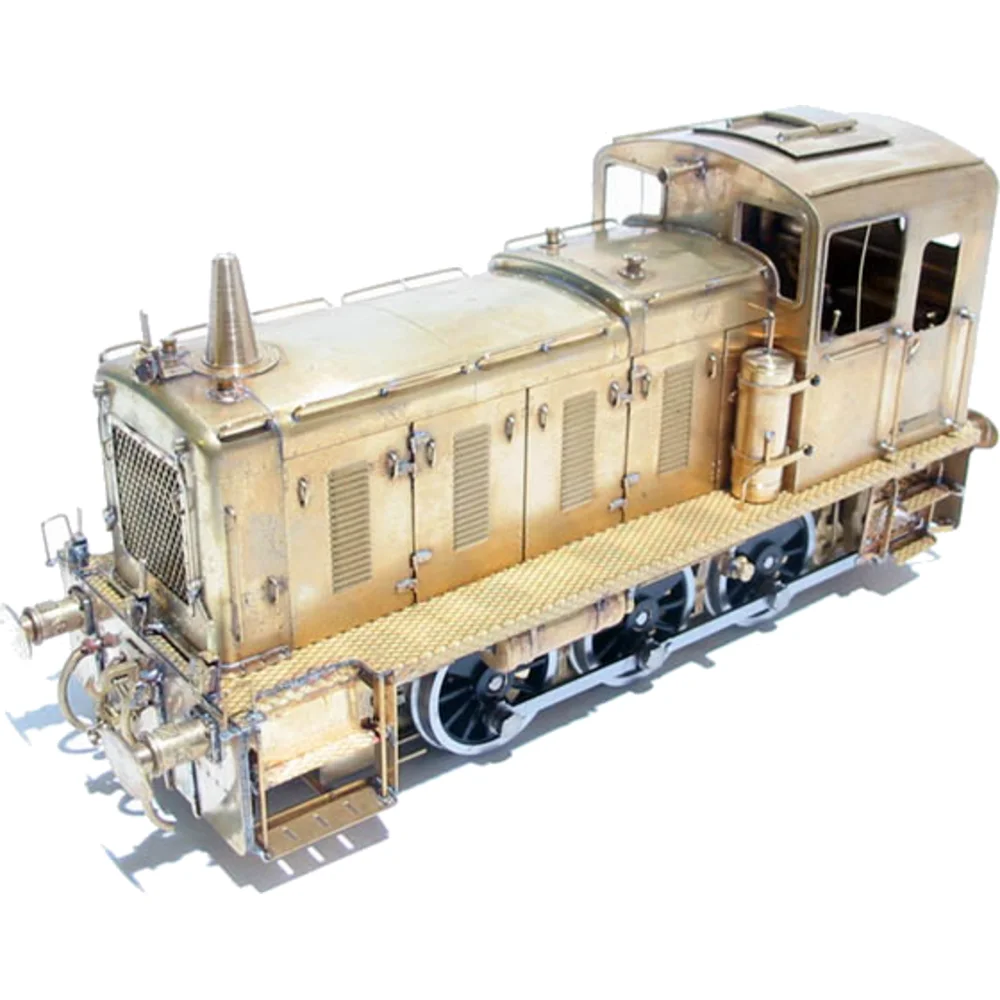
Kit options exist for advanced modellers seeking ultimate customisation. DJH Model Railway Kits offers Class 03 shunters in whitemetal and etched brass for O gauge (catalog K326), with factory-built examples available for those lacking construction skills. These kits enable extensive super-detailing beyond ready-to-run standards, though they require significant modelling experience and precise construction techniques.
Special editions and limited runs periodically expand the available range. Bachmann Collectors Club exclusive releases, weathered versions, specific preserved railway liveries, and retailer exclusives create collectible variants. The 2011 Modelzone release of Isle of Wight prototypes demonstrated manufacturer responsiveness to enthusiast interests in unique variants. These special editions often appreciate in value, creating secondary markets for discontinued models.
Unique Modelling Tips and Layout Integration
Successfully incorporating British Rail Class 03 models into layout operation requires understanding the specialised nature of their prototype duties and the authentic operating scenarios that characterised light shunting work during the 1957-2008 period. Unlike main line locomotives that might work prestigious expresses, the Class 03 was typically assigned to humble but essential local duties connecting various railway facilities and enabling smooth traffic flow.
Authentic operating scenarios should reflect the intensive yard and station work. A typical Class 03 duty might involve marshalling wagons in a goods yard, assembling trains from various sidings, moving wagons between loading points, and performing the slow, deliberate movements characteristic of shunting. Station pilot duties at terminus stations offer excellent operational interest—coupling and uncoupling passenger coaches, adding or removing portions from trains, and performing carriage shunting between services.
Layout design should accommodate the class's operational characteristics and typical infrastructure. Goods yards with 4-8 sidings provide ideal settings for authentic shunting operations. Dock and harbour layouts suit Class 03s perfectly, with the Weymouth Harbour Tramway offering particularly photogenic street running possibilities. Industrial sidings allow modelling coal-fired power stations, chemical works, factories, and quarries with rail connections where the Class 03's light weight enabled access to weight-restricted tracks.
Weathering Authenticity for Shunting Service
Class 03 weathering should reflect intensive shunting operations whilst maintaining the relatively clean appearance expected during BR service. Focus on brown dust from brake shoes around wheels and running gear, oil leaks creating dark streaks along the underframe, road dirt thrown up from track creating thin brownish film, and exhaust staining on the roof. Apply powdered tempera with stiff brush for general grime, use diluted acrylics for panel line washes, and dry-brush highlights for colour variation. Set with water spray to make tempera permanent. Avoid heavy industrial weathering inappropriate for BR-maintained locomotives receiving regular attention at depots.
Era selection proves crucial for authentic Class 03 representation. BR green period layouts (1957-late 1960s) demand small BR crests, D-prefix numbers, red buffer beams, and small or no yellow warning panels initially. Include mixed goods trains with 5-plank and 7-plank opens, covered vans, coal wagons, tank wagons, and 20-ton brake vans. BR blue period layouts (1970s-1980s) should show full yellow ends, TOPS 03xxx numbers, BR double-arrow logos, and appropriate freight vehicles including 21-ton hoppers and Speedlink stock.
Including a shunters' truck (runner wagon) coupled behind the locomotive adds authentic 1960s-1970s operational detail. The Class 03's short wheelbase didn't always reliably trigger track circuits, necessitating the runner wagon solution. This simple open wagon provides additional wheelbase length whilst offering operational justification for an extra vehicle in yard movements. Model this detail by permanently coupling a suitable wagon immediately behind the locomotive.
Coaching stock selection for station pilot duties requires careful period matching. Use non-corridor compartment stock for local services, corridor coaches for longer-distance trains, and appropriate mix for typical passenger operations. Carriage colours should match the era: BR crimson and cream for 1950s-1960s, BR blue and grey for 1970s, InterCity and regional liveries for 1980s. Avoid anachronistic combinations like green locomotives with InterCity coaches.
Sound-equipped models benefit from careful function programming to emphasise the Class 03's distinctive operational characteristics. Set appropriate maximum speed (28.5 mph prototype), slow acceleration and deceleration curves for shunting realism, and function keys for lights, sound on/off, horn, shunting mode with reduced speed, and various sounds including brake squeal and coupling. The authentic Gardner 8L3 engine sound creates unmistakable character distinct from other diesel types.
Detail upgrades transform models into convincing miniatures. Replace plastic handrails with metal versions for improved appearance and durability. Add turned metal buffers, etched nameplates, windscreen wipers, lamp brackets with working lamps, and correctly draped brake hoses. Apply Fox Transfers decals for number variations, depot codes, and warning panels. Install crew figures from Bachmann or Preiser to suggest operational activity.
Heritage railway settings justify multiple Class 03s in different liveries as "visiting locomotives" during diesel galas, carriage siding operations showing preservation-era duties, small engine shed facilities demonstrating maintenance activities, and demonstration freight trains entertaining visitors. The 56 preserved examples provide abundant prototype justification for this popular theme, enabling modellers to display multiple liveries simultaneously.
Operational sessions should emphasise the deliberate, methodical nature of shunting work. Plan switching puzzles using car card systems or switch lists, operate at realistic scale speeds (5-10 mph yard work, 15-20 mph trip workings), and include frequent stops characteristic of coupling operations. The gentle starts and careful speed control required by mechanical transmission creates engaging operation distinct from modern diesel-electric traction.
Timetable construction enables systematic operations reflecting intensive shunting schedules. Multiple duties throughout an operating session—assembling morning departures, trip workings to industrial sidings, carriage shunting between passenger services, and evening goods yard marshalling—provide constant activity. This varied workload creates interesting movements whilst remaining prototypically accurate to Class 03 employment patterns.
Finally
The British Rail Class 03 represents far more than 230 modest diesel shunters; these machines embodied BR's pragmatic approach to the diesel revolution that prioritised reliability, economy, and operational flexibility over headline power figures. The Gardner 8L3 engine's legendary durability, combined with mechanical transmission simplicity and robust construction, delivered exceptional value throughout decades of intensive service.
For railway historians, the class provides fascinating insights into BR's modernisation programme and the practical realities of diesel traction implementation. The transition from optimistic Modernisation Plan projections to sobering operational reality—with many Class 03s surplus within a decade—illustrates the railway industry's tumultuous transformation during the 1960s-1970s. Yet selected examples' survival into the 2000s, with 03179 working until 2008, demonstrates the fundamental soundness of the design.
The exceptional preservation success—56 of 230 locomotives (24%) surviving—represents one of British railway preservation's greatest triumphs. This success ensures the Class 03 story remains accessible through operational demonstrations at heritage railways nationwide. The diversity of preserved examples, from cut-down cab Welsh variants to Isle of Wight tunnel-clearance locomotives to the last Birkenhead trio, captures the full spectrum of Class 03 operations.
Bachmann's exceptional OO gauge range, Graham Farish's N gauge models, and Heljan's O gauge offerings provide model railway enthusiasts with comprehensive coverage across all major scales. The quality tooling, multiple livery options, and DCC compatibility enable authentic layout representation from 1950s green era through 1980s blue period to contemporary preservation operations. The models' compact size suits layouts of all scales whilst delivering genuine operational interest.
Model railway hobbyists incorporating Class 03s into layouts gain versatile locomotives suitable for diverse scenarios: goods yard shunting, station pilot duties, dock operations, industrial sidings, depot movements, and heritage railway operations. The class's moderate size and specialised capabilities provide authentic justification for presence where larger locomotives couldn't operate. Whether marshalling wagons in a busy goods yard, threading through Weymouth's streets with boat trains, or triple-heading Welsh coal trains, these models bring character and authenticity.
The British Rail Class 03 story ultimately celebrates practical engineering serving everyday railway operations with distinction. These machines weren't glamorous express locomotives or powerful freight haulers, but they were absolutely essential. Every passenger train that departed on time, every wagon delivered to its destination, every depot maintaining smooth locomotive movements—all depended on shunters like the Class 03 working reliably day after day, year after year, often in difficult conditions with minimal recognition.
As railway preservation continues evolving and new generations discover the fascination of BR-era operations, the Class 03 stands as perfect exemplar of an era when standardisation and systematic maintenance delivered remarkable results. The 56 preserved examples ensure these characterful machines will continue charming enthusiasts for generations, whilst quality models across multiple scales enable modellers to capture their operational essence on layouts large and small.
Frequently Asked Questions
How many British Rail Class 03 locomotives were built and when?
British Railways built 230 Class 03 locomotives at Doncaster and Swindon Works between 1957 and 1962. They were numbered D2000-D2199 and D2370-D2399 initially, later renumbered 03004 to 03399 under the TOPS system introduced in the 1970s. The construction programme spanned five years, with both works contributing to the build. Two locomotives (D2370 and D2371) were originally numbered 91 and 92 respectively and used as departmental shunters before entering the capital stock.
What makes the Class 03 different from the similar-looking Class 04?
The Class 03 was built in-house by BR as a refinement of the contractor-built Class 04. Key visual differences include the Class 03's bulged rear bonnet accommodating a larger 300-gallon fuel tank, and curved cab roof meeting sides smoothly versus the Class 04's angled junction with a lip all the way round. Mechanically they were virtually identical, sharing the Gardner 8L3 engine and Wilson-Drewry 5-speed gearbox, but BR standardised on Class 03 as the preferred light diesel-mechanical shunter for workshop construction.
Where can I see preserved Class 03 locomotives today?
With 56 preserved examples, opportunities abound nationwide. Major locations include Peak Rail (Heritage Shunters Trust collection with 5 examples), Mangapps Railway Museum (2 operational), Embsay & Bolton Abbey Railway (03078 frequently operating), West Somerset Railway (D2133), Isle of Wight Steam Railway (2 including cut-down cab variants), Llangollen Railway, Severn Valley Railway, East Lancashire Railway, and numerous other heritage railways. Many operate at diesel galas and special events throughout the year, providing excellent photographic opportunities.
Which model should I buy for OO gauge?
Bachmann Branchline produces the current standard model with excellent detail, coreless motor, Next18 DCC socket, and space for sound installation. Avoid early Mainline and Replica split-chassis models for DCC due to electrical problems. Choose livery based on your layout era: BR green for 1957-late 1960s, BR blue for 1970s-1980s, departmental yellow or industrial liveries for specific scenarios, or preserved railway schemes for heritage settings. DCC Ready versions cost £100-130, Sound Fitted £150-180 depending on retailer.
Can Class 03s operate with modern-image layouts?
Yes, the 56 preserved examples justify their presence on heritage railway-themed layouts representing present day. Locomotive 03179 even operated on the national network until 2008 at Hornsey depot, wearing WAGN and First Capital Connect liveries—creating authentic modern-era justification. Industrial sites and preservation settings allow Class 03s in contemporary layouts convincingly. Heritage railway diesel galas provide perfect scenarios for multiple Class 03s in various liveries operating together.
What's the story behind the cut-down cab variants?
Nine Class 03s received lowered cabs reducing height from 12 ft 8.5 in to approximately 11 ft 3 in for specific duties. Six (03119, 03120, 03141, 03142, 03144, 03145) plus later additions (03151, 03152, 03382) worked the Burry Port & Gwendraeth Valley Railway where low bridges necessitated reduced clearance, often working triple-headed on coal trains. Two (03079, 03179) served the Isle of Wight with cut-down cabs for Ryde tunnel clearance. Six Burry Port and both IoW examples survive in preservation.
How do Class 03s compare with Class 08 shunters for layout suitability?
Class 03s (30 tons, 204 hp, mechanical transmission) suit light duties, weight-restricted lines, compact layouts, dock work, and specialised operations. Class 08s (50 tons, 350-400 hp, diesel-electric) handle heavier general-purpose shunting and marshalling yards. For modelling purposes, choose Class 03 for scenarios where its smaller size and light weight were operationally necessary—locations like Ipswich Docks where bridge weight restrictions prevented Class 08 access. Using both provides operational variety and era-appropriate authenticity representing BR's fleet diversity.
What livery variations are available in model form?
OO gauge Bachmann offers BR green (early/late crests), BR blue with wasp stripes, departmental yellow, industrial liveries including NCB, and preserved schemes. N gauge Graham Farish includes BR green (with/without wasp stripes), BR blue, and Network SouthEast. O gauge Heljan provides 10 livery options with conical or flowerpot chimneys, red/yellow/black buffer beams. Limited editions and exclusive retailer releases expand options periodically, with special editions like the Burry Port & Gwendraeth Valley examples and Isle of Wight locomotives occasionally available.
Are Class 03s suitable for beginners?
Absolutely. Their compact size suits small layouts important for space-limited modellers, simple shunting operations provide achievable operational interest without complex trackwork, good model availability across scales ensures easy acquisition, and abundant preserved examples facilitate prototype research. Basic weathering with powdered tempera transforms appearance dramatically, whilst simple operating scenarios (goods yard switching, station pilot duties) teach fundamental railway operation principles. The Class 03 exemplifies an ideal "first diesel" for BR-era modellers, combining visual appeal with practical operational possibilities.
What was unique about 03179's service history?
Locomotive 03179 achieved distinction as the last Class 03 in mainline service. After initial BR service on the Isle of Wight until 1993 with cut-down cab for tunnel clearance, it was reinstated by WAGN in 1998 for Hornsey depot in North London. Named "Clive" after a 43-year depot employee, it wore Network SouthEast and later First Capital Connect liveries whilst working carriage shunting and depot movements. Final withdrawal came in 2008 after 51 years of service spanning four operators, making it the longest-serving Class 03. It's currently being restored and returning to Isle of Wight Steam Railway in October 2025.
Why were Class 03s used on the Weymouth Harbour Tramway?
Southern Region Class 03s worked Channel Islands boat trains along the Weymouth Harbour Tramway through town streets during the early 1970s, displacing the last GWR 1366 Class pannier tanks. The street-running duty required warning equipment for public safety and exemplified the Class 03's operational versatility. Their compact size, good visibility from the cab, and light weight suited the restricted clearances and weight limitations of street trackwork. This photogenic operation created one of BR's most distinctive locomotive duties, now providing excellent modelling inspiration.
What industrial operators used Class 03s after BR withdrawal?
Many Class 03s found industrial careers after BR withdrawal. Power stations including Richborough, Rye House, and Barking employed them for coal and ash handling. British Cellophane's Bridgwater factory, British Industrial Sand, various collieries, and scrapyards including Queenborough all operated Class 03s. Four were exported to Italy for steel works operations (one surviving until reported in 2015), three to Belgium. Industrial operators appreciated the Gardner engine's reliability, mechanical transmission simplicity, and robust construction requiring minimal maintenance infrastructure compared to diesel-electric locomotives.
Are Class 03 models available with sound?
Yes, Bachmann produces DCC Sound Fitted variants in OO gauge with pre-installed ESU LokSound decoders providing authentic Gardner 8L3 engine sounds, horn, brake squeal, coupling effects, and 20+ functions. These retail £150-180 depending on livery. For DCC Ready models, aftermarket sound installation is possible using ESU LokSound 5 Micro decoders (approximately £142 with speaker) and sugar cube speakers fitting in the roof or underframe. Sound files from UK specialists like Legomanbiffo recreate the distinctive Gardner diesel character. N and O gauge models require aftermarket sound installation.